YubNub Social YubNub Social
    #astronomy #jesuschrist #nightsky #moon #liberals #fullmoon #planet #christ #jesus #jupiter #americafirst #socialists #easter #resurrection #christisrisen
    Advanced Search
  • Login
  • Register

  • Day mode
  • © 2026 YubNub Social
    About • Directory • Contact Us • Developers • Privacy Policy • Terms of Use • shareasale • FB Webview Detected • Android • Apple iOS • Get Our App

    Select Language

  • English
Night mode toggle
Featured Content
Community
New Posts (Home) ChatBox Popular Posts Reels Game Zone Top PodCasts
Explore
Explore
© 2026 YubNub Social
  • English
About • Directory • Contact Us • Developers • Privacy Policy • Terms of Use • shareasale • FB Webview Detected • Android • Apple iOS • Get Our App
Advertisement
Stop Seeing These Ads

Discover posts

Posts

Users

Pages

Blog

Market

Events

Games

Forum

Intel Uncensored
Intel Uncensored
5 w

Iran Is Merely a Chess Piece in a Much Bigger Game
Favicon 
www.sgtreport.com

Iran Is Merely a Chess Piece in a Much Bigger Game

by Kurt Schlichter, Townhall: Let’s get real about what this latest iteration of the until-now endless Iran War is all about. There’s no imminent threat. That assertion is a pacifier to the weak-kneed and timid. Last June, we set the mullahs back years in their quest for nukes. They have a metric butt-load of ballistic […]
Like
Comment
Share
Intel Uncensored
Intel Uncensored
5 w

Max Blumenthal : Gaza-like Horror in Tehran
Favicon 
www.sgtreport.com

Max Blumenthal : Gaza-like Horror in Tehran

from Judge Napolitano: TRUTH LIVES on at https://sgtreport.tv/
Like
Comment
Share
History Traveler
History Traveler
5 w

6 Famous Russians Buried in Moscow’s Novodevichy Cemetery
Favicon 
www.thecollector.com

6 Famous Russians Buried in Moscow’s Novodevichy Cemetery

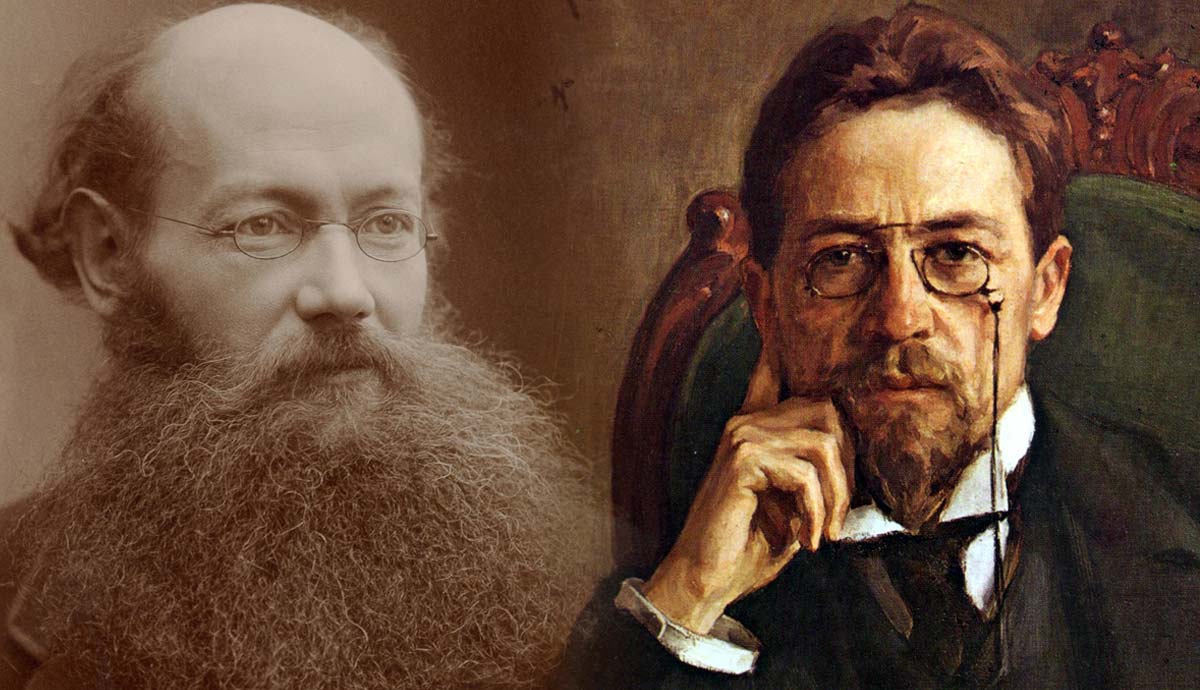
  The Novodevichy Convent on the banks of the Moskva River is one of the most distinctive buildings in the Russian capital. Inaugurated in 1898, the Novodevichy cemetery became Russia’s second-most prestigious burial ground during the Soviet period. The graves of many famous Russians buried in other monasteries were transferred to the site. In addition to world-renowned writers, musicians, and actors, Novodevichy is the final resting place for many Soviet and post-Soviet politicians, including three heads of state. But who exactly is buried in Novodevichy Cemetery?   1. Isaac Levitan (1860-1900) Portrait of Isaak Levitan, by Valentin Serov, 1893. Source: Tretyakov Gallery via Wikimedia Commons/Tretyakov Gallery, Moscow   One of the most celebrated Russian landscape artists, Isaac Levitan was born in 1860 to a Jewish family in present-day Lithuania. After the family moved to Moscow, Levitan studied at the Moscow School of Painting and began exhibiting his work in 1877.   In 1880, the Moscow art collector Pavel Tretyakov acquired Levitan’s painting Autumn Day. Sokolniki, featuring a path in a Moscow park with a female figure painted by his friend Nikolay Chekhov (the brother of the writer Anton Chekhov). Tretyakov retained an interest in Levitan’s work and acquired more than 20 pieces during the artist’s lifetime, which are exhibited in the State Tretyakov Gallery.   After leaving the Moscow Art School in 1884, Levitan routinely exhibited his work with the Peredvizhniki movement, a group of artists who moved away from representing classical and Biblical scenes and embraced subjects within Russia. Together with Ivan Shishkin, Levitan represented a new golden age of Russian landscape painting.   While Shishkin is known for bringing the Russian forest to life, Levitan acquired international renown for his “mood landscapes,” often featuring a vast open expanse with a path or creek extending into the distance. His 1894 painting Over Eternal Peace, featuring a small wooden church overlooking a vast body of water that disappears into the horizon, is emblematic of his style.   During the 1890s, Levitan made three trips to Western Europe and acquired international recognition, and he incorporated elements of French Impressionism into his later works. He suffered from poor health for much of his life and was diagnosed with a serious heart condition in 1894. After his death in 1900, he was initially buried at the Dorogomilovo Jewish cemetery in Moscow, but in 1941, his remains were transferred to the Novodevichy Cemetery near Chekhov’s grave.   2. Anton Chekhov (1860-1904) Portrait of Anton Chekhov, by Osip Braz, 1898. Source: Wikimedia Commons/Tretyakov Gallery, Moscow   Anton Pavlovich Chekhov is one of the most famous Russian writers to have lived. In the West, he is best known for his players, who portray the decline of the Russian gentry at the turn of the 19th century, but in his native Russia, Chekhov is primarily known for his short stories.   Born in Taganrog, near the Black Sea, in 1860, Chekhov remained in his hometown for almost 20 years. In 1876, his father moved to Moscow with his eldest sons to avoid debtor’s prison, leaving Chekhov and his mother behind to sell the estate. After finishing his education, Chekhov joined his family in Moscow in 1879 and began training as a doctor. Before his graduation in 1884, he supported the family by submitting short stories to literary journals.   Chekhov continued writing after he qualified as a doctor. His medical work brought him into frequent contact with poor and sick people whom he treated for free. These experiences influenced his writing, and Chekhov developed a distinctive style by ending his short stories in a way that left it up to readers to draw their own conclusions.   Anton Chekhov’s grave at Novodevichy Cemetery, Moscow, photograph by Jimmy Chen, 2017. Source: Jimmy Chen   In 1887, Chekhov wrote his first play, Ivanov, which proved an unexpected hit. It was at this time that he formulated the concept known as Chekhov’s gun, a principle stating that every single element of a story should be necessary and contribute to the final plot.   He continued to write several shorter pieces for the stage, but The Seagull played to a hostile audience during its St. Petersburg premiere in 1896. This setback proved a blessing in disguise, as Konstantin Stanislavsky saw the potential of the play as a tragedy and staged a successful revival at the Moscow Art Theater in 1898. Chekhov’s Uncle Vanya premiered in Moscow the following year.   Chekhov was plagued by poor health throughout his life but was reluctant to submit himself to examination by his colleagues. He began coughing blood in the mid-1880s, but it was only in 1897 that he was officially diagnosed with tuberculosis. This prompted him to move to Yalta, where he wrote Three Sisters and The Cherry Orchard. In 1901, he married the actress Olga Knipper, but they were frequently apart as Chekhov remained in Yalta while Olga continued her career in Moscow.   In 1904, Chekhov and his wife set off to Germany to seek treatment for his illness. He died on July 15, 1904, at the age of 44. His body was returned to Russia in a refrigerated railway carriage carrying oysters and buried at Novodevichy Cemetery.   3. Pyotr Kropotkin (1842-1921) Pyotr Kropotkin, photograph by Felix Nadar, c. 1876. Source: BnF Gallica   Best known as a revolutionary theorist, Prince Pyotr Kropotkin was born in Moscow to an aristocratic family in 1842. As a child, Kropotkin enrolled in the Corps of Pages in St. Petersburg and served as a courtier to Tsar Alexander II upon graduation in 1861.   As an opponent of serfdom, Kropotkin welcomed the tsar’s abolition of the institution in 1861 but later believed that the tsar’s reforms did not go far enough. In 1862, he took the opportunity to embark on a five-year journey through Siberia on government service. In addition to surveying lands recently annexed to Russia, he took a great interest in observing how animals survived the harsh climate. His observations helped him develop the concept of mutual aid, in which animals cooperated rather than competed with each other to ensure their survival.   Kropotkin’s existing sympathy for the political prisoners in Siberia and his observations of the natural world led him to adopt left-wing ideas about cooperation. He returned to St. Petersburg and was elected to the Russian Geographical Society, but was inspired by the Paris Commune of 1871 to become more politically active.   Although he rejected political violence, Kropotkin’s call for political agitation was enough to get him arrested by the tsarist secret police in March 1874. He escaped from prison in 1876 and went to Switzerland, where he lived for the next five years until he was expelled by the Swiss authorities following the assassination of Tsar Alexander II in 1881.   Pyotr Kropotkin’s grave at Novodevichy Cemetery, Moscow, photograph by Jimmy Chen, 2017. Source: Jimmy Chen   By 1886, Kropotkin established a base in London, where he would live for the next three decades. During his period, he produced some of his best-known works, including The Conquest of Bread, a political manifesto for anarchist communism, envisaging a society under common ownership where people were only required to work for five hours a week. Responding to claims that humans would not be willing to work without a profit incentive, Kropotkin argued that people are happy to do work they enjoy and are willing to help fellow members of the community.   When the First World War broke out in 1914, Kropotkin split the anarchist movement by declaring in favor of Britain and France. After Tsar Nicholas II was overthrown in 1917, Kropotkin returned to Russia in June. He refused an offer of a post in the Provisional Government but argued for Russia’s continued participation in the war. Following the Bolshevik Revolution, Kropotkin challenged Lenin’s centralization of power. He died in February 1921 at the age of 78 and was buried at the Novodevichy Cemetery. Although the Bolsheviks offered him a state funeral, they soon suppressed his writings after his death.   4. Sergei Prokofiev (1891-1953) Sergei Prokofiev. Unknown photographer, 1918-1920. Source: The US Library of Congress, Washington DC   Sergei Prokofiev was one of the most accomplished Russian composers of the 20th century. Born in 1891 in present-day Ukraine, Prokofiev was a musical prodigy who wrote his first piano piece at the age of five and a short opera at the age of nine. In 1904, he began studying at the St. Petersburg Conservatory after a recommendation from the composer Alexander Glazunov.   Much younger than the other students, Prokofiev was regarded as boastful and arrogant. He was a talented pianist, and his first two piano concertos were regarded by contemporaries as extremely modern and difficult to play. However, he demonstrated his versatility with his First Symphony (the ‘Classical’) from 1917, conforming to a more conventional style.   In 1913, Prokofiev made his first foreign trip and encountered Sergei Diaghilev in Paris. His Scythian Suite of 1915 featured music initially intended for a ballet. He would later write three successful ballets performed by Diaghilev’s Ballet Russes in the 1920s. His 1935 ballet Romeo and Juliet features the famous “Dance of the Knights.”   After the Russian Revolution, Prokofiev received permission from the Soviet Union to leave the country, heading first to the United States and then to Paris. His most famous opera, The Love for Three Oranges, set to a French libretto written by Prokofiev himself, was premiered in Chicago in December 1921. By the 1930s, Prokofiev yearned to return to the Soviet Union. He was commissioned to write the music for the Soviet film Lieutenant Kijé, which premiered in 1934. Prokofiev’s music was so popular that he reworked it into a standalone suite. In 1936, he returned to Moscow permanently and wrote Peter and the Wolf, one of his most famous compositions.   Sergei Prokofiev’s grave at Novodevichy cemetery, photograph by Jimmy Chen, 2017. Source: Jimmy Chen   Prokofiev continued to write music for the Soviet film industry, most notably collaborating with Sergei Eisenstein on the 1938 film Alexander Nevsky. A work of propaganda celebrating the triumph of Russian prince Alexander Nevsky over the Teutonic Knights at a time when the Soviet Union and Nazi Germany were poised to go to war, the film was suppressed following the Molotov-Ribbentrop Pact but revived to great acclaim after the German invasion of the Soviet Union in 1941. Once again, Prokofiev exploited the popularity of his film score to adapt the music into a cantata.   The German invasion encouraged Prokofiev to write a grand opera based on Tolstoy’s War and Peace. After receiving feedback from the Soviet authorities to include more patriotic scenes, he initially produced a two-part version intended to be performed over two nights. A final revised version intended for performance on a single evening was not premiered until after the composer’s death in 1953.   In his later years, Prokofiev collaborated with a younger generation of talented musicians, including pianist Svyatoslav Richter and cellist Mstislav Rostropovich. In 1948, his music was denounced by Soviet Culture Minister Andrei Zhdanov “for confused, neuropathological combinations which transform music into cacophony.”   Famously, Prokofiev’s death at the age of 61 on March 5, 1953, was overshadowed by that of Stalin on the same day. His family could not hold his funeral for three days as crowds of Stalin’s mourners prevented the body from being brought out of his apartment near Red Square. When he was eventually buried at Novodevichy Cemetery, the mourners were unable to get hold of any flowers for the grave.   5. Nikita Khrushchev (1894-1971) Nikita Khrushchev and US Vice President Richard Nixon during the famous “Kitchen debate” in 1959. Source: White House Historical Association/Nixon Presidential Library/NARA   Nikita Khrushchev served as First Secretary of the Communist Party of the Soviet Union between 1953 and 1964. As Soviet leader, he is best known for dismantling Stalin’s cult of personality following his ‘Secret Speech’ of 1956, his unsuccessful efforts to boost agricultural production by turning over ‘Virgin Lands’ for the cultivation of corn, and his confrontation with President Kennedy during the Cuban Missile Crisis of 1962.   Born in 1894 in Kalinovka near the border between Russia and Ukraine, Nikita Khrushchev trained as a metal worker before becoming a political commissar during the Russian Civil War and rising up the ranks of the Communist Party. As head of the Moscow party organization during the 1930s, he was involved in the construction of the Moscow Metro.   In 1938, Khrushchev became head of the Communist Party in Ukraine and purged the party organization on Stalin’s orders. During the Second World War, Khrushchev served as a commissar on the frontlines in Kyiv and Stalingrad and was also present at the Battle of Kursk. After the war, Khrushchev was restored to the leadership of an enlarged Ukraine before being recalled to Moscow in 1949. As head of the party organization for both the city and surrounding province, Khrushchev launched an expansive housebuilding program to provide cheap accommodation after the ravages of war.   Nikita Khrushchev’s grave at Novodevichy cemetery, photograph by Jimmy Chen, 2017. Source: Jimmy Chen   In the months after Stalin’s death in March 1953, Khrushchev emerged as First Secretary of the Communist Party and allied with Premier Georgy Malenkov to oust the notorious secret police head, Lavrenty Beria. He consolidated his power by replacing Malenkov with his protégé Nikolay Bulgarin in 1955 before demoting Bulgarin and becoming premier himself in 1958. Khrushchev’s unpopular reforms to the party apparatus and his decision to back down over the Cuban Missile Crisis saw him overthrown by his protégé Leonid Brezhnev in 1964. Khrushchev died seven years later, in 1971, at the age of 77.   Had Khrushchev died in office, he would undoubtedly have been buried at the Kremlin Wall Necropolis near Lenin’s Mausoleum. However, when he died in 1971, he was relegated to the Novodevichy Cemetery. At the request of the Khrushchev family, the sculptor Ernst Neizvestny designed a striking funerary monument made of black and white slabs, emphasizing Khrushchev’s positive and negative legacies. Ironically, Neizvestny had been criticized by Khrushchev in 1962 for “disfigur[ing] the faces of Soviet people.” Until Mikhail Gorbachev’s death in 2022, Khrushchev was the only Soviet leader buried in Novodevichy Cemetery.   6. Boris Yeltsin (1931-2007) Russian Prime Minister Boris Yeltsin giving a speech to supporters atop a Soviet tank, 1991, via Reuters   The first president of post-Soviet Russia, Boris Yeltsin was born in Sverdlovsk oblast in 1931. He became a construction worker and joined the Communist Party in 1961. During the 1960s, he was responsible for leading construction projects in the city of Sverdlovsk, present-day Ekaterinburg. In 1976, he was appointed First Secretary of the Sverdlovsk Oblast Party Committee. At the age of 45, he was among the youngest provincial leaders in Soviet Russia. In 1977, he ordered the demolition of Ipatiev House, where Tsar Nicholas II and his family had been killed in 1918.   In 1981, Yeltsin joined the Communist Party’s Central Committee. By this time, he began to have doubts about the effectiveness of the Soviet government and began conducting unannounced inspections to obtain a better idea of how the system was actually operating.   Following Mikhail Gorbachev’s accession to the leadership in 1985, Yeltsin was transferred to Moscow, where he served as head of the city’s party organization and dismissed older corrupt officials in favor of a younger generation. Yeltsin believed that Gorbachev’s reforms were not ambitious enough and was dismissed from office in November 1987.   His departure from the government allowed him to lead the liberal opposition to Gorbachev. His election as chairman of the Supreme Soviet of the Russian Soviet Federative Socialist Republic in May 1990 prompted a showdown with Gorbachev after Yeltsin issued a declaration of sovereignty for Russia in June. The following month, he resigned from the Communist Party.   Boris Yeltsin’s grave at Novodevichy cemetery, photograph by Jimmy Chen, 2017. Source: Jimmy Chen   When Communist Party hardliners launched a coup in August 1991 to overthrow Gorbachev, Yeltsin defiantly faced up to the tanks and helped ensure the coup’s failure. After saving Gorbachev, Yeltsin quickly moved to undermine his government. While Gorbachev sought to broker a new Union treaty to save the Soviet Union, Yeltsin met with the presidents of Ukraine and Belarus on December 8, 1991, to form the Commonwealth of Independent States, effectively dissolving the Soviet Union. Gorbachev duly transferred power to Yeltsin on December 25, and the Soviet Union was formally dissolved the following day.   Yeltsin’s presidency is known for radical economic reforms that led to hyperinflation and economic inequality, as well as the rise of oligarchs who acquired privatized state enterprises at low prices. Yeltsin’s reforms faced widespread opposition from parliament, and in 1993, he controversially mobilized tanks to shell the parliament building. He forced through a new constitution that concentrated powers in the hands of the presidents. After trailing Communist Party candidate Gennady Zyuganov early in the 1996 presidential campaign, Yeltsin cut a deal with the oligarchs and won reelection.   Yeltsin had a reputation for heavy drinking and reportedly canceled several meetings with foreign leaders because he was inebriated. Plagued with health problems, Yeltsin resigned from the presidency on December 31, 1999. His prime minister, the relatively unknown Vladimir Putin, succeeded him in a temporary capacity before winning the 2000 presidential election. Yeltsin died of a heart attack in 2007 and is buried at Novodevichy under a large gravestone representing the Russian flag.
Like
Comment
Share
History Traveler
History Traveler
5 w

The Chakri Dynasty That Has Ruled Thailand for Over 240 Years
Favicon 
www.thecollector.com

The Chakri Dynasty That Has Ruled Thailand for Over 240 Years

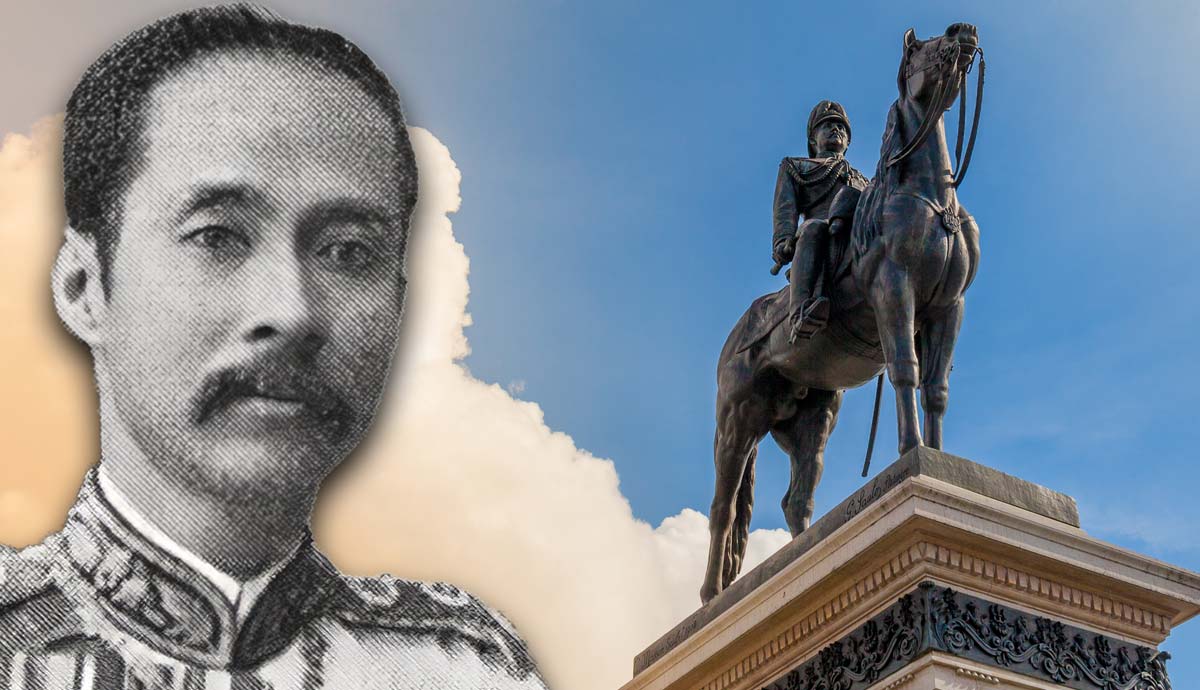
  The Thai monarchy is often seen as one of the most peculiar royal institutions in the world. Since 1782, Thailand (known as Siam until 1939) has been ruled by the Chakri Dynasty. The history of the Chakri Dynasty and the history of Siam were closely interlinked until the end of the absolute monarchy in 1932. While Thai monarchs no longer have any political power, the institution retains symbolic importance and has served as a source of legitimacy for many military governments.   The Foundation of the Chakri Dynasty Mural paintings of Rama I-V at the Kanchanaburi War Museum, Thailand, photograph by Jimmy Chen, 2022. Source: Jimmy Chen   In early 1782, the commander-in-chief of the Siamese Army, the Chao Phraya Chakri, was campaigning in Cambodia when he received news that King Taksin had been arrested and removed from power in a coup. He quickly returned to the capital of Thonburi and restored order by neutralizing the rebel forces. However, he was soon faced with the dilemma of what to do with his friend and superior, King Taksin.   A military commander of Chinese descent who served as the governor of the province of Tak in the kingdom of Ayutthaya, Taksin had been present when Ayutthaya was occupied and sacked by Burmese troops in 1767. As the Siamese state fragmented into several smaller entities, Taksin established his base at Thonburi on the western bank of the Chao Phraya River, some 50 miles downstream of Ayutthaya. Between 1767 and 1771, Taksin led a series of campaigns that reunified most of Siam and expelled the small Burmese garrison in the country. One of his closest allies was the former governor of Ratchaburi, whom he had raised to Chao Phraya Chakri.   In addition to his military conquests, Taksin sought to revive the economy by encouraging agricultural production and establishing commercial and diplomatic links with China. However, by the early 1780s, he was showing signs of mental instability, insisting on being worshipped as a future Buddha and arbitrarily imprisoning family members and close associates. It was this erratic behavior that led to his removal from power. Chao Phraya Chakri knew that restoring Taksin was a great risk at a time when the Burmese threat was not fully extinguished. He also recognized that keeping Taksin alive would risk political instability. With great reluctance, after taking the throne on April 6, 1782, he ordered Taksin’s execution.   Consolidation Statue of King Rama I at Rajabhakti Park, Hua Hin, Thailand, photograph by Jimmy Chen, 2020. Source: Jimmy Chen   The new king, known posthumously as Phra Phutthayotfa Chulalok (Rama I), moved his capital from Thonburi to the opposite bank of the Chao Phraya River. This area formed the nucleus of the city known to the world as Bangkok but known to Thais as Krung Thep or City of Angels. Situated on a bend of the Chao Phraya River, the site was surrounded by water on three sides. Rama I ordered the construction of a canal on the eastern side, transforming the site into an artificial island known as Rattanakosin Island. Accordingly, Rama I’s realm also came to be known as the Rattanakosin Kingdom.   Rattanakosin means “Abode of the Emerald Buddha,” referring to a religious artifact taken by the king from the Laotian capital of Vientiane during an earlier military campaign. The Emerald Buddha became the centerpiece of the temple Rama I built within the Grand Palace complex in Bangkok, known as Wat Phra Kaew or Temple of the Emerald Buddha. The temple’s outer walls were decorated with scenes from the Ramakien, the Thai national epic based on the Ramayana, a Sanskrit epic following the life of Rama, an incarnation of the Hindu god Vishnu. Official copies of the Ramakien were lost during the destruction of Ayutthaya in 1767, and Rama I supervised and partly contributed to the creation of a new text in 1797.   Memorial to the Battle of Lat Ya in the Nine Armies War, photograph by Jimmy Chen, 2022. Source: Jimmy Chen   In 1785, King Bodawpaya of Burma launched an invasion of Siam known as the Nine Armies’ War, since nine columns of Burmese troops converged on Siamese territory from the north, west, and south. While Burmese forces enjoyed some success on the northern and southern fronts, in December 1785, the king dispatched his younger brother and uparaja (viceroy), Maha Sura Singhanat (also known as Chao Phraya Surasi), at the head of an army to confront the main Burmese invasion force in Kanchanaburi province. The two armies faced each other at Lat Ya, some ten miles northwest of Kanchanaburi City. The Siamese forces cut off the Burmese supply lines and launched an assault in February 1786 that forced the Burmese to withdraw and abandon the campaign.   Having already established Siamese suzerainty over Laos, Rama I extended Thai influence into Cambodia and Vietnam during his reign. In 1785, he granted refuge to the exiled Vietnamese lord Nguyễn Ánh, whose family traditionally ruled over southern Vietnam. In 1787, Nguyễn Ánh left Siam and captured Saigon the following year, on his way to conquering the whole of Vietnam and establishing himself as Emperor Gia Long in 1802. This enabled Siam to maintain close diplomatic relations with Vietnam, and Rama had also installed a pro-Siamese ruler in Cambodia.   Rama I died in 1809 and was succeeded by his son, Prince Isarasundhorn. The death of the founder of the Chakri Dynasty encouraged another Burmese invasion, but the Siamese armies once again prevailed. Rama II (Phra Phutthaloetla Naphalai) built on his father’s legacy, and the kingdom remained at peace, enabling the king to focus his energies on reviving cultural traditions from the kingdom of Ayutthaya. Rama II was a distinguished poet in his own right who promoted khon dramas based on his father’s version of the Ramakien.   Reform and Modernization Statue of King Rama IV (Mongkut) at Rajabhakti Park, Hua Hin, Thailand, photograph by Jimmy Chen, 2020. Source: Jimmy Chen   Rama II fell ill and died in July 1824 at the age of 57 without naming an heir. At the time, the expectation was that he would be succeeded by the 20-year-old Prince Mongkut, the son of Queen Sri Suriyendra. Instead, the late king was succeeded by a 37-year-old son from a minor consort, posthumously named Nangklao (Rama III). The new king had been chosen by the nobility owing to his record as an effective military and political leader prior to his accession.   During his reign, Rama III expanded trading relations with China, earning a large surplus that he used to build up a fund for emergencies. The reign also witnessed the signing of the Burney Treaty in 1826 between Siam and British envoy Henry Burney. The agreement recognized Siamese control of the Malay states of Kedah, Kelantan, Perlis, Terengganu, and Patani. While Rama III had over 40 children with several consorts, he did not raise any to the status of queen, and when he died in 1851, the throne passed to Mongkut (Rama IV).   Best known in the West via a rather unflattering portrayal in the 1956 film The King and I, based on an account by the English governess Anna Leonowens, Mongkut was a reformer and modernizer who encouraged the adoption and teaching of modern science and technology. The king ordered his nobles to wear upper garments, and he himself was often photographed wearing Western-style military uniforms. Mongkut’s reign witnessed the Bowring Treaty of 1855, which significantly reduced trade barriers with the British. While the Siamese government lost a large amount of tax revenue from customs duties, the liberalization of trade stimulated foreign investment in the Siamese economy.   Statue of King Rama V (Chulalongkorn) at Dusit, Bangkok, Thailand, photograph by Jimmy Chen, 2017. Source: Jimmy Chen   He was particularly interested in astronomy and used his observations and calculations to reform the Buddhist calendar. On August 18, 1868, Mongkut and his son Prince Chulalongkorn accompanied Siamese and European officials to Prachuap Khiri Khan Province, south of Hua Hin, to observe a solar eclipse he had accurately predicted. Both of them caught malaria during the expedition. While Mongkut succumbed to the illness on October 1, the 15-year-old Chulalongkorn (Rama V) survived to become king.   During his 42-year reign, Chulalongkorn followed in his father’s footsteps to become one of the greatest reforming monarchs in Thai history. He is best known for the abolition of slavery, which was carried out gradually during his reign and culminated in the Slave Abolition Act of 1905. The abolition of slavery naturally led to major changes in the social and economic system, as well as military recruitment. The Conscription Act of 1905 established a conscript army to replace the slave army. Chulalongkorn’s other domestic policy achievements included the centralization of administration via a hierarchical system and major infrastructure projects to facilitate economic development.   While Chulalongkorn sought to maintain cordial relations with European powers, this failed to prevent France from taking over Vietnam, Laos, and Cambodia to establish the colony of Indochina. Chulalongkorn sent several of his sons to receive military training in Europe. Prince Vajiravudh studied in Britain, Prince Chakrabongse went to St. Petersburg, and Prince Mahidol to Germany. In 1897, Chulalongkorn became the first Siamese monarch to visit Europe, and he made a second visit a decade later in 1907. Despite these efforts to improve diplomatic relations, Chulalongkorn was forced to cede four southern provinces to British Malaya in 1909, shortly before his death.   Crisis and Abdication Statue of King Rama VI (Vajiravudh) in Lumphini Park, Bangkok, photograph by Jimmy Chen, 2018. Source: Jimmy Chen   In 1910, Vajiravudh (Rama VI) succeeded his father, Chulalongkorn, to the throne. Educated at the Royal Military Academy at Sandhurst in Britain, Vajiravudh was an Anglophile who established a Royal Pages School based on Eton and Harrow and upgraded the status of a civil service college founded by his father into Chulalongkorn University. In addition to educational reform, Vajiravudh was intent on improving healthcare and established the country’s first public hospitals. His reign also witnessed the completion of the Hua Lamphong Railway Station in Bangkok and the Don Mueang Airfield, which became Thailand’s main international airport from 1924 to 2006.   In July 1917, Siam declared war on Germany and Austria-Hungary and joined the Allies in World War I. Siamese troops arrived on the Western Front during the closing stages of the war and saw little action. The conflict nevertheless witnessed an increase in Thai nationalism. In September, the king replaced the old royal standard featuring a white elephant with the red-white-and-blue flag that continues to be used today.   At around this time, Vajiravudh (the sixth king of the Chakri Dynasty) also began to style himself as King Rama VI, establishing the convention that each king of the Chakri Dynasty would be known as Rama in the English-speaking world. In another initiative inspired by European monarchies, Rama VI promulgated the Succession Law of 1924, prioritizing his full brothers and excluding princes with foreign mothers from the throne. This clause excluded Rama VI’s nephew, Prince Chula Chakrabongse, the son of the late Prince Chakrabongse and his Ukrainian wife, Kateryna Desnytska.   Siamese troops marching through Paris in the 1919 Victory Parade. Source: Wikimedia Commons   Accordingly, when Rama VI died without a son in November 1925, he was succeeded by his youngest brother Prajadhipok (Rama VII). Educated at Eton College in Britain, Rama VII was a conscientious ruler who sought advice from family members who were senior statesmen. However, his failure to deal with economic challenges during the Great Depression strengthened a political movement known as Khana Ratsadon (The People’s Party), which called for a constitutional monarchy.   On June 24, 1932, Khana Ratsadon took advantage of the king’s absence from the capital to take power in Bangkok. The liberal-minded Rama VII agreed to serve as a constitutional monarch, and a constitution drafted by the democratic leader Pridi Banomyong was promulgated in December. However, the king was alarmed by the economic reform program Pridi introduced in 1933 and supported a conservative crackdown on Khana Ratsadon. The ensuing political crisis became intolerable for the king, who abdicated on March 2, 1935.   Postwar Revival Image of King Rama IX (Bhumibol Adulyadej), Bangkok, photograph by Jimmy Chen, 2018. Source: Jimmy Chen   With the democrats in the ascendancy, the abdication of Rama VII seemed rather anti-climactic. Under the terms of the 1924 Succession Law, the new king was Ananda Mahidol (Rama VIII), the 10-year-old elder son of Prince Mahidol, Rama VII’s late half-brother. The young king was studying in Switzerland at the time and remained there for most of his reign. In Bangkok, the government was dominated by Field Marshal Plaek Phibulsongkram (also known as Phibun), who formally changed the country’s name to Thailand in 1939.   During World War II, the field marshal put up symbolic resistance to the Japanese invasion in 1941 before signing an alliance with the Japanese and supporting military operations against Burma and India. As the tide of war shifted in the Allies’ favor, Pridi ousted Phibun in 1944 and controlled the government as regent for the teenage King Ananda.   After the end of the war, the king returned to Thailand in December 1945 and was enthusiastically welcomed by his subjects. However, on the morning of June 9, 1945, days before he was due to return to Switzerland to complete his university studies, the 20-year-old king was found dead with a gunshot wound to his head. The circumstances of his death remain a mystery to this day.   King Bhumibol inspecting the Royal Rainmaking Project. Source: Assumption University, Thailand   The king’s tragic death elevated his 18-year-old brother, Bhumibol Adulyadej (Rama IX), to the throne. Born in the United States in 1927 while his father was studying at Harvard, King Bhumibol’s reign saw Thailand become an important American ally in Southeast Asia during the Cold War. Bhumibol was also a talented saxophonist who formed his own jazz band in the 1950s.   Bhumibol was largely sidelined after Phibun returned to power in 1951, but the king played a crucial role in legitimizing General Surat Thanarat’s coup that ousted Phibun in 1957. After this, the king’s profile was elevated, and the royal projects aimed at developing the Thai economy received government support. Bhumibol studied science in Switzerland and had several patents to his name. In addition to dams and irrigation projects, Bhumibol established the Royal Rainmaking Project in 1955 to research artificial rainmaking techniques to address droughts in rural Thailand.   The Chakri Dynasty Today: An Outdated Institution? Mural paintings of Rama VI-X at the Kanchanaburi War Museum, Thailand, photograph by Jimmy Chen, 2022. Source: Jimmy Chen   In the second half of the 20th century, Thai politics was characterized by military dictatorship, punctuated by brief periods of democratic government. Bhumibol remained extremely popular throughout his reign and presented himself as a neutral arbiter in political disputes. However, military leaders often used the king to legitimize and defend their governments by resorting to the notorious lèse-majesté law, claiming that criticism of the government was the same as criticizing the king.   While Bhumibol enjoyed good relations with General Surat Thanarat (1957-1963) and General Prem Tinsulanonda (1981-1987), he sought to distance himself from the military in the 1970s after dozens of protestors, mostly students, were killed protesting against the government in October 1973.   In the 1990s, Bhumibol became increasingly reclusive and made few public appearances. He had three daughters and one son with his wife, Queen Sirikit. In 1972, the king designated his son Maha Vajiralongkorn as crown prince, though he was reportedly appalled by the latter’s propensity for scandal.   Despite talk of Bhumibol altering the succession in favor of his favorite daughter, Princess Sirindhorn, when he died in October 2016 after 70 years on the throne, he was succeeded by Vajiralongkorn (Rama X). While Vajiralongkorn is less popular than his father and spends much of his time living in Germany, his place on the Thai throne seems secure for now.

Like
Comment
Share
Country Roundup
Country Roundup
5 w

Ashley McBryde Breaks Down Talking About Rehab: 'I Was Gonna Die'
Favicon 
tasteofcountry.com

Ashley McBryde Breaks Down Talking About Rehab: 'I Was Gonna Die'

For the first time, Ashley McBryde tells the full story of what sent her to rehab. Continue reading…
Like
Comment
Share
Conservative Voices
Conservative Voices
5 w ·Youtube Politics

YouTube
Trump Just FIRED The Internet
Like
Comment
Share
Conservative Voices
Conservative Voices
5 w ·Youtube Politics

YouTube
We DESTROYED Iran's Airforce
Like
Comment
Share
The People's Voice Feed
5 w

Favicon 
thepeoplesvoice.tv

Elite Pedophile Cover-Up: Congress Votes 357–65 to Protect Its Own Taxpayer-Funded Predators

In the shadowy halls of Congress, where taxpayer dollars quietly silence victims and protect the powerful, 357 lawmakers—Republicans and Democrats alike—just colluded to bury the truth forever. On March 4, 2026, the House voted 357–65 [...] The post Elite Pedophile Cover-Up: Congress Votes 357–65 to Protect Its Own Taxpayer-Funded Predators appeared first on The People's Voice.
Like
Comment
Share
The People's Voice Feed
5 w

Favicon 
thepeoplesvoice.tv

Former Disney Star Fired by Universal Studios for Revealing ‘Pedophile’ Coworker Was a ‘Danger to Children’

A former Disney Channel actor is accusing Universal Studios Hollywood of wrongful termination after they fired him for daring to report a “pedophile” coworker he suspected of being a danger to children. Steven Anthony Lawrence, [...] The post Former Disney Star Fired by Universal Studios for Revealing ‘Pedophile’ Coworker Was a ‘Danger to Children’ appeared first on The People's Voice.
Like
Comment
Share
Strange & Paranormal Files
5 w ·Youtube Paranormal

YouTube
Science Behind Time Storms | Time Isn't What You Think It Is
Like
Comment
Share
Showing 4433 out of 117231
  • 4429
  • 4430
  • 4431
  • 4432
  • 4433
  • 4434
  • 4435
  • 4436
  • 4437
  • 4438
  • 4439
  • 4440
  • 4441
  • 4442
  • 4443
  • 4444
  • 4445
  • 4446
  • 4447
  • 4448
Advertisement
Stop Seeing These Ads

Edit Offer

Add tier


Select an image
Delete your tier
Are you sure you want to delete this tier?

Reviews

In order to sell your content and posts, start by creating a few packages. Monetization

Pay By Wallet

Payment Alert

You are about to purchase the items, do you want to proceed?

Request a Refund