YubNub Social YubNub Social
    #astronomy #jesuschrist #nightsky #moon #liberals #fullmoon #planet #christ #jesus #jupiter #americafirst #socialists #easter #resurrection #christisrisen
    Advanced Search
  • Login
  • Register

  • Night mode
  • © 2026 YubNub Social
    About • Directory • Contact Us • Developers • Privacy Policy • Terms of Use • shareasale • FB Webview Detected • Android • Apple iOS • Get Our App

    Select Language

  • English
Night mode toggle
Featured Content
Community
New Posts (Home) ChatBox Popular Posts Reels Game Zone Top PodCasts
Explore
Explore
© 2026 YubNub Social
  • English
About • Directory • Contact Us • Developers • Privacy Policy • Terms of Use • shareasale • FB Webview Detected • Android • Apple iOS • Get Our App
Advertisement
Stop Seeing These Ads

Discover posts

Posts

Users

Pages

Blog

Market

Events

Games

Forum

Science Explorer
Science Explorer
5 w

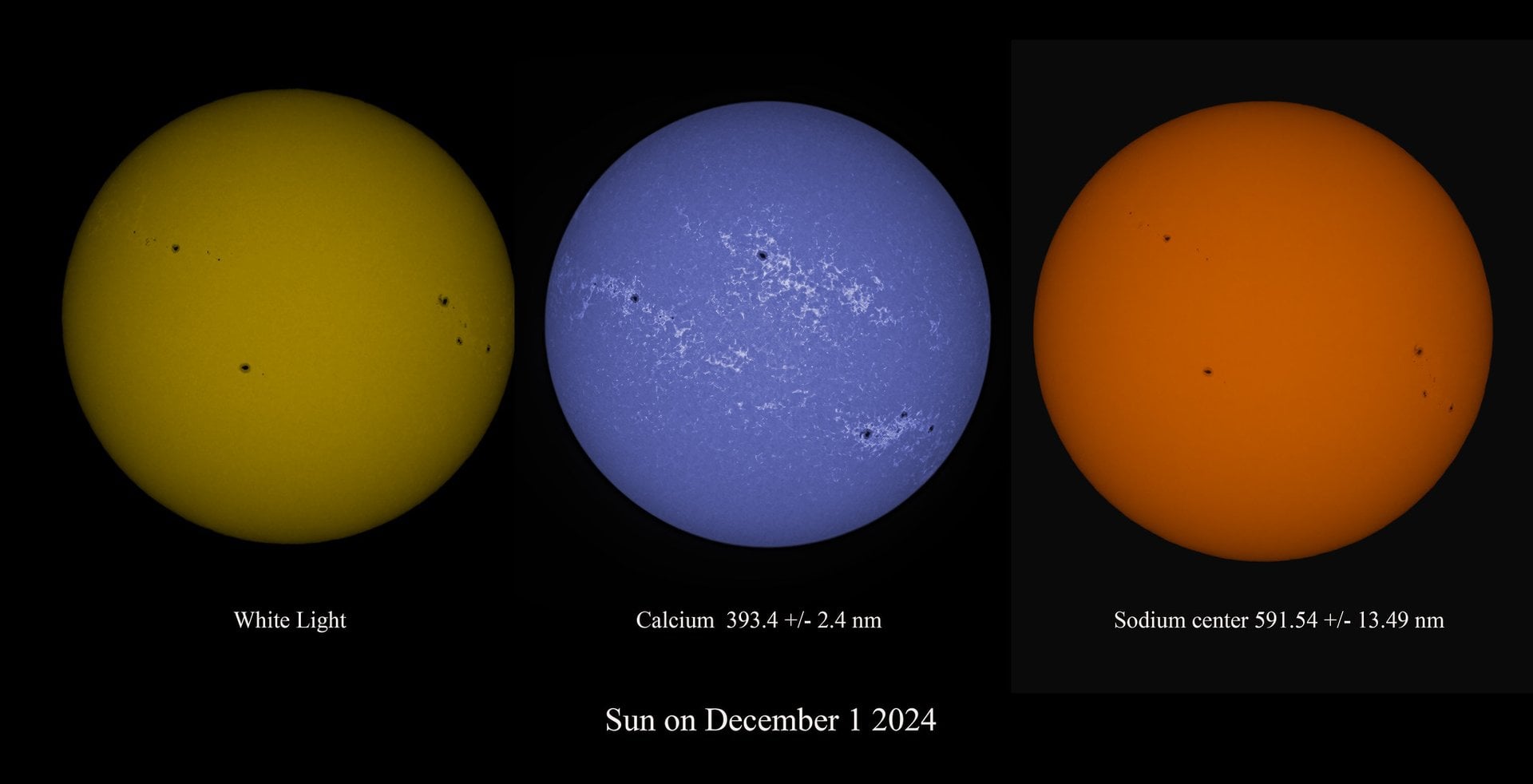
Making New Solar Activity Connections From Old Data
Favicon 
www.universetoday.com

Making New Solar Activity Connections From Old Data

It’s tough sometimes, living with a tempestuous star. Modern human civilization and technology lives at the whim of the Sun, as it sends solar storms and punishing coronal mass ejections our way. And while we understand the overall pitch of the 11 year solar cycle, it's hard to predict exactly what the Sun is going to do next. Now, a recent study has reached back and examined over a century of solar observations, in an effort to make more accurate near-term predictions of solar activity.
Like
Comment
Share
Young Conservatives
Young Conservatives
5 w ·Youtube General Interest

YouTube
Allie Beth Stuckey: Progressive Christianity Exposed | The Riley Gaines Show
Like
Comment
Share
Constitution Watch
Constitution Watch
5 w

Will the mystery of the Dobbs leak ever be solved?
Favicon 
www.scotusblog.com

Will the mystery of the Dobbs leak ever be solved?

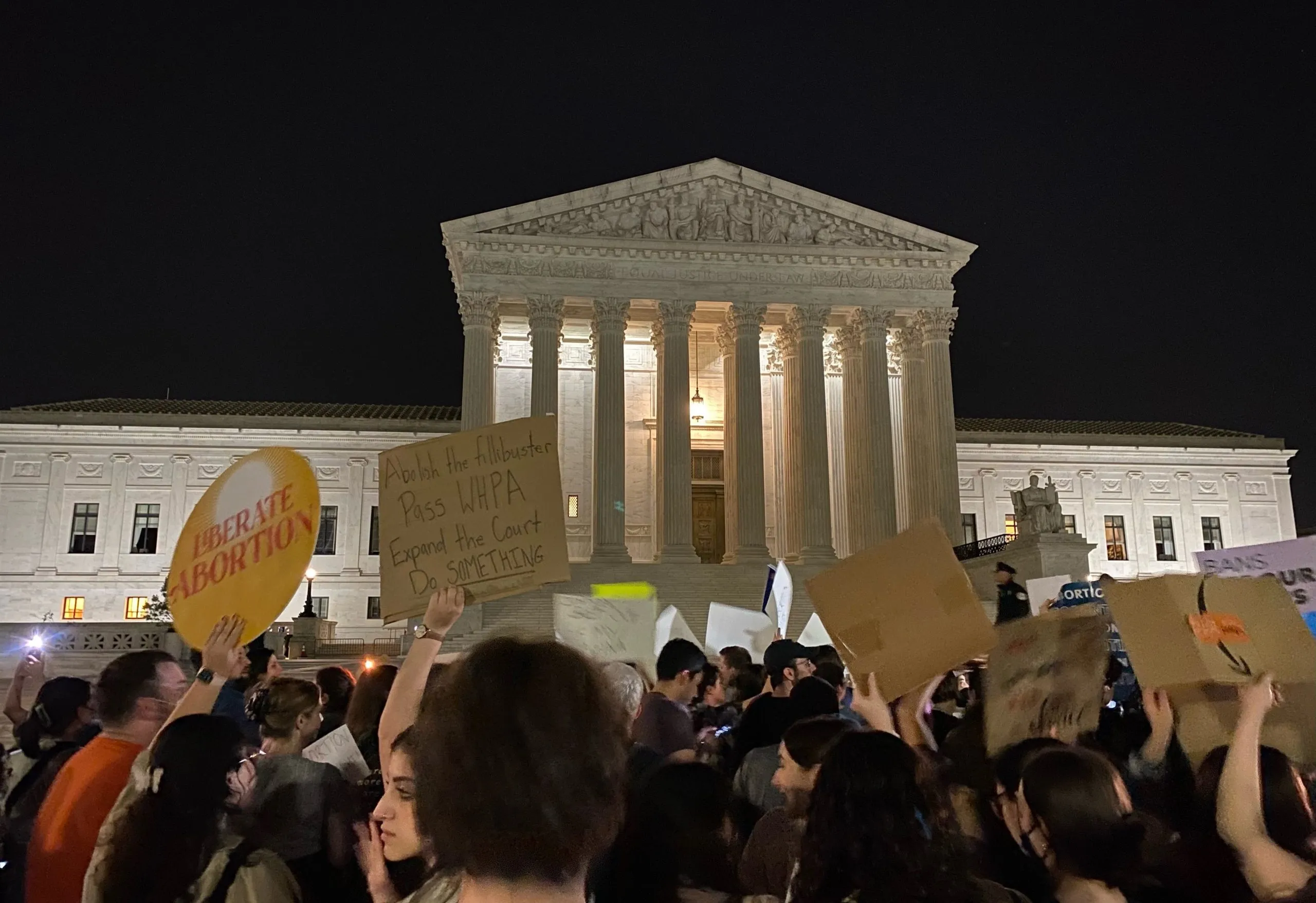
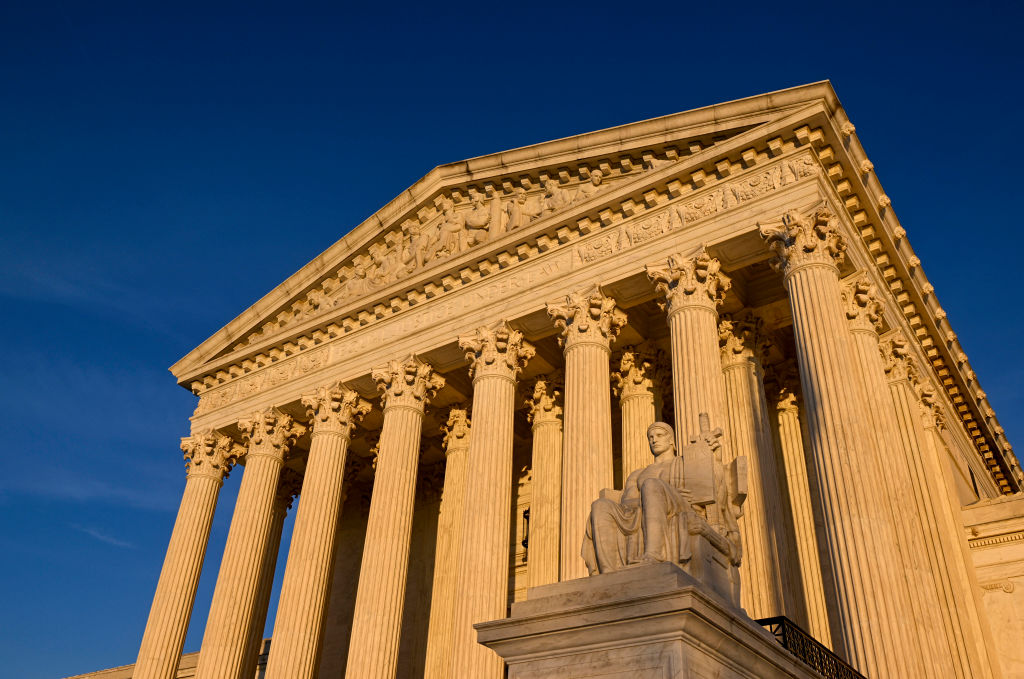
Justice Clarence Thomas’ virtual appearance last week at a legal conference in Washington, D.C. brought renewed attention to court security. Thomas had originally planned to attend in person,  but he had to pivot due to an unexplained risk. News coverage of the change noted that justices have taken heightened precautions since 2022, when a leak of a draft of the Supreme Court’s opinion in Dobbs v. Jackson Women’s Health Organization, the case in which the court ultimately overturned Roe v. Wade, led to protests outside some justices’ houses and an assassination attempt on Justice Brett Kavanaugh. The leak itself was briefly back in the news in mid-February, amid Attorney General Pam Bondi’s testimony before the House Judiciary Committee. During the hearing, Rep. Brandon Gill, a Republican from Texas, asked if “the Biden-Harris DOJ ever determine(d) who leaked the Dobbs decision,” prompting Bondi to explain that she “can’t discuss that,” but that, no, the Department of Justice under President Joe Biden did not identify the leaker. Bondi’s non-response response implies that the Department of Justice does not consider the investigation to be closed, although the Supreme Court itself announced in January 2023 that, after an unsuccessful investigation led by the Supreme Court marshal, there were few leads left to follow.   Here’s a refresher on the circumstances of the leak, the court’s investigation, and a look at what might happen next. What is the Dobbs leak? This part will likely be quite familiar to most SCOTUSblog readers, but, as a refresher, in Dobbs the court reconsidered its past decisions establishing a constitutional right to abortion, ultimately overruling those cases and returning the power to set abortion policy to the states. Dobbs was the highest-profile case of the 2021-22 term, and indeed, one of the highest-profile Supreme Court cases in history. The court heard argument in Dobbs on Dec. 1, 2021. On May 2, 2022, Politico published, in an article by Josh Gerstein and Alexander Ward, what appeared to be a draft of the court’s opinion in the case without revealing who had leaked it. The article – titled “Supreme Court has voted to overturn abortion rights, draft opinion shows” – reported that the opinion by Justice Samuel Alito, which was dated Feb. 10, had been “circulated inside the court and obtained by Politico.” The article sparked a flurry of online commentary about whether the draft was real and, if so, how the unprecedented leak had happened. It also led to in-person protests outside the Supreme Court Building, outside some of the justices’ homes, and across the country. Did the Supreme Court confirm the Dobbs leak was real? The day after Politico published the draft opinion, the Supreme Court confirmed that it was real in a press release. Chief Justice John Roberts described the leak as “a singular and egregious breach” of the trust between the court and its employees – indeed, the Dobbs leak is thought to be the first leak of a draft opinion, although there have been leaks about the court’s internal deliberations before (such as justices’ likely votes). Nevertheless, Roberts made clear that “[t]he work of the Court will not be affected in any way.” “To the extent this betrayal of the confidences of the Court was intended to undermine the integrity of our operations, it will not succeed,” Roberts said. The chief added that he had “directed the Marshal of the Court to launch an investigation into the source of the leak.” How did the court’s Dobbs opinion compare to the leaked opinion? While the court’s press release confirmed the authenticity of the draft, it also emphasized that a draft is exactly that, a draft. “Justices circulate draft opinions internally as a routine and essential part of the Court’s confidential deliberative work. Although the document described in yesterday’s reports is authentic, it does not represent a decision by the Court or the final position of any member on the issues in the case,” the release said. However, when the court released its Dobbs opinion on June 24, 2022, the final document had much in common with the leaked draft. CNN’s in-depth analysis of the two texts showed that more than 100,000 of the 125,290 characters in the final opinion were unchanged from the February draft. As CNN reported, “[w]hile some parts were taken out [from the draft], Alito’s opinion added more to the final ruling — including a critique of the dissenting opinions — than he removed.” What happened with the Supreme Court’s investigation? As noted above, following the draft’s leak, Roberts instructed Supreme Court Marshal Gail Curley “to launch an investigation into the public disclosure of the draft majority opinion” so as to “determine who made the unauthorized disclosure.” On Jan. 19, 2023, seven months after it released its opinion in Dobbs and over eight months after the investigation began, the Supreme Court offered an update on Curley’s investigation. “After months of diligent analysis of forensic evidence and interviews of almost 100 employees,” the court’s two-page statement explained, “the Marshal’s team determined that no further investigation was warranted with respect to many of the ‘82 employees’” who would have had access to the leaked draft. The investigators, according to the statement, followed up “on all available leads,” but had so far been “unable to identify a person responsible by a preponderance of the evidence.” Along with its statement, the court released a public version of Curley’s report, which explained the investigation in more detail. It indicated that her team conducted “formal interviews” with 97 employees, “all of whom denied disclosing the opinion.” After those initial interviews, the employees were asked to sign sworn statements, under penalty of perjury, attesting that they were not the source of the leak. “[A]ll personnel who had access to the draft opinion” signed these affidavits, according to the report. The report also revealed that investigators had ruled out as “unlikely” the possibility that someone from outside the court had hacked into the court’s computer systems and accessed the draft opinion that way. The court’s statement emphasized that investigators would continue to review available evidence but implied that there were few leads left to pursue. It also noted that the court had asked Michael Chertoff, a former secretary of Homeland Security and judge, to assess the investigation, and that Chertoff had deemed it to be “thorough.” As SCOTUSblog reported at the time, the marshal’s report was “widely criticized” because it provided few insights about how the justices themselves were treated during the investigation. For example, Curley did not reveal whether investigators had spoken with the justices or members of the justices’ families. But in a brief statement released on Jan. 20, 2023, Curley clarified that she had spoken “with each of the Justices, several on multiple occasions.” She further clarified that, unlike court employees, the justices were not asked to swear under penalty of perjury that they were not the source of the leak. Is the FBI involved? Even before the court revealed that its investigation had not uncovered a clear culprit, Roberts faced some criticism for the decision to assign the task to Curley from observers who felt the marshal and her team were ill-equipped to conduct a thorough investigation. Although few of the justices have spoken about this, Alito told The Wall Street Journal in 2023 that he felt Curley “did a good job with the resources that were available to her.” In May 2025, we learned that additional investigators had been assigned to the matter: then-FBI Deputy Director Dan Bongino announced on social media that the FBI was prioritizing work on the Dobbs leak and that he was receiving weekly briefings on the investigation. “If you have any investigative tips on these matters that may assist us then please contact the FBI,” Bongino wrote. What would happen if the leaker were to be identified? In the aftermath of the leak, legal experts debated whether what had happened was a crime or merely a breach of the court’s internal code of conduct. Charges would have been more likely if the leak involved hacking or a physical break-in, lawyers told The Washington Post. As it stands, the most likely charge is for theft of government property. The relevant statute, 18 U.S.C. 641, prohibits stealing or receiving government property, including documents, and carries a penalty of up to 10 years in prison. The leaker could also potentially be subject to prosecution for lying during the court’s investigation if that individual had signed a sworn affidavit denying involvement. If the source of the leak is identified as a current Supreme Court employee, there would almost certainly be professional consequences. The court has long used confidentiality pledges or other, similar documents to enforce its expectation of secrecy and has more recently begun having employees sign nondisclosure agreements “promising to keep the court’s inner workings secret,” according to The New York Times (though the enforceability of such agreements is questionable).  What has Pam Bondi said about the Dobbs leak? February was not the first time Bondi was questioned about the Justice Department’s work on the Dobbs leak. Sen. Ted Cruz, a Republican from Texas, brought up the potential for criminal charges against the source of the leak – if that source can be identified – when Bondi testified before the Senate Judiciary Committee in October 2025. “General Bondi, do you agree that leaking that opinion was a criminal act?,” Cruz asked after explaining that he believes that 18 U.S.C. 641 would apply. Bondi responded, “I can’t discuss anything regarding that matter. That should answer your question.” Cruz urged Bondi “to direct the FBI to use every resource possible to investigate, to find the leaker,” noting that the FBI “has far greater investigatory tools at its disposal than does the Marshals Service.” Will the source of the Dobbs leak be identified? To state the obvious: we don’t know. That said, the justices themselves may have at least some idea of the leaker’s identity. In his 2023 interview with The Wall Street Journal, Alito said that he has “a pretty good idea who is responsible,” but added that “that’s different from the level of proof that is needed to name somebody.” He didn’t elaborate further. As noted above, Bondi also alluded to an ongoing investigation during her House testimony in February. At the very least, this suggests that the Justice Department may believe there is more to uncover about the leak. But as Cruz noted during the Senate Judiciary Committee hearing in October, time is running out in at least one regard: There is a five-year statute of limitations on stealing government property, which would mean that prosecutors would have to bring charges by around this time next year. The post Will the mystery of the Dobbs leak ever be solved? appeared first on SCOTUSblog.

Like
Comment
Share
Constitution Watch
Constitution Watch
5 w

The emergency docket’s critics have it backwards
Favicon 
www.scotusblog.com

The emergency docket’s critics have it backwards

Ratio Decidendi is a recurring series by Stephanie Barclay exploring the reasoning – from practical considerations to deep theory – behind our nation’s most consequential constitutional decisions. Last Monday, the Supreme Court issued two emergency orders in a single evening: Mirabelli v. Bonta, vacating the U.S. Court of Appeals for the 9th Circuit’s stay of a district court injunction protecting parents from California’s gender-identity nondisclosure policies, and Malliotakis v. Williams, staying a New York trial court order that would have redrawn a congressional district before the 2026 midterms. The rulings share little in common on the merits, but they have attracted a unified critique: that the court bypassed necessary procedural steps in a rush to reach preferred results. Justice Elena Kagan’s dissent in Mirabelli set the tone, complaining that the court resolved “novel legal questions” with “scant and, frankly, inadequate briefing,” without oral argument, on a “short fuse.” Justice Sonia Sotomayor’s dissent in Malliotakis was more colorful – her opening line being that the 101-word unsigned order “can be summarized in just 7: ‘Rules for thee, but not for me’” — but made a parallel point about premature federal intervention. The New York Times recently reported on other criticisms from court watchers (some of whom are friends and colleagues). These are serious critics making arguments that deserve a serious answer. On examination, though, I don’t think the procedural objections hold up in either case. In Mirabelli, the critics identify no rule the court violated – only a preference for more waiting. But that standard has never governed the emergency docket. What’s novel here is not the court’s practice. It’s this objection. And in Malliotakis, the question is not just whether one more state court avenue technically existed, but whether it could have provided meaningful relief before the election calendar foreclosed federal review. The court has authority to act to protect potential future jurisdiction even before a case is in final appellate posture, precisely to prevent irreversible facts on the ground from mooting the constitutional question before the court can reach it. California: the nonexistent en banc problem One of Kagan’s key complaints in Mirabelli is that the U.S. Court of Appeals for the 9th Circuit’s en banc process was still actively pending when the court acted. Specifically, parents prevailed at the district court level, a 9th Circuit panel granted California’s stay, and the parents then sought en banc rehearing – a petition that had been filed but not yet decided when the court granted relief. Again, Kagan’s charge is that the court couldn’t even wait for the 9th Circuit to resolve its own en banc consideration. This objection would be a real problem if there were a rule requiring en banc exhaustion before seeking emergency relief from the Supreme Court. There is no such rule. The standard governing emergency applications is the four-factor framework outlined in the 2009 case of Nken v. Holder – likelihood of success on the merits, irreparable harm, balance of equities, public interest. En banc exhaustion appears nowhere in that analysis. The overwhelming majority of emergency applications are filed immediately after an adverse panel ruling, before the 14-day window for seeking panel or en banc rehearing has even closed. Death penalty litigation wouldn’t function as it does if the rule were otherwise. If Kagan’s principle were accepted, emergency jurisdiction from the 9th Circuit – the nation’s largest – would become effectively illusory in capital cases and many others. But the court’s willingness to act before en banc proceedings conclude is not new — and Kagan herself has treated it as unremarkable. In Husted v. Ohio State Conference of the NAACP, an Ohio voting-rights case that came to her as circuit justice, Kagan noted “uncertainty about when the Sixth Circuit will act on the emergency petition for rehearing en banc” — and treated that uncertainty not as a reason to wait, but as a reason to expedite the response deadline and refer the matter promptly to the full court, which granted the stay over her dissent. The procedural posture was essentially identical to the one she now condemns: a live en banc petition, unresolved, pending in the circuit at the moment the Supreme Court granted emergency relief. If awaiting en banc resolution were a genuine precondition for Supreme Court intervention, Kagan had the opportunity to say so in Husted — as a matter of judicial administration if nothing else. She did not. The procedural concern she now elevates was, in 2014, simply a scheduling detail. More to the point, the dissenters’ own practice undercuts their procedural objection. Justices Sonia Sotomayor, Kagan, and Ketanji Brown Jackson have spent years arguing, in dissent after dissent in capital cases, that irreversible harm justifies immediate emergency intervention without waiting for further proceedings below. And it’s not just capital cases. When the court took up the Trump administration’s emergency application in Department of State v. AIDS Vaccine Advocacy Coalition – intervening at the district court level, well before any appellate proceedings were complete – the dissenters joined the prevailing side without a word about prematurity. They were right both times: the court can and should act when the harm is irreversible and the need is urgent. That is the nature of the emergency docket. The majority applied that same logic in Mirabelli. What has changed is not the court’s practice. It is whose interests that practice now serves. The deeper answer, though, is that the panel’s error in Mirabelli was the kind of clear misreading of controlling precedent that makes en banc self-correction particularly unlikely – and emergency intervention particularly appropriate. Justice Amy Coney Barrett’s concurrence identified the problem precisely: the 9th Circuit panel’s opinion in Mirabelli had characterized the Supreme Court’s ruling in the case of Mahmoud v. Taylor as a “narrow decision” and limited it to curricular contexts, a reading with no basis in Mahmoud’s reasoning. Rather, the court’s holding in Mahmoud was that government action “substantially interfer[ing] with the religious development” of children triggers strict scrutiny (the highest standard of review) – a standard not anchored to classroom instruction, and plainly satisfied by a policy of active concealment of a child’s social transition from parents. When a panel demonstrably misconstrues a recent and controlling precedent, waiting for en banc review has no principled advantage over prompt correction. Finally, the harm calculus mattered independently of any sequencing question. The record in Mirabelli included accounts of parents who learned their child had been socially transitioning at school only after a mental health crisis involving a suicide attempt – and even then “school administrators continued to withhold information about the student’s gender identification.” That harm accrues daily and cannot be undone retroactively. En banc timelines are measured in months. The Nken factors – irreparable harm and likelihood of success – provided the court with independent justification for prompt intervention. New York: the finality problem that isn’t Sotomayor’s dissent in Malliotakis rests on two related claims: that the court lacked jurisdiction (the ability to hear the case) because New York’s highest court had not yet ruled, and that even if jurisdiction existed, longstanding principles of federal deference to state courts in election disputes should have counseled restraint. As quoted earlier, her opening line – that the unsigned 101-word order “can be summarized in just 7: ‘Rules for thee, but not for me’” – captures the dissent’s animating charge: that the majority weaponized the emergency docket to hand a Republican incumbent a partisan victory before the state courts could finish their work. The procedural sequence deserves some careful assessment. After the trial court’s Jan. 21 order that a new congressional map be drawn to prevent the dilution of Black and Latino voting power, applicants sought relief in both the Appellate Division and Court of Appeals (the highest court in New York) simultaneously. Following the Appellate Division’s refusal to stay the district court’s order, the Court of Appeals transferred the appeal and dismissed the stay motion on Feb. 11. Applicants filed at the Supreme Court the very next day — before the Appellate Division had ruled on the merits, and after it had denied the stay. Sotomayor is thus right that a procedural path in the state courts remained open. That said, the critique falters on three grounds. First, Sotomayor’s invocation of Purcell v. Gonzalez, which prohibits courts from disrupting election administration close to an election, proves too much. According to Sotomayor, “the majority’s decision to grant relief” in Malliotakis was “irreconcilable with its repeated admonishing of lower federal courts not to interfere with state election laws on the ‘eve of an election.’” But the legislatively enacted map was the status quo. The trial court’s redistricting mandate was the 11th-hour intervention. Staying that order restores stability; it does not undermine it. Sotomayor’s argument would recast Purcell’s equitable logic — that late judicial disruption of settled election rules harms candidates, voters, and administrators — as a reason to permit exactly that disruption, so long as it originates in a state court rather than a federal one. That is not what Purcell’s rationale supports, even if its formal doctrine has not been extended to state tribunals. Second, the charge of partisan manipulation is difficult to sustain against the court’s actual redistricting record. The majority’s consistent principle across terms has been to preserve existing or legislatively enacted maps against last-minute judicial alteration – a principle applied regardless of which party benefits. California’s Democratic-drawn maps and Texas’ Republican-drawn maps have both been allowed to proceed on the emergency docket under this framework. The New York case fits the same pattern: the court stayed a trial court’s alteration of an existing map. Indeed, when the court denied emergency relief in the California case earlier this term — leaving California’s Democratic-drawn map undisturbed — that denial drew no objection from the conservative majority, a fact that sits awkwardly alongside the narrative of systematic partisan manipulation. If the majority were selectively intervening to entrench Republican incumbents, one would expect asymmetric outcomes. The record shows something more principled, and less dramatic, than Sotomayor’s seven-word summary suggests. Third, the jurisdictional analysis holds, though the issue requires some untangling. The Court of Appeals’ Feb. 11 transfer and stay dismissal — issued on state jurisdictional grounds — raises a threshold problem: decisions resting on adequate and independent state grounds are ordinarily insulated from federal review, which undermines the claim that the dismissal constitutes a reviewable “final judgment” under 28 U.S.C. § 1257. Sotomayor presses this point, and it has some force. But Justice Samuel Alito’s concurrence invokes a separate jurisdictional basis: the All Writs Act, 28 U.S.C. §1651, which authorizes writs “necessary or appropriate in aid of jurisdiction.” Under the 1970 case of Atlantic Coast Line v. Engineers and 1966’s FTC v. Dean Foods Co., that standard can be satisfied when a stay is needed to prevent state court proceedings from interfering with the court’s authority to decide a federal question — a condition Alito found met when the election clock threatened to moot the constitutional issue before certiorari review became available. In the past, the Supreme Court has used its discretion under the All Writs Act authority with respect to a state-court order prior to final judgment to “maintain the status quo by injunction pending review.” Following this reasoning, in cases like CBS, Inc. v. Davis, or Volkswagenwerk A.G. v. Falzon, the Supreme Court issued stays before the state high court had ruled on the stay request, much less the merits, where such action was necessary to protect the court’s potential jurisdiction. Alito was thus following this same sort of approach when he said that type of reasoning applies here. Finally, Sotomayor’s characterization of the case as a state-law dispute the federal courts should leave alone is question-begging. Alito’s position is that the trial court’s order is racially discriminatory under the 14th Amendment. If he is right, this was always a federal constitutional case. The premise that the court intruded on a purely state law matter collapses the moment the equal protection clause is implicated, and the dissenters notably decline to offer even a tentative defense of the trial court order’s constitutionality. What the critiques actually establish None of this is to say the procedural critics have no important questions to raise. Kagan is right that a full merits opinion with proper briefing, oral argument, and conference deliberation would have produced a more carefully developed analysis. These are real costs of the emergency docket, and Barrett’s concurrence in Mirabelli acknowledged them candidly. But the critics have conflated a policy disagreement about the emergency docket with a principled procedural objection to these specific orders. There is no rule or long-established practice requiring en banc exhaustion before emergency relief; the court has never consistently required it; and the liberal justices raising the objection have not applied it symmetrically. The finality objection in Malliotakis identifies a real gap where the case had not been fully resolved below. But the All Writs Act arguably provides jurisdictional grounds for the court to take up the case in such a posture, and Alito addressed this justification in writing, which is more transparency than many emergency orders provide. The emergency docket exists because some harms cannot wait for the ordinary appellate process to run its course. That is not a Republican or Democratic principle. It is a structural feature of emergency jurisdiction. Applied to these cases, it means that parents who are being actively deceived about their children’s gender transitions at school, and applicants facing a likely unconstitutional redistricting on the eve of an election, can seek relief without waiting for a process whose timeline would swallow the remedy. And it is worth asking, in cases like these, which court is actually behaving aggressively. What generates a Supreme Court emergency application is almost always a lower court that has already disturbed the status quo — issuing an injunction, overriding a legislative map, blocking a policy already in effect. Viewed in that light, the court’s intervention looks less like overreach than like a restoration of equilibrium pending full appellate review, consistent with the ordinary four-factor stay analysis. What is called judicial aggression at One First Street is often just a response to judicial aggression one floor down — the correction, not the disruption. The post The emergency docket’s critics have it backwards appeared first on SCOTUSblog.

Like
Comment
Share
Entertainment News
Entertainment News
5 w

THE ’BURBS:  Episode 1.1:  “The GD Brownies”
Favicon 
www.movieguide.org

THE ’BURBS: Episode 1.1: “The GD Brownies”

Episode 1 of Peacock’s THE ’BURBS is a horror comedy series remake of the 1989 movie THE ’BURBS. where Samira notices strange goings-on
Like
Comment
Share
Young Conservatives
Young Conservatives
5 w

Trump: ‘There Will be No Deal With Iran Except UNCONDITIONAL SURRENDER!’
Favicon 
legalinsurrection.com

Trump: ‘There Will be No Deal With Iran Except UNCONDITIONAL SURRENDER!’

"After that, and the selection of a GREAT & ACCEPTABLE Leader(s), we, and many of our wonderful and very brave allies and partners, will work tirelessly to bring Iran back from the brink of destruction, making it economically bigger, better, and stronger than ever before." The post Trump: ‘There Will be No Deal With Iran Except UNCONDITIONAL SURRENDER!’ first appeared on Le·gal In·sur·rec·tion.
Like
Comment
Share
Young Conservatives
Young Conservatives
5 w

Anti-Israel Protesters Who Took Over Building at U. Washington Face Charges
Favicon 
legalinsurrection.com

Anti-Israel Protesters Who Took Over Building at U. Washington Face Charges

"Asked why the suspects do not face felony charges, officials said there was not enough evidence." The post Anti-Israel Protesters Who Took Over Building at U. Washington Face Charges first appeared on Le·gal In·sur·rec·tion.
Like
Comment
Share
Intel Uncensored
Intel Uncensored
5 w

Favicon 
endtimeheadlines.org

Qatar warns that oil could double to $150 a barrel and ‘bring down the economies of the world’

Qatar’s energy minister has warned the price of a barrel of oil could double to more than $150, dragging down global economies. Saad al-Kaabi says the Middle East conflict could result in a new energy crisis. Currently, oil is trading at around $89 a barrel have risen 6 per cent this morning. That comes after […]
Like
Comment
Share
Intel Uncensored
Intel Uncensored
5 w

Favicon 
endtimeheadlines.org

Russia is providing Iran intelligence to target US forces

Russia is providing Iran with targeting information to attack American forces in the Middle East, the first indication that another major U.S. adversary is participating — even indirectly — in the war, according to three officials familiar with the intelligence. The assistance, which has not been previously reported, signals that the rapidly expanding conflict now […]
Like
Comment
Share
Intel Uncensored
Intel Uncensored
5 w

Favicon 
endtimeheadlines.org

Housing is now so expensive that people even earning $200,000 qualify for help

Brendi Bluitt didn’t think she fit the typical profile of someone needing public assistance to pay for housing. She had a good job in public relations, earning $80,000 a year. But she qualified for D.C.’s home-purchase-assistance program, and she ended up getting an interest-free loan of more than $84,000. She had to contribute only $1,000 […]
Like
Comment
Share
Showing 4490 out of 117251
  • 4486
  • 4487
  • 4488
  • 4489
  • 4490
  • 4491
  • 4492
  • 4493
  • 4494
  • 4495
  • 4496
  • 4497
  • 4498
  • 4499
  • 4500
  • 4501
  • 4502
  • 4503
  • 4504
  • 4505
Advertisement
Stop Seeing These Ads

Edit Offer

Add tier


Select an image
Delete your tier
Are you sure you want to delete this tier?

Reviews

In order to sell your content and posts, start by creating a few packages. Monetization

Pay By Wallet

Payment Alert

You are about to purchase the items, do you want to proceed?

Request a Refund