YubNub Social YubNub Social
    #freedom #americanhistory #amercia250
    Advanced Search
  • Login
  • Register

  • Day mode
  • © 2026 YubNub Social
    About • Directory • Contact Us • Developers • Privacy Policy • Terms of Use • shareasale • FB Webview Detected • Android • Apple iOS • Get Our App

    Select Language

  • English
Night mode toggle
Featured Content
Community
New Posts (Home) ChatBox Popular Posts Reels Game Zone Top PodCasts
Explore
Explore
© 2026 YubNub Social
  • English
About • Directory • Contact Us • Developers • Privacy Policy • Terms of Use • shareasale • FB Webview Detected • Android • Apple iOS • Get Our App
Advertisement
Stop Seeing These Ads

Discover posts

Posts

Users

Pages

Blog

Market

Events

Games

Forum

Classic Rock Lovers
Classic Rock Lovers  
5 w

‘The Band’s With Me’: A Former Groupie Lays It All Down
Favicon 
bestclassicbands.com

‘The Band’s With Me’: A Former Groupie Lays It All Down

The memoir is a vivid, raucous, hilarious snapshot of a side of the rock world once ubiquitous. Sally Mann Romano makes no excuses for any of it, nor should she. The post ‘The Band’s With Me’: A Former Groupie Lays It All Down appeared first on Best Classic Bands.
Like
Comment
Share
History Traveler
History Traveler
5 w

The Little-Known Story Of World War II Hero Charles Jackson French And The 15 Sailors He Saved
Favicon 
allthatsinteresting.com

The Little-Known Story Of World War II Hero Charles Jackson French And The 15 Sailors He Saved

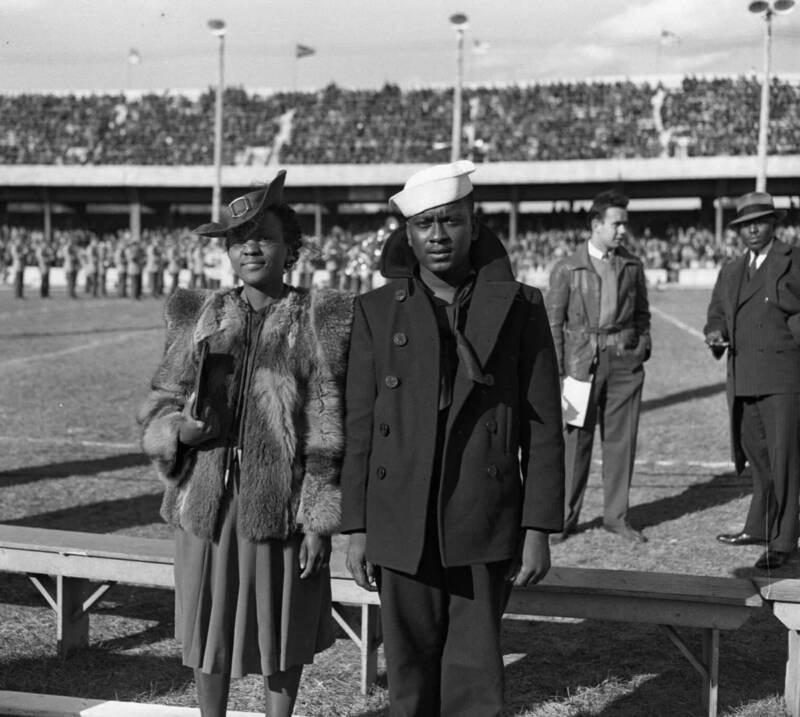
Charles Jackson French was posthumously awarded the Navy and Marine Corps Medal for his bravery. On a pitch-black night in 1942, the waters of the Pacific Ocean near Savo Island and Guadalcanal suddenly lit up with gunfire. Within minutes, two American ships on patrol were sunk by Japanese destroyers. And as sharks circled below, and Japanese soldiers fired from all around, a Black mess officer named Charles Jackson French leaped into action. French, one of the only uninjured sailors, discarded his waterlogged clothing, tied a rope around his waist, and started to swim. For six to eight hours, he tugged a raft filled with injured sailors behind him, pulling them to safety. But, while his heroic story was later made public, Charles Jackson French received little recognition during his life. Instead of a medal, he was sent a letter of “commendation.” It wasn’t until recent years — and long after his death at the age of 37 — that this hero finally received his due. ‘I Want To Do My Part’ Born on September 29, 1919, Charles Jackson French spent his early years in Foreman, Arkansas. At the time, Black and white pools were segregated, making it difficult for Black people to find opportunities to learn to swim. Swimming World Magazine speculates that French may have learned to swim by visiting the city’s stone quarries and the Red River. However he learned to swim, French’s days in Foreman were numbered. After his parents died, he left Arkansas and moved in with his married, older sister Viola in Omaha, Nebraska. And by the time he was 18, French decided to strike out on his own and enlist in the U.S. Navy The Navy, like swimming pools across the country, was strictly segregated. As a Black man, French had virtually no other choice than to work as a mess attendant. In that capacity, the U.S. Navy Office Of Information reports that French spent four years the USS Houston, serving meals to the white sailors, cleaning their tables, and keeping the mess hall spick and span. French returned to Omaha when his deployment ended in November 1941, but he wouldn’t stay in Nebraska for long. After the Japanese attack on Pearl Harbor on Dec. 7, 1941, French promptly re-enlisted. “I want to do my part, because I’m already trained and I can start right away,” French said at the time. He had spent his last tour cruising around the Pacific. But this time, Charles Jackson French would see significantly more action. Charles Jackson French’s Heroism During World War II Public DomainCharles Jackson French was assigned to the USS Gregory, which was destroyed in September 1942. Following his reenlistment, Charles Jackson French was assigned to the USS Gregory as a Steward’s Mate 1st class. According to Swimming World Magazine, French’s rank was elevated above a mere mess mate, but he and others were still derided in the Black press as “seagoing bellhops.” After six months at sea, however, French would prove that he was much more than a bellhop — seagoing or otherwise. Then, on September 5, 1942, the USS Gregory and the USS Little were attacked by Japanese destroyers around 1 a.m. while patrolling the waters near Savo Island and Guadalcanal. The U.S. Navy Office Of Information reports that the Gregory, outgunned, sank after just three minutes. Its surviving men were plunged into shark-infested waters as the Japanese fired on them. But French leaped into action. The 23-year-old helped injured sailors onto a makeshift raft and — when U.S. Navy Ensign Robert Adrian told him that the current would pull the raft toward a Japanese-occupied island — volunteered to jump in the water and pull the raft in the other direction. Adrian told him it was impossible. French, according to Adrian, replied: “Just keep telling me if I’m goin’ the right way.” He shed his waterlogged clothes, tied a rope around his waist, and started to swim. For the next six to eight hours, French tirelessly swam as sharks got so close that they sometimes brushed against his legs. At sunrise, an American scout finally spotted him and the others and sent rescue. War Gum Trading Card CompanyA depiction of Charles Jackson French’s heroism. But French’s ordeal didn’t end there. As he later recounted, as recorded by Chester Wright in Black Men and Blue Water, French and other uninjured soldiers were taken to a rest camp by their rescuers, who wanted to separate French from the white sailors. To French’s surprise, the sailors insisted that French stay with them as a fellow member of Gregory’s crew. “Them white boys stood up for me,” French emotionally told Wright. The story of Charles Jackson French’s heroism was later made public by Adrian, who described it on a radio program called It Happened in the Service in October 1942, according to Swimming World Magazine. Adrian had never learned French’s full name — he and the others only knew him as “French” — but he fully credited him for their rescue that day. “I can assure you that all the men on that raft are grateful to mess attendant French for his brave action off Guadalcanal that night,” Adrian said. The story was soon picked up by the national news, and Charles Jackson French was identified by NBC. He was celebrated across the country, featured in a comic strip, and lauded by the Black press. Adrian “and other white Americans owe their LIVES to a black man whom he identified as a ‘mess attendant named French,'” the Pittsburgh Courier, a Black newspaper, wrote after French was identified. The newspaper continued: “Although Mess Attendant Charles Jackson French of Arkansas was not in a heroic job, he MADE a heroic job out of it. He who had been looked down upon as a caste man, frozen in status, suddenly was looked up to as a SAVIOUR.” Though rumors spread that Charles Jackson French might be awarded the Navy Cross, he was given only a letter of commendation from Admiral William F. Halsey, Jr., the then-commander of the Southern Pacific Fleet. French may have been denied the medal because a Silver Star was awarded to one of his superiors — and it was unprecedented to award a higher medal to a subordinate. But the Omaha World-Herald noted some decades later that future president John F. Kennedy had been given the Navy and Marine Corps Medal for a similar act of bravery. Charles Jackson French, on the other hand, was slowly forgotten. The Legacy Of Charles Jackson French U.S. NavyCharles Jackson French salutes while next to his sister Viola at a Creighton University football game on Oct. 31, 1942. After his service on the USS Gregory, Charles Jackson French didn’t rest on his laurels. He returned to his role in the mess on the USS Endicott and the USS Frankford, and witnessed D-Day and the invasion of southern France. After World War II ended, French faded from the public eye. Black Past reports that he suffered from alcoholism and depression, and passed away on Nov. 7, 1956, in San Diego, California. He was only 37 years old. But since then, there’s been a push to give this forgotten World War II hero his due. In April 2021, a post about French from the International Swimming Hall of Fame revived his story. And a year later, Rear Admiral Charles Brown, the Navy public affairs officer, presented eight of French’s relatives with a posthumous Navy and Marine Corps Medal — just like Kennedy’s. “It will inspire generations of sailors,” Brown said at the medal ceremony, reported by the Omaha World-Herald. “It’s a story of the best of who we are.” French has been honored in other ways, too. A training pool at Naval Base San Diego was named after French, and a post office in his hometown of Omaha also bears his name. In life, French wasn’t honored like he deserved. Wright notes that his death didn’t merit even “two paragraphs” in the San Diego press when he died. But finally, after six decades, his heroic acts during World War II are finally being recognized and rewarded. “I’ve always felt glad to be a proud American,” his nephew, Roscoe Harris, told the Omaha World-Herald, after attending his uncle’s medal ceremony. The 89-year-old added: “I was happy to see that, as an American Black man, (French) got recognized.” After reading about Charles Jackson French, discover the story of Doris Miller, the ship’s cook who became a naval hero during the attack on Pearl Harbor. Or, discover the forgotten stories of some of America’s most impressive Black war heroes. The post The Little-Known Story Of World War II Hero Charles Jackson French And The 15 Sailors He Saved appeared first on All That's Interesting.

Like
Comment
Share
History Traveler
History Traveler
5 w

The Harrowing Survival Tale Of The 11-Year-Old Girl Who Was Orphaned At Sea
Favicon 
allthatsinteresting.com

The Harrowing Survival Tale Of The 11-Year-Old Girl Who Was Orphaned At Sea

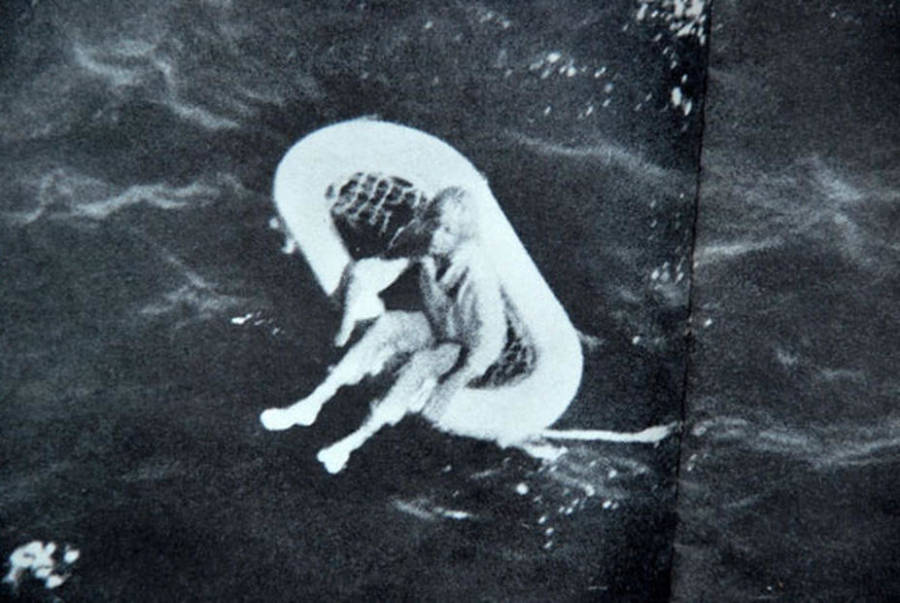
In 1961, a picture was snapped of a young girl who was discovered adrift, alone, on a small lifeboat in the waters of the Bahamas. And the story of how Terry Jo Duperrault ended up there is much more horrifying and bizarre than one can imagine. The Discovery Of Terry Jo Duperrault Adrift At Sea CBSThe iconic image of Terry Jo Duperrault, the “Sea Waif.” When Nicolaos Spachidakis, second officer of the Greek freighter Captain Theo, saw Terry Jo Duperrault, he could hardly believe his eyes. He had been scanning the waters of the Northwest Providence Channel, a strait that divides two major islands of the Bahamas, and one of the thousands of tiny dancing whitecaps in the distance caught the officer’s eye. Among the hundreds of other boats in the channel, he focused on that single dot and realized it was too large to be a piece of debris, far too small to be a boat that would travel that far out to sea. He alerted the captain, who put the freighter on course for the speck. When they pulled up alongside it, they were shocked to discover a blonde-haired, eleven-year-old girl, floating by herself in a small, inflatable lifeboat. One of the crew members took a picture of her squinting into the sun, looking up at the vessel that had saved her. The image made the front page of Life magazine and was shared around the world. But how did this young American child find her way to the middle of the ocean all alone? The Story Behind Terry Jo Duperrault’s Harrowing Time Alone At Sea Lynn Pelham/The LIFE Picture Collection/Getty ImagesTerry Jo Duperrault recovering in a hospital bed after being discovered at sea. The story begins when her father, a prominent optometrist from Green Bay, Wisconsin named Dr. Arthur Duperrault, chartered the luxury yacht the Bluebelle from Fort Lauderdale, Florida to the Bahamas for a family trip. He brought with him his wife, Jean, and his kids: Brian, 14, Terry Jo, 11, and Renee, 7. He also brought his friend and former Marine and World War II veteran Julian Harvey as his skipper, along with Harvey’s new wife, Mary Dene. By all accounts, the trip was going swimmingly, and there was little friction between the two families throughout the first five days of the journey. On the fifth night of the cruise, however, Terry Jo was awoken by “screaming and stamping” on the deck above the cabin in which she slept. Talking to reporters later, Terry Jo recalled how she, “went upstairs to see what it was, and I saw my mother and brother lying on the floor, and there was blood all over.” She then saw Harvey walking towards her. When she asked what happened, he just slapped her in the face and told her to go down below deck. Terry Jo once more went above deck, when the water levels began to rise on her level. She ran into Harvey again, and asked him if the boat was sinking, to which he replied, “Yes.” He then asked her if she had seen the dinghy that was moored to the yacht break loose. When she told him she had, he jumped into the waters towards the loose vessel. Isa Barnett/Sarasota Herald-TribuneIllustration depicting Terry Jo’s interaction with Julian Harvey on the deck of the yacht. Left alone, Terry Jo remembered the single life raft aboard the vessel and embarked on the tiny boat out into the ocean. Without food, water, or any covering to protect her from the heat of the sun, Terry Jo spent 84 grueling hours before she was rescued by the Captain Theo. The Grisly Crimes Aboard The Bluebelle Unbeknownst to Terry Jo Duperrault, by the time she woke up on November 12, Harvey had already drowned his wife and stabbed the rest of Terry Jo’s family to death. He likely killed his wife to collect on her $20,000 double indemnity insurance policy. When Terry Jo’s father witnessed him killing her, he must have killed the doctor, and then proceed to kill the rest of her family. He then sunk the yacht they were on and escaped on his dinghy with his wife’s drowned corpse as evidence. His dinghy was found by the freighter the Gulf Lion and brought to a U.S. Coast Guard site. Harvey told the Coast Guard that the yacht had broken down while he was on the dinghy. He was still with them when he heard that Terry Jo had been discovered. “Oh my god!” Harvey reportedly stammered when he heard the news. “Why that’s wonderful!” The next day, Harvey killed himself in his motel room, slitting his thigh, ankle, and throat with a double-edged razor. Miami HeraldA newspaper clipping covering Terry Jo Duperrault’s ordeal. To this day, why Harvey decided to let the young Terry Jo Duperrault live is unknown. Some at the time hypothesized that he had some kind of latent desire to be caught, as little else would explain why he would have no qualms killing the rest of her family, but mysteriously left Terry Jo Duperrault alive. Whatever the case, this bizarre act of mercy the case resulted in the media phenomenon of the “sea waif” that captured the nation. Enjoy this article on the miraculous survival story of Terry Jo Duperrault? Next, read the horrific true story of the Amityville murders behind the movie. Then, learn about the fear of the open ocean known as thalassophobia. The post The Harrowing Survival Tale Of The 11-Year-Old Girl Who Was Orphaned At Sea appeared first on All That's Interesting.

Like
Comment
Share
History Traveler
History Traveler
5 w

John Haigh, The ‘Acid Bath Killer’ Who Dissolved His Victims In Vats Of Sulfuric Acid
Favicon 
allthatsinteresting.com

John Haigh, The ‘Acid Bath Killer’ Who Dissolved His Victims In Vats Of Sulfuric Acid

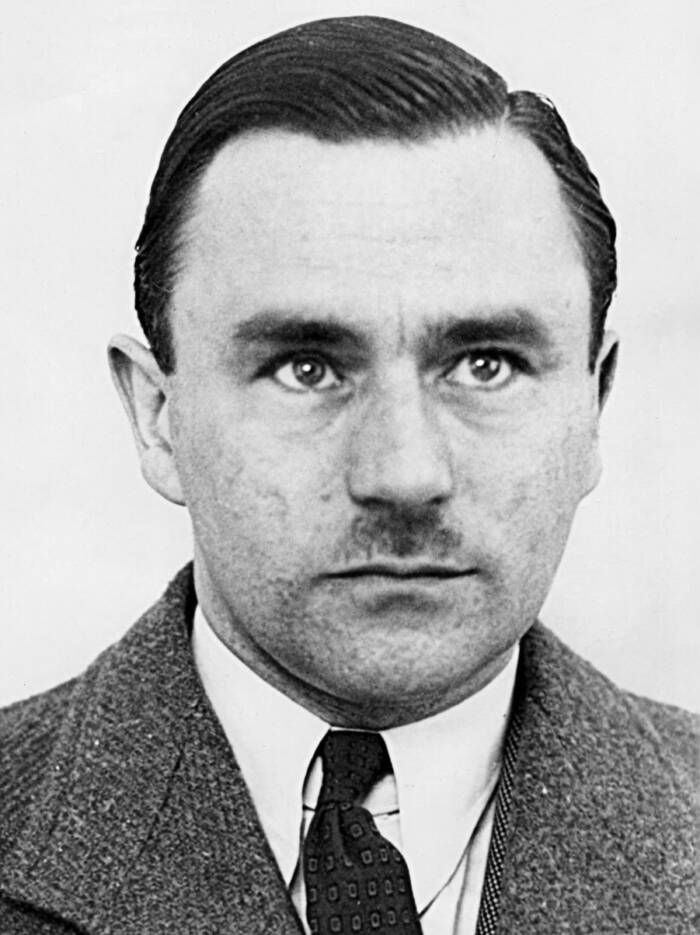
Sussex ConstabularyJohn George Haigh, the English serial killer known as the Acid Bath Murderer. In February 1949, police raided a warehouse in West Sussex, owned by John George Haigh, following the disappearance of a local woman. Inside, they found several 40-gallon drums and containers of concentrated sulfuric acid. Outside, they found 28 pounds of melted human body fat, part of a human foot, human gallstones, and part of a denture. The horror of the crime scene was instantly clear to investigators. Haigh had murdered someone, then dissolved their body in acid. But as they soon found out, Haigh had used this method to murder at least five other people. This is the chilling story of John George Haigh, the Acid Bath Murderer who dissolved his victims in acid. The Early Life Of John George Haigh Born on July 24, 1909, in Stamford, Lincolnshire, England John George Haigh grew up in a highly religious, conservative family. Haigh was discouraged against making friends, and forbidden from any entertainment aside from reading the Bible. That said, he was a talented piano player as a boy. But as a young man, he soon drifted into a life of crime. In his 20s, Haigh started committing financial fraud and was imprisoned in 1934, 1937, and 1941. He also began to learn about the law, including the idea of “corpus delicti.” This means “body of the crime,” and is the idea that a crime cannot be proven through a confession alone — it also requires evidence. Haigh interpreted this to mean that a murder could not be proven without a body. He also began to experiment with dissolving mice in acid. Trinity Mirror / MirrorpixJohn George Haigh was charming to those who knew him, but he had a secret dark side. Indeed, Haigh believed he had come up with the perfect crime. The bodies of mice dissolved in acid in just 30 minutes, and Haigh suspected he could use the same method to get rid of human remains. After all, he believed that if investigators could not find a body, he would not be charged with murder. For his first victim, John George Haigh targeted a wealthy former friend and employer named William McSwann. Haigh had learned that McSwann had a lucrative job collecting rent from his parents’ tenants, and Haigh wanted it. The Victims Of The Acid Bath Killer In 1944, John George Haigh lured McSwann to a basement and beat him to death. Then, he dissolved McSwann’s body in a 40 gallon drum of acid. The plot turned out just like Haigh had hoped — after two days, McSwann’s body was gone and Haigh was able to pour the remains of the acid into the sewer. In the aftermath, he more or less took over McSwann’s life. Crime and Investigation reports that Haigh quietly took over McSwann’s landlord duties, and he began to plot the murders of his next victims: McSwann’s parents. At first, McSwann’s parents Don and Amy seemed to believe it when Haigh claimed that their son had fled to Scotland to avoid being drafted in WWII. But as the war came to an end, and he didn’t return, they became more suspicious. And so Haigh killed them as well. As he’d done before, Haigh destroyed their bodies in acid and poured the sludge into the sewer. He then stole their pension checks and took over their properties, which Haigh sold for a tidy sum. According to the University of Cambridge, Haigh was then able to move into a luxurious hotel in Kensington. To those who knew him at the time, Haigh seemed charming and wealthy, with a taste for fine suits and cars. But Haigh was also a gambler. And by 1947, he’d run low on cash. To maintain his lifestyle, he needed more victims. Local Studies CollectionThe Onslow Court Hotel in Kensington, a luxurious hotel that John Haigh was able to afford by robbing and murdering his victims. After feigning interest in a house that was for sale, Haigh murdered the house’s owners, Dr. Archibald Henderson and his wife, Rose Henderson. As he’d done before, Haigh lured the couple to a secluded location, murdered them, and dissolved their bodies in acid. But though Haigh was able to then steal the Hendersons’ assets, he quickly killed again. But John George Haigh’s next victim, a widow named Olive Durand-Deacon, would be his last. The Arrest And Execution Of John George Haigh John George Haigh crossed paths with Olive Durand-Deacon in 1949 at the hotel where they both lived. Deacon, an aspiring inventor, had an idea for artificial fingernails for women. Haigh told her he could help her develop her idea, and invited her to his workshop in Crawley, West Sussex. When Durand-Deacon arrived, Haigh murdered her like he’d murdered his other victims, and dissolved her body in acid. But then he made a mistake. Though Haigh had poured his other victims into the sewer, he didn’t have easy access to a manhole at his workshop. So he dumped Durand-Deacon’s remains in his backyard. Haigh then sold Durand-Deacon’s jewelry and had her fur coat cleaned. But her disappearance had not gone unnoticed, and investigators soon arrived at Haigh’s workshop door. Upon examining the backyard, they found piles of acid sludge — and human remains. There, at Haigh’s workshop, was 28 pounds of human body fat, three gallstones, part of a left foot, 18 fragments of human bone, and the remains of Durand-Deacon’ dentures. John George Haigh was arrested. Though he gave conflicting statements about what had happened to the widow, he finally declared: “I will tell you all about it. Mrs. Durand-Deacon no longer exists. She has disappeared completely and no trace of her can ever be found again. I have destroyed her with acid. You will find the sludge which remains at Leopold Road. Every trace has gone. How can you prove murder if there is no body?” Sussex ConstabularyA police photograph of John George Haigh. But Haigh had misunderstood the concept of corpus delicti. Without this defense, he attempted to portray himself as insane, claiming that he had murdered his victims in order to drink their blood. This was somewhat difficult to prove, as Haigh had left no physical evidence of his victims behind. And Haigh had also suspiciously asked a detective if he had a better chance of being released from a psychiatric hospital than from a prison. In the end, a jury took just 30 minutes to find Haigh guilty. He was sentenced to death, and hanged on August 10, 1949. So what was really the motivation of the Acid Bath Killer? To this day, it’s unknown for certain. Possibly, Haigh was driven by financial gain. Possibly, he liked the thrill of getting away with murder, or the act of murder itself. Maybe he was even telling the truth when he told investigators that he’d been driven by a desire to drink human blood. But it seems likely that John George Haigh was simply a psychopath, with little consideration for human life. Murder, for him, was a way to money and power, which he seemed to value above all else. “The really interesting thing that emerges from the letters he wrote to his parents [from prison] is that he rarely addresses the question of his actual crimes,” Friedrich Loesel, Director of the Institute of Criminology at Cambridge and an expert in forensic psychology, told Cambridge University. Losel continued: “Nor does he write about his hanging. He also exhibits delusions of grandeur – he is proud to read about himself in the papers, for instance. These are typical indicators of psychopathy. There is also very little evidence he understood the emotional impact of what he had done; it is as if he hears the tone but does not understand the music.” Now that you’ve read about John George Haigh, the Acid Bath Murderer, read about the gruesome history of serial killer Edmund Kemper. Then, check out the story of Carl Panzram, the most cold-blooded killer in American history. The post John Haigh, The ‘Acid Bath Killer’ Who Dissolved His Victims In Vats Of Sulfuric Acid appeared first on All That's Interesting.

Like
Comment
Share
History Traveler
History Traveler
5 w

The Gruesome Reason Why Chainsaws Were Invented
Favicon 
allthatsinteresting.com

The Gruesome Reason Why Chainsaws Were Invented

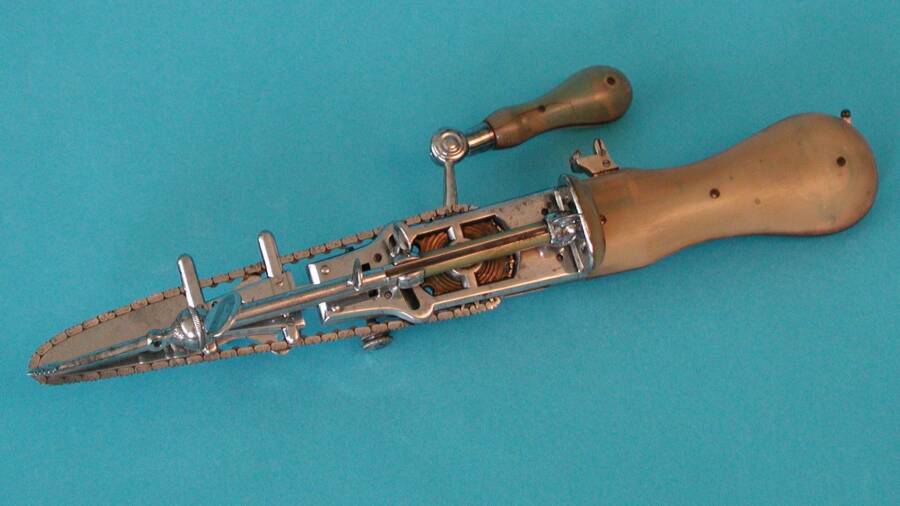
Chainsaws are great for cutting down trees, pruning overgrown bushes, or even carving ice. But the reason why chainsaws were invented might shock you. The answer goes back to the 1800s — and it’s unsettling. Indeed, chainsaws were not invented by inventive landscapers but instead were created by doctors and surgeons. Sabine Salfer/Orthopädische Universitätsklinik FrankfurtThe chainsaw’s original use was nothing short of gruesome. Of course, that meant these fast-rotating blades weren’t originally used on trees, but rather the first chainsaws played a role in childbirth. Why Chainsaws Were Invented Childbirth has presented a bevy of challenges throughout human history. Though childbirth is safer now with a global rate of 211 maternal deaths per 100,000 live ones, an alarming number of women and babies have succumbed in the past. A mother dying before childbirth was such a challenge in the Roman era that a law was actually put into place which decreed that physicians must attempt a dangerous procedure known as a “Cesarean” on dead or dying mothers in order to save the baby. Unknown/British LibraryA 15th-century depiction of physicians performing a cesarean section. Dubbed a Cesarean for the fact that it was Emperor Caesar who allegedly wrote the law, the procedure required a physician to cut open a dying mother and remove the infant. For centuries, cesarean sections were a last resort as it was unlikely that physicians could save the lives of both mother and child, so the procedure prioritized the baby’s life over the mother’s. But rumors claimed that a cesarean section could save both lives. In 1500, a Swiss veterinarian reportedly saved his own wife and child with a C-section, though many treated the tale with skepticism. Then in the 19th century, medical advancements like hygiene hinted at the possibility of saving both mother and child during a cesarean. But in an era before anesthetics or antibiotics, the abdominal surgery remained intensely painful and perilous. It didn’t help that the surgery had to be completed either by tearing into the woman’s uterus by hand or using scissors, neither of which were often fast enough to spare the mother pain or save the baby’s life. J. P. Maygrier/Wellcome CollectionAn 1822 medical text shows where doctors could make an incision to perform a cesarean section. Indeed, the same year that the medical chainsaw was invented, Dr. John Richmond published this horrifying tale of a failed cesarean. After hours of labor, Richmond’s patient was at death’s door. “Feeling a deep and solemn sense of my responsibility, with only a case of common pocket instruments, about one o’clock that night, I commenced the cesarean section,” Richmond related. He cut into the woman using a pair of scissors. But Richmond still could not remove the child. “It was uncommonly large, and the mother very fat,” Richmond explained, “and having no assistance, I found this part of my operation more difficult than I had anticipated.” Over the mother’s agonizing cries, Richmond declared “a childless mother was better than a motherless child.” He declared the baby dead and removed it piece by piece. After weeks of recovery, the woman lived. Richmond’s horrific story helps answer the question of why chainsaws were invented originally as a more humane alternative to the C-section. The First Devices That Replaced C-Sections John Graham Gilbert/Wikimedia CommonsDr. James Jeffray, who is credited with inventing the chainsaw. Jeffray ran into trouble for reportedly buying bodies to dissect. Around 1780, Scottish doctors John Aitken and James Jeffray came up with what they hoped would be a safer alternative to C-sections. Instead of cutting into the abdomen, they would cut into the mother’s pelvis in order to widen her birth canal and remove the baby vaginally. The procedure was known as a symphysiotomy, which is no longer practiced today. But a sharp knife was often not fast and painless enough to perform this surgery safely. So Aitken and Jeffray consequently envisioned a rotating blade that could cut through bone and cartilage, and thus, the first chainsaw was born. Initially small enough to fit in a doctor’s hand, the original chainsaw was more like a small serrated knife attached to a hand crank. And though it sped up the process of widening a laboring mother’s birth canal, it too proved too dangerous for most doctors to attempt. However, Aitken and Jeffray were not the only doctors of their era to innovate with medical chainsaws. About 30 years after Aitken and Jeffray’s invention, a German child named Bernhard Heine began experimenting with medical devices. Heine came from a medical family, his uncle Johann Heine manufactured artificial limbs and orthopedic devices, for instance, and so he spent most of his childhood learning how to construct different orthopedic tools. While his uncle focused on the technical side of orthopedics, Heine studied medicine. After gaining surgical training, Heine specialized in orthopedic surgery. That’s when he saw a way to blend his medical training with his technical skills. In 1830, Johann Heine invented the chain osteotome, a direct ancestor to the modern chainsaws of today. Osteotomes, or tools used to cut bone, used to be chisel-like and hand operated. But Heine added a chain to his crank-powered osteotome, creating a faster and more effective device. The Original Uses Of Chainsaws Wikimedia CommonsA demonstration of how physicians used the chain osteotome to cut through bone. Johann Heine considered the medical applications of his invention carefully, and therefore it came to be used for a variety of surgeries. Heine added guards on the edges of the chain to protect the surrounding tissue, so surgeons could now cut into the skull without causing bone splinters or destroying soft tissue. It vastly improved any medical procedure that required cutting through bone, such as 19th-century amputations. Before the chain osteotome, surgeons used a hammer and chisel to take off a limb. Alternatively, they might use an amputation saw that required jarring motions. The medical chainsaw simplified the procedure and improved results. Consequently, the osteotome became incredibly popular. Heine won a prestigious award in France and earned an invitation to Russia to demonstrate the tool. Manufacturers in France and New York began making the surgical instrument en masse. Samuel J. Bens/U.S. Patent OfficeThe patent filed by inventor Samuel J. Bens in 1905. Bens realized an “endless chainsaw” with a looping chain could help loggers cut down redwood trees. In the case of amputation, the medical chainsaw certainly surpassed a hammer and chisel. Yet in childbirth, the chainsaw was not the best solution to an age-old problem. Instead, sterile surgical environments, anesthesia, and access to more advanced medical care saved more lives in childbirth. And in 1905, an inventor named Samuel J. Bens realized that the medical chainsaw could cut through redwood trees even better than it could bone. He filed a patent for the first recognizably modern chainsaw. Thankfully, the era of using chainsaws to help women survive labor was short-lived. After this look at why were chainsaws invented and what the chainsaw’s original use was, read about James Barry, the famed 19th-century doctor who was secretly born a woman. Then learn about these fascinating accidental inventions. The post The Gruesome Reason Why Chainsaws Were Invented appeared first on All That's Interesting.

Like
Comment
Share
History Traveler
History Traveler
5 w

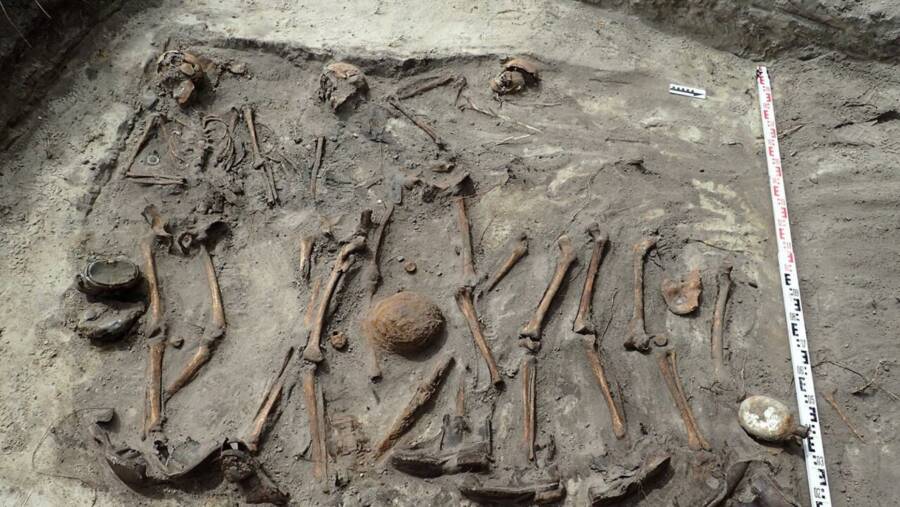
The Skeletal Remains Of 18 Nazi Soldiers Were Found In A Mass Grave In Poland
Favicon 
allthatsinteresting.com

The Skeletal Remains Of 18 Nazi Soldiers Were Found In A Mass Grave In Poland

Facebook/POMOSTThe skeletons were found side by side with various artifacts of war. Archaeologists in Poland have discovered a mass grave containing the remains of 18 Nazi paratroopers from World War II. The discovery also yielded numerous weapons, medals, and tools. The grave was found by locals in the southwestern village of Kożlice, who then notified the Pracownia Badań Historical and Archaeological Research Laboratory (POMOST). According to Fox News, POMOST was able to determine that these remains belonged to members of Nazi Germany’s air force, known as the Luftwaffe, due to their dog tags and a steel artifact that was engraved with the symbol of the Luftwaffe buried beside them. Facebook/POMOSTA steel tool etched with the symbol of the Luftwaffe. The dead had been laid beside one another and according to Tomasz Czabanski, president of POMOST, the soldiers were likely killed in 1945. “There was a lot going on here. Many individual graves have been discovered in this area.” Czabinski added that the locals have been helpful in identifying and notifying his team about historical finds. “It also very often happens that they come and look at excavations, tell their stories and that’s how we learn about yet other unidentified graves.” Facebook/POMOSTThis rusting anti-aircraft sight would have been fitted to an MG rifle. Also found were a spare anti-aircraft sight for an MG rifle, a Spanish Cross, and a pocket watch. But perhaps the most historically fascinating find was the Spanish Cross, a distinguished award that denoted bravery during the Spanish Civil War. Adolf Hitler backed Spanish dictator Francisco Franco with the Condor Legion of the Luftwaffe during that time. Kożlice was more than mere territory for the Germans during World War II, as just a few miles north the Nazis had established a Luftwaffe base. Thus, it’s believed that these paratroopers were likely stationed there. The base was eventually attacked by Joseph Stalin when the Red Army advanced in January 1945, but not before a panicked Germany demolished the base and left only a small number of troops behind to stay and fight the Russian onslaught. Facebook/POMOSTThe Spanish Cross was given to German soldiers who fought in the Spanish Civil War for Hitler’s dictatorial ally, Francisco Franco. As the very first country to be invaded by Nazi Germany in September 1939, Poland is naturally littered with remnants of the war. Recently, an invaluable diary written by an SS officer was discovered there. Some believe that the historical document might contain the location of Nazi treasure worth billions of dollars today. A few weeks after the discovery of the diary, archaeologists unearthed a treasure chest filled with silver — including goblets and cutlery — near the remains of a 600-year-old castle once occupied by the Nazis during the war. As for the remains of these 18 soldiers, their bones will be analyzed before being put to rest in a military cemetery in the city of Wrocław. Next up, read about how 300 soft tissue remains from executed prisoners of the Nazis were found buried in Berlin. Then, take a look at 25 tragic photos of the forgotten genocide in Nazi-occupied Poland. The post The Skeletal Remains Of 18 Nazi Soldiers Were Found In A Mass Grave In Poland appeared first on All That's Interesting.

Like
Comment
Share
National Review
National Review
5 w

The Biblical Whirlwind of Death That Is About to Rain Down on the Mullahs
Favicon 
www.nationalreview.com

The Biblical Whirlwind of Death That Is About to Rain Down on the Mullahs

‘I don’t think anyone really understands the scale or capacity we have because no one’s ever seen it before.’
Like
Comment
Share
Twitchy Feed
Twitchy Feed
5 w

Dems Pearl Clutching About Trump 'Defying the Supreme Court' Are Being Hit With Biden AND AOC Flashbacks
Favicon 
twitchy.com

Dems Pearl Clutching About Trump 'Defying the Supreme Court' Are Being Hit With Biden AND AOC Flashbacks

Dems Pearl Clutching About Trump 'Defying the Supreme Court' Are Being Hit With Biden AND AOC Flashbacks
Like
Comment
Share
RedState Feed
RedState Feed
5 w

Barbara Lee Praised Defunding Police; Now Her SUV Has Been Swiped From City Hall
Favicon 
redstate.com

Barbara Lee Praised Defunding Police; Now Her SUV Has Been Swiped From City Hall

Barbara Lee Praised Defunding Police; Now Her SUV Has Been Swiped From City Hall
Like
Comment
Share
NEWSMAX Feed
NEWSMAX Feed
5 w

Trump: 'Don't Need' Congressional Approval on Tariffs
Favicon 
www.newsmax.com

Trump: 'Don't Need' Congressional Approval on Tariffs

President Donald Trump said he does not plan to seek additional congressional action on tariffs after Friday's 6-3 Supreme Court ruling that Congress had not granted him authority under an emergency statute to levy unlimited tariffs, telling reporters that he already has the ability he needs.
Like
Comment
Share
Showing 4865 out of 115714
  • 4861
  • 4862
  • 4863
  • 4864
  • 4865
  • 4866
  • 4867
  • 4868
  • 4869
  • 4870
  • 4871
  • 4872
  • 4873
  • 4874
  • 4875
  • 4876
  • 4877
  • 4878
  • 4879
  • 4880
Advertisement
Stop Seeing These Ads

Edit Offer

Add tier


Select an image
Delete your tier
Are you sure you want to delete this tier?

Reviews

In order to sell your content and posts, start by creating a few packages. Monetization

Pay By Wallet

Payment Alert

You are about to purchase the items, do you want to proceed?

Request a Refund