YubNub Social YubNub Social
    #music #tew #tuba #euphonium #militarymusic #tew2026 #armymusic #armyband #uk #jazz #quartet #history #warmup #armyblues #bigband
    Advanced Search
  • Login
  • Register

  • Night mode
  • © 2026 YubNub Social
    About • Directory • Contact Us • Developers • Privacy Policy • Terms of Use • shareasale • FB Webview Detected • Android • Apple iOS • Get Our App

    Select Language

  • English
Night mode toggle
Featured Content
Community
New Posts (Home) ChatBox Popular Posts Reels Game Zone Top PodCasts
Explore
Explore
© 2026 YubNub Social
  • English
About • Directory • Contact Us • Developers • Privacy Policy • Terms of Use • shareasale • FB Webview Detected • Android • Apple iOS • Get Our App
Advertisement
Stop Seeing These Ads

Discover posts

Posts

Users

Pages

Blog

Market

Events

Games

Forum

The Lighter Side
The Lighter Side
5 w

A Coal Town Reborn
Favicon 
reasonstobecheerful.world

A Coal Town Reborn

As the sun rises over Loos-en-Gohelle, its yellow rays gradually illuminate two great mounds on the edge of the former mining town. These hulking slag heaps, relics of the past, were created by what was once one of the largest coal mining regions in Europe. But while the industry vanished into thin air in the 1980s after over a century of coal production, this town in the north of France decided to keep the heaps, a byproduct of the extraction process, as a symbol of pride and its bold socio-ecological transition. “When the mines closed, it was a profound crisis,” says Antoine Reynaud, chief of staff at Loos town hall. “It was not only an economic crisis, but also an identity crisis. When they closed, people said to themselves: ‘What is our use now?’” By 2021, enough solar panels had been installed on municipal buildings at Loos-en-Gohelle to power 90 percent of public energy needs. Photo courtesy of Loos-en-Gohelle City Hall The town of 7,000 people went on to defy the odds, resisting the post-industrial collapses suffered by many mining hubs across Europe. In doing so, Loos’ democratic, inclusive and collaborative approach has become a model for how to transition an economy away from fossil fuels at a time when nations worldwide face an urgent need to shift away from carbon-based industries. Faced with the existential challenge of the mine closures, Marcel Caron, the mayor at the time, plotted a new future for Loos-en-Gohelle. Unlike other northern French coalfield authorities, which wanted to revamp their image and erase their taboo mining heritage, Loos-en-Gohelle instead embraced this past while putting locals at the heart of its stellar transformation. Today, Loos’ galaxy of projects span clean energy, sustainable agriculture, water and land-use systems, biodiversity protection, cultural integration and beyond. The slag heaps have been turned into a site for paragliding, art made by residents and a thriving nature reserve home to natterjack toads, peregrine falcons and swallowtail butterflies. One initiative allows residents to propose community projects and receive assistance from the municipality if they help manage it. Photo courtesy of Loos-en-Gohelle City Hall The old mining headquarters, meanwhile, have been converted into an eco-park hosting nonprofits committed to sustainable development. Fruit bushes have been planted in the town center, managed by the inhabitants, which are linked to a “green belt” of car-free paths allowing people to cross the town without vehicles. Downtown is filled with vibrant independent businesses supported by a community currency. The roof of the Saint-Vaast Church, like many municipal buildings, is covered in solar panels.  This transformation, which put citizen participation at its heart throughout the decision-making, took decades. It was not straightforward either: The model represented a massive break with the past, since during the former era everything from transport to health, housing and leisure was paternalistically controlled by mining companies. “Caron wanted to create a new imaginary for Loos, a new identity, one where there was pride in being a Gohelliade,” explains Reynaud. Mayor Caron, who was in power from 1977 to 2001 and whose motto was “transform without forgetting your roots,” first set about rebuilding a sense of community and identity. In 1984, he launched the annual Gohelliades Festival, encouraging locals to go on stage and recount their histories alongside traditional dances, exhibitions and feasts. Caron’s aim was not to praise the coal mines, which had clearly negative effects on workers and the environment, but to recognize the history of inhabitants. To catalyze real change, Caron argued, people must be engaged on an emotional level: Rationality alone wouldn’t be enough to tackle complex issues like climate change. Events such as the Fête de l’Agriculture Paysanne (Agriculture Festival) help unite the community. Photo courtesy of Loos-en-Gohelle City Hall From there on, all urban projects became centered on citizens. When Caron’s time in office came to an end in 2001, his son, Jean-François, took over and brought an even stronger ecologist approach. The latter also held over 50 meetings with the public every year, encouraging open discussion. “[The amount of meetings he held] was enormous,” says Daniel Florentin, an expert in ecological transition projects for public policy at France’s National School of Bridges and Roads. “It showed a way for elected officials to be reachable and accessible, to lower the level of frustration in public meetings. And it really worked.” Weighed down by negative news? Our smart, bright, weekly newsletter is the uplift you’ve been looking for. [contact-form-7] Among other policies was the drawing up, in collaboration with inhabitants, of the Living Environment Charter, which outlined major issues that they would address such as urban transit, water resources, energy, household waste and risks such as mining subsistence. Another was the so-called “50/50” dispositive, which allows residents to propose projects for the town and in turn receive financial and technical assistance from the municipality if they take a leading or joint role in managing it. One project, Mine de Soleil (Sun Mine), was set up to increase use of solar in Loos-en-Gohelle. Jean-Luc Mathé, part of a committee of citizens created to develop the plans, says members were involved in all of the process, from the choice of name to the fundraising, selection of the panel supplier and communication about the project. About a dozen residents are part of the committee, including school teachers, business owners and Mathé, a retiree. The first meetings began in 2018, and by 2021 about 2,600 square meters of solar panels had been installed on municipal buildings, enough to power 90 percent of public energy needs. The panels generate around €50,000 (approximately $60,000) worth of energy a year and, while this was initially sold, it now is mostly provided to residents. “It made us become actors, not just critics,” says Mathé. “It takes a lot more time, working with citizens, but it is a much better system.” And that system has proved hugely popular. Jean-François Caron has won massive support for his inclusive, ecological policies, earning re-election since 2001 — with scores of up to 82 percent of the vote when facing an opponent, or indeed sometimes running unchallenged. Environmental sustainability is at the heart of Loos-en-Gohelle’s community events. Photo courtesy of Loos-en-Gohelle City Hall While Loos is a working-class town not immune to poverty, economic indicators show the benefits of the model. The unemployment rate was 13.7 percent in 2022 — higher than the national average but lower than other towns in the north of France, such as Bethune (18.2 percent), Calais (22.8 percent), Lens (23.6 percent) and Roubaix (26.4 percent). What’s more, some argue that Loos’ progress can’t be purely measured by standard monetary indicators. The inhabitants feel a strong “attachment” to the town and a sense of pride thanks to the efforts to create a vibrant community, a study by Professor Florentin in 2021 found. “What they achieved was a transformation of behavior,” says Florentin. “We found that participation is not only done by the elderly and rich, but [also by] young people and people on low income.” Loos’ success is even drawing outsiders while other areas suffer population declines. Loic Haegeman moved there 18 years ago after a brief visit led him to fall in love with the place. Today the 37-year-old is manager of the restaurant Le Chantilly, and in 2024 he became a municipal councilor with a focus on festivals and ceremonies. “When I visited I knew I would move here if I had the opportunity,” says Haegeman, amid a boisterous lunch service. “This place isn’t just a dormitory town. Everyone knows each other. Everyone says hello. It’s got the spirit of a village.” Over the years, this bold, citizen-powered transition in Loos-en-Gohelle has garnered accolades, welcomed researchers and even led others to try to replicate it. Wait, you're not a member yet? Join the Reasons to be Cheerful community by supporting our nonprofit publication and giving what you can. Join Cancel anytime In 2012, the Loos-en-Gohelle mining basin was designated a UNESCO World Heritage Site — alongside the pyramids of Egypt and the Great Wall of China. In 2015, then-President François Hollande chose to bring a delegation of leaders to Loos as France hosted the COP21 climate conference. Around that time, the town also signed a partnership agreement with the French Agency for Ecological Transition (ADEME), which named it a “national demonstrator for driving change towards sustainable cities” — meaning that Loos receives funding to do its work and share learnings with others. “We started to be recognized as a laboratory,” says Reynaud. In 2020, Loos decided to spread its model more intentionally, with the founding of La Fabrique des Transitions, or the Transitions Factory, an organization that aims to roll out its methods nationwide. In 2024, it supported eight pilot areas in France to define and implement transition projects, running group sessions and providing technical advice. ‘It’s got the spirit of a village,’ says one Loos-en-Gohelle resident, who fell in love with the town on a visit and later relocated there. Photo courtesy of Loos-en-Gohelle City Hall This citizen-centered scale up could be significant for France’s climate transition. Recent French history shows the risks of attempting to transition without everyone on board. The gilets jaunes, or yellow vests, movement began as a backlash against fuel taxes linked to climate policy and led to massive, nationwide protests from 2018 to 2020. “The goal is to spread to the national level,” says Florentin. “To create a form of doctrine, an alternative model of development, that centers on social and ecological transition at the same time.” The post A Coal Town Reborn appeared first on Reasons to be Cheerful.

Like
Comment
Share
Classic Rock Lovers
Classic Rock Lovers  
5 w

"It was this dream song that just turned up as I was waking up one morning. It came to me fully formed." The story of the cinematic classic that kick-started Bob Mould's second life
Favicon 
www.loudersound.com

"It was this dream song that just turned up as I was waking up one morning. It came to me fully formed." The story of the cinematic classic that kick-started Bob Mould's second life

Bob Mould spent much of 1991 on punishing tours in a bid to salvage his ailing career - then came the song that showed him the way forward
Like
Comment
Share
BlabberBuzz Feed
BlabberBuzz Feed
5 w

Chinese ‘Special Interest Alien’ Caught In Camouflage Run To San Antonio
Favicon 
www.blabber.buzz

Chinese ‘Special Interest Alien’ Caught In Camouflage Run To San Antonio

Like
Comment
Share
BlabberBuzz Feed
BlabberBuzz Feed
5 w

Vogue’s Gavin Newsom Profile Goes Viral for Its Parody-Level Ridiculousness
Favicon 
www.blabber.buzz

Vogue’s Gavin Newsom Profile Goes Viral for Its Parody-Level Ridiculousness

Like
Comment
Share
The Lighter Side
The Lighter Side
5 w

What does being sober curious even mean? Here’s how to explore your relationship with alcohol
Favicon 
www.optimistdaily.com

What does being sober curious even mean? Here’s how to explore your relationship with alcohol

BY THE OPTIMIST DAILY EDITORIAL TEAM Let’s face it: in many social circles, alcohol is the default. We drink to celebrate, to unwind, to meet new people, to mark life’s big (and not-so-big) milestones. Birthdays? Champagne. Breakups? Wine night. Your coworker’s dog’s half-birthday? Sure, another round. But more and more people, especially younger adults, are starting to question this automatic association between alcohol and just about… everything. Maybe you’ve seen it trending on TikTok, heard a friend mention it, or caught yourself wondering why you even said “yes” to that third drink. If so, welcome to the world of sober curiosity. Sober curious 101: what it is (and isn’t) Being sober curious isn’t about slapping a permanent “no drinks ever” label on yourself. Instead, it’s about pausing, asking questions, and getting intentional about your relationship with alcohol (and sometimes other substances too). “Typically someone who’s sober curious is choosing to explore what it would be like to use less or to not drink or use substances at all—and will give that a try for a period of time with no commitment to forever,” explains Leah Young, LCPC, clinical manager at Pathlight Mood & Anxiety Center. That means you might take a week, a month, or longer off from drinking just to see how it feels. Or you might decide to keep alcohol in your life, but in a more mindful, occasional way. Either path is valid. The key is curiosity, not judgment. Why sober curiosity is on the rise According to Gallup, alcohol use among Americans under 35 has dropped from 72 percent to 62 percent over the past two decades. That’s a significant cultural shift, and one driven by people who are rethinking habits that no longer serve them. Young says many sober-curious folks feel frustrated with how often social events revolve around drinking. So instead of barhopping, they’re swapping in book clubs, post-work yoga, or dinner parties at home with mocktails. Some are hitting up the growing number of sober bars across the U.S. And yes, those exist and they’re thriving. It’s not just about swapping drinks for sparkling water, though. For some, it’s a way to explore deeper questions about stress, anxiety, and how we show up in our relationships and environments. It’s not uncommon for people to start as sober curious and realize they might benefit from cutting back more permanently or even seeking professional help. How to start exploring your sober-curious side Curiosity is the first step. But if you’re ready to go from wondering to trying, here’s how to get started: Take inventory.  Ask yourself: Why do I drink? When do I drink? How do I feel afterward? Is this habit helping me or holding me back? Make a plan.  Young recommends defining what your ideal relationship with alcohol looks like. That could include how often you want to drink (if at all), under what circumstances, and how much. Be specific. Find support.  You don’t have to go it alone. Ask a trusted friend to be an accountability partner or check in with a therapist. The goal is to feel supported, not pressured. Set yourself up for success.  If your go-to drink is a little too tempting, consider removing alcohol from your home temporarily. Replace that 5 p.m. glass of wine with a ritual that feels good: a walk, a mocktail, or your favorite playlist. Be ready for curveballs.  Cravings, social pressure, or even boredom can pop up. Think ahead about how you’ll handle those moments so you’re not caught off guard. What’s in it for you? The perks of sober curiosity People exploring sober curiosity often report feeling clearer, more present, and, maybe surprisingly, even more connected to others. “It allows people to find a method of sobriety that works for them,” Young says. “It can help those folks who have been misusing to be more aware and intentional. It opens us up to new ways of socializing.” Some of the other benefits? Improved relationships, better sleep, more energy, increased mental clarity, and sharper performance at work. Plus, according to the American Addiction Centers, cutting back on alcohol can improve brain, liver, and heart function, too. Not bad, right? That said, the early days can be challenging. If you’ve used substances to manage anxiety or stress, stepping back may feel uncomfortable at first. But that discomfort often makes space for healthier tools and more sustainable well-being in the long run. Is sober curiosity for everyone? Not necessarily. Young points out that for some people, cutting back just a little isn’t safe or sustainable. “There are some people who need to have that black-and-white mentality—that they simply can’t use any substance of intoxication safely,” she says. In those cases, professional support and clear abstinence may be the right path. But for many others, sober curiosity is a powerful tool that allows space for reflection, experimentation, and growth without the pressure of total sobriety. Curiosity leads the way Whether you’ve just finished a Dry January, are skipping cocktails to support your wellness goals, or simply wondering what life might feel like with fewer hangovers, sober curiosity invites you to check in with no rules, no shame, and no long-term commitment required. It’s about asking better questions, having more meaningful experiences, and showing up for yourself in new ways.     Did this solution stand out? Share it with a friend or support our mission by becoming an Emissary.The post What does being sober curious even mean? Here’s how to explore your relationship with alcohol first appeared on The Optimist Daily: Making Solutions the News.
Like
Comment
Share
The Lighter Side
The Lighter Side
5 w

The Ocean Cleanup removed a record 25 million kilos of plastic in 2025 (and they’re just getting started)
Favicon 
www.optimistdaily.com

The Ocean Cleanup removed a record 25 million kilos of plastic in 2025 (and they’re just getting started)

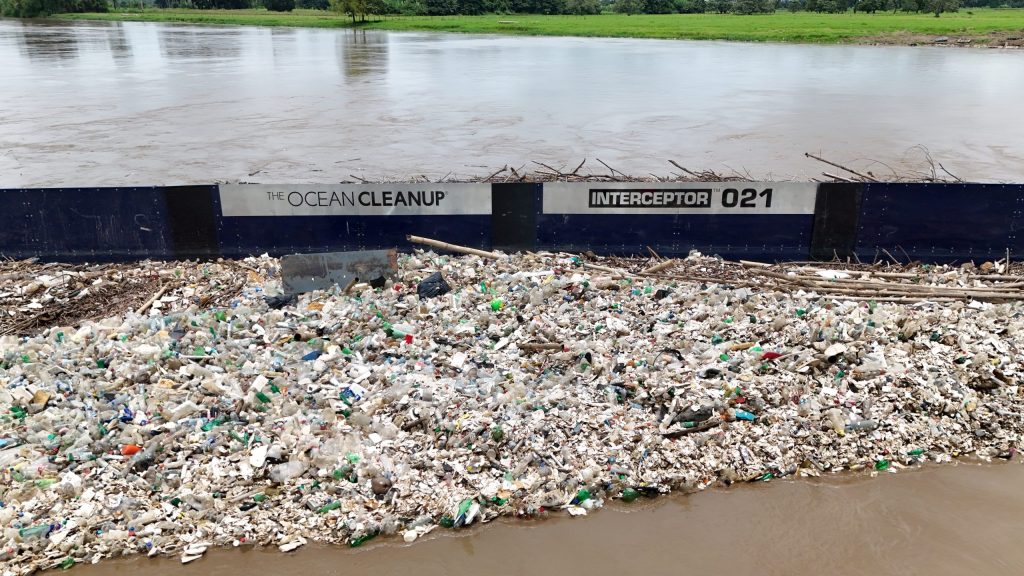
BY THE OPTIMIST DAILY EDITORIAL TEAM In a world where the scale of plastic pollution can feel overwhelming, 2025 brought a milestone worth celebrating: The Ocean Cleanup, a Dutch nonprofit dedicated to removing plastic from marine environments, pulled more than 25 million kilograms of waste from global waters last year alone. That’s over 55 million pounds or about 2,000 garbage trucks’ worth of plastic that is no longer drifting through our oceans. The achievement brings their cumulative haul to more than 45 million kilos (99 million pounds) since operations began. This number not only reflects enormous operational progress, but also offers a sobering reminder of just how vast the challenge remains. The scale of the problem, a shift in strategy While this record-setting year marks real momentum, it’s also a small dent in a much larger crisis. According to the United Nations Environment Programme (UNEP), a staggering 11 million metric tons of plastic (11 billion kilograms) flow into the oceans every year. In other words, for every ton The Ocean Cleanup removes, hundreds more are entering. That’s why the organization has been refining its approach. Over the past year, it focused not only on removing plastic from the ocean, but also on stopping it from getting there in the first place. Rivers: the source and the solution A breakthrough study, co-published by The Ocean Cleanup in Science Advances, showed that just 1,000 rivers, which represent a mere one percent of the world’s waterways, are responsible for nearly 80 percent of plastic pollution reaching the ocean. This finding led the organization to double down on intervention at the source. Enter the river interceptor: a solar-powered device designed to collect plastic before it ever hits the sea. By capturing trash upstream, these systems help reduce the amount of waste that makes it to open waters, where removal is far more difficult, costly, and time-consuming. The 2025 success, the team notes, was the result of “years of research, data-driven decision-making, and commitment to implementing responsible solutions adapted to local contexts.” That includes working closely with communities, governments, and local partners to ensure each deployment fits the environment it serves. Prevention is still the biggest puzzle piece Despite the impressive totals, plastic continues to pour into our oceans at alarming rates. Much of it comes from poor waste management systems, outdated packaging design, and limited infrastructure in fast-growing urban centers. That’s why The Ocean Cleanup’s efforts, while vital, can’t solve the problem alone. Real progress, say experts and advocates, requires prevention: reducing plastic production, redesigning products, improving recycling systems, and creating global standards for waste control. Only about nine percent of the world’s plastic is currently recycled. The rest piles up in landfills, burns in incinerators, or leaks into natural ecosystems, where it can fragment into microplastics that linger for centuries. 90 percent reduction by 2040 Still, there’s hope on the horizon. The Ocean Cleanup’s official mission is ambitious but clear: remove 90 percent of floating ocean plastic by 2040. To help meet that goal, the group unveiled its 30 Cities Program at the United Nations Ocean Conference in Nice. The initiative targets plastic pollution from some of the world’s most impactful urban rivers, the ones that are responsible for roughly a third of ocean-bound waste. Success will require more than machines and data. It demands long-term commitment, local support, and effective downstream waste management. That’s why the organization is partnering with municipal governments, NGOs, and residents to build systems that don’t just remove plastic but prevent it from ever entering the water again. A two-pronged path forward The next decade of ocean cleanup will unfold along two critical tracks:  Technology and operations, scaling up the deployment of systems that clean more plastic, more efficiently, in harsher and more remote environments. Policy and prevention, driving global efforts to redesign the way we produce, consume, and manage plastic before it becomes waste. As the numbers grow (25 million kilos in one year, 45 million total), it is tempting to focus on what’s been removed. But The Ocean Cleanup’s biggest achievement may be its evolving strategy. The shift to reach upstream and partner with local entities reminds us that no piece of plastic is too small to matter.     Did this solution stand out? Share it with a friend or support our mission by becoming an Emissary.The post The Ocean Cleanup removed a record 25 million kilos of plastic in 2025 (and they’re just getting started) first appeared on The Optimist Daily: Making Solutions the News.
Like
Comment
Share
Fun Facts And Interesting Bits
5 w

10 Wild Facts About Taxidermy That You Probably Didn’t Know
Favicon 
listverse.com

10 Wild Facts About Taxidermy That You Probably Didn’t Know

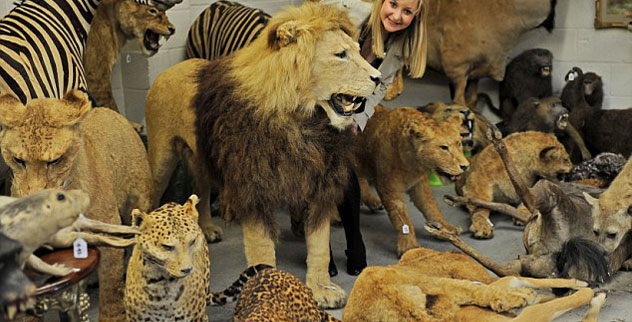
It’s hard to escape the influence of the Victorian era when talking about taxidermy. During that period, a fascination with death, science, and the natural world led people to decorate their houses with stuffed animals. These days, taxidermy is a bit divisive. Some people are disgusted by the thought of stripping the skin off a […] The post 10 Wild Facts About Taxidermy That You Probably Didn’t Know appeared first on Listverse.
Like
Comment
Share
History Traveler
History Traveler
5 w

Trepanned skull of giant found in Viking-era mass grave
Favicon 
www.thehistoryblog.com

Trepanned skull of giant found in Viking-era mass grave

A mass grave from the 9th century containing mixed skeletal remains including the trepanned skull of an extremely tall man has been discovered on the outskirts of Cambridge, UK. A team of University of Cambridge students and professional archaeologists  The find site was a frontier area between the Saxon kingdom of Mercia and East Anglia, conquered by the Vikings in 870 A.D. so the mass grave may be related to constant armed conflict in this border region in the decades after the Viking invasion. The burial pit contained a mixture of complete articulated skeletons and bones from dismembered body parts, including scattered limbs, a stack of legs and a pile of skulls. There are at least four complete skeletons and their positions suggest they were bound before being buried. The severed heads and limbs were thrown in the pit on top of them. Based on the number of skulls, archaeologists estimate the grave contains the remains of up to 10 different individuals, all of them younger men. One of the men thrown into the pit was exceptionally tall, about 6’5″, which more than a half foot above the average height for men in the UK today, never mind in the 9th century when the average height for an adult man was around 5’6″. He was between 17 and 24 years when he died. It was his skull that had the trepanation hole in the side. The elliptical hole is 3cm across and was evenly cut, drill or scraped with a sharp tool. The bone edges were healed, so we know he survived the operation, but the new growth conceals the evidence of what tool was used. “The individual may have had a tumour that affected their pituitary gland and caused an excess of growth hormones,” said Dr Trish Biers, curator of the Duckworth Collections at the University of Cambridge, where these remains have been taken for further analysis. “We can see this in the unique characteristics in the long shafts of their limb bones and elsewhere on the skeleton. Such a condition in the brain would have led to increased pressure in the skull, causing headaches that the trepanning may have been an attempt to alleviate. Not uncommon with head trauma today,” Biers said. The mass grave was discovered just south of the ringwork of an Iron Age hillfort in Wandlebury Country Park. This is actually the second mass burial from the 8th-9th century period found at Wandlebury. The first was discovered close to the current dig site in 1976 when a tree was uprooted during a storm. It contained five skeletons, all of them complete. The combination of complete skeletons and disarticulated remains in the recently excavated burial pit is very unusual. Only one of the heads displays chop marks on the jaw consistent with decapitation and a few other bones show signs of combat injuries, but this is too meager evidence to indicate the deceased were killed in battle. However, to have severed heads, limbs and other remains – from ribs to pelvises – tossed in a pit, with body parts of the same type stacked together in some cases, piled on top of four dead men, at least one apparently bound, suggests terrible violence and perhaps an execution, according to CAU’s Dr Oscar Aldred. “Those buried could have been recipients of corporal punishment, and that may be connected to Wandlebury as a sacred or well-known meeting place. It may be that some of the disarticulated body parts had previously been displayed as trophies, and were then gathered up and interred with the executed or otherwise slaughtered individuals,” Aldred said. “We don’t see much evidence for the deliberate chopping up of some of these body parts, so they may have been in a state of decomposition and literally falling apart when they went into the pit.” The team will now subject the bones to DNA and stable isotope analysis to find out more about the health, origins and kinship links of the deceased. They will also attempt to puzzle together the disarticulated remains to see if they can reconstruct skeletons and determine how many people’s remains are in the pit.
Like
Comment
Share
YubNub News
YubNub News
5 w

DHS Operation Metro Surge Makes More Than 4,000 Arrests in Minnesota
Favicon 
yubnub.news

DHS Operation Metro Surge Makes More Than 4,000 Arrests in Minnesota

Border Patrol agents stand guard at the Bishop Henry Whipple Federal Building in Minneapolis on Jan. 8, 2026. Charly Triballeau/AFP via Getty ImagesLaw enforcement has so far arrested more than 4,000…
Like
Comment
Share
YubNub News
YubNub News
5 w

How the New US Food Guide Differs From Australia’s
Favicon 
yubnub.news

How the New US Food Guide Differs From Australia’s

Beef is displayed for sale at a butcher shop in Melbourne, Australia on April 4, 2025. Asanka Ratnayake/Getty ImagesAmerica is telling its citizens to rethink what’s on their plates, with the Trump…
Like
Comment
Share
Showing 5328 out of 113992
  • 5324
  • 5325
  • 5326
  • 5327
  • 5328
  • 5329
  • 5330
  • 5331
  • 5332
  • 5333
  • 5334
  • 5335
  • 5336
  • 5337
  • 5338
  • 5339
  • 5340
  • 5341
  • 5342
  • 5343
Advertisement
Stop Seeing These Ads

Edit Offer

Add tier


Select an image
Delete your tier
Are you sure you want to delete this tier?

Reviews

In order to sell your content and posts, start by creating a few packages. Monetization

Pay By Wallet

Payment Alert

You are about to purchase the items, do you want to proceed?

Request a Refund