YubNub Social YubNub Social
    #democrats #loonylibs #exodermin
    Advanced Search
  • Login
  • Register

  • Day mode
  • © 2026 YubNub Social
    About • Directory • Contact Us • Developers • Privacy Policy • Terms of Use • shareasale • FB Webview Detected • Android • Apple iOS • Get Our App

    Select Language

  • English
Night mode toggle
Featured Content
Community
New Posts (Home) ChatBox Popular Posts Reels Game Zone Top PodCasts
Explore
Explore
© 2026 YubNub Social
  • English
About • Directory • Contact Us • Developers • Privacy Policy • Terms of Use • shareasale • FB Webview Detected • Android • Apple iOS • Get Our App
Advertisement
Stop Seeing These Ads

Discover posts

Posts

Users

Pages

Blog

Market

Events

Games

Forum

Classic Rock Lovers
Classic Rock Lovers  
6 w

Ray Davies’ six favourite albums of all time: “A fascinating charater”
Favicon 
faroutmagazine.co.uk

Ray Davies’ six favourite albums of all time: “A fascinating charater”

Essential listening. The post Ray Davies’ six favourite albums of all time: “A fascinating charater” first appeared on Far Out Magazine.
Like
Comment
Share
Intel Uncensored
Intel Uncensored
6 w

White House Aims For Cuba Regime Change By Year-End
Favicon 
www.sgtreport.com

White House Aims For Cuba Regime Change By Year-End

from ZeroHedge: Brimming with bravado after snatching Venezuelan President Nicolas Maduro in a lightning raid on Caracas earlier this month, the Trump administration has now set a goal to end Communism in Cuba by the end of the year, according to sources who talked to the Wall Street Journal. Using the Venezuela operation as a blueprint, the White […]
Like
Comment
Share
The Lighter Side
The Lighter Side
6 w

Inside the Teen-Run Hotline Meeting America’s Mental Health Crisis
Favicon 
reasonstobecheerful.world

Inside the Teen-Run Hotline Meeting America’s Mental Health Crisis

On weekday evenings between 6 p.m. and 10 p.m. PST, the small, softly lit Teen Line office in Culver City, CA, begins to buzz. A handful of high schoolers — many still in their school sweatshirts — settle into cubicles, put on headsets and begin answering calls, texts and emails from other teenagers who need someone to talk to. For more than four decades, Teen Line has been demonstrating the power of a simple but radical idea: That sometimes the best person to talk to about teenage problems is another teenager. Founded in 1980 as the Center for the Study of Young People in Groups, the grassroots nonprofit evolved into a vital resource for young people struggling with stress, loneliness, relationships and mental health challenges. Today, it operates as part of Didi Hirsch Mental Health Services, home to the nation’s first and largest Suicide Prevention Center, which served more than 232,000 individuals in 2024. Teen Line still runs on the same core model: Trained teens supporting peers through nonjudgmental listening. “I think the biggest thing I say to almost every caller is that it’s okay not to be okay,” says Sanaya, a soft-spoken volunteer who joined in fall 2024 and prefers to only give her first name. “There’s such a culture, especially among teenagers, to just say, ‘I’m fine.’ But by reassuring them that it’s really okay to talk about what’s going on, people start to open up. Then we can have a much deeper conversation.” Teen Line’s mission feels more critical than ever. Approximately 40 percent of U.S. high-school students report persistent sadness or hopelessness, and suicide remains the second leading cause of death for youth ages 10 to 24, according to the CDC. Teen Line fills a widening gap in the nation’s fraying youth mental health system — with no federal funding, only grants, donations and the dedication of 100 teen volunteers who log more than 10,000 contacts a year from youth around the world. “We even once got a call from a teen in Zimbabwe who found us online,” says Cheryl Karp Eskin, the organization’s senior director. Approximately 100 teen volunteers log more than 10,000 contacts a year from youth around the world. Photo courtesy of Teen Line Meanwhile, major funding streams for school-based mental health support have been cut. The U.S. Department of Education recently ended roughly $1 billion in grants originally designated to help schools hire additional counselors and psychologists under the 2022 Bipartisan Safer Communities Act, passed after a wave of school shootings. Simultaneously, the federal government has removed the dedicated “Press 3” option for LGBTQ+ youth on the national 988 Suicide & Crisis Lifeline.  At a time when youth mental health needs are escalating, federal support for key programs is shrinking. That makes Teen Line’s peer-to-peer model all the more essential. Volunteers like Sanaya must be at least 14 years old and complete a rigorous selection and training process before taking their first call. “It starts with a written application and then interviews,” she explains. “If you get accepted, you get about three months of classroom training where you learn about the various topics you could be covering — anything from bullying to eating disorders to suicide — and how to manage those when you’re on a call. We also learn active listening and ways to make people feel heard.” That training includes practice calls, guest speakers from organizations like the Rape Treatment Center, and lessons in emotional regulation and crisis response. Only after completing this curriculum do volunteers begin answering emails, then texts and finally phone calls. Sanaya usually takes about one shift a week, more than the minimum commitment of two shifts a month. “It’s definitely one of my favorite things to do after school,” she says. “I love meeting all of the people that work there. We share a lot of the same interests, and I’ve made some really close friends at Teen Line.” Weighed down by negative news? Our smart, bright, weekly newsletter is the uplift you’ve been looking for. [contact-form-7] According to Eskin, about 60 to 70 percent of contacts come through online channels — text or email — and all are anonymous and confidential unless someone’s safety is at risk. When the Teen Line office closes at 10 p.m., trained adult counselors at Didi Hirsch pick up the phones as part of their shift on the national 988 Lifeline hotline.  “We’re not anti-adult,” Eskin says with a laugh. “But often the adults in teens’ lives are the ones grading them or disciplining them. That power dynamic changes everything. When you’re talking to another teen, it just feels simpler — and safer.” Eskin would know. She was once a Teen Line volunteer herself in high school and has been involved for more than 15 years. Over that time, she’s seen social media, smartphones and the pandemic reshape what it means to be a teenager and how vital empathy has become. “Being a teen today is a lot,” she says. “The pressures of school, social media and just being constantly connected, it’s no wonder anxiety and stress are among our top issues, along with relationships, depression and suicide. But what’s hopeful is that teens want to help each other. And when they do, it works.” Indeed, Teen Line’s impact data show that 98 percent of callers report finding their interaction helpful, and many reach out again or recommend the line to friends. Some even write back months later to say the call “saved their life. For Sanaya, the experience of listening has been transformative. “I joined at the beginning of my sophomore year because I wanted to make an impact in my community,” she says. “A friend had used Teen Line and found support, and I wanted to be that person for someone else.” Nearly a year later, she notices the skills carry over into her own life. “We practice active listening all the time, and those skills are so useful — helping a friend who’s stressed, or even just staying calm in a tough situation. It’s changed how I deal with stress or emotions. I feel more logical, more grounded.” The Department of Education recently ended roughly $1 billion in grants originally designated to help schools hire additional counselors and psychologists. Photo courtesy of Teen Line Calls vary in length — sometimes ten minutes, sometimes over an hour. “Sometimes it’s just them ranting and me listening; other times it’s more of a conversation,” Sanaya says. Lately, the most common topic she hears is school stress. Relationship issues — romantic, family, or friendship — are a close second. When conversations reveal deeper issues like abuse, eating disorders, or suicidal thoughts, Teen Line volunteers are trained to connect callers with professional resources such as the National Sexual Assault Hotline (RAINN) or local crisis centers. “There’s not always a lot you can do in one call,” Sanaya says, “but if you can make even a small impact, and give them resources to get help, that’s the best thing you can do.” Peer-to-peer listening isn’t new, but research increasingly underpins its effectiveness. A 2023 systematic review in The British Journal of Psychiatry found that structured peer support significantly reduced depressive symptoms and increased help-seeking among teens. For many young people, peers are the first — and sometimes only — people they trust to confide in. Eskin believes that’s where Teen Line’s true power lies. “We like to say no problem is too big or too small,” she says. “You don’t have to be in a life-or-death crisis to reach out. Sometimes starting the conversation is what gets someone to the help they need.” She’s also quick to dispel doubts about whether teenagers can handle the emotional weight of this work. “A lot of people question whether teens can do this,” Eskin says. “But I’ve seen it for decades — they can, and sometimes they do it better than adults. With proper screening and training, teens have this incredible capacity for empathy. They meet each other where they are.” That empathy has ripple effects. Over the years, Teen Line has trained more than 2,000 high school students, many of whom have gone on to careers in counseling, social work and advocacy. Eskin herself is one of them. “I don’t know if Teen Line made me a therapist or if I was always going to be one,” she says, smiling. “But it absolutely shaped how I see the world and how I talk about things like suicide. It’s not scary to me anymore. It’s something we can, and should, talk about.” For callers, Teen Line can be a lifeline. For volunteers, it can be life-changing. But its broader impact might be cultural: It normalizes talking about mental health in a culture that often discourages it.  “Social media can make it look like everyone else is living their best life,” says Sanaya. “It can feel really isolating to someone who’s struggling. I think it’s important to remind people that what they see online isn’t the full truth.” Wait, you're not a member yet? Join the Reasons to be Cheerful community by supporting our nonprofit publication and giving what you can. Join Cancel anytime Teen Line amplifies that message in school presentations, outreach campaigns and social media. “We’ve had teens tell us they found us because ChatGPT suggested it,” Eskin admits with a laugh. “AI can be scary, but if it’s helping people find human connection, that’s a good thing.” As evening falls in Culver City, the phones keep ringing. On the other end might be a teen crying quietly about a breakup, someone afraid to tell their parents about depression, or a student overwhelmed by exams. Sanaya doesn’t always have the perfect words, but she’s learned that sometimes that’s not what matters most. “The best thing I can do is just listen and let them know their feelings are valid,” she says. “Sometimes you don’t have the exact right thing to say, but by just being there, that’s enough.” In a culture that often tells young people to toughen up, Teen Line’s volunteers are proving the opposite: Gentleness, empathy and listening can save lives. “The power of someone believing you, validating you and really listening, that’s huge,” Eskins says. “That’s where healing begins.” If you or someone you know needs help, and you are in the U.S., call the Suicide and Crisis Lifeline at 988 or visit 988lifeline.org The post Inside the Teen-Run Hotline Meeting America’s Mental Health Crisis appeared first on Reasons to be Cheerful.

Like
Comment
Share
cloudsandwind
cloudsandwind
6 w ·Youtube

YouTube
Ungrateful Sod
Like
Comment
Share
Conservative Satire
Conservative Satire
6 w Funny Stuff

rumbleOdysee
And then they said "This is MAGA country!"
Like
Comment
Share
The People's Voice Feed
6 w

Favicon 
thepeoplesvoice.tv

US Officially Withdraws From World Health Organization

The United States has officially completed its withdrawal from the World Health Organization (WHO). The ending of its 77-year membership was announced on Thursday, exactly one year after President Donald Trump signed an executive order [...] The post US Officially Withdraws From World Health Organization appeared first on The People's Voice.
Like
Comment
Share
History Traveler
History Traveler
6 w

The British Empire’s Brothels
Favicon 
www.historytoday.com

The British Empire’s Brothels

The British Empire’s Brothels James Hoare Fri, 01/23/2026 - 08:48
Like
Comment
Share
Living In Faith
Living In Faith
6 w

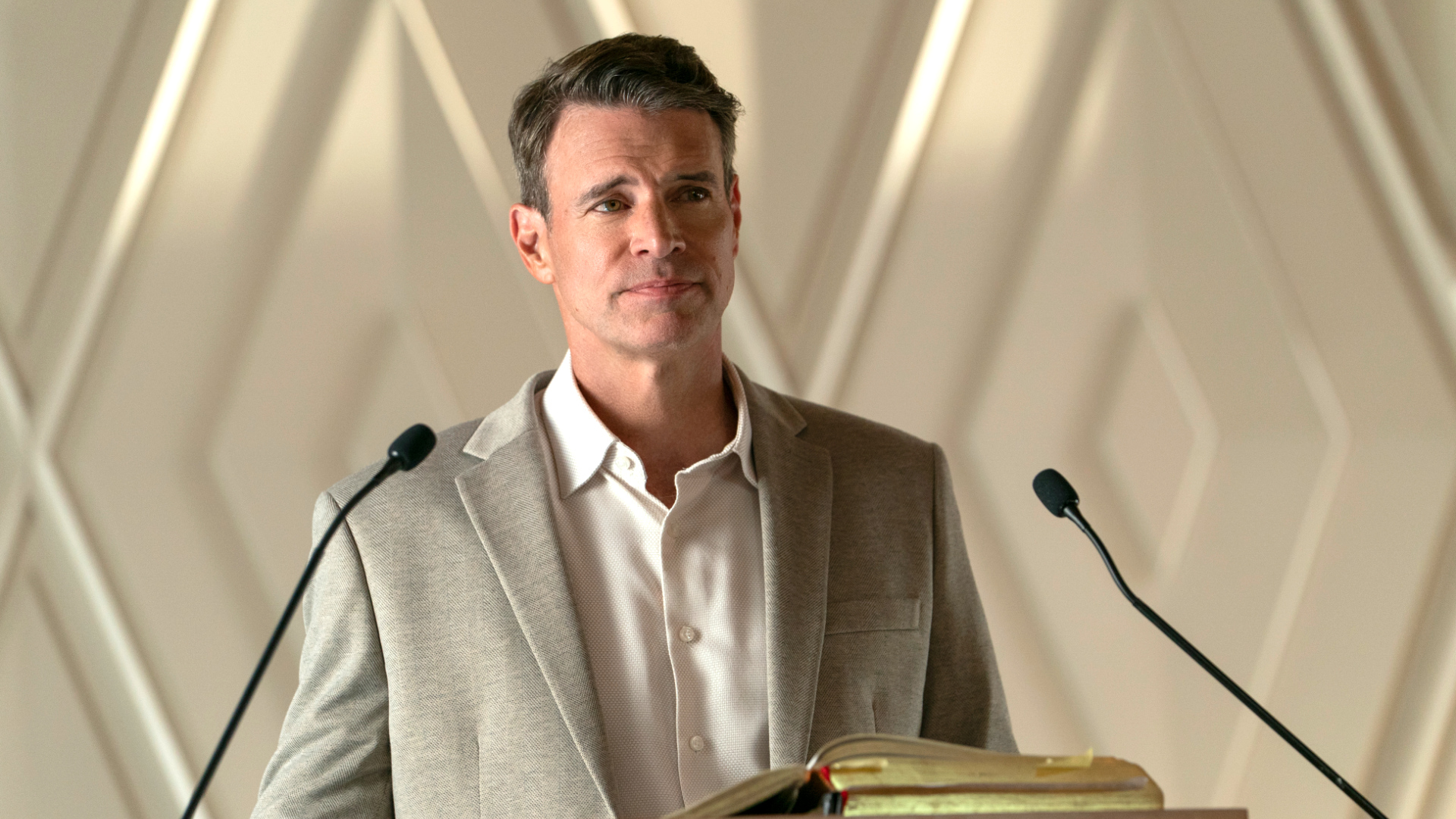
‘It’s Not Like That’: TV Takes a Christian Pastor Seriously
Favicon 
www.thegospelcoalition.org

‘It’s Not Like That’: TV Takes a Christian Pastor Seriously

I’ve long wondered when—or if—someone in Hollywood would create an interesting TV show about the life of a pastor and his family. The drama inherent in ministry—interpersonal conflict, familial strain, theological wrestles, political division, to name a few—feels like a treasure trove for a TV dramedy. Television has occasionally featured Christian characters, but they tend to be unfair caricatures or exemplars of hideous hypocrisy (e.g., The Righteous Gemstones). I’ve not seen a show that takes sincere Christian life and ministry seriously as a focal point for drama. Until now. With Wonder Project’s new series It’s Not Like That—premiering Sunday on Prime Video—showrunners Ian Deitchman and Kristin Robinson are taking up the challenge of creating an entertaining, not-cheesy, not-condescending show about Christian characters—one where faith and church life take center stage. While not perfect, the result (I’ve seen the first five episodes) is refreshing and full of potential. ‘Parenthood’ Meets Pastoring House of David and The Chosen have been big hits for Prime Video, proving there’s an audience and a hunger for prestige-quality TV about faith, even on major streamers. And with a show like this, plus the forthcoming Nate Bargatze comedy film The Breadwinner, Wonder Project is poised to break new ground for faith-friendly stories. But will a contemporary dramedy about a Christian pastor find viewers? Will a contemporary dramedy about a Christian pastor find viewers? As the title might suggest, It’s Not Like That plays with audience expectations. On one hand, this is a show about a pastor, Malcolm, played by Scott Foley (Felicity, Grey’s Anatomy). He’s a faithful, longtime pastor of an Atlanta church called Grace Community. But he’s not a one-dimensional stereotype, and about 75 percent of the show focuses not on his pastoral vocation but on his complex personal life. A widowed father of three, he’s struggling to shepherd his adolescent kids through the trauma of losing their mom, even as he wrestles with his own pain and romantic loneliness. The title’s rom-com vibe reflects this plot point. The other lead character, Lori (Erinn Hayes), is a divorced single mom at Grace Community whose family has always been close with Malcolm’s. Lori was best friends with Malcolm’s late wife, Jenny. But in the wake of both their losses, Lori’s friendship with Malcolm might become more than friendship. Or will it? As I watched the first episodes, I kept thinking of how much it reminded me of Parenthood and Friday Night Lights, shows that capture the messy drama of relationships but also aspire to showcase genuinely good, healthy families. Those shows featured some of the most real and honorable depictions of parenthood I’ve seen on TV. It’s Not Like That feels like a kindred spirit (turns out its writers also worked on Parenthood). As much as this is a show about pastoral ministry, it’s also just about parenthood. Lori’s two kids have their own issues, exacerbated by the shock waves of their parents’ divorce (J. R. Ramirez plays their dad, Lori’s ex). In addition to the grief of their mom’s death, Malcom’s three kids have other challenges as they carry the burden of “PK” expectations on top of the normal stresses of bullies, dating, and other teen drama. The creators said in a press release that the title, It’s Not Like That, ultimately reflects the fact that people are more complex than our surface assumptions, carrying burdens and pain we can’t always see. They write, Everyone you meet is battling something you don’t know about. In other words, it’s not like that. There is always a deeper, more complex story, one that requires an extension of grace. That’s really the overarching theme. Some Concerns While there’s a lot to like about It’s Not Like That, I do have concerns about the kind of Christianity it so far exhibits (bear in mind I haven’t seen the final three episodes of season 1). There’s not a lot of explicit talk of Jesus, for example. It’s clear Malcolm is a Protestant Christian pastor. But sometimes the feel of his Christianity is more therapeutic than theological, overtly inoffensive more than clearly confessional. Grace Community is heavy on acceptance and inclusion (“Where all are welcome” is the slogan on the marquee) but noticeably avoidant of “sin” talk or Christ’s exclusivity (John 14:6), at least so far. Ecumenical community work seems to be a bigger value than gospel proclamation and evangelism. One of Malcolm’s best friends is a Muslim imam, for example, and in one episode Grace Community participates in an interfaith rummage sale with local mosques, Jewish temples, and Catholic churches. Sometimes the feel of Malcolm’s Christianity is more therapeutic than theological. When asked why he became a pastor, Malcolm describes what he felt called to: “To see people and love them, right where they are. I think that’s the best way to describe what it means to be a pastor.” But isn’t that also a good description of a therapist? Surely a description of “what it means to be a pastor” should include mention of discipling people to become more like Jesus, preaching God’s Word, and helping believers know and apply Scripture. A pastor’s job certainly includes seeing people and loving them, but it’s more than that. Currently, the Christianity in It’s Not Like That is thin and generic. As in Rian Johnson’s recent Wake Up Dead Man, it feels like the progressive-leaning, inclusive Christianity that Hollywood would like to see normalized. Perhaps the show’s producers want Grace Community to mirror the actual progressive mainline church in Atlanta where the church scenes are filmed. If so, it feels like a missed opportunity. Because while it’d be what Hollywood creatives might want to see on-screen, it’s not really the Christianity that Wonder Project fans are likely to practice. Suggestions for Future Episodes The show is just starting out, though, so maybe my concerns are premature. We’ll see. I’d welcome a Hollywood show that takes seriously not just Christianity but biblically faithful, traditional Christianity. The writers would find a lot more intrigue and drama if they explored Malcolm’s pastor character—and Grace Community Church—as theologically conservative and committed to unapologetic adherence to God’s Word, even when it’s culturally unpopular. Just think of the possible plotlines: Malcolm has hard conversations with his interfaith clergy friends about Christ’s exclusivity. Malcolm speaks biblical truth about God’s view of homosexuality when someone in his congregation (or family) comes out as gay. Malcolm loses half his congregation when he says a Christian shouldn’t support abortion rights. Walking with a terminally ill, aging parishioner, Malcolm takes a firm stance against her wish to end her life through euthanasia. During a national election season, Malcolm has to field questions about why he’s not publicly supporting one candidate or another. A trans person becomes a Christian at Grace Community, and Malcolm advises detransitioning. A Christian teen gets cut from an athletic team for prioritizing church on Sunday over playing in Sunday games. Someone in the church gets fired for refusing to participate in a workplace Pride Month initiative. These scenarios are controversial—if not unthinkable—for a typical Hollywood writers’ room, but they’re truer to real life for most churchgoing Christians today. And they’d be fascinating to watch on TV. Maybe It’s Not Like That won’t be the show that really goes there in its exploration of contemporary church life. But I hope some show, at some point, does.
Like
Comment
Share
Living In Faith
Living In Faith
6 w

Stoic Virtues Are Trending, but Can They Truly Transform?
Favicon 
www.thegospelcoalition.org

Stoic Virtues Are Trending, but Can They Truly Transform?

Stoicism may not be a household topic for many people, but it’s gaining momentum in our culture. An online event, “Stoic Week,” which began in 2012, has drawn more than 40,000 people from around the world to deepen their knowledge and practice of Stoicism. The philosophy is growing online and is especially attractive to young men looking for meaning in life. One popular proponent of Stoicism, Ryan Holiday, a media strategist and influencer, recently published the final installment in his Stoic Virtue Series, which includes Courage Is Calling (2021), Discipline Is Destiny (2022), Right Thing, Right Now (2024), and Wisdom Takes Work (2025). Holiday’s goal is to convince readers to adopt the cardinal virtues: courage, temperance, justice, and wisdom. Modern Stoicism prescribes a way of life rooted in self-sufficiency. If you’re suffering, chalk it up to your perspective on events rather than the events themselves. And change your perspective. If you’re anxious, cast out your anxieties with your own power. If you’re seeking a life of purpose, live life according to the virtues found in Nature. Stoic virtue is better than many approaches to living in the modern world, but it falls short of the Christian ideal for the virtuous life. Ancient Virtues The cardinal virtues aren’t unique to Stoicism and other ancient philosophies; they have a rich history in Christian theology. As C. S. Lewis observes, the cardinal virtues are called such after the Latin word cardo, meaning “hinge.” They’re pivotal to moral life. Lewis argues that practicing the virtues trains our reflexes toward goodness, which befits those who have received eternal life. Yet the way the virtues are defined makes all the difference. One reason why Holiday’s books are so popular is his use of concrete images for abstract concepts. He illustrates the virtues with examples, even as he offers succinct definitions of each. For example, “courage is the management of and the triumph over fear.” Temperance, or discipline, is maintaining command over one’s physical, mental, and spiritual self. Justice is “holding the line. . . . That is, the line between good and evil, right and wrong, ethical and unethical, fair and unfair.” Wisdom is knowing what, when, and how to do the right thing. The arguments of the books are made clearer by the concise definitions, but those definitions rely on undefined cultural assumptions about concepts like evil and fairness. Holiday draws his examples of virtue wherever he finds them, without consideration of theological system or metaphysic. Thus, he references the Bible alongside the Bhagavad Gita, without noting how those books might conflict. He’s also as likely to reference Mahatma Gandhi, Harvey Milk, or Muhammad Ali as examples of virtuous individuals. The cultural range of these examples makes sense because of Holiday’s assumption that shared human reason enables people to intuit right and wrong regardless of their worldview, upbringing, or habits. This aligns Holiday with the Stoic tradition, which teaches that Nature gives humans reason that enables us enact the virtues. For Holiday, the pathway into flourishing and happiness is contained within a holistic approach to the cardinal virtues. The most prominent aspect of individual flourishing is freedom, and “discipline is how we free ourselves.” Concerning societal flourishing, Holiday states that justice “is not a me virtue but a we virtue.” Discipline and justice promote individual and societal flourishing, and wisdom and courage help enact these virtues. Common Ground In one sense, it’s encouraging that Holiday’s books are popular. Our hedonistic culture is beginning to recognize that it needs something more than pleasure. Readers who seek a way of life beyond hedonism will find such a way in the pages of the Stoic Virtue Series. Holiday offers pragmatic advice that encourages selflessness and growth in resilience. Our hedonistic culture is beginning to recognize that it needs something more than pleasure. As Christians, we should celebrate the fruit of common grace, which drives many people to live upright and just lives, even though they’re outside the faith. The practical wisdom of imitating Lou Gehrig’s restraint and discipline rather than Babe Ruth’s indulgence is nothing to scoff at. Moreover, Holiday’s encouragement toward living justly rather than merely debating the nature of justice is welcome, given the way social media often encourages virtue signaling over action. Though some of Holiday’s interpretations of Scripture are questionable, such as understanding the Ten Commandments as suggestions rather than commands, his use of the Bible may provide opportunities for meaningful dialogue with modern Stoics. For example, he champions the mercy demonstrated by the titular character in the parable of the Good Samaritan, following a common moralistic interpretation of the story. Yet, when considered in context, that story is about more than neighborliness; it’s about the gospel. As virtue language becomes more popular in culture due to teachers like Holiday, Christians have the opportunity to talk about the need for a righteousness that exceeds anything a mere human can embody. Philosophical Confusion Though Holiday draws some language and ideas from ancient Stoicism, many of his examples reflect the post-Christian context in which he lives. For example, he argues that the virtues, particularly justice, are valuable for giving people hope. That “we must reject all forms of nihilism, unseriousness, and despair” is good advice, but an appeal to hope is inconsistent with ancient Stoicism. In contrast, according to Seneca, people should disdain hope for the same reason they should disdain fear. Both hope and fear speak to a future outside one’s control. Or, as the Stoic philosopher Epictetus writes, “If [a matter] concerns anything not in our control, be prepared to say that it is nothing to you.” Authentic Stoicism is oriented toward detachment, not hope. The amalgamation of post-Christian cultural assumptions and ancient philosophies is dangerous for the soul. As the apostle Paul warns, hope apart from Christ’s resurrection is pitiable (1 Cor. 15:19). And, of course, the human need for authentic hope is exactly why Christian virtue ethics adds the three theological virtues—faith, hope, and love—to the four cardinal virtues. When defined in biblical terms, the theological virtues give substance and direction to the cardinal virtues. When defined in biblical terms, the theological virtues give substance and direction to the cardinal virtues. Holiday’s virtue-ethics approach illustrates the problem Alasdair MacIntyre wrestles with in Whose Justice? Which Rationality? The Stoicism Holiday promotes fails to consider the varying concepts of virtue within their historical and cultural contexts. As a result, his modern Stoicism offers even less structure than ancient versions, which taught people to exercise reason to live virtuous lives aimed at achieving happiness and tranquility. Instead, Holiday encourages readers to “choose a north star,” which appeals to self-reflection about who you want to be rather than some objective reason. As pragmatic as Holiday’s framework is for modern individuals, it’s hard to see how it fits within the broader Stoic tradition or provides a pathway toward a cohesive, flourishing society. Call for More The popularity of Holiday’s books, podcast, and social media content demonstrates how hungry people are for virtue. He fits among influencers like Scott Galloway and Jordan Peterson, who are willing to demand more of their followers, particularly young men. Yet audiences are sticking with these demanding influencers. That should encourage church leaders to exhort their congregations to embody biblical virtues more rigorously. God has, by his divine power, given Christians all they need to live godly lives (2 Pet. 1:3). That’s why the apostle Peter called his readers to add to faith virtue, goodness, knowledge, self-control, perseverance, godliness, brotherly affection, and love (vv. 5–7). These virtues don’t lead to our justification, but they do keep Christians “from being ineffective or unfruitful in the knowledge of our Lord Jesus Christ” (v. 8). And fruitfulness is something many within our culture crave. In the end, Christianity offers a superior vision for the virtuous life than modern Stoicism. Ultimately, the Stoic Virtue Series highlights a significant cultural trend for church leaders as they guide young people toward virtue grounded in Scripture.
Like
Comment
Share
Living In Faith
Living In Faith
6 w

Challenges Facing the Protestant Church (Part 1)
Favicon 
www.thegospelcoalition.org

Challenges Facing the Protestant Church (Part 1)

In part 1 of this session from TGC25, three speakers address critical weaknesses in our discipleship that cause believers to drift from the gospel. They provide a defense of Protestantism and give compelling reasons to rediscover the church’s beauty. Jared C. Wilson talks about the danger of assuming gospel centrality rather than cherishing it. Gavin Ortlund talks about the desire, especially felt by young men, for assurance and depth, and he explains how the Protestant church can provide these things. Brad Edwards considers how to address the modern assumption that the church is inherently harmful. Part 2 will include Q&A with the panelists moderated by Brett McCracken. In This Episode 0:01 – Introduction 3:25 – Jared C. Wilson on gospel centrality 26:01 – Gavin Ortlund on ecclesial anxiety and assurance 44:49 – Brad Edwards on the reason for church Resources Mentioned Lest We Drift by Jared C. Wilson What It Means to Be Protestant by Gavin Ortlund The Reason for Church by Brad Edwards SIGN UP for one of our newsletters to stay informed about TGC’s latest resources. Help The Gospel Coalition renew and unify the contemporary church in the ancient gospel: Give today. Don’t miss an episode of The Gospel Coalition Podcast: Apple Podcasts Spotify YouTube
Like
Comment
Share
Showing 5359 out of 112731
  • 5355
  • 5356
  • 5357
  • 5358
  • 5359
  • 5360
  • 5361
  • 5362
  • 5363
  • 5364
  • 5365
  • 5366
  • 5367
  • 5368
  • 5369
  • 5370
  • 5371
  • 5372
  • 5373
  • 5374
Advertisement
Stop Seeing These Ads

Edit Offer

Add tier


Select an image
Delete your tier
Are you sure you want to delete this tier?

Reviews

In order to sell your content and posts, start by creating a few packages. Monetization

Pay By Wallet

Payment Alert

You are about to purchase the items, do you want to proceed?

Request a Refund