YubNub Social YubNub Social
    #virginia #astronomy #police #humor #nightsky #moon #crime #treason #animalbiology #supermoon #perigee #commies #zenith #loonyleft #lawenforcement
    Advanced Search
  • Login
  • Register

  • Night mode
  • © 2025 YubNub Social
    About • Directory • Contact Us • Developers • Privacy Policy • Terms of Use • shareasale • FB Webview Detected • Android • Apple iOS • Get Our App

    Select Language

  • English
Install our *FREE* WEB APP! (PWA)
Night mode toggle
Community
New Posts (Home) ChatBox Popular Posts Reels Game Zone Top PodCasts
Explore
Explore
© 2025 YubNub Social
  • English
About • Directory • Contact Us • Developers • Privacy Policy • Terms of Use • shareasale • FB Webview Detected • Android • Apple iOS • Get Our App
Advertisement
Stop Seeing These Ads

Discover posts

Posts

Users

Pages

Blog

Market

Events

Games

Forum

YubNub News
YubNub News
4 d

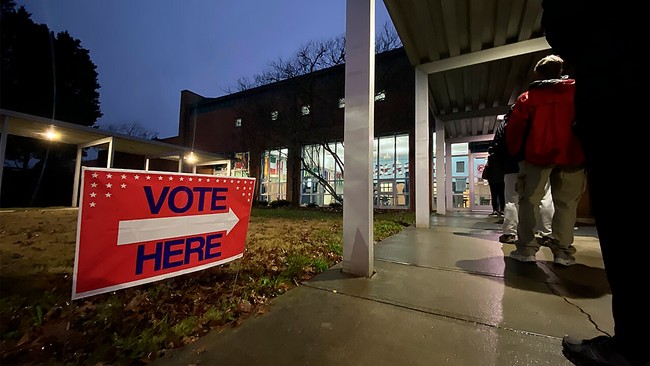
Republican Triumphs in Tennessee Special House Election
Favicon 
yubnub.news

Republican Triumphs in Tennessee Special House Election

Republican Matt Van Epps triumphed in Tuesday’s House special election in Tennessee, stifling talk of a possible Democrat upset in a reliably red district. As of Tuesday evening, the Associated Press…
Like
Comment
Share
YubNub News
YubNub News
4 d

Obama Def Sec Leon Panetta – Who Signed ‘Intel Letter’ About the Hunter Laptop – Accuses Pete Hegseth of a War Crime (VIDEO)
Favicon 
yubnub.news

Obama Def Sec Leon Panetta – Who Signed ‘Intel Letter’ About the Hunter Laptop – Accuses Pete Hegseth of a War Crime (VIDEO)

Leon Panetta – Screencap of YouTube video. Leon Panetta, who served as Obama’s first Secretary of Defense in 2009, recently accused Pete Hegseth of committing a war crime, because of the most recent…
Like
Comment
Share
YubNub News
YubNub News
4 d

JUST IN: Corrupt Obama Judge Beryl Howell Bars Trump Admin From Making Warrantless Immigration Arrests in DC
Favicon 
yubnub.news

JUST IN: Corrupt Obama Judge Beryl Howell Bars Trump Admin From Making Warrantless Immigration Arrests in DC

Corrupt Obama-appointed Judge Beryl Howell on Tuesday evening barred the Trump Administration from making warrantless immigration arrests in DC. Judge Howell issued a preliminary injunction blocking the…
Like
Comment
Share
YubNub News
YubNub News
4 d

Smarter Than a College Freshman: Univ. of Alabama Student Redraws Senate Maps, Gets Federal Approval
Favicon 
yubnub.news

Smarter Than a College Freshman: Univ. of Alabama Student Redraws Senate Maps, Gets Federal Approval

Daniel DiDonato is a University of Alabama student who recently turned 18. Alabama has its statewide elections in 2026, so as a potential voter, DiDonato now has skin in the game. But even before he did,…
Like
Comment
Share
YubNub News
YubNub News
4 d

Want to know a secret? You’re saved before you know it
Favicon 
yubnub.news

Want to know a secret? You’re saved before you know it

By Robin Schumacher, Exclusive Columnist Wednesday, December 03, 2025iStock/LadaniferEditors’ note: The Christian Post Opinion Page has published two countering views on Calvinism. To read the opposing…
Like
Comment
Share
YubNub News
YubNub News
4 d

Which comes first in salvation order: Faith or regeneration?
Favicon 
yubnub.news

Which comes first in salvation order: Faith or regeneration?

By John Chipman, Op-ed contributor Wednesday, December 03, 2025PixabayEditor's note: The Christian Post Opinion Page has published two countering views on Calvinism. To read the opposing view in the piece…
Like
Comment
Share
YubNub News
YubNub News
4 d

We need a 1970s Jesus Movement today
Favicon 
yubnub.news

We need a 1970s Jesus Movement today

By Elizabeth McCauley, Op-ed contributor Wednesday, December 03, 2025(L-R) Jonathan Roumie as Lonnie Frisbee and Kelsey Grammer as Chuck Smith in the film, "Jesus Revolution," a Lionsgate release. | Dan…
Like
Comment
Share
YubNub News
YubNub News
4 d

Late Breaking: Trump-Endorsed Van Epps Defeats Anti-Police Democrat in TN House Race
Favicon 
yubnub.news

Late Breaking: Trump-Endorsed Van Epps Defeats Anti-Police Democrat in TN House Race

Tennessee Democrat upstart state Rep. Aftyn Behn ended up making it closer than expected, but not close enough, in Tennessee’s special election on Tuesday. With over 95 percent of the votes in, the…
Like
Comment
Share
Conservative Voices
Conservative Voices
4 d

U.S. Hawkishness on Russia Makes Deterring China Harder
Favicon 
www.theamericanconservative.com

U.S. Hawkishness on Russia Makes Deterring China Harder

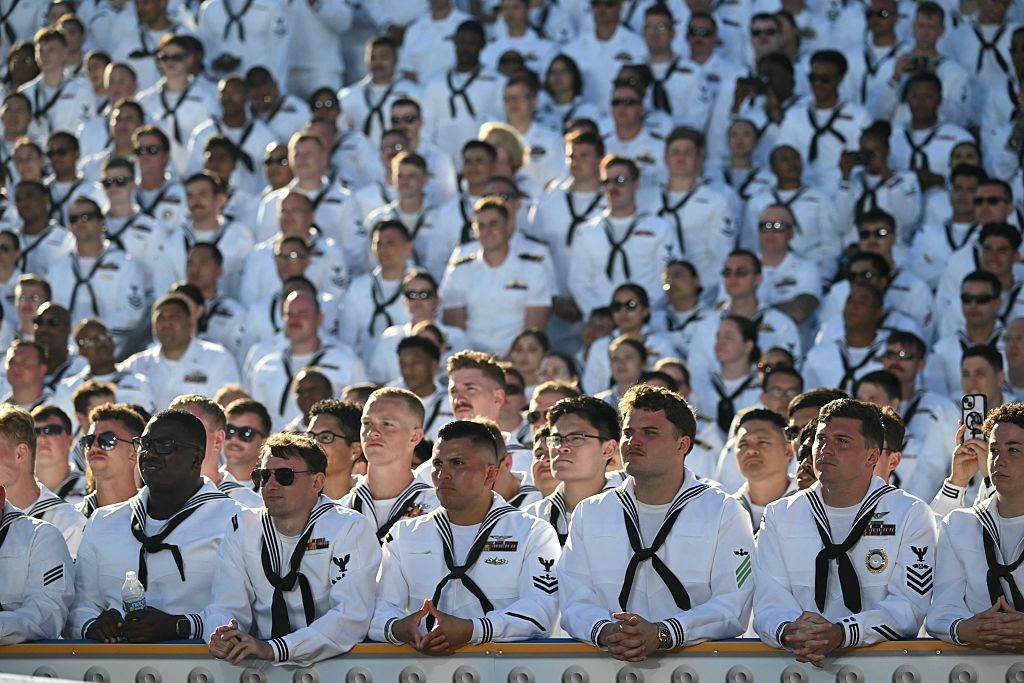
Foreign Affairs U.S. Hawkishness on Russia Makes Deterring China Harder America’s Ukraine policy has led to a potential “nightmare” for our navy in the Pacific. (Photo by SAUL LOEB/AFP via Getty Images) American hawks often claim that hostile policy towards Russia is in the interests of the United States because it deters China, our main superpower competitor. Their argument is roughly that, if we do not sanction Russia and give money to Ukraine indefinitely, China will feel “emboldened” with the possible result of a kinetic conflict over Taiwan. This policy premise has only strengthened China by forcing the Russians into the hands of the Chinese. Tangibly, American aid to Ukraine and sanctions on Russia have aided the PRC, and particularly its naval forces, in their ongoing nuclear buildup by encouraging Russian technology transfers to China. Until 2020, China’s nuclear strategy was largely a relic of the Cold War and the Sino–Soviet tensions of the 1970s. Accordingly, China’s nuclear capabilities consisted of a stockpile of nuclear warheads numbering in the low 200s to deter the USSR or Russia and America. Chinese nuclear capabilities were also heavily dependent on land-based systems, largely medium-range. China possessed comparatively few (and noisy) ballistic missile submarines (SSBNs), and lacked air-launched ballistic missile (ALBM) capabilities altogether (and consequently lacked a nuclear triad).  China has recently embarked upon a massive buildup of its nuclear forces. By mid-2024, China had tripled the number of nuclear warheads in its inventory to over 600, and is currently on-track to have around 1,000 warheads by 2030, establishing it as a nuclear peer of the United States and Russia. In 2019, the Chinese announced their first bomber capable of carrying an ALBM; in 2025, during its Victory Day celebrations, China revealed the existence of its first ALBM, completing its nuclear triad. The most concerning aspect of China’s nuclear development is the buildup of the sea-based component of China’s nuclear capabilities, most notably through the development of the Type 096 submarine. China has historically lagged in SSBN development and production; it currently has six SSBNs in commission, compared to the 14 operated by both Russia and the United States. China’s SSBNs are also considerably smaller than their American or Russian counterparts. Crucially, Chinese submarines have also been known to be comparatively loud and easy to detect, with the Type 094, the newest SSBN in Chinese service, assessed louder and more detectable than Soviet submarines from the mid-1980s. This is comforting for American officials, as the ability of SSBNs to cruise and to maintain station undetected is arguably their most important capability. This is because the main asset of a submarine-launched nuclear deterrent (compared to land or air-launched) is its unpredictability. A sea-launched missile (nuclear or conventional) from an undetected and submerged submarine is much harder to plan against or to intercept.  SSBNs also play a critical role in nuclear deterrence by providing second-strike capabilities. Even should a nation’s land and air-launched nuclear capabilities be destroyed during the opening salvos of a conflict, SSBNs can launch a second strike on the hostile country. For this reason, even in peacetime, The United States and Russia almost always keep part of their SSBN inventory at sea on “fully-armed nuclear deterrence patrols” to provide a permanent nuclear deterrent.  Being able to detect and track foreign SSBNs, particularly through their noise emissions, is the main way of mitigating this risk, and could enable such a threat to be neutralized if need arise. Accordingly, the recurring struggles of the PLAN to field quiet and advanced SSBNs has been of great benefit to the United States in being able to maintain a qualitative military edge over the PLAN and to deter China. This gap between the capabilities of the USN and PLAN capabilities looks likely to close with the new Type 096 submarine, which is currently being developed and is set to enter service in the late 2020s or early 2030s. As has been noted by American strategists, this new class will be much quieter than earlier PLAN submarines. “The Type 096s are going to be a nightmare,” Christopher Carlson, a retired American submariner and military analyst, told Reuters. “They are going to be very, very hard to detect.” While much of China’s nuclear buildup is beyond the control of policy-leaders in Washington, this increase in China’s submarine-launched nuclear capabilities is in large part directly attributable to the U.S. government’s short-sighted Russia policy. It has been widely reported that the reason for the projected stealthiness of the Type 096 is that Russia transferred some of its submarine-stealth technology to China as a result of Western sanctions over the ongoing war in Ukraine. There is considerable evidence that Russia has aided China in the development of the Type 096. The Type 096 follows many Russian design trends; the submarine’s propulsion system is estimated to mirror that of Russia’s Borei-class submarines, and Russia’s Rubin Design Bureau is said to have influenced the Type 096’s design. This technology transfer was not inevitable. Russia has long been very hesitant to export or transfer any of its submarine stealth technology, which has been described as Russia’s “crown jewels”—a considerable advantage in the nuclear arena, particularly over China. But Western aid to Ukraine and sanctions targeting Russia have deepened both economic and political ties between Russia and China; the sub tech transfer is one of the results. Though it is doubtful that the Russians transferred their newest technology, the “imitative innovation” of even older Russian technology by the Chinese is set to create significant strategic headaches for the United States. This has been admitted by our leaders. Admiral Samuel Paparo, the commander of the U.S. Indo-Pacific Command, said that Russian technology transfers of submarine technology to the PRC “has the potential of closing American undersea dominance.” While it is impossible to “win” a nuclear war, and even a conventional conflict with China would be harmful to U.S. interests, it is beneficial for the U.S. to maintain its advantage in submarine capabilities over China. American naval strength deters China from influencing, coercing, or intervening militarily in its regional neighbors, including across the Taiwan Strait. The recent increases in the quantity and quality of China’s nuclear deterrent, particularly in the critical field of submarine-based capabilities, greatly benefits the PRC in its dealing with surrounding countries and the U.S., increasing China’s geopolitical leverage over its neighbors and giving it the ability to further supplant American influence in Asia and globally. While the cat may very well be out of the bag on the Type 096, it is not too late to stop similar instances of Chinese-Russian cooperation on military technology. Even with these transfers of technology, China still lags behind Russia in submarine quieting technology, and preventing further transfers is in the interests of the United States. The United States should seek rapprochement with Russia to avert potentially fatal cooperation between Moscow and Beijing.  Setting aside the carnage caused by leading Ukraine “down the primrose path,” genuine harm has been done to American interests and military capabilities by those who, for whatever reason, have pursued hostility between the United States and Russian Federation. Those who pitched confrontation with Russia as an efficacious means of deterring China should especially stand discredited. The post U.S. Hawkishness on Russia Makes Deterring China Harder appeared first on The American Conservative.
Like
Comment
Share
Conservative Voices
Conservative Voices
4 d

Trump’s War on Democracy in Honduras
Favicon 
www.theamericanconservative.com

Trump’s War on Democracy in Honduras

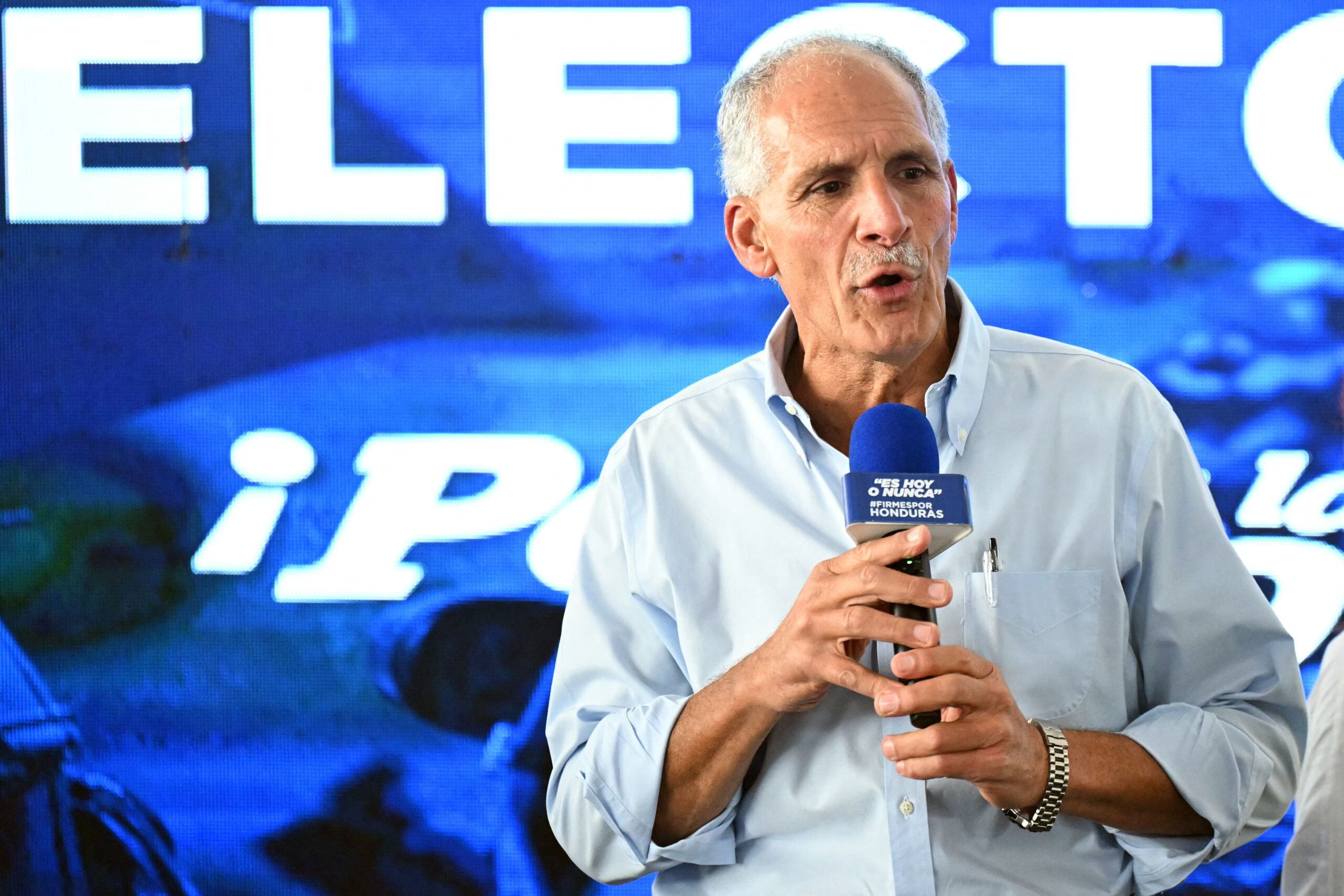
Foreign Affairs Trump’s War on Democracy in Honduras The U.S. should stop interfering in Latin American politics. The people of Honduras had not yet made up their minds. So, Donald Trump intervened to help them.  The major candidates in Sunday’s election were Rixi Moncada, the former defense minister of the ruling left-wing LIBRE party, who had promised to continue President Xiomara Castro’s agenda; Nasry “Tito” Asfura, a construction magnate who is running for the right-wing National Party on a free market platform; and Salvador Nasralla, formerly of the LIBRE party, who broke with them and moved to a centrist anticorruption platform. In the lead-up to the election, the polls suggested a three-way race with no clear favorite. But Trump had a favorite. Firing off two Truth Social posts within 18 minutes of each other, Trump dramatically intervened in the election.  With Venezuela under threat of U.S. military intervention, Trump’s posts widened the focus of the threat to encompass Honduras. “Will Maduro and his Narcoterrorists take over another country like they have taken over Cuba, Nicaragua, and Venezuela?” Trump asked. The only way to remove themselves from America’s gun sights was, apparently, to vote for Asfura, the right-wing candidate. “The man who is standing up for Democracy, and fighting against Maduro,” Trump said, “is Tito Asfura, the Presidential Candidate of the National Party.” The threat was clear: a vote for Moncada is a vote for Venezuela that puts Honduras at risk of war; a vote for Asfura is a vote for America to fight against Maduro. “Tito and I can work together to fight the Narcocommunists…. I cannot work with Moncada and the Communists,” Trump told the voters of Honduras. And the threat was not only military but also economic. Right after hitting “post” on his first message, another thought struck Trump that Hondurans needed to hear: “If Tito Asfura wins for President of Honduras, because the United States has so much confidence in him, his Policies, and what he will do for the Great People of Honduras, we will be very supportive. If he doesn’t win, the United States will not be throwing good money after bad.” With the threat of military and economic intervention now clear, Trump declared, “Democracy is on trial in the coming Elections,” and he left it to the people of “the beautiful country of Honduras” to decide. Moncada was not guilty of hyperbole or sensationalism when she complained that Trump’s posts, “three days before the election,” were “totally interventionist.” This is not the first time the U.S. has lacked the patience to wait for an election before undertaking an intervention or a coup. The preemptive soft coup, whether by endorsement, diplomatic support, removal from the ballot, threat of sanctions, or smearing the vote as illegitimate ahead of its taking place, has recently been a popular page in the American interventionist handbook. Such interventions have been undertaken in several recent elections, including Venezuela, Haiti, Ecuador, and Argentina. One of the key congresspeople keeping tabs on the Honduran election is Rep. Maria Salazar (R-FL). She is hardly averse to non-democratic transfers of power in Honduras. When Honduras’s President Manuel Zelaya, the founder of the LIBRE party, was ousted in a 2009 coup, Salazar said “thank God… Mr. Zelaya was out of office.” The U.S. role in the 2009 coup has not given America a good résumé in Honduras. On June 28, 2009, Manuel Zelaya was seized at gunpoint and whisked away in a plane that, unsubtly, refueled at a U.S. military base. The U.S. knew it was a coup. A July 24, 2009 cable sent from the U.S. embassy in Honduras says, “There is no doubt that the military, Supreme Court and National Congress conspired on June 28 in what constituted an illegal and unconstitutional coup….” As an exclamation point, it adds, “none of the . . . arguments [of the coup defenders] has any substantive validity under the Honduran constitution.” Nonetheless, when the UN and the Organization of American States (OAS) called for the return of the elected president, the U.S. did not. And when the UN and the OAS refused to recognize the coup president, the U.S. did. Then-Secretary of State Clinton has admitted that she aided the coup government by shoring it up and blocking the return of the elected government: “In the subsequent days [after the coup] I spoke with my counterparts around the hemisphere, including Secretary [Patricia] Espinosa in Mexico. We strategized on a plan to restore order in Honduras and ensure that free and fair elections could be held quickly and legitimately, which would render the question of Zelaya moot.” Rodolfo Pastor Fasquelle, a minister in the Zelaya government, told Democracy Now that “I know for a fact that CIA operatives and military personnel of the United States were in direct contact with the conspirators of the coup d’état and aided the conspirators.” Trump’s current intervention in Honduran elections, which the codirector of the Center for Economic and Policy Research, Mark Weisbrot, has pointed out is “a violation of Article 19 of the Charter of the Organization of American States, to which the United States is a signatory,” seems to have borne some fruit. Neck and neck among the three leading candidates before Trump’s social media posts, the preliminary results, after 57 percent of the votes had been counted, suggest Moncada no longer has a shot. Asfura had 39.91 percent of the vote, Nasralla 39.89 percent, and Moncada had disappeared from the race with 19.18 percent. Though there are still many ballots to be counted, including from remote rural communities that could change the balance, voters seem to have abandoned Moncada. Some polling had suggested that Nasralla held the edge among the large group of undecided voters. Trump’s influence, though, seemed to bump up Asfura as intended. But by the time the first tranche of votes had been counted, Nasralla had closed the gap, leading Trump to return to Truth Social, claiming fraud in the vote count. Without a hint of evidence, Trump first insisted, “Looks like Honduras is trying to change the results of their Presidential Election.” He then threatened, “If they do, there will be hell to pay!” Trump’s claim was based on the fact that the National Election Commission “abruptly stopped counting” the vote. But, as The New York Times explains, it was an expected pause after digital results were counted and the slower-to-arrive hand votes were left to be tallied. This whole affair is bad for America’s reputation in Honduras and Latin America, it is bad for the people of Honduras who were forced to vote under threat, and it is bad for Venezuela. It could also be bad for the stability of the region. The same La Palmerola air base at which the 2009 coup plotters refueled their plane is still operational. If it comes to war with Venezuela, there are U.S. personnel stationed there. Honduras could find itself drawn into the conflict. The time has long passed for the U.S. to stop engaging in colonial-style interference in the elections of Latin American countries and to stop “defending democracy” when our candidate wins and subverting it when our candidate loses. The post Trump’s War on Democracy in Honduras appeared first on The American Conservative.

Like
Comment
Share
Showing 544 out of 101642
  • 540
  • 541
  • 542
  • 543
  • 544
  • 545
  • 546
  • 547
  • 548
  • 549
  • 550
  • 551
  • 552
  • 553
  • 554
  • 555
  • 556
  • 557
  • 558
  • 559
Advertisement
Stop Seeing These Ads

Edit Offer

Add tier


Select an image
Delete your tier
Are you sure you want to delete this tier?

Reviews

In order to sell your content and posts, start by creating a few packages. Monetization

Pay By Wallet

Payment Alert

You are about to purchase the items, do you want to proceed?

Request a Refund