YubNub Social YubNub Social
    #covid #bible #america #god #tyranny #jesuschrist #vaccination #god\ #youtube #kjv #kjb #kingjamesbible #scriptures #scripture #biblestudy
    Advanced Search
  • Login
  • Register

  • Night mode
  • © 2026 YubNub Social
    About • Directory • Contact Us • Developers • Privacy Policy • Terms of Use • shareasale • FB Webview Detected • Android • Apple iOS • Get Our App

    Select Language

  • English
Night mode toggle
Featured Content
Community
New Posts (Home) ChatBox Popular Posts Reels Game Zone Top PodCasts
Explore
Explore
© 2026 YubNub Social
  • English
About • Directory • Contact Us • Developers • Privacy Policy • Terms of Use • shareasale • FB Webview Detected • Android • Apple iOS • Get Our App
Advertisement
Stop Seeing These Ads

Discover posts

Posts

Users

Pages

Blog

Market

Events

Games

Forum

Conservative Voices
Conservative Voices
1 y

Trump Risks Repeating Biden’s Disasters in Gaza
Favicon 
www.theamericanconservative.com

Trump Risks Repeating Biden’s Disasters in Gaza

Only three weeks into his second term, President Donald Trump is at a crossroads.  Trump has taken the reins of government from Joe Biden’s disastrous administration that effectively spent its final year publicly unraveling, largely due to its foreign policy—more specifically, over Biden’s unconditional backing for Israel’s war on Gaza. The policy pleased no one: It ignited outrage from the left, leading to scenes of chaos and sometimes shocking violence on the home front; America-Firsters were forced to watch the country regularly humiliated and pushed around by its own client state, all as U.S. troops were put at risk, the country’s geopolitical position diminished, and the risk of another U.S. war in the Middle East grew; and the rest of the country, fed up with feeling abandoned at the behest of overseas commitments, once more seethed as a foreign government got endless billions of dollars while their communities struggled.  Trump won the election in no small part by promising a sharp change from this. But having inherited Biden’s war as his own, Trump is now faced with a choice that may define his presidency: make good on this promise, largely by putting his foot down with Israel, or repeat Biden’s failures.  The president has already reaped the benefits of the first option, and before he was even inaugurated, when he pressured Israel’s Prime Minister Benjamin Netanyahu to agree to a ceasefire. He received widespread applause for doing what Biden had proven himself too weak to do for the past year, and for making good on a key campaign promise and bolstering his image as a peacemaker—all while neutralizing Gaza as a flashpoint in domestic politics. In many ways, it simply followed the model of Ronald Reagan, who used U.S. leverage—namely, the enormous military aid that made Israeli wars almost entirely reliant on American support— to end Israel’s similarly self-destructive war on Lebanon in 1982. But Trump’s moves since taking office suggest he’s moving toward rejecting that approach and instead of falling into the same trap as Biden, with similarly disastrous potential consequences. For one, Netanyahu has made clear he has no intention of moving to the next stage of the ceasefire deal, and simply restarting the war after the first 42-day phase of the agreement—and Trump has made public and, reportedly, private statements indicating he may back him to do this. Taking this course would betray a key segment of voters who went for Trump, kill his stated hope of leaving his “proudest legacy” as a “peacemaker,” and reignite the massive protests that bedeviled Biden—which were populated not by foreigners on student visas, but by thousands of Americans, whom it would not be popular to put down with heavy-handed measures. What’s more, it would diminish the image of strong U.S. leadership and cause many Americans to ask who exactly is running U.S. foreign policy: the president of the United States, or Benjamin Netanyahu?  Maybe more perilously, it puts the threat of having the United States dragged into another dumb and disastrous Middle East war back on the table. Trump’s ceasefire has ceased the Houthi attacks on American ships in the Red Sea—which, besides endangering Americans, had also effectively started an undeclared U.S. war in Yemen—but this would restart if Netanyahu begins slaughtering Palestinians again. Likewise with Netanyahu’s clear efforts to drag the United States into a war with Iran, which Trump has indicated he doesn’t want, and which the Biden administration only narrowly avoided by dumb luck.  The peril is just as great with the plan Trump rolled out this week, for the United States to “take over” the Gaza strip, relocate the Palestinian population out of it to neighboring countries, and clear the territory for real estate development that would, presumably, be eventually settled by Israel. Pitched as a simple, common-sense solution, this would in reality be Biden’s embarrassing floating pier boondoggle on a grander scale, with even worse potential blowback on the United States. (Trump has nominally walked back some of the most alarming parts of the plan since, seemingly ruling out deploying U.S. troops to the territory, but it’s hard to see how Gaza being “turned over to the United States by Israel” could happen without involving a U.S. military force.)  The refusal of countries like Egypt, Jordan, and the Gulf states to take in a large influx of Palestinians is not simply a matter of their lacking the will to do it. Besides the sudden, enormous strain this would create on their resources and infrastructure, it would also further inflame public opinion among their populations, who have protested in large numbers against the war and demanded their governments rip up the Abraham Accords that Trump brokered in his first term, along with other peace agreements with Israel. These populations would be even more furious at seeing their rulers effectively helping Israel ethnically cleanse Gaza of Palestinians.  It’s hard to imagine how the president’s dream of a grand deal between Israel and Saudi Arabia and other states would happen under these circumstances. In fact, Jordan views the expulsion of Palestinians into its borders as such a serious threat to its existence, it has gone so far as to threaten war against Israel if it goes forward with this.  The reality is, the long-term peace Trump insists would come out of the expulsion of Gazans is an illusion. Biden’s own secretary of state admitted that, after a year flattening Gaza and killing tens of thousands, Hamas had “recruited almost as many new militants as it has lost.” Hamas or an organization like it will continue to exist wherever the Palestinian population goes, given the enormous anger and resentment that Israel’s war has created, and which expulsion and a takeover of their land would only add to. It is simply unrealistic that Palestinians, once removed from their homeland, will sit quietly and watch from their new homes as the United States and Israel occupy it. In short, Trump’s plan would likely ensure neverending and quite possibly widening war, not lasting peace and stability. Meanwhile, just as with Biden’s pier, the Americans and Israelis tasked with clearing Gaza and resettling it—whether troops or civilians—would be sitting ducks for the resulting attacks. At the same time, the sharply increased risk of anti-American terrorism that U.S. officials have repeatedly warned that Biden’s approach had led to would be turned up to overdrive if the United States was now not only perceived as ethnically cleansing Gaza, but occupying it. In other words, not only would the Gaza takeover plan mean once more endangering American lives at the behest of a foreign government, and for no conceivable benefit to U.S. interests, but it makes it more likely for the United States to be pulled into another terrible war in the region.  Biden’s presidency and legacy are in tatters because he wasn’t a strong enough leader to do what Reagan and other presidents had done: to act like the superpower the United States is and tell Israel “no.” Instead, he pursued fantastical, failed workarounds like the pier and subjected himself and the country to constant humiliation, all in the hope of avoiding having to stand up to the Israelis. Trump began his presidency doing the opposite, the result being that U.S. interests were put first and the risk of all-out war lowered. It would plainly be in both the country’s and his best interests to stay on this path. The question is if he’s smart enough to realize it—and strong enough to make it happen.  Politics Trump Risks Repeating Biden’s Disasters in Gaza If Trump pursues the plan articulated at his press conference with Benjamin Netanyahu, he invites disaster. Credit: image via Shutterstock The post Trump Risks Repeating Biden’s Disasters in Gaza appeared first on The American Conservative.
Like
Comment
Share
Conservative Voices
Conservative Voices
1 y

The Foreign Aid Controversy Echoes Cold War Debates
Favicon 
www.theamericanconservative.com

The Foreign Aid Controversy Echoes Cold War Debates

Politics The Foreign Aid Controversy Echoes Cold War Debates Sharp ideological differences drive the dispute over U.S. assistance. Credit: Christian Thiel/Shutterstock “I think we are going to peel… more off the foreign aid handout program, and I hope the State Department will not accuse us of being Communist sympathizers if we do,” said Republican Congressman H.R. Gross of Iowa in 1963. Even at the height of the Cold War, when America’s foreign policy debate was narrow, Washington was divided over an issue that is igniting controversy again today: foreign aid. MAGA conservatives, like their Republican predecessors, are peeling more off the foreign aid handout program, a move that critics have branded as not only heartless but one that “helps the Chinese and their autocratic allies.” Political debates over foreign aid arise from conflicting visions of America’s role in the world. If one accepts that the United States government should advance liberal modernity globally, then foreign aid is paramount. Such was the case for Cold War liberals, who viewed material want overseas as presenting fertile soil for the spread of communism.  However, if one believes that the role of America’s foreign policy is to protect core national interests, then foreign aid often appears wasteful and counterproductive. During the Cold War, conservative Republicans asserted that such aid wasted taxpayer dollars, subsidized authoritarian rulers, undermined a global order built on national sovereignty, and left Washington bogged down in foreign lands.  This fundamental debate has returned to American politics, more than three decades after the Cold War, which birthed the modern foreign-aid regime, and more than three years after the withdrawal from Afghanistan ended the Global War on Terror, which had sustained that regime long after the fall of the Soviet Union. In the opening years of the Cold War, conservative Republicans maintained earlier, more traditional assumptions about America’s role in the world. Drawn from the ranks of the “Old Right”—often associated with Robert Taft, who served as Ohio Senator throughout the 1940s—they continued to believe what conservatives had thought before World War II transformed the international order: that government aid to other countries constituted a type of foreign entanglement. Whether it was the Marshall Plan or the Truman Doctrine, Old Rightists warned that foreign aid enmeshed the United States in European affairs, cultivated dependency in recipient nations, and undermined America’s own geopolitical independence by creating institutional incentives to continue supporting foreign governments. For the Old Rightists, America’s mission in the Cold War was not to spread democracy and liberalism, but to defend the homeland against an aggressive and expansionist Soviet Union. And they believed that the nascent foreign aid regime served not as a useful counter to Soviet communism, but as a threat to the American republic and its sovereignty. Even as the Cold War settled into a new status quo with the Korean War and Washington’s foreign aid response—the Mutual Security Act—opponents on Capitol Hill kept up their struggle to end U.S. government largesse overseas. The act, which regularized American foreign aid, quickly became H.R. Gross’s legislative white whale. During debate on the House floor, he groused that among the act’s beneficiaries was Franco’s Spain, “a regime of tyranny,” in Gross’s estimation. Other recipients, Gross wryly noted, were Europe’s colonial powers, Tito’s communist government in Yugoslavia, and illiberal regimes in South Korea and Taiwan. Gross argued that the client list demonstrated the “complete idiocy of the term ‘free world.’” And he asked how much longer his fellow Americans would have to “listen to the siren songs of these internationalists” and how long it was “proposed to make chumps of the American people.” Republican opponents in Congress were joined by conservative lobbying groups like the Citizens Foreign Aid Committee (CFAC). Despite the ambiguous name, CFAC, which was organized in 1959 and drew from several alumni of the long-defunct America First Committee, opposed government foreign aid, overseas military basing, and other trappings of the Cold War. CFAC argued that foreign assistance contributed to an increasingly lopsided balance of payments, was unnecessary considering Western Europe’s economic recovery, and amounted to American taxpayers subsidizing that region’s post-war welfare states. The committee’s opening document, entitled “Foreign Aid and You,” declared that “Western Europe, more prosperous than before World War II, is not carrying its proportionate share of the NATO defense effort.” Similarly, the committee resisted growing aid commitments in the postcolonial world. CFAC questioned a growing liberal consensus that held that material conditions lay at the heart of communism’s appeal. Instead, they asserted that foreign aid boiled down to a wasteful program fueled by confiscatory taxes “bestowed by our government bureaucrats upon a foreign government to do with it as it pleases.” Lastly, CFAC, recognizing profound differences between nations, argued that foreign aid unfairly imposed Western modernity “upon underdeveloped countries with less complex living standards, slower tempo, and different cultures,” all while flooding tottering governments with cheap money that incentivized corruption. Republican opposition to foreign aid continued into the 1960s as the incoming President John F. Kennedy saw reason to expand the Cold War. Accelerating decolonization, White House officials believed, left more of the globe open to Soviet influence, which meant American influence was needed to counter it. The administration was influenced by modernization theory, a social-science model that construes modernity as universal, rational, and therefore exportable. In pursuit of its Cold War aims, the Democratic administration sought to expand the scope and ambition of foreign aid. The Foreign Assistance Act of 1961, which established the United States Agency for International Development (USAID), became a cause célèbre among conservatives who opposed the foreign-aid aspects of the Cold War state. Due to the anguish of the Vietnam War, former Cold War liberals joined Gross in his crusade. Among these Democratic turncoats was Senator Frank Church of Idaho. In addition to his more famous change of heart vis-à-vis the intelligence community, Church became an outspoken critic of American foreign aid. In a speech entitled “Farewell to Foreign Aid: A Liberal Takes Leave,” Church argued: “This country simply cannot afford to sustain such an outlay of habit” and that “the program is on the whole a proven failure, whose termination is warranted on […] empirical grounds alone.” In a cross-partisan gesture, Church sent Gross, one of the few members of a withering Old Right, a copy of his speech with compliments. Gross responded, “Welcome to the club.” The partnership would not last long, as Gross retired from Congress three years later, completing a generational turnover in Republican Party politics. Into the vacuum emerged a New Right that made its peace with programs like foreign aid. By 1985, foreign assistance programs had risen to 0.6% of GDP, the largest share since the height of the Marshall Plan. The fall of the Soviet Union and the triumphalism that followed gave such programs an ideological second life, as they appeared to be an essential part of the West’s victory.  Today, as the Cold War and the War on Terror recede further in the rearview mirror, conservative efforts to curtail or eliminate foreign aid have reemerged. During the Cold War, ideological constraints hemmed in figures like H.R. Gross to some extent. In our own age of post-ideological global conflict and multipolarity, such constraints apply less than they once did. Still, foreign aid supporters similarly frame dissent as playing into the hands of foreign actors, especially China, which they believe will spread its influence more rapidly if the U.S. government doesn’t shower the world with American tax dollars. If America is to move on from an era of postwar empire, this aspect of past debates deserves to become history.  The post The Foreign Aid Controversy Echoes Cold War Debates appeared first on The American Conservative.
Like
Comment
Share
Conservative Voices
Conservative Voices
1 y

Trump’s Humane Plan for Making Gaza Great Again 
Favicon 
www.theamericanconservative.com

Trump’s Humane Plan for Making Gaza Great Again 

Foreign Affairs Trump’s Humane Plan for Making Gaza Great Again  A serious but not literal version of Trump’s Gaza scheme could benefit both sides of the conflict. Credit: PhotopankPL/Shutterstock The critics are raving about President Trump’s comments at that February 4 press conference at the White House: “The U.S. will take over the Gaza strip, and we’ll do a job with it, too. We’ll own it.”  Yep, that got ’em going: “Trump’s Gaza fantasy is a recipe for a forever war,” sniped the headline in POLITICO. “Trump’s Gaza proposal for ‘Riviera of the Middle East’ sparks global condemnation,” snapped Reuters. “Gaza plan sparks sharp criticism,” snipped CNN. Plus this header in the Hill: “Texas Dem says he’ll bring articles of impeachment against Trump over Gaza.”  In his report, the New York Times’ Peter Baker found plenty of experts who were hostile to Trump’s idea, and yet Baker espied Trump’s freewheeling imagination: President Trump basked as Prime Minister Benjamin Netanyahu of Israel praised his “willingness to think outside the box.” But when it came to Gaza, Mr. Trump’s thinking on Tuesday was so far outside the box that it was not clear he even knew there was a box. That’s Trump. He eats mental boxes—and any other kind of conventional wisdom—for breakfast.  And as it happens, just four days before, this author, here at TAC, pondering pacific solutions for Gaza, had admiringly indulged in some imagery: “President Donald Trump hasn’t just shifted the Overton Window, the zone of what’s understood to be possible in politics; he’s blown it wide open. It’s now the Overton Vista.” In that article, I argued there’s never going to be a peace deal between Israel and Gaza so long as the Strip is controlled by Hamas or anything close. Indeed, there’s going to be little if any reconstruction, either; the Israelis, mindful of who started this war back on October 7, 2023, don’t want to see Hamas replenished.  As for Trump’s America, it is withdrawing from the United Nations Relief and Works Agency, which seems to have dabbled—or more than dabbled—in support for terrorism. So where’s help for the Gazans going to come from? The Europeans, palsied by their Malthusian policies and needful of American defense against Russia, are unlikely to cross Trump with a big aid effort of their own. As for Arab and other Muslim countries, they, too, seem unlikely to mess with Trump or Israel. So the baseline scenario for Gazans is that they will be sitting, wretchedly, in tents and rubble for years to come.  Surely there’s some better way to uplift Gazans while protecting Israelis against another 10/7. In that same TAC piece I recalled a book I had published in November 2023, Create Gaza 2, Protect Israel, Build Peace, along with my co-author, Dr. Joyce Starr. We argued that the only hope Gazans had for a decent life was to live somewhere else. To sweeten the deal, we suggested paying them $100,000 each to leave. If the population of Gaza is 2 million, that would mean an outlay of $200 billion. For sure, that’s a lot of money, but it’s not so much compared to the cost of the carnage and the hit on the Israeli economy in the past two years—one recent international survey found that Israel’s national “brand” now ranks 50th out of 50 countries. In terms of business confidence and investment, that’s a costly cellar in which to dwell.  Yet if peace were to break out in Gaza, not only would Israel gain value, but so, likely, would other indexes, as markets priced in lower risks. If there’s ever a mission for enlightened capital, this would be it. With apologies to Churchill, spend-spend is better than kill-kill. But where would the Gazans go? For his part, Trump has spoken vaguely about relocating them to other Arab countries. Yet embarrassingly for the Pan-Arab cause, Arab states don’t want the Gazans, or any Palestinians, as they tend to carry with them turmoil. So Starr—a veteran Middle East expert—and I suggested building them a new island, far from Arab crowds that the Gazans could madden. Thinking greenly, we further suggested making the island out of captured and solidified carbon—so the Gazans, too, could be part of the fight against climate change.  Striving for a Trumpy worldview, my TAC piece touted condos and casinos on the “Gaza Riviera.” So yes, when Trump mentioned Gaza as a potential “Riviera of the Middle East,” I was thrilled. Warming up, Trump pitched “economic development that will supply unlimited jobs and housing for people of the area.”  Alas, the critics didn’t dig it. Ignoring Trump’s positivity, they focused on negativity: “warmonger,” “endless wars,” “genocide,” “crimes against humanity.” In point of fact, Trump is against all those bad things.  Indeed, he’s been on Team Restrained Realist for decades. It was he who lanced the neocon bubble in February 2016, when he attacked George W. Bush for his disastrous Iraq War. A few days later, Trump won the South Carolina Republican presidential primary, marking the end of Bushian save-the-world interventionism. Trump is willing to throw Uncle Sam’s weight around, but he prefers cruising missiles to building nations.  Okay, but what of Trump’s recent talk about “taking over” Gaza? Isn’t that unsettling? Potentially, sure. But the best frame for viewing Trump comes from journalist Salena Zito; back in 2016, she wrote, “Take Trump seriously, not literally.” Nine years later, Trump talks about everything and yet not everything he talks about comes to pass—or is even repeated the next day. Still, oftentimes, there’s method in Trump’s meandering. Reacting to Trump’s Gaza newsbreak, Scott Adams tweeted, “King Solomon: ‘Cut the baby in half.’ President Trump: ‘America will own Gaza.’ Same energy.” That is, a bluff intended to get a reaction. Which, for sure, Trump got.  While it’s okay to shake things up, it’s not so good even to hint at a neo-Bush Operation Gaza Freedom. So within 24 hours, White House Press Secretary Karoline Leavitt, Secretary of State Marco Rubio, and Middle East Envoy Steve Witkoff assured the world that no military operation was in the offing. For sure, this is a trust-yet-verify thing, and yet Trump’s anti-quagmire record sustains faith. A realist might say, Better ill-chosen words than wars of choice. But still the question: Quo Gaza? Probably most Americans would say, “That’s someone else’s problem,” and they’d have a point. Yet that’s not quite Trump, who has never met a deal he didn’t want to “art.” At one time or another, the Dealosaurus rex has mused aloud about dealing and healing the problems of the Koreas, Ukraine, Mexico, and Iran, as well as of the Arabs and Israelis.  Indeed, in the Middle East, his Abraham Accords stand as a genuine achievement—any American president not named “Trump” would have received a Nobel Peace Prize. So now, thinking about Gaza, shrewd observers espy the hidden hand of Abraham Accorder and son-in-law Jared Kushner. Trump and Kushner, never having attended Georgetown University’s Walsh School of Foreign Service—or any other school of the blob—have their own ideas, rooted in their shared experience in real-estate transactionalism. Such outside-the-box thinking is, of course, anathema to the State Department and cognate deep states, and yet over the past eight decades, the Middle Eastern experts haven’t exactly covered themselves in success, to say nothing of glory. So White House Communications Director Steven Cheung is calling them out: “The definition of insanity is doing the same thing, expecting a different result. Peace—truly lasting peace—is the ultimate goal. And it can only happen with this President.” We’ll have to see if Trump can do better than his predecessors, but at least he’ll get his chance. As they proceed with their plan, Trump & Co. will likely get buy-in from some Arab countries, starting with the oil-rich kingdoms of the Persian Gulf—they hate missing out on a deal. And as for policing Gaza, it probably won’t be American troops, but it could be American contractors.  But there’s still the issue of where the Gazans could go. If other nations won’t take them, then perhaps we’re back to the idea of a newly built island, perhaps relatively near the Middle East—but safely far from Israel. Yes, an island refuge seems improbable, but it’s not impossible. And if Trump shied away from difficulty, he wouldn’t be where he is today.  The post Trump’s Humane Plan for Making Gaza Great Again  appeared first on The American Conservative.

Like
Comment
Share
Conservative Voices
Conservative Voices
1 y

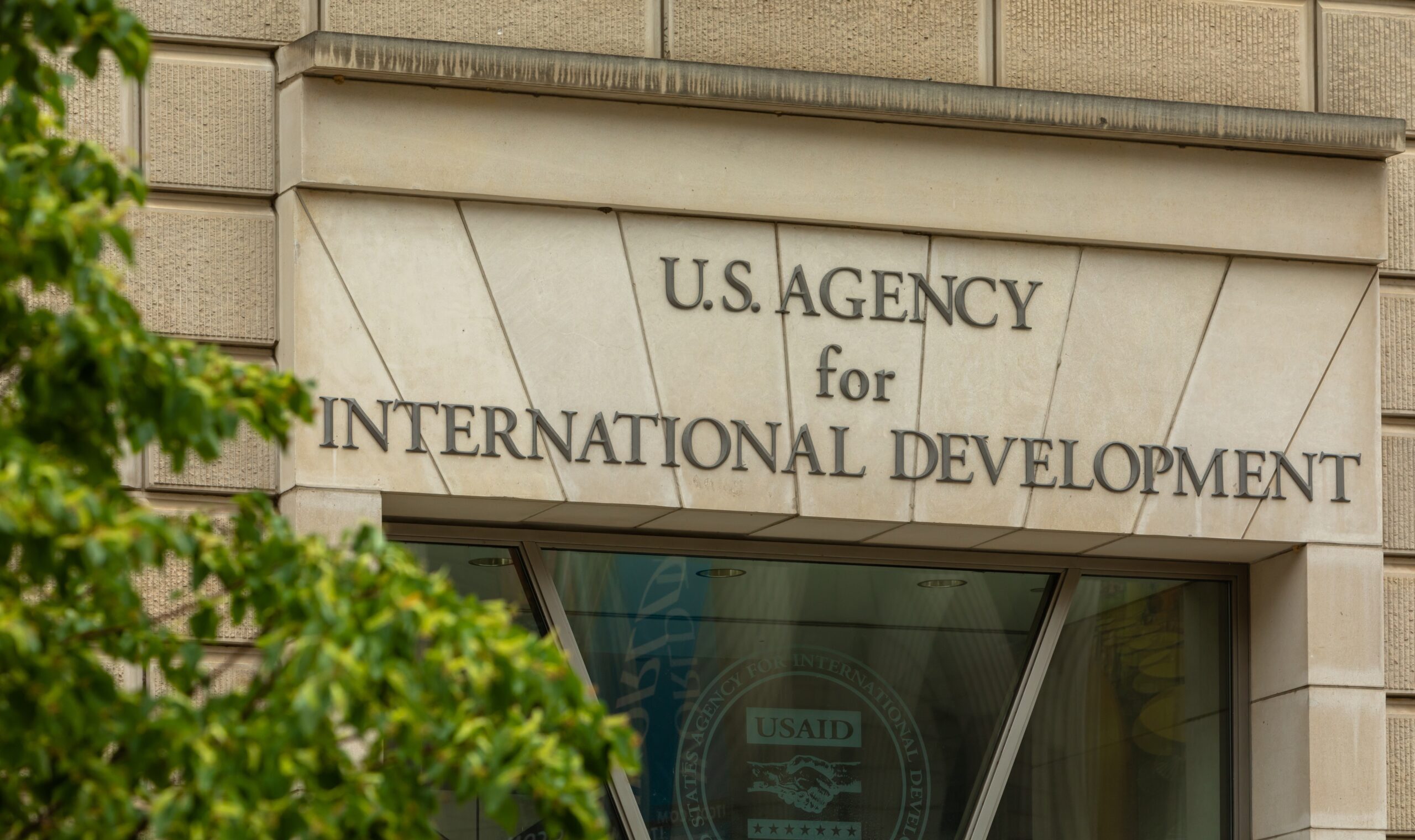
Insider: Level Of Democrat Panic Over Musk Freezing USAID “Unlike Anything Ever Seen”
Favicon 
conservativefiringline.com

Insider: Level Of Democrat Panic Over Musk Freezing USAID “Unlike Anything Ever Seen”

The following article, Insider: Level Of Democrat Panic Over Musk Freezing USAID “Unlike Anything Ever Seen”, was first published on Conservative Firing Line. (Natural News) A Democratic Party insider says that the level of panic over President Trump and Elon Musk’s DOGE freezing all USAID spending is “unlike anything he’s ever seen.” (Article by Steve Watson republished from Modernity.news) The source described the development as “a killing blow to the heart” of the deep state. Talked to a friend … Continue reading Insider: Level Of Democrat Panic Over Musk Freezing USAID “Unlike Anything Ever Seen” ...
Like
Comment
Share
Intel Uncensored
Intel Uncensored
1 y

?? Senator Rennick dropping truth bombs in the Senate (Freedom of speech)
Favicon 
api.bitchute.com

?? Senator Rennick dropping truth bombs in the Senate (Freedom of speech)

Discusses how they bulldozed the Hate Speech laws
Like
Comment
Share
Intel Uncensored
Intel Uncensored
1 y

Your smart phone Microphone is Working 24-7
Favicon 
api.bitchute.com

Your smart phone Microphone is Working 24-7

?AND YOUR CAMERA IS TOO!!!!!!? ✅GET YOUR FREE NUMEROLOGY READING HERE: https://bit.ly/numericalreading ✅SELF-HYPNOSIS AUDIO PROGRAMS: Reprogram Your Subconscious Mind http://bit.ly/2RGCade 0:00 - INTRO 1:15 - MUST WATCH!!! 3:25 - John McAfee 5:11 - P*rnography websites are hacking you 10:16 - SHARE THIS WITH YOUR FAMILY! ►Copyright ©: Script - BE INSPIRED Narration - BE INSPIRED Footage is licensed through Videoblocks, Artgrid, and Envato. Music: Epidemic Sound / Audiojungle / Envato Elements Interviews / Video References were used under FAIR USE LAW. © BE INSPIRED CHANNEL - All rights reserved For any concerns or business inquiries, please contact us at: beinspiredmanager@gmail.com AFFILIATE DISCLOSURE: there may be a few links in this description that, at no cost to you, will earn us a commission if you choose to click them and make a purchase Don’t worry, we only recommend products we know and trust! ?Source: Be Inspired? https://www.youtube.com/@BeInspiredChannel
Like
Comment
Share
Intel Uncensored
Intel Uncensored
1 y

UTL at RED HOT SUMMER concert - Gold Coast
Favicon 
api.bitchute.com

UTL at RED HOT SUMMER concert - Gold Coast

Hi all....UTL is at the RED HOT SUMMER concert on the Gold Coast, Queensland Australia right now.... Just wanted to make a comment on the DEMOGRAPHICS around me ?...
Like
Comment
Share
Intel Uncensored
Intel Uncensored
1 y

Killing Heidi - Weir (Live - Red Hot Summer Concert - Gold Coast)
Favicon 
api.bitchute.com

Killing Heidi - Weir (Live - Red Hot Summer Concert - Gold Coast)

UTL - A reminder about life - we still have to enjoy ourselves and what we've got....
Like
Comment
Share
Classic Rock Lovers
Classic Rock Lovers  
1 y

“Every type of physical and mental abuse imaginable”: Jerry Lee Lewis’ marriage to his underage cousin
Favicon 
faroutmagazine.co.uk

“Every type of physical and mental abuse imaginable”: Jerry Lee Lewis’ marriage to his underage cousin

Married at 13, a mother at 14. The post “Every type of physical and mental abuse imaginable”: Jerry Lee Lewis’ marriage to his underage cousin first appeared on Far Out Magazine.
Like
Comment
Share
Classic Rock Lovers
Classic Rock Lovers  
1 y

Why did The Beatles move to Hamburg?
Favicon 
faroutmagazine.co.uk

Why did The Beatles move to Hamburg?

Why the band needed the city. The post Why did The Beatles move to Hamburg? first appeared on Far Out Magazine.
Like
Comment
Share
Showing 57723 out of 118522
  • 57719
  • 57720
  • 57721
  • 57722
  • 57723
  • 57724
  • 57725
  • 57726
  • 57727
  • 57728
  • 57729
  • 57730
  • 57731
  • 57732
  • 57733
  • 57734
  • 57735
  • 57736
  • 57737
  • 57738
Advertisement
Stop Seeing These Ads

Edit Offer

Add tier


Select an image
Delete your tier
Are you sure you want to delete this tier?

Reviews

In order to sell your content and posts, start by creating a few packages. Monetization

Pay By Wallet

Payment Alert

You are about to purchase the items, do you want to proceed?

Request a Refund