YubNub Social YubNub Social
    #freedom #libtards #patriots #privacy #americafirst #loonyleft #surveillancestate #police\ #alpr #flock
    Advanced Search
  • Login
  • Register

  • Night mode
  • © 2026 YubNub Social
    About • Directory • Contact Us • Developers • Privacy Policy • Terms of Use • shareasale • FB Webview Detected • Android • Apple iOS • Get Our App

    Select Language

  • English
Community
New Posts (Home) ChatBox Popular Posts Reels Game Zone Top PodCasts
Explore
Explore
© 2026 YubNub Social
  • English
About • Directory • Contact Us • Developers • Privacy Policy • Terms of Use • shareasale • FB Webview Detected • Android • Apple iOS • Get Our App
Advertisement
Stop Seeing These Ads

Discover posts

Posts

Users

Pages

Blog

Market

Events

Games

Forum

Conservative Voices
Conservative Voices
1 y

Trump signs historic, first-ever executive order of its kind
Favicon 
www.brighteon.com

Trump signs historic, first-ever executive order of its kind

Follow NewsClips channel at Brighteon.com for more updatesSubscribe to Brighteon newsletter to get the latest news and more featured videos: https://support.brighteon.com/Subscribe.html
Like
Comment
Share
Conservative Voices
Conservative Voices
1 y

Democrats Are Trying to Terrify the Public
Favicon 
www.brighteon.com

Democrats Are Trying to Terrify the Public

Follow NewsClips channel at Brighteon.com for more updatesSubscribe to Brighteon newsletter to get the latest news and more featured videos: https://support.brighteon.com/Subscribe.html
Like
Comment
Share
Conservative Voices
Conservative Voices
1 y

DeSantis Plots a Comeback
Favicon 
www.theamericanconservative.com

DeSantis Plots a Comeback

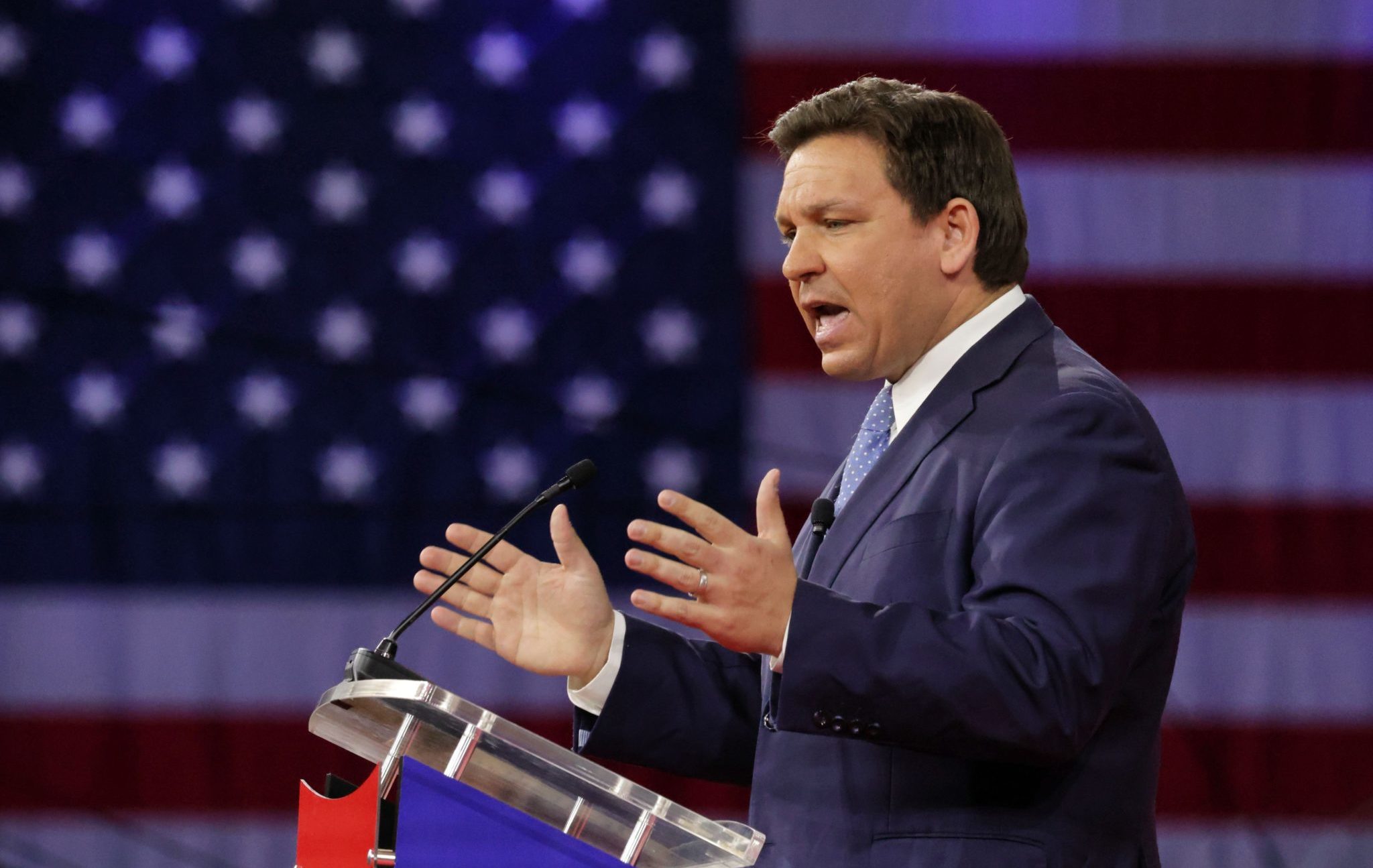
Politics DeSantis Plots a Comeback The failed 2024 candidate wants to try again—but his wife may be more likely to win the White House one day.   (Joe Burbank/Orlando Sentinel/Tribune News Service via Getty Images) Remember Ron DeSantis? His disastrous presidential campaign rivaled Jeb Bush’s in how severely it humiliated the candidate. The man once proclaimed as the future of conservatism suffered a humbling defeat at the hands of Donald Trump. Despite the intense anti-Trump hatred of his campaign, DeSantis immediately endorsed Trump after dropping out. The Florida governor’s star diminished significantly after his presidential bid. The MAGA base lost respect for him and he supplied plenty of fodder for online mockery. His failure to compete with Trump dethroned him as the strongest possible successor. But DeSantis hasn’t given up on his White House ambitions. His team is making moves to push Ron back into the discourse and make him a contender for 2028. But these moves may actually handicap another run and show he didn’t learn much from his failed bid. DeSantis is still a successful conservative governor of one of the largest states in the union. He has wide name recognition. Yet, the fundamental issues that killed his 2028 campaign remain.  DeSantis World wants to make his wife, Casey, the next governor of Florida. Ron is term-limited, so he can’t run in 2026. Who better to carry on the DeSantis legacy than the state’s first lady? Casey, unlike her husband, has charisma and confidence, and she’s much better on the stump. She’s a political creature and Ron’s chief advisor. Her strong approval ratings and compelling story of overcoming cancer make her a promising candidate. Moreover, her husband’s strong political machine will undoubtedly help her if she chooses to run. But Mrs. DeSantis faces a major obstacle to staying in the governor’s mansion: President Trump has already endorsed Rep. Byron Donalds in the race. Rather than trying to wage war against Trump in the petulant manner of her husband in the 2024 primary, Casey is going with a friendlier approach. This week, she played golf with the president while her husband took pictures. It’s part of a charm offensive to get Trump to stay out of the race and potentially extend his endorsement to Mrs. DeSantis. (Trump has endorsed multiple candidates in the same race before.)  This shows DeSantis World has learned an important lesson from the failed presidential bid, namely, that it’s never wise to go toe-to-toe with Trump as a Republican—because you are bound to lose. Fortunately for the DeSantis clan, the president doesn’t appear to hold a grudge. He’s reconciled with the governor in the same way he came to terms with many of his 2016 rivals. DeSantis is a smart politician. He realizes he has to be in the president’s good graces to keep his White House dreams alive. A gubernatorial race where Trump actively involves himself on behalf of Byron Donalds would doom Mrs. DeSantis’s chance. So Ron and Casey played golf with their former enemy. This is smart. However, DeSantis World still wants to undermine Trump in a more subtle fashion. The governor’s team knows it’s stupid to go on the offensive against the president. So they went with a proxy target in the form of Andrew Tate, whose appeal to young men they really don’t like. The “redpill” influencer is widely hated by conservative commentators for his “misogyny,” criticism of Israel, and alleged abuse of women. After Romania lifted restrictions on Tate and his brother, the pair flew to Florida. Reports claim Trump officials may have had a hand in pressuring Romania to lay off the Tate brothers.  The event could be easily ignored or dismissed by DeSantis and Florida officials. Tate is not a major concern for offline people. But to the influencers and pundits who shaped DeSantis’s horrible campaign strategy, Tate is one of the greatest threats to humanity–and they especially relish the alleged Trump connection. The extremely annoying people who helped tank DeSantis’s persona among conservatives see this as an opportunity to get back at Trump World. So they’ve decided to make a big deal out of Andrew Tate. First DeSantis issued a very clear rebuke of the Tate brothers and said they’re not welcome in Florida. Now the state attorney general is investigating the pair over human trafficking allegations. Romanian authorities have pursued a legal case against the brothers over the matter, but without reaching a conviction.  The state can certainly investigate Andrew Tate if it has reason to believe he’s involved in wrongdoing. But to make a public spectacle out of the investigation is an attempt to score political points. However, it’s unlikely to result in much political gain. Byron Donalds condemned the Tates, taking away an issue for DeSantis World to use against him. (Matt Gaetz, on the other hand, defended the Tates and accused DeSantis World of exploiting the matter to “virtue signal.”) The investigation will definitely please Ron’s remaining online fans and his supporters in conservative media, but he doesn’t need to do any more to win them over. His entire presidential campaign was centered around them—and he lost. He needs to move beyond caring about this devoted fanbase. Ordinary people do not care about Tate. There are far more important matters in this country and in Florida than a controversial influencer flying to the Sunshine State. Nobody is going to vote for DeSantis because he tried to imprison Andrew Tate. It’s an extremely online issue, reminiscent of how DeSantis thought Twitter Spaces was a great idea to launch a presidential bid. Taking on the Tates won’t necessarily harm DeSantis, but it could if Trump perceives an investigation as an implicit attack on himself. If that happens, Casey can kiss her hopes of winning over the president goodbye. The whole point of DeSantis’s comeback is to make him a viable presidential candidate once more. Choosing a proxy battle with Trump over Andrew Tate could prove disastrous. DeSantis’s online fans happily perceive this matter as an anti-Trump affair. (They still hate Trump, by the way.) But if DeSantis should’ve learned anything from his 2024 bid, it’s that he needs to ignore the Gator emoji set and work on making himself more MAGA. All that said, DeSantis has reasons to be optimistic. Trump may brush off the Tate matter and decide to stay out of the Florida race. If he does, Mrs. DeSantis stands a strong chance in 2026, and the current governor has a shot at the White House in 2028. But I wouldn’t bet on Mr. DeSantis ever being a viable presidential contender. Ron’s chief problem remains—his personality. Trump identified this shortcoming in the primary, writing in a Truth Social post: “The problem with Rondesanctimonious is that he needs a personality transplant, and those are not yet available.”  DeSantis is awkward meeting voters and on the stump. He heavily depended on conservative media making him out to be Ron “DeSavage” rather than the stiff he actually is. One cannot win the presidency with such a personality. People who make their living off politics bizarrely tried to claim that charisma doesn’t matter in campaigns when touting DeSantis, but they were completely wrong. Voters often cast their ballot based on personality rather than on policy. It’s just the nature of people, and this was affirmed in the 2024 primary. Mr. DeSantis’s moment has passed. He still has a strong record and name recognition, but other non-Trump politicians, such as J.D. Vance, have taken up his space. No one outside of the remaining DeSantoids on X treat him as the second coming anymore. The 2024 election was a disaster for DeSantis, and there’s little to suggest that 2028 would bring a different result. Ron’s personality issues may even make Casey the more viable presidential contender, in which case the first gentleman would be relegated to taking pictures of his wife at public events rather than making news himself. So much for Ron “DeSavage.” The post DeSantis Plots a Comeback appeared first on The American Conservative.
Like
Comment
Share
Conservative Voices
Conservative Voices
1 y

MAGA Should Embrace a Stronger Europe
Favicon 
www.theamericanconservative.com

MAGA Should Embrace a Stronger Europe

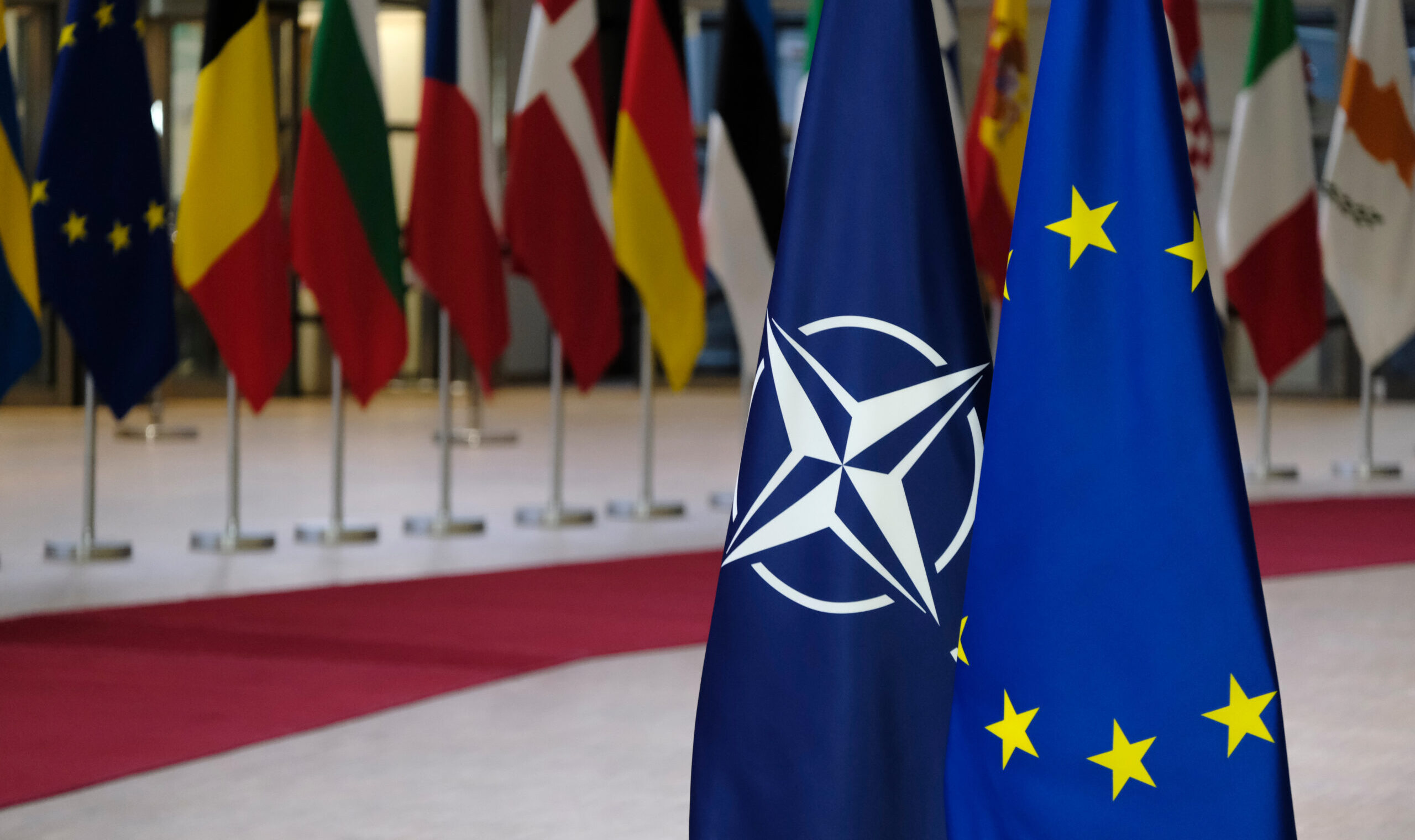
Foreign Affairs MAGA Should Embrace a Stronger Europe America’s allies across the pond are getting serious about security.   Credit: Alexandros Michailidis/Shutterstock The Europeans got the message. American presidents since Kennedy have wanted Europe to shoulder more of the burden of its own security. But not until President Donald Trump has a U.S. leader succeeded in getting Europeans to want the same. Of course, the eruptions of a revanchist Russia have helped. The latest example of Europe’s new groove: The prime minister of Poland, Donald Tusk, announced on Friday plans for all Polish men to undergo military training. Tusk said he wants to increase the size of the army from 200,000 soldiers to half a million, and that Ukraine’s army has 800,000 while Russia’s has 1.3 million. It’s no coincidence that the target set by Tusk would make up the difference. One far-sighted philosopher prophesied long ago that Russia’s rise would lead to Europe’s revitalization. In 1886, Friedrich Nietzsche wrote that Europe might only shake its feebleness, divisions, and liberal illusions in the face of a growing Russian threat:  I mean such an increase in the threatening attitude of Russia, that Europe would have to make up its mind to become equally threatening—namely, to acquire one will, by means of a new caste to rule over the Continent, a persistent, dreadful will of its own, that can set its aims thousands of years ahead; so that the long spun-out comedy of its petty-stateism, and its dynastic as well as its democratic many-willed-ness, might finally be brought to a close. The time for petty politics is past; the next century will bring the struggle for the dominion of the world—the compulsion to great politics. The 20th century did indeed bring great power politics to Europe, as Nietzsche foretold—but not European unity against Russia. That wouldn’t come until the third decade of the 21st century. Still, the Trump White House has needed to prod the Europeans to translate their moral solidarity into military action. Last month Secretary of Defense Pete Hegseth, during a meeting in Brussels, told NATO allies that the U.S. would retrench from Europe—meaning Europeans would need to step up on their continent. “Safeguarding European security must be an imperative for European members of NATO,” Hegseth said. Subsequent White House moves reinforced the message. At the Munich Security Conference in February, Vice President J.D. Vance scolded European elites for sacrificing their own people on the altar of globalism, and he questioned whether shared values still held together the transatlantic partnership. A few days later, Trump dispatched top diplomats to meet Russian envoys in Saudi Arabia—and didn’t invite Europeans to join. Two weeks after that, during a tense Oval Office meeting with Ukrainian President Volodymyr Zelensky, Trump made clear that he wouldn’t aid Ukraine’s war effort against Russia indefinitely. Europeans, in reaction, have grown concerned that they can no longer rely on America to defend them from Russian aggression—or worse, that Washington is aligning with Moscow against Europe. To meet the moment, leaders like Tusk and Friedrich Merz, Germany’s chancellor-in-waiting, have promoted European self-sufficiency. “My absolute priority will be to strengthen Europe as quickly as possible so that, step by step, we can really achieve independence from the USA,” Merz said last month. France’s President Emmanuel Macron—Mr. Europe himself—must sense a golden opportunity to construct what he calls a “Power Europe.” In recent weeks, Macron has found a more receptive audience for his controversial idea to extend France’s nuclear umbrella across the continent. Tusk has said Poland’s government is “carefully examining” France’s offer—and might itself develop nuclear weapons one day. Merz said Sunday that he’s open to France and Britain “sharing” their nuclear weapons with Germany. The Europeans would be wise to fold up America’s nuclear umbrella and open one of their own—and America would be wise to let them. U.S. nuclear deterrence has always been questionable in Eastern Europe, where America lacks vital interests. In such a situation, America’s clients can become over-confident, while its adversaries may doubt that Washington would fight for faraway vassals.  Hegseth had proposed in Brussels that Europe take the lead only in conventional security while Washington continues providing nuclear deterrence. But if the Europeans believe that Washington has become “largely indifferent to the fate of Europe,” as Merz recently claimed, why would they count on America to risk nuclear war to defend Warsaw and Vilnius? The truth is, they no longer do. Oddly, many American commentators who have mocked Europe’s weakness are now dismissing its plans for rearmament as moronic and the leaders who promote those plans as warmongers. Some of these commentators are plainly motivated by anti-European sentiments, plus a smattering of braggadocio about American power. Ben Shapiro, a pro-Israel podcaster, is one of many conservative voices calling on Europe to pay more for defense, or as he put it, to “pony up, show us the money.” Shapiro is also one of many conservatives who have evinced personal disdain for Europe, as he did in a tirade a few years ago on his show. On the same day, Shapiro left no doubt about the kind of notions that fed his antipathy, promoting David Harsanyi’s book Eurotrash: Why America Must Reject the Failed Ideas of a Dying Continent. America-First patriots have taken a different view of the old continent, seeing it as the ancestral homeland of most U.S. citizens and the wellspring of America’s cultural heritage.  Following the Cold War, Pat Buchanan, a cofounder of The American Conservative, was fiercely critical of America’s deepening entanglement in Eastern Europe, predicting that it would provoke a backlash from Russia. He also lambasted the EU as a “socialist superstate” and spoke of Europe’s civilizational decline. Yet Buchanan always harbored deep affection for Europe, and he drew harsh criticism for his view that America was founded on European stock and might not survive the influx of African, Asian, and Hispanic immigrants. Buchanan would agree, I think, that the best reason to support Europeans’ rearmament is not that they have been insolent freeloaders, but that it would be good for both Europe and America.  In truth, American militarism has lately endangered Europe, not protected it, often over the objections of European capitals. Belligerent U.S. policies made a Russian invasion of Ukraine more likely. U.S. wars in the Middle East sparked migration crises that have destabilized European politics. And U.S. support for Israel’s war in Gaza has inflamed the hatred that many of Europe’s newcomers feel for the West. American retrenchment and European rearmament would be a boon to Europe’s security.  A military restructuring may also bring about a spiritual revival among Europeans, arousing the warrior ethos that historically they have been known for. Safeguarding one’s own existence tends to focus the mind, dispelling universalist illusions and sharpening distinctions between friend and foe, brother and stranger. For Europeans, whose national identities are being deconstructed to make way for multiculturalism, such a change in consciousness can’t come soon enough. European self-sufficiency would also be good for the United States, as Buchanan argued in books like A Republic, Not an Empire. Our efforts to serve as the world’s policeman have drained U.S. resources and enmeshed us in foreign conflicts that do not implicate the interests of Americans. In the dawning era of multipolarity, America should prioritize the homeland; Europe should become a strong pillar in the NATO alliance; and the collective West needs to chart a new course—even as it continues marching toward a common destiny. To that end, the Trump administration should modulate its criticisms of Europe, highlighting the mutual benefits of European independence and the common interests of Western nations. J.D. Vance struck the right note in Munich: “We ought to ask whether we’re holding ourselves to an appropriately high standard,” Vance insisted. “And I say ‘ourselves,’ because I fundamentally believe we are on the same team.”  If Trump can pass the ball to Europe without breaking up the team, he could go down not only as a successful America-First president—but as a transformative figure in the history of Western civilization. The post MAGA Should Embrace a Stronger Europe appeared first on The American Conservative.
Like
Comment
Share
Conservative Voices
Conservative Voices
1 y

Can Trump’s Gold Card Scheme Work?
Favicon 
www.theamericanconservative.com

Can Trump’s Gold Card Scheme Work?

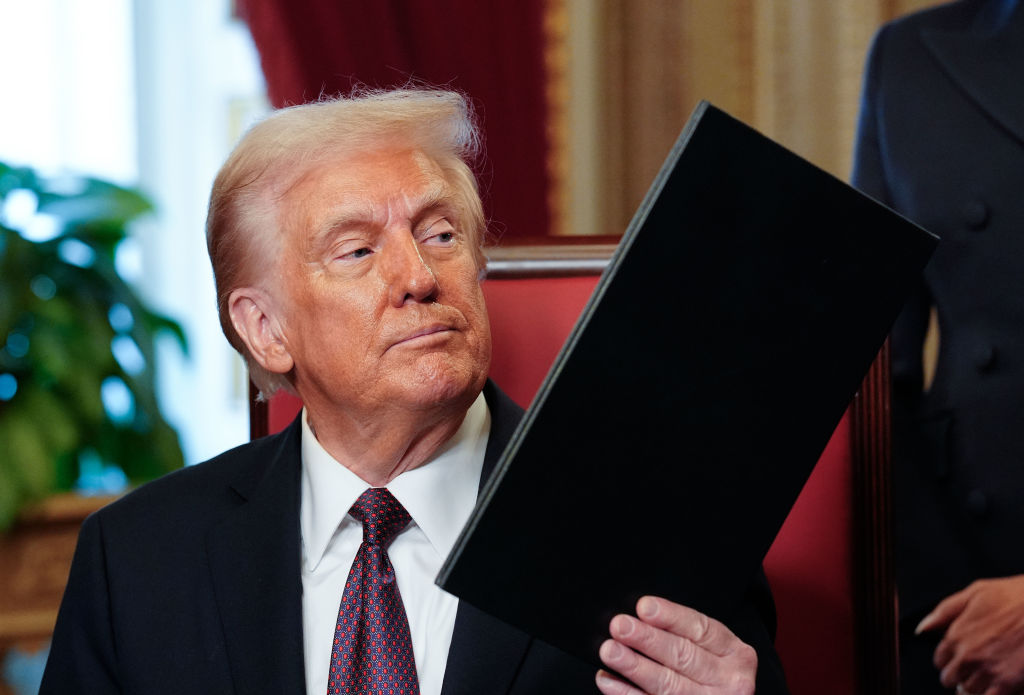
Politics Can Trump’s Gold Card Scheme Work? American citizenship is already on sale; it’s all a matter of price. (Melina Mara /The Washington Post via Getty Images) If you’re hung up on the idea of selling American citizenship, that horse left the barn decades ago. What’s left to be resolved is just how much it should cost. “We’re going to be selling a gold card,” President Donald Trump said from the Cabinet Room recently. “You have a green card. This is a gold card. We’re going to be putting a price on that card of about $5 million, and that’s going to give you green card privileges, plus it’s going to be a route to citizenship. And wealthy people will be coming into our country by buying this card.”  Highly skilled people can also get in on the deal if they can find a sponsor. “Companies can buy gold cards and, in exchange, get those visas to hire new employees,” Trump said. He estimates he can sell 10 million of them. Trump is talking about changes to America’s current citizenship-for-sale scheme, the EB-5 visa. That visa requires a foreigner to create a new business through investment that creates or sustains at least 10 American jobs, or buy an existing business resulting in at least a 40 percent increase in the net worth or number of employees. In the case of a troubled business, an EB-5 investor may rely on “job maintenance,” that the number of existing employees is, or will be, no less than the pre-investment level for a period of at least two years. What’s really required, in addition to the usual vetting, is money, at least $1,050,000 in most cases, $800,00 if the investment is in a rural or high-unemployment area (most investors go for the cheaper option, called a Targeted Employment Area.) The paperwork is significantly backed up, but after you invest the money and wait three to six years for adjudication, you’ve bought yourself a path to U.S. citizenship. The problem is that the scheme has not worked as well as it should have. Commerce Secretary Howard Lutnik stated that the program is rife with “nonsense, make-believe, and fraud.” He was likely referring to the many fraudulent investments marketed to EB-5 investors abroad, particularly housing developments and golf courses that absorb investment money but never seem to appear on the ground. He may also be referring to a U.S. government decision to allow overseas investors to pool their money for an investment, meaning no one person puts a million dollars at risk. Another decision allows the investor to borrow his million abroad, a loan to invest in the U.S., meaning if the loan goes sour abroad so does the U.S. investment. Things got even shadier when promissory notes began being accepted in lieu of the bulk of the one million investment as cash. (It bears saying that there were also some notable successes funded with EB-5 money, including Hudson Yards in Manhattan and the Barclay’s Center in Brooklyn.) Overall the program suffered from a lack of transparency in what investment would be approved by the USG, and a lack of enforcement to ensure the investors followed through on their side of the deal after the visa was actually issued. Traffic was only so-so—desire for the visa peaked in 2015, when the minimum investment was only $500,000. At that peak the government approved about 15,000 visas a year, a long shot short of Trump’s projected million visas sold for his $5 million gold card. The long processing times have not helped business. Overall, 2020, 78,278 investors applied for the EB-5 program. Some 80 percent of those investors came from four countries, China, South Korea, Taiwan, and the United Kingdom, with China clearly in the lead: In 2014, of the total of 10,692 EB-5 visas issued, 85 percent were for Chinese nationals. The lack of broader interest in the American EB-5 has nothing to do with actual demand from the world’s wealthy. The world’s wealthy love second passports, especially if the principal happens to have a lot of money and a passport that opens few doors or can easily be taken away in a country like Nigeria or Vietnam. Brokers suggest passports from some 28 countries might be available, including NATO member Turkey (about $400,000) and EU member Portugal (roughly $541,000). A number of smaller Caribbean nations like St. Lucia offer passports for sale, or, if a little lipstick is needed for the pig, passports for investment. Details and requirements vary greatly, as does cost, from a few hundred thousand to over one million dollars. To apply for a Portuguese golden visa, for example, one qualifying option is to make a large non-refundable contribution to an approved cultural organization. In the Caribbean, you can make a contribution toward funds the government designed to help invest in varying sectors, like infrastructure. Some Caribbean countries also allow you to qualify for citizenship by purchasing real estate. One popular but pricey option is EU Malta’s citizenship by naturalization, which requires a $780,000 non-refundable contribution to the economy. Applicants must also pay $52,000 for each qualifying dependent, lease or purchase a property in Malta for six years, and donate to a Maltese charity. All of these options would compete with Trump’s gold card for buyers. Desire for a second passport is not limited to Nigerian princes and Vietnamese oligarchs. Many wealthy Americans are in the market (though obviously would not be in the pool for a Trump gold card). Henley & Partners, a law firm specializing in high-net-worth citizenships, said Americans now outnumber every other nationality when it comes to securing alternative residences or added citizenships. Recent high-profile examples of second citizenships include the billionaire Peter Thiel (New Zealand) and the former Google CEO Eric Schmidt (Cyprus). The head of private clients at Henley & Partners added, “If I’m wealthy, I would like to hedge against levels of volatility and uncertainty. The idea of diversification is well understood by wealthy individuals around what they invest. It makes no sense to have one country of citizenship and residence when I have the ability to actually diversify that aspect of my life as well.” “Globally, millionaire migration was expected to have hit a new high in 2024, as wars, government crackdowns on wealth, and political uncertainty drove more wealthy residents to other countries, with an estimated 128,000 millionaires forecast to move to a new country,” according to Henley. The U.S. remains a top destination for the global wealthy, with an inflow of 2,200 millionaires in 2023 and an estimated 3,500 in 2024. China remains the biggest source of emigration, losing 13,500 millionaires last year. So what might this mean for Trump’s gold card? There is first of all the problem of getting rid of the creaky EB-5 visa and replacing it with the gold card. Trump says an executive order will suffice, but most experts agree only Congress can revoke or create new visa categories. Assuming Trump can get past that hurdle (no small task), is his gold card in the clear? On the plus side, he is in fact marketing the U.S. as the world’s best destination. While someone may scoop up a Maltese passport for travel convenience, he is unlikely to want to move his fortune there, invest further, or set up house. The U.S. is different, and the gold card would be on sale for a single fee, transactional and quick, no risky investing needed, no subjective adjudication. Despite Americans’ fears, the U.S. passport is still one of the most usable in the world, and for the rich, American wealth-creation, education, and medical care rank close to number one. The U.S. is a highly desirable location not just for a convenient passport but as a place of residence. The problem is price. Trump’s gold card, if offered at $5 million, is dramatically more expensive than its competitors. The pool of potential buyers, though not small, is not that deep. Simply put, is the price too high? The post Can Trump’s Gold Card Scheme Work? appeared first on The American Conservative.

Like
Comment
Share
RetroGame Roundup
RetroGame Roundup
1 y ·Youtube Gaming

YouTube
The AKI Series of Pro-Wrestling Video Games PART ONE Documentary WCW WWF WWE バーチャル・プロレス2 〜王道継承〜
Like
Comment
Share
Intel Uncensored
Intel Uncensored
1 y

Attorney Catherine Ybarra: U.S. Military Planes Spraying Chemicals Over Populated Areas
Favicon 
api.bitchute.com

Attorney Catherine Ybarra: U.S. Military Planes Spraying Chemicals Over Populated Areas

On March 8, 2025, Camus @newstart_2024 writes: Attorney Catherine Ybarra recently presented shocking findings on military planes spraying chemicals -- not just high-altitude stratosphere ops, but low-level flights over populated areas. Her team uncovered that the U.S. Air Force uses specialized units, like those with C-130 planes, to spray chemicals such as Naled (an organophosphate banned in the EU) for mosquito control. Air Force docs show planes dispersing over places like near Langley AFB, VA. They map areas to avoid -- like bald eagle nests -- but not residential zones. Ybarra highlighted the tech involved: Battelle, a defense contractor, developed advanced spray systems (per their patents). These nozzles can disperse fine mists of pesticides, antibiotics, even vaccines or DNA fragments. Used on planes, drones, maybe helicopters, the spraying leaves visible clouds—not always “chemtrail” lines, but noticeable. Health risks? Studies link organophosphates to cancer, neurological damage, and more. Yet it’s sprayed where people live. Is this cure worse than the disease? Ybarra asks why eagle nests are prioritized over human health. The patents raise bigger questions about long-term impacts. Anyone near military bases seen this? Let’s discuss. Source: https://x.com/newstart_2024/status/1898356553939591287 See also: Weather Modification History https://weathermodificationhistory.com ...................
Like
Comment
Share
Classic Rock Lovers
Classic Rock Lovers  
1 y

Third Eye Blind
Favicon 
rockintown.com

Third Eye Blind

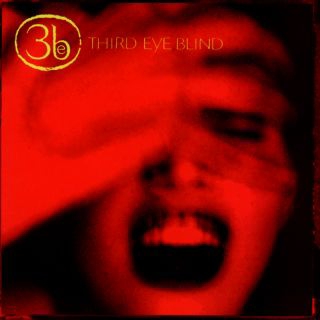
Like many groups, San Francisco’s Third Eye Blind got going in fits and starts. The original incarnation fractured leaving only guitarist/vocalist/songwriter Stephen Jenkins and bassist/vocalist Arion Salazar. They hooked up with guitarists Kevin Cadogan and Tony Fredianelli.In ’94 Fredianelli left but the group was able to find drummer Brad Hargreaves. Barely surviving the local club scene, Third Eye Blind did manage to get a slot opening for Oasis when they were in town. That and other notable gigs eventually won Third Eye Blind a recording contract. Their self-titled album, produced by Jenkins and Eric Valentine, arrived in ’97 powered by the mega-hit “Semi-Charmed Life.” The album was a big seller as Third Eye Blind moved from opening to headliner status. Finding massive success is one thing.  Repeating it is another. Though it contained the modest hit “Never Let You Go,” the ’99 sophomore effort “Blue” failed to live up to critical or commercial expectations. Semi-Charmed Life The song was inspired by Lou Reed’s “Walk On The Wild Side.”  Never Let You Go In ’00, Cadogan left and was replaced by Fredianelli who had recently served as the group’s tour guitarist. Third Eye Blind released “Out Of The Vein” in ’03.This effort too had disappointing sales – a “mere” 500,000 copies. Part of the problem was corporate. Their label, Elektra was absorbed by Atlantic. Promotional support was sparse with a budget for only one video – the single “Blinded.” “Our record company ceased to exist the month the record was released, Elektra Records imploded,” said Jenkins at the time.The set also came out right on the heels of the Jenkins/actress Charlize Theron breakup. At various shows Jenkins told the audience that “Forget Myself” and “Palm Reader” were written either for Theron or about the relationship.Adding to the misery, Warner Music dropped Third Eye Blind, along with other bands. The ’04 pruning, according to Atlantic co-chairman Craig Kallman, was so “we can give each of our (remaining) acts top priority.”Third Eye Blind kept going, but it wasn’t easy. Salazar walked. Leo Kremer filled in on bass but was done after a tour of Japan. Abe Millet temporarily took over with the band saying Salazar could return whenever he wished – there was an “open door policy.” “Ursa Major,” Third Eye Blind’s fourth studio album, dropped in ’09. Ursa Major is an astral constellation. The name means bear in Latin which explains why one (outlined by stars) graces the album’s cover. The album was first discussed in ’07 when Jenkins said that it would be “more political” than previous albums. The single, “Non-Dairy Creame,” was released in 08, but the song wasn’t included on the album. “Don’t Believe A Word” was “Ursa Major’s” lead single. But that song and a subsequent single failed to breakthrough.Still, “Ursa Major” topped the Billboard Rock Albums chart, Top Alternative Albums chart, and Top Digital Albums chart. Ursa Major But following the initial supporting tour, Fredianelli was fired. He did not go quietly into the night. No, he sued claiming he was denied songwriting credits and benefits that he allegedly was entitled to.” Legal entanglements followed with a California jury awarding Fredianelli more than $438,000.Irish musician Kryz Reid replaced Fredianelli as the band continued their tour.An oft discussed “Ursa Minor,” containing tracks not included on “Ursa Major,” never saw the light of day.Third Eye Blind continued to record with little to show for it until ’15 when “Dopamine” finally arrived. The set featured the track “Everything Is Easy.”“Screamer” came next. The group’s first album in four years initially started as an EP and grew from there.Jenkins said they aimed for “a rougher, less polished sound,” while emphasizing a mantra of ‘keep the edge, keep it weird.”  The set contained a guest contribution from Sleigh Bells’ Alexis Krauss on the title track. “Our Bande Apart” dropped in ’21. ### The post Third Eye Blind appeared first on RockinTown.
Like
Comment
Share
Intel Uncensored
Intel Uncensored
1 y

War Room’s Steve Bannon Discusses Chaos, Violence and Collapse of Syria with Jack Posobiec (VIDEO)
Favicon 
www.sgtreport.com

War Room’s Steve Bannon Discusses Chaos, Violence and Collapse of Syria with Jack Posobiec (VIDEO)

by David Greyson , The Gateway Pundit: War Room’s Steve Bannon discussed the chaos and violence in Syria with Jack Posobiec. The video opens with comments from President Trump explaining to the press that the October 7th attack on Israel and Iran going from broke to having billions of dollars being the fault of the […]
Like
Comment
Share
Intel Uncensored
Intel Uncensored
1 y

Ukraine’s Intelligence is All Lies, Lies, & More Lies
Favicon 
www.sgtreport.com

Ukraine’s Intelligence is All Lies, Lies, & More Lies

by Martin Armstrong, Armstrong Economics: Ukraine’s intelligence chief outlines Putin’s next targets: “Russia sees itself as an empire.” Kyrylo Budanov cited the Warsaw Pact countries, including the Czech Republic, Poland, Hungary and Bulgaria. “They’re the bare minimum for creating an empire.” TRUTH LIVES on at https://sgtreport.tv/ So, on the one hand, Russia is weak, and NATO […]
Like
Comment
Share
Showing 62484 out of 127222
  • 62480
  • 62481
  • 62482
  • 62483
  • 62484
  • 62485
  • 62486
  • 62487
  • 62488
  • 62489
  • 62490
  • 62491
  • 62492
  • 62493
  • 62494
  • 62495
  • 62496
  • 62497
  • 62498
  • 62499
Advertisement
Stop Seeing These Ads

Edit Offer

Add tier


Select an image
Delete your tier
Are you sure you want to delete this tier?

Reviews

In order to sell your content and posts, start by creating a few packages. Monetization

Pay By Wallet

Payment Alert

You are about to purchase the items, do you want to proceed?

Request a Refund