YubNub Social YubNub Social
    #jesuschrist #christmas #christ #merrychristmas #christmas2025 #princeofpeace #achildisborn #noël #sunrise #morning
    Advanced Search
  • Login
  • Register

  • Night mode
  • © 2025 YubNub Social
    About • Directory • Contact Us • Developers • Privacy Policy • Terms of Use • shareasale • FB Webview Detected • Android • Apple iOS • Get Our App

    Select Language

  • English
Install our *FREE* WEB APP! (PWA)
Night mode toggle
Community
New Posts (Home) ChatBox Popular Posts Reels Game Zone Top PodCasts
Explore
Explore
© 2025 YubNub Social
  • English
About • Directory • Contact Us • Developers • Privacy Policy • Terms of Use • shareasale • FB Webview Detected • Android • Apple iOS • Get Our App
Advertisement
Stop Seeing These Ads

Discover posts

Posts

Users

Pages

Blog

Market

Events

Games

Forum

Daily Caller Feed
Daily Caller Feed
1 y

Editor Daily Rundown: Kamala Finally Doing Interview, But With Training Walz
Favicon 
dailycaller.com

Editor Daily Rundown: Kamala Finally Doing Interview, But With Training Walz

FINALLY... KAMALA TO DO A SINGLE INTERVIEW... BUT SHE NEEDS TRAINING WALZ... Harris Brings Along VP Pick For Her First Sit-Down Interview Vice President Kamala Harris is set to sit down for her first interview since launching her campaign with CNN, and her running mate Gov. Tim Walz will be appearing alongside her. Harris and her campaign have faced growing pressure over the last month as the vice president has failed to hold a press conference or sit down for an interview since launching her bid for president.
Like
Comment
Share
The Lighter Side
The Lighter Side
1 y

US National Parks Are Receiving Record-High Gift of $100 Million to Protect and Restore Fragile Ecosystems
Favicon 
www.goodnewsnetwork.org

US National Parks Are Receiving Record-High Gift of $100 Million to Protect and Restore Fragile Ecosystems

The official non-profit organization representing America’s National Parks has received notice that it is set to receive the largest philanthropic gift of its history. $100 million has been set aside for the National Parks Foundation (NPF) from the Lilly Endowment for the purpose of protecting the most fragile ecosystems our parks contain. Some national parks […] The post US National Parks Are Receiving Record-High Gift of $100 Million to Protect and Restore Fragile Ecosystems appeared first on Good News Network.
Like
Comment
Share
The Lighter Side
The Lighter Side
1 y

Stranger Saves Babyand#039;s Life After Desperate Plea From Mother
Favicon 
www.sunnyskyz.com

Stranger Saves Babyand#039;s Life After Desperate Plea From Mother

Like
Comment
Share
Pet Life
Pet Life
1 y

Tiller’s Cup of Tea: It’s Not Everyone’s (Just Mine)
Favicon 
www.catster.com

Tiller’s Cup of Tea: It’s Not Everyone’s (Just Mine)

The post Tiller’s Cup of Tea: It’s Not Everyone’s (Just Mine) by Dr. Lauren Demos DVM (Veterinarian) appeared first on Catster. Copying over entire articles infringes on copyright laws. You may not be aware of it, but all of these articles were assigned, contracted and paid for, so they aren't considered public domain. However, we appreciate that you like the article and would love it if you continued sharing just the first paragraph of an article, then linking out to the rest of the piece on Catster.com. Hi, I’m Dr. Lauren! Read my introduction to learn more about me and my two adventurous cats, Pancake and Tiller. Most cats like catnip, or valerian root. Or feather toys. Or something remotely cat-like. But leave it to Tiller to have a unique trait. I only found out, as I have recently been forced to uptake a certain daily number of cups of tea, due to a distinct lack of summer weather, and an attempt to stave off the cold. Since I prefer black tea cold, and with lemon, I had to find a substitute. Enter: green tea. Some say it looks and tastes like grass, but grass is healthy, right? So, little did I expect when Tiller took a sudden interest in me one evening while I was sitting on the couch, I got all excited for some cuddles, and maybe even some lap time. How wrong was I? Instead, she walked over to my cup of tea, and calmly, deliberate, stuck her foot in it. Then pulled it out. And drank the tea from her foot. Repeatedly. I figured this was a fluke. But every time since, if a cup of green tea comes out, so does Tiller. To what end? Green tea, I was curious, what about it would attract cats? Perhaps green tea is similar in some way to catnip. I can’t find any scientific research to support this, and certainly some suggest that the caffeine in green tea isn’t ideal for cats.  Or perhaps green tea simply tastes good to Tiller. After all, cats, just like humans, have individual taste preferences. Many of my feline patients refuse tuna but love poultry foods, and vice versa. In the end, I’ll probably never know why Tiller loves a good cup of tea. Maybe deep down, she’s part British Shorthair? Or maybe I just chalk it up to her being… a cat. This article is a part of Dr. Lauren, Pancake, and Tiller's series. Read her previous article: Please Don’t Put That In Your Mouth! Inappropriate Items Cats Eat The post Tiller’s Cup of Tea: It’s Not Everyone’s (Just Mine) by Dr. Lauren Demos DVM (Veterinarian) appeared first on Catster. Copying over entire articles infringes on copyright laws. You may not be aware of it, but all of these articles were assigned, contracted and paid for, so they aren't considered public domain. However, we appreciate that you like the article and would love it if you continued sharing just the first paragraph of an article, then linking out to the rest of the piece on Catster.com.
Like
Comment
Share
SciFi and Fantasy
SciFi and Fantasy  
1 y

Seven Speculative Stories About Preserving History and Culture
Favicon 
reactormag.com

Seven Speculative Stories About Preserving History and Culture

Books short fiction Seven Speculative Stories About Preserving History and Culture Which stories, knowledge, and experiences are worth saving, no matter the cost, and what can we do to keep them alive? By Ratika Deshpande | Published on August 28, 2024 Comment 0 Share New Share Last year, I spent a lot of time deleting posts from my blog that I didn’t consider “important”—a tricky thing to define, as I’ve discussed previously. I was thinking about obsolescence, about the things that we leave behind, and on my most self-censoring days, I discarded scores of posts at a time. Then a couple of months ago, I tried salvaging these pieces from the Internet Archive’s (IA) Wayback Machine, regretting my impulsive deleting and blessing the readers who thought they should save my writing there. As I explored the IA and its mission to archive everything—everything—I was forced to contemplate why we consider certain things more important than others. While my blog posts seemed trivial to me, for some people every blog post, every journal entry, every shopping list, is worth saving. These daily texts made by ordinary people are just as integral to preserving our history and culture as elaborate monuments and epics. What other works and items, generally considered to be ordinary or banal, are worth preserving, and what approaches can we take for doing so? Here are some SFF stories that consider these questions… The Singing Hills Cycle by Nghi Vo Cleric Chih of the Singing Hills abbey collects stories. Accompanied by Almost Brilliant, a hoopoe who, like other neixin, can remember every story she’s told, Chih travels the lands, collecting tales from people of all walks of life. These stories then become part of the archives at the abbey. But stories are always changing. Everyone from the empress and her handmaiden to bandits, brides, tigers, and hoopoes have their own versions . They vary in little details, in the perspective from which the stories are told, and even in the events included. As a writer who’s interested in all things related to memory, I loved Chih’s internal monologue on how to do their work well—by asking the right questions, and listening to new versions of familiar stories. Cindy Kay’s audiobook narration complements Vo’s lush prose brilliantly. “To Walk the River of Stars” by Emily Y. Teng Yineng culture had been forgotten and suppressed because of the Integration. Now, soon, it will be time for the girls of the present generation to go through a rite of passage and walk the river of stars. Our narrator’s mother had first discovered it, working as a janitor at the Museum of Culture and Arts, but didn’t know what the words on the plaque that attracted her notice—except “Yineng”—actually meant. Things have changed for their people since, and now our narrator’s daughter must play her part in the resurrection and preservation of their lost customs in this short, lyrical story. “The Belfry Keeper” by S.L. Harris The Academy was once renowned for its magic, but now there’s technology to take care of things (and turn a profit, too), so no one goes there anymore. The clockwork mechanism that has maintained the books and the garden and the corridors all this time has now been ordered by the wizard to sell the furniture and melt down the metal of the bell to pay off the Academy’s debts. But the clockwork is of the Academy, and it refuses. However, it can only continue for so long. Will anyone ever study there again? Will everyone eventually forget the Academy and move on? Will there even be anyone left to protect the Academy from? “The Bone-Gatherer’s Lament” by Wendy Nikel As the Bone Gatherer wanders the desert, collecting the bones of those who have died in this hot place, hearing them speaking, praying for them, he comes across bones that, unlike his usual finds, come from someone who wasn’t of the desert, but from a place where water was plentiful. The bones have a message to share, but how will it reach the people it’s meant for? The Bone Gatherer has listened for years. It may now be time to do more.  Nikel takes an interesting look at the way we think of preserving the lives of those we loved, and what it means to take care of that which would have been lost otherwise. “Monopticon” by Dani Atkinson Told through a letter written to someone far in the future, this is the story of a world where every single thing every person did was always watched and recorded. Nothing is hidden from Panopticon, and so no one can recruit, organize, rebel. Even your thoughts are watched; every single thing that passes through your mind, no matter how fleeting, is recorded. How do you fight something like that? So much of our lives today are about preserving the past and present by documenting our lives, archiving what already exists, recording the voices and pictures of loved ones. In this context, Atkinson’s dystopia makes one wonder if we should all start asking for the right to be forgotten instead.  “Song of the Balsa Wood Bird” by Katherine Quevedo At the market, hunting for souvenirs for her cousins, Alondra finds a bird made of balsa wood that she can’t tear her eyes away from. When she takes it home, her abuelo tells her the story of who the bird is and what makes it so special. It’s a legend filled with betrayal and loss and hope. Saddened, Alondra wishes she could hear the song of this bird, said to be the sweetest of all. But wooden birds don’t sing, and Alondra refuses to forget this little piece of the forest. A short story with a particularly stunning scene that’s imprinted itself on my mind, a tale of hope and determination, and also of loss, all at the same time. “The Future Library” by Peng Shepherd After the death of Katie Paterson, who conceived the Future Library (a real project in Norway), Claire, the fifty-seventh author (out of one hundred) invited to contribute to the collection, is given the responsibility of looking after the forest planted for project. Her arborist partner, Ingrid, suggests burying the ashes of the authors under their respective trees after their deaths. When the trees are cut, at a time when the forest is the last one left in the world and Claire has passed away, the words are already written on the wood. But that’s the only start of the end of the Future Library. Can Ingrid, who knows what actually happened, stop its destruction, as the Board pushes to keep going beyond the original hundred trees,  experimenting with cutting the hundred-and-first tree to see how the words went into the trunks in the first place? [end-mark] The post Seven Speculative Stories About Preserving History and Culture appeared first on Reactor.
Like
Comment
Share
Survival Prepper
Survival Prepper  
1 y

Preppers: What to Do When You Don’t Know What to Do
Favicon 
www.theorganicprepper.com

Preppers: What to Do When You Don’t Know What to Do

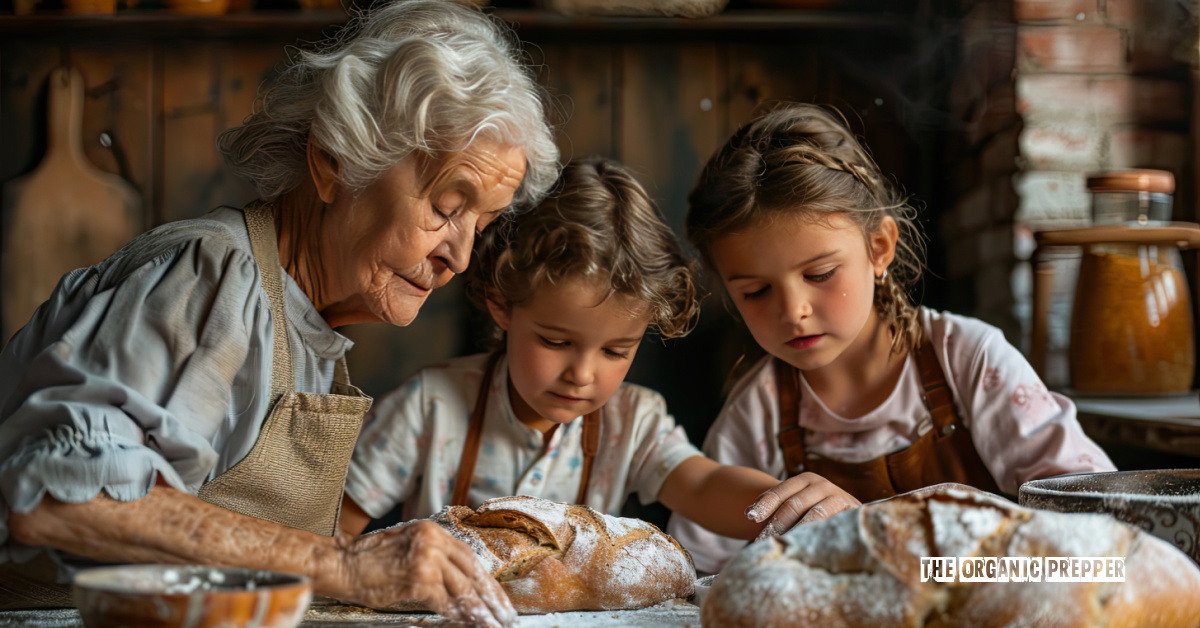
Author of How to Prep When You’re Broke and Bloom Where You’re Planted online course We are living in absolutely crazy times right now. What with the contentious election, the migrant crisis, the potential of war with Russia, looming terror threats, our crashing economy, our fragile power grid, and frequent heated demonstrations about Gaza and Israel, it’s difficult to focus your prepping energy. A lot of folks have said they currently feel incredibly helpless because they don’t know what to do. Today, we’ll talk about what to do. It’s overwhelming. Our present situation is nothing if not overwhelming. Threats are coming at us from all different directions. How can we focus on just one without missing an important indicator? It’s easy to get sucked into the cycle of fear, but that is paralyzing. You may need to limit your access to news to get beyond it. I’m certainly not saying to completely ignore it – just to carefully select your sources and not scroll on newsfeeds and X all day long. We need information, but I’m not sure we need constant, every-second-of-our-lives information. I think that makes things seem even worse than they are in an already bad situation. Find some trusted sources and limit yourself to those. Also, you may want to put a time limit on this. There’s a name for spending hours reading negative news. It’s called “doom-scrolling,” and Merriam-Webster defines it as “spending excessive time online scrolling through news or other content that makes one feel sad, anxious, angry, etc.” If you’re already in the habit of doing that, it can be difficult to escape the cycle, but it’s essential if you want to be effective. Focus more on spending those hours being productive rather than immersing yourself in bad news. As a news junkie myself, and also while I’m recovering from surgery, it can be extra tough not to get sucked in. I finally had to make a rule for myself to check three places for news in the morning and then three later in the afternoon. I spend the rest of my time working on other projects, reading books, learning skills and languages, and enjoying some shows on Amazon Prime. I strongly suggest you limit your news time as well.  You may also want to seek out some more positive stuff. There are a lot of fun channels on YouTube with good news, how-to videos, nature documentaries, cute puppies, and adorable kittens. Yes, I know some people are going to say this is an idiotic way to spend your time. And obviously, it’s not productive. But it’s far better for your mental health than doomscrolling. What should you be prepping for? You know, I’ve always kind of hated that question. That silly show, Doomsday Preppers, was always edited to make it look like the guests were hyper-focused on only one looming event. That’s not how real people prep, and I’m pretty sure it’s not how the guests prepped, either. But if you sound well-balanced and rational, it doesn’t make for good television. I like to recommend general preparedness. Selco also recommends “going back to basics” when you don’t know what to do. So, think about your pillars of preparedness. Pillar One: Water Pillar Two: Shelter Pillar Three: Fire Pillar Four: Food Pillar Five: Signaling | Communication Pillar Six: Medical | Hygiene Pillar Seven: Personal Safety No matter what emergency you are facing, you can’t go wrong by focusing on these areas. Another area I’d recommend focusing on is financial preparedness – paying off debt, investing wisely in tangible goods, and putting your savings into a medium that won’t lose its value. Physical fitness cannot be overlooked either. In some situations, we are trapped in our own bodies, but most folks can work to become more mobile and fit. The more active you are now, the less difficult it will be for you later. If you’re new to this, start off slowly with just a simple, short walk at an easy pace. If you have mobility issues like I do, you can look on YouTube for seated exercises. One of my legs doesn’t work, but my arms have never been so ripped. While this may not make you more mobile, you can never go wrong with extra strength and stamina. Some productive things you can do Another thing that helps a lot is to do productive things. If your productive things are related to the pillars or your financial security, then this will help you to get through basically any kind of emergency. Some activities cost money, while others don’t. Use containers you already have to store more water. Make sure you have multiple ways to purify water you acquire. Take a walk around your neighborhood or property and seek out additional sources of water. Grow your own food. Preserve food. Stockpile long-term storage food. Make any necessary improvements on your homes – good windows, perhaps some off-grid power sources, needed repairs, etc. Make sure you have a way to cook that doesn’t require electricity, and then practice. I used to take my girls out into our backyard in the city and we’d have a fun cookout over a campfire. They loved it, we learned stuff, and it was a nice way to bond while learning skills. Think about how you could stay warm if your power went out, then proceed to prepare for these alternative methods. Consider getting your ham radio license and practicing for communications purposes. Learn medical skills. You can often find free local courses at your fire department or YMCA. You can also find a plethora of excellent videos on YouTube to help you learn to handle medical emergencies. Look at both First Aid and longer term options for care, in case help is not coming. Learn about natural remedies. Work to make your home safer. Are there any easy access points for criminals to breach your home? Fix them before things get even crazier. Learn self-defense skills. These skills are perishable, so if you already know them, practice them. Head to the shooting range. This is also a perishable skill. If you don’t know how to shoot, now is the time to learn. If you do know how, now is the time to practice. Work on building a trusted community of people nearby. It’s great to have a plan to go across the country to meet up with family, but if you can’t get there, you’ll need a like-minded community nearby. Learn survival skills for extreme situations from folks who have experienced such events. Learn what to do in the case of certain events, like a nuclear disaster, civil unrest, or economic collapse. Teach your children how to handle emergencies in case they ever have to face them alone. Teach your children and grandchildren the skills you possess – things like making a loaf of bread, the joy of planting a seed and watching it grow, being outdoors in nature safely – don’t let these skills and arts be lost to the next generation. These things may seem very small but in the grand scheme of things they’re significant. We are all limited by something – things like our health, our finances, our mobility, our locations, or something else. But if we’re diligent and use the resources we have to improve our situations, we can focus on productivity instead of panic. The key here is to do something. Don’t get sucked into the doom cycle. It’s paralyzing and no matter who you are, or where you are, or what your situation is like, there is always some small thing you can do to improve your chances of survival.  Focus on the basics when you don’t know what to do and you’ll always be better off. What about you? How do you focus on productivity? Do you have any hacks for learning skills inexpensively? Do you find yourself doomscrolling online? Let’s discuss it in the comments section. About Daisy Daisy Luther is a coffee-swigging, adventure-seeking, globe-trotting blogger. She is the founder and publisher of three websites.  1) The Organic Prepper, which is about current events, preparedness, self-reliance, and the pursuit of liberty; 2)  The Frugalite, a website with thrifty tips and solutions to help people get a handle on their personal finances without feeling deprived; and 3) PreppersDailyNews.com, an aggregate site where you can find links to all the most important news for those who wish to be prepared. Her work is widely republished across alternative media and she has appeared in many interviews. Daisy is the best-selling author of 5 traditionally published books, 12 self-published books, and runs a small digital publishing company with PDF guides, printables, and courses at SelfRelianceand Survival.com You can find her on Facebook, Pinterest, Gab, MeWe, Parler, Instagram, and Twitter. The post Preppers: What to Do When You Don’t Know What to Do appeared first on The Organic Prepper.

Like
Comment
Share
Hot Air Feed
Hot Air Feed
1 y

Where Are the Facebook Files on Censorship?
Favicon 
hotair.com

Where Are the Facebook Files on Censorship?

Where Are the Facebook Files on Censorship?
Like
Comment
Share
Science Explorer
Science Explorer
1 y

There’s A Lot Of Misinformation And Pseudoscience In The Wellness Industry, Here’s How To Avoid It
Favicon 
www.iflscience.com

There’s A Lot Of Misinformation And Pseudoscience In The Wellness Industry, Here’s How To Avoid It

The wellness Industry is filled with misinformation and pseudoscience that can be harmful, but how can we tell what is scientifically sound from the spurious and absurd?
Like
Comment
Share
Science Explorer
Science Explorer
1 y

Six New Worlds Challenge What We Know About The Birth Of Planets And Stars
Favicon 
www.iflscience.com

Six New Worlds Challenge What We Know About The Birth Of Planets And Stars

These likely rogue planets seem to have formed like no planet should.
Like
Comment
Share
Strange & Paranormal Files
1 y

Operation Saucer: Commander Who Told About UFOs Committed Suicide
Favicon 
anomalien.com

Operation Saucer: Commander Who Told About UFOs Committed Suicide

“Operation Saucer” was an investigation into a terrifying series of reported incidents in 1977 where residents in the Brazilian city of Colares claimed that they not only witnessed flying saucers – but they were also being attacked by them. Bright objects of differing shapes, sizes and colours were said to have been flying at low altitudes – just a few metres above the tops of trees – and firing light beams at people on the ground below. Several witnesses claimed to have seen beings piloting the crafts, describing them as no more than three to four feet tall. What separates these sightings from the usual glimpses of UFOs in the skies are the numerous and recurring injuries that people suffered. “I never forgot the panic on the faces of people who said they had been attacked by lights that descended from the sky and drew blood from them”, recalls journalist Carlos Mendes. Chosen to cover the case by the newspaper O Estado do Pará , he estimates that he interviewed 80 witnesses. The beams gave off intense beams of radiation that caused puncture marks and lesions, with some reporting to local media at the time that it felt like a “heavy weight pushed against their chest”. A report into the claims made by the victims stated: “The beam was about seven or eight centimetres in diameter and white in colour. “It never hunted for them but hit them suddenly. When they tried to scream no sound would come out, but their eyes remained open. The beam felt hot, almost as hot as a cigarette burn.” Describing the injuries, Doctor Wellaide Cecim Carvalho – who worked in a health care unit in the area during the 1970s – wrote: “All of them had suffered lesions to the face or the thoracic area. “The lesions, looking like radiation injuries, began with intense reddening of the skin in the affected area. Later the hair would fall out and the skin would turn black. There was no pain, only a slight warmth. “One also noticed small puncture marks in the skin. The victims were men and women of varying ages, without any pattern.” Dr. Wellaide Cecim Carvalh The saucers were quickly dubbed ‘chupa-chupa’ – meaning ‘sucker-sucker’ – and with reports of more sightings and more incidents of people being injured or losing blood, panic soon started to set in and women and children left the area while local men stayed to look after their homes or possessions. With no reasonable explanation offered as to what exactly was behind the so-called attacks from UFOs, the Brazilian Air Force (FAB) was tasked with finding out what was going on on the island, with the investigation officially named Operation Saucer. A 2,000-page military report was soon compiled, featuring 500 photographs and 16 hours of film that the FAB reportedly witnessed with their own eyes. Ufologist Daniel Rebisso Giese claimed in his book Vampiros Extraterrestres Na Amazonia (Extraterrestrial Vampires of the Amazon) that several military personnel suffered nervous breakdowns, while others went completely insane during the course of the investigation. The documents were kept classified until several pages were released in 2004, showing drawings and photographs of what the military saw. Bright, cylindrical lights feature in the photographs, while several drawings show similarly-shaped objects witnessed by people on the island at the time. Despite this, the operation never explicitly stated that UFOs or aliens were the official cause of the sightings and injuries. However, high-ranking officials from FAB reportedly told a group of ufologists in 2004 that they had discreetly been studying the existence of UFOs since the mid 1950s. But what could the explanation be if the aliens theory is dismissed? Some think the area was simply being used as a test site for top secret military craft – something people have also used to explain away the secrecy behind Area 51. However, there are yet more strange occurrences aside from the sightings that make this case an ongoing mystery – and catnip for conspiracy theorists. Photograph taken on December 10, 1977, at approximately 8:30 p.m. The object was over Ponta do Machadinho, on Colares Island. It is estimated that the object was 300 meters high, 3,000 meters away from the photographer, Sergeant Flávio and 3 other civilians. The UFO remained stationary for approximately 5 minutes. Dr Carvalho, who treated islanders for their injuries after the ‘attacks’, later said she was “compelled” to lie to them about their injuries – and to tell them they were simply hallucinations. She said: “This is what the Air Force always asked me to say. It did not happen any kind of mass hysteria or visual hallucinations. “The psychiatry proves it didn’t happen. It may happen mystic collective problems when people commit mass suicide. “But nobody can have the same delirium, the same visual, sonic and synthetic hallucination at the same time and in different places.” She also claims to have seen a UFO herself, adding: “I could see the UFOs bright metal and it wasn’t a dish-like object, but much more like a cone or a cylinder.” Uyrangê Bolivar Soares Nogueira de Hollanda Lima. This is the name of the first officer of our armed forces to come out into the public to talk about UFO research activities carried out secretly in Brazil. Further to this, Lima – the commander of the operation – gave an interview in 1997 to UFO Magazine, where he recounted how terrified his men were during their investigations. This 1997 interview is the only official TV appearance that Captain Hollanda did exposing the classified program he led in back 1977 called ‘Operation saucer’ a study on the violent UFO attacks in Colares, Brazil. Less than a month after this appearance he was found strangled in his house. (AI Dub) byu/Sky5759 inUFOs He went on to reveal eyewitness statements which described residents waking up to beings wearing protective clothing shooting coloured beams at their heads, as well as several officers reporting seeing strange lights emerging from and diving back into coastal waters around the area – leading some to assume this was the location of a UFO base. Three months after giving the interview, Captain Hollanda was found dead in his home after he seemingly hung himself using the belt of his bathrobe. It’s fair to say there is a lot to be suspicious about in this particular UFO case and it remains one of the most baffling and mystifying incidents in the history of unexplained phenomena. The post Operation Saucer: Commander Who Told About UFOs Committed Suicide appeared first on Anomalien.com.
Like
Comment
Share
Showing 64309 out of 104192
  • 64305
  • 64306
  • 64307
  • 64308
  • 64309
  • 64310
  • 64311
  • 64312
  • 64313
  • 64314
  • 64315
  • 64316
  • 64317
  • 64318
  • 64319
  • 64320
  • 64321
  • 64322
  • 64323
  • 64324
Advertisement
Stop Seeing These Ads

Edit Offer

Add tier


Select an image
Delete your tier
Are you sure you want to delete this tier?

Reviews

In order to sell your content and posts, start by creating a few packages. Monetization

Pay By Wallet

Payment Alert

You are about to purchase the items, do you want to proceed?

Request a Refund