YubNub Social YubNub Social
    #bible #jesus #americafirst #patriotism #culture #fuckdiversity
    Advanced Search
  • Login
  • Register

  • Night mode
  • © 2026 YubNub Social
    About • Directory • Contact Us • Developers • Privacy Policy • Terms of Use • shareasale • FB Webview Detected • Android • Apple iOS • Get Our App

    Select Language

  • English
Night mode toggle
Featured Content
Community
New Posts (Home) ChatBox Popular Posts Reels Game Zone Top PodCasts
Explore
Explore
© 2026 YubNub Social
  • English
About • Directory • Contact Us • Developers • Privacy Policy • Terms of Use • shareasale • FB Webview Detected • Android • Apple iOS • Get Our App
Advertisement
Stop Seeing These Ads

Discover posts

Posts

Users

Pages

Blog

Market

Events

Games

Forum

Conservative Voices
Conservative Voices
1 y

The Domino Theory Refuses to Fall
Favicon 
www.theamericanconservative.com

The Domino Theory Refuses to Fall

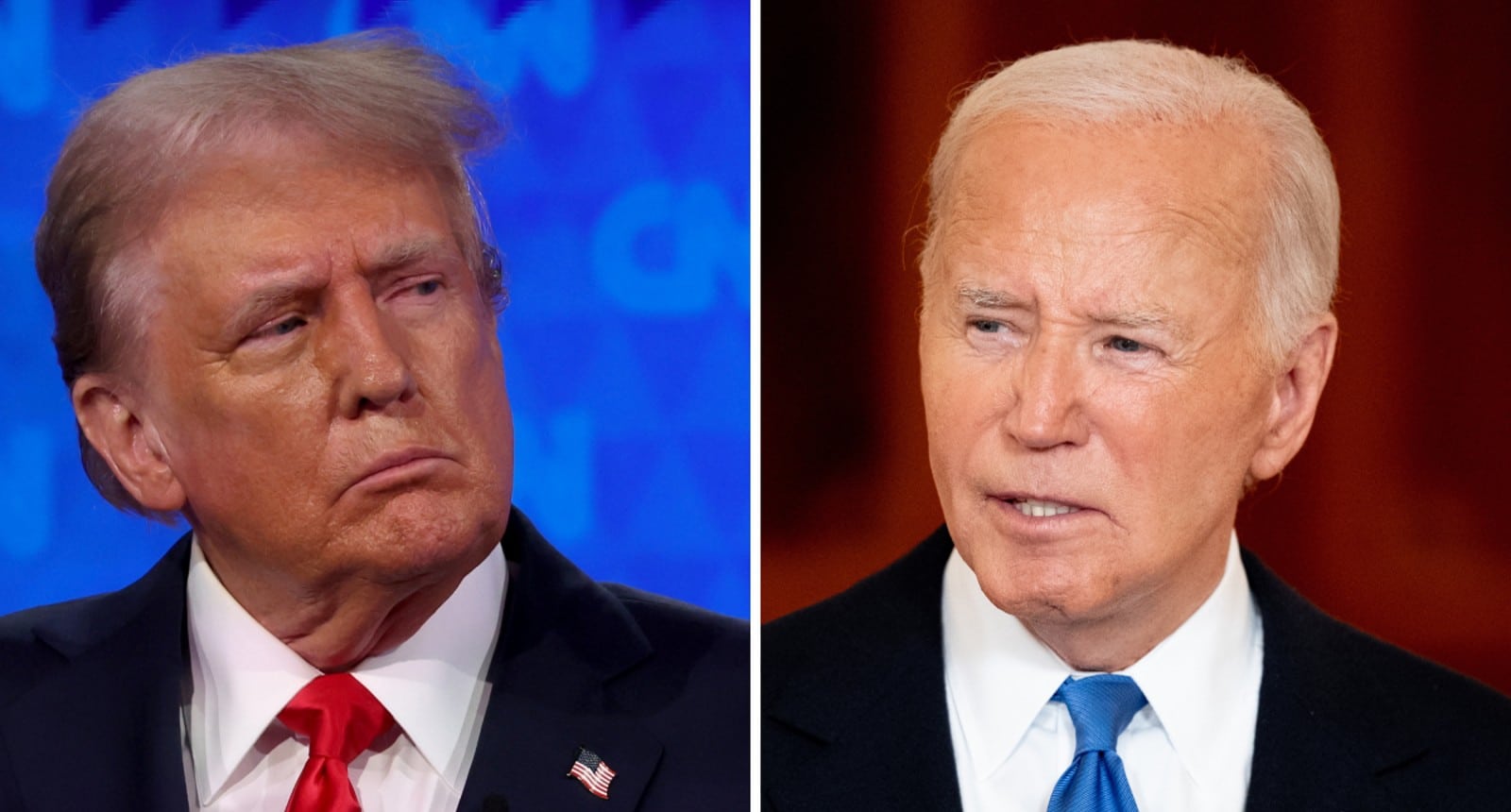
Foreign Affairs The Domino Theory Refuses to Fall The theory behind the Vietnam disaster is still current among policymakers. Credit: image via Shutterstock The recent debate between Vice President Kamala Harris and the former President Donald Trump focused relatively little on foreign affairs. This was probably a good thing, as when the conversation finally did turn to foreign policy, both candidates reiterated an inherited and widespread belief that protecting vital U.S. interests depends on the perception that America is willing to wage war no matter how minor the interests, powerful the adversary, or distant the battlefield. This shibboleth of the foreign policy elite is a version of the “domino theory,” which stipulated 50 years ago that if Vietnam fell to communism, other, more strategically significant states would soon follow. The experience of the Vietnam War and its aftermath should have disabused Americans of this superstition. Policymakers, afraid to lose face by admitting victory was impossible, pointlessly wreaked destruction on Southeast Asia. Vietnam ultimately fell to communism and the United States was humbled, yet the other “dominoes”—Japan, South Korea, Thailand, Indonesia, etc.—didn’t fall. Instead, Vietnam soon found itself at war with communist Cambodia and China. Over subsequent decades, Vietnam developed normal diplomatic relations and strong economic ties with the United States, and is now considered by Washington to be an important partner to counterbalance China. The lure of domino theory, however, remains deeply ingrained among the foreign policy elite and the commentariat. Two examples from last week’s debate demonstrate its persistence. The first came when former president Trump criticized the Biden administration for the Afghanistan withdrawal—something Trump himself had promised as president—calling it “the most embarrassing moment in the history of our country,” and claiming the withdrawal was “why Russia attacked Ukraine.” The second example was when Harris, for her part, claimed that had Trump been president when Russia invaded Ukraine in 2022, he would have appeased and emboldened Putin out of his desire for “friendship.” Harris asserted that “Putin’s agenda is not just about Ukraine,” and, remarkably, that had Trump been in office, “Putin would be sitting in Kyiv with his eyes on the rest of Europe…starting with Poland.” Politicians’ interests are primarily domestic, not international, in nature. There is little patience for foreign policy views more complicated than aphorisms that can fit on a cocktail napkin, like “peace through strength,” or “appeasement emboldens aggressors.” These often misleading axioms are received from their advisors and policy-planners, who have both ideological and careerist motivations to maintain a U.S. foreign policy of global hegemony, what Stephen Walt has called “a full employment policy for the foreign policy elite.” For their part, commentators and media figures transform these myths into pearls of conventional wisdom, amplifying self-serving rationales for American primacy. Dissenting views are increasingly either crowded out, deemed ignorant, or simply shouted down. A recent example is former secretary of state Condoleezza Rice’s new cover article in Foreign Affairs. Despite being one of the principals responsible for the disastrous Iraq War as a member of the Bush administration, Rice has lost no prestige or credibility on Olympus. Instead, she is given top billing in America’s most prestigious foreign policy magazine to warn against “the perils of isolationism.” According to Rice, unless the United States accepts the humble and selfless task of dominating the world, China and Russia will launch wars of conquest, “illegitimate” regimes will “sustain” themselves (i.e., remain un-invaded or un-couped by the U.S.), Saudi Arabia and Israel will never become pals, America’s economy will tank, and pirates will terrorize the seas. This is all nearly as scary as Saddam’s WMDs. Strategy is all about distinguishing vital from superfluous ends in order to apply the limited means at hand toward what is most valued. Among most of those who direct or influence our foreign policy, however, strategy is instead equated with drawing implausible causal connections between disparate and unrelated phenomena, making everything a priority and setting no price too high. There is plenty of scholarship disputing this ideology. “Dominoes” rarely fall and capable states rarely bandwagon with aggressors out of fear of abandonment by allies. States don’t judge the credibility of others’ commitments by past actions under separate circumstances, but according to their perceived capabilities and interests. As scholars from Paul Kennedy to Robert Gilpin have noted, diplomatic compromise—often smeared as “appeasement”—is often a successful strategy, cutting deals with rivals to avoid a worse outcome. For example, the United States and United Kingdom, previously enemies, avoided war and began their transatlantic love affair after the latter “appeased” the former by accepting their hegemony in the Western Hemisphere at the end of the 19th century. As Upton Sinclair once said, however, “it is difficult to get a man to understand something, when his salary depends on his not understanding it.” If your theory of international politics says you must be willing to fight for anything, anywhere, against anyone, you will probably be compelled to fight for everything, everywhere, against everyone. Looking at the scope of the United States’ present international military entanglements, it appears that the domino theory is alive and well. As the United States and its allies stare down the prospect of a direct conflict with Russia, Iran, or China (or perhaps all three at once), it’s time to ditch our national superstition about falling dominoes and instead reappraise what really matters most both at home and abroad. The post The Domino Theory Refuses to Fall appeared first on The American Conservative.
Like
Comment
Share
Conservative Voices
Conservative Voices
1 y

Oiler Debacle Shows How the Navy Is Running Aground
Favicon 
www.theamericanconservative.com

Oiler Debacle Shows How the Navy Is Running Aground

Politics Oiler Debacle Shows How the Navy Is Running Aground The Navy is dysfunctional. Is there anything that can be done about it? And when? Credit: image via Shutterstock In this dirty business, you run the risk of becoming boring—repeating yourself every week, becoming a curio shelf of obsessions and tics. Yet sometimes you don’t get a choice, because the news is itself boring and repetitious, a dull student’s punishment on the blackboard of reality. In my own case, I’ve been banging the gong of the abject condition of These States’ seapower for some weeks, both in terms of the Formosa war everyone seems to be itching to have and our abandonment of the Red Sea to the irrepressible Houthis. On the cover of our current print issue, there’s a survey of the shabby state of our merchant fleet from your humble correspondent. I’m getting stale! And I don’t like it. I have beautiful thoughts I’d like to share about architectural history, mushroom-hunting, and how men’s pants should be cut. I’ve got an original insight on an intertext between Hobbes and Fortescue that could change the reading of Leviathan and modern political science forever. I wish I could tell you about piano concerts, the Yankees, or my favorite German restaurant. I am like you; I have a rich inner life; I’d like to hold your eye up to the keyhole of my consciousness and shriek, Look! Look inside! Look at these beautiful things! But, instead, we’ve got to stick to the sorry state of American seapower, because this week the Navy crashed a ship. The maritime press puts it more delicately—“ran aground,” they write—but I am not a mariner. If I were to hop a curb in my trusty Mazda and tear enough of the bottom off that it fills with water and has to get a tow to the nearest garage, I would feel justified in saying that I crashed the car.  I would also feel extremely bummed, as I must imagine our naval brass do. The ship in question, the USS Big Horn, was the oiler accompanying the USS Abraham Lincoln’s carrier group in its long schlep to the Pacific from the Persian Gulf region, where we’ve been idly mustering naval forces for about a year on the apparent theory that we might want to get into it with the Islamic Republic. (As mentioned, the actually existing American maritime interest in the Middle East, keeping the Red Sea shipping lanes open, has been left to the ineffectual attentions of the French and the British.) The Navy has 17 oilers, which are responsible for making sure ships in a given group stay fueled. These are bad tidings; for one thing, the Abraham Lincoln and co.’s schlep gets much trickier without fuel. For another, the Navy is already on the verge of retiring an oiler and 16 other support ships because of the shortage of mariners who can operate and service them. The details of the Big Horn’s little accident have yet to be disclosed, so we will keep our inexpert speculations about causes private. I do not think, however, that it is controversial to say that crashing large, irreplaceable ships is undesirable and ought to be unusual. Yet it seems to be the latest instantiation of a long pattern. The hapless state of the Navy and its support services is not news. Senator Tom Cotton (R-AK) released a report in 2021, following a spate of high-profile naval mishaps, in which he detailed the shabbiness of training, discipline, and physical maintenance in this sorry epigone of the Great White Fleet. The Maritime Administration began to trumpet the shortage of civilian mariners available to help with sealift in case of war in 2017; it has been too embarrassed or incompetent to conduct any surveys since. The supposedly revolutionary program of the Obama administration, replacing our aging frigates with “littoral combat ships,” has gone badly awry; we can’t retire the widely hated LCS quickly enough, and the replacement frigates are running about six years behind schedule.  What does it all mean, Mr. Natural? It don’t mean—well, there are actually a few points to be made here. You’ll forgive me if they are things you have read before here or elsewhere, but, as I said, sometimes life’s problems are evident and unchanging. First, anyone who thinks we are going to fight a serious naval war in the next five years is a boob, and possibly a danger to himself or others. Forget the never-arriving 400-ship fleet; we can’t even keep the ships we have manned, operational, and not crashed. If policymakers think Taiwan is important for American security, they’d be better off cutting Palmer Luckey a personal check for $500 million (Memo: “Figure it out!”) and giving him a one-way ticket to Taipei. Second, the grotesque bloat of the military–industrial complex needs actually serious attention. The proportion of funding that has gone to R&D has plummeted, while the part devoted to the obscure liturgies and rights of contract leveraging continues apace. If an enterprising congressman who isn’t worried about getting on the board of a Big Five contractor is reading this—you have your brief. Contracting reform is basically virgin territory. The post Oiler Debacle Shows How the Navy Is Running Aground appeared first on The American Conservative.
Like
Comment
Share
Intel Uncensored
Intel Uncensored
1 y

United Kingdom Totalitarian Lego City Police State Edition. Now Your Kids Can Make Starmer Proud
Favicon 
api.bitchute.com

United Kingdom Totalitarian Lego City Police State Edition. Now Your Kids Can Make Starmer Proud

United Kingdom Totalitarian Lego City Police State Edition. Now Your Kids Can Make Starmer Proud - September 8th, 2024 wallzeymrdramatic - FAIR USE FOR EDUCATIONAL PURPOSES Mirrored From: https://old.bitchute.com/channel/wallzeymrdramatic/
Like
Comment
Share
Classic Rock Lovers
Classic Rock Lovers  
1 y

The rock band Dave Grohl considered too silly: “Do I truly believe it? Well, no”
Favicon 
faroutmagazine.co.uk

The rock band Dave Grohl considered too silly: “Do I truly believe it? Well, no”

Not one serious bone in their body. The post The rock band Dave Grohl considered too silly: “Do I truly believe it? Well, no” first appeared on Far Out Magazine.
Like
Comment
Share
Intel Uncensored
Intel Uncensored
1 y News & Oppinion

rumbleRumble
The Flyover Conservatives Show
Like
Comment
Share
Intel Uncensored
Intel Uncensored
1 y News & Oppinion

rumbleRumble
Inside the World's Largest Doomsday Bunker Community
Like
Comment
Share
Conservative Voices
Conservative Voices
1 y

‘The Democratic Party Left Me’: A Fireside Chat With Robert F. Kennedy Jr.
Favicon 
spectator.org

‘The Democratic Party Left Me’: A Fireside Chat With Robert F. Kennedy Jr.

At The American Spectator’s 56th Robert L. Bartley Gala, guests were treated to a sit-down discussion between editor Paul Kengor and former presidential nominee Robert F. Kennedy Jr.  From leaving the Democratic Party, to being denied Secret Service protection, to suspending his presidential campaign and supporting Donald Trump, RFK Jr. has been consistently antagonized by the Left. In this discussion, RFK Jr. shared his thoughts and experiences regarding his life and the challenges he’s experienced throughout his campaign. (READ MORE: The American Spectator’s Gala Provides a Glimpse Into the Kennedy Family) Kengor opened the discussion by reading an excerpt from American Spectator founder R. Emmett Tyrrell’s book, How Do We Get Out of Here?: Half a Century of Laughter and Mayhem at The American Spectator―From Bobby Kennedy to Donald J. Trump, which begins with Tyrrell’s chance encounter with RFK Jr.’s father, Robert Kennedy Sr. In response to Kengor’s question about upholding the Kennedy legacy, RFK Jr. discussed the political atmosphere regarding the Vietnam War, and how the Kennedy family viewed the Democratic Party as the “party of peace.” “My dad, my uncle, the Democratic Party, as a Rand [Paul] said, was traditionally the party of protecting the First Amendment, the cornerstone of all our rights,” RFK Jr. said. “They know that the free flow of information is the sunlight, the soil, the water, the air, the fertilizer for democracy. If you strangle free speech, democracy also dies today with this party.” RFK Jr. touted a recent endorsement for Trump by former CDC director Robert Redfield, who called Trump “the right man for the job” in handling the American health crisis.  RFK Jr. continually criticized the current state of the Democratic Party. “The Democrats spent tens of millions of dollars not only defaming me [and] making me look like a crazy person, but then they ended the primaries. They wouldn’t let me run against them,” RFK Jr. said.  Kengor then touched upon RFK Jr.’s being denied Secret Service protection, despite it being a practice that started with the assassination of his father in 1968. RFK Jr. shared how he was not provided security despite giving the Secret Service 68 pages of documentation on the threats and attacks made against himself and his family. “Each time they refused, and they clearly were doing it because the agency was politicized…. They knew that we were spending $1 million a month on security, and I knew that this was a way to bleed me dry,” he said.  RFK Jr., who is aligning his efforts in support of Donald Trump in the presidential election, praised Trump’s commitment to integrating the platform “Make America Healthy Again” into his campaign.  When asked what he would like to do in the Trump administration should Trump win the presidency, RFK Jr. responded, “I would like kind of a roving portfolio, unravel corruption in various agencies.”  WATCH the conversation between Paul Kengor and Robert F. Kennedy Jr. here:  The post ‘The Democratic Party Left Me’: A Fireside Chat With Robert F. Kennedy Jr. appeared first on The American Spectator | USA News and Politics.
Like
Comment
Share
Conservative Voices
Conservative Voices
1 y

Five Quick Things: Eric Adams, Jive Turkey
Favicon 
spectator.org

Five Quick Things: Eric Adams, Jive Turkey

Well, for you folks it might have been a tough week. And particularly for you folks in Florida who have had to get ready for Helene, that sky-monster due to pound the length and width of your state, you have my sympathies. Here in Louisiana, we had one roll through a couple of weeks ago, and though Beryl was a relatively benign hurricane as hurricanes go, there were nonetheless lots of people with flooded cars, flooded houses, roof damage, and power outages. All of which sucks. That said, this has been a pretty good week for us here at The American Spectator. After all, Tuesday night was our 56th annual Robert L. Bartley gala, and we had two political titans come forth to address the crowd — Sen. Rand Paul, whom I also had the pleasure of interviewing for this week’s Spectacle Podcast, and Robert F. Kennedy, Jr. Paul Kengor’s 45-minute sit-down with Kennedy at the gala, which was a tour de force of an interview, is well worth your time. So yep. We’re pretty happy in this quarter. We’re a lot happier than, say, Eric Adams… 1. He Didn’t Know It’s Bad to Get a Visit From The Turk In NFL lore, a visit from The Turk is another way to say that you’re about to be cut from the team. You don’t want to get a visit from The Turk. Eric Adams, New York’s just-indicted mayor, might be finding out that a visit from The Turk is not a good thing even if you’re not in the League: New York City Mayor Eric Adams was indicted Thursday on federal charges alleging that he secured bribes from foreign nationals and illegal campaign contributions in exchange for favors that included helping Turkish officials get fire safety approvals for a new diplomatic building in the city. Adams, a former captain in the New York City police department, faces conspiracy, wire fraud and bribery charges in a five-count indictment that describes a decade-long trail of crimes. At a news conference announcing the charges, Damian Williams, the U.S. attorney for Manhattan, said Adams had a duty to disclose gifts he received, but year after year “kept the public in the dark.” At a separate news conference outside Gracie Mansion, meanwhile, Adams said he doesn’t plan to resign from his job running the country’s largest city, telling reporters he hopes New Yorkers will wait to hear his legal team’s defense before making any judgments. Adams’ reaction to the indictment was passionate, and he’s pulling zero punches in claiming that this is political retaliation for his having trashed the Biden administration’s atrocious border policies. The guess here is these things aren’t mutually exclusive. Adams can be a crook — and he probably is — and still be persecuted for his heterodoxical opposition to Dirty Joe’s migrant invasion. Which he probably is. Unless this is the start of some Merrick Garland Justice Department crusade to clean all the crooks out of America’s big blue cities. I’ll raise a glass to that, and say happy hunting, but we all know that urban graft and corruption goes wholly unpunished in this country up until the point when it becomes inconvenient for the Democrats. And that’s Eric Adams’ great sin. Nevertheless, you do want to stay away from the Turk. 2. Ted Cruz Just Firebombed Colin Allred This ad caught my eye, because of a couple of things. First, it’s absolutely true. And second, the likely reaction to it will magnify how true — and relevant — that it is. It’s an ad about how Cruz’s opponent for reelection, a wacko leftist congressman named Colin Allred who’s a bit like a poor man’s Beto O’Rourke — he’s somehow palatable to dumb upscale white chicks — is a big fan of men competing against women. The ad points this out in a way that is not kind to Allred: NEW AD Colin Allred could have stopped men from competing in girls’ sports, but instead he voted against our daughters and stood with the radical left. What kind of man does that? Colin Allred is too extreme for Texas. pic.twitter.com/MlwC2RKTOL — Truth and Courage PAC (@tandcpac) September 26, 2024 Cruz is almost certainly going to win that race, but he might not win it by a lot. He’s simply not the kind of politician who wins races by a lot. And that’s OK, because you need people willing to be the guy who has to slug it out in every race. It’s harder to be that guy than to be Good-Time Charlie who wants to be liked by everybody. The Democrats are throwing a massive amount of money at Allred in hopes they can save the Senate by knocking Cruz off. Maybe running somebody who doesn’t want to victimize female athletes in the name of transgender ideology would yield better results. 3. Kamala’s Just Not a Great Interview, Is She? Stephanie Ruhle is a joke, of course. You don’t get to host a show on MSNBC unless you’re a joke. And her infomercial-in-interview-form of Kamala Harris this week was a joke. Don’t take my word for that. The New York Post put this pretty succinctly: Since Ms. Harris began granting more interviews in recent days, her media strategy has been to sit with friendly inquisitors who are not inclined to ask terribly thorny questions or press her when her responses are evasive. Nothing about that changed during her interview with Ms. Ruhle before her audience on MSNBC, the liberal cable channel whose viewers overwhelmingly favor Democratic candidates. […] Ms. Ruhle joined Ms. Harris in attacking Mr. Trump (“His plan is not serious, when you lay it out like that”) and avoided posing tricky questions about positions Ms. Harris supported during her 2020 presidential campaign or what, if anything, she knew about Mr. Biden’s physical condition or mental acuity as his own campaign deteriorated. Which is perhaps why Ms. Harris agreed to the interview in the first place. Whoops! Sorry. That was the New York Times’ take on the interview. This was the Post’s review: How utterly vapid is VP Kamala Harris? She just flunked an interview with a “journalist” who’d announced days before that demanding to know where the veep actually stands on policy is as unreasonable as wanting to live in a state of nirvana. Under mild questioning from MSNBC’s Stephanie Ruhle, Harris still managed to flop and flail and word-salad her way into ever greater depths of inanity. Consider this sample exchange on the subject of how Harris will pay for her estimated $1.7 trillion spending plan: “If you can’t raise corporate taxes, or if the GOP takes control of the Senate, where do you get the money to do that? Do you still go for those plans and borrow,” asked Ruhle. A key question, one that every candidate should have a detailed answer ready for. Harris’ response: “Well, but we’re going to have to raise corporate taxes.” Ruhle let this nonsense pass with zero meaningful probing. But things somehow got even more sycophantic from there: Ruhle simpered, “You have laid out policy in great detail.” To which Harris gave an utterly mendacious “Yes.” That’s literally the one thing Harris hasn’t done — including in the interview Ruhle was conducting at the time, the first solo interview the candidate has given a major network so far. There’s a reason the legacy corporate media is going to seed. Here’s hoping the GOP has enough gumption that if things go well in November, enough power exists to break up the media oligopolies that prop up these failing “news” organizations and force them to compete in the marketplace. Kamala Harris should have been exposed as the nincompoop she is by now. Tulsi Gabbard did it in a debate. Instead, she’s been coddled and protected by jokes like David Muir and Stephanie Ruhle. Which tells you something. Rand Paul said a hundred times more meaningful things in a 19-minute interview I did with him than Harris has in any of these hagiographic exercises she’s consented to. It’s a damn shame. 4. Thank You, John Stossel Thursday, I had a post at The Hayride, and I wanted to give this a little larger airing here, about the evisceration that John Stossel laid on Robert Reich in his latest podcast: Reich is a prolific podcaster and social media influencer, as well as a contributor on the various cable news networks. This is the case despite the fact that he’s almost universally wrong in every particular – from his unhinged Trump Derangement Syndrome attacks on the Republican presidential nominee to his stupid pronouncements about the economy. He’s a fundamentally unlikeable figure, which is probably a good thing; if Reich were more charismatic, there is a danger that more people would take him seriously. But the stupid things he says – it’s corporate greed and not government spending which causes inflation, billionaires ought to be outlawed, foreign trade exploits black and brown people in the Third World – are echoed by others who do have some charisma. And that’s unfortunate. It’s also dangerous, particularly when the people who would otherwise correct these idiocies and blow Reich out of the water are so often suppressed by social media platforms. Stossel, fortunately, doesn’t get suppressed, or at least not universally. So it’s good to see him annihilate Reich for being wrong about more or less everything. And here’s the annihilation: I do take issue — somewhat — with Stossel’s doctrinaire position on free trade, in that when you’re dealing with a communist country like Cuba where you literally cannot find a trade partner there who isn’t an arm of the Castro regime, or an effectively fascist country like China where there is some nominal private sector you could buy from or sell to but not without a great deal of “input” from the regime, the trade might be free on your side but it won’t be on the other side, and as such, you’re going to get some perverted results from the trade relationship. And I talk a bit about that in the Hayride post. But otherwise, Stossel nails Reich to the wall. For which he deserves thanks. Melissa and I have been going back and forth about how best one or both of us could take a shot at that irritating little lunatic, and along comes Stossel to do some of that work for us. Much obliged, John. 5. The Critical Drinker Likes The Penguin (And Rightfully So) Last weekend, HBO dropped the first episode of the new Colin Farrell–led Batman spinoff series, The Penguin, and it was somewhat surprising how understated the hype was for it. Maybe it’s that the comic book/superhero genre is fading out and everyone knows it, and as such, the investment in marketing another property within that genre would justifiably be smaller. Or maybe it’s that The Penguin was always something of a minor villain within the Batman story; he’s a freaky character with less panache than the Joker or Catwoman or even the Riddler. On film, Danny DeVito’s portrayal in Batman Returns (1992) was well done as far as it went, though DeVito wasn’t given a great deal to work with: It’s not really a shock that, as the Critical Drinker says, this series wasn’t all that heralded. But something interesting has happened. I’ll let him take it over from here: He’s right. The ambiance of the show carries over from the last Batman flick, The Batman, which was quite well done even though for me the Christopher Nolan Dark Knight movies will always be the real Batman productions. Actually, The Penguin wouldn’t be all that out of place in Nolan’s telling, either, and the portrayal of Gotham is pretty much the same. What’s best about this show, of course, is Farrell’s portrayal of the lead — to me, Colin Farrell is the funny Irish hit man in In Bruges or the depressed, rejected friend in The Banshees of Inisherin, or the lover in A Winter’s Tale, and this is pretty much a 180-degree change from those roles. Then again, Farrell played the Penguin in The Batman, so the massive makeup job and the completely different voice aren’t anything new. He was good in the role then, and he’s even better in this. Give Farrell credit — the guy has some serious range as an actor. But The Penguin offers something else. The Drinker noted the similarities to The Sopranos, and that really hits home. This is a slightly comic-booky version of that massive HBO hit, and I’d say it was an exceptionally good choice to go in that direction with this series. Oz Cobb, which is a lot more believable name for the character than the Oswald Cobblepot DeVito was stuck with, turns out to be a pretty complex character. He’s ugly and he’s deformed and he’s a villain mostly because life dictated that he had to be, but he’s human in a way that James Gandolfini’s Tony Soprano was human. He’s also ambitious, strategic, and ruthless only when he has to be. In other words, identifiable, as is the situation he finds himself navigating in the first episode. This has the makings of a show worth watching, as the Drinker notes. It might just be the oasis in the television desert we find ourselves subjected to at present. READ MORE from Scott McKay: Villains, Villains Everywhere Further Examinations: From Hellmarsh With Love Ep. 3 The Spectacle Ep. 149: Israel’s Exploding Pagers Send a Warning Message About Future Weaponization The post Five Quick Things: Eric Adams, Jive Turkey appeared first on The American Spectator | USA News and Politics.
Like
Comment
Share
Conservative Voices
Conservative Voices
1 y

Casey Attacks GOP’s McCormick For Holding Father Gov. Casey’s Pro-Life Views
Favicon 
spectator.org

Casey Attacks GOP’s McCormick For Holding Father Gov. Casey’s Pro-Life Views

Amazing. Pennsylvania’s Democrat senator — Robert P. Casey Jr. — is in a hot race for reelection with Republican businessman Dave McCormick.  Dave is a decidedly impressive candidate with a background in both the military and business. He is a seventh-generation Pennsylvanian, a West Point grad, a combat veteran, and he earned the Bronze star. He was also a highly successful businessman in his role as the CEO of Bridgewater Associates and served in government as undersecretary of Treasury and as deputy national security advisor.  Casey is famously the namesake son of the late Democrat Gov. Robert P. Casey Sr. After a longtime career in Pennsylvania politics, fueled in considerable part by the popularity of his dad, this would be Casey’s fourth Senate term if reelected. Living here in the middle of Pennsylvania as I do, I am, along with my fellow Pennsylvanians, swamped with the usual political television commercials.  But what stands out in the midst of all the usual hoo-ha is a specific Casey attack on McCormick. What is that attack? Casey attacks Dave McCormick because McCormick has had the audacity — the nerve! — to say that he is — ready? — pro-life! Ohhhh no! Now, there is something going on here that is above and beyond the usual battle in this day and age between a pro-choice left-leaning Democrat and a conservative pro-life Republican. And what would that be? As mentioned, Sen. Casey is the namesake of his very popular late dad, Democrat Gov. Robert P. Casey Sr. And as for those Pennsylvanians who are old enough to recall, Gov. Casey was decidedly seriously pro-life. Which put him in the headlines with stories like this one in the Los Angeles Times from the 1992 Democratic Convention. ‘92 DEMOCRATIC CONVENTION : Denied Stage, Casey Calls Abortion a Party Litmus Test The Times story reported — and bold print for this story has been supplied for emphasis: NEW YORK —  Pennsylvania Gov. Robert P. Casey, the most prominent Democrat in a state Bill Clinton considers vital to his presidential election chances, complained Monday that leaders of the party’s convention are bowing to wishes of “the radical far left” and denying him a chance to air his opposition to abortion rights here. Casey charged that Democratic leaders have made support for abortion rights a litmus test for participation in party functions. He added that he speaks for a majority of Democrats who oppose unrestricted abortion rights and that it was “politically dumb” for the party to ignore those voters. “I’m trying to get my party to be a mainstream party and not have a radical, extreme position,” Casey said. Then there was this from October 1992 in the New York Times: Protesters Silence Anti-Abortion Talk That Times story reported:  Gov. Robert P. Casey of Pennsylvania, who was not allowed to give his anti-abortion views at the Democratic national convention in July, fared no better last night in Manhattan at a talk co-sponsored by The Village Voice and Cooper Union. Knots of demonstrators in the college’s Great Hall, where Abraham Lincoln spoke on slavery in 1860, prevented Governor Casey from delivering his speech, “Can a Liberal Be Pro-Life?” at the Cooper Union School of Architecture. Nat Hentoff, a writer for The Voice who introduced Governor Casey, repeatedly begged and scolded the demonstrators to let the Governor speak. “Murderers have no right to speak,” demonstrators shouted back, referring to arguments that women will die in illegal abortions if abortion is outlawed. There are infinitely more stories out there recalling the fact that progressives of 1992 went out of their way to try and bully Gov. Casey into silence for being pro-life.  Among other things, they were livid that Gov. Casey was willing to fight for the pro-life cause all the way up to the U.S. Supreme Court, where he was famously named in the case Planned Parenthood v. Casey. That case, decided in favor of the pro-choice cause, like Roe v. Wade, was overturned by the current Court in its landmark 2022 Dobbs v. Jackson Women’s Health Organization. The irony, of course, is that in today’s world, Sen. Casey — who is doubtless where he is in part because he carries his father’s name — is running for reelection by slamming opponent McCormick for holding the same pro-life views that his own father held — and held when he, Gov. Casey, was savaged by pro-choice Democrat “progressives” for being pro-life. Views that Gov. Casey described as “a radical, extreme position.” Now? Now Sen. Casey has not only abandoned his father’s famous stand for the pro-life cause, he is also making a point of spending serious money to flood the Pennsylvania airwaves with a commercial attacking McCormick for holding the same pro-life views as his own father.  Which all by itself shows just how far left the Pennsylvania Democrat Party has strayed since the pro-life supporting Gov. Casey spoke up fearlessly for the unborn. As the saying goes, ya can’t make it up. READ MORE: RFK Jr.’s Fight for Principle Largest US Billboard Company Cancels Catholic Pro-Trump Ads The post Casey Attacks GOP’s McCormick For Holding Father Gov. Casey’s Pro-Life Views appeared first on The American Spectator | USA News and Politics.
Like
Comment
Share
Conservative Voices
Conservative Voices
1 y

The Spectacle Ep. 150: Rand Paul on Violence Against Trump, Balancing Budgets, and Tackling Tariffs
Favicon 
spectator.org

The Spectacle Ep. 150: Rand Paul on Violence Against Trump, Balancing Budgets, and Tackling Tariffs

There are less than 40 days until the election, and Americans are growing increasingly concerned about the atmosphere of political violence and the recent assassination attempts targeting GOP candidate and former President Donald Trump.  On this episode of The Spectacle Podcast, host Scott McKay and special guest Sen. Rand Paul (R-Ky.) discuss the Secret Service’s inept response to the threats against Donald Trump’s life and the continued incitement of violence from public figures on the left. Sen. Paul also explains his proposals to lower the deficit and his stance on tariffs. Tune in to hear their conversation! Listen to The Spectacle with Melissa Mackenzie and Scott McKay on Spotify. Watch The Spectacle with Melissa Mackenzie and Scott McKay on Rumble.  The post <i>The Spectacle</i> Ep. 150: Rand Paul on Violence Against Trump, Balancing Budgets, and Tackling Tariffs appeared first on The American Spectator | USA News and Politics.
Like
Comment
Share
Showing 66092 out of 109866
  • 66088
  • 66089
  • 66090
  • 66091
  • 66092
  • 66093
  • 66094
  • 66095
  • 66096
  • 66097
  • 66098
  • 66099
  • 66100
  • 66101
  • 66102
  • 66103
  • 66104
  • 66105
  • 66106
  • 66107
Advertisement
Stop Seeing These Ads

Edit Offer

Add tier


Select an image
Delete your tier
Are you sure you want to delete this tier?

Reviews

In order to sell your content and posts, start by creating a few packages. Monetization

Pay By Wallet

Payment Alert

You are about to purchase the items, do you want to proceed?

Request a Refund