YubNub Social YubNub Social
    Advanced Search
  • Login
  • Register

  • Night mode
  • © 2026 YubNub Social
    About • Directory • Contact Us • Developers • Privacy Policy • Terms of Use • shareasale • FB Webview Detected • Android • Apple iOS • Get Our App

    Select Language

  • English
Night mode toggle
Featured Content
Community
New Posts (Home) ChatBox Popular Posts Reels Game Zone Top PodCasts
Explore
Explore
© 2026 YubNub Social
  • English
About • Directory • Contact Us • Developers • Privacy Policy • Terms of Use • shareasale • FB Webview Detected • Android • Apple iOS • Get Our App
Advertisement
Stop Seeing These Ads

Discover posts

Posts

Users

Pages

Blog

Market

Events

Games

Forum

Daily Signal Feed
Daily Signal Feed
7 w

English Only: State Eliminates Foreign Language Options on Driver Test Following Deadly Crashes  
Favicon 
www.dailysignal.com

English Only: State Eliminates Foreign Language Options on Driver Test Following Deadly Crashes  

After multiple recent deadly car crashes across the United States involving illegal aliens, Florida has changed its driver test policy to require all prospective drivers to take the test in English. “All driver license knowledge and skills testing will be conducted in English” for both non-commercial and commercial driver’s licenses, according to the new policy. The state “remains committed to ensuring safe roadways for all Floridians and visitors by promoting clear communication, understanding of traffic laws, and responsible driving behavior,” according to the the Florida Department of Highway Safety and Motor Vehicles. Department of Transportation Secretary Sean Duffy responded to Florida’s new policy Monday, calling it “common sense.” “Whether you’re driving a sedan or a big rig, you need to be able to read the rules of the road and communicate with law enforcement,” Duffy wrote on X. Hats off to Florida? This is common sense to keep the American people SAFE!Whether you’re driving a sedan or a big rig, you need to be able to read the rules of the road and communicate with law enforcement pic.twitter.com/DX1pVKV8ED— Secretary Sean Duffy (@SecDuffy) February 9, 2026 Florida joins several other states, including Wyoming and Oklahoma, that only offer driver’s license tests in English. The move in Florida follows reports of multiple deadly car accidents involving individuals living in the U.S. illegally. Huang, a Chinese national, obtained a commercial driver’s license after illegally entering the U.S. from Mexico in 2023, according to the Department of Homeland Security. In December, he rear-ended a tractor-trailer in Tennessee, “causing a chain reaction that led to the death of one American, Kerry Smith, injuring 2 others.” Huang failed the English proficiency test following the crash, according to DHS. Huang. (DHS) Bekzhan Beishekeev, a national of Kyrgyzstan, entered the U.S. during the Biden administration using the CBP One app and was issued a commercial license in Pennsylvania. On Feb. 3, Beishekeev was driving a semi-truck in Indiana and swerved into oncoming traffic, crashed into a van, and killed four people, according to the ABC affiliate WHAM. The office of Pennsylvania Gov. Josh Shapiro, a Democrat, contests the DHS claim that Beishekeev did not have legal status in the U.S. when he was issued the drivers license.  “The individual in question had legal status in [DHS Secretary] Kristi Noem’s database when the license was issued in July 2025 and still shows as eligible to receive a license as of today,” Shapiro spokesperson Alex Peterson told Fox News.  Bekzhan Beishekeev. (DHS) Scene of crash involving Bekzhan Beishekeev. (DHS) “In recent months, we’ve seen a disturbing pattern of criminal illegal aliens driving commercial vehicles on American roads, directly threatening public safety and resulting in senseless loss of life,” according to DHS. The National Highway Traffic Safety Administration does not collect data related to the number of fatal vehicle accidents that involve illegal aliens, as state vehicle crash reports do not include this information. The Department of Transportation does report the number of fatalities from motor vehicle crashes each year. During the first half of 2025, DOT projected that over 17,000 people died in vehicle crashes. DOT also reports that 19% of vehicle fatalities involved drivers with invalid licenses. The post English Only: State Eliminates Foreign Language Options on Driver Test Following Deadly Crashes   appeared first on The Daily Signal.
Like
Comment
Share
Daily Signal Feed
Daily Signal Feed
7 w

House Passes Housing Affordability Bill
Favicon 
www.dailysignal.com

House Passes Housing Affordability Bill

The House of Representatives on Monday passed the Housing for the 21st Century Act, making changes to federal housing regulations which proponents say could drive down the cost of homes. The bill, sponsored by Financial Services Committee Chairman French Hill, R-Ark., passed by a 390-9 margin. Eight Republicans and one Democrat voted against it, while 33 members did not vote. The bill advanced out of the committee on a bipartisan basis in December 2025 and has the backing of ranking member Maxine Waters, D-Calif. Waters said in a December statement that it “makes meaningful reforms to housing programs that will make them more effective, efficient, and responsive to the needs of today’s families.” During a floor speech Monday, Waters praised the bill for including a Democrat-backed provision which would allow states to use Community Development Block Grant (CDBG) funds for the construction of affordable housing. A press release from Hill’s office says the bill “streamlines housing production and affordability by updating outdated programs, removing unnecessary federal requirements, and increasing local flexibility.” If signed into law, the bill would require that the Department of Housing and Urban Development publish new recommendations for zoning policy which state and local governments could choose to adopt. Additionally, the bill attempts to simplify federal environmental standards for building projects. The bill would also simplify the process for providing housing grants, remove a regulation requiring that manufactured homes have a “permanent chassis,” remove barriers for veterans to access public housing, and set up a process for Congress to conduct oversight of HUD. Additionally, the bill contains multiple provisions to ease regulations on community banks. “The bill tackles an important roadblock to housing: financing,” reads an op-ed in The Hill co-authored by Rep. Hill and Rep. Mike Flood, R-Neb. “Without loans, homes don’t get built, and community and regional banks play a critical role in this.” Now the House is one step ahead of the Senate in advancing housing legislation.  The Senate has previously included the ROAD to Housing Act in a version of the National Defense Authorization Act (NDAA) that it passed in Oct. 2025. However, in the final version of the NDAA, bicameral negotiators excluded it. The post House Passes Housing Affordability Bill appeared first on The Daily Signal.
Like
Comment
Share
Hot Air Feed
Hot Air Feed
7 w

Europe Faces Threats From Chinese Spies
Favicon 
hotair.com

Europe Faces Threats From Chinese Spies

Europe Faces Threats From Chinese Spies
Like
Comment
Share
Hot Air Feed
Hot Air Feed
7 w

TPUSA vs Bad Bunny: Did the NFL Adopt the Bud Light Strategy?
Favicon 
hotair.com

TPUSA vs Bad Bunny: Did the NFL Adopt the Bud Light Strategy?

TPUSA vs Bad Bunny: Did the NFL Adopt the Bud Light Strategy?
Like
Comment
Share
NewsBusters Feed
NewsBusters Feed
7 w

CNN's Cornish: Don't Give Trump Credit For Pulling Offensive Obama Video
Favicon 
www.newsbusters.org

CNN's Cornish: Don't Give Trump Credit For Pulling Offensive Obama Video

We've been chronicling Audie Cornish's adventures as host of CNN This Morning ever since she took over the post just shy of one year ago. There was never a doubt that Audie leaned left.  After all, before joining CNN, Cornish co-hosted NPR's All Things Considered for ten years. You don't get that gig unless your lefty credentials have been conclusively established. But Audie's affect has always been more temperate than that of other liberal media hosts. See and compare with the hard-edged Nicolle Wallace, the screaming Joe Scarborough -- and don't even get us started on Joy Reid! But there was apparently something about the video posted by President Trump's Truth Social account that depicted Barack and Michelle as apes that pushed Cornish over the edge. Audie would not normally express her liberal opinions outright. Instead, she would do so with a subtle suggestion, a loaded question, and by stocking her panels with a disproportionate representation of liberals. On those occasions when a conservative is permitted to appear, he or she is sure to be outnumbered by people on the left. But today, Cornish adopted a tougher tone.  She twice flat-out accused Trump of "racism," and accused his administration of promoting "white supremacist ideology." She refused to grant Trump any grace for having deleted the video in question: "You don't get points for not apologizing and saying someone else did it." And, reacting with surprise to the fact that some Republicans had criticized Trump over the video, Cornish took a nasty little shot at the only black Republican senator:  "I was surprised, honestly, to see the Republican [inaudible.] I did not know they had a line. So we found it somehow. Even Tim Scott found his way to this line." "Even" Tim Scott?  Speaking of Cornish's surprise at Republicans finding a line that Trump crossed that was too much for them: Despite the glaring evidence of his incapacity, Biden never crossed a line with Democrats or the liberal media--all devoted members of the "Biden is just fine" cult--until the utter debate fiasco of "we finally beat Medicare." Here's the transcript. CNN This Morning  2/9/26 6:25 am ET AUDIE CORNISH: President Trump refusing to apologize for a racist post on his Truth Social account depicting the Obamas as apes, and lawmakers on both sides of the aisle are calling out his racism.  PRESIDENT TRUMP: I looked at the first part, and it was really about voter fraud and the machines, how crooked it is, how disgusting it is. Then I gave it to the people, so generally they'd look at the whole thing, but I guess somebody didn't.  REPORTER: President, a number of Republicans are calling on you to apologize for that post. Is that something you're going to do?  TRUMP: No, I didn't make a mistake.  CORNISH: Racism against the Obamas has been a longtime preoccupation with Trump. He launched his political career by questioning former President Obama's U.S. citizenship. This recent post was just the latest instance, however, of white supremacist ideology that's been amplified by the administration.  Joining us now in the group chat this morning, Zach Wolf, CNN senior politics writer, Francesca Chambers, White House correspondent for USA Today, and Catherine Lucey, Bloomberg News White House correspondent.  So. the reason why I wanted to do this is because I keep seeing percolating online images that then people who are experts in this will say, hey, that looks strangely familiar.  So the last one I noticed was Kristi Noem. And I don't know if we have that image. But we also have Homeland Security is like a really big proponent of this as well, using phrases like One Homeland, One People. Can you talk about why? Oh, here's some of them. Can you talk about why you think we are seeing these comments and amplification and retweeting? What are they getting out of it?  ZACH WOLF: Well, those are very, those are very specific things that were done on purpose when you look at those Homeland Security, the ICE recruitment videos. So it's hard to deny that they are, at least, trying to appeal to this segment of society, the white nationalist segment of society.  If you add on to that something like President Trump's Truth Social post, which has something that's so obviously racist that even he deleted it, which I think is the real interesting thing here, it's hard to not, kind of add those things up and see that this administration is certainly trying to appeal to these people.  CATHERINE LACEY: And I do think, as Zach said, it is notable that they took this post down. He didn't apologize. But we rarely see any kind of retreat from this White House  on any of these social media posts. You have the different kinds that you're talking about.  CORNISH: Isn't that the soft bigotry of low expectations?  LACEY: That is.  CORNISH: That's my soft bigotry.  LACEY: That is what we are getting on this.  CORNISH: You don't get points for not apologizing and saying someone else did it.  . . .  WOLF: The anti-wokeness element is still very much driving so much of what this president does.  CORNISH: But it seems like there's a red line even for the anti-woke, or else these Republicans wouldn't have been calling.  WOLF: Sure, and this is the thing that got those Republican lawmakers you mentioned frustrated and had them call out the president. But he has also referred to Somalis as garbage, and he didn't retreat from that at all. I mean, that's a patently horrible thing to do. And so the line, there is a line we have identified now, but -- CORNISH: Which I was surprised, honestly, to see the Republican [inaudible.] I did not know they had a line. So we found it somehow. Even Tim Scott found his way to this line. 
Like
Comment
Share
History Traveler
History Traveler
7 w

The Story Of The Doomed Franklin Expedition And The Mummified Body Of John Torrington Left Behind
Favicon 
allthatsinteresting.com

The Story Of The Doomed Franklin Expedition And The Mummified Body Of John Torrington Left Behind

Brian SpenceleyThe preserved body of John Torrington, one of the Franklin expedition mummies left behind after the crew was lost in the Canadian Arctic in 1845. In 1845, two ships carrying 134 men set sail from England in search of the Northwest Passage — but they never returned. Now known as the lost Franklin expedition, this tragic journey ended in an Arctic shipwreck that left no survivors. Much of what remains are the Franklin expedition mummies, preserved for more than 140 years in the ice, belonging to crewmen like John Torrington. Ever since these bodies were first officially found in the 1980s, their frozen faces have evoked the terror of this doomed journey. History Uncovered Podcast Episode 3: The Lost Franklin Expedition And The Ice Mummies Left Behind More than a century after two British ships vanished during their quest to find the Northwest Passage, a series of icy corpses discovered on a remote Canadian island revealed the fate of the missing crews. Analysis of these frozen bodies also helped researchers discover the starvation, lead poisoning, and cannibalism that led to the crew’s demise. Furthermore, while John Torrington and the other Franklin expedition mummies were long the only remains of the voyage, new discoveries have since shed more light. The two ships of the Franklin expedition, the HMS Erebus and HMS Terror, were discovered in 2014 and 2016, respectively. In 2019, a Canadian archaeology team’s drones even explored inside the wreck of the Terror for the first time ever, giving us yet another up-close look at the eerie remnants of this grisly tale. Brian SpenceleyThe hands of John Hartnell, one of the Franklin expedition bodies exhumed in 1986 and photographed by Hartnell’s own great-great nephew, Brian Spenceley. Though the fate of John Torrington and the Franklin expedition mummies has only recently become more clear, much of their story remains mysterious. But what we do know makes for a haunting tale of terror in the Arctic. Where Things Went Wrong With The Franklin Expedition The unfortunate tale of John Torrington and the Franklin expedition begins with Sir John Franklin, an accomplished Arctic explorer and officer of the British Royal Navy. Having successfully completed three previous expeditions, two of which he commanded, Franklin set out once more to traverse the Arctic in 1845. In the early morning of May 19, 1845, John Torrington and 133 other men boarded the Erebus and the Terror and departed from Greenhithe, England. Outfitted with the most state-of-the-art tools needed to complete their journey, the iron-clad ships also came stocked with three years’ worth of provisions, including more than 32,289 pounds of preserved meat, 1,008 pounds of raisins, and 580 gallons of pickles. While we know about such preparations and we know that five men were discharged and sent home within the first three months, most of what happened next remains something of a mystery. After they were last seen by a passing ship in northeastern Canada’s Baffin Bay in July, the Terror and the Erebus seemingly vanished into the fog of history. Wikimedia CommonsAn engraving of the HMS Terror, one of the two ships lost during the Franklin expedition. Most experts agree that both ships eventually became stranded in ice in the Arctic Ocean’s Victoria Strait, located between Victoria Island and King William Island in northern Canada. Subsequent discoveries helped researchers piece together a possible map and timeline detailing just where and when things went wrong before that point. Perhaps most importantly, in 1850, American and British searchers found three graves dating back to 1846 on an uninhabited speck of land west of Baffin Bay named Beechey Island. Though researchers wouldn’t exhume these bodies for another 140 years, they would prove to be the remains of John Torrington and the other Franklin expedition mummies. Then, in 1854, Scottish explorer John Rae met Inuit residents of Pelly Bay who possessed items belonging to the Franklin expedition crew and informed Rae of the piles of human bones spotted around the area, many of which were cracked in half, sparking rumors that the Franklin expedition men likely resorted to cannibalism in their last days alive. Knife marks carved into skeletal remains found on King William Island in the 1980s and 1990s back up these claims, confirming that the explorers were driven to cracking the bones of their fallen comrades, who had likely died of starvation, before cooking them down to extract any marrow in a final attempt at survival. But the most chilling remains from the Franklin expedition came from a man whose body was actually stunningly well-preserved, with his bones — even his skin — very much intact. The Discovery Of John Torrington And The Franklin Expedition Mummies YouTubeThe frozen face of John Torrington peeks through the ice as researchers prepare to exhume the body some 140 years after he died during the Franklin expedition. Back in the mid-19th century, John Torrington surely had no idea that his name would eventually become famous. In fact, not much was known about the man at all until anthropologist Owen Beattie exhumed his mummified body on Beechey Island nearly 140 years after his death across several excursions in the 1980s. A hand-written plaque found nailed to the lid of John Torrington’s coffin read that the man was just 20 years old when he died on Jan. 1, 1846. Five feet of permafrost buried and essentially cemented Torrington’s tomb into the ground. Brian SpenceleyThe face of John Hartnell, one of the three Franklin expedition mummies exhumed during the 1986 mission to the Canadian Arctic. Fortunately for Beattie and his crew, this permafrost kept John Torrington perfectly preserved and ready to be examined for clues. Dressed in a gray cotton shirt adorned with buttons made of shell and linen trousers, the body of John Torrington was found lying on a bed of wood chips, his limbs tied together with strips of linen and his face covered with a thin sheet of fabric. Underneath his burial shroud, the details of Torrington’s face remained intact, including a now milky-blue pair of eyes, still opened after 138 years. Brian SpenceleyThe crew of the 1986 exhumation mission used warm water to thaw out the frozen Franklin expedition mummies. His official autopsy report shows that he was clean-shaven with a mane of long brown hair which had since separated from his scalp. No signs of trauma, wounds or scars appeared on his body, and a marked disintegration of the brain into a granular yellow substance suggested that his body was kept warm immediately after death, likely by the men who would outlive him just long enough to ensure a proper burial. Standing at 5’4″, the young man weighed only 88 pounds, likely due to the extreme malnutrition he suffered in his final days alive. Tissue and bone samples also revealed fatal levels of lead, likely due to a poorly canned food supply that surely affected all 129 of the Franklin expedition men on some level. Despite the full postmortem examination, medical experts have not identified an official cause of death, though they do speculate that pneumonia, starvation, exposure, or lead poisoning contributed to the death of Torrington as well as his crewmates. Wikimedia CommonsThe graves of John Torrington and shipmates on Beechey Island. After researchers exhumed and examined Torrington and the two other men buried beside him, John Hartnell and William Braine, they returned the bodies to their final resting place. When they exhumed John Hartnell in 1986, he was so well-preserved that skin still covered his exposed hands, his natural red highlights were still visible in his near-black hair, and his intact eyes were open enough to allow the team to meet the gaze of a man who’d perished 140 years before. One team member who met Hartnell’s gaze was photographer Brian Spenceley, a descendant of Hartnell’s who’d been recruited after a chance meeting with Beattie. Once the bodies were exhumed, Spenceley was able to look into the eyes of his great-great-uncle. To this day, the Franklin expedition mummies remain buried on Beechey Island, where they will continue to lie frozen in time. Recent Investigations Into The Fate Of John Torrington And The Franklin Expedition Brian SpenceleyThe preserved face of John Torrington some 140 years after he perished. Three decades after researchers found John Torrington, they finally found the two ships on which he and his crewmates had traveled. When the Erebus was discovered in 36 feet of water off King William Island in 2014, it had been 169 years since it set sail. Two years later, the Terror was discovered in a bay 45 miles away in 80 feet of water, in an astounding state after nearly 200 years underwater. “The ship is amazingly intact,” said archaeologist Ryan Harris. “You look at it and find it hard to believe this is a 170-year-old shipwreck. You just don’t see this kind of thing very often.” Parks CanadaThe Parks Canada team of divers went on seven dives, during which they inserted remotely-operated underwater drones into the ship through various openings like hatches and windows. Then, in 2017, researchers reported that they had collected 39 tooth and bone samples from Franklin expedition members. From these samples, they were able to reconstruct 24 DNA profiles. They hoped to use this DNA to identify crew members from various burial sites, look for more precise causes of death, and piece together a more complete picture of what really happened. Meanwhile, a 2018 study provided evidence that contradicted long-held ideas that lead poisoning due to poor food storage helped explain some of the deaths, though some still believe lead poisoning to be a factor. Otherwise, big questions remain unanswered: Why were the two ships so far away from one another and how exactly did they sink? At least in the case of the Terror, there was no definitive evidence to explain how it sank. “There’s no obvious reason for Terror to have sunk,” said Harris. “It wasn’t crushed by ice, and there’s no breach in the hull. Yet it appears to have sunk swiftly and suddenly and settled gently to the bottom. What happened?” These questions have since left researchers looking for answers — which is precisely what archaeologists did during a 2019 drone mission that went inside the Terror for the first time ever. The Discovery Of The HMS Terror A guided tour of the HMS Terror by Parks Canada. The Terror was a state-of-the-art vessel and, according to Canadian Geographic, it was originally built to sail during the War of 1812, participating in several battles before its journey to the Arctic. Reinforced with thick iron plating to break through ice and designed to absorb and equally distribute impacts across its decks, the Terror was in top shape for the Franklin expedition. Unfortunately, this wasn’t enough and the ship ultimately sank to the bottom of the ocean. Using remote-controlled underwater drones inserted into the ship’s hatchways and crew cabin skylights, the 2019 team went on seven dives and recorded a fascinating batch of footage showcasing how remarkably intact the Terror was nearly two centuries after it sank. Parks Canada, Underwater Archaeology TeamFound in the officers’ mess hall aboard the Terror, these glass bottles have remained in pristine condition for 174 years. Ultimately, to answer this question and others like it, there’s much more research to be done. To be fair, the research has really only just begun. And with modern-day technology, it’s quite likely we’ll find out more in the near future. “One way or another,” said Harris, “I feel confident we’ll get to the bottom of the story.” But although we may uncover more secrets of the Terror and the Erebus, the stories of John Torrington and the other Franklin expedition mummies may be lost to history. We may never know what their final days on the ice were like, but we’ll always have the haunting images of their frozen faces to give us a clue. After this look at John Torrington and the Franklin expedition mummies, learn about sunken ships way more interesting than the Titanic. Then, check out some astounding Titanic facts you’ve never heard before. The post The Story Of The Doomed Franklin Expedition And The Mummified Body Of John Torrington Left Behind appeared first on All That's Interesting.

Like
Comment
Share
History Traveler
History Traveler
7 w

The Story Of Mae Capone, Who Stood By Al Capone As Syphilis Destroyed His Brain
Favicon 
allthatsinteresting.com

The Story Of Mae Capone, Who Stood By Al Capone As Syphilis Destroyed His Brain

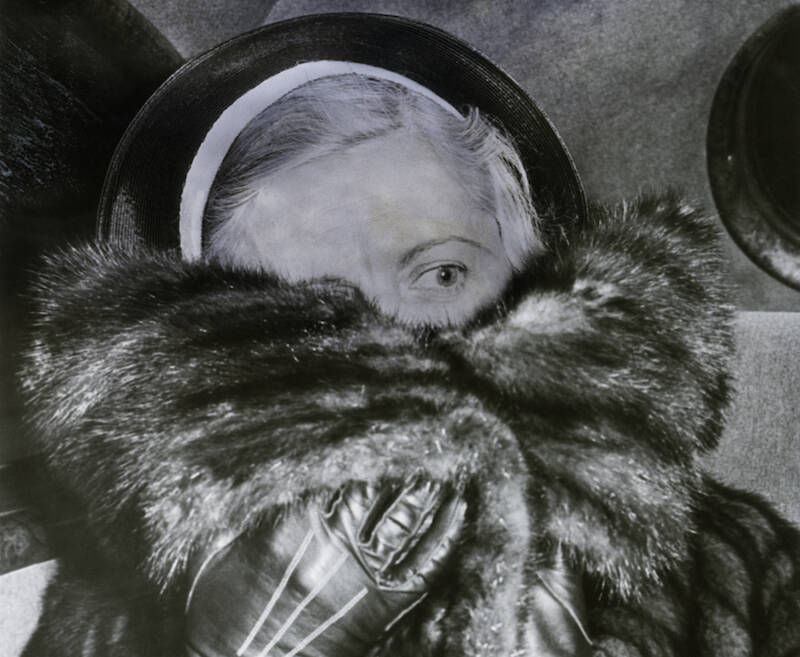
Bettmann/Contributor/Getty ImagesAl Capone’s wife, Mae Capone, tries to avoid photographers while visiting her husband in prison in December 1937. By all accounts, Mae Coughlin’s early life was much like that of any other hardworking Irish American in the early 1900s. The daughter of two immigrants, she was studious and ambitious as she began to make a life for herself. But her life would change forever when she met Al Capone. While much has been written about the legendary mobster, Al Capone’s wife has been largely relegated to the sidelines. But it was she who protected him from opportunistic journalists when he became gravely ill due to advanced syphilis in his 40s. It was also she who made sure the mob didn’t worry about the former leader’s deteriorating mental state. Though Mae Capone was an angelic figure in her husband’s life, she was also complicit in his crimes. While she didn’t wield a gun herself, Mae Capone was well aware of what her husband did for a living. During Al Capone’s rise from a low-ranking thug to a fearsome mob boss, Mae Capone was always by his side. And she never left, even when his syphilitic brain reduced his mental capacity to that of a 12-year-old. As Deirdre Bair’s book Al Capone: His Life, Legacy, and Legend put it: “Mae was a ferocious protector. The Outfit knew he was cloistered and that Mae wouldn’t let him become a problem for them. And Mae knew all about the Outfit. She was one of those wives who made spaghetti for Al and the gang at 3 in the morning when they did business back when he was in charge. She must have heard everything.” This is the little-known story of Mae Capone, Al Capone’s wife, his protector, and the one woman who surely did hear everything. Her Life Before Meeting Al Capone Wikimedia CommonsMae Capone was two years older than her husband, and was considered by some to be “marrying down.” Mary “Mae” Coughlin was born on April 11, 1897 in Brooklyn, New York. Her parents had emigrated from Ireland earlier that decade and started their family in America. After Mae Coughlin’s father died of a heart attack, the hardworking student left school at about age 16 to find a job at a box factory. When she first met Al Capone a few years later, he also worked at a box factory — but he was already getting started on less legitimate side businesses with 1920s mobsters Johnny Torrio and Frankie Yale. Wikimedia CommonsBy the time Mae Coughlin met Al Capone, he was already mixed up in the world of organized crime in Brooklyn. Though a prudent Irishwoman from a religious Catholic family bringing home an Italian street punk was odd, their relationship was truly a love story. Mae Coughlin Falls For Capone And Decides To “Marry Down” Al Capone was about 18 when he first met Mae Coughlin, who was two years older than him (a fact she would go to great lengths to hide throughout her life). But despite his youth and mysterious side jobs, he thoroughly charmed his girlfriend’s family. Even when she became pregnant out of wedlock, she was allowed to live openly at home before they got hitched. It’s unclear exactly how the couple first met, but some think they may have hit it off at a party in Carroll Gardens. Others speculate that Capone’s mother might have arranged their courtship. Wikimedia CommonsAl Capone’s son was partially deaf, just like him. For Capone, marrying an Irish Catholic woman who was more educated than him was a definite step up. Some viewed Coughlin’s decision to wed Capone as “marrying down,” but she found security and trust in him. After all, he made enough money to forward a good chunk of it to his mother. Though Al Capone bedded countless women, he genuinely fell for Coughlin. Shortly after the birth of their first and only child, the unconventional couple got married at St. Mary Star of the Sea in Brooklyn in 1918. Mae Capone’s Tumultuous Life As Al Capone’s Wife Wikimedia CommonsThe Capone home in Chicago. 1929. By about 1920, Mae Capone had moved to Chicago with her husband and son, Albert Francis “Sonny” Capone. Like his father before him, Sonny lost some of his hearing early in his life. The gangster steadily rose in the ranks in the Windy City, but along the way he also contracted syphilis from a prostitute while working as a bouncer for mob boss James “Big Jim” Colosimo. It’s still debated whether the couple’s lack of other children besides Sonny was due to Mae Capone contracting the disease from her husband or not. Capone would later experience severe cognitive decline due to his untreated disease. But before that happened, he built himself an empire in the underworld. After colluding with Torrio to murder Colosimo and take over his business, the newly-promoted thug began his rise as a top mob boss. Mae Capone was aware of his job, but it was his philandering that hurt her most. “Don’t do as your father did,” she reportedly told Sonny. “He broke my heart.” Getty ImagesMae Capone successfully lobbied to get her husband out of prison early. Capone inherited the business in the late 1920s, after Torrio gave him the reins. From then on, it was a roaring rampage of bootlegging, bribing cops, and murdering the competition. “I’m just a businessman, giving the people what they want,” he’d say, as photos of Capone were splashed across newspapers nationwide. “All I do is satisfy a public demand.” In the end, however, Capone was ultimately nabbed for tax evasion on Oct. 17, 1931. After Capone’s net worth skyrocketed throughout Prohibition, federal agents led by Eliot Ness eventually discovered that they could put him away for not paying taxes on all that income. After he was sent away, Mae Capone visited her husband in prison, where his health started to visibly decline. News of his mysterious health issues made the papers, with an overwhelmed Mae being mobbed by press hounds when she arrived at at the penitentiary. “Yes, he is going to get well,” she reportedly said. “He is suffering from dejection and a broken spirit, aggravated by intense nervousness.” Mae Capone: “Feorcious” Protector Of An Ailing Husband Ullstein Bild/Getty ImagesThe former mob boss was reduced to a mentally deficient child in his final years — with tantrums filling his days. Al Capone never improved. He had already begun to act strange behind bars, wearing winter clothes in his heated cell. After he was released early in 1939 for good behavior, he spent a short time seeking medical care in Baltimore before his family relocated to Palm Island, Florida. The mob had moved on and restructured. They were satisfied to have Capone retire, paying him $600 per week — a pittance compared to his previous salary — just to stay quiet. Before long, Capone began to have delusional chats with long-dead friends. He became Mae Capone’s full-time job, most of which entailed keeping him away from reporters, who were routinely trying to catch a glimpse of him. Ullstein Bild/Getty ImagesAl Capone spent his last years chatting with invisible houseguests and throwing tantrums. “She knew that it was dangerous for him to go out in public,” wrote author Deirdre Bair. This was particularly concerning, as anything that painted Capone as a blabbermouth could cause his old friends to silence him for good. But Mae Capone was “protective of him to the end,” explained Bair. She also made sure he got the best medical treatment. In fact, Capone was one of the first people to be treated with penicillin in the early 1940s, but by that point it was too late. His organs, including his brain, had begun to rot beyond repair. A sudden stroke in January 1947 allowed pneumonia to take hold in his body as his heart began to fail. Mae asked her parish priest, Monsignor Barry Williams, to administer her husband’s last rites — knowing what was to come. Ultimately, Al Capone died of cardiac arrest on Jan. 25, 1947 after a series of health complications. “Mama Mae seemed to need our company,” her granddaughters recalled. “It’s as if the house died when he did. Even though she lived to be eighty-nine… something in her died when he did.” She never ascended to the second floor of the house again, and chose to sleep in another bedroom. She covered the living room furniture with sheets and refused to serve any meals in the dining room. In the end, Mae Capone died on April 16, 1986, in a nursing home in Hollywood, Florida. After learning about Al Capone’s wife, Mae Capone, take a look at Al Capone’s prison cell. Then, learn about the short life of Frank Capone. The post The Story Of Mae Capone, Who Stood By Al Capone As Syphilis Destroyed His Brain appeared first on All That's Interesting.

Like
Comment
Share
History Traveler
History Traveler
7 w

Czeslawa Kwoka Died At The Hands Of The Nazis, But The Power Of Her Auschwitz Portrait Lives On
Favicon 
allthatsinteresting.com

Czeslawa Kwoka Died At The Hands Of The Nazis, But The Power Of Her Auschwitz Portrait Lives On

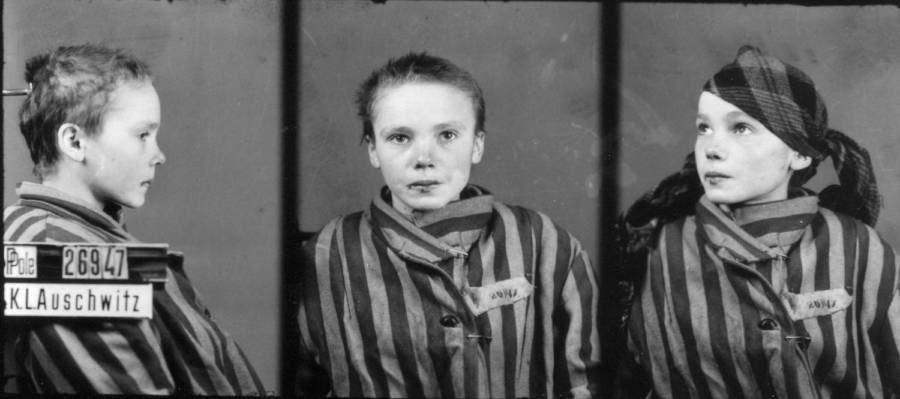
The Holocaust happened on a scale so massive that we’re virtually unable to fully comprehend its scope. Reading the words “6 million lives” is certainly chilling (to say nothing of the millions of others killed), but it is a number so large that it becomes abstract. It’s thus difficult to attach a human element to this great tragedy, to attach a face to every figure. Wikimedia CommonsCzeslawa Kwoka, photographed for Nazi records upon her arrival at Auschwitz and just after she’d been beaten by a camp guard. Circa 1942-1943. Czeslawa Kwoka was one of the 116,000 Poles deported from their tiny villages in the wake of the German invasion in 1939. These villagers, mainly Catholic farmers, were ripped from their homes to make room for the Germans that the Nazis imagined would soon come to populate the area. Very little is known about Kwoka’s life before this moment. We do know that Czeslawa Kwoka was born in the small village of Wolka Zlojecka in southeastern Poland on August 15, 1928, and that she and her mother were deported from Zamosc, Poland to Auschwitz on December 13, 1942. But to the Nazis, Czeslawa Kwoka was just prisoner 26947. She was also a photo. Wikimedia CommonsA young Polish girl discovers the body of her sister, killed by a German bomb in 1939. Known for their ruthless efficiency, the Germans photographed and cataloged the prisoners who passed through the death camps for their records. In Kwoka’s photo, the fright emanating from her expression has transcended the black and white of the image and remains potent decades later. Her terror is palpable, conveying all of the horrors of the Holocaust without words or movement. The 14-year-old girl in this haunting photograph would be dead three months after the shutter snapped, one of the 230,000 children at Auschwitz where life expectancy was a few months at most. It is not known how she was killed, whether by hard labor, exhaustion, horrifying experiment, or any of the other countless methods of murder the Nazis had at their disposal. Wikimedia CommonsChild prisoners stand near the fence at Auschwitz. 1945. While we don’t know exactly what came after the photo, we do know what had come just before, thanks to the recollection of photographer Wilhelm Brasse. A Polish man deported to Auschwitz by the Nazis, Brasse was forced to photograph between 40,000 and 50,000 prisoners at the camp, including Czeslawa Kwoka. He vividly remembered taking her photo, recalling how the terrified girl was ushered in with the others, unable to understand anything that was happening around her: “So this woman Kapo (a prisoner overseer) took a stick and beat her about the face. This German woman was just taking out her anger on the girl. Such a beautiful young girl, so innocent. She cried but she could do nothing. Before the photograph was taken, the girl dried her tears and the blood from the cut on her lip. To tell you the truth, I felt as if I was being hit myself but I couldn’t interfere. It would have been fatal for me. You could never say anything.” The blood from the cut on Czeslawa Kwoka’s lip is still visible in the photograph that Brasse took. As camp photographer, Brasse was an eyewitness to all of Auschwitz’s nightmarish horrors. He captured the raw fear on the prisoners’ faces and preserved it for eternity. Wikimedia CommonsAn elderly Hungarian women and three children march to the gas chambers at Auschwitz in 1944. Even after Brasse was sent to another concentration camp and finally liberated by American forces in 1945, he wrestled with the ghosts of the tens of thousands of victims he photographed for years to come. Eventually, he had to give up photography altogether. “When I started taking pictures again,” he explained, “I saw the dead. I would be standing taking a photograph of a young girl for her portrait, but behind her I would see them like ghosts standing there. I saw all those big eyes, terrified, staring at me. I could not go on.” These ghosts live on thanks to people like Brasse, who preserved the photos despite the Nazis’ best efforts to destroy them. Once they realized the war was lost, the Germans tried to get rid of all evidence of the things they had done, a measure that included the burning of victim’s identity cards. But Brasse and a few others managed to hide the negatives, preserving the faces to the victims that suffered these unimaginable abuses. Wikimedia CommonsA small sampling of the more than 40,000 Auschwitz prisoner photos taken by Wilhelm Brasse. The photograph of Czeslawa Kwoka was among those that Brasse managed to save. The frail, young face emblazoned with fear remains a poignant reminder of the all-consuming horrors of genocide and war, of all the lives that were extinguished before they had really begun. After this look at Czeslawa Kwoka and her powerful portrait from Auschwitz, see the most photos taken during the Holocaust. Then, discover the horrors of the largely overlooked genocide in Nazi-occupied Poland. The post Czeslawa Kwoka Died At The Hands Of The Nazis, But The Power Of Her Auschwitz Portrait Lives On appeared first on All That's Interesting.

Like
Comment
Share
History Traveler
History Traveler
7 w

Workers Restoring An Historic Merchant’s House In Moscow Uncovered Nearly 20,000 Silver Coins Dating Back 400 Years
Favicon 
allthatsinteresting.com

Workers Restoring An Historic Merchant’s House In Moscow Uncovered Nearly 20,000 Silver Coins Dating Back 400 Years

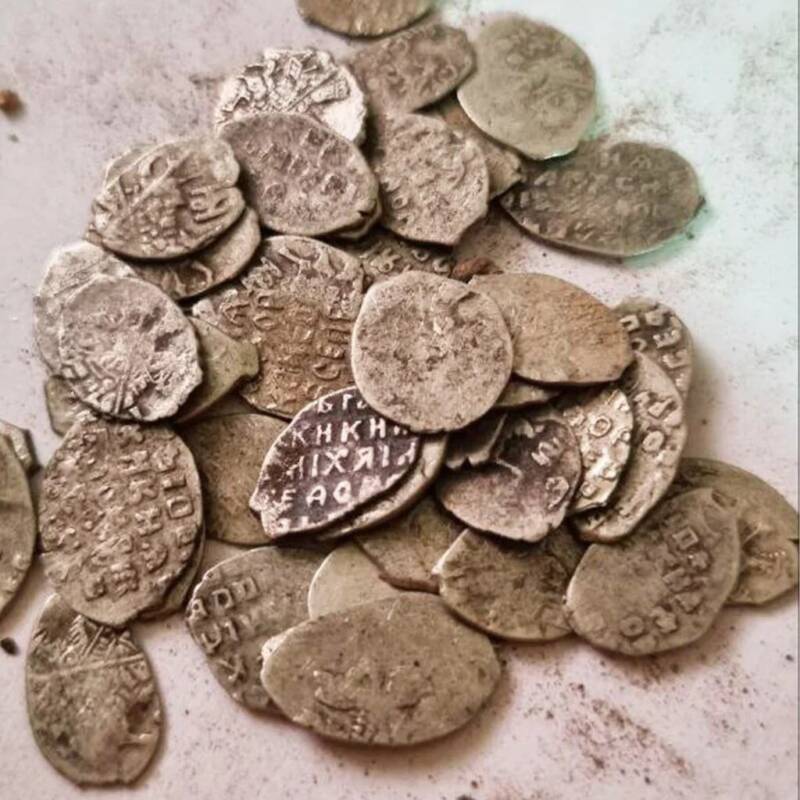
Olga Lyubimova/TelegramThis discovery has been hailed as one of the most significant coin hoards found in Russia in recent years. During restoration work at the historic home of 17th-century merchant Averky Kirillov in Moscow, archaeologists opened up a ceramic vessel and came across nearly 20,000 silver coins. This astounding hoard is not only an incredible numismatic discovery, it also helps shed light on an especially turbulent and pivotal period in Russian history. Nevertheless, many questions remain about who originally owned the coins, how they fell into the hands of Kirillov, and why they were hidden away in his opulent Moscow home roughly 400 years ago. The 20,000 Silver Coins Found In The Historic Home Of Averky Kirillov According to an announcement from Olga Lyubimova, Russia’s Minister of Culture on Telegram, the coin hoard was found during restoration work at merchant Averky Kirillov’s home, which Kirillov constructed in the 17th century along the Bersenevskaya Embankment near the center of Moscow. Olga Lyubimova/TelegramThe coins were found in a ceramic vessel on the second floor of Averky Kirillov’s historic home in Moscow. The 20,000 coins were hidden inside a ceramic vessel on the second floor of the building, and have been preliminarily dated to the late 16th and early 17th centuries. However, experts are still examining the markings on the coins. Such markings will be a valuable data point, as coins from this era were often simultaneously issued by various parties that were claiming power at the same moment. And the era when the coins were minted was a tumultuous one indeed, which may explain why they were hidden in Averky Kirillov’s home in the first place. Why Did The Coins End Up In Averky Kirillov’s Home Following The Time Of Troubles? Public DomainA 20th-century depiction of Russia’s Time of Troubles, an era of political violence and famine that killed as many as 1 million people. Though the 20,000 coins found in Kirillov’s home still need to be studied, experts believe for the moment that they were minted during the late 1500s and early 1600s. This was an especially tumultuous period of Russian history known as the Smutnoye vremya, or the Time of Troubles. This period began in 1598, when the ineffective ruler Feodor I, the son of Ivan the Terrible, died without an heir. He was the last of the Rurik dynasty, which had ruled Russian since the 9th century, and his death left a power gap that many factions rushed to fill. Feodor’s father had infamously killed Feodor’s older brother, Ivan, in 1581, but false rumors spread that Feodor’s younger brother was still alive, prompting many to claim to be this “lost” heir to the Rurik dynasty. The political upheaval led to widespread violence. And this, combined with a famine that began at the beginning of the 17th century and lasted for three years, killed up to a million people. Conditions didn’t stabilize until 1613, when Michael Romanov became tsar and established the Romanov dynasty. The Romanov dynasty, of course, lasted until 1917, when the tsar and his family were toppled during the Russian Revolution. It was during this era of political upheaval, violence, and famine, that the coins appear to have been minted. So how did they end up in Averky Kirillov’s home in Moscow? Experts think there are several possibilities. Kirillov is thought to have acquired the home, then a wooden property, around 1656. He replaced it with the striking red, two-story stone building that stands there today. Experts think that the coins could represent Kirillov’s personal savings, or that the hoard was merchant capital stored during a period of political unrest, or that it had been collected for trade or taxation purposes, but never collected — possibly because its owner was exiled or killed. Wikimedia CommonsRussian merchant Averky Kirillov’s historic home along the Bersenevskaya Embankment in Moscow. While many questions thus remain about the coin hoard found in Averky Kirillov’s home, future study will assuredly provide more answers about when the coins were made, and to whom they belonged. Hopefully that will in turn shed more light on why and when they were hidden — and how this treasure trove remained forgotten for the past several centuries. After reading about the hoard of 20,000 silver coins that were found in the Moscow home of merchant Averky Kirillov, discover the astounding story of the Lykov Family, which fled their village in Russia in 1936 and spent the next four decades living in total isolation in the wilderness. Then, look through these photos of life in Oymyakon, Russia, the coldest inhabited place on Earth. The post Workers Restoring An Historic Merchant’s House In Moscow Uncovered Nearly 20,000 Silver Coins Dating Back 400 Years appeared first on All That's Interesting.

Like
Comment
Share
Twitchy Feed
Twitchy Feed
7 w

Houston Chronicle Rushes in to Defend Old Clip of Gene Wu Talking About the 'Shared Oppressor'
Favicon 
twitchy.com

Houston Chronicle Rushes in to Defend Old Clip of Gene Wu Talking About the 'Shared Oppressor'

Houston Chronicle Rushes in to Defend Old Clip of Gene Wu Talking About the 'Shared Oppressor'
Like
Comment
Share
Showing 6967 out of 116249
  • 6963
  • 6964
  • 6965
  • 6966
  • 6967
  • 6968
  • 6969
  • 6970
  • 6971
  • 6972
  • 6973
  • 6974
  • 6975
  • 6976
  • 6977
  • 6978
  • 6979
  • 6980
  • 6981
  • 6982
Advertisement
Stop Seeing These Ads

Edit Offer

Add tier


Select an image
Delete your tier
Are you sure you want to delete this tier?

Reviews

In order to sell your content and posts, start by creating a few packages. Monetization

Pay By Wallet

Payment Alert

You are about to purchase the items, do you want to proceed?

Request a Refund