YubNub Social YubNub Social
    #astronomy #nightsky #newyork #physics #moon #astrophysics #fullmoon #supermoon #planet #nasa #zenith #wolfmoon #moonafteryule #cosmology #coldmoon
    Advanced Search
  • Login
  • Register

  • Day mode
  • © 2026 YubNub Social
    About • Directory • Contact Us • Developers • Privacy Policy • Terms of Use • shareasale • FB Webview Detected • Android • Apple iOS • Get Our App

    Select Language

  • English
Install our *FREE* WEB APP! (PWA)
Night mode toggle
Community
New Posts (Home) ChatBox Popular Posts Reels Game Zone Top PodCasts
Explore
Explore
© 2026 YubNub Social
  • English
About • Directory • Contact Us • Developers • Privacy Policy • Terms of Use • shareasale • FB Webview Detected • Android • Apple iOS • Get Our App
Advertisement
Stop Seeing These Ads

Discover posts

Posts

Users

Pages

Blog

Market

Events

Games

Forum

Science Explorer
Science Explorer
1 y

Astronauts Heading To Mars Might Have A Drug Problem On Their Hands
Favicon 
www.iflscience.com

Astronauts Heading To Mars Might Have A Drug Problem On Their Hands

The first astronauts heading to Mars will venture further than any human before them, and should any of them encounter medical problems on their journey – perhaps “cosmic kidney disease” or a bacterial infection – they will be almost entirely alone to deal with them. Adding to those challenges, a new study has identified another problem; medications brought along on the mission will expire before the astronauts return to Earth. On the International Space Station (ISS), astronauts have access to a variety of medications that can be replenished by resupply missions if depleted or expired. However, a trip to Mars will take around nine months each way, with an extra three months spent on the Red Planet waiting for Earth and Mars to be in a suitable position for the return journey. That's 21 months in total, with no new supplies.NASA does not routinely disclose medication used on the ISS, but the new study's authors used a Freedom of Information Act Request to obtain a list, assuming that a Mars-bound mission would have a similar stock. The researchers, from the Duke University School of Medicine, then assessed how long each drug would be expected to last in its original packaging. This too raises a problem, as shelf-lives are based on the drugs being kept in their original packaging, but drugs sent to the ISS are repackaged before launch.On top of that, we don't know how long these drugs last in space. It's possible that they will degrade more quickly due to radiation.The good news is that the shortest shelf life (for an ophthalmic lubricant) is 18 months, posing a "minimal risk" for extended missions to the Moon – but for longer missions, astronauts could see their drugs become less effective."Using the maximum labeled shelf-life across all sources for each medication, we found that 14 medications will expire by 24 months: one ophthalmic lubricant, one advanced life support medication, one anaphylaxis treatment medication, one benzodiazepine, one antiangina medication, two corticosteroids, one local anesthetic, one topical urinary jelly, two antibiotics, one antipsychotic, one inhaler, and one ear wax removal medication," the team writes in their study. "Furthermore, over half [...] of the entire 2023 ISS formulary will expire by 36 months."Using more conservative estimates of efficacy based on each medication’s minimum labeled shelf-life, 97.8 percent of medications taken aboard the ISS expire within 36 months.Drug manufacturers assure the effectiveness of their medication up to the expiration date, but beyond that, they may become less effective. “It doesn’t necessarily mean the medicines won't work, but in the same way you shouldn’t take expired medications you have lying around at home, space exploration agencies will need to plan on expired medications being less effective,” Daniel Buckland, assistant professor in the Department of Emergency Medicine at the Duke University School of Medicine and aerospace medicine researcher said in a statement."Ultimately, those responsible for the health of spaceflight crews will have to find ways to extend the expiration of medications to the complete mission duration," the team concluded, "or accept the elevated risk associated with administration of an expired medication."The study is published in the journal npj Microgravity.

Like
Comment
Share
cloudsandwind
cloudsandwind
1 y

https://voiceofeurope.com/germ....an-court-revokes-add

German Court revokes additional protection for Syrian refugees due to civil war  | Voice of Europe
Favicon 
voiceofeurope.com

German Court revokes additional protection for Syrian refugees due to civil war | Voice of Europe

VOICE OF EUROPE IS GOING TO BE BLOCKED due to pressure from European authorities on freedom of speech and attempts to hi...... | Voice of Europe
Like
Comment
Share
cloudsandwind
cloudsandwind
1 y

Good or bad ?

https://voiceofeurope.com/czec....h-school-will-take-a

Czech school will take away children's cell phone  | Voice of Europe
Favicon 
voiceofeurope.com

Czech school will take away children's cell phone | Voice of Europe

VOICE OF EUROPE IS GOING TO BE BLOCKED due to pressure from European authorities on freedom of speech and attempts to hi...... | Voice of Europe
Like
Comment
Share
Intel Uncensored
Intel Uncensored
1 y

Covid Shots Cause Sudden Death by Weakening Heart, Study Finds
Favicon 
www.sgtreport.com

Covid Shots Cause Sudden Death by Weakening Heart, Study Finds

by Frank Bergman, Slay News: A new study has identified another form of heart damage that is causing sudden deaths to surge among people who have been injected with Covid mRNA shots. Top Japanese scientists uncovered evidence linking Pfizer’s mRNA shot to severely weakened hearts. The team of researchers at the Narita-Tomisato Tokushukai Hospital in […]
Like
Comment
Share
Conservative Voices
Conservative Voices
1 y Politics

rumbleRumble
The Five (Full episode) - Wednesday, July 24
Like
Comment
Share
The Lighter Side
The Lighter Side
1 y

“When Your Golden Retriever Sits In Line And Politely Orders A Pup Cup”
Favicon 
www.inspiremore.com

“When Your Golden Retriever Sits In Line And Politely Orders A Pup Cup”

There are tons of ways to bond with our pets. One particularly sweet way to do so while enjoying a coffee treat is by giving your dog one of their own! Their treat, of course, doesn’t include any coffee. Instead, there are tons of dogs who are obsessed with what is often called a pup cup! This treat is super simple — it’s just a cup with whipped cream inside. But for our animal friends, this simple treat is an incredible indulgence. In fact, Charlie the golden retriever is so set on getting his own pup cup, he doesn’t even wait for his parents! This precious moment takes place while Charlie and his humans, which includes Haley Dwyer, are taking a nice stroll. As luck would have it, they pass by his favorite coffee truck. Without hesitating, Charlie pitter-patters his way over to the truck and sits. Then, he barks — in other words, he order his pup cup. Watch this adorable moment in the video below! @haleydwyer_ Charlie Revival Coffee and Ice Cream #goldenretriever #goldensoftiktok #dogsoftiktok #pupcup #goldenretrieverlife #goldenretrieversoftiktok ♬ original sound – Haley Dwyer “I love how his tail was wagging until he ordered and then it was strictly business,” the popular weratedogs account shares in the comments, with another person adding, “That was a nice woof, not to loud yet very firm and telling. 10/10 would highly recommend.” Golden Retriever Enjoys His Pup Cup Some viewers expressed their disappointment over not getting the chance to see Charlie enjoy his much deserved pup cup. Luckily, Haley was more than happy to share a follow up video showing just that! And yes, it’s just as cute as you’re imagining. @haleydwyer_ Replying to @Blue skies ♬ L-O-V-E – Nat King Cole “Why did I think he was gonna grab it and walk away,” someone admits, with another sharing, “If a dog is happy, I’m happy.” You can find the source of this story’s featured image here! The post “When Your Golden Retriever Sits In Line And Politely Orders A Pup Cup” appeared first on InspireMore.
Like
Comment
Share
Strange & Paranormal Files
1 y

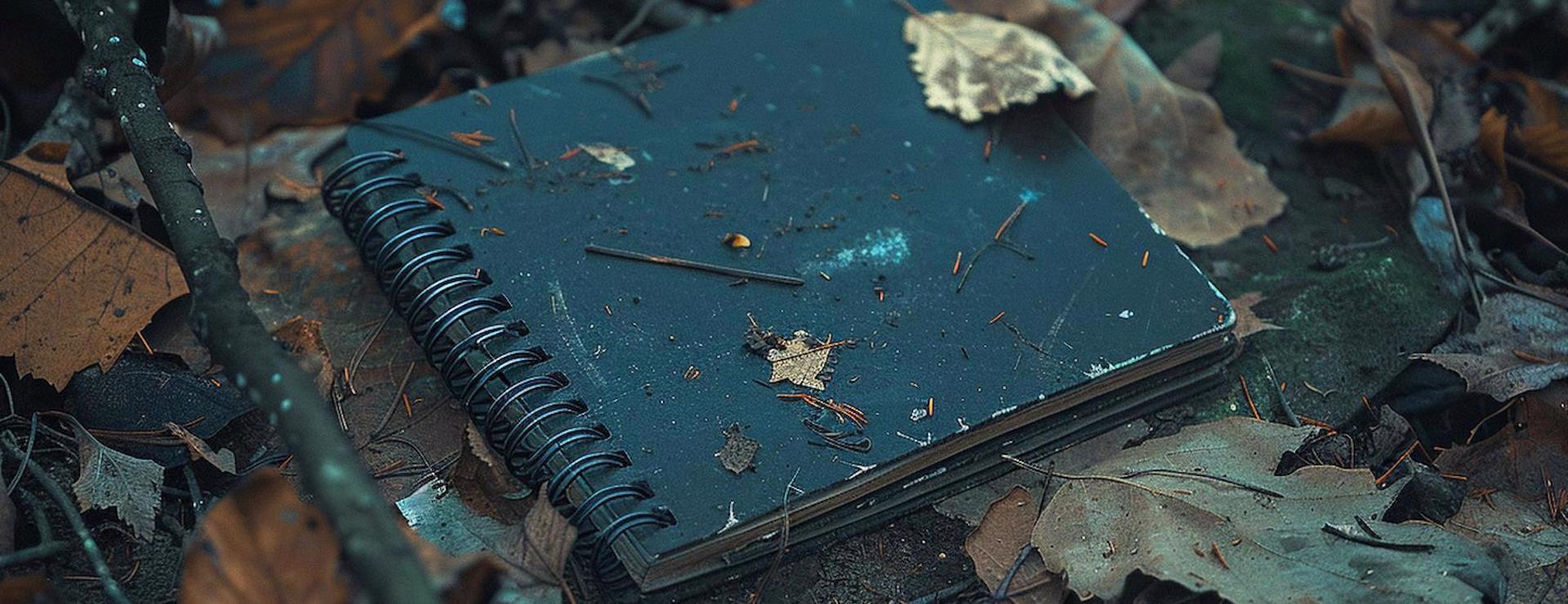
An Odd Case of a Creepy Abandoned Notebook, Bizarre Disappearances, and Strange Mysteries in the Woods
Favicon 
mysteriousuniverse.org

An Odd Case of a Creepy Abandoned Notebook, Bizarre Disappearances, and Strange Mysteries in the Woods

During my vast research into the paranormal and unexplained, I often come across cases that truly stand out, and which I had never heard of. Some of these raise an eyebrow, some are truly perplex, some are obvious hokum, yet there are others I am not quite sure what to do with or make of. Recently I came across a very odd case involving a creepy abandoned shed, a discarded notebook full of mysterious rantings, a series of bizarre disappearances, and all manner of weird occurences in an apparently haunted forest. As a disclaimer, I am not sure how true any of this is, or how much of it actually happened, but it is all a truly disturbing story that is worth looking at nevertheless. Is any of it true? Read on and decide for yourself. 
Like
Comment
Share
Science Explorer
Science Explorer
1 y

Tiny Sea Slugs Feed In Packs To Bring Down Dangerous Prey
Favicon 
www.iflscience.com

Tiny Sea Slugs Feed In Packs To Bring Down Dangerous Prey

Animals hunting in groups is an amazing example of both intelligence and communication between individuals, from orcas teaming up to sink yachts to prides of lions and packs of wolves taking down prey often much larger than themselves. While these are fairly common examples, taking a trip below the waves reveals that even tiny sea slugs are capable of working together to get the ultimate meal.The nudibranch mollusk Berghia stephanieae only eats a sea anemone species called Exaiptasia diaphana, however research has now revealed that the nudibranchs are feeding on these anemones in packs. E. diaphana is dangerous prey – the anemone contains nematocysts and acontia, similar kind of stinging cells to those found on a jellyfish. The anemones are also capable of killing and eating their predators. Therefore, the team believe that much like a lion pride would hunt in a group to take down a dangerous buffalo, the nudibranchs are teaming up to reduce the likelihood of possible injury.The team conducted a series of experiments in the lab to explore how B. stephanieae would react to different feeding situations. First, they placed one anemone for every nudibranch inside the tank but rather than eat alone, results showed that the nudibranchs fed socially. The feeding together was not influenced by how hungry the nudibranchs were in tests where they weren’t fed for seven or three days. In a different experiment, the team placed two anemones inside the tank but found that the nudibranchs did not distribute themselves evenly between the pair. The researchers also thought that the sea slugs could be following slime trails left by the others in the tank, which could influence which anemone they chose to feed on. By placing a nudibranch in the tank to leave trails, but then removing it before it could feed on any of the anemones, the team found that the rest of the anemones did not choose to feed on the anemone with the slime trail leading to it any more than chance.This kind of feeding behavior is known as aggregation, where the individuals behave independently but come together to feed. The team think that having multiple individuals feeding on the anemone reduces the risk of injury for the feeding nudibranchs but have yet to work out the mechanisms that trigger this. The paper is published on the preprint server bioRxiv and has not yet undergone peer review. 
Like
Comment
Share
Science Explorer
Science Explorer
1 y

IFLScience The Big Questions: Is Evolutionary Biology Sexist?
Favicon 
www.iflscience.com

IFLScience The Big Questions: Is Evolutionary Biology Sexist?

Science can’t be sexist, we hear you cry, it’s methodical, rational. And yet science is carried out by humans who are often a product of the time and place they operate in, struggling to overcome intrinsic biases and outside influence.Host Katy Evans is joined by zoologist and presenter Lucy Cooke, author of Bitch: A Revolutionary Guide to Sex, Evolution and the Female Animal, to discuss how these biases have affected – and sometimes prevented – what we know about animal biology in some truly eye-opening ways, and hopefully debunk some myths along the way.You can listen to this episode and subscribe to the podcast on all your favorite podcast apps: Apple Podcast, Spotify, Podbean, Amazon Music, and more. A transcript of the conversation is available here.
Like
Comment
Share
Science Explorer
Science Explorer
1 y

Moon Experienced An Enormous “Magmatic Event” – Cataclysmic Impact Might Be To Blame
Favicon 
www.iflscience.com

Moon Experienced An Enormous “Magmatic Event” – Cataclysmic Impact Might Be To Blame

The Moon is believed to have become pretty solid pretty quickly after it formed 4.4 billion years ago. But that doesn’t mean that volcanism and magmatic events stopped there. By looking at rocks collected during the Apollo missions, researchers believe they have found evidence of a major magmatic event taking place about 100 million years after the Moon formed. The cause might have been the collision that created the largest known impact crater in the Solar System.The team dated over 500 zircons from lunar samples and reported a peak in their age distribution at around 4.33 billion years. Zircons are formed from lunar magma solidifying and dating them provides insights into the chronology of the Moon. The high number of zircons from a time after the Moon should have solidified suggests that this might have been from an event.More specific dating of some of these zircons suggests the event lasted about 4 million years, plus or minus half a million. It is possible that it was the final hurrah of the solidifying Moon – or maybe it was a period of intense asteroid strike. However, the team believes that the strongest evidence supports the idea that this event was caused by the impact that caused the South Pole-Aitken Basin.Our findings also have interesting implications for the state of the early Solar System over 4.3 billion years ago.Dr Melanie Barboni“In our study, we found intriguing evidence for a major, potentially global magmatic event on the Moon 4.338 billion years ago. By precisely dating lunar zircon crystals from the Apollo missions, we discovered a striking concentration of zircon ages tightly clustered around 4.338 billion years,” co-lead author Dr Melanie Barboni, from Arizona State University, told IFLScience.“Such a massive impact would have excavated lunar mantle material from great depths. We suggest the zircons we dated likely crystallized within the impact melt sheet as it cooled and differentiated. Subsequent impacts could have then distributed these zircons across the lunar surface.”The zircons eventually made their way to the sites of Apollo 14, 15, and 17, even though the South Pole-Aitken Basin is on the far side of the Moon and far removed from where humans have visited so far. The crater is an area of massive interest for our understanding of the Moon's past.The impact might have caused such a major magmatic event and the object that caused it might have simply sunk and now remains buried underneath this region. There is a massive structure under it. If the zircons are confirmed to truly come from the South Pole-Aitken impact, they would allow us to precisely date the impact, with consequences for our understanding of the Moon and the whole Solar System.“An impact of this scale would have also significantly influenced the development of the lunar crust and mantle. Our findings also have interesting implications for the state of the early Solar System over 4.3 billion years ago. An impact of this size hints at a still dynamic Solar System at this time, with large objects continuing to collide with planets and moons,” Dr Barboni explained.If the Moon was getting hit by such objects, the Earth might not have been spared either. And while craters from that period have been erased by the eons of plate tectonics, having these insights might explain some of the properties of the Earth that remain today. Confirmation of this research might come sooner rather than later.“Our research is particularly timely given the recent return of the first samples from the South Pole-Aitken basin by China's Chang'e 6 mission. The combination of these new samples and our zircon age data could significantly advance our understanding of this major impact basin's history and the broader impact history of the early Solar System,” Dr Barboni told IFLScience.There is a lot of hope that Chang’e 6 might have found rocks from the actual lunar mantle. Such a find would be revolutionary, but even more, zircon would provide evidence for or against this work with all the important consequences listed here.A paper describing the results is published in the journal Science Advances.
Like
Comment
Share
Showing 69688 out of 105184
  • 69684
  • 69685
  • 69686
  • 69687
  • 69688
  • 69689
  • 69690
  • 69691
  • 69692
  • 69693
  • 69694
  • 69695
  • 69696
  • 69697
  • 69698
  • 69699
  • 69700
  • 69701
  • 69702
  • 69703
Advertisement
Stop Seeing These Ads

Edit Offer

Add tier


Select an image
Delete your tier
Are you sure you want to delete this tier?

Reviews

In order to sell your content and posts, start by creating a few packages. Monetization

Pay By Wallet

Payment Alert

You are about to purchase the items, do you want to proceed?

Request a Refund