YubNub Social YubNub Social
    #covid #music #bible #america #trombone #atw #militarymusic #armymusic #god #armyband #atw2026 #tyranny #jesuschrist #jazz #quartet
    Advanced Search
  • Login
  • Register

  • Night mode
  • © 2026 YubNub Social
    About • Directory • Contact Us • Developers • Privacy Policy • Terms of Use • shareasale • FB Webview Detected • Android • Apple iOS • Get Our App

    Select Language

  • English
Night mode toggle
Featured Content
Community
New Posts (Home) ChatBox Popular Posts Reels Game Zone Top PodCasts
Explore
Explore
© 2026 YubNub Social
  • English
About • Directory • Contact Us • Developers • Privacy Policy • Terms of Use • shareasale • FB Webview Detected • Android • Apple iOS • Get Our App
Advertisement
Stop Seeing These Ads

Discover posts

Posts

Users

Pages

Blog

Market

Events

Games

Forum

YubNub News
YubNub News
8 w

Poll: 64% Of State Of The Union Viewers Say Trump Policies Will Move Country In Right Direction
Favicon 
yubnub.news

Poll: 64% Of State Of The Union Viewers Say Trump Policies Will Move Country In Right Direction

64 percent of Americans said the policies proposed by President Donald Trump in his State of the Union address on Feb. 24 would move the country in the right direction, compared to 54 percent…
Like
Comment
Share
YubNub News
YubNub News
8 w

Poll: 64% Of State Of The Union Viewers Say Trump Policies Will Move Country In Right Direction
Favicon 
yubnub.news

Poll: 64% Of State Of The Union Viewers Say Trump Policies Will Move Country In Right Direction

64 percent of Americans said the policies proposed by President Donald Trump in his State of the Union address on Feb. 24 would move the country in the right direction, compared to 54 percent…
Like
Comment
Share
Science Explorer
Science Explorer
8 w

Into Totality: Our Complete Guide to the March 3rd Total Lunar Eclipse
Favicon 
www.universetoday.com

Into Totality: Our Complete Guide to the March 3rd Total Lunar Eclipse

If skies are clear, don’t miss one of the top astronomical events of the year this coming Tuesday, March 3rd, as the Moon passes through the Earth’s shadow in a total lunar eclipse. This will be a fine leisurely affair centered around the Pacific Ocean region, with totality lasting almost an hour in duration. For many observers worldwide, this is the last total lunar eclipse until late 2028 and mid-2029.
Like
Comment
Share
Science Explorer
Science Explorer
8 w

The Cosmic Brain As Seen By The JWST
Favicon 
www.universetoday.com

The Cosmic Brain As Seen By The JWST

A dying star has ejected its outer layer and illuminated it with its powerful radiation. The resulting nebula looks every bit like a transparent human skull. Astronomers are calling the unusual structure the Exposed Cranium Nebula.
Like
Comment
Share
Classic Rock Lovers
Classic Rock Lovers  
8 w

Iron Maiden to Take a Break From Touring for All of 2027
Favicon 
ultimateclassicrock.com

Iron Maiden to Take a Break From Touring for All of 2027

They've announced the final shows of their Run for Your Lives world tour. Continue reading…
Like
Comment
Share
Classic Rock Lovers
Classic Rock Lovers  
8 w

If You Grew Up in the ’80s, You Had These at Home
Favicon 
ultimateclassicrock.com

If You Grew Up in the ’80s, You Had These at Home

The 1980s weren’t just about the music — they were a full-blown “things” decade. These everyday objects once felt completely normal and now feel like artifacts from a louder, brighter time. Continue reading…
Like
Comment
Share
Heroes In Uniform
Heroes In Uniform
8 w

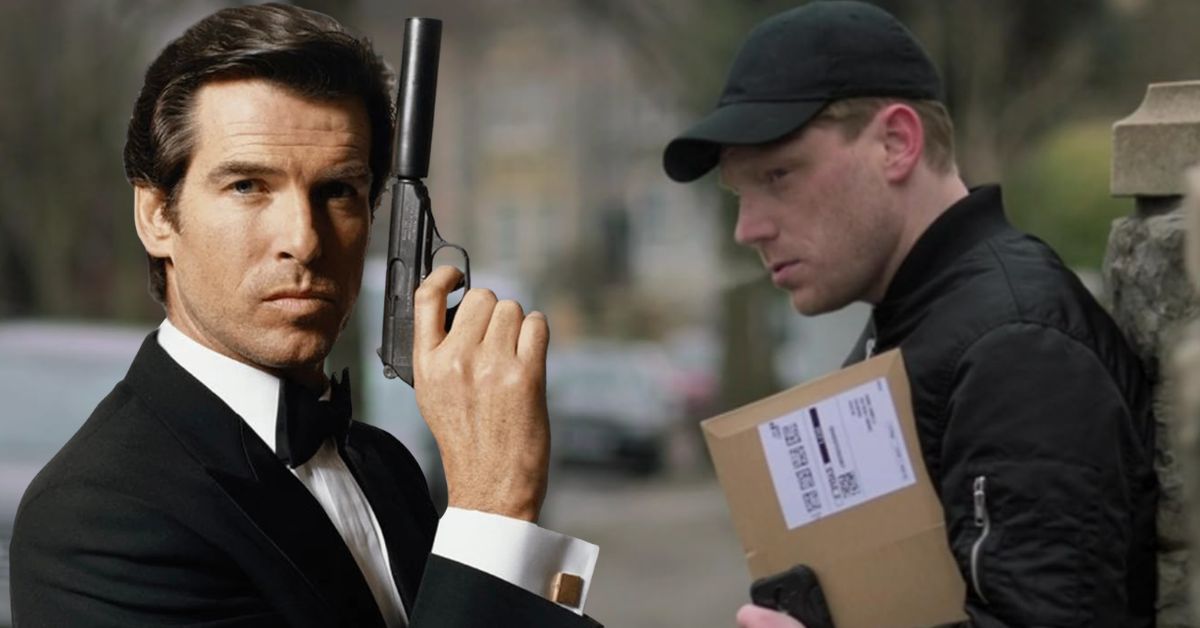
The bizarre James Bond hoax that has Hollywood scratching its head 
Favicon 
www.wearethemighty.com

The bizarre James Bond hoax that has Hollywood scratching its head 

Here’s what we know: Amazon has greenlit what is being called “Bond 26,” the next film in the 007 franchise with “Dune” director Denis Villeneuve directing and “Peaky Blinders” showrunner Steven Knight writing. Here’s what we don’t know: Who will play James Bond?Also Read: The mistake that led the James Bond movie ‘Goldfinger’ to be banned in IsraelHere’s where it gets weird: An unknown actor tried to throw his hat in the ring by conning Hollywood trades into announcing that he was in consideration for the role? Let’s dive into it.  With 25 films spanning seven decades, the Bond franchise is well-established and well-loved. Anytime a new Bond actor is announced, fans have opinions (remember when everyone freaked out about Daniel Craig’s casting because he was blond?). Indeed, rumors abound currently for “Bond 26” with “Frankenstein” and “Wuthering Heights” actor Jacob Elordi suggested for the role (or is this another hoax???).  With Elordi hitting a series of entertainment industry wins, including an Oscar nomination for his portrayal of Dr. Frankenstein’s Monster, it makes sense that the rising star’s name would be in the mix. But last year, a (no offense) “nobody” decided to take his future into his own hands and see if he couldn’t just become the first red-headed Bond.  Here’s what happened. Movies The bizarre James Bond hoax that has Hollywood scratching its head  People have firm opinions on who plays James Bond. By Shannon Corbeil Feature General Patton’s grandson help heal veterans through filmmaking By Blake Stilwell Vietnam War The real story of Jane Fonda and the Vietnam vets who hate her Some beef cannot be squashed. By Blake Stilwell Actor Scott Rose-Marsh made the (bold?) decision to send story tips to multiple entertainment industry reporters, wherein he claimed to have evidence that an unknown British actor was being considered for the role of James Bond. “I am providing one redacted casting email (of two in my possession) that proves actor Scott Rose-Marsh has been seen by the Bond producers and is being actively considered for the role of James Bond,” the message read, according to Deadline’s Jake Kanter, one of the reporters targeted by Rose-Marsh.  The email included strange, redacted attachments with casting breakdowns and what would have been confidential audition materials. While Kanter’s spidey senses lit up at the strange phrasing, unusual digital access to what would otherwise be highly protected information, and bizarre behavior from the email sender (who identified themselves as a “Michael Lawrence”), The Hollywood Reporter did publish the rumor in their gossip column. After that, it actually gets more bizarre. Amazon MGM Studios didn’t dispute the rumors—an unusual move. Rose-Marsh then doubled down and granted an interview to an Australian publication under the headline “Meet Scott Rose-Marsh, the man who might be James Bond.”Kanter eventually confronted Rose-Marsh directly, but the actor responded with non-answers except to say, “I do not agree with or condone hoaxers. I don’t comment on rumors, but since being in the public eye, it’s humbling that people think a rising actor like me could really be James Bond.” Bold, dude. Bold to go for the humble, charming angle. As of this writing, Elordi is the current frontrunner, with publications announcing that he may have even been offered the role, but then again, Elordi may have just sent some AI pages to (checks notes) The Times of India to try to win himself the casting. We really won’t know until a trailer hits our feed.I guess the takeaway here is shoot your shot? But don’t get caught? Don’t Miss the Best of We Are The Mighty • The top 007 Reasons why James Bond is the worst spy ever• James Bond is based on Ian Fleming’s real-world experiences in World War II• The kibbutznik spymaster that came in from the cold Entertainment Movies You could be the next owner of Darth Vader’s revolver By Miguel Ortiz Entertainment Captain America and the boldest punch in American pop culture By Daniel Tobias Flint Humor Legendary actor, Army veteran, and Navy brat Robert Duvall dies at 95 By Blake Stilwell Movies Here’s what’s going on with the ‘Top Gun: Maverick’ lawsuit saga By Shannon Corbeil Movies The new Jimmy Stewart biopic depicts his World War II service By Blake Stilwell The post The bizarre James Bond hoax that has Hollywood scratching its head  appeared first on We Are The Mighty.
Like
Comment
Share
Heroes In Uniform
Heroes In Uniform
8 w

VA to formally rescind controversial disability ratings rule
Favicon 
www.militarytimes.com

VA to formally rescind controversial disability ratings rule

A regulation that would have required Veterans Affairs medical examiners to include the effects of medication in assigning disability ratings is expected to be rescinded formally on Feb. 27. According to an advanced Federal Register notice, the rescission will be effective immediately on publication, expected early Friday morning. In the notice, VA officials said that while the rule was meant to clarify existing policy, “stakeholders have expressed uncertainty” about its impact on claims and leaving the rule in place during the codification process “could undermine confidence in the benefits system.” “VA always takes veterans’ concerns seriously and recognizes that many commenters construed the interim final rule as something that could result in adverse consequences,” the notice read. The rule, published Feb. 17, generated significant backlash from veterans, advocacy groups and lawmakers who said the proposal could have financially penalized veterans who adhere to medical treatment or encourage those seeking a disability rating to forego medications prior to a compensation and pension exam, putting their health at risk. The VA said the regulation simply formalized a practice that has been in place since 1958. Officials said it was needed because a 2025 court ruling, Ingram v. Collins, decided the VA must discount the positive impact of medication when issuing a disability rating. The rule stated that the methodology dictated by the courts set a standard that was “unquantifiable, hypothetical [and] unwarranted.” The major veterans groups, including Disabled American Veterans, the Veterans of Foreign Wars and American Legion strongly objected to ruling, which they said was crafted without any input from veterans outside the VA. Nearly 20,000 veterans and advocates have flooded the Federal Register’s comment section on the rule, saying it would hurt veterans. “As a former Army nurse, it seems this rule change could have unforeseen and harmful downstream effects for veterans, which is why it demands serious public scrutiny and possible legislative clarification from Capitol Hill,” VFW National Commander Carol Whitmore said in a statement shortly after the rule was published. “While VA has authority to amend the rating schedule, it must do so without adversely affecting veterans.” Collins announced two days after publication that the rule would not be enforced. But it remained on the books, raising concerns among veterans. At least one lawsuit was filed against the VA seeking to stop implementation and on Tuesday, 20 Democrat and independent lawmakers from the House and Senate wrote Collins asking the rule be revoked. They said that leaving the rule on the books was causing veterans to “confront the unnecessary dilemma of continuing life-improving treatment for their conditions.” “This rule forces veterans into an impossible choice: follow their prescribed treatment plan or risk losing their benefits,” wrote the lawmakers, including the ranking Democrats on the House and Senate Veterans Affairs Committees, Rep. Mark Takano of California and Sen. Richard Blumenthal of Connecticut. In letter, the lawmakers said enforcement of the rule could have resulted in an estimated $23 billion in savings and objected to what they said was a “political maneuver aimed at cutting costs.” The VA has filed an appeal to the Ingram v. Collins ruling, and the rescission does not resolve that court case which continues. In the notice to be published Friday, officials said the department is “committed to its mission of ensuring that every claimant applying for benefits — especially veterans who have earned disability compensation through their honorable service to the Nation — receives all benefits to which they are entitled under the law as expeditiously as possible.”
Like
Comment
Share
Constitution Watch
Constitution Watch
8 w

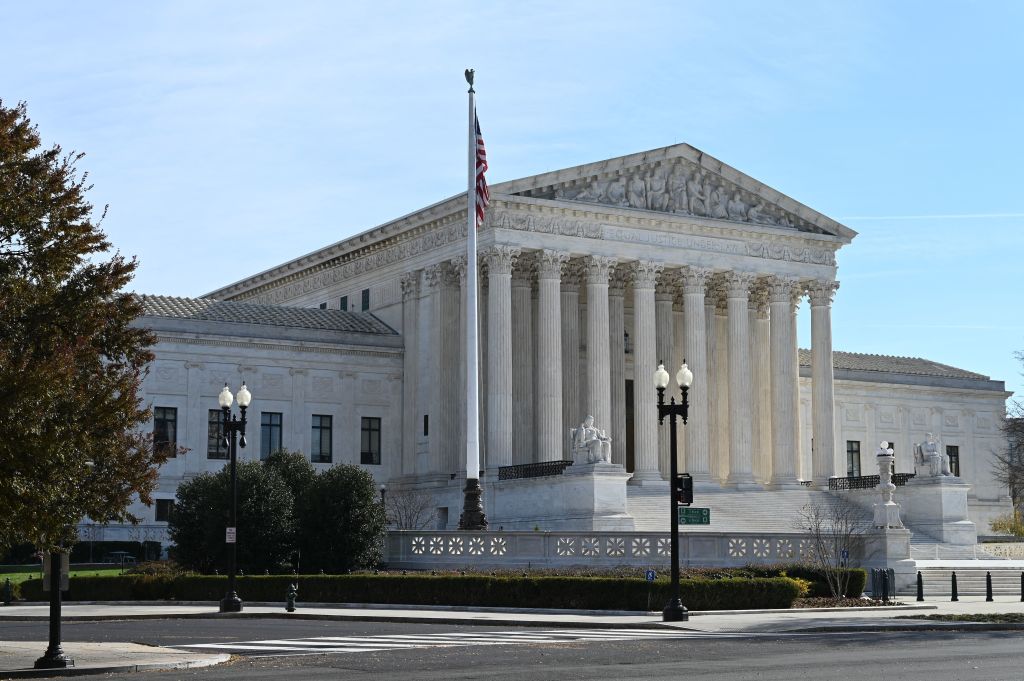
Court to hear argument on whether and when drug users may possess firearms
Favicon 
www.scotusblog.com

Court to hear argument on whether and when drug users may possess firearms

The Supreme Court will hear oral arguments on Monday in United States v. Hemani, the second gun-rights case of the 2025-26 term. In January, the Trump administration supported Hawaii gun owners in their challenge to that state’s law requiring them to obtain express permission from the owners of private property before bringing their guns onto that property. But on Monday, the Trump administration will be asking the justices to allow it to prosecute a Texas man on charges that he violated a federal law that prohibits users of illegal drugs from having a gun. The case began after the FBI searched the home of Ali Danial Hemani, the defendant in the case. FBI agents found a Glock 19 9mm pistol, 60 grams of marijuana, and 4.7 grams of cocaine. Hemani told the FBI agents that he used marijuana roughly every other day. Based on his admission that he used marijuana, Hemani was indicted on charges that he had violated a federal law that makes it a crime for anyone who is “an unlawful user of or addicted to any controlled substance” to have a gun. A knowing violation of the law is a felony, which can carry a sentence of up to 15 years in prison. Hemani asked the federal trial judge to throw out the charge against him. He contended that at least as applied to him, the law violated the Second Amendment, which protects “the right of the people to keep and bear Arms.” U.S. District Judge Amos Mazzant dismissed the indictment. He relied on a recent decision by the U.S. Court of Appeals for the 5th Circuit holding that the law is unconstitutional when it is used to charge someone who may have been a habitual drug user but was not shown to be under the influence of drugs when he had the gun. The government appealed, but agreed with Hemani that – based on 5th Circuit precedent – that court should uphold Mazzant’s dismissal of the charge. In a brief, unsigned opinion, the court of appeals did just that.   The federal government came to the Supreme Court in June, asking the justices to grant review, which they did in October. In its brief on the merits, the Trump administration recognized that the Second Amendment has a “central role in our constitutional scheme,” so that “the government bears a significant burden in justifying restrictions on” the right to have a gun. But Hemani’s case, U.S. Solicitor General D. John Sauer wrote, “presents narrow circumstances where the government can satisfy that rigorous burden.” The government emphasized that the question before the court is “a narrow one”: whether, as the court of appeals held and Hemani argues, federal law only bars the possession of a gun by someone who is actually under the influence of drugs, or whether, as the government argues, it also prohibits possession by someone who habitually uses drugs. Under the Supreme Court’s 2022 decision in New York State Rifle and Pistol Association v. Bruen, the government contended, the law can survive only if there is a historical tradition that justifies its “temporary disarmament of habitual drug users.” In early U.S. history, the government wrote, there was a tradition of barring people from having a gun when they were intoxicated. But there was also, the government continued, a “highly robust body of much harsher founding-era restrictions on the rights of” a group of people who were analogous to “habitual drug users” – laws involving “habitual drunkards,” which were based on the idea that those people were more likely to be criminals or violent. Indeed, the government suggested, early American legislatures punished “habitual drunkards” much more severely than people who were drunk in public on discrete occasions: the former could lead to jail time or a stint in a workhouse, while the latter “was punishable by a small fine or a few hours in the stocks.” Moreover, the government continued, the practice of both the federal government and the states after the ratification of the Second Amendment further confirms that regular drug users can violate the law: “at least 43 States, the District of Columbia, and all five territories have enacted similar laws restricting the possession of firearms by drug users and drug addicts.” And to the extent that there are potential concerns about the constitutionality of applying the law in particular “marginal cases,” the government concluded, those worries can be addressed by a separate federal law that allows anyone who would otherwise be prohibited from owning a gun to seek permission to do so from the U.S. attorney general. In his brief on the merits, Hemani contended first that the question before the court is whether the law “is constitutional as applied to someone who admits to consuming marijuana a few times a week. It is not,” he concluded. As an initial matter, Hemani told the justices, the law is so vague that it is unconstitutional, because it does not give defendants like him enough notice that they could be subject to it and face criminal penalties. The phrase “unlawful user” does not specify how often someone must use illegal drugs to be subject to the ban, or how recent or substantial the drug use must be. To try to fill in these gaps, Hemani said, the federal government adds the word “habitual” – which is not a word that appears in the statute. Indeed, Hemani suggested, even “the government does not say what it thinks ‘habitual user’ means, other than that it is broad enough to capture Mr. Hemani’s marijuana use.” The absence of an explanation from the government, he concluded, “is powerful evidence that the statute ‘fails to give ordinary people fair notice of the conduct it punishes.’” But even if the law did provide clear notice to drug users, Hemani continued, there is no historical analogue that would support the ban that the law imposes. Everyone agrees, he wrote, that “the government may prohibit people from carrying firearms while intoxicated.” Moreover, he continued, if it does so clearly and with “appropriate safeguards,” it may also bar people addicted to drugs or alcohol from having guns. “But there has never been a tradition in this country of stripping anyone who uses an intoxicating substance with some degree of frequency of the right to keep a firearm in the home. To conclude otherwise would empower the government to deprive tens of millions of Americans who pose little if any risk of firearm misuse of a fundamental constitutional right,” Hemani said.   The historical analogues that the federal government suggests would justify imposing the law here – restrictions on “habitual drunkards” – “are far afield,” Hemani insisted. He contended that any historical restrictions on the gun rights of “habitual drunkards” did not apply to people who simply used alcohol on a regular basis. “Indeed,” he suggested, “to deem anyone who regularly drank alcohol a ‘drunkard’ not only would have been anomalous to early Americans, but would have labeled a significant portion of the populace ‘drunkards.’” When states later began to impose restrictions on access to guns by people who use illegal drugs, Hemani continued, those restrictions largely focused on people who were addicted to illegal drugs. But those states did not, Hemani said, generally strip anyone who used illegal drugs, “regardless of the frequency or quantity of use, of the right to keep arms and bear them while sober.“ The federal government’s approach, Hemani suggested, could mean that “anyone who regularly takes a sleep gummy” or “regularly has a beer with dinner” could lose his right to have a gun in the house. Hemani also pushed back against the government’s assurance that, in close cases, someone who otherwise would be prohibited from owing a gun could ask the attorney general to have his rights restored. “To state the obvious,” Hemani told the justices, “the prospect that rights may be restored has no bearing on whether the government may take them away in the first place.” But in any event, Hemani added, the rights-restoration process “has been on ice for over 30 years. And while the government claims to have ‘recently revitalized’” the process, right now the Department of Justice website indicates only that applications to restore gun rights “‘will be available online soon,’ pending the release of a ‘final rule.’” The post Court to hear argument on whether and when drug users may possess firearms appeared first on SCOTUSblog.

Like
Comment
Share
Entertainment News
Entertainment News
8 w

How This BACHELOR Star Turned Prayer From a ‘Discipline’ Into ‘Delight’
Favicon 
www.movieguide.org

How This BACHELOR Star Turned Prayer From a ‘Discipline’ Into ‘Delight’

For Madi Prewett Troutt, her prayer life is a “discipline” that became a “delight.” “My old church did this thing called 21 day...
Like
Comment
Share
Showing 7290 out of 118918
  • 7286
  • 7287
  • 7288
  • 7289
  • 7290
  • 7291
  • 7292
  • 7293
  • 7294
  • 7295
  • 7296
  • 7297
  • 7298
  • 7299
  • 7300
  • 7301
  • 7302
  • 7303
  • 7304
  • 7305
Advertisement
Stop Seeing These Ads

Edit Offer

Add tier


Select an image
Delete your tier
Are you sure you want to delete this tier?

Reviews

In order to sell your content and posts, start by creating a few packages. Monetization

Pay By Wallet

Payment Alert

You are about to purchase the items, do you want to proceed?

Request a Refund