YubNub Social YubNub Social
    #music #trombone #atw #armymusic #militarymusic #atw2026 #armyband #band #concertband #tusab #jazz #trombonechoir #jazztrombone #quartet #warmup
    Advanced Search
  • Login
  • Register

  • Night mode
  • © 2026 YubNub Social
    About • Directory • Contact Us • Developers • Privacy Policy • Terms of Use • shareasale • FB Webview Detected • Android • Apple iOS • Get Our App

    Select Language

  • English
Night mode toggle
Featured Content
Community
New Posts (Home) ChatBox Popular Posts Reels Game Zone Top PodCasts
Explore
Explore
© 2026 YubNub Social
  • English
About • Directory • Contact Us • Developers • Privacy Policy • Terms of Use • shareasale • FB Webview Detected • Android • Apple iOS • Get Our App
Advertisement
Stop Seeing These Ads

Discover posts

Posts

Users

Pages

Blog

Market

Events

Games

Forum

Intel Uncensored
Intel Uncensored
8 w

If this is true THIS IS TREASON:
Favicon 
www.sgtreport.com

If this is true THIS IS TREASON:

If this is true THIS IS TREASON: https://t.co/zzCoZHuhwv — SGTreport (@SGTreport) March 5, 2026
Like
Comment
Share
Intel Uncensored
Intel Uncensored
8 w

Independent Rape Gang Inquiry exposes the depravity of perpetrators and involvement of staff in various UK public institutions
Favicon 
www.sgtreport.com

Independent Rape Gang Inquiry exposes the depravity of perpetrators and involvement of staff in various UK public institutions

by Rhoda Wilson, Expose News: Last month, an independent inquiry into the Muslim rape gangs that have been preying on white girls for decades was held. To protect the identities of victims, only snippets and summaries of their testimonies have been released. The little that has been released is truly horrific. TRUTH LIVES on at https://sgtreport.tv/ […]
Like
Comment
Share
Intel Uncensored
Intel Uncensored
8 w

UK Consults on Social Media Age Verification While Directing Parents to Report “Hate Speech” to Big Tech
Favicon 
www.sgtreport.com

UK Consults on Social Media Age Verification While Directing Parents to Report “Hate Speech” to Big Tech

by Cindy Harper, Reclaim The Net: The consultation closes in May, but Parliament already handed ministers the power to act in February. The British government launched a consultation this week that could require age verification for anyone using social media, gaming sites, or AI chatbots. The consultation, titled “Growing up in the online world,” opened on March […]
Like
Comment
Share
Intel Uncensored
Intel Uncensored
8 w

This Is What A Crisis Looks Like!!
Favicon 
www.sgtreport.com

This Is What A Crisis Looks Like!!

from Doug Casey’s Take: TRUTH LIVES on at https://sgtreport.tv/
Like
Comment
Share
Pet Life
Pet Life
8 w ·Youtube Pets & Animals

YouTube
Skinny Senior Dog Just Needed Someone to Love Her | The Dodo
Like
Comment
Share
Let's Get Cooking
Let's Get Cooking
8 w

The Cheap & Easy Creamy Pasta I Make at Least Once a Week
Favicon 
www.thekitchn.com

The Cheap & Easy Creamy Pasta I Make at Least Once a Week

The cheesy, lemony, sauce is pure magic. It’ll make you want to cook everything in it. READ MORE...
Like
Comment
Share
History Traveler
History Traveler
8 w

How the Sasanians Used Chemical Warfare to Beat Rome at Dura-Europos
Favicon 
www.thecollector.com

How the Sasanians Used Chemical Warfare to Beat Rome at Dura-Europos

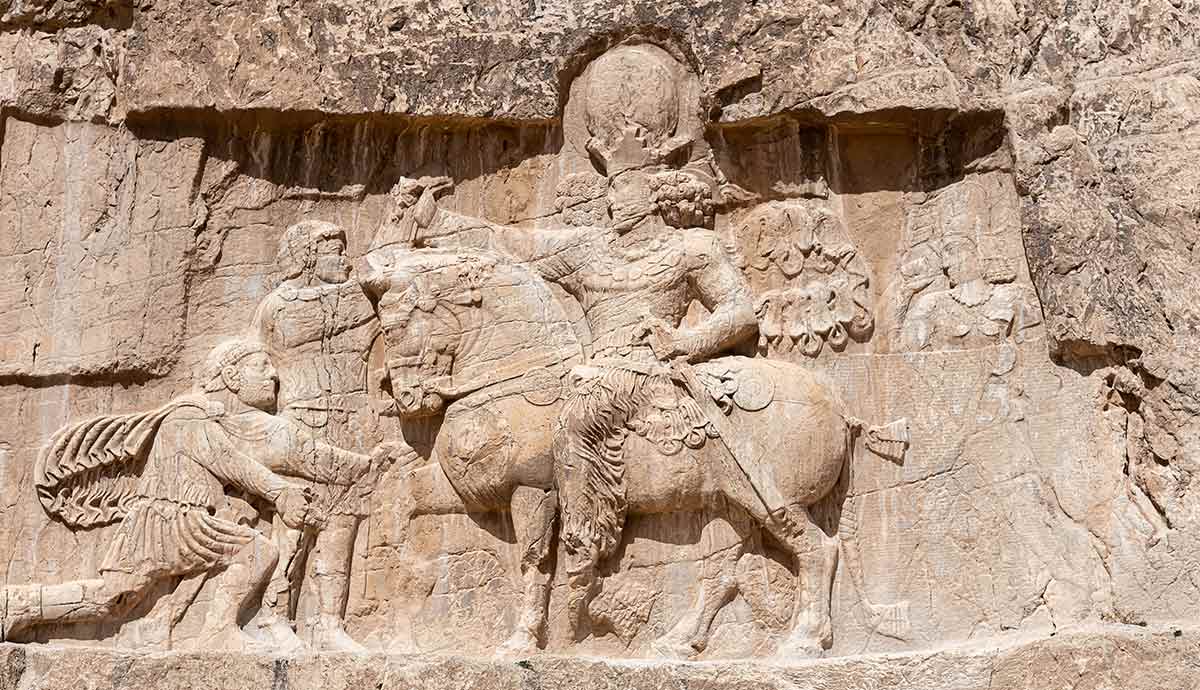
  In 256 CE, Shapur I led an invasion of Roman Syria and besieged the strategic fortress-city of Dura Europos, located on the southwestern bank of the Euphrates, near the modern village of Salhiyé, in Syria. The Sasanian attackers used tunnels to undermine the walls of the fortress, and the Roman defenders dug countermines. In one of these tunnels, traces of toxic gases were found that killed 19 Roman defenders, making it one of the first recorded uses of chemical warfare in history.   Dura Europos: Founding & Early History Aerial view of Dura Europos, taken in 1934. Source: Yale University Art Gallery   Dura Europos was founded by the first Seleucid king, Seleucus I Nicator (358-283 BCE), around the year 300 BCE as a fortress along the southwestern bank of the Euphrates to monitor and control the trade routes going from east to west and the communication lines between the major cities of Antioch and Seleucia, which were also founded around the same time. It quickly grew in importance and was expanded in the 2nd century BCE along the Hippodamian model.   The city was captured by the Parthians in 113 BCE and lost its importance as a fortress along the Euphrates. The Parthians imported many new inhabitants, which swelled the population of Dura Europos.   The Romans later gained permanent control of the city during the Roman-Parthian War of 161-166 CE under the emperor Lucius Verus. Under Septimius Severus, the city became an important center in the region, being the easternmost settlement on the Roman frontier with the Persians, and it grew in size and importance, with a population ranging from 5,000 to 15,000.   Context of the Siege Rockface relief at Naqsh-e Rostam of Shapur receiving offerings on horseback from Valerian and Philip the Arab. Source: Wikimedia Commons   In 224 CE, a Persian prince from southern Iran by the name of Ardashir revolted against the Parthian ruler and successfully took his place, founding what would become the Sasanian Empire, which lasted until the 7th century CE. This new dynasty was more aggressive toward Rome than the Parthians and invaded multiple times.   During almost the entirety of the Third Century Crisis, the Sasanians and the Romans were at war, with the Sasanians having, for the most part, the upper hand. The Roman emperor Gordian III led a disastrous campaign against Shapur I, in which he died, and his successor Philip the Arab had to pay 500,000 denarii to the Sasanian king to allow him to return to the Roman Empire.   In 250 CE, Shapur I, the son of Ardashir, began an invasion of Roman territory and completely annihilated a Roman army of around 60,000 at the battle of Barbalissos (252 CE), before moving on to the Syrian capital of Antioch, the third largest city of the Roman Empire, and plundering it (253 CE). Returning home, he decided to besiege the fortress-city of Dura Europos, which had been strengthened to meet the Sasanian threat; the Romans had built a buttress against the exterior walls to strengthen them against artillery attacks, destroying a large section of the city to do so.   The Siege and the Use of Chemical Warfare Photograph of the excavations in the sixth season, 1932-3. Source: Yale University Art Gallery   No literary source tells us any information about the siege of Dura Europos in 256 CE; we must therefore rely almost entirely on archaeological evidence, which, fortunately, is abundant (the site was even nicknamed the “Pompeii of the desert”). This is in stark contrast with the other major Sasanian siege we know of, the Siege of Amida in 359 by the second Shapur, which is recorded by only one eyewitness, Ammianus Marcellinus.   We do not know the number of soldiers stationed there, nor the names or details of any of the defenders. Debate is still occurring over whether the siege lasted weeks or months. The Sasanians started by building a huge siege ramp composed of solid blocks and paved with fired brick, to try to get over the southern end of the western wall. The Romans reacted by heightening their own city wall and deepening the buttress they had already added. The Sasanians also used siege machines as a part of a multipronged attack.   Meanwhile, both sides dug mines; the Persians were seeking to enter the town and undermine the defences, whereas the Romans wanted to destroy the attackers’ ramp.   The Sasanian attackers dug another tunnel, this time to undermine Tower 19 of the fortress and make a breach to let in the rest of the Sasanian army. The Romans detected it and reacted by digging a countermine. In these tunnels, archaeologists found 20 skeletons, still with their armor. Scholars have come to this conclusion about their death: the Romans dug a tunnel and managed to link with the end of the Sasanian tunnel, just under their defences, which was higher than the rest of the Sasanian mine. Hearing them, the Sasanians used choking fumes, probably sulphur and bitumen, which went up into the Roman tunnel and asphyxiated the Romans.   Tunnel made by the Sasanians during the siege. Source: Wikimedia Commons   Afterward, the attackers entered the Roman tunnel and collapsed the entrance using sulphur and bitumen again to start a fire, which killed one Sasanian fighter. They also dragged all the Roman bodies along with their shields and armor to block the entrance, stacking them into a wall.   The Sasanians weren’t the first to use chemical warfare. For example, we know from certain Roman writers that armies were already using choking fumes against their enemies during the Hellenistic era. In the 2nd century BCE, the Romans besieged the city of Ambracia, which was a part of the Aetolian League. The defenders resisted vigorously and used the first instance of a chemical weapon against the Romans.   Photograph of a Sasanian soldier found in situ on the floor of the Roman countermind with his armor almost intact, 1933-34. Source: Yale University Art Gallery   Livy describes the chemical weapon as follows: “A new device as well, and one easy of execution, was thought out against the Romans who were in the tunnel. They prepared a cask pierced at the bottom, where a pipe of moderate size could be inserted, and likewise an iron pipe and an iron lid for the cask, this lid too being perforated in several places. This cask, filled with light feathers, they placed with its mouth facing the tunnel. They fixed in the holes in the lid the very long spears which they call ‘sarisae,’ so as to keep the enemy at a distance. A light spark of flame, placed among the feathers, they fanned by blowing with a smith’s bellows placed at the mouth of the pipe. Then, since smoke, not merely abundant in quantity, but, even more, unendurable by reason of the vile stench from the burning feathers, had filled the whole tunnel, scarcely anyone was able to remain within it” (Livy, XXXVIII, 7).   Aftermath and Excavations Bust thought to be Odaenathus. Source: Glyptotek Museum   We do not know how the Sasanians finally broke into the fortress, but we know that the Romans made a final stand in the northern section of the city. Afterward, the city was never rebuilt, even though some evidence suggests activity until the 5th century CE. Much like the stronghold of Masada in Israel, which was besieged and captured by the Romans in 73 CE, the site was not disturbed throughout the centuries, and the local environmental conditions were favorable to the great preservation of the artifacts.   After the siege, the Sasanians invaded the Roman Empire several more times, even taking the Roman emperor Valerian prisoner after his defeat at the Battle of Edessa in 260 CE. The Romans finally regained the upper hand when the ruler of the city-state of Palmyra, Odaenathus, husband of Zenobia (who would later rebel against the Romans and split to form her own state), led some victorious campaigns in the name of Rome against the Sasanians in the 260s CE.   View of the fortification walls of Dura Europos. Source: Yale University Art Gallery   When the historian Ammianus Marcellinus accompanied the emperor Julian in his disastrous campaign against the Sasanians in 363 CE, he described the city of Dura as follows: “After making a march of two days in this manner, we approached the deserted city of Dura, situated on the riverbank. Here so many herds of deer were found, some of which were slain with arrows, others knocked down with heavy oars, that all ate to satiety; but the greater number of the animals, accustomed to rapid swimming, leaped into the river and with a speed that could not be checked escaped to their familiar deserts.” A bit over a century after the Sasanian siege, the only inhabitants left were herds of deer.   A 5th-century Syriac document, the Life of the Martyr Mu’Ain, tells us that a Christian hermit named Benjamin lived in the ruins of Dura Europos during the reign of Shapur II (309-379 CE).   Roman painted shield or Scutum, found in Tower 19. Source: Yale University Art Gallery   The site was rediscovered in 1885, when the Palmyrene Gate was photographed by John Henry Haynes of the “Wolfe Expedition,” but excavations were only carried out after World War I by French and American teams, initially under Franz Cumont, then Clark Hopkins and Michael Rostovtzeff. Archaeologists have found magnificently preserved buildings there, including a temple for the rites of the cult of Mithras. They have also found some very well-preserved Roman weaponry, including the scale horse armor of a cataphract, an armored cavalryman, and the only known surviving Roman scutum, or shield. Beneath Tower 19, archaeologists discovered scale armor in incredible condition.   The site was added in 1999 and again in 2011 to the “Tentative List” of the UNESCO World Heritage Sites. Unfortunately, between 2011 and 2014, during the Syrian Civil War, Dura Europos was looted and partially destroyed by Islamic State. No further excavations have been carried out in the area. Its fate is much like the ancient city of Palmyra, which was a wealthy city at the junction of multiple commercial routes but was later raided and destroyed by Islamic State during the Syrian Civil War in 2011.
Like
Comment
Share
Country Roundup
Country Roundup
8 w

Kelsea Ballerini's Ex Chase Stokes Appears To Slam Her Ex-Husband
Favicon 
tasteofcountry.com

Kelsea Ballerini's Ex Chase Stokes Appears To Slam Her Ex-Husband

Why is Kelsea Ballerini's ex-boyfriend so angry at her ex-husband? Continue reading…
Like
Comment
Share
Conservative Voices
Conservative Voices
8 w ·Youtube Politics

YouTube
Are voter ID laws racist?
Like
Comment
Share
100 Percent Fed Up Feed
8 w

The Reason You’re Tired Has Nothing to Do With How You Slept Last Night
Favicon 
100percentfedup.com

The Reason You’re Tired Has Nothing to Do With How You Slept Last Night

You’ve tried the energy drinks. The ones with names that sound like they were invented by a fourteen-year-old boy. You cracked them open at 6 a.m., hoping the caffeine and taurine and whatever else they’ve crammed into that aluminum can would make you feel like yourself again. They gave you forty-five minutes of jittery alertness, followed by a crash so profound you nearly fell asleep in the middle of a Tuesday afternoon. Your edge didn’t come back. Your heart rate, however, went through the roof. You’ve tried the gym-bro supplements. The pre-workouts. The protein powders. The mysterious capsules from that brand your buddy swore by — the one with the label that looked like it was designed for a comic book villain. You choked them down for months, convinced that if you just pushed harder, lifted heavier, and consumed enough processed whey to drown a small horse, the vitality would return. Your muscles grew marginally. Your energy, your drive, your sharpness — those stayed exactly where they were. Which is to say, somewhere you’d rather not discuss. You’ve tried sheer willpower. You went to bed earlier. You drank more water. You cut out the late-night snacking. You did everything the wellness influencers told you to do, and you did it with the grim determination of a man who refuses to accept that something fundamental has shifted. And yet — you still wake up feeling like someone drained the batteries overnight. Still drag through the afternoon. Still notice that the fire, the focus, the physical confidence you once took for granted has quietly packed its bags and left without so much as a forwarding address. But you’re still exhausted. Still sluggish. Still wondering where the version of you went — the one who had energy to spare, who attacked the day instead of merely surviving it, who felt strong and sharp and fully alive in his own body. The man who didn’t need to schedule enthusiasm. That’s because you’ve been operating under a deeply mistaken belief: that your fatigue is a lifestyle problem. That if you just sleep better, eat cleaner, train harder, and manage your stress like some kind of monk-athlete hybrid, everything will snap back into place. You’ve been told the answer is discipline. You’ve been told the answer is hustle. You’ve been told the answer is one more supplement from one more brand making one more empty promise. The Truth That Nobody In Those Industries Wants You To Hear After age thirty, your testosterone levels begin to decline — roughly one to two percent per year. By the time you’re forty, fifty, sixty, the cumulative deficit is not trivial. It is physiologically significant. It affects your energy. Your strength. Your mental clarity. Your recovery. Your libido. Your mood. Your body composition. Every system in your body that makes you feel like you is downstream of this single hormonal reality. You haven’t been failing at self-improvement. Your biology has been quietly undermining you, and no amount of caffeine or discipline can override the endocrine system. MARS by The Wellness Company is the supplement that finally addresses the actual problem. It is a precision-crafted formula built not on hype, but on science — designed to support your body’s own natural testosterone production and optimize the testosterone you already have. No synthetic hormones. No TRT injections. No harsh stimulants masquerading as solutions. MARS works with your biology, not against it. The formula reads like a medical board’s wish list. Tongkat Ali — clinically shown to raise testosterone levels while simultaneously reducing cortisol, the stress hormone that actively suppresses your T. Shilajit — a potent Himalayan resin that supports male fertility, stamina, and free testosterone. Horny Goat Weed, rich in icariin, which improves nitric oxide levels for blood flow and vascular performance. Tribulus Fruit, a traditional testosterone enhancer that supports virility and physical output. Boron, which increases free testosterone by reducing SHBG — the protein that binds your testosterone and renders it useless. And Zinc, essential for testosterone synthesis itself. Each ingredient is included at clinically backed doses. Not pixie-dusted label decoration. Real amounts that do real work. What Men Say About It The men who take MARS don’t speak about it in vague terms. A 78-year-old man reported more energy, elevated mood, reduced aching, and a feeling of renewed muscular vitality — in the first three weeks. A 60-year-old lifelong fitness enthusiast found that MARS restored his workout gains and eliminated his need for intimacy medications entirely. These are not paid testimonials. These are verified buyers who had the same skepticism you have right now — and were proven wrong. What separates MARS from the asea of testosterone supplements cluttering the shelves is what it doesn’t contain. No synthetic hormones. No artificial fillers. No GMOs. No gluten. No proprietary blend hiding underdosed ingredients behind a veil of secrecy. Every capsule is vegetarian, housed in an amber glass bottle to preserve potency, and backed by a team of physicians who actually practice medicine — not influencers who practice marketing. Two capsules each morning with food. That is the entire protocol. Taken in the morning to align with your body’s natural testosterone rhythm, MARS begins working with your circadian biology from the moment you start your day. It is not a miracle pill. It is a serious, science-backed intervention for a serious, science-based problem that affects every man who lives long enough to experience it. You have spent years fighting the wrong enemy. Stop battling the symptoms and start addressing the cause. Order MARS today — or subscribe and save 10% on every shipment, delivered to your door on your schedule. Your body has been waiting for reinforcements. Send them. (Note: The information provided is intended for generalized informational purposes only and should not be considered personal medical advice or used as a substitute for professional healthcare guidance. It is your responsibility to comply with all applicable laws, regulations, and guidelines regarding the purchase, possession, and use of prescription medications. Thank you for supporting businesses like the one presenting a sponsored message in this article and ordering through the links provided, which benefits WLTReport. We appreciate your support and the opportunity to keep you SAFE and HEALTY!)
Like
Comment
Share
Showing 7361 out of 119985
  • 7357
  • 7358
  • 7359
  • 7360
  • 7361
  • 7362
  • 7363
  • 7364
  • 7365
  • 7366
  • 7367
  • 7368
  • 7369
  • 7370
  • 7371
  • 7372
  • 7373
  • 7374
  • 7375
  • 7376
Advertisement
Stop Seeing These Ads

Edit Offer

Add tier


Select an image
Delete your tier
Are you sure you want to delete this tier?

Reviews

In order to sell your content and posts, start by creating a few packages. Monetization

Pay By Wallet

Payment Alert

You are about to purchase the items, do you want to proceed?

Request a Refund