YubNub Social YubNub Social
    #democrats #loonylibs #exodermin
    Advanced Search
  • Login
  • Register

  • Night mode
  • © 2026 YubNub Social
    About • Directory • Contact Us • Developers • Privacy Policy • Terms of Use • shareasale • FB Webview Detected • Android • Apple iOS • Get Our App

    Select Language

  • English
Night mode toggle
Featured Content
Community
New Posts (Home) ChatBox Popular Posts Reels Game Zone Top PodCasts
Explore
Explore
© 2026 YubNub Social
  • English
About • Directory • Contact Us • Developers • Privacy Policy • Terms of Use • shareasale • FB Webview Detected • Android • Apple iOS • Get Our App
Advertisement
Stop Seeing These Ads

Discover posts

Posts

Users

Pages

Blog

Market

Events

Games

Forum

Conservative Voices
Conservative Voices
1 w

How to Save South Africa
Favicon 
www.theamericanconservative.com

How to Save South Africa

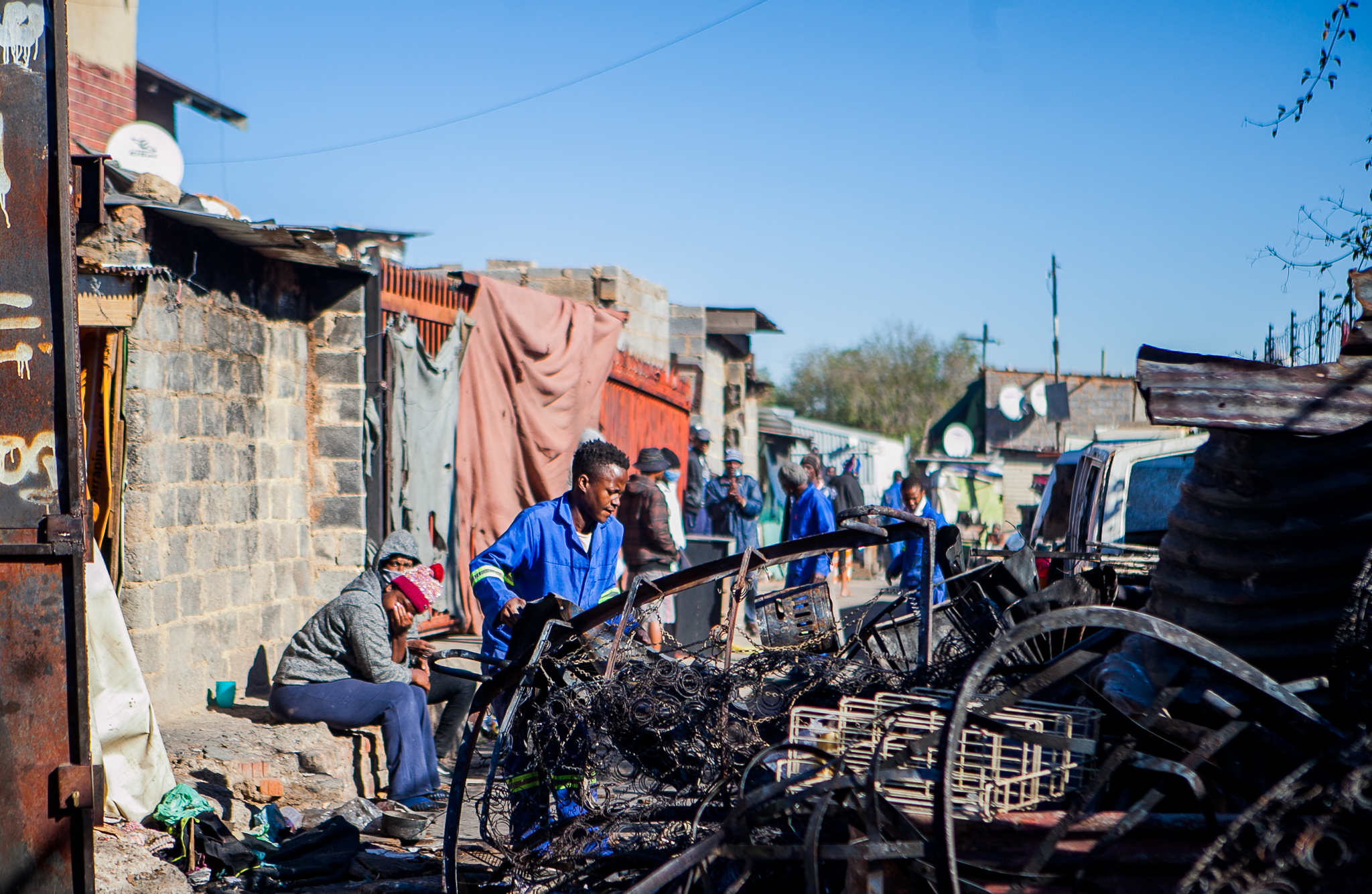
Foreign Affairs How to Save South Africa The country’s slow-motion collapse can be reversed. When South Africa became a democracy in 1994, the world applauded. The country was hailed as a miracle: a peaceful transition, a liberal constitution, and the promise of shared prosperity after decades of racial injustice. Thirty-two years later, that optimism has curdled into disillusionment. South Africa now faces a grim reality of state-driven decay, economic stagnation, and institutional collapse—largely the result of policy choices made under African National Congress (ANC) rule. The numbers tell the story. After respectable growth during the Mandela and Mbeki years, the economy has endured nearly two lost decades since 2007, averaging barely 1 percent annual growth. The rand has lost 77 percent of its value against the dollar since 1994, making imports dramatically more expensive. Official unemployment has risen from 20 to 32 percent, while youth unemployment approaches an astonishing 60 percent. Roughly half the population depends on state welfare. Only 16 percent of municipalities receive clean audits. In the criminal justice system, just 8 percent of violent crimes lead to convictions. What went wrong, and can it still be fixed? The ANC’s first strategic error was ideological. Its guiding star was closer to the Russian Revolution than Japan’s Meiji Restoration. To this day, ANC policy is officially framed as a “National Democratic Revolution,” marketed domestically as radical transformation. The goal was a developmental state modeled loosely on China, driven by state-owned enterprises and enforced through “cadre deployment” to ensure party control over key institutions. The result has been catastrophic. State monopolies in electricity, rail, and ports have collapsed under mismanagement and corruption. Cadre deployment hollowed out institutional capacity and made reform nearly impossible. Instead of catalyzing development, the state became the principal obstacle to it. Second, the ANC has operated more as a movement for equality than for freedom. Rather than combating poverty through growth, it prioritized redistribution and equal outcomes. Too often, the emphasis was on making the rich poorer rather than the poor richer. As growth stalled, the party doubled down on its socialist instincts by expanding state control over land, minerals, water, education, and the broader economy. Elections remain largely free and fair, but individual and economic freedoms have steadily narrowed. Third, the ANC attempted to govern a geographically and culturally diverse country—one with 12 official languages—as a centralized unitary state rather than a federation. Federalism is resisted because it would limit power. The outcome is a country fragmented into five realities: well-governed regions such as the opposition-run Western Cape; poorly governed ANC-controlled areas; ungovernable zones; vast rural areas that are barely governed at all; and private enclaves that effectively govern themselves. South Africa does not merely have a governance problem—it has a systemic design problem. The fourth error was the exclusion and alienation of the Afrikaner minority. Four years after World War II, the Allies treated Germans as partners in rebuilding Europe. Yet more than three decades after apartheid, the ANC still governs against Afrikaners. Race-based regulation under the banner of redress, along with violations of constitutional protections for schools and universities, has driven skills, capital, and taxpayers out of the country. South Africa’s largest export today is human capital. Concerns about shrinking freedoms are routinely dismissed as nostalgia for apartheid, further deepening mistrust. Fifth, foreign policy has been shaped by ideology and history rather than national interest. South Africa’s entry into BRICS in 2010 signaled a pivot toward China, Russia, Iran, and Cuba, accompanied by deteriorating relations with the U.S., Israel, and other democracies. This alignment has brought little economic benefit while increasing geopolitical risk. These outcomes were not unforeseeable. In the early 1990s, political scientist Francis Fukuyama warned that South Africa’s constitutional democracy risked becoming “a foreign body sitting on top of a society that’s not modernized in other respects.” He cautioned that socialism embraced by the ANC and its communist allies would likely obstruct modernization rather than advance it. History has largely vindicated that warning. Yet there is still hope. While recent reforms have been tentative and overdue, they suggest an awareness that the status quo is unsustainable. What is needed now is a decisive break. First, the economy must be liberated. The state’s role should be reduced, and the private sector unequivocally embraced as the engine of growth. A growing economy remains the most effective job creator and the fastest path out of poverty. Second, South Africa must shift from the illusion of a “developmental state” to the reality of a developmental society that invests primarily in people, skills, and incentives rather than bureaucratic control. Third, centralism should give way to federalism. Real democracy, freedom, and effective governance require devolved power and accountability closer to communities. Fourth, foreign policy should be grounded in national interest, rebuilding strong relations with the U.S., and remaining at least nonaligned rather than ideologically committed. Finally, Afrikaners and other minorities must be treated as partners in rebuilding the country. A formal cultural accord that respects constitutional rights would stem the skills exodus and rebuild trust. South Africa’s miracle was real. Its decline is not inevitable. But only bold, structural reform can prevent the country from sliding further into the past. The United States can play a decisive role by re-engaging South Africa as a strategic partner, supporting market-oriented reforms, protecting groups like Afrikaners, and anchoring the country firmly within a community of democratic, growth-focused nations. The post How to Save South Africa appeared first on The American Conservative.
Like
Comment
Share
Conservative Voices
Conservative Voices
1 w

The TAC Interview: John Kiriakou on Epstein, Propaganda, and Heroin
Favicon 
www.theamericanconservative.com

The TAC Interview: John Kiriakou on Epstein, Propaganda, and Heroin

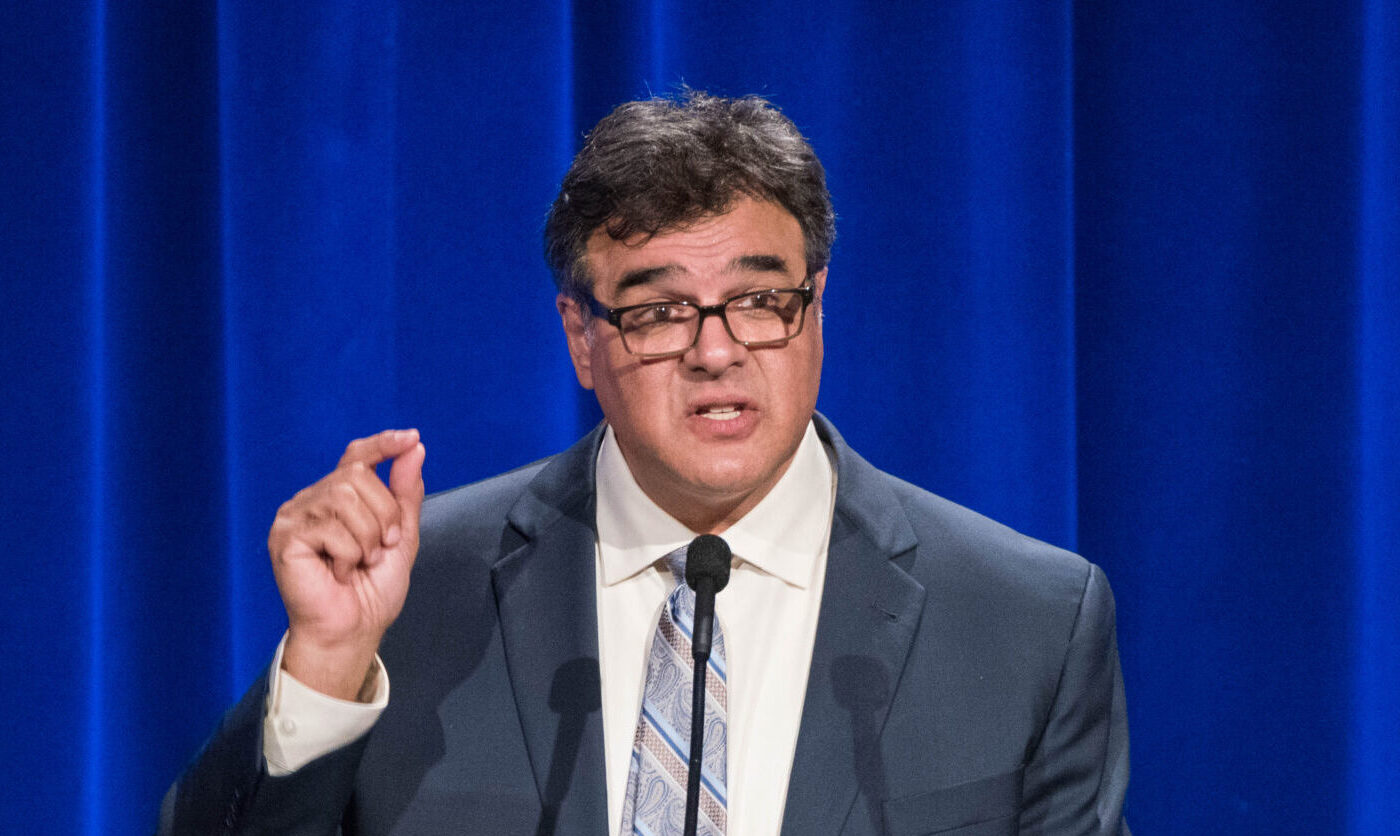
Politics The TAC Interview: John Kiriakou on Epstein, Propaganda, and Heroin The internet’s favorite former intelligence officer sits down with The American Conservative. Nearly two decades after he exposed the CIA’s secret torture program—and paid for it with a prison sentence—the former intelligence officer John Kiriakou has suddenly attracted massive viral engagement on social media platforms. He spoke with The American Conservative correspondent Harrison Berger about the surge of attention, in a wide-ranging conversation on government secrecy, CIA propaganda, and the U.S. security state under the Trump administration. You’ve gone viral on TikTok and Instagram, overnight almost, mostly among Gen Z, people my age, who now suddenly have a particular interest in what you have to say. I’m wondering why you think that is. I’m thrilled by that. I’ve actually asked a couple people why that is, because I’m not entirely sure myself. And a couple people have, without skipping a beat, come right out and said, it’s because you tell the truth and that there was a price that came with telling the truth and people respect that, which makes me very, very happy.  Maybe on a less serious note… I’m kind of proud of my storytelling abilities. Some of them are fun and people on the internet cut them up into edits and make lasers shoot out of my eyes and give me the Alvin and the Chipmunks voice. I don’t know if that’s it or not. I think on a more serious note, it’s that I have consistently told the truth.  I remember making a decision in December of 2007 when I was getting ready to go on that Brian Ross interview on ABC News and I decided, and I even said this to my wife at the time, I’m going to tell the truth no matter what he asks me and just let the cards fall. And then, fast-forwarding another exactly seven years, I was six weeks before being released from prison. I was able to call my wife every other day for 15 minutes. I called her one day in December of 2014 and I said, “How was your day?” She said it was great. And I said, “Really, what made it so great?” And she said, “Because the Senate torture report was released today and it proved that everything you said was true.” And so there’s just no better policy than to tell the truth. And I think that’s why it’s taken off. I think Gen Z interest in your whistleblowing may also stem from what we’re seeing play out in Congress and the White House over these Epstein files, to the point where government secrecy and deep state redactions have become a meme.  When it comes to the limited files that have been released, one of the names which stands out is Kathy Ruemmler, who was the former White House Chief Legal Counsel. It was revealed in these emails her extensive connections to the U.S. deep state, even winning a CIA award personally from John Brennan— Which, may I add, is normally given to people who are killed in the line of duty.  Who is Kathy Ruemmler and what might she have done to win a CIA award?  Yeah, I’m going to speculate here too, because I think that this is a very important story that’s not being covered. Kathy Ruemmler was the White House legal counsel under Barack Obama, the senior-most attorney in the White House. Why did she have such a close and abiding relationship with John Brennan? We can speculate as to why she had such a close relationship with Jeffrey Epstein. And you will have seen by now the numerous emails that she sent Epstein saying, “When are you in town again? Oh, next week? I want us to get together with John Brennan. Are you free? Oh, you’re gonna love John Brennan. We should get together for dinner. Oh, let me introduce you to John Brennan. He’s a real sweetheart.” Why was there this overwhelming desire to introduce Jeffrey Epstein to John Brennan? And why did Kathy Ruemmler have this relationship with John Brennan?  So here’s my speculation. In 2009, the New Yorker magazine broke a major story in that they reported on the existence of what was then called “the Tuesday morning kill list meeting,” a meeting at the White House chaired by John Brennan, who at the time was the deputy national security advisor for counterterrorism. They would come up with a list of people to be killed that week by the CIA, people who had not been charged with crimes, people who had not faced their accusers in a court of law. The teams would fan out around the world, they would kill their targets, and then they would go back to the White House the next Tuesday and get their list from that Tuesday morning kill list meeting. Well, John Brennan was chairing that. Kathy Ruemmler would have been the final legal authority in the White House to approve those assassinations. And I think she was into it and that’s why they became friends. I’m wondering if it was Epstein that wanted her to broker this introduction to John Brennan.  Now we also know from this latest tranche of Epstein files that Epstein’s attorneys reached out to the CIA and to the NSC and asked for some sort of a letter, some sort of documentation proving that Epstein had ties to the CIA. We don’t know that he did. I think he did, my belief is that he did, even if they were incidental, even if transactional. And so I’d like to now know what the story is about John Brennan, and God knows he hasn’t said anything at all about Jeffrey Epstein. There’s a story here.  The only information we get from that organization is whatever the CIA will choose to leak to the public, or, very rarely, like in your case and Edward Snowden’s, from brave leakers who risk their freedom to tell us what the security state tries to keep secret from the American public. One of the most secretive parts of the CIA is a branch within the special activities center called the Political Action Group (PAG). CIA leaders and station chiefs are generally revealed in their obituaries and through other reporting, but since the 1980s, not a single PAG officer has been identified to the public. So what is that group, and why is it so secretive even compared to other branches of the CIA?  The group is essentially the CIA’s lead clandestine propaganda arm. It’s the group that is able to put propagandists in place around the world, keep them funded, and then supply to them the propaganda to be released. It used to be called the Active Measures Group. But when the iron curtain came down, it changed its name like everything else did. But you’re right. This is the group that would be working with or would be financing NED. that would be working with, or financing the Democratic and Republican National Committee’s international groups. And you run into them every once in a while overseas. I ran into both of them in Kuwait. And I mean weeks after the war ended in 1991. There wasn’t even any food and half the country was on fire, but the DNC and the RNC are there and they’re flush with money. So, you know, there was always this carefulness to not propagandize the American people, right? They always had to ensure that what they were doing was outwardly focused. It was focused on foreign minds and foreign voices and foreign media outlets and personalities. But Barack Obama changed all that with the National Defense Authorization Act of 2011.  It’s kind of a funny story, the NDAA. It was changed for the strangest reason. We’ve got these propaganda outlets aimed at Cuba called Radio Martí and TV Martí. I know with 100 percent certainty, because I did a study on it for the Senate Foreign Relations Committee—we know that nobody in Cuba watches TV Martí and nobody in Cuba listens to Radio Martí. Sometimes they’re jammed, usually not. The only time that Cubans actually watch or listen to them is when they’re playing baseball games because the games are in Spanish. The Dish Network, that satellite TV company in the U.S., picked up Radio and TV Martí in the southwestern corner of Florida to beam at Cuba.  But there was this little slice of territory right on the coast of Florida, around Fort Myers, where Dish networks subscribers could get TV Martí. Well, that’s illegal. You can’t propagandize the American people. And so members of Congress wrote an amendment, lifting the prohibition on propagandization of the American people, just so the Dish Network could continue to carry TV Martí. Well, there was broad fallout from that decision. Now the CIA can propagandize the American people, the CIA can plant pro-CIA stories in the American media, which, as you noted a few minutes ago, they do with their preferred stenographers at the Post and the Times and elsewhere, and it’s perfectly within the confines of the law. That law should never have been amended, never. Because now, even as Americans, we don’t know what’s true and what’s false. So we don’t know what originated at the CIA just to try to win our minds.  I want to move on to another organization that you have not been a part of, but that you are very familiar with due to your time in Afghanistan, which is the DEA. Most people really don’t think of it as related at all to the CIA or even serving some of the same purposes, but they really seem to when you look at what they do, particularly with their involvement in the Afghanistan War. Afghanistan, during the course of that war, became the global hotspot for heroin production. The DEA would publish reports during that war saying that all of the heroin production was caused by the Taliban… rather than the Northern Alliance and the various tribes that we were allied with in the region who, it turns out, were actually the ones growing all the heroin, including, for instance, the brother of Afghanistan’s President Hamid Karzai, who was on the CIA payroll. We now know that all these reports the DEA published were fake. What does that reveal about the role of that organization abroad? You know, that’s actually a more complicated question than might appear on the face of things. And I’ll start with a little bit of background. So many of your viewers will have seen the television series Narcos on Netflix. And one of the themes in Narcos is just as the DEA is gonna move in for the arrest, they’re gonna grab Pablo Escobar, the CIA station chief steps in and just screws up the whole operation because the CIA doesn’t care about drug interdiction. They cared about communism or terrorism. That was always true. And the CIA had for the most part, a very difficult, contentious relationship with DEA, but not always because what you just said, this cooperation, this clandestine cooperation between the CIA and DEA on drugs is also true.  When I was the senior investigator in the Senate Foreign Relations Committee, I was there from 2009 to 2011. I told John Kerry, who was the chairman at the time, that I wanted to go to Afghanistan and do an in-depth study on heroin poppy. When the Taliban were running the country in the year before 9/11, Afghanistan produced literally zero heroin poppy. There was a fatwa that was issued by the Taliban forbidding the cultivation of heroin poppy. By 2009, Afghanistan was producing 93 percent of the world’s heroin, So I flew out there and I told the Pentagon in advance, of course, that I was coming and that I wanted to investigate this and fly down to the heroin-producing areas.  They didn’t like that at all. Not at all. So I fly into Kabul, there’s a helicopter waiting for me and it takes me to Bagram Air Base, and in Bagram they give me this briefing. And I made them fly me first to Kandahar, and then Lashkar Gah, where we had a little State Department outpost called a PRT. And when we got to Lashkar Gah, I insisted that we get in a jeep with security and a translator and we just drive into the poppy fields until I could find a heroin poppy farmer. I wanted to talk to him. And so sure enough, we find a poppy farmer out there cultivating his fields. And we pull up and he’s very nervous. And I asked what in retrospect was a very naive, silly question. I said, “Why do you grow poppy when instead you could grow things that have two growing seasons like onions or pomegranates or tomatoes?” And he says, “The Americans told me in 2001, that if I told them where the Arabs were hiding, I could grow all the poppy I wanted.” And I said, “What Americans told you you could grow the poppies you wanted?”  As soon as that second question came out of my mouth, my military handler grabbed me by the collar and said, “We gotta go, we’re under threat,” and pulled me back to the Jeep and we took off. So I get back to Washington and I write this paper and I include this information. I never got that paper published. John Kerry killed it because the CIA told him to. That was one of the most egregious cases where I saw the CIA and DEA working together in direct opposition to the best interests of the United States. The post The TAC Interview: John Kiriakou on Epstein, Propaganda, and Heroin appeared first on The American Conservative.

Like
Comment
Share
Classic Rock Lovers
Classic Rock Lovers  
1 w

The highest-charting British artist on the first UK Singles Chart
Favicon 
faroutmagazine.co.uk

The highest-charting British artist on the first UK Singles Chart

A major milestone. The post The highest-charting British artist on the first UK Singles Chart first appeared on Far Out Magazine.
Like
Comment
Share
Intel Uncensored
Intel Uncensored
1 w

Clintons Set to Give Sworn Testimony in House GOP Investigation of Jeffrey Epstein
Favicon 
www.sgtreport.com

Clintons Set to Give Sworn Testimony in House GOP Investigation of Jeffrey Epstein

from Your News: Former president and former secretary of state to appear under subpoena in Chappaqua as Oversight probe advances. By yourNEWS Media Newsroom Former President Bill Clinton and former Secretary of State Hillary Clinton are scheduled to provide sworn testimony this week before the U.S. House Oversight Committee as part of a Republican-led investigation […]
Like
Comment
Share
Bikers Den
Bikers Den
1 w ·Youtube General Interest

YouTube
One Tattoo That'll Get You Into Serious Trouble
Like
Comment
Share
Classic Rock Lovers
Classic Rock Lovers  
1 w

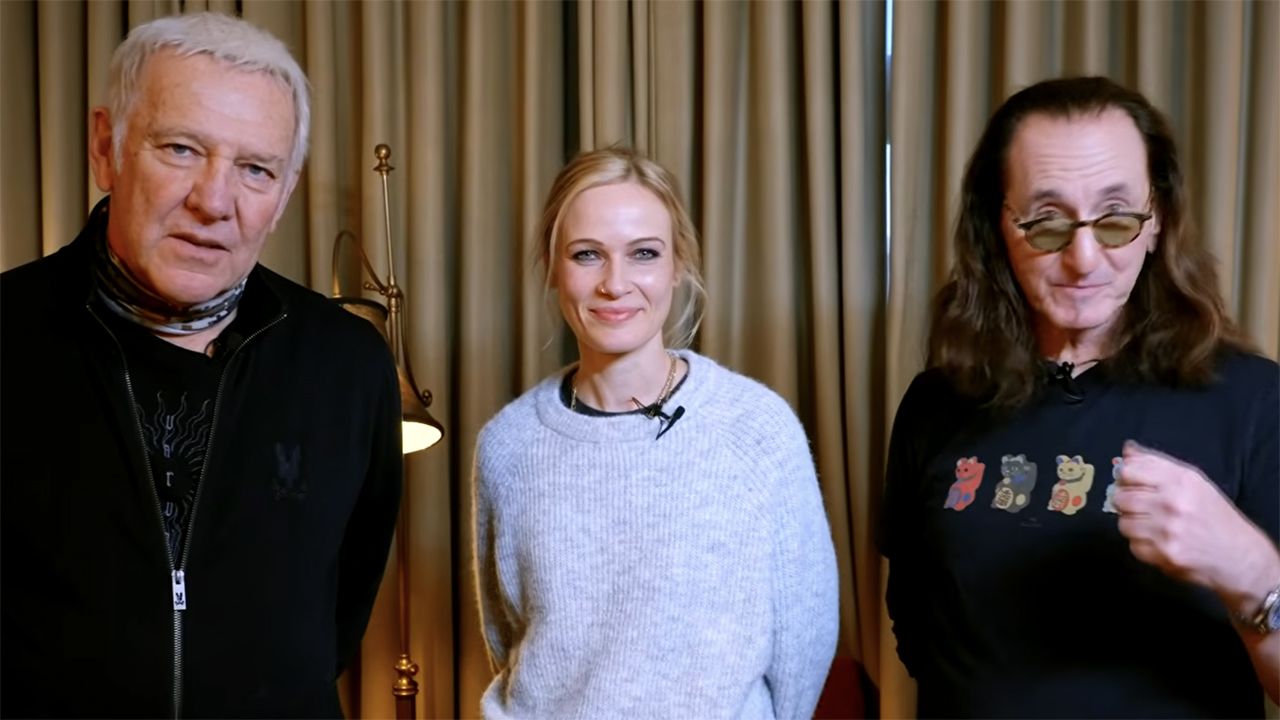
“When Geddy Lee said he’d heard this drummer the other day and her name was Anika, we should have been paying more attention”: One Rush fan’s journey from the last aftershow party of 2015 to the big comeback of 2026
Favicon 
www.loudersound.com

“When Geddy Lee said he’d heard this drummer the other day and her name was Anika, we should have been paying more attention”: One Rush fan’s journey from the last aftershow party of 2015 to the big comeback of 2026

Prog writer Philip Wilding – who once played Neil Peart’s drums – remained in contact with Lee as a dark decade exploded into new light
Like
Comment
Share
NEWSMAX Feed
NEWSMAX Feed
1 w ·Youtube News & Oppinion

YouTube
'Weapon of mass distraction': Israel, Tucker-Huckabee debate explained by Wayne Allyn Root
Like
Comment
Share
BlabberBuzz Feed
BlabberBuzz Feed
1 w

Hollywood A-Lister Dennis Quaid Exposes The Shocking New Reality Inside Hollywood
Favicon 
www.blabber.buzz

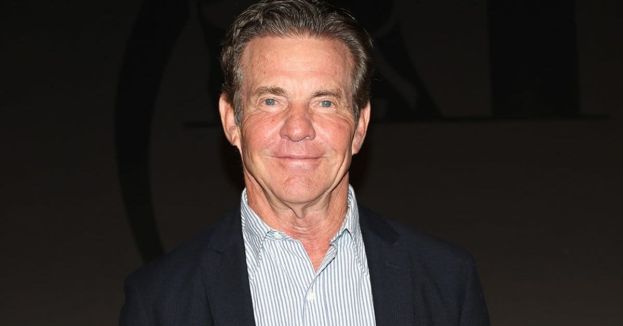
Hollywood A-Lister Dennis Quaid Exposes The Shocking New Reality Inside Hollywood

Like
Comment
Share
The Lighter Side
The Lighter Side
1 w

EU launches action plan to tackle cyberbullying and protect children’s mental health online
Favicon 
www.optimistdaily.com

EU launches action plan to tackle cyberbullying and protect children’s mental health online

BY THE OPTIMIST DAILY EDITORIAL TEAM As young people spend more of their lives online, the risks they face have become harder to ignore. From harassment in group chats to manipulated images shared without consent, cyberbullying is no longer a side issue of digital life but a central one. In response, the European Commission introduced a sweeping Action Plan Against Cyberbullying, aimed at protecting the mental health and safety of children and teenagers across the European Union. The strategy combines technology, regulation, education, and coordination among member states to build a more consistent and effective response. At its core, the plan rests on three pillars: creating an EU-wide reporting app, coordinating national approaches, and strengthening prevention through better digital practices. An EU-wide app to report and receive support One of the most tangible elements of the plan is the development of a user-friendly app designed to help victims report cyberbullying quickly and safely. The app will connect directly to national helplines and support services, giving children and teenagers a clearer pathway to help. Beyond reporting, the app is intended to allow young people to securely store and transmit evidence, a crucial step in addressing online abuse, which often disappears as quickly as it appears. The Commission will create a blueprint for the app, which member states can adapt, translate, and integrate into their national systems. The aim is simple but powerful: no child should struggle to figure out where to turn. A coordinated approach across the EU While digital platforms operate across borders, protections for minors often vary from country to country. The Commission wants to close that gap by encouraging member states to develop comprehensive national plans built on a shared understanding of cyberbullying. Standardized data collection will allow countries to compare trends and measure progress more effectively. The Action Plan also strengthens existing regulatory frameworks. Among the key steps: Reviewing the Digital Services Act guidelines on protecting minors to reinforce platform obligations to prevent harmful content and improve reporting mechanisms. Adopting clearer guidelines on “trusted flaggers” under the Digital Services Act, particularly for illegal cyberbullying content. Addressing cyberbullying within video-sharing platforms as part of the ongoing evaluation of the Audiovisual Media Services Directive. Supporting the enforcement of the Artificial Intelligence Act, especially provisions prohibiting manipulative AI practices used for bullying. Advancing transparency rules, including labelling AI-generated content that could be misused to harass or deceive. Together, these measures signal a shift toward stronger accountability for digital platforms. Prevention begins with digital literacy While enforcement matters, prevention remains a central focus. The Action Plan encourages healthier and more respectful digital habits from an early age. The upcoming review of the Commission’s guidelines for educators will place cyberbullying prevention at the forefront of digital literacy efforts, aligning with the broader Union of Skills initiative. At the same time, the Commission plans to expand training and resources for schools through the network of Safer Internet Centres and the multilingual Better Internet for Kids platform. Safer Internet Day, which was first launched in the EU in 2004 and now observed in approximately 160 countries, will continue to serve as a global platform promoting children’s rights and well-being both online and offline. Why the urgency? The numbers paint a clear picture. An estimated one in six children aged 11 to 15 report being victims of cyberbullying, and about one in eight admit to bullying others online. Meanwhile, a recent Eurobarometer survey found that more than ninety percent of Europeans believe urgent public action is needed to protect children from the negative mental health impacts of social media, cyberbullying, and age-inappropriate content. The Action Plan reflects direct input from young people themselves. It was shaped by consultation with more than six thousand children, alongside a broader public consultation. Building on existing protections The plan does not start from scratch. It builds on established legislation: The Digital Services Act requires platforms to maintain high standards of safety and privacy for minors, including tools that allow children to block or mute users and prevent being added to groups without consent. The Audiovisual Media Services Directive mandates measures to shield minors from harmful content, including cyberbullying. The Artificial Intelligence Act prohibits manipulative AI systems and requires labelling of deepfakes to prevent deception. By increasing visibility and outreach for tools already available, such as the Safer Internet Centres, which served around 48 million European citizens in 2025, the Commission hopes to ensure that protections translate into practical support. What comes next? Implementation will involve cooperation among member states, industry leaders, civil society, international organizations, and children themselves. Additional initiatives are also underway, including piloting a privacy-preserving EU age verification solution, advancing the forthcoming Digital Fairness Act, assembling an expert panel on child online protection, and conducting an inquiry into the mental health impacts of social media. The Commission’s message is clear: protecting children online requires not only rules, but responsiveness in systems that evolve as quickly as the digital spaces young people inhabit. If successful, the Action Plan could mark a significant step toward making the internet safer not just in principle, but in practice.     Did this solution stand out? Share it with a friend or support our mission by becoming an Emissary.The post EU launches action plan to tackle cyberbullying and protect children’s mental health online first appeared on The Optimist Daily: Making Solutions the News.
Like
Comment
Share
The Lighter Side
The Lighter Side
1 w

Before you buy: 6 smart questions to avoid impulse spending
Favicon 
www.optimistdaily.com

Before you buy: 6 smart questions to avoid impulse spending

BY THE OPTIMIST DAILY EDITORIAL TEAM We have all heard the advice: buy what you need, not what you want. In theory, it is simple. In practice, especially when money feels tight or emotions are running high, it can be surprisingly difficult. The truth is, spending on something you want is not inherently wrong. The key is intention. As Aja Evans, a licensed mental health counsellor and financial therapist, explains, mindful spending starts with awareness. That means pausing to consider your budget, the occasion, and even your emotional state. “What’s going on with me emotionally? Am I just buying this because I am upset? Am I buying this because I have this dream that this is gonna solve all my problems?” she says. Before you click “add to cart,” here are six questions Evans and Consumer Reports reporter Brian Vines suggest asking yourself. If the answer is “yes” to any of them, it may be worth taking a breath and reconsidering. Is your cash flow already stretched? If purchasing something means dipping into money reserved for essentials like housing, groceries, transportation, or credit card payments, that is a crystal clear sign to hold off, Evans says. The same goes for pulling from your emergency fund or savings set aside for a specific goal like a vacation. Instead, build flexibility into your budget. Create a realistic line item for fun purchases so you do not feel deprived. “If you deprive yourself too much, you will not stick to it,” Evans says. A small, planned allowance for treats can help prevent bigger, regret-driven splurges later. Are you trying to soothe a feeling? Impulse spending often masks something else. Evans suggests using the acronym HALT, a tool developed by Alcoholics Anonymous, to check in with yourself. Are you hungry, angry, lonely, or tired? If one of those basic needs is driving the urge to spend, address that first. Maybe what you need is a snack at home, a walk outside, or a call with a friend. A purchase may offer a quick dopamine hit, but it rarely resolves the underlying emotion. Is this becoming a pattern? A single indulgence is one thing. A recurring habit is another. If you find yourself regularly browsing estate sales, antique stores, or online marketplaces “just to look,” what you might actually need to take a closer look at is the bigger picture. “If every weekend you’re going to different antique stores to search, peel back a layer and ask what’s going on,” Evans says. “How often are you shopping in this kind of way?” Sometimes the thrill is not about the object itself, but the excitement of the hunt. Simply recognizing that pattern can be enough to break it. Are you buying it to impress someone? New gadgets, designer labels, and luxury upgrades often come with an unspoken promise of status. But it is worth examining whether that promise matters more than the product. “Maybe you want people to look at you a certain way, and having this item may signify something [important],” Evans says. If that resonates, consider what the purchase represents to you. Is it about confidence? Belonging? Approval? As Evans puts it, reflecting on why you care so much about what others think is “where the juicy stuff starts to happen.” That self-awareness can be more valuable than any item. Have you done your research? If you have decided the purchase is necessary, slow down and compare options. Read reviews. Check prices. Look beyond brand reputation. “Price does not guarantee performance,” Vines says. A higher price tag does not automatically mean better quality, and the cheapest option is not always the smartest investment either. In some cases, saving up for a more durable product will cost less in the long run. Vines also recommends tapping into your network. “Call your rich aunt who buys all the things you’re interested in having and see if she actually likes it,” he says. “Call the person you know who is the most cost-conscious and ask them questions.” Honest feedback can prevent buyer’s remorse. Are you settling for something you do not really want? Sometimes the issue is not overspending, but compromise. Imagine you are craving a doughnut, but the bakery has sold out. Should you grab a muffin instead? For Vines, the answer is clear. “I’m not going to take a muffin or half a pie or a slice of tiramisu when I want one doughnut,” he says. “If it’s not what you want, walk away.” Settling for a substitute can lead to spending more while still not feeling satisfied. Waiting for the right purchase can be the more rewarding choice. Long story short: pause, then proceed Mindful spending is less about strict rules and more about thoughtful pauses. Checking your budget, your emotions, your motivations, and your research can transform a reactive purchase into an intentional one. Buying something you truly value, that fits your finances and your goals, can feel good. But if your answers reveal stress, impulse, or pressure from outside expectations, giving yourself permission to wait may be the most empowering decision of all.     Did this solution stand out? Share it with a friend or support our mission by becoming an Emissary.The post Before you buy: 6 smart questions to avoid impulse spending first appeared on The Optimist Daily: Making Solutions the News.
Like
Comment
Share
Showing 1531 out of 112782
  • 1527
  • 1528
  • 1529
  • 1530
  • 1531
  • 1532
  • 1533
  • 1534
  • 1535
  • 1536
  • 1537
  • 1538
  • 1539
  • 1540
  • 1541
  • 1542
  • 1543
  • 1544
  • 1545
  • 1546
Advertisement
Stop Seeing These Ads

Edit Offer

Add tier


Select an image
Delete your tier
Are you sure you want to delete this tier?

Reviews

In order to sell your content and posts, start by creating a few packages. Monetization

Pay By Wallet

Payment Alert

You are about to purchase the items, do you want to proceed?

Request a Refund