YubNub Social YubNub Social
    #freedom #privacy #surveillancestate #police\ #alpr #flock
    Advanced Search
  • Login
  • Register

  • Night mode
  • © 2026 YubNub Social
    About • Directory • Contact Us • Developers • Privacy Policy • Terms of Use • shareasale • FB Webview Detected • Android • Apple iOS • Get Our App

    Select Language

  • English
Community
New Posts (Home) ChatBox Popular Posts Reels Game Zone Top PodCasts
Explore
Explore
© 2026 YubNub Social
  • English
About • Directory • Contact Us • Developers • Privacy Policy • Terms of Use • shareasale • FB Webview Detected • Android • Apple iOS • Get Our App
Advertisement
Stop Seeing These Ads

Discover posts

Posts

Users

Pages

Blog

Market

Events

Games

Forum

The Lighter Side
The Lighter Side
2 d

A study of 100,000 people found we cooperate more than we think
Favicon 
www.optimistdaily.com

A study of 100,000 people found we cooperate more than we think

BY THE OPTIMIST DAILY EDITORIAL TEAM In a standardized behavioral experiment run with more than 100,000 people across 125 countries, 69 percent of participants chose to cooperate with an anonymous stranger on behalf of a shared goal, even when doing so meant taking a personal financial loss. Those same participants, when asked how many of their fellow citizens would make the same choice, guessed 47 percent. The research, led by a German team and published in Science, is the first globally representative study of human cooperation. Participants were drawn from 125 nationally representative country samples. What the experiment measured Each participant was paired with an anonymous person from their own country and given a choice. The non-cooperative option guaranteed $100. The cooperative option paid only $70, but if both parties independently chose it, $400 would be donated toward climate action. Choosing cooperation meant accepting a $30 personal loss in exchange for a $400 contribution to a common cause, contingent on a stranger making the same call without knowing the other had. On average, 69 percent of participants cooperated. That figure held consistently across the full range of countries in the sample. The gap between what people do and what they expect The same participants were asked to estimate what share of their fellow citizens would cooperate. The average guess was 47 percent. That 22-point gap between actual behavior and expected behavior appeared in 124 of 125 countries surveyed, making it nearly universal. Lead author Armin Falk at the University of Bonn put the implication directly: “If we were less pessimistic and therefore more realistic, we could live in a better world.” The researchers describe the gap as a form of cognitive self-deception, a tendency to assess others too negatively while behaving more generously than expected. “And in doing so, we weaken ourselves.” Why this matters beyond the laboratory Collective action on problems that require coordination, from climate change to public health, depends in part on what people believe others will do. If most people assume most others will not participate, the incentive to participate weakens. The pessimism becomes self-fulfilling. The researchers frame cooperation as a basic prerequisite for social well-being. Many challenges can only be overcome if people contribute to the common good beyond their immediate interests. The data suggests most people already do. They just do not know that most other people are doing the same. Source study: Science— Homo cooperans: Understanding the nature of human cooperation     Did this solution stand out? Share it with a friend or support our mission by becoming an Emissary.The post A study of 100,000 people found we cooperate more than we think first appeared on The Optimist Daily: Making Solutions the News.
Like
Comment
Share
The Lighter Side
The Lighter Side
2 d

Historic ILO vote gives gig workers labour rights for the first time
Favicon 
www.optimistdaily.com

Historic ILO vote gives gig workers labour rights for the first time

BY THE OPTIMIST DAILY EDITORIAL TEAM For the first time, gig workers have binding international labour protections. The International Labour Organization voted June 12 to adopt a convention setting enforceable employment standards for platform workers in ride-hailing and food delivery. Four hundred and six member governments, employer groups, and workers’ representatives voted yes, including China, Japan, Germany, France, and South Africa among them. Eight voted no. The U.S. was one of them. What does the convention cover? The protections apply whether a worker is classified as an employee or an independent contractor. That classification has been the target for platform companies: call someone a contractor, and the minimum wage and benefits requirements disappear. The convention sets minimum standards for occupational safety and health, minimum pay, and protection against unjustified termination or account deactivation. It also sets the first international rules on algorithmic management. Platforms must now disclose how and when automated systems control pay and access to work, something workers have been asking for since this industry came into existence. Why the stakes are this high The World Bank estimates between 154 million and 435 million people work through apps. A lot of them earn almost nothing once expenses come out. A 2025 Human Rights Watch report found U.S. platform workers surveyed earned a median of $5.12 per hour after expenses, about 30 percent below the federal minimum wage. Amanda Brown, vice chair of the ILO’s Workers’ Group, put it directly: “For the first time in the history of international law, the women and men who move our cities, who clean and care in our homes… will be named, recognised and protected by a binding international standard.” The real test: ratification and enforcement The ILO can’t enforce anything on its own. Countries have to ratify the convention and write it into domestic law. This process is notoriously slow, political, and far from automatic. The U.S. voted against it. U.S. representative Lorenzo Riboni argued that rigid rules in a fast-moving sector “hinder innovation and harm workers that they intend to help.” Britain and India sat it out. European countries have a better track record on ratification, which is part of why the vote went the way it did. What enforcement could look like Where governments do ratify and implement the convention, individual workers may be able to take platform companies to court. The ILO can also receive complaints and pressure governments, but that’s roughly the extent of its reach. Lena Simet, senior advisor on economic justice at Human Rights Watch, called the result a breakthrough and “a floor, not a ceiling.” Governments still need to act: ratify, enforce correct classification, and close gaps for workers misclassified as self-employed. The standard is set. Everything after this is implementation.     Did this solution stand out? Share it with a friend or support our mission by becoming an Emissary.The post Historic ILO vote gives gig workers labour rights for the first time first appeared on The Optimist Daily: Making Solutions the News.
Like
Comment
Share
Living In Faith
Living In Faith
2 d

A Prayer to Be Thirsty for God - Your Daily Prayer - June 22
Favicon 
www.ibelieve.com

A Prayer to Be Thirsty for God - Your Daily Prayer - June 22

Even when you’re not able to hear from God well, you still have a natural thirst for God in your soul.
Like
Comment
Share
Living In Faith
Living In Faith
2 d

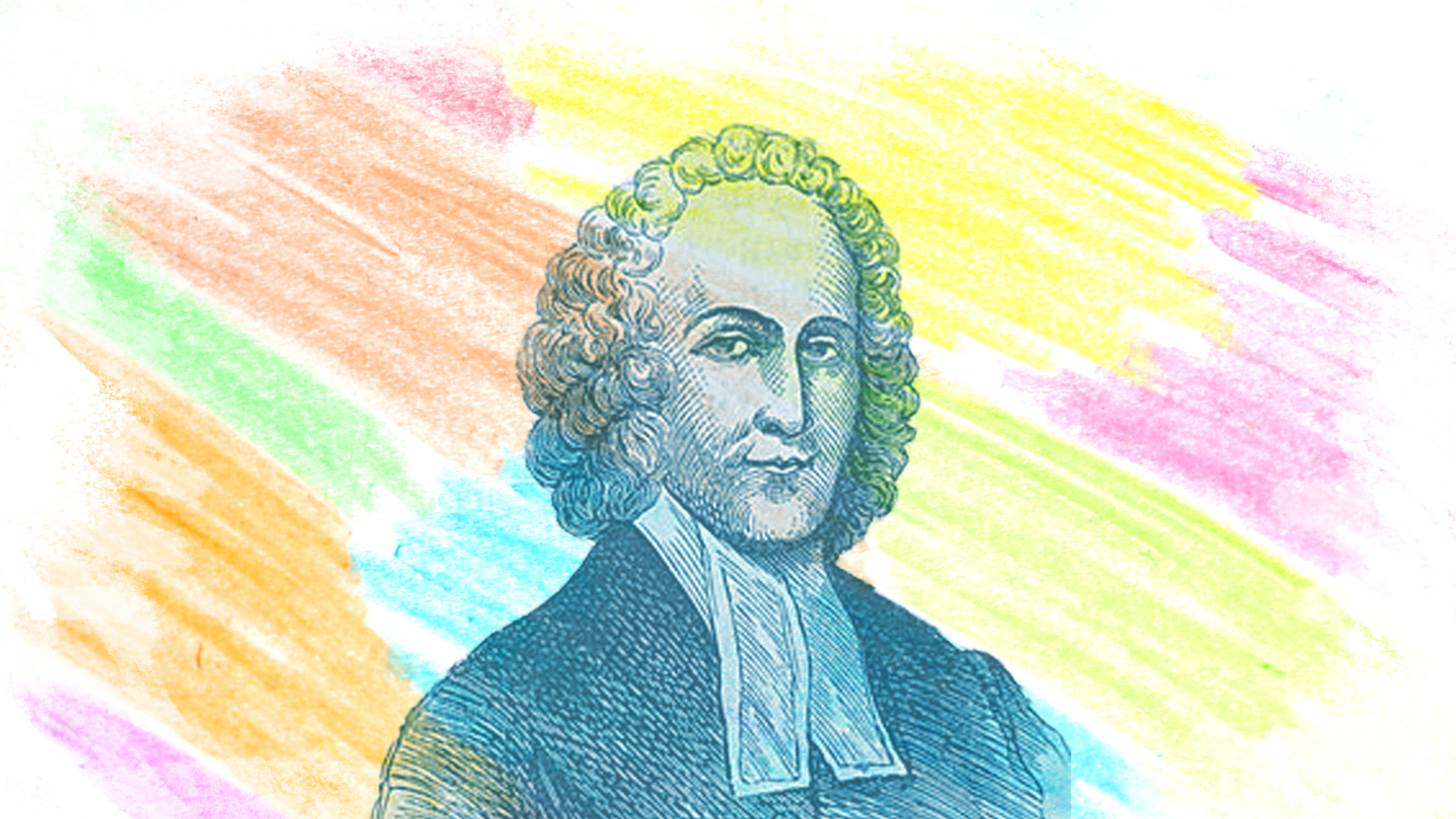
Your Kids Need to Know About Jonathan Edwards
Favicon 
www.thegospelcoalition.org

Your Kids Need to Know About Jonathan Edwards

My first impression of Jonathan Edwards wasn’t good. I lived for years with the distorted (and sadly common) perspective I received from a high school history textbook. It seemed like the only thing Edwards had done was preach “Sinners in the Hands of an Angry God.” In college, an older student twisted my arm to read John Piper, where I came across quotes from Edwards. Those quotes were surprisingly bright and warm compared to the dark and morose figure I expected. But even that wasn’t enough to get me to read Edwards right away. I assumed these glimpses must be exceptions and that his books would be inaccessible and filled with fire and brimstone. It’s tragic how common textbooks often misrepresent one of the greatest minds and hearts in American history. My kids deserve a better introduction to Edwards. Your kids do too. For years, that wrong first impression held me back from feeding on the banquet of God-centered, Christ-adoring food spread out in the works of Jonathan Edwards. The Boy Who Lived—for Jesus American history is on our minds this summer as we celebrate our nation’s 250th anniversary. As we teach our children about George Washington, Abraham Lincoln, and Benjamin Franklin, let’s not forget other significant figures in our history. Edwards’s theological and evangelistic work was as important for the formation of the United States as the political philosophies of other great leaders. Textbooks often underplay the key role Edwards played in the First Great Awakening and how revival prepared American minds and hearts for the later Revolution. And we see in him, unlike in many of our nation’s founders, a manifest love of Jesus and the Christian Scriptures. We don’t have to guess what Edwards thought on the matters of greatest importance. Here are a few lessons I want my kids to learn from Edwards’s life and ministry. 1. God speaks in his Word and world. Even before he became a great student and preacher of God’s Word, the boy Edwards learned to study God’s world. Now, let’s not minimize how important it is to learn about God from his own mouth as revealed in his Word. That he has spoken and still speaks in his Word by his Spirit is a marvel worth celebrating all our days. We don’t have to guess what Edwards thought on the matters of greatest importance. Yet God means for his Book to go along with what we see and learn of him from his world. The heavens too are telling of his glory (Ps. 19:1). Edwards learned about God through his world by spending extended time outdoors, carefully observing creation, trying to figure out how it works and what our world teaches us about the God who made it. Notably, Edwards had a special fascination with spiders. Rather than recoiling from them like many of us, he was curious about them. He wanted to gather all the knowledge he could about them, because he knew that their Creator made everything with purpose. 2. God doesn’t have grandchildren. Edwards had 10 sisters and no brothers, which I’m sure made for an unusual childhood. But the most significant detail about his growing up is that he was raised in a Christian home. His father was a pastor and was deeply concerned that all who heard his preaching would personally repent of their sin and come to know themselves as God’s adopted sons through faith. As a teenager, Edwards heard this loud and clear and came to have a deep and abiding concern for his own soul and personal faith. He didn’t presume on the faith of his parents but struggled (at times intensely) to confirm that his faith was his own and genuine. Edwards wasn’t content to play “grandchild” of God because his parents were Christians. He wanted to experience the true faith that made him a child of God. In time, and through much agony, he came to recognize he was securely God’s own. 3. We don’t have to choose between thinking and feeling. When I first encountered Edwards, I assumed his great intellect must mean he was handicapped in heart. My high school textbook encouraged that impression. However, when I read Edwards myself, especially his sermons, I saw how a mind for God and a heart for Jesus go hand in hand. They’re mutually reinforcing. A great mind, rightly employed, serves a great heart for the God who made all things and the Son he sent to rescue us from our sins. Edwards both loved the person of Jesus and loved to study God’s words in the Bible. His was one of the greatest minds of his time, and of American history. Yet with such an exacting intellect, he was still awed by Jesus and the Christian Scriptures. Edwards’s writings are filled with praise for the greatness and sweetness of knowing Jesus. 4. We can appreciate flawed heroes. None of the heroes we encounter in church history or the pages of Scripture is perfect—except for one. Edwards made many mistakes as a pastor. One of them was going at the work of ministry alone for so long without a team of fellow pastors to check his blind spots and smooth off his rough edges. Edwards’s writings are filled with praise for the greatness and sweetness of knowing Jesus. More gravely, like many in his day, he was blind to the evils of slavery. At times, he acted unwisely in complex social situations. Edwards was a sinner, and his sin hurt others deeply. But our heroes can be flawed if they own it and have a Hero in Jesus. In fact, the great Hero and the imperfect heroes of history work together to teach our children twin truths. First, that they’re flawed and sinful and need forgiveness. And second, that in Jesus, God has provided the only Hero who could rescue us from our sin. Only because of Jesus can we be counted as righteous before God or empowered by the Holy Spirit to do good for others. We aren’t the first generation to walk in Jesus’s wake. Edwards and other heroes like him can help us, and our kids, follow the great Hero. And the earlier we start them, the better.
Like
Comment
Share
Living In Faith
Living In Faith
2 d

On My Shelf: Life and Books with Kevin Burrell
Favicon 
www.thegospelcoalition.org

On My Shelf: Life and Books with Kevin Burrell

On My Shelf helps you get to know various writers through a behind-the-scenes glimpse into their lives as readers. I asked Kevin Burrell—pastor of StoneBridge Church Community in Charlotte, North Carolina, and author of Considering Sparrows: What Birds Teach Us About Who We Are, Where We’re Going, and the Joy of Following Jesus—about what’s on his bedside table, his favorite fiction, the books he regularly revisits, and more. What’s on your nightstand right now? It might be best to divide my book-wielding furniture into three places: the nightstand, the home study nook, and the church office end table. It doesn’t always break down this easily, but I’ve realized that my reading unintentionally seems to partition itself by location. The nightstand is mostly adorned with classic novels (and, admittedly, the Kindle app, so I can read with the lights off and not disturb my wife). Last month I finished Steinbeck’s East of Eden. As a finicky 17-year-old, I had written off Steinbeck after a bad experience with The Grapes of Wrath. But East of Eden is a masterpiece, and it’s caused me to give a second chance to other authors I cavalierly dismissed as a pompous teen (I’m currently rereading Dickens’s Great Expectations). I also devoured Malcolm Guite’s new book Galahad and the Grail, the first in a four-part series on the tales of King Arthur and Camelot. It’s a massive epic narrative poem that’s so rhythmic that it begs to be read out loud. Seriously, I dare you not to read it out loud. It’s gorgeous, uplifting, inspiringly illustrated, and gospel-minded in the way that a tale of spiritual pilgrimage was meant to be. We should celebrate that books like this are still being written out into the world. The home study nook tends to be the place for Christian growth books, though addictive books like Galahad often find their way downstairs. Recent visitors to this nook have included Seth Lewis’s The Language of Rivers and Stars, a thoughtful walk through the language of creation as translated by the Rosetta Stone of God’s Word; Russ Ramsey’s Rembrandt Is In the Wind and Van Gogh Has a Broken Heart, which utilize Ramsey’s love of art to ponder spiritual truths and the weight of the human condition; and Andrew Osenga’s How to Remember: Forgotten Pathways to an Authentic Faith, which challenges our modern approaches to music, liturgy, and personal worship. Lastly, there’s the church office end table, reserved for the ministry-pertinent reading that shapes my preaching and leadership. We’re working through Exodus right now, so I’m helpfully informed by Michael Morales’s Exodus Old and New (thematically associating the exile and exodus of Israel with that of the Christian pilgrim) and Philip Ryken’s gold-mine commentary from the Preaching the Word series. These books tend to follow me around in my backpack, as weighty reminders that Sunday’s coming. Oh, and did I mention Galahad and the Grail? What are your favorite fiction books? I’m solidly on the Theo of Golden bandwagon; rarely does a week go by without me recommending it to someone. But most of my favorites lean further back. Les Misérables has been at the top of my list for a long time. I love to read and reread Tolkien and Lewis, especially The Great Divorce, Perelandra, and The Lord of the Rings (I’m currently savoring it for the fifth time). And then there’s the world of Anniera captured in Andrew Peterson’s Wingfeather Saga, a four-volume series that’s on par with Narnia and Middle-earth, at least in my estimation. What biographies or autobiographies have most influenced you and why? I lean in the direction of the survival/adventure biographies. So, for instance, Laura Hillenbrand’s Unbroken haunts me regularly; as a story of horrifying injustice and inspiring forgiveness, it confronts my petty reluctances to turn the other cheek. Alfred Lansing’s Endurance, my favorite adventure bio, is a treasure trove of sermon illustrations, and I’m most struck by Ernest Shackleton’s preservation of his entire crew at great personal risk. And aside from the survival stories, I love the genius of Daniel Nayeri’s Everything Sad Is Untrue, an autobiographical memoir written in novel form from the point of view of the author’s 13-year-old self, recounting the personal ripple effects of his Iranian mother’s unlawful conversion to Christianity. What are some books you regularly reread and why? I used to consider life too short to read the same book twice. But the older I get, the more I want my heart stirred by the sorts of works that resonated deeply once upon a time. I’ve mentioned several already, mostly Tolkien and Lewis. But sometimes I pull a book off the shelf just to reread a favorite scene, like Les Misérables—to replay the heart-soaring emotions of Valjean rescuing Cosette from the Thénardiers. Or The Warden and the Wolf King (the last volume of The Wingfeather Saga), just to let the renaming of the Fangs stir the hope of redemption in my soul all over again. I used to consider life too short to read the same book twice. But the older I get, the more I want my heart stirred by the sorts of works that resonated deeply once upon a time. Valley of Vision: A Collection of Puritan Prayers and Devotions has been a faithful friend. My prayers often meander in the same circles, and weighty things don’t get prayed for because I would never have thought to pray them. Eugene Peterson said that in prayer, the well is deep and we don’t have a good enough bucket. The prayers of the Puritans give me a better bucket to draw deeper from the well. The Every Moment Holy series does the same; these thoughtful prayers and liturgies find the holy in the ordinary. And while describing them on the surface might sound trite or humorous (like the two liturgies for changing a diaper, or the one for brewing morning coffee), each prayer is actually a profound means of seeing the Lord faithfully at work in the space between. What books have most profoundly shaped how you serve and lead others for the sake of the gospel? In pastoral ministry, I prefer the sorts of books that hit you upside the head with a gracious two-by-four. Paul Tripp’s Dangerous Calling and Lead have both done that to me: the former in wrestling down ministry pride and the latter in pursuing authentic gospel leadership communities. I’ve led would-be seminarians through Zack Eswine’s The Imperfect Pastor, which offers sweet freedom from the pastoral pressure of being all things to all people all the time everywhere. Lastly, I discovered Eugene Peterson’s pastoral books Working the Angles and Under the Unpredictable Plant early in ministry, and they’ve stayed with me, shaping pastoral priorities and calling me back from the siren sounds of the ship to Tarshish. What’s one book you wish every pastor would read? You Are What You Love by James K. A. Smith is a seriously important book for pastors. We are seminary-hardwired to convey orthodoxy—a ministry built on the convictions of didactic truth. As well we should. But although it’s true that often “[God’s] people are destroyed for a lack of knowledge” (Hos. 4:6), my pastoral experience over the years shows forth a lot more brokenness in people’s desires than in their knowledge base. They know their Bibles and their theology; they simply want other things more than they want Jesus. As we develop biblically literate people, we have to challenge their faulty feelings, not just their faulty thinking. Orthopathos, not just orthodoxy—Jesus as the more beautiful song to subdue our competing idols. That affects how we preach, disciple, and measure our ministry faithfulness. What’s your best piece of writing advice? Practice analogical thinking. In our pastoral team’s preaching development time, I always start us off with an exercise in sermon illustrations. As we develop biblically literate people, we have to challenge their faulty feelings, not just their faulty thinking. It involves two jars, both filled with scraps of paper: the first contains theological or biblical concepts, and the latter contains random objects, concepts, or scenes from ordinary life. Each of us draws a paper from each jar, and then—on the spot—launches into a sermon illustration that connects them. “How is the work of the Holy Spirit like a hair dryer?” “How is original sin like Mount St. Helens?” The result can be comparison, contrast, vignette, allegory, whatever—as long as it makes a salient point. As you can imagine, some are better than others, and we have some good laughs, but I believe the exercise stretches the way we write sermons. In the end, my book, Considering Sparrows, could be described as 16 chapters of extended sermon illustrations. “How does a hummingbird depict the transformative role of the church in the culture?” “How does a mockingbird picture the importance of modeling in discipleship?” Good analogies stick with people. What are you learning about life and following Jesus? Although I’m a slow learner, the Lord has me in a beautiful season right now, with a gracious daily sense of his nearness. This freshness hasn’t been a result of finding the right morning devotional or prayer prompts, although I do both. It’s been more about “the approach”; coming to him at the outset and confessing what I seek, “that I may dwell in the house of the LORD all the days of my life” including this one (Ps. 27:4), admitting my past-day failures to truly seek him with heart, soul, and mind, and then putting my trust in Jesus all over again: “Lord, to whom shall we go? You have the words of eternal life” (John 6:68). I’ve been waking up more and more eager to be with him, so that we might rehearse these heart-truths together. I’m also learning to be less wounded by the criticisms of others. Honestly, the COVID-19 season probably beat a lot of that out of me. While it’s hard to lead through change, or to free my heart from man-pleasing, it’s much easier when you ultimately live your life before an audience of One. The Lord has been gracious to grow in me a more nonanxious presence in ministry. How have birds—and broadly the Book of Nature—helped you understand God’s Word and ways better? When I’m writing for my blog, Ornitheology, I’m usually flanked by two bookstacks: commentaries on one side and books about birds on the other. It’s a joy for me to bring these two worlds together, drawing analogies between the behavior of birds and the biblical truths they might represent. If it’s true that “the heavens declare the glory of God; the skies proclaim the work of his hands” (Ps. 19:1, NIV), then we should be looking up more often. The Lord has aha moments for us there. Goldfinches teach me about God’s providential timing, killdeer show me how to take a hit for my church, and kookaburras teach me about the mirth of our Savior. Psalm 19 takes a whiplash turn midway through, to the new topic of the law of God—but it’s really not a new topic at all. God’s “invisible qualities” are revealed in part by “what has been made” (Rom. 1:20, NIV), and so looking at the creativity of the creation should lead us to ponder the character of the Creator. I’m always looking, watching for connections, considering sparrows.

Like
Comment
Share
YubNub News
YubNub News
2 d

The Lost Charms of ‘Football,’ and of Life
Favicon 
yubnub.news

The Lost Charms of ‘Football,’ and of Life

[View Article at Source]Professional players once were heroes, not celebrities. The post The Lost Charms of ‘Football,’ and of Life appeared first on The American Conservative.
Like
Comment
Share
YubNub News
YubNub News
2 d

What happens when AI starts targeting Christians?
Favicon 
yubnub.news

What happens when AI starts targeting Christians?

By Andrea Picciotti-Bayer, Voices Contributor Monday, June 22, 2026  | Joel Saget/AFP via Getty ImagesThis month, five FBI employees were fired for their roles in producing a 2023 internal memo suggesting…
Like
Comment
Share
YubNub News
YubNub News
2 d

Liberal Elites Promote ‘Abundance,’ But Democratic Voters Want Socialism
Favicon 
yubnub.news

Liberal Elites Promote ‘Abundance,’ But Democratic Voters Want Socialism

[View Article at Source]Pro-capitalist social liberalism resembles the “reform conservatism” that President Trump vanquished. The post Liberal Elites Promote ‘Abundance,’ But Democratic Voters…
Like
Comment
Share
YubNub News
YubNub News
2 d

Why Nigerian widows are gathering in an abandoned chicken coop
Favicon 
yubnub.news

Why Nigerian widows are gathering in an abandoned chicken coop

By Brad Brandon, Op-ed contributor Monday, June 22, 2026  | AFP via Getty ImagesIn a quiet corner of Northern Nigeria, a group of women gathers each week in a place no one would mistake for sacred:…
Like
Comment
Share
YubNub News
YubNub News
2 d

Is Islam or secularism more dangerous to the world?
Favicon 
yubnub.news

Is Islam or secularism more dangerous to the world?

By Robin Schumacher, Exclusive Columnist Monday, June 22, 2026iStock / Getty Images Plus/mirsad sarajlicOne of my many duties as a husband is serving as my wife's Director of Entertainment. That…
Like
Comment
Share
Showing 271 out of 127063
  • 267
  • 268
  • 269
  • 270
  • 271
  • 272
  • 273
  • 274
  • 275
  • 276
  • 277
  • 278
  • 279
  • 280
  • 281
  • 282
  • 283
  • 284
  • 285
  • 286
Advertisement
Stop Seeing These Ads

Edit Offer

Add tier


Select an image
Delete your tier
Are you sure you want to delete this tier?

Reviews

In order to sell your content and posts, start by creating a few packages. Monetization

Pay By Wallet

Payment Alert

You are about to purchase the items, do you want to proceed?

Request a Refund