YubNub Social YubNub Social
    #music #tew #tuba #euphonium #tew2026 #militarymusic #armymusic #armyband #band #freedom #concertband #tusab #armyorchestra #orchestra #warmup
    Advanced Search
  • Login
  • Register

  • Night mode
  • © 2026 YubNub Social
    About • Directory • Contact Us • Developers • Privacy Policy • Terms of Use • shareasale • FB Webview Detected • Android • Apple iOS • Get Our App

    Select Language

  • English
Night mode toggle
Featured Content
Community
New Posts (Home) ChatBox Popular Posts Reels Game Zone Top PodCasts
Explore
Explore
© 2026 YubNub Social
  • English
About • Directory • Contact Us • Developers • Privacy Policy • Terms of Use • shareasale • FB Webview Detected • Android • Apple iOS • Get Our App
Advertisement
Stop Seeing These Ads

Discover posts

Posts

Users

Pages

Blog

Market

Events

Games

Forum

Front Page Mag Feed
Front Page Mag Feed
2 d

California Tears Down Cesar Chavez Statues, Repaints Murals
Favicon 
www.frontpagemag.com

California Tears Down Cesar Chavez Statues, Repaints Murals

The party forces their icon on us. Then tears him down. The post California Tears Down Cesar Chavez Statues, Repaints Murals appeared first on Frontpage Mag.
Like
Comment
Share
Independent Sentinel News Feed
2 d

We Could Lose It All in November But Then There Is Trump
Favicon 
www.independentsentinel.com

We Could Lose It All in November But Then There Is Trump

It is important to start with positive news. In good news, Australia and the United Arab Emirates on Saturday became the latest countries to add their names to a joint statement now signed by 22 nations calling on Iran to immediately stop attempts to block commercial traffic in the Strait of Hormuz. The statement says […] The post We Could Lose It All in November But Then There Is Trump appeared first on www.independentsentinel.com.
Like
Comment
Share
BlabberBuzz Feed
BlabberBuzz Feed
2 d

HBO’s ‘The Pitt’ Just Declared War On ICE Agents
Favicon 
www.blabber.buzz

HBO’s ‘The Pitt’ Just Declared War On ICE Agents

Like
Comment
Share
Daily Wire Feed
Daily Wire Feed
2 d

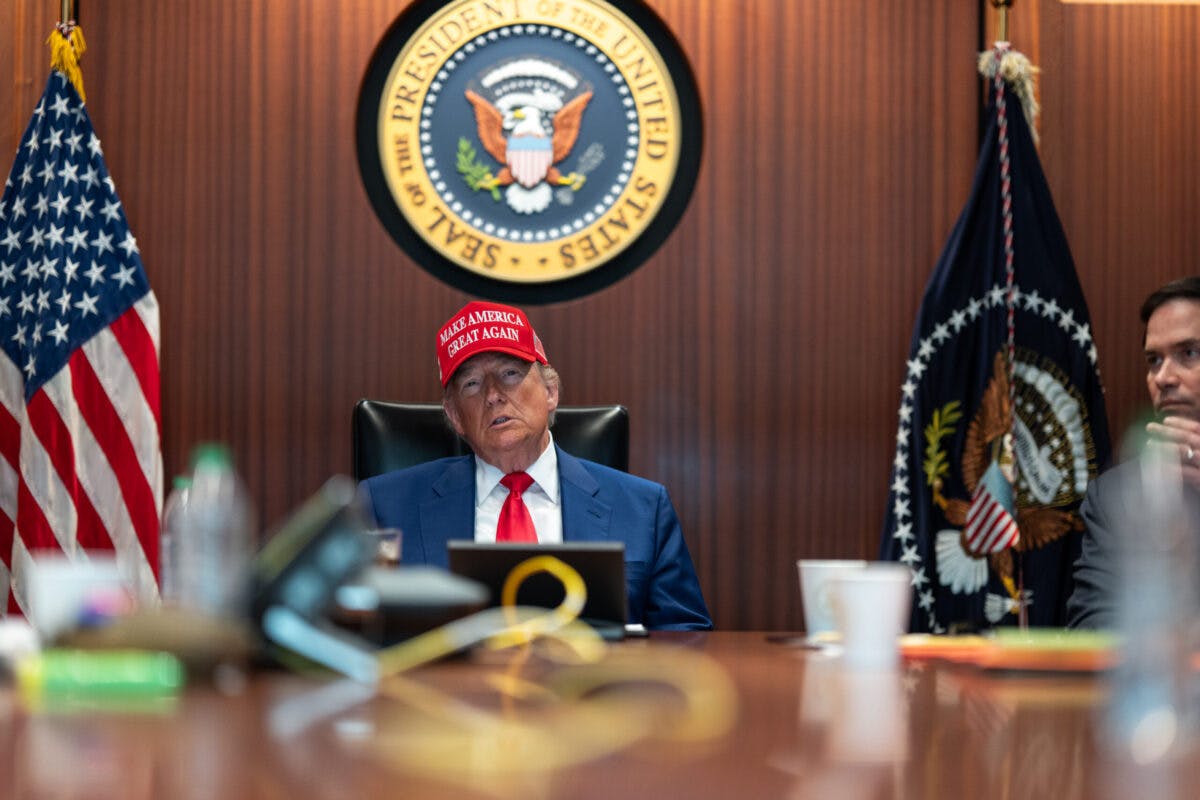
Trump Draws Red Line: 48 Hours To Open Strait Or U.S. Strikes Begin
Favicon 
www.dailywire.com

Trump Draws Red Line: 48 Hours To Open Strait Or U.S. Strikes Begin

President Donald Trump on Saturday issued a stark 48-hour ultimatum to Iran, warning that the United States will begin targeting the country’s energy infrastructure if it does not reopen the strategically critical Strait of Hormuz. “If Iran doesn’t FULLY OPEN, WITHOUT THREAT, the Strait of Hormuz, within 48 HOURS from this exact point in time, the United States of America will hit and obliterate their various POWER PLANTS, STARTING WITH THE BIGGEST ONE FIRST!” Trump wrote on Truth Social at 7:44 p.m. EST. The warning marks one of the most direct threats yet on Iranian infrastructure as the conflict enters a dangerous new phase. The Strait of Hormuz is one of the most critical waterways in the world, carrying roughly one-fifth of the global oil supply during peacetime. Since early March, traffic through the narrow passage has been severely restricted following Iranian military actions, including attacks on commercial vessels and the laying of naval mines, according to international statements. The disruption has already sent oil prices surging, with global markets reacting to fears of prolonged instability in the region. Trump signaled in recent remarks that reopening the strait would not be overly complex militarily, though it would require significant coordination. “It’s relatively safe … you need ships, you need volume,” he told reporters Friday, describing the operation as a “simple military maneuver.” At the same time, the president criticized NATO allies for failing to step in. “NATO could help us, but they so far haven’t had the courage to do so,” Trump said, after earlier blasting the alliance as “cowards.” Despite Trump’s criticism, more than 20 countries, including the United Kingdom, France, Germany, Japan and Canada have signed a joint statement condemning Iran’s actions. “We condemn in the strongest terms recent attacks by Iran on unarmed commercial vessels … and the de facto closure of the Strait of Hormuz,” the statement read. The countries also signaled their “readiness to contribute” to ensure safe passage through the waterway, suggesting the early stages of a potential multinational response. Trump’s ultimatum comes just days after U.S. forces carried out strikes on Iranian anti-ship missile sites near the strait. According to U.S. Central Command, the operation involved 5,000-pound bunker-buster bombs, targeting capabilities believed to threaten maritime traffic. The escalation underscores how quickly the standoff is moving from economic pressure to direct military confrontation. Iranian officials have pushed back on U.S. demands, with Foreign Minister Abbas Araghchi claiming in an interview with Kyodo News that restrictions have only applied to countries involved in attacks on Iran. At the same time, Iran has issued its own warnings, threatening to target U.S.-aligned energy infrastructure across the region if strikes continue. Iran launched one of its most destructive attacks of the conflict over the weekend, with missiles striking southern Israel and injuring more than 100 people, including civilians in residential areas. Israeli Prime Minister Benjamin Netanyahu vowed to retaliate “on all fronts,” as Israeli forces reportedly carried out additional strikes inside Iran. Asian countries such as Japan are heavily dependent on oil shipments through the passage, with the Japanese already weighing potential military involvement, including minesweeping operations, if conditions allow. Meanwhile, global oil prices have surged past $100 per barrel multiple times during the conflict, raising concerns about inflation and economic disruption far beyond the Middle East. Trump’s ultimatum now sets a clear deadline in a high-stakes staring contest: if Iran does not comply, the United States could move from targeting military assets to striking core infrastructure inside the country. With both sides escalating, the next 48 hours may determine whether the conflict remains contained or spirals into something far larger.
Like
Comment
Share
Daily Signal Feed
Daily Signal Feed
2 d

Pennsylvania Is Losing Businesses and Workers
Favicon 
www.dailysignal.com

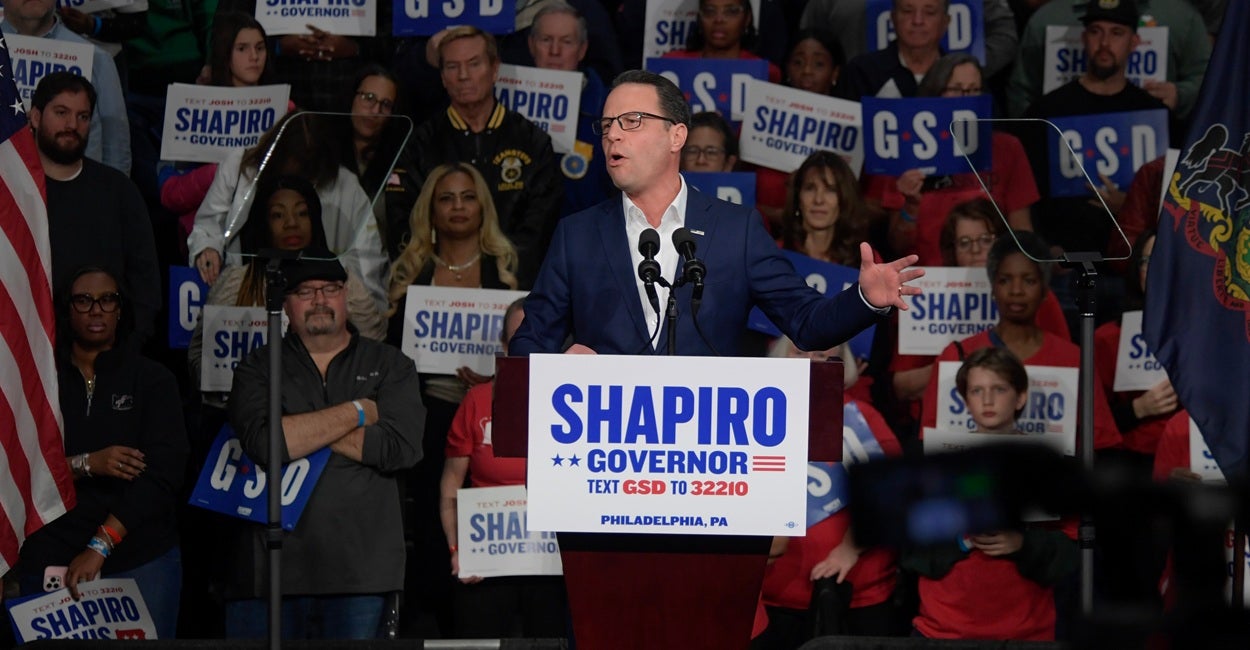
Pennsylvania Is Losing Businesses and Workers

Sadly, one of the nation’s biggest employers is closing in Pennsylvania. Saks & Company recently announced plans to shut down its fulfillment center in Foster, laying off 435 employees as an unfortunate aftermath. This follows on other recent closures and layoffs by Saks in Bala Cynwyd and Wilkes-Barre, which also resulted in the loss of another 200 jobs. Business closures like this are a gut punch to our commonwealth, but they are also indicative of the tough financial times Pennsylvanians currently face. And though it is easy to point fingers at national and international trends, many of Pennsylvania’s economic woes are of its own making. Our commonwealth has what it needs to compete and attract businesses: a skilled workforce, abundant natural resources, geographic proximity to huge markets, etc. Yet, Pennsylvania struggles to compete nationally. In its annual Rich States, Poor States, the American Legislative Exchange Council ranks Pennsylvania 36th in economic outlook and 44th in economic performance. The Tax Foundation ranks our commonwealth 36th nationally for tax competitiveness, dropping down two spots from last year’s rankings. These adverse economic conditions have driven far too many Pennsylvanians to leave their home state. From 2012 to 2022, Pennsylvania lost more than 180,000 residents to state-to-state migration, taking $16.5 billion in personal income with them. Our commonwealth ranks sixth in the nation for the number of people lost to outmigration and seventh for lost personal income. Pennsylvanians leaving for Florida, the Carolinas, and Texas are not just chasing warmer weather. Polling reveals that 55% of Pennsylvanians are leaving or considering leaving to find a lower cost of living. So, how do we reverse course? It all begins with the state budget. Every year, Pennsylvania lawmakers legislate not only how tax dollars are spent but also the policies and programs that guide the spending. And with the right reforms, Pennsylvania can start climbing back to being the economic powerhouse it once was. Regulatory reform would be a great place to start. Our commonwealth has a terrible reputation for excessive red tape that discourages and is a barrier to business. Pennsylvania is the 14th-most regulated state, with more than 164,000 regulations on the books! And even the slightest reduction in this regulatory burden would pay huge dividends. A Commonwealth Foundation study found that a 36% reduction in Pennsylvania regulations would generate more than $9.2 billion in new GDP spending and more than 180,000 jobs. One way to chip away at Pennsylvania’s regulatory burden is the Regulations from the Executive in Need of Scrutiny (REINS) Act. The REINS Act would require legislative approval for any major new and costly regulation before it takes effect. States that have embraced similar commonsense reforms have seen real economic dividends. Florida, which passed the REINS Act in 2010, has become one of the leading states for domestic migration, economic growth, and job creation. We made notable progress during last year’s budget when lawmakers adopted “deemed-approved” permitting. Now, if a state agency fails to meet a deadline for permit approval, the permit is automatically approved, allowing business owners to break ground on their new projects faster.  We also must not legislate away our competitive advantage in energy production. Lawmakers in Harrisburg are considering counterproductive policies, such as the governor’s “Lightning Plan,” that threaten our commonwealth’s status as an energy powerhouse. If adopted, the Lightning Plan—a series of onerous carbon taxes and renewable energy mandates—would impose more than $150 billion in new energy costs over the next decade, jacking up utility prices on families and businesses already paying out the nose when their electricity bills come due. Accelerating tax reform would also alleviate rising costs. Pennsylvania levies one of the highest corporate taxes nationally. In 2022, lawmakers passed a plan to reduce the corporate net income tax (CNIT) from 9.99% to 4.99% by 2031. But this reduction needs to be fast-tracked. Even with today’s lower rate (7.49%), Pennsylvania still taxes at a higher rate than our neighbors in New York, West Virginia, Virginia, and Ohio. (In fact, the Buckeye State has no corporate taxes.) Accelerating the CNIT reduction would put us ahead of our neighbors, making Pennsylvania an ideal place to start a business or relocate. Tax reform also requires the fiscal discipline needed to avoid new taxes. Pennsylvania’s Independent Fiscal Office has made a scary projection of a $6 billion state deficit by fiscal year 2026–27, which would fully exhaust our general fund and emergency reserves the following year. This fiscal crisis will result in a statewide tax hike of $2,100 per family of four. Given that half of Americans cannot afford a $1,000 emergency expense, this is a profound blow to the wallets of Pennsylvanians. Business closures like Saks should serve as a wake-up call. Without genuine regulatory reforms or tax relief, Pennsylvania risks losing more jobs, businesses, and families to other states. Adopting a fiscally responsible budget—complete with meaningful regulatory reform and tax relief—would sharpen and broaden the commonwealth’s competitive edge, invite more businesses, foster economic growth, and stop the hemorrhage of outmigration to other states. This article was originally published by RealClearPennsylvania and made available via RealClearWire. We publish a variety of perspectives. Nothing written here is to be construed as representing the views of The Daily Signal. The post Pennsylvania Is Losing Businesses and Workers appeared first on The Daily Signal.
Like
Comment
Share
Hot Air Feed
Hot Air Feed
2 d

Shaking Off the Shrouds: Sunday Reflection
Favicon 
hotair.com

Shaking Off the Shrouds: Sunday Reflection

Shaking Off the Shrouds: Sunday Reflection
Like
Comment
Share
The Blaze Media Feed
2 d

The campus isn’t ‘misunderstood.’ It’s mismanaged — on purpose.
Favicon 
www.theblaze.com

The campus isn’t ‘misunderstood.’ It’s mismanaged — on purpose.

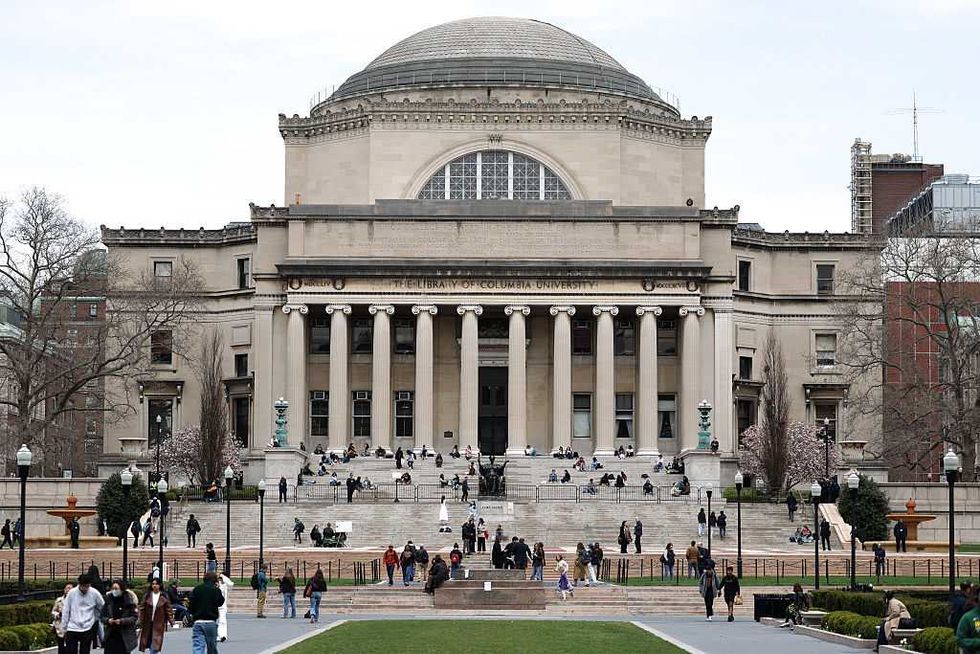
Former Columbia University President Lee C. Bollinger has produced a slender, puzzling book. It glides past the central problems facing campuses — weak leadership, weak accountability, and ideological capture — and lingers instead on nostalgia and the “community of scholars.”It also prompts a blunt question: Why do university presidents publicly dissemble? Not in the chest-thumping manner of a cable-news partisan, but in the lubricated, bureaucratic manner that says almost everything except what matters most.Bollinger presents a university with virtually no blemishes — blameless, well-run, noble — and then points outward, toward Trump and the federal government, as the true threat.Bollinger was recruited by W.W. Norton editor in chief Dan Gerstle to adapt lectures delivered in spring 2025 into a book. He aims to remind readers that the American university occupies a critical place in society. In the abstract, he’s right, and parts of the argument work.As a constitutional law scholar, he also tries to weave the First Amendment into the university’s institutional identity, suggesting the two are inseparable. That claim needs more force than this book provides. The prose reads like speech material polished for print. The ambition outruns the substance.But the real center of gravity arrives quickly: Bollinger casts the primary threat to higher education as “outsiders,” especially the federal government and, most of all, Donald Trump. Yes, it’s another Trump-as-villain entry in the culture wars, and likely the reason this book was rushed into print. Whatever Bollinger’s hygienic tone, this is hatchet work in a gentleman’s suit.Bollinger is no detached man of letters offering serene judgment from above the fray. He remains a prominent operator inside elite academic and political networks. His calm posture functions less as neutrality than as insulation.The book is divided into three parts: “The University,” “The First Amendment,” and “The Fifth Branch.” If the press is the “fourth branch” of government, Bollinger argues the university deserves branch status too.I write often about the university’s high mythology — the version parents and alumni carry around because universities actively sell it. Bollinger indulges that mythology. His university is a place of serious minds, noble purpose, and largely blameless governance, with only the occasional “organized anarchy,” the predictable messiness of complex institutions.He offers this earnest passage:I challenge anyone to spend a day, a week, or more in any university — sitting in on classes, attending lectures, meeting with students, visiting a laboratory, being part of a seminar — and not come away deeply impressed, indeed invigorated, about the human potential to know and to grasp something of our existence.Many readers will want to believe it. Bollinger counts on that desire.And here’s where the trouble begins.RELATED: How America’s universities embraced anti-American ‘blood and soil’ Photo by Selcuk Acar/Anadolu via Getty ImagesThe book’s best section is its opening chapter, which promises an insider’s look at how universities actually function. Bollinger divides the institution into multiple levels of analysis — individual, university, and system — in a way that will feel familiar to anyone trained in serious political science. The intent looks analytic. The presentation sounds authoritative.Then he leaves out the single biggest operational reality on most campuses.Bollinger describes academic affairs — faculty, curriculum, and the traditional governance story — and effectively ignores student affairs, often rebranded as “student success.” That omission is not a minor gap. It’s the whole fight.Modern universities are not simply faculty-driven institutions with a few administrative appendages. They are sprawling managerial systems in which student affairs bureaucracies routinely outnumber faculty and operate as an ersatz ideological faculty through what they call the co-curriculum: workshops, trainings, mandatory seminars, “wellness” programming, diversity offices, identity centers, residence-life systems, conduct regimes, orientation pipelines, and retention machinery.This is education by parallel authority.Student affairs is frequently staffed, trained, and ideologically shaped by external nonprofits such as ACPA, NASPA, NADOHE, and NACADA. These groups do not simply offer best practices. They often function as ideological conduits, pushing “critical pedagogy” and “critical consciousness” as an institutional mission. One of them literally advertises the goal of “boldly transforming higher education.”That transformation is not a side story. It is the story. It’s how the modern university moved from the “shared governance” myth to a bureaucratic reality where the faculty increasingly serves as a decorative legitimacy layer.Bollinger never deals with it. Not directly. Not honestly. Not at all.Contemporary scholarship has already documented how student affairs increasingly designs, delivers, and assesses structured educational experiences parallel to the faculty curriculum. The same bureaucracy often serves as a channel for activism infrastructure that has helped fuel campus chaos since 2020.Student affairs is wholly under the control of the extremist left. Yet Bollinger presents a university with virtually no blemishes — blameless, well-run, noble — and then points outward, toward Trump and the federal government, as the true threat.It’s hard not to conclude that the nostalgia is doing work. Bollinger affirms the version of the university that parents and alumni want to believe still exists: the citadel of learning devoted to truth, stewarded by wise leaders, occasionally messy but fundamentally righteous.RELATED: How to muzzle the three-headed diversity monster Photo by Bill Pugliano/Getty ImagesThat image now functions as cover.It shields what many universities have become: money-making and idea-laundering operations that give lip service to the people paying the bills — parents, students, donors — while empowering internal bureaucracies that answer to their own ideological class.Bollinger’s personal position makes this posture easier to spot. He belongs to the wealthy mandarin class that runs elite higher education. His Columbia compensation reportedly topped $5 million annually. Columbia’s assets were roughly $23.5 billion at the end of 2022.He also guards his own record with careful selection.While he was president of the University of Michigan, the school was involved in two affirmative action cases decided by the Supreme Court in 2003. Bollinger highlights the win (Grutter v. Bollinger) but gives scant attention to the loss (Gratz v. Bollinger). In places, his wording blurs them together in a way that can leave casual readers thinking Michigan prevailed across the board.It didn’t. In Gratz, Michigan’s admissions policy violated the Equal Protection Clause. That case foreshadowed the eventual collapse of the broader regime in Students for Fair Admissions v. Harvard two decades later.At Columbia, Bollinger helped lay the groundwork for the institution’s later disorder by expanding and empowering DEI bureaucracies in response to the 2020 “racial reckoning.” Many presidents issued pro forma statements they now quietly regret. Bollinger went further: He built and strengthened the permanent infrastructure.My view is straightforward: Bollinger represents the ascent of the new mandarins — administrators who guard prerogatives, expand PR machinery, and grow their internal empires against faculty authority, all while presenting themselves as the guardians of scholarly life. He is the living, breathing antithesis of what the university and its presidents should be in the 21st century.In “University: A Reckoning,” Bollinger wants readers to see a university that largely no longer exists. His lack of candor ensures that readers learn little about how universities actually function — and even less about why so many are failing.

Like
Comment
Share
The Blaze Media Feed
2 d

Allie Beth Stuckey credits Christian education for shaping her faith — and debate skills
Favicon 
www.theblaze.com

Allie Beth Stuckey credits Christian education for shaping her faith — and debate skills

BlazeTV host Allie Beth Stuckey credits not only her parents but her faith-based education — from kindergarten through high school — with shaping her worldview and skill set.“My dad always said that he would do whatever it took, however many hours he had to work, however many shifts he had to work, to make sure my brothers and I attended a Christian school,” Stuckey says.“I went to the same Christian school from kindergarten through 12th grade. Was it perfect? No. I had some not so great teachers. The culture wasn’t always the best. The community wasn’t always the best,” she continues.“I would not trade my education for anything. In addition to the Holy Spirit and my parents, my kindergarten through 12th grade education is responsible for instilling in me the word of God, the ability to memorize it, to defend it, to think logically, to reason, to read, to write, to argue,” she explains.“That just goes to show how crucial it is to disciple your kids from an early age because what they learn now, they will keep with them as adults, even more than the things they learn as adults,” she adds.Stuckey points out that after her viral Jubilee debate, she was asked by several people how she prepared herself to take on such a large number of liberals.“Yes, it took a lot of practice and preparation and skill, experience. Yes, my parents in so many ways prepared me for that just by how they raised me. But also, 13 years of Christian education, a decade of Awana, eight years of youth group, decades of Sunday school,” she explains.“You just can’t beat the evangelical upbringing when it comes to knowing the Bible. And I am so thankful for it. I use it every single day,” she adds.Want more from Allie Beth Stuckey?To enjoy more of Allie’s upbeat and in-depth coverage of culture, news, and theology from a Christian, conservative perspective, subscribe to BlazeTV — the largest multi-platform network of voices who love America, defend the Constitution, and live the American dream.
Like
Comment
Share
Twitchy Feed
Twitchy Feed
2 d

A GIDDY Tom Homan Tells CNN's Dana Bash How READY ICE Is to Assist TSA and Lefties Just Can't DEAL -Watch
Favicon 
twitchy.com

A GIDDY Tom Homan Tells CNN's Dana Bash How READY ICE Is to Assist TSA and Lefties Just Can't DEAL -Watch

A GIDDY Tom Homan Tells CNN's Dana Bash How READY ICE Is to Assist TSA and Lefties Just Can't DEAL -Watch
Like
Comment
Share
Twitchy Feed
Twitchy Feed
2 d

Bishop Robert Barron ENDS Carrie Prejean Boller's 'Preposterous' Antisemitic Claims in Kindly BRUTAL Post
Favicon 
twitchy.com

Bishop Robert Barron ENDS Carrie Prejean Boller's 'Preposterous' Antisemitic Claims in Kindly BRUTAL Post

Bishop Robert Barron ENDS Carrie Prejean Boller's 'Preposterous' Antisemitic Claims in Kindly BRUTAL Post
Like
Comment
Share
Showing 301 out of 115262
  • 297
  • 298
  • 299
  • 300
  • 301
  • 302
  • 303
  • 304
  • 305
  • 306
  • 307
  • 308
  • 309
  • 310
  • 311
  • 312
  • 313
  • 314
  • 315
  • 316
Advertisement
Stop Seeing These Ads

Edit Offer

Add tier


Select an image
Delete your tier
Are you sure you want to delete this tier?

Reviews

In order to sell your content and posts, start by creating a few packages. Monetization

Pay By Wallet

Payment Alert

You are about to purchase the items, do you want to proceed?

Request a Refund