YubNub Social YubNub Social
    #trump #democrats #loonylibs #americafirst #sotu #culture #fuckdiversity #exodermin
    Advanced Search
  • Login
  • Register

  • Night mode
  • © 2026 YubNub Social
    About • Directory • Contact Us • Developers • Privacy Policy • Terms of Use • shareasale • FB Webview Detected • Android • Apple iOS • Get Our App

    Select Language

  • English
Night mode toggle
Featured Content
Community
New Posts (Home) ChatBox Popular Posts Reels Game Zone Top PodCasts
Explore
Explore
© 2026 YubNub Social
  • English
About • Directory • Contact Us • Developers • Privacy Policy • Terms of Use • shareasale • FB Webview Detected • Android • Apple iOS • Get Our App
Advertisement
Stop Seeing These Ads

Discover posts

Posts

Users

Pages

Blog

Market

Events

Games

Forum

History Traveler
History Traveler
4 w

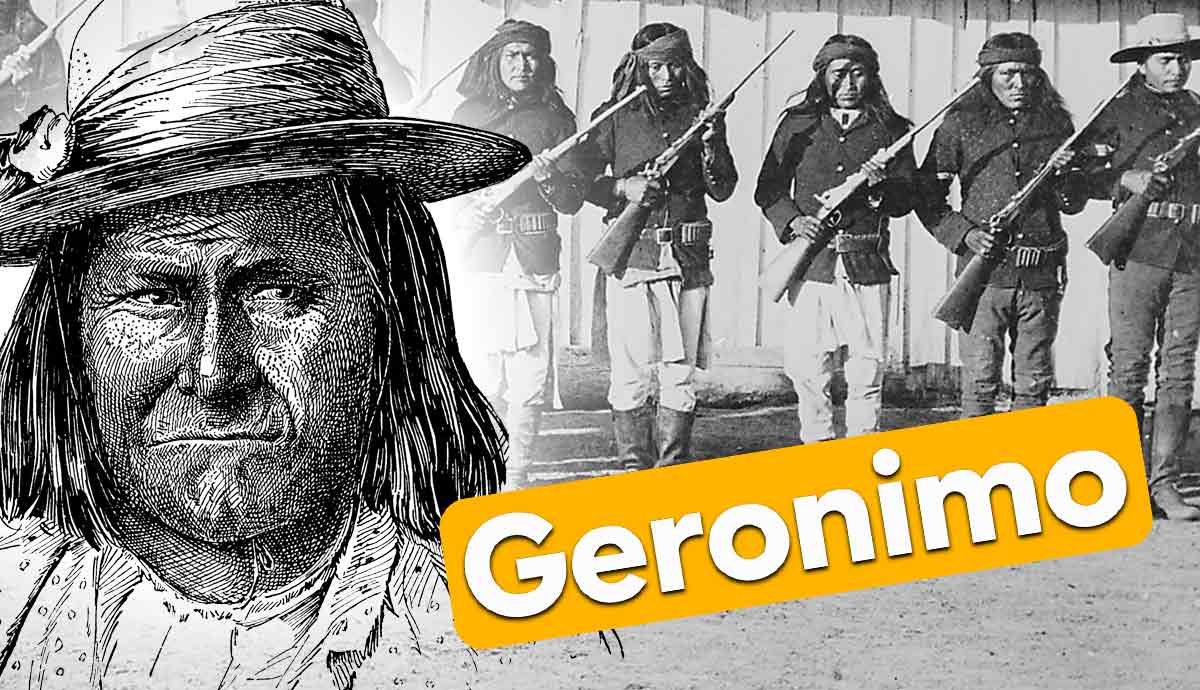
Why Do Paratroopers Yell “Geronimo”? The Link Between the Battle Cry and the Man
Favicon 
www.thecollector.com

Why Do Paratroopers Yell “Geronimo”? The Link Between the Battle Cry and the Man

  When swimmers yell “Geronimo!” as they jump off the diving board and cannonball into the pool, do they know whose memory they are conjuring? While his name may be an everyday exclamation in American English, Geronimo, the man, is less recognizable. A talented hunter and warrior, Geronimo took up arms to defend his people and their homeland against the incursion of the United States government. One of the last holdouts of the United States’ attempts to remove Native Americans, Geronimo’s fierceness and commitment to the Apache people are indelible.   Life on the Move An Apache baby, circa 1900. Source: USC Libraries Special Collections/Wikimedia Commons   Goyahkla, the child who would later be known as Geronimo, was born in June 1829. His birthplace was No-Doyohn Canyon in Mexico, which today is in Southwestern New Mexico. Goyahkla, meaning “one who yawns,” was a member of the Bedonkohe, a division of the Chiricahua Apache tribe. The Bedonkohe was a small group with many enemies, including Mexicans, Navajo people, and the Comanche tribe. Eventually, this list of enemies would include the United States government.   A big reason for these tense relationships was the fact that the nomadic tribe often raided for survival. Resources such as livestock, horses, food, ammunition, and weapons were captured as a result of this practice, which had been part of the Chiricahua culture for centuries. Goyahkla proved himself a talented hunter and fighter, and was admitted to the warriors’ council in 1846. He married at the age of 17, and he and his wife, Alope, had three children.   “No Gun Will Ever Kill You…” Geronimo, left, and another Chiricahua man named Christidi Naiche sometime in the 1880s. Both men have autographed the photo. Source: National Archives at College Park/Wikimedia Commons   In 1858, Goyahkla was on a trading trip in Janos, Mexico, with several other men. When they returned to their camp, they found that the women and children who had remained encamped had been attacked and massacred by Mexican soldiers from a nearby town. The Mexican government and people had a longstanding fractious relationship with the Apache, at times offering cash for scalps of Apache men, women, and even children.   More than 100 women and children were killed, including Goyahkla’s mother, wife, and three children. In keeping with tradition, Goyahkla burned the belongings of the deceased and went alone into the wild to grieve. While he was alone in the wilderness, Goyahkla claimed to have heard a voice that promised him, “No gun will ever kill you. I will take the bullets from the guns of the Mexicans…and I will guide your arrows.” He took this as encouragement to exact revenge on those who had taken his family and people.   Geronimo at the St. Louis Exposition, 1904. Source: Carter Museum   When he returned to his people, Goyahkla took an even stronger leadership role. Devastated over his loss, he vowed revenge, supported by a force of approximately 200 other men. Over the next decade, Goyahkla led his men on a campaign of revenge against the Mexicans. He earned his more recognizable name, Geronimo, during a pitched battle with the Mexicans. Mexican soldiers attempted to appeal to St. Jerome, or “Jeronimo” in Spanish. Their cries of “Jeronimo!” would become their slayer’s new nickname, one which he was said to accept.   A Changing Enemy Geronimo photographed in the 1880s. Source: National Archives at College Park/Wikimedia Commons   After the conclusion of the Mexican-American War and the discovery of gold in the Southwestern United States, American settlers began streaming into areas of the country that were once part of Mexico—territory that was frequented by the Chiracahua. This new presence threatened the existence of Geronimo’s people as efforts to remove Indigenous people from their homelands began to spread. Apache attacks on travelers and settlements began to ramp up as the Apaches attempted to not only continue their raiding culture but to halt incursion. Apaches and Americans escalated to taking prisoners, and a series of events known as the Apache Wars began.   Geronimo had remarried (he would have several wives over his lifetime, with sources ranging in estimates from seven to over a dozen) and fought under his father-in-law, Cochise, and legendary chief Mangas Coloradas. There were few open battles during the conflict, which lasted 24 years, but many ambushes and raids. In 1872, much to Geronomio’s disappointment, Cochise negotiated with General O.O. Howard to end the conflict. As a result, the Apache were granted reservation land in what is now Southeastern Arizona. Geronimo did not adjust well to reservation life and left frequently.   Cochise Stronghold in the Dragoon Mountains of Arizona was once a base of operations for Cochise’s forces. Source: Wikimedia Commons   After Cochise’s death in 1874, likely from stomach cancer, relations between the United States government and the Apache tribe disintegrated. The reservation was moved north, away from traditional Apache homelands, in order to allow for American settlements. Geronimo continued to leave the reservation frequently, often raiding during these absences. More and more Apache were leaving the reservation, and the Americans began to negotiate with new leaders, Juh and Taza, Cochise’s son, in an effort to return people to the reservation system.   Geronimo interfered in these discussions, pitting Juh and Taza against one another. Geronimo often spoke for Juh, a lifelong friend, due to the latter’s stutter. Juh refused to move to the new San Carlos reservation, leaving with Geronimo and two-thirds of the Chiricahua people. When Indian Agent John Clum learned Geronimo was to blame for the broken deal, he issued a call for his arrest.   A Wanted Man Geronimo in regalia at age 78. Source: Library of Congress/Wikimedia Commons   Geronimo was arrested at the Warm Springs Reservation near Winston, New Mexico. As a result, the reservation was closed, and the Warm Springs Apaches were moved to San Carlos with the other Chiricahuas. His arrest did little to stem Geronimo’s exodus from the reservation. In 1881, Geronimo struck out again with his followers. For the next five years, he eluded the US Army. Legions were sent after him, and at one point, nearly a quarter of the US Army’s troops were searching for him, in addition to numerous “Indian scouts.” Geronimo and his followers were considered the last major Indigenous force to hold out against US occupation in the West.   General George Crook was appointed to subdue Geronimo’s forces and knew he was up against a tough enemy. When asked to describe the Chiricahua, Crook said that they had “acuteness of sense, perfect physical condition, absolute knowledge of locality, almost absolute ability to persevere from danger.” He called them the “tiger of the human species.” The US Army even colluded with their old rivals, the Mexican government and the two parties gave one another permission to cross their shared border indiscriminately when in pursuit of the Chiricahua.   General George Crook, photographed by Matthew Benjamin Brady. Source: National Archives at College Park/Wikimedia Commons   Though Crook was a man of admirable military skill, he was somewhat impulsive when it came to hunting. One day, while on the trail, he ventured off, tracking an animal, and came face to face with Geronimo and his people. Though Geronimo had the perfect opportunity, he didn’t kill the general that he called “The Tan Wolf” due to his khaki wardrobe. Geronimo had realized that there was no end in sight. The US army had virtually endless resources at its disposal, and a few dozen Apache warriors would not be able to hold them off forever. Geronimo took the opportunity to start negotiations with Crook. An agreement was reached that granted the Chiricahua a reservation at Turkey Creek in Arizona.   Two women in an Apache camp in 1880. They are standing in front of the traditional Apache home, a wickiup, which can easily be packed up and moved. Source: Denver Library/Wikimedia Commons   Peace persisted for approximately a year before tensions came to a head once again. The US government attempted to assimilate the Apache, encouraging farming and outlawing many practices of Apache cultural life, such as the brewing of a traditional alcoholic beverage, tizwin. Miscommunication further contributed to these issues, as translation often required Spanish as an intermediary between Apache and English.   Geronimo decided it was time for one last run. Along with 36 followers, he left the reservation, heading to Mexico. A $25,000 bounty was placed on Geronimo, and his band of three dozen was pursued by 9,000 US soldiers, Mexican soldiers, and assorted volunteers. General Nelson Miles of the US Army proposed an idea to lure Geronimo in for surrender. He suggested banishing the remaining Chiricahua at San Carlos, who had family in Geronimo’s fleeing band, to prison in Florida. When Geronimo heard of this threat, he met with Lieutenant Charles Gatewood to negotiate a surrender.   The Warrior Falls Many reservation-confined Indigenous people performed with Buffalo Bill Cody, in addition to Geronimo. Here, Cody is photographed with Hunkpapa Lakota leader Sitting Bull in 1885. Source: Library of Congress/Wikimedia Commons   In the summer of 1886, Geronimo became the last Chiricahua to surrender to the United States. The US followed through on their threat of banishment to Florida, and Geronimo would be among those deported. The long train trip took its toll on the people, as did the poor sanitation in the disease-ridden prison. Geronimo spent time in Florida, then Alabama, as a prisoner of war. A legend among white Americans who had read of his exploits in newspapers, he spent time in Buffalo Bill Cody’s Wild West Show and rode in Theodore Roosevelt’s election parade. While there, Geronimo asked Roosevelt for his people to be returned to the Southwest. His request was denied.   Apache scouts for the US army drilling at Fort Wingate in New Mexico, undated. Source: National Archives at College Park via Wikimedia Commons   An artist who visited the imprisoned Geronimo to paint him stated that his subject showed him over fifty bullet wounds on his body, explaining, as the voice in the wild once had, that bullets would not kill him. Instead, Geronimo died in 1909. He acquired pneumonia after a drinking spree resulted in him spending the night in a ditch after falling off his horse. In 1913, after 27 years in confinement, his people were given the option to return to the Southwest, to the Mescalero Reservation. Today, there are thousands of Apache people living in the United States, the very people which Geronimo fought with vengeance and commitment in his heart to save.
Like
Comment
Share
History Traveler
History Traveler
4 w

What Caused the War of 1812? Key Factors and Triggers
Favicon 
www.thecollector.com

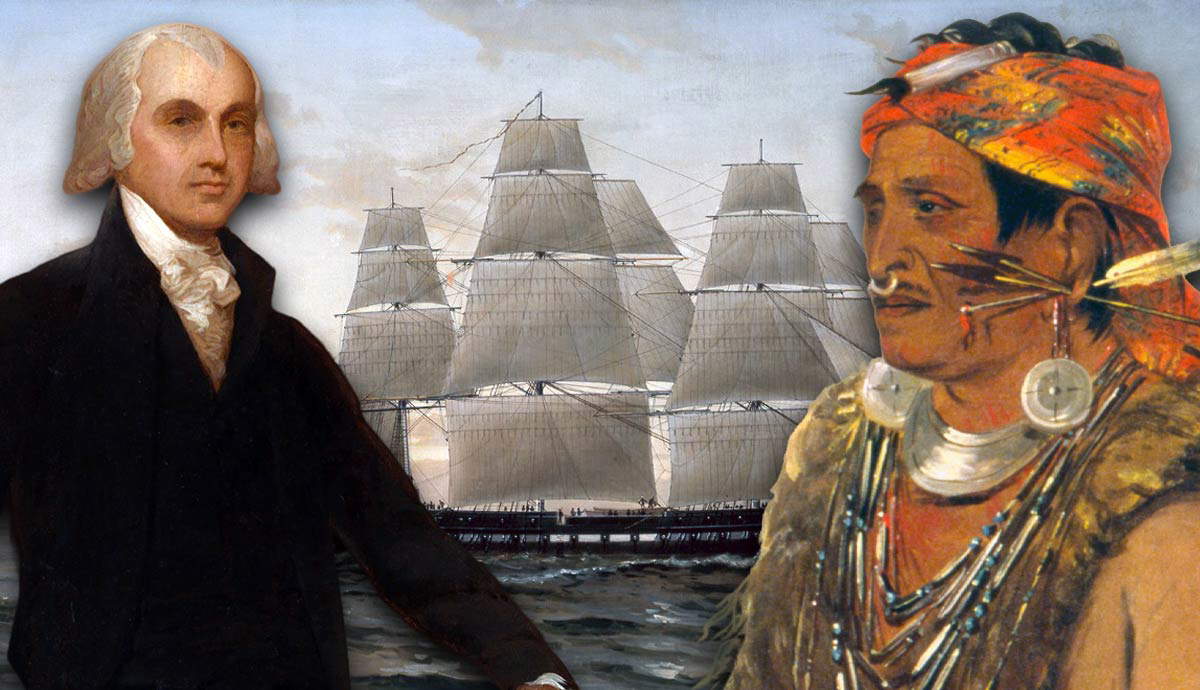
What Caused the War of 1812? Key Factors and Triggers

  Largely overlooked in modern American society, the War of 1812 is often overshadowed by the United States’ initial struggle for independence and the American Civil War, two existential conflicts that define the country’s development. The War of 1812, however, is an important milestone that set the foundation for expansion in the North American continent, allowing the United States to develop politically, militarily, and economically. While the war’s outcomes are more transparent, its causes are a complex assembly of grievances that boiled over to a climax in 1812.   British Impressment USS Chesapeake by Frank Muller, c. 1910. Source: Naval History and Heritage Command   One of the primary catalysts of the War of 1812 was the widespread British impressment of American sailors. The British navy often coerced unsuspecting individuals into service in wartime, and manpower requirements during the Napoleonic Wars led the Royal Navy to forcibly recruit American sailors by claiming that they were deserters. While the US Navy had impressed sailors during the American Revolutionary War, the British Navy’s impressment of American sailors was a major provocation to the newly independent American people. All in all, approximately 10,000 American mariners were impressed during the Napoleonic Wars.   In 1794, the Washington administration dispatched John Jay to negotiate with the British, but the resulting Jay Treaty did not address impressment and caused an outcry. Thomas Jefferson and James Madison demanded a more assertive response to the British. As president, Jefferson passed the Embargo Act of 1807, prohibiting American ships from trading in British and French ports. Although the policy was designed to enforce American neutrality and compel the British to stop impressing American seamen, the law was repealed two years later after causing significant economic damage.   Despite the downsides of impressment, sailors who escaped the practice, including future United States naval officers Charles Stewart and John Digby, often acquired advanced knowledge of British tactics and techniques, which informed the United States’ war effort.   Also, read our article mapping the key locations and battlefields that decided the War of 1812.   Trade Restrictions American superiority at the World’s Great Fair by R. H. Thomas, 1851. Source: Smithsonian Institution   At sea, British trade restrictions against the United States exacerbated hostile impressment. In 1807, England passed the Orders in Council, a sequence of decrees designed to limit global trade with France in response to Napoleon’s Continental Blockade of Britain. The legislation applied to foreign neutral ships, including the United States, by compelling international vessels to stop at British ports before exchanging goods with other European nations.   The Orders in Council significantly interrupted American markets. American ships sailing across the Atlantic were routinely found in violation, resulting in the seizure of American goods deemed contraband. President Jefferson’s Embargo Act of 1807 quickly proved more harmful to the United States than its European targets. Following the repeal of the embargo, Congress passed the 1809 Non-Intercourse Act, which enabled trade with European countries other than Britain and France. After finding the new bill difficult to enforce overseas, Macon’s Bill No. 2 reinstated trade with Britain and France under conditional terms.   Napoleon saw the latest American policy as a means to force the United States to reinstate its embargo with Britain by agreeing to stop intercepting American shipping. As Napoleon anticipated, this exacerbated tensions between the United States and Britain. The embargoes and trade restrictions were highly damaging to US economic interests, and American leaders began considering military action to defend their interests.   British Support for Native American Tribes Tenskwatawa, The Open Door, known as The Prophet, Brother of Tecumseh by George Catlin, 1830. Source: Smithsonian Institution   In the early 19th century, few alliances were as logical as that between Britain and prominent Native American tribes in the United States. Partnering with Native American groups following defeat in the American Revolutionary War gave the British an opportunity to resist American expansion without direct military involvement. For Native Americans, agreeing to alliances with Britain was a necessary means to protect their land against a mutual adversary. Prior to and during the War of 1812, Britain’s strategic alliances with Native American tribes spread from the then-Northwest United States to the Great Lakes region, encompassing Tecumseh’s Confederacy. Tecumseh and his brother, the Prophet, offered a powerful impediment to American expansion.   Early American leaders believed that victory over Britain gave the United States an inherent right to expand westwards without interference. By 1811, before the United States officially declared war on Britain, tensions between American settlers and Native Americans resulted in violent clashes. At the Battle of Tippecanoe, Governor William Henry Harrison of the Indiana Territory led American forces to inflict a crushing defeat upon Tenskwatawa’s forces. Two years later, Tecumseh was killed in the 1813 Battle of Thames, resulting in the collapse of the Native American confederation.   Territorial Disputes Print of Meriwether Lewis at the National Portrait Gallery, 1816. Source: Smithsonian Institution   Following the American Revolutionary War, Article 7 of the Treaty of Paris specifically stated that the British military was to evacuate its forces from all forts and territories in the newly independent United States “with all convenient speed.” Despite this provision, the British retained key defenses in the Northwest Territory near modern-day Michigan, Ohio, Wisconsin, Indiana, and Illinois. The British used Fort Detroit as a hub for operations with their Native American allies well after the Treaty of Paris mandated their departure.   Britain’s refusal to abandon its wartime fortifications extended into control of key American waterways. British-manned Fort Mackinac and Fort Niagara allowed them to exploit strategic positions near the Straits of Mackinac (which connects Lake Huron and Lake Michigan) and the Niagara River (which feeds into the Great Lakes). By continuing to garrison these outposts, the British not only ignored the terms of the Treaty of Paris outright, but continued to enforce prewar policies in the Northwestern territories.   Before the Revolution, King Geroge III published the Proclamation of 1763 to preserve the Appalachian Mountains for Native Americans, banning colonists from settling there. While the law became a dead letter after the founding of the United States, its lasting effects in the region complicated the United States’ expansion west. While American expansion remains controversial today, the continued British occupation of the Northwestern forts was a clear violation of the Treaty of Paris.   American Expansionism American Progress by John Gast, 1872. Source: Wikimedia Commons   Although the concept of Manifest Destiny, the inevitable and divine right of the United States to spread democracy throughout the North American continent, was not coined until 1845, American expansionism had an immediate foothold in the United States following the American Revolutionary War. Belligerent American politicians known as war hawks believed that America’s northern and southern frontiers could only be secured by armed conflict. By annexing British-held Canada and the Spanish territory of Florida, the United States could be free of foreign influence east of the Appalachian Mountains.   This plan, however, was not without strong resistance. Through Native American proxies, England aimed to create a deliberate buffer zone between the United States and British subjects in Canada. While the British strategy was intended to protect Canada, the War of 1812 began with a three-pronged American invasion of Canada.   To the west, British influence presented additional roadblocks to American ambitions of unopposed expansion. Less than a decade prior to the War of 1812, the Louisiana Purchase from France nearly doubled the physical size of the United States by adding 828,000 square miles of territory, including over a dozen current states. Under President Jefferson, the Louisiana Purchase and subsequent Lewis and Clark Expedition encouraged Americans to venture west for economic opportunity via new agricultural pastures and trade routes. This expansionism was met with British-supported Native American resistance, further escalating tensions prior to the outbreak of war.   National Honor and Post-Revolution Tensions James Madison, US President during the War of 1812. Portrait by Thomas Sully, 1809. Source: National Portrait Gallery, Smithsonian Institution   While events like Shay’s Rebellion in 1786 illustrate how the United States navigated domestic instability following independence, anti-British sentiment defined post-Revolutionary society in America. After eight years of fighting British forces with limited resources, the postwar United States was left in a fragile economic state. Popular rhetoric justifiably blamed the British for the economic damage during the war.   Alongside British-aided Native American resistance to expansionism, impressment, and territorial disputes, widespread anti-British sentiment following the American Revolutionary War fueled an era where a new America desired not only a country free of foreign influence, but also broader international recognition of American independence. Existing diplomatic approaches such as the Jay Treaty failed to address the main American complaints about British actions, fueling calls for war in the early 19th century.   The War of 1812 provided a means to gain national honor on the international stage. By defeating the British navy in several engagements, the United States gained increased overseas attention for its military prowess. Impending war also provided early American citizens with a sense of unity and identity that strengthened American nationalism following the conflict.   The War of 1812 was caused by several related factors that together encouraged American leadership to go to war with Britain despite the risks. Although the war was fought on a far smaller scale compared to the Napoleonic Wars in Europe, it was nevertheless a formative experience in the early American republic and came to be regarded as a second war of independence.
Like
Comment
Share
History Traveler
History Traveler
4 w

What Life Was Really Like in Al-Andalus During Its Golden Age
Favicon 
www.thecollector.com

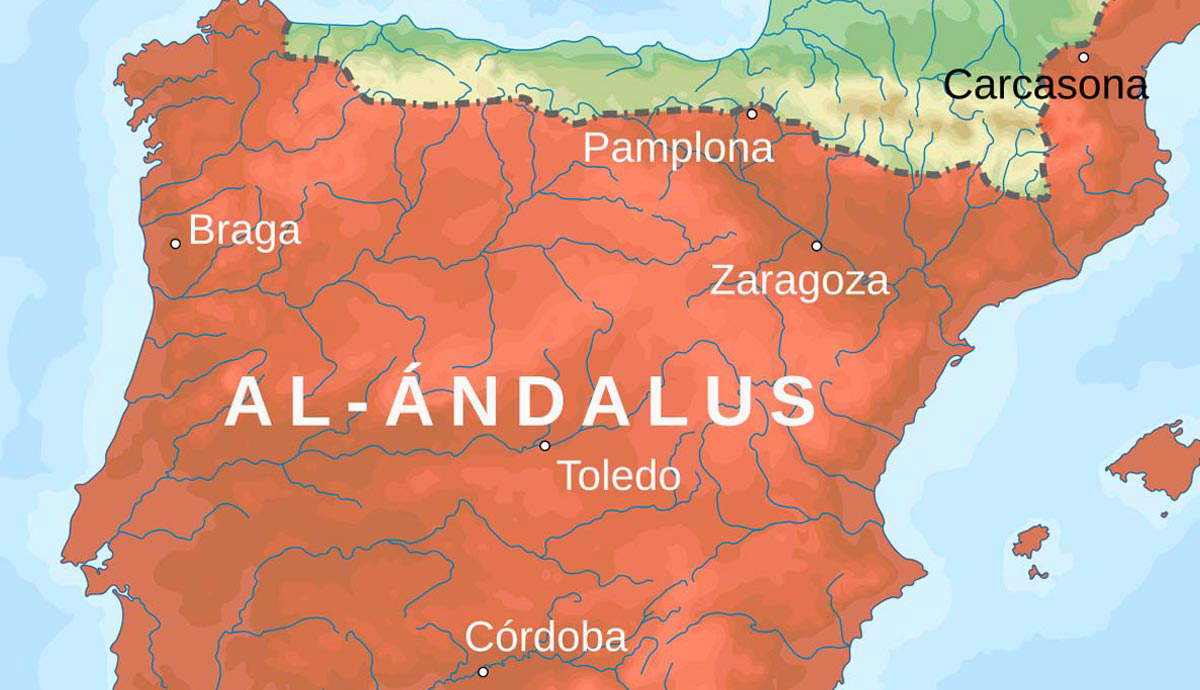
What Life Was Really Like in Al-Andalus During Its Golden Age

  From the 8th to the 15th centuries, the Moors ruled most of the Iberian Peninsula, which ended with the Christian Reconquista. While there was certainly a lot of innovation and cultural advancement, life for Al-Andalus’s inhabitants was not as utopian as has often been suggested.   What Was Al-Andalus? Painting on the ceiling of the Hall of Kings in the Alhambra Palace, Granada. Source: Wikimedia Commons   To this day, historians argue the impact Muslim rule had on the Iberian Peninsula. Some people argue that Muslim rule brought innovation, tolerance, and security to the region. Others argue that al-Andalus was riven with internal chaos, suffered under the tyranny of fundamentalist rulers, and weakened itself to the point where the Christians could conquer their territory relatively easily. These debates include references to first-person accounts of life in Moorish Iberia.   During the 750s, the Umayyad prince ʿAbd al-Raḥmān I fled Damascus after his family was overthrown by the Abbasid Caliphate. ʿAbd al-Raḥmān marched to Spain and founded the Emirate of Córdoba, conquering most of the Iberian peninsula, which was known to Muslims as al-Andalus. The emirate was later upgraded to a caliphate in 929.   The Umayyad period, which lasted between 756 and 1031, came to be known as al-Andalus’s “Golden Age”. Culture, arts, and sciences flourished there in a fashion unknown to much of continental Europe. Religious tolerance was maintained under the banner of Islamic Law. Many intellectuals wrote about their experiences there, such as Maimonides and Ibn Rushd.   However, there was a darker side to Muslim rule. By the 11th century, al-Andalus started to fragment into separate kingdoms that engaged in ruthless violence towards one another. To the north, Christian kingdoms like Aragon and Castile were on the march, seeking to restore the Iberian peninsula to Christian rule. The Almohad and Almoravid caliphates proved to be poorly administered and intolerant. By the time the Reconquista was completed, few people mourned the end of al-Andalus. For centuries after the fall of Granada in 1492, scholars have debated what to make of al-Andalus’s legacy.   Demographics of Al-Andalus The ruins of a Mozarabic Church in Ardales. Source: Council of Malaga   Throughout the period of Moorish rule in Iberia, al-Andalus had a relatively consistent social structure. Muslims, especially Arab Muslims, dominated the hierarchy, since they formed the core of ʿAbd al-Raḥmān’s invasion force. Many of the soldiers in the Umayyad armies were Berber tribesmen from North Africa, who took up administrative roles in the rural frontier areas of the kingdom. Anyone who converted to Islam, known as a Muladí, was granted certain privileges but was still considered separate from the Arabs and Berbers.   Christians in al-Andalus were known as Mozarabs. They were second-class citizens, forced to pay a tax known as a jizya. However, they were granted certain legal protections, including the right to pray and speak their native language, called Mozarabic. Jews were also granted these rights, speaking Ladino and being allowed to hold certain positions in society. At the bottom of the hierarchy were slaves of the Arabs and Berbers, often people from sub-Saharan Africa.   This system held throughout the Umayyad period but it started to collapse with the Almohad period in the 12th century. The Almohads insisted that anyone under their rule had to be a practicing Muslim and they drove out anyone who did not conform to this rule in the 1140s. The chaos in the aftermath of the fall of the Umayyads undermined the social structure of the region. Additionally, the Christian conquests took more territory, depriving al-Andalus of the manpower it needed for its armies.   Culture of Al-Andalus Photograph of the Real Alcazar in Seville, including the Moorish archways. Source: Exodus Travels   Al-Andalus reached its cultural zenith during the Umayyad period. The Umayyad rulers encouraged innovation and learning in Andalusian society. For instance, Moorish farmers experimented with new types of irrigation techniques, which expanded the region’s agricultural capacity. Additionally, the Moors brought stunning architecture to the region, such as the horseshoe arch, mosaic tilework like zellij, and the honeycomb vaults in major buildings throughout the region.   By the 11th century, al-Andalus started to fracture and this had a major impact on the region’s cultural development. The Almohad expulsions of non-Muslims devastated the region’s capacity for diversity of thought. It also led to the region becoming defined by backwardness and fundamentalism. The Christian Reconquista contributed to this phenomenon by creating a siege mentality amongst the Moors. This halted the cultural innovations initiated during the Umayyad period.   Even after the collapse of Moorish rule, some of al-Andalus’s cultural accomplishments remained in place. For instance, many of the Alcázars (Moorish castles) that the Moors constructed remained intact when the Christians took over the whole peninsula. The teachings of Maimonides and Ibn Rushd resonated with later generations of Spaniards and Portuguese people. Lastly, the innovations made in agriculture, navigation, and science helped drive the rise of the Spanish and Portuguese empires.   Myths of Moorish Society 18th-century engraving depicting Maimonides, the Jewish scholar from al-Andalus. Source: Yale University Library   Notwithstanding the major achievements of the Andalusian “Golden Age”, the idea that the population lived in a utopian society is false. The Arab conquerors created a social hierarchy, as mentioned above, that prioritized themselves at the expense of the people they conquered. Even Berbers, who made up much of the conquering armies, did not enjoy the same social status as the Arabs, though they were rewarded with plots of land for their military service.   Under the system of Dhimmitude, non-Muslims had to pay a tax called the Jizya in order to be accepted in Moorish society. This was notwithstanding the fact that Christians and Jews sought to be accepted members of Andalusian society. The Almohads ended the policy but ordered most non-Muslims to be exiled instead. While some people, like Maimonides, went to North Africa, others went to the Christian kingdoms in Europe. Throughout the entire period of Moorish rule, slavery was an institutionalized practice.   For many years, scholars of Islamic history and thought characterized al-Andalus as a haven for minorities and innovation, only to be brought down by the backward, intolerant Christian kingdoms. This view has been revised by recent scholarship. The society that existed in al-Andalus was very modernized and developed for a period, but ultimately imploded on itself centuries before the completion of the Reconquista. The contradictions in Andalusian society made the realm unsustainable over time.   Why Did Al-Andalus Fall? The Capitulation of Granada by Francisco Pradilla y Ortiz, 1888. Source: Wikimedia Commons   While the fall of al-Andalus is generally attributed to the successful conquests of Christian kingdoms such as Aragon and Castile, internal problems were also largely responsible. When the Umayyad Caliphate of Cordoba collapsed, the fragmentation of the region ensured that the Christians could acquire territory more easily. Over the centuries, Castile gradually absorbed other Christian kingdoms as al-Andalus unraveled, gaining more manpower and resources at the expense of the Moors.   In the late 12th century, the Almohads unsuccessfully attempted to stem the Christian advances. At the Battle of Las Navas de Tolosa, the Castilians broke Moorish control over central Spain. Almohad intolerance also encouraged many people to flee the region, contributing to a fall in population. The Moors struggled with the same problems that the Crusader Kingdoms in the Levant did: long distances from the metropoles, internal chaos, and poor governance.   The last Moorish kingdom in Iberia was the Emirate of Granada, which hugged the southern Spanish coast. By 1479, it faced a united Castile and Aragon, whose forces were poised to drive the Moors off the peninsula entirely. The Spaniards had modern artillery and more men while the Moors were still feuding amongst each other. In 1492, the Christians conquered Granada itself, marking the end of the Reconquista.
Like
Comment
Share
History Traveler
History Traveler
4 w

Why Ely Parker Was So Much More Than Ulysses S. Grant’s “Quiet Right Hand”
Favicon 
www.thecollector.com

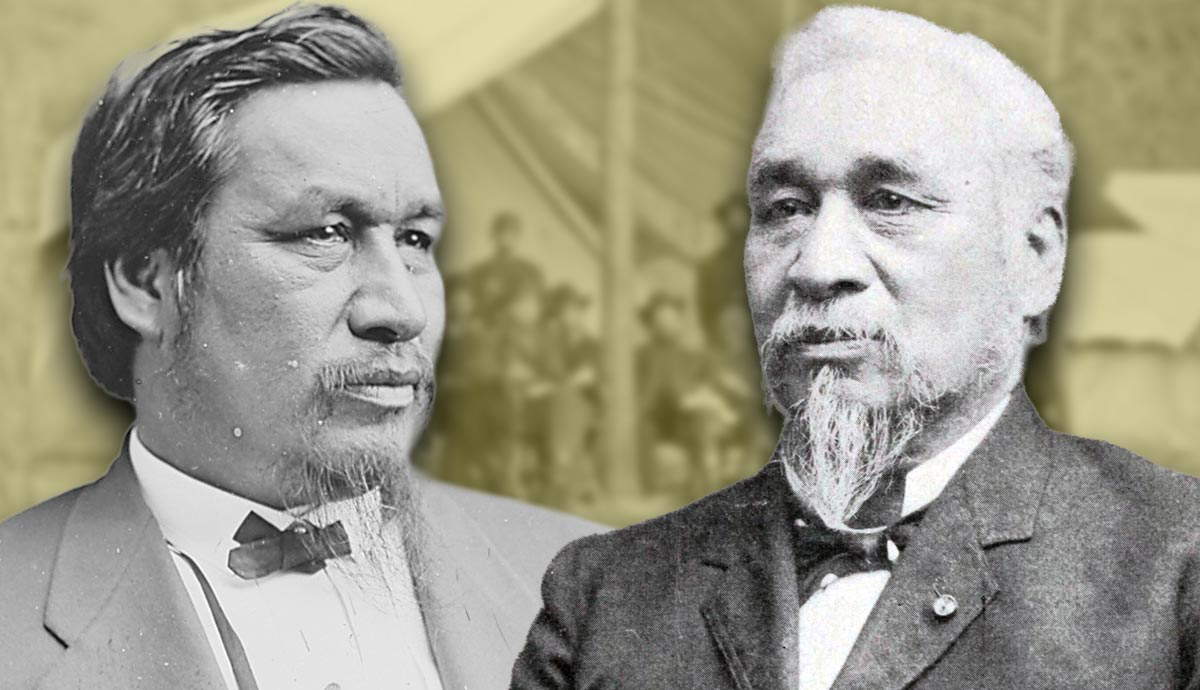
Why Ely Parker Was So Much More Than Ulysses S. Grant’s “Quiet Right Hand”

  Truly a man of two worlds, Ely S. Parker made his mark on both. As a cultural and educational leader and advocate within his tribe, the Seneca, Parker fought to promote the survival of his people’s way of life. Facing discrimination throughout his life, Parker persisted, becoming an accomplished engineer, military man, and politician. The myriad challenges he dealt with along the way didn’t seem to discourage his progress, and Parker himself had an impressive impact on many of his contemporaries and the hallmark events of 19th-century America.   Born in a Buckboard A buckboard wagon like the Parker’s. Source: Dwight Burdette/Wikimedia Commons   Ely Samuel Parker’s entrance into the world was an exciting one, taking place as his parents took a rough buckboard wagon ride back home to the Tonawanda Reservation in New York State. William and Elizabeth Parker were members of the Wolf Clan of the Seneca Nation, a culture in which their new son would be raised. Parker was born Hasanoanda in 1828 and later changed his name to Ely when he attended a mission school. Ely was the Parker’s fourth of seven children and was one of the six who survived to adulthood.   Seneca leader Kiontwogky, painted sometime in the early 19th century. Source: University of Cincinnati Libraries Digital Collection/Wikimedia Commons   The Seneca people were part of the Haudenosaunee Nation, a group of allied Indigenous tribes that lived in the New York area at the time of Parker’s birth. The Parkers decided to raise their son in Haudenosaunee traditions but also thought it important that he receive an American education to be successful in a changing world, so they sent Ely to a Baptist mission school to be educated. Ely was an excellent student and mastered the English language along with traditional Seneca. His ability to communicate in both tongues was useful and thrust him into a leadership role when he was only a teenager.   The American government threatened to remove the Seneca people to westward reservations, much like they had removed the Indigenous people in the Southeast to Oklahoma in the 1830s. To face this threat head-on, the Seneca people needed to understand treaties and propositions written in a foreign language. At just 14, Ely was appointed as a translator and scribe for Seneca leaders who were corresponding and meeting with US officials.   Lewis Henry Morgan used his influence to support Ely Parker’s education pursuits. Many members of the Parker family assisted Morgan in his ongoing studies of the Haudenosaunee people. Source: Popular Science/Wikimedia Commons   Ely’s educational experience was further expanded when anthropologist Lewis Henry Morgan sponsored his admission to Cayuga Academy, a renowned whites-only prep school. Despite facing racial harassment during his time at the school, Parker excelled and became well-known for his excellent oratory and debate skills. He continued to assist his people in protecting themselves from the US government’s efforts at encroachment and eventually had the opportunity to travel to Washington, DC, to advocate for the preservation of his people’s reservation.   Finding a Professional Path An image of 1900 Cayuga County, New York’s bench and bar. Racist policies prevented Parker from ever applying. Source: Library of Congress/Wikimedia Commons   Once he had completed his education, Parker began considering where his career path might lie. He had an interest in the law and began legal studies at the law offices of Angel and Rice in Ellicottville, New York. However, when Parker applied for the New York State Bar, he encountered a roadblock. The New York Supreme Court had ruled that only natural born or naturalized United States citizens were eligible for admission to the state bar. As a Seneca, Parker met neither of those qualifications.   With help from Morgan, he studied civil engineering at Rensselaer Polytechnic Institute and obtained a new job in 1850. He worked on the expansion of the Erie Canal, where he became more entrenched in day-to-day white society. However, he maintained his roots to his people and was named a Sachem of the Six Nations Confederacy in 1851. With his new role, Parker was given a new name: Donehogawa, meaning “Keeper of the Western Door,” due to his role as a liaison to the white world.   Parker continued this effort despite the US Congress refusing to allow his people to keep their homeland. He used his legal knowledge to help bring four lawsuits against land companies that were pursuing the Seneca lands. Two of these cases brought legal decisions in favor of the Seneca, and the Senate revised their plans. The Seneca were able to use the resources earmarked for their Kansas removal to “buy back” over seven thousand acres of the Tonawanda Reservation.   Ely Parker photographed during the Civil War era. Source: National Archives at College Park/Wikimedia Commons   Parker continued working in engineering and eventually earned a job as an engineer for the US Treasury Department. In 1857, he was in Galena, Illinois, to oversee the construction of the US Customs building. There, he met a former Army officer who was working as a clerk in a family store: Ulysses S. Grant. The two struck up a lifelong friendship.   Uncivil Treatment General Ulysses S Grant pictured in a Civil War camp with staff members, including Ely Parker, seated second from right. Source: The US National Archives/Wikimedia Commons   When the American Civil War broke out in 1861, Parker attempted to enlist in the Union Army and encouraged several other Haudenosaunee men to sign up with him. However, the men were turned away due to their race, with Secretary of State Willliam Seward stating this was “an affair between white men.” After repeatedly being turned away, in 1863, Parker finally received a commission to the United States Army.   He worked first as an army engineer, then as a military secretary for Grant, who had rejoined the army at the onset of the war. As Grant rose to the position of commander of the entirety of the Union Army, Parker accompanied him, eventually rising to the rank of lieutenant colonel.   Parker was instrumental in the surrender that took place at Appomattox Courthouse in 1865. He drafted the official copy of the terms of surrender. During the meeting in which the document was signed, Confederate General Robert E. Lee made the comment to Parker, “I am glad to see one real American here,” to which Parker responded, “We are all Americans, sir.”   A print showing those present at the Confederate surrender in Appomattox. Parker is fifth from right. Source: Historical Society of the New York Courts   After the conclusion of the war, Parker continued working with Grant in the army and served as a consultant for new “Indian policies” as the military focus shifted from the Civil War to assimilating tribes in the West. His work with the US government drew criticism among some of the Seneca people who had once seen him as their champion.   Parker’s marriage to a white woman, Minnie Sackett, in 1867 unsettled his critics in the Seneca and white worlds alike. Marriage between different races wasn’t officially legalized until the twentieth century. Ely and Minnie had one daughter, Maud.   On to Washington Ely Parker in his later years. Source: Internet Book Archives/Wikimedia Commons   When Grant took the presidency in 1869, Parker was appointed as the first Native American cabinet member when he became the first Native American Commissioner of Indian Affairs. He was heavily involved with President Grant’s “peace policy” toward Indigenous tribes. While Grant and Parker hoped to protect Indigenous interests, they found many obstacles in their way. However well-meaning these policies were, corruption within the government led to increased assimilation measures and little consideration for Indigenous culture. Despite his accomplishments in the army, Parker continued to suffer from racism in his government job. He was accused of fraud, with opponents claiming he misdirected funds that were intended for reservation use for his own personal gain. While these proved to be simple attacks from racist political enemies, they frustrated Parker’s work. He was found innocent of all charges by an 1871 Congressional committee but lost many powers within his office and decided to resign.   Minnie and Ely moved to Fairfield, Connecticut, and Parker proved himself adept in business. He built quite a fortune in the stock market, but the economic Panic of 1873 hit his finances hard. He attempted to go back to engineering but found that his skills had aged with the advent of rapidly growing technologies.   Ely eventually found a steady job as a desk clerk for the New York Police Department. He stayed busy as a devoted father and took some public speaking gigs for extra cash. His health suffered in his final years as he dealt with kidney issues, diabetes, and multiple strokes. Ely Parker passed away in his sleep on August 31, 1895. He was buried with full military honors in Connecticut but was later re-interred in New York.   A historical marker near Parker’s birthplace. Source: 777edward via Wikimedia Commons   Subjected to blatant racism despite his achievements in a variety of arenas, Ely Parker walked a troubled line between two worlds. At home in both, yet still not quite fitting in, he was viewed with both admiration and suspicion. Skilled in numerous areas, he used his abilities to help advance both his people, the Seneca, and the future of the country as a whole. Parker was a groundbreaking speaker, engineer, military man, but most of all, a leader for a young America.
Like
Comment
Share
History Traveler
History Traveler
4 w

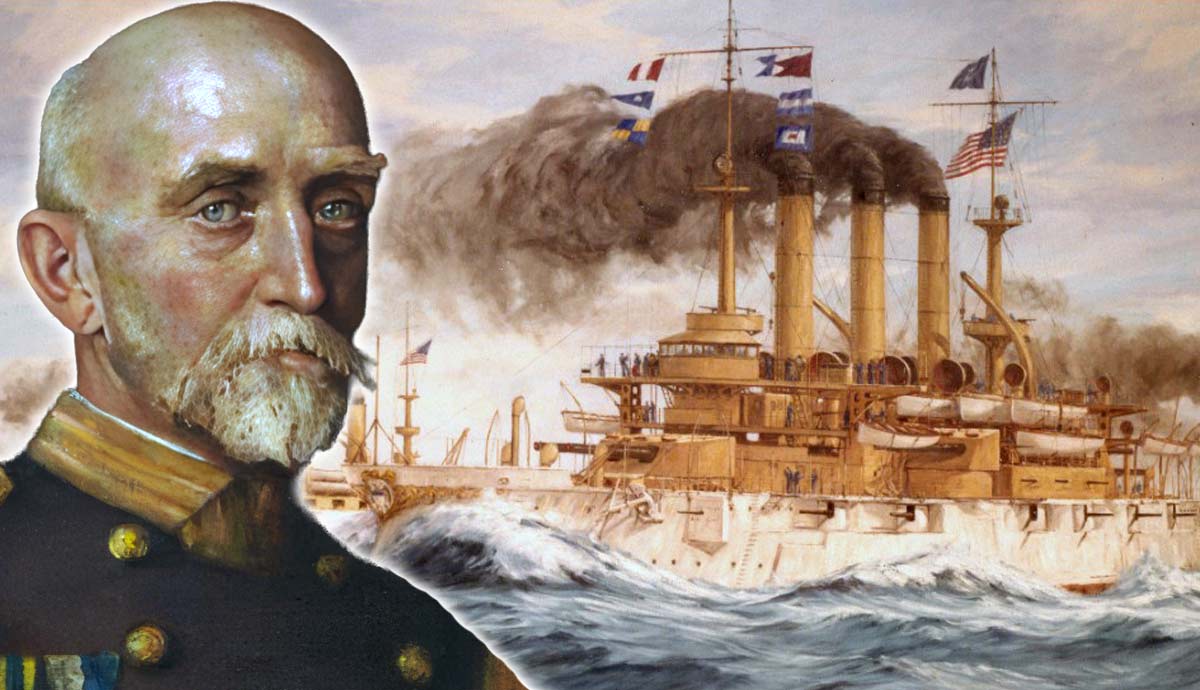
The Forgotten Admiral Alfred Thayer Mahan Who Shaped Modern Naval Warfare
Favicon 
www.thecollector.com

The Forgotten Admiral Alfred Thayer Mahan Who Shaped Modern Naval Warfare

  From 1859-1896, Alfred Thayer Mahan served in different roles in the US Navy, eventually becoming president of the Naval War College. He had limited combat experience and his record of captaining a ship was mediocre. However, his writings on the importance of sea power became renowned around the world. His advocacy of a strong navy with the ability to project force globally continues to play a major part in US strategic considerations to this day.   Early Life and Career Photograph of Alfred Thayer Mahan. Source: Wikimedia Commons   Born on September 27, 1840, Alfred Thayer Mahan was the son of a professor at West Point. He spent several years living near the campus before attending the Naval Academy at Annapolis, Maryland as an Acting Midshipman in 1856. The Academy was relatively new and senior officers had high hopes for its potential. After graduating, he became a lieutenant and was assigned duty to several surface warships on the Atlantic coast. While he had a good academic record, his sailing record proved to be poor.   When the American Civil War broke out, he served in the Union navy and was assigned duty on several ships blockading Southern ports. In November 1861, he served as executive officer aboard the corvette USS Pocahontas as it prepared to attack the Confederate stronghold at Port Royal, South Carolina. The Pocahontas was too late to join the action, and after arriving at the scene, Mahan crashed the ship into a friendly vessel. For the rest of the war, he stayed on blockade duty, a humdrum and exhausting experience for sailors that did little to improve his limited combat skills.   When the war ended, he remained in the Navy, hoping for more opportunities for promotion. In 1872, he was finally granted command of the USS Wasp, his first time captaining a vessel. He continued to captain ships as his naval career progressed, but his time in command continued to be marred by poor seamanship. He engaged in very little combat after the Civil War ended and despaired of his career prospects.   President of the Naval War College Photograph of the US Naval War College. Source: US Naval Institute   In October 1884, Rear Admiral Stephen Luce took over as the president of the newly established Naval War College in Newport, Rhode Island. The desire to expand teaching on naval matters beyond the academy influenced American policymakers. Wargaming and strategizing became a major part of the College’s curriculum. Luce admired Captain Mahan, whom he had met before taking over as president of the College. In 1886, Mahan joined the staff to lecture on naval strategy.   Being a lecturer was far more comfortable for Mahan than commanding a ship at sea. Mahan was an avid reader of history and sought to use naval history as a point of analysis when formulating his ideas. Later that year, Luce was ordered back to sea and Mahan took over as president of the College. It was in this capacity that he wrote his first and most widely-read book: The Influence of Sea Power upon History, 1660–1783. This book focused on the history of British sea power and how the Royal Navy helped turn Britain into one of the world’s most formidable empires. He complemented it with a book on French sea power and its influence on France’s empire-building project.   The Influence of Sea Power upon History noted that Britain lacked all the resources it needed to fuel its economy. Therefore, it relied on naval power to open markets. As the US economy struggled in the 1890s following the Panic of 1893, Mahan and others supported the idea of forcing open new markets abroad to stimulate the US economy.   Mahan, TR, and the Spanish-American War Rear Admiral Alfred Thayer Mahan in uniform by Alexander James, 1945. Source: Naval War College Museum   A couple of years before he wrote The Influence of Sea Power, Mahan met with Theodore Roosevelt. Roosevelt, then a member of the Civil Service Commission, was also interested in naval history. He wrote a book on the naval component of the War of 1812 against the British and had become convinced that the United States could only survive with a strong navy. Mahan made a major impression on Roosevelt and contributed to TR’s beliefs that a stronger navy was essential if the United States were to become a major player on the international stages.   In 1897, TR was made Assistant Secretary of the Navy to the McKinley Administration. While he was not a prominent cabinet member, he effectively took charge of naval policy, writing war plans with European countries, reinforcing the American fleet in the Pacific, and encouraging the White House to pursue more assertive policies. At this point, Mahan had returned to active service and served as a strategic advisor to inform how the United States would approach a potential war with Spain. The war duly broke out in 1898 after the USS Maine exploded in Havana Harbor in Cuba.   The war was most famous for the exploits of American troops in Cuba, Puerto Rico, and the Philippines. However, it was the Navy that made these victories possible. Right before he resigned, Roosevelt ordered Commodore George Dewey’s Asiatic Fleet to attack the Spanish at anchor in Manila harbor. The battle was a resounding American victory. Subsequently, they destroyed the Spanish fleet in Cuba and assisted in the landing of American troops on the archipelago.   Mahan and the Evolution of the US Navy The Great White Fleet. Painting by John Charles Roach, 1984. Source: US Naval History and Heritage Command   During Mahan’s time at sea and at the Naval War College, the US Navy underwent a major transformation as a fighting force. Throughout American history, the Navy was a small but professional force. While it was capable of protecting America’s coastline, it was too small to project force abroad like the British Royal Navy. During the American Civil War, the fleet increased in size in order to blockade the South as part of General Winfield Scott’s Anaconda Plan. After the war, it retained many of its ships but scrapped others due to budget cuts.   In the 1870s, the Navy faced a major crisis with the economic downturn after the Panic of 1873 and increased tensions with Europe. During the early 1880s, President Chester Arthur decided that the Navy needed a major refurbishment. By the time the US went to war with Spain, the Navy had 160 vessels active, making it one of the largest navies in the world at the time. Its performance in battle demonstrated that the naval rearmament program was a success.   Although Mahan had retired from active service in 1896, he continued to follow naval affairs with interest. He continued his correspondence with TR, who became president after McKinley’s assassination in 1901. In 1907, Roosevelt ordered the US Navy to send a squadron of 16 battleships around the world for 14 months, exemplifying his Big Stick Policy. The Great White Fleet was Mahan’s dream: America showing force with its fleet.   Mahan’s International Influence Admiral Tōgō Heihachirō, the victor of Tsushima and an admirer of Mahan’s writings, 1920. Source: ThoughtCo   Mahan’s theories did not just impact American policymaking; it reverberated around the world. Observers in Germany and Japan were particularly influenced by his writing. Japanese maritime thinkers of the time, such as Akiyama Saneyuki, Satō Tetsutarō and Katō Kanji, were profoundly influenced by Mahan and used his conceptions to further the growth of the Imperial Japanese Navy and forge government policy. Tokyo modeled its navy on the British, who had influenced Mahan’s thinking.   When Japan went to war with Russia in 1904, one of its priorities was destroying the Russian navy. In February 1904, the Japanese Navy launched a surprise attack against the Russian Pacific Fleet at anchor in Port Arthur. In late 1904, Tsar Nicholas II dispatched his Baltic Fleet around the world to relieve the blockaded fleet. Port Arthur fell in December 1904, and in May 1905 the Japanese Navy devastated the rest of the Russian Navy at Tsushima. This battle was fought exactly in line with Mahan’s theory of destroying the enemy fleet and its ports. Japan’s naval commander, Admiral Tōgō Heihachirō, credited Mahan with his strategy. Over three decades later, Admiral Yamamoto Isoroku was also inspired by Mahan’s strategic ideas when planning the Pearl Harbor attack.   Germany also admired Mahan’s theories. Mahan predicted that Germany would grow its strength on land and at sea. Admiral Alfred Tirpitz was ordered by Kaiser Wilhelm II to create a major fleet. He followed Mahanian principles and prepared German war plans for a decisive battle against the British or French. The naval arms race that began in the late 1890s increased international tensions in the lead-up to the First World War. However, the tactically inconclusive Battle of Jutland in 1916 enabled the Royal Navy to maintain control of the North Sea.   The Legacy of Mahan’s Work in America US Pacific Fleet an anchor in Tokyo Bay during the Japanese surrender, 1945. Source: US Naval History and Heritage Command   On December 2, 1914, Mahan died of heart disease at the US Naval Hospital. He believed that America’s involvement in WWI was inevitable and was concerned that America’s foes were gaining an advantage over the United States at sea. After his retirement from active service, he was promoted to rear admiral and worked with the Department of Historical Research at the Carnegie Institution. The respect he gained for his promotion of American naval power lasted long beyond his death.   Throughout the rest of the 20th century, the US Navy grew in size and acquired new capabilities. It prioritized a doctrine of overwhelming strength and a link of overseas bases, such as Hawaii, that could ensure its ability to operate anywhere around the globe. During WWI, the Navy had 2,000 ocean-going vessels of all types and 600,000 sailors available on its rosters. While this number decreased during the interwar period, the Navy still remained one of the most potent branches of the American military.   America’s navy would become a goliath during the Second World War in line with Mahanian principles and the Olympian ambitions of Admiral Ernest King. By 1945, 6,768 ships were in active service and 3.4 million sailors were on the rolls. This was the largest fleet in history and it also marked the first time that the US Navy became the dominant naval power at sea. The US Navy continues to operate a major fleet with some of the most advanced warships in history. While Mahan never saw this growth, he predicted America’s naval future to the letter.
Like
Comment
Share
History Traveler
History Traveler
4 w

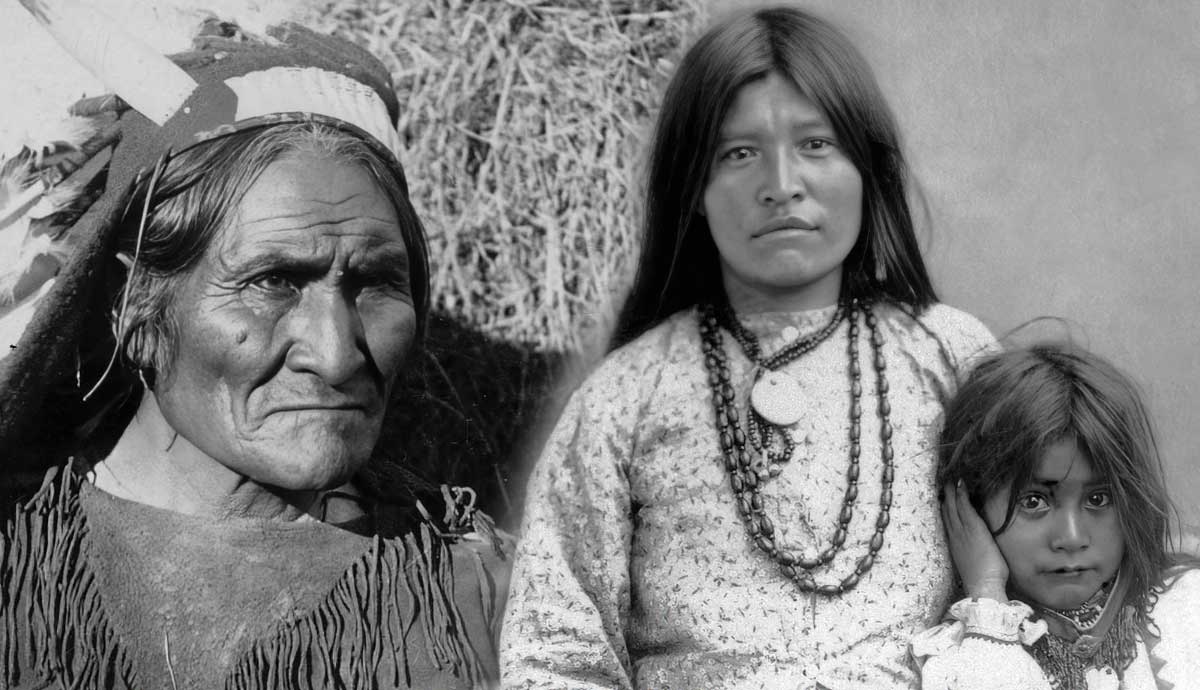
7 Facts About Geronimo, the Apache Who Became a Symbol of Indigenous Resistance
Favicon 
www.thecollector.com

7 Facts About Geronimo, the Apache Who Became a Symbol of Indigenous Resistance

  From early life as a fearless raider and warrior to the final decades spent as a prisoner of war, Geronimo was a defender of his people throughout his days. He became a symbol of Indigenous resistance not only against the United States government but Mexican forces as well. His fearless fighting style was what he was known for, but his personal story reveals that there was much more to the man behind the reputation.   1. Geronimo Was a Nickname A historical marker in the town of Geronimo, Arizona. Source: Marine 69-71 via Wikimedia Commons   A member of the Bedonkohe band of the Chiricahua Apache tribe, Geronimo was actually given the birth name Goyahkla, meaning “One Who Yawns.” He claimed to have been born in June 1829, though an exact date was lost to recorded history. He did not earn his most famous moniker until later in life. While fighting the Mexicans in a series of raids and attacks throughout the late 1850s into the 1860s, Goyahkla earned a reputation as a fearless, vicious warrior who took no prisoners.   The Mexican soldiers called upon St. Jerome for protection in their frantic fighting. The Spanish version of Jerome—Geronimo—became associated with Goyahkla and would become his designation in the Mexican and American realms. He was said to have accepted the name.   2. He Was Driven by Vengeance Geronimo, later in his life, in confinement at Fort Sill in Oklahoma. Source: National Archives at College Park/Wikimedia Commons   Geronimo is still well-known centuries later for his dedication to his people. However, many don’t realize that his fighting spirit was originally driven by revenge. In 1858, he was on a trading trip to the Mexican town of Janos. The women and children of the band stayed behind in the nomadic group’s encampment while the majority of the men visited the town to procure supplies. When the traders returned, they were horrified to find that Mexican troops had come to the camp, stolen ponies, destroyed supplies, killed the guards, and massacred dozens of women and children. Among the dead were Geronimo’s mother, his wife Alope, and their three children. His entire immediate family was wiped out, and Geronimo was devastated. He later wrote “I had no purpose.”   Geronimo later took other wives, including Ta-ayz-slath (Early Morning), pictured here with their son, 1884-1885. Source: Denver Library/Wikimedia Commons   After a great deal of reflection, fasting, and grieving, Geronimo once again found a purpose, and this time, his goal was revenge. He vowed retaliation upon the Mexican army and anyone associated with them. Geronimo received permission from his chief, Mangas Coloradas, to gather support from his band’s warriors as well as other Apache bands, the Nedni and Chokonen. Over the next several years, Geronimo and his fellow warriors would wage attacks on the Mexican people. The leader later recalled, “In all the battle I thought of my murdered mother, wife, and babies…and I fought with fury.” He wore his hair short for the remainder of his life, a sign of mourning among many Indigenous groups.   3. He Wrote an Autobiography Geronimo photographed with two nieces in Oklahoma. Source: Library of Congress/Wikimedia Commons   In his later years, when he was living as a prisoner of war, Geronimo wrote an autobiography. The manuscript was transcribed and edited by Steven Melvil Barrett, who was a colonel in the US Army, superintendent of Oklahoma schools, and notable author. Geronimo’s Story of His Life was published in 1906 and provides a first-person account of his days. The book includes details such as the Apache creation story, his childhood, and his retelling of the numerous conflicts he was involved in against other tribes, Mexico, and the United States.   The autobiography Geronimo’s Story of His Life was dedicated to President Theodore Roosevelt. Source: Library of Congress/Wikimedia Commons   Geronimo dedicated his book to President Theodore Roosevelt, with the words, “I am thankful that the President of the United States has given me permission to tell my story. I hope that he and those in authority under him will read my story and judge whether my people have been rightly treated.” Roosevelt and Geronimo had a tense relationship. Though the Apache leader had ridden in Roosevelt’s inaugural parade along with several other Indigenous chiefs, the president had declined his request that the government consider allowing the Chiricuaha to return to their homelands. The meeting, which was documented in the New York Tribune, quoted Roosevelt as saying, “We must wait a while before we can think of sending you back to Arizona.”   4. Almost a Quarter of the US Army Hunted Him Geronimo, dressed in a full headdress and photographed with a revolver at Fort Sill, Oklahoma in the 1890s. Source: Heritage Auctions/Wikimedia Commons   As the 19th century progressed and the US idea of Manifest Destiny continued to spread, Geronimo and his people faced off with the US army in an effort to retain their freedom and homelands. The Apache fought the US in one of the longest conflicts between an Indigenous group and the US government, lasting 24 years from the mid-1800s onwards.   In 1874, the Chiricahua Apache community was moved to a reservation in San Carlos, Arizona. Geronimo would leave reservation life with various groups of followers on many occasions. He was arrested multiple times but was undeterred. In 1886, Geronimo escaped custody again, leading a small group of fewer than forty followers. Five thousand US soldiers, approximately a quarter of the entire army at the time, were sent after the small group, accompanied by 500 Indigenous auxiliary fighters. Mexico also deployed three thousand soldiers and several hundred volunteers, and a $25,000 bounty was placed on Geronimo’s head. Geronimo eventually surrendered at the end of the summer when army officials threatened to send the remaining reservation Chiricahua to a Florida prison.   5. He Attended the 1904 World’s Fair The World’s Fair took place in St. Louis, Missouri in 1904. Source: Missouri History Museum/Wikimedia Commons   Geronimo attended the World’s Fair, formally known as the Louisiana Purchase Exposition, in St. Louis, Missouri, with permission from President Theodore Roosevelt. Branded “The Apache Terror,” Geronimo was featured alongside other Indigenous celebrities such as Chief Joseph of the Nez Perce and Quanah Parker of the Comanche. The men were part of the “human zoo” at the exposition. Geronimo spent his summer signing autographs for white attendees and participating in reenactments.   6. He Spent Over 20 Years as a POW An undated bird’s eye view drawing of Fort Sill, Oklahoma. Source: Library of Congress/Wikimedia Commons   While his early life was spent constantly on the move, his later years were spent in confinement. After his formal surrender to US General George Crook in the summer of 1886, Geronimo was arrested and held as a prisoner of war. He spent over two decades as a prisoner of the United States, being held at prisons in Florida and Alabama, before spending the last 14 years of his life at Fort Sill, Oklahoma.   In his first prison residence at Fort Marion in Florida, Geronimo was held with 501 other Apache prisoners who had been transported by train from the Southwest. The prison was designed to hold only 150 prisoners. After a brief period in Alabama after Fort Marion, the Apache prisoners were transferred to Fort Sill in 1894. They were the last Indigenous group to be transferred to Oklahoma’s “Indian Territory” after relocation efforts began in 1830. Geronimo died in February 1909 from pneumonia. On his deathbed, he stated, “I should never have surrendered.”   7. The US Military Used Geronimo as a Code Name Geronimo looks down at a pistol in this photo taken in Oklahoma by William Edward Irwin. Source: Oklahoma Historical Society   Geronimo’s legacy has been preserved in history books, photographs, novels, and in people yelling, “Geronimo!” when they take literal leaps of faith. However, his memory has been preserved by his former enemy, the United States military, in another way. “Geronimo” was the code name used for the operation to kill al-Qaeda leader Osama bin Laden, the mastermind behind the 9/11 attacks. When Bin Laden was located and killed in 2011, the first message reporting the death to President Obama read “Geronimo-E KIA” (Enemy Killed in Action). Two teams of Navy SEALS participated in the successful operation, which was formally known as Operation Neptune Spear.   Navy Seals made up the forces that apprehended and killed Osama bin Laden, in an operation known as codename “Geronimo.” Source: United States Navy/Wikimedia Commons   There was some controversy over the use of Geronimo’s name in this context. Some believed the designation referred to Bin Laden himself and found it offensive that Geronomio would be compared to a terrorist. Some, including Geronimo’s great-grandson Harlyn Geronimo, a US military veteran, called for an apology from the White House. None was ever extended.
Like
Comment
Share
History Traveler
History Traveler
4 w

Why Have So Many Self-Coups Occurred in Latin America? The Troubling History of Autogolpe
Favicon 
www.thecollector.com

Why Have So Many Self-Coups Occurred in Latin America? The Troubling History of Autogolpe

  Autogolpes, or self-coups, occur when a leader who came to power legitimately overthrows themselves as president in favor of an illegitimate but all-powerful leadership position unburdened by his country’s legislature or judiciary. While the best-known autogolpe in the Latin American region occurred in Peru in 1992, successful and attempted self-coups have plagued the region since independence. Is Latin America especially susceptible to autogolpes, and if so, why?   Latin America: Birthplace of the Autogolpe? 19th-century portrait of Porfirio Diaz, a typical caudillo who ruled Mexico for 35 years. Source: Library of Congress   While various forms of government overthrow have abounded around the globe, the autogolpe, the name itself born in the region, seems to be especially prevalent in Latin America. The key to this phenomenon may lie in how independent governance evolved in the wake of colonization and the rise of caudillismo.   In the power vacuum left behind after Spain’s withdrawal from the continent, former military leaders often took charge, having gained influential wealth and power from the lands they were granted in reward for their service. In this period of instability, people looked to strong rulers who could protect them. These caudillos, steeped in military traditions of unquestioned authority and strict adherence to orders, led the only way they knew how: with an iron fist. Caudillos might pursue policies that were progressive or conservative, but their governance style was authoritarian.   While caudillismo ultimately fell out of favor with the global push toward participatory democracy, it had left its mark: a practice, both among politicians and the populace, of obedience to a single, strong-willed leader. This tradition was necessarily at odds with the multi-pronged structure of democratic governance, as well as the development of institutions to hold the government accountable. As a result, democracy was slow to take hold in Latin America, undermined by military coups, authoritarian power grabs, and outright dictatorship throughout the late 19th and 20th centuries.   It is perhaps no surprise, then, that when democracy did get a foothold, elected leaders struggled to function under a system designed to impede unilateral rule. While they believed in democracy enough to get themselves elected, such a belief often did not extend to their actual time in office. From here, then, the autogolpe is born.   Self-Coups Without a Name: Early Autogolpes Portrait of Antonio Lopez de Santa Anna, who served as president of Mexico multiple times. Source: San Jacinto Museum   The term “autogolpe” did not enter the political discourse until, arguably, the late 20th century, and the majority of government overthrows in Latin America prior to that were orchestrated by the military, sometimes with the help of the CIA. Still, there are several historical events for which the term could be applied in retrospect. Mexico’s famous Santa Anna, for example, pursued a number of autogolpe-like tactics during his numerous presidencies, including the dissolution of congress in 1834 and repeal of the constitution in 1835. However, given that representative governments had arguably not been fully consolidated in these countries, these power grabs were often seen as missteps along the path to fully implementing democracy, rather than coups.   One successful autogolpe took place in Brazil in 1937, when the democratically elected  Getúlio Vargas moved to install himself as a dictator. Though his rule, begun in 1930, had already been marked by authoritarian moves like suspending civil rights and declaring successive “states of emergency” that gave the government outsized policing powers, it finally came to a head when he “convinced” congress to sign a new constitution. With that done, the upcoming presidential elections were cancelled, opposition candidates arrested, political parties banned, and the media censored. For the next eight years, the country was largely ruled by decree until the military deposed Vargas in 1945.   Official portrait of Getúlio Vargas, president turned dictator of Brazil. Source: Government of Brazil   Uruguay also faced not one but two events that could be termed self-coups, the first in 1933. Gabriel Terra had been elected in 1931 and faced a spiraling economic situation. He proposed reforming the constitution and dissolving the agency that set economic and social policies. Deciding that these reforms weren’t coming to fruition quickly enough, Terra dissolved the general assembly and began ruling by decree, censoring the press and silencing the opposition. Although a new constitution was ultimately adopted and a constituent assembly elected, Terra won an illegal second term and continued in power until 1938.   Again in 1973, the democratically elected candidate, Juan María Bordaberry, already employing a variety of authoritarian tactics, including the suspension of civil liberties and imprisonment of opposition candidates, moved to rule as a dictator. After just one year in office, Bordaberry dissolved congress and suspended the constitution. Awarding extraordinary powers to the country’s police and military, he ruled by decree, advised only by his security council, until he was forced to resign.   Despite these earlier examples, it was ultimately the dramatic government overthrow orchestrated by Peru’s president Alberto Fujimori in 1992 that brought widespread recognition to the term autogolpe.   Fujimorazo: The Quintessential Self-Coup “A president like you,” Alberto Fujimori campaign poster, 1990. Source: University of New Mexico   The quintessential self-coup, the one that cemented the word autogolpe in the lexicon of history, was Fujimori’s overthrow of his own legitimate government in Peru. Elected two years earlier in a country plagued by terrorist attacks from the Sendero Luminoso (Shining Path) guerrilla movement, Fujimori struggled to move his agenda through the country’s legislature, where his party was in the minority. In particular, opposition parties resisted the adoption of economic austerity measures being pushed by financial institutions such as the IMF and the World Bank.   On April 5, 1992, Fujimori suspended the country’s constitution, dissolved the legislature, dismissed senior judges, and placed prominent opposition officials under house arrest. Former president Alan Garcia barely escaped arrest and sought asylum in Colombia. Fujimori quickly adopted Decree Law 25418, giving himself all legislative powers and overriding the country’s constitution.   Soldiers patrol the streets in Lima following Peru’s 1992 autogolpe. Source: El Comercio   Often overlooked in recounting the autogolpe, the country’s military had, years earlier, drawn up plans for a “traditional” military coup, the so-called Plan Verde, which Fujimori adopted to launch his self-coup. It then comes as no surprise that all branches of the military promptly signed a communiqué supporting Fujimori’s new Government of Emergency and National Reconstruction—it was their own plan all along. The military took control of the nation’s media outlets and occupied government buildings, tear-gassing a group of politicians attempting to hold a session after Fujimori’s announcement disbanding the legislature.   International response to the self-coup was underwhelming. Although the general opinion was against Fujimori’s illegal moves, Peru was not suspended from the Organization of American States for violating the Inter-American Democratic Charter. Within two weeks, the US formally recognized Fujimori as Peru’s legitimate president. Domestically, Peru’s politicians and journalists rejected the autogolpe, but the Peruvian people, though perhaps limited in their understanding of events by media blackout, largely supported Fujimori. In fact, they would go on to re-elect him in 1995 in what were broadly considered free and fair elections. The Fujimorazo was a success.   Guatemala 1993: The Failed Copycat Autogolpe Guatemala’s leaders meet to reject the “Serranazo,” President Jorge Serrano’s attempt to stage a self-coup. Source: Prensa Libre   In 1993, the beleaguered president of Guatemala, Jorge Serrano Elías, who had apparently watched Fujimori’s autogolpe with great interest, attempted a similar power grab. Just two years earlier, Serrano’s accession to the presidency had marked the first peaceful and democratic transfer of power from an incumbent to the opposition in 40 years, a promising start. Yet, with the country amid a prolonged civil war and his party holding just 18 seats in the legislature, he was primed for a difficult term.   During his first two years, the country saw modest economic growth, and Serrano was able to reestablish civilian control over the military. Yet, he failed to sufficiently address the issue of human rights abuses by the military and right-wing paramilitaries and made little progress in securing peace with the leftist rebels, both key campaign promises.   Despite his party’s success in the 1993 mayoral elections, Serrano remained relatively weak politically, so his next step has long puzzled political scholars. On May 25, 1993, Serrano suspended the country’s constitution and closed congress, as well as the Supreme Court and the Constitutional Court. Like Fujimori, Serrano proclaimed himself a champion of democracy, implementing these measures in order to root out the corruption in the very institutions of governance that were preventing democracy from thriving.   Unlike Fujimori, Serrano gravely overestimated his popularity and support, particularly with the military, which had been so key in Fujimori’s takeover. Widespread opposition to his maneuvers quickly coalesced among civil society, including key players like the press and the Catholic Church, international organizations condemned his takeover, and foreign governments imposed sanctions. By June 1, Serrano had resigned and fled the country. Democracy, though temporarily thrown into chaos, prevailed.   Autogolpes in the 21st Century Nicolas Maduro assuming the presidency of Venezuela, April 19, 2013, photographed by Xavier Granja Cedeño. Source: Chancellery of Ecuador via Flickr   Despite the widespread consolidation of democracy throughout the Western Hemisphere, autogolpes have continued into the modern era, though they have evolved over time. Rather than outright disbanding the co-institutions of government, today’s self-coup often involves illegally co-opting the legislature and judiciary, undermining and ultimately rendering impotent the other branches of government, or simply ignoring them and daring anyone to stop them. There have been quite a number over the last two decades, including another attempted self-coup in Peru in 2022.   With Hugo Chavez’s death in 2013, Nicolas Maduro, then-vice president, took over Venezuela’s presidency. Venezuela was arguably already in dictatorship territory prior to Chavez’s passing, but the vestiges of democracy remained. Even those quickly fell apart. After the opposition won control of the National Assembly in 2015, Maduro quickly moved to fill the country’s Supreme Court with allies during “lame duck” assembly sessions and oversaw the removal of opposition candidates from the new legislature due to supposed electoral irregularities, ending the opposition’s supermajority.   The packed court, cancelling a recall referendum, awarded Maduro more and more authority, until he ultimately ordered it to take over the assembly’s legislative powers in 2017. After elections, widely regarded both at home and abroad as rigged, produced a Constituent Assembly favorable to Maduro, he declared the 2015 assembly dissolved. He remains in power today.   Nayib Bukele is inaugurated for a second term, June 1, 2024, photographed by Eduardo Santillán Trujillo. Source: Government of Ecuador via Flickr   El Salvador’s Nayib Bukele has often referred to himself as the “world’s coolest dictator,” and the dictator part, at least, is not hyperbole. Elected in 2019, his party initially didn’t have enough legislative representation to push his agenda. His response, on one occasion, was to send soldiers into the legislative assembly to intimidate it into approving a loan request. After his party won the majority of seats in 2021, Bukele moved swiftly to ensure his ongoing authority. The five judges on the country’s Constitutional Court were removed, along with the attorney general, and new, Bukele-friendly judges took over. By 2022, Bukele had invoked the country’s infamous “state of exception,” suspending civil liberties like due process and jailing tens of thousands of “gang members” in order to bring order to a country plagued by violence. Despite a constitutional ban on consecutive terms, Bukele was inaugurated for a second time in 2024.   One unifying element of 21st-century autogolpes is that they are commonly referred to as “constitutional crises” until their success or failure is determined. These two examples of modern self-coups were without a doubt successes, but a number of constitutional crises elsewhere present additional threats to the supremacy of democracy over autocracy in the hemisphere.

Like
Comment
Share
History Traveler
History Traveler
4 w

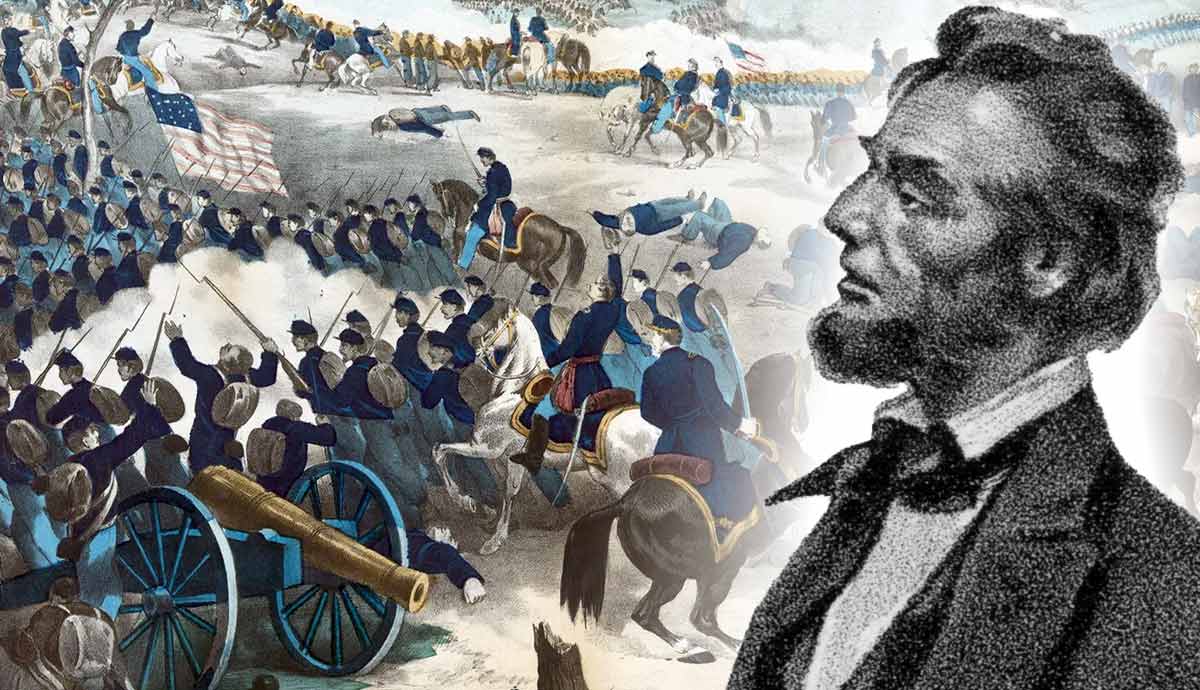
When Lincoln Delivered the Gettysburg Address, and Why That Day Changed America
Favicon 
www.thecollector.com

When Lincoln Delivered the Gettysburg Address, and Why That Day Changed America

  The Gettysburg Address stands out as one of the most iconic speeches, if not moments, in US history. At a critical point in the country’s history, Abraham Lincoln managed to summarize the principles on which the United States was founded in a dedication that has echoed through the ages. Surprisingly, though, Lincoln’s speech did not find much traction at the time, and it was only in the subsequent century that it began to gain prominence. Nevertheless, the events surrounding the Gettysburg Address deserve further exploration.   The Background: When Was the Gettysburg Address? An artist’s rendition of the Battle of Gettysburg. Source: American Battlefield Trust   The Gettysburg Address was delivered in 1863, a few months after the titanic Battle of Gettysburg. Commonly regarded as the most pivotal battle in the American Civil War, it saw Union forces halt Confederate advances northwards. The Union victory in the fight began to turn the tide of the war, ultimately leading to the surrender of the Confederacy at Appomattox. One of the bloodiest days in US history, Gettysburg saw over 50,000 casualties.   Months after the battle, a ceremony was planned to consecrate the new National Cemetery at Gettysburg. The site of the cemetery was purchased by the government of Pennsylvania on the location of the original battlefield. Planned for November 19, 1863, the event was expected to draw a crowd of around 15,000, a slew of reporters, and six state governors.   Only invited a few weeks beforehand, Abraham Lincoln was in a poor state of health in the days leading up to the address he would give. Suffering from what would eventually be diagnosed as smallpox, the president felt dizzy throughout the day. He was unable to talk to a crowd that had gathered outside his room the night before, and his aides were unsure if he would be able to deliver the speech.   A map of the Union and the Confederacy. Source: National Geographic   The day was planned as mostly a mix of music by various bands and choirs, as well as prayers led by religious leaders. Lincoln’s speech was not the major event of the day, however. That was an oration led by Edward Everett. Everett was a former senator and secretary of state from Massachusetts who had worked diligently to keep the Union together during its time of crisis. Regarded as one of the best speakers in the country, Everett planned to recount the battle and lay out the future of the United States.   In a two-hour address (which was typical for the time), Everett totaled 13,000 words without any notes to draw from. His address mentioned a variety of conflicts throughout history, primarily from the English Civil War, as well as from other civil wars in Europe. The Battle of Gettysburg was also described in vivid, meticulous detail. After Everett had finished, there was a short hymn before it was time for Abraham Lincoln to take to the podium.   The Gettysburg Address: Facts & Debates Photo of President Abraham Lincoln by Alexander Gardner. Source: Library of Congress   Like Everett’s speech, Lincoln’s Gettysburg Address also drew from historical sources and biblical references. This time, he went even further back. Scholars have compared Lincoln’s speech to Pericles’ Oration (recorded by Thucydides) during the Peloponnesian War.   Indeed, the Gettysburg Address follows a similar path to Pericles. It acknowledges the events leading up to the speech, emphasizes the democracy being fought for, reaffirms the need to honor the sacrifice of those who died in battle, and then commits to continuing the fight. “This nation,” declared the US president, “under God, shall have a new birth of freedom.”   Then, Lincoln concluded the speech with potentially the most famous quote in any American speech, asserting that “a government of the people, by the people, for the people, shall not perish from the earth.”   An image showing US President Abraham Lincoln giving his now-famous Gettysburg Address months after the battle. Source: The National Geographic Society   There is a dispute amongst historians as to what Lincoln said exactly. Five copies of the speech were given out, each slightly differing from the others. Two were given to Lincoln’s secretaries around the day of the speech, and three were sent afterwards to those who requested them.   The biggest debate centers on whether Lincoln used the words “Under God,” indicating a direct religious influence behind his speech, or, conversely, he sought to maintain the separation between church and state. The two early copies of the speech do not include them, yet they do appear in the later versions. Reporters at the event confirmed that he did, in fact, pronounce those words, yet the debate still remains.   The Lincoln Memorial in Washington DC. Source: pxhere.com   What has emerged as the most popular version of the address is the Bliss copy (each version is named after the person who received it). Alexander Bliss was a colonel in the Union Army who wanted to add the speech to a collection aimed at raising money for veterans. The Bliss copy is the only one that Lincoln himself signed. We will not know for certain exactly what Lincoln said at Gettysburg, but the following is a rough consensus amongst modern-day historians (taken from the Library of Congress):   “Four score and seven years ago our fathers brought forth on this continent, a new nation, conceived in Liberty, and dedicated to the proposition that all men are created equal.   Now we are engaged in a great civil war, testing whether that nation, or any nation so conceived and so dedicated, can long endure. We are met on a great battlefield of that war. We have come to dedicate a portion of that field as a final resting place for those who here gave their lives that that nation might live. It is altogether fitting and proper that we should do this.   But, in a larger sense, we can not dedicate—we can not consecrate—we can not hallow—this ground. The brave men, living and dead, who struggled here, have consecrated it, far above our poor power to add or detract. The world will little note, nor long remember what we say here, but it can never forget what they did here. It is for us the living, rather, to be dedicated here to the unfinished work which they who fought here have thus far so nobly advanced. It is rather for us to be here dedicated to the great task remaining before us—that from these honored dead we take increased devotion to that cause for which they gave the last full measure of devotion—that we here highly resolve that these dead shall not have died in vain—that this nation, under God, shall have a new birth of freedom—and that government of the people, by the people, for the people, shall not perish from the earth.”   The Fallout From the Gettysburg Address Caption: A Currier & Ives image of the fall of Richmond, Virginia, to Union forces on April 2, 1865. Source: The Metropolitan Museum of Art, New York   In the context of the American Civil War, the Gettysburg Address had little impact. The Union was already in the ascendancy and continued to press into the South. A few Confederate victories would slow their advance, but the overwhelming force of the Union was too much for the rebels.   As for the speech itself, it was not received that well. Reports from the event highlight muted applause and surprise at the brevity of the president’s remarks. Broader reception for the speech fell along partisan lines.   Those who loved Lincoln praised it, saying it was a testament to the United States. Those critical of the president said it embarrassed the United States and was not becoming of the time. Foreign media were also critical of the Gettysburg Address, arguing that the short speech did not live up to their expectations of the president as the totemic figure he was said to be.   The strongest praise for the speech came from Edward Everett, who requested a personal copy from Lincoln. Despite being the main speaker for the event, Everett highlighted how Lincoln’s short oration managed to summarize everything he had wanted to deliver. However, reflections on the consecration still focused on Everett.   It was only after the Union was victorious in the Civil War and Lincoln’s assassination that the speech started to gain international prominence. Lincoln’s dramatic murder enshrined him in American consciousness, so that by the turn of the century, the Gettysburg Address was one of the mainstays of US political culture.   Many tried to recreate the titanic overtones of the speech, particularly during the crisis periods of the First and Second World Wars. The speech would even gain fame abroad, with much of its language being incorporated in the Constitution of Japan in 1947.   The Legacy of the Address Caption: The Eisenhower National Historic Site, situated right beside the site of the Battle of Gettysburg. Source: Wikimedia Commons   More political turmoil in the 1960s would further catapult Lincoln’s address into the consciousness of the American public. Martin Luther King Jr. was clearly influenced in his speech at the Washington Monument, beginning with a similar reference to time, “five score years ago,” a clear indication that Lincoln’s address had now become a centerpiece of US political culture.   John F. Kennedy would also use similar language in his inaugural address and in subsequent speeches. This again highlights how the Gettysburg Address came to be a common theme for groundbreaking political movements.   Even today, there still exists confusion about the information surrounding the Gettysburg Address. Multiple attempts have been undertaken to recreate the site from where Lincoln gave the speech. Limited photographic evidence has made this difficult, and therefore, several different locations have been proposed.   Despite some murkiness surrounding the speech itself and its muted reception in the immediate aftermath, the Gettysburg Address stands today as one of the greatest presidential addresses. In the context of a raging civil war, it helped outline the democratic principles of the United States and justify the Union cause, all within two minutes.
Like
Comment
Share
History Traveler
History Traveler
4 w

How Puerto Rico Became a US Territory With Millions of Citizens But No Equal Rights
Favicon 
www.thecollector.com

How Puerto Rico Became a US Territory With Millions of Citizens But No Equal Rights

  Citizens of the 50 United States enjoy a set of protections and rights guaranteed by the US Constitution, but the same can’t be said for those residing in US territories. Puerto Rico, the most populous US territory, has been in political limbo since it was acquired in the late 19th century. Today it is home to more than 3 million US citizens who cannot vote and are not entitled to the same rights as those residing in the states. What’s to blame for this bizarre circumstance? The Insular Cases.   Background: Puerto Rico Becomes a US Territory “A Thing Well Begun Is Half Done,” Victor Gillam, satirical cartoon published in Judge Magazine, 1899. Source: Cornell University   By the late 19th century, Spain’s once-dominant empire in the Americas had been reduced to a few remaining island possessions in the Caribbean. Though it had lost all of its colonies in North and South America after various wars of independence, it remained determined to retain its last few strategic outposts. So, when Cuba declared its independence in 1895, Spain responded with military force.   At the same time, the United States had come to see the Caribbean region as essential to its business interests, particularly Cuba. As such, it was sympathetic to Cuba’s fight for independence. When a US naval ship sent to protect US interests in Cuba, the USS Maine, exploded in Havana harbor in early 1898, the US saw it as an act of war—though various investigations since have failed to determine the cause of the explosion.   By April, the US had declared war on Spain. It launched offensive operations in the Philippines, Cuba and Puerto Rico, defeating the Spanish easily, particularly in Puerto Rico, where it faced almost no opposition. With the signing of the Treaty of Paris in December 1898, Puerto Rico became a US territory.   Statehood Off the Table Laborers clearing a sugarcane field in Puerto Rico. Report of the Census of Porto Rico, 1899. Source: Geoisla   Once Puerto Rico became a US territory, the issue of how to govern it—and what rights its citizens would have—quickly came to the forefront. For the first year, it was largely treated the same way any other newly acquired territory had been as the US expanded westward. In 1899, a military government was put in place, but by 1900 the Foraker Act established a civilian government in Puerto Rico. While its highest representatives were appointed by the federal government, Puerto Ricans were permitted to elect their own House of Representatives. It was widely believed that the island would ultimately become a state and its residents entitled to the same protections, and subject to the same requirements, as US citizens.   However, after President William McKinley was reelected in 1900, it became clear that his administration intended to pursue a different approach to Puerto Rico and other newly acquired territories. Unlike the newest territories in the continental US, which were largely populated by white settlers of European descent, Puerto Rico’s population was largely mixed race and Black. In the minds of McKinley and his successor, Teddy Roosevelt, these “rescued peoples” and “mere savages” warranted a different approach. A colonial one.   The Supreme Court Steps In: The Insular Cases The Fuller Court, SCOTUS justices, 1888-1902. Source: Supreme Court Historical Society   In 1901, the US Supreme Court (SCOTUS) began hearing a series of cases that would ultimately determine the political fate of Puerto Rico and other recently acquired territories—though disagreements over which specific cases are included among them persist. Now referred to as the Insular Cases, they arguably began with Downes vs. Bidwell, a pivotal dispute ostensibly about duties: were shipments from Puerto Rico to New York international or intercontinental? The decision, however, didn’t just answer that question. It established a new category of US territories—one arguably based explicitly on race.   The court’s 5-4 decision in this case ruled that Puerto Rico was “a territory appurtenant and belonging to the United States, but not a part of the United States within the revenue clauses of the Constitution.” Justice Henry Brown, writing for the Court, argued that being “inhabited by alien races,” Puerto Rico could not be governed “by Anglo-Saxon principles.” The decision went on to establish an entirely new concept for the expanding US empire: incorporated vs. unincorporated territories. Puerto Rico, being the latter, did not merit the full protections of the Constitution or the full rights of US citizenship. Instead, it was declared, cryptically, “foreign to the United States in a domestic sense” and only undefined “fundamental rights” were guaranteed.   “Separated,” by cartoonist Clifford Berryman, The Washington Post, March 9, 1900. Source: National Archives   The Downes vs. Bidwell decision laid the groundwork for the subsequent series of cases that, based on the ruling that Puerto Rico was not part of the United States, allowed the federal government to pick and choose which Constitutional protections were “fundamental” and therefore applied to the island and its residents and which did not. Another crucial decision came in Gonzales vs. Williams, a 1904 case that denied Puerto Ricans US citizenship but created an entirely new and largely undefined category for residents of these unincorporated territories: non-citizen national.   Another case the same year, Dorr vs. United States, ruled that residents of unincorporated territories had no right to a jury trial. Even after Congress bestowed citizenship on Puerto Ricans with 1917’s Jones Act, the decision in what’s generally considered the final Insular Case, 1922’s Balzac vs. Porto Rico, asserted that the island’s unincorporated status meant that not all Constitutional protections applied—creating an island of US citizens who did not have equal rights under the law. Further, unlike other citizens’ whose Constitutional rights are (ostensibly) guaranteed, basic rights and protections for Puerto Ricans have been subject to ongoing litigation and re-litigation, creating a sense of impermanence and confusion.   Life After the Insular Cases: Separate and Unequal Luis Muñoz Marín, first elected governor of Puerto Rico. Source: Wikimedia Commons   The piecemeal and seemingly arbitrary awarding or denial of various Constitutional rights and protections to the island of Puerto Rico and its people resulted in haphazard development throughout the 20th century. For several decades the federal government maintained direct rule over the island, appointing its governor. In 1947, Congress granted the island the right to elect its own governor and in 1952 approved Puerto Rico’s Constitution—but not without making its own revisions first.   The island was redesignated a commonwealth with a degree of political autonomy, yet it remained subject to federal laws and the US retained the authority to strike down any local or territorial laws it determined violated those federal laws. No representation in Congress was apportioned to the territory, so Puerto Ricans largely remained voiceless in the process of developing the federal laws it was subject to, as well as in selecting the President and Congressional representatives that held ultimate authority over the island. Lawsuits continued to be filed throughout the 20th century in an attempt to iron out which rights and protections of the Constitution were “fundamental” and which were not.   Even into the 21st century, rulings in court cases suggest the Fifth Amendment right to equal protection under the law, among others, is still not considered fundamental. It was determined, for example, that it was legal to impose federal payroll taxes for Social Security and Medicare but to provide said benefits at a lower level on the island. Unequal access to veterans’ benefits on the island has also been documented, with testimony provided in a recent statement by the Puerto Rico Advisory Committee to the US Commission on Civil Rights. Most recently, in a 2022 case, United States v. Vaello Madero, the SCOTUS ruled that Puerto Ricans were not eligible for the Supplemental Security Income program.   The Puerto Rican Rainbow, ca. 1981, Frank Espada. Source: National Museum of American History   Some high-profile SCOTUS rulings have also demonstrated the lack of clarity on how far Puerto Rico’s sovereignty extends. For example, there was a period of confusion when, in the Obergefell v. Hodges case, SCOTUS ruled that bans on same-sex marriage were unconstitutional. A Puerto Rican judge argued that the basis of that ruling, the Fourteenth Amendment, did not apply on the island, and therefore neither did the decision. The subsequent series of decisions and appeals regarding the ruling highlights both issues of Puerto Rican autonomy and persistent questions about which parts of the US Constitution apply on the island.   One thing US citizenship has guaranteed Puerto Ricans is the right to live anywhere within the incorporated or unincorporated United States, with the result that several large waves of migration, particularly in the post-WWII period and since 2000, have brought millions of Puerto Ricans to the mainland since the early 20th century. Significantly, the full rights and protections of the Constitution do apply to Puerto Ricans residing in the 50 US states, though, like many other minority groups, Puerto Ricans attempting to exercise their right to vote faced discrimination, somewhat ameliorated by passage of the Voting Rights Act.   Legacy of the Insular Cases “School begins,” Louis Dalrymple, 1899. Source: Library of Congress   Various legal scholars have argued for over a century that the territorial incorporation doctrine established in Downes vs. Bidwell had no Constitutional basis and that the unequal treatment of US citizens in Puerto Rico and other territories is unconstitutional. Yet, the decisions made in the Insular Cases, despite recognition by the Department of Justice that “the racist language and logic of the Insular Cases deserve no place in our law,” are still used to make rulings in contemporary court cases. In 2022, SCOTUS denied a request to consider whether the Insular Cases should be overturned.   To date, Puerto Ricans living on the island still cannot vote in federal elections, nor do they have equal access to federal support services. They are eligible for the draft and can serve in the Armed Forces but cannot vote for their president. Puerto Rico has no Senators or voting Congressional representation, only a “resident commissioner” who serves as a non-voting delegate. Various non-binding plebiscites carried out over the last several decades have found significant numbers of Puerto Ricans in favor of either independence or statehood, but ultimately only Congress can approve a change in status for the de facto colony.
Like
Comment
Share
History Traveler
History Traveler
4 w

8 Most Exciting Artworks From the Gallery of Matica Srpska
Favicon 
www.thecollector.com

8 Most Exciting Artworks From the Gallery of Matica Srpska

  Although Serbia is not a big country, it boasts two national academies. Apart from the Academy of Sciences and Art in the capital, Belgrade, the Balkan nation has another bastion of Serbian art: Matica Srpska in Novi Sad. Expatriate Serbs founded it in 1826 in Pest (present-day Budapest), to preserve their identity within the Austrian Empire. Several decades later, a gallery was added to it, eventually becoming a separate institution in 1958. However, the Gallery kept its original name as a reminder of its mission to showcase Serbian art.   1. The May Assembly Srpska Narodna skupština 1. maja 1848. godine, Pavle Simić, 1848-1849. Source: The Gallery of Matica Srpska, Novi Sad   The painting May Assembly is an oil on canvas that is the only visual testimony of the eponymous event. In the words of the Gallery itself, it is “a Mona Lisa-like masterpiece” that documents “the most important event in the history of Serbian people on the territory of Vojvodina in the 19th century.”   After the French Revolution of 1848 and the subsequent Hungarian revolution, the Serbian minority declared its autonomy and proclaimed the Serbian Vojvodina. The latter exists to this day, albeit in a different format, and its administrative center is Novi Sad, Gallery of Matica Srpska’s hometown. Not far from there lies Sremski Karlovci, a picturesque village on the right bank of the Danube. This was the setting of the May Assembly, which had participants from all walks of life.   The artist, Pavle Simić, wanted to pronounce the newly elected patriarch, Josif Rajačić, who is the only figure in the upper row. In an act of symbolism, resembling the famous Statue of Liberty, he is holding in his left hand the royal privileges that guarantee Serbian national rights within the Habsburg Empire. To his left (close to his heart) is the Serbian tricolor, while on the right, less pronounced Hungarian and Austrian flags are flying. The patriarch is surrounded by distinguished Orthodox bishops, while the image of the crowd contains an Easter egg. If you look at the bottom-right corner, you’ll see a person facing away from the happening. This is none other than the painter himself.   2. A Sulky Girl Nadurena devojčica, Uroš Predić, 1879. Source: The Gallery of Matica Srpska, Novi Sad   The following image is also one of the symbols of the Gallery of Matica Srpska. Today, they cherish the Sulky Girl just as much as its author, who held onto the painting until a couple of years before his death.   Uroš Predić painted the portrait of the mysterious girl during his college days at the Academy of Fine Arts in Vienna in 1879. That year, it won the prize for the best students’ oil painting. The secret behind the painting’s longevity is similar to that of Leonardo da Vinci’s Mona Lisa: the mysterious facial expression that confounds the spectator.   However, the “Mona Lisa of children’s portraits” is not a portrait painted from life. The petulant girl is most probably a literary character from a period children’s poem, Srda, authored by Jovan Jovanović Zmaj. He founded the popular children’s magazine, Neven, for which Predić worked as an illustrator.   In fact, he also did a portrait of his editor and friend, which was just one of several hundred of Predić’s “sitters” of famous people. The list includes kings and queens, poets, army generals, statesmen, composers, and industrialists. Predić was a prolific author, producing over 1,700 pieces of art until his death in 1953. He is the author of arguably the most famous Serbian painting, Kosovo Maiden. The famous realist painter held a deep connection with Matica Srpska: he was their first fine arts stipendiary in 1876. Today, he has a street named after him in Novi Sad and other Serbian cities.   3. The Wounded Montenegrin Ranjeni Crnogorac, Paja Jovanović, 1882. Source: The Gallery of Matica Srpska, Novi Sad   Paja Jovanović was another Serbian realist painter who gained fame for his historical and folk life images. The Wounded Montenegrin is an epitome of this motif: a wounded young man is surrounded by locals during the Montenegrin-Ottoman War (1876–1878).   The group, consisting of a crying woman on her knees and a worried elderly man, among others, is inside a single room in a village house. This is one of four versions of the same painting. The variations include the removal of the two shadowy figures on the right side of the painting, as well as adding the author’s signature. Jovanović did not have the habit of naming his artwork, believing the audience would come up with their own names. Therefore, the oil on canvas in question is also known as The Wounded Herzegovinian, The Wounded Bosnian, and A Sad Encounter.   When the painting first appeared at the Academy of Fine Arts’ annual art exhibition in Vienna in 1882, it won the first prize. Based on this success, Jovanović got a scholarship from the Austro-Hungarian government. This allowed him to produce a series of paintings documenting life in the Balkans, such as Fencing Class (1884). The artist would continue to produce masterpieces of Serbian art, such as Migration of the Serbs, The Coronation of Emperor Dušan, and The Cock Fight. The latter is also displayed at the Gallery of Matica Srpska.   4. The Stoning of Saint Stephen Kamenovanje Svetog Stefana, Novak Radonić, 1857. Source: The Gallery of Matica Srpska, Novi Sad   Born and raised in the village of Mol in the region of Vojvodina, Novak Radonić was a representative of Serbian Romanticism. Having attended art colleges in several Central European cities, including Vienna, he embarked on a two-year study trip across Italy. Having seen the classics firsthand, Radonić started doubting his talent, and for the remainder of his career, he mostly painted iconostases in Orthodox churches across the Banat region.   The elementary school in his home village was named after the painter whose artwork is prominently featured in the Gallery of Matica Srpska. Radonić’s notable paintings include The Death of Emperor Uroš, The Girl with the Canary, and his self-portrait, painted around the time he completed The Stoning of Saint Stephen.   The oil on canvas depicts a motif that was topical among European painters. Saint Stephen was the first Christian martyr after Jesus. According to the Acts of the Apostles, Stephen was a Hellenistic Jew who had converted to Christianity. His preaching of Christianity got him into trouble with the authorities in Jerusalem. They stoned Stephen to death for the crime of blasphemy, with one of his executioners being Saul of Tarsus, who would later become Paul the Apostle.   When he was just 19, Rembrandt, the famous Dutch artist, painted the same scene as Radonić (1625), making this oil on oak panel his first signed painting. Other notable artists who utilized this motif include the Greek painter Philotheos Skoufos (1685) and the German Baroque painter Adam Elsheimer (c. 1603).   5. The First Portrait of a Woman Painted by a Woman Anka Topalović rođ. Nenadović, Katarina Ivanović, 1837. Source: The Gallery of Matica Srpska, Novi Sad   The image above is “the first” in several ways. It is the first Serbian portrait of a woman painted by a woman, and it is the first portrait in Serbian art where the female subject is depicted outdoors. Finally, this is Katarina Ivanović’s first commissioned portrait, which she did for a fee.   Katarina Ivanović was born in present-day Hungary and was just one of three known Serbian female painters in the 19th century, alongside Mina Karadžić and Poleksija Todorović. Apart from portraits and still lifes, she is also famous for her historical scenes, such as The Conquest of Belgrade (1844-1845), which was the first historical composition authored by a Serbian woman.   When her 1837 oil on canvas arrived in the Gallery of Matica Srpska after World War II, it had a mysterious inscription: “A Young Woman in Serbian.” The curators assumed that the subject was Princess Persida Кarađorđević, since the National Museum in Belgrade already owned two of Ivanović’s portraits of her.   However, when they removed the frame at the beginning of the 20th century, the curators realized that dating was somewhat off. Further studies revealed that the woman’s brooch bore the initials “A.H.,” which directed the researchers’ attention to Anka, Persida’s younger sister. They renamed the painting accordingly, as it depicted Anka Nenadović, a 17-year-old girl whom Katarina Ivanović had portrayed before her marriage (hence the “nee Nenadović” in the title). The outdoor place where the painter met her model remained unknown to this day.   6. The Legend of Saint Ladislaus Sveti Ladislav, Franz Eisenhut, 1898. Source: The Gallery of Matica Srpska, Novi Sad   Although it belongs to 19th-century artwork, Saint Ladislaus is part of the Large Formats collection. This is due to the painting’s size: roughly, two by three meters. This doesn’t come as a surprise, once we know that the author also painted one of the largest paintings in the former Yugoslavia region. In 1898, Franz Eisenhut created the Battle of Zenta, an oil on canvas painting, measuring a whopping seven meters long and four meters high. The image is displayed in the County Palace in Sombor, Bačka.   Eisenhut was born in the south of the same region in a German family, but he considered himself Hungarian, changing his name from Franz to Ferencz. He had strong ties to Munich, where he attended the Royal Academy of Fine Arts and ultimately passed away in 1903. Eisenhut was a famous Orientalist, having travelled as far as Samarkand, earning the epithet “the man who painted the Orient.”   His oil on canvas displayed in the Gallery of Matica Srpska bears the full title “Saint Ladislaus Chasing a Cuman Warrior, Girl Kidnapper.” Ladislaus I was an 11th-century King of Hungary who fought the Pechenegs and the Cumans, tribes that invaded his kingdom’s eastern borders. These are the historical origins of the legend of his pursuit on horseback of a Cuman who had taken away a Hungarian girl. Unable to catch up with him, he shouted to the girl to throw her kidnapper off the horse. Eisenhut’s painting captures this moment, as the girl is grabbing the Cuman by the lapel.   7. The Hilandar Monastery Hilandar sa konacima, Vladislav Titelbah, 1890. Source: The Gallery of Matica Srpska, Novi Sad   The colored ink wash on paper is an interesting example of the work of the ethnologist and illustrator Vladislav Titelbah. He was a Serb born in the present-day Czech Republic, who worked as a professor of mathematics in the Novi Sad gymnasium in the mid-19th century.   Titelbah traveled across Serbia, documenting the nation’s rich ethnographic heritage using his camera. He later used these photographs to draw his own illustrations of famous landmarks. Titelbah predominantly painted historical portraits, while his most famous work is Marko Kraljević and Musa Kesadžija. The oil on canvas from the year 1900 is on display at the National Museum in Kikinda.   The painting above depicts the Hilandar monastery with its monastic quarters. Founded in the late 12th century by the Serbian royal family, the Eastern Orthodox monastery is one of the most significant spiritual sites in Mount Athos in Greece. Titelbach’s rendering of Hilandar is a fine blend of the military fortification in the background and the residential quarters in the foreground. The church in the center, a fine example of medieval Orthodox art, is the centerpiece of the painting, lighter than the surrounding structures.   8. The Metropolitanate of Karlovci in Serbian Art Mitropolit Stefan Stratimirović, Pavel Đurković, 1812. Source: The Gallery of Matica Srpska, Novi Sad   Stefan Stratimirović served as the Metropolitan Bishop of Karlovci from 1790 until his death in 1836. His portrait from the Gallery of Matica Srpska dates back to this period (1812).   The author of the oil on canvas is Pavel Đurković, a Serbian painter born in Baja, Hungary. He mostly painted iconostases, such as those in Vršac and Bela Crkva in northeastern Serbia, but he was also renowned for his portraits. After the liberation of Serbia in the 19th century, the country’s ruler, Miloš Obrenović I, invited him to his court in Kragujevac to paint the portraits of himself and the royal family. His portrait of Vuk Karadžić, the famous Serbian language reformist, appeared on the modern 10-dinar bill in the Republic of Serbia, showing the man of letters at the relatively young age of 29.   The Metropolitanate of Karlovci was established around the time of the Great Migrations of the Serbs. As the lands to the south of the Sava and the Danube rivers fell under Ottoman rule, Serbs migrated north. This brought them into the lands of the Habsburg Empire, which is present-day Hungary.   The establishment of their metropolitanate, that is, ecclesiastical province, was part of the religious autonomy granted by the Holy Roman Emperor Leopold I. The institution became a patriarchate in 1848, so Stefan I, pictured above, was actually one of the last Eastern Orthodox metropolitans seated in the aforementioned Sremski Karlovci.
Like
Comment
Share
Showing 4069 out of 112084
  • 4065
  • 4066
  • 4067
  • 4068
  • 4069
  • 4070
  • 4071
  • 4072
  • 4073
  • 4074
  • 4075
  • 4076
  • 4077
  • 4078
  • 4079
  • 4080
  • 4081
  • 4082
  • 4083
  • 4084
Advertisement
Stop Seeing These Ads

Edit Offer

Add tier


Select an image
Delete your tier
Are you sure you want to delete this tier?

Reviews

In order to sell your content and posts, start by creating a few packages. Monetization

Pay By Wallet

Payment Alert

You are about to purchase the items, do you want to proceed?

Request a Refund