YubNub Social YubNub Social
    #astronomy #nightsky #moon #liberals #fullmoon #planet #jupiter #americafirst #socialists #pinkmoon #recruitment #nokings
    Advanced Search
  • Login
  • Register

  • Night mode
  • © 2026 YubNub Social
    About • Directory • Contact Us • Developers • Privacy Policy • Terms of Use • shareasale • FB Webview Detected • Android • Apple iOS • Get Our App

    Select Language

  • English
Night mode toggle
Featured Content
Community
New Posts (Home) ChatBox Popular Posts Reels Game Zone Top PodCasts
Explore
Explore
© 2026 YubNub Social
  • English
About • Directory • Contact Us • Developers • Privacy Policy • Terms of Use • shareasale • FB Webview Detected • Android • Apple iOS • Get Our App
Advertisement
Stop Seeing These Ads

Discover posts

Posts

Users

Pages

Blog

Market

Events

Games

Forum

Intel Uncensored
Intel Uncensored
1 y

Upcoming Video Announcements
Favicon 
www.sgtreport.com

Upcoming Video Announcements

from HopeGirl Alternative News: TRUTH LIVES on at https://sgtreport.tv/
Like
Comment
Share
Conservative Voices
Conservative Voices
1 y Politics

rumbleRumble
Matt Taibbi: All the Top Secret Information Trump Is Releasing & What He Should Declassify Next
Like
Comment
Share
History Traveler
History Traveler
1 y

Roman Emperor Elagabalus: Scandal and Controversy
Favicon 
www.thecollector.com

Roman Emperor Elagabalus: Scandal and Controversy

  SUMMARY Elagabalus, a Syrian priest, became emperor through deceit and military support. He introduced the worship of the sun god Elagabal, causing religious and social upheaval. His eccentric behavior, including multiple marriages and extravagant displays, alienated many. Elagabalus was ultimately overthrown and killed by the Praetorian Guard.   Few emperors enjoy and endure quite as diverse a legacy as Elagabalus, who ruled from 218 to 222 CE. At the age of just 18, mutinous Praetorian guards cut down the emperor and his mother in the imperial capital. The emperor quickly became the subject of gossip and vitriol. From tales of oriental decadence, including smothering banquet guests to death beneath a cascade of rose petals, sexual perversity, and religious eccentricities, the truth of this young emperor is frequently veiled by scandal.   How Did a Syrian Youth Become Roman Emperor? Portrait of the Emperor Caracalla as a Youth, 196-204 CE. Source: State Hermitage Museum   The story of Elagabalus’ rise begins with a lie. His grandmother, Julia Maesa, had previously enjoyed a life of imperial luxury. Her sister, Julia Domna, had been the wife of one emperor, Septimius Severus, and mother of another, Caracalla. Confined to their native city of Emesa in Syria after the murder of Caracalla in 217 CE, Maesa began to scheme. She had two daughters named Julia Soaemias and Julia Mammaea. Both daughters had sons, and Maesa began to spread rumors pertaining to their parentage. In particular, she asserted that Julia Soaemias’ son, Elagabalus, was actually the offspring of an adulterous affair between her daughter and the former emperor, Caracalla. The boy reputedly bore a striking resemblance to the former emperor as a young man. Generous bribes certainly helped the soldiers stationed at Emesa believe that this Syrian youth was actually the son and rightful heir to the Empire.   Elagabal: Who Was Elagabalus’ God? Coin of Uranius Antoninus with reverse depiction of the god Elagabal, c. 253 CE. Source: British Museum   While Julia Maesa was busy buying the loyalty of the Roman soldiers and creating spurious family trees, Elagabalus was engaged in his priestly duties. He, like others in his family before him, was the chief priest of the main god in Emesa, Elagabal. Unlike other deities of the Classical world, Elagabal had no human form. Rather than a personified figure, this Phoenician sun god was worshipped as a large, conical black stone, also known as a baetyl.  The Roman soldiers at Emesa allegedly delighted in watching the eccentric but harmless priestly duties of the handsome young man. When the rumors spread by Julia took hold, and the soldiers in Syria proclaimed Elagabalus as the true emperor, war was inevitable. Macrinus, the man who had usurped Caracalla just a year before in 217, was defeated by the Elagbalian forces at the battle of Antioch. According to the historian Cassius Dio, Elagabalus actually led his supporters from the front, cutting an almost divine figure at the fore of the battle. Alongside his role as priest, the young man had demonstrated himself to be a worthy imperial prince.   What Did the Romans Think of Elagabalus at the Start of his Reign? The Curia Julia as seen from the Roman Forum, Rome   Victorious, Elagabalus embarked upon the long journey to Rome from Syria. Wintering at Nicomedia in the winter of 218 CE, he shocked the populace of the Empire he encountered by performing the traditional rites associated with the worship of Elagabal and appearing dressed in ornate luxurious clothing, including, according to Herodian, opulent purple robes and a bejeweled tiara. Electing not to heed the warnings of his grandmother and her concerns that his appearance may shock and alienate the Romans upon his arrival, the young emperor instead ordered a full portrait of himself performing his priestly duties. This was sent ahead of the imperial entourage to be displayed at Rome, in the Curia (the Senate House), above the statue of Victory located there. The relationship between the new emperor and Rome’s traditional power base was off to a rocky start.   Silver denarius of Elagabalus, c. 218-222 CE. Source: British Museum   That Elagabalus’ reign was to be beset by troubles was evident from its earliest days. The emperor, now officially known as Marcus Aurelius Antoninus, a name change designed to confirm his dubious heritage and dynastic legitimacy, was compelled to combat several revolts within the first year of his reign. The young emperor’s decision to kill Gannys, an adviser who had been central to his initial accession, was a poor one. Angered by the licentious behavior and religious oddities of the emperor, several legions revolted, including the Fourth Legion in Syria, led by Gellius Maximus. The world was already, Dio suggests, beginning to turn on its head.   Things would not improve upon Elagabalus’ arrival in Rome. In 219 CE, he oversaw the devaluation of the Roman currency, with a reduction in the silver levels of the denarius, the standard Roman silver coin.   Did Elagabalus Try to Change Roman Religion? Heliogabalus, High Priest of the Sun, by Simeon Solomon, 1866. Source: Wikimedia Commons   As the chief priest of the god Elagabal, the new emperor oversaw the complete restriction of the Roman religious hierarchy. Although new forms of worship typically found space within the pluralistic pantheon of Roman religion – provided they accommodated worship of the emperor, which Judaism and Christianity did not – Elagabalus’ religious politics caused social and political tensions to rise.    This change is most obvious in the new titles the emperor took for himself. Alongside the traditional office of Pontifex Maximus (Chief Priest), the new emperor also became Sacerdos amplissimus dei invicti Solis Elagabali (the most sacred priest of the invincible sun god Elagabalus). The new god was to be housed in two temples built in the imperial capital. One colossal structure was built on the Palatine Hill, the foundations of which are still visible today on the Vigna Barberini, and a second one, according to Herodian, on the outskirts.   Who Were the Wives and Lovers of Elagabalus? The Roses of Heliogabalus, by Sir Lawrence Alma-Tadema, 1888. Source: Wikimedia Commons   To help ingratiate himself within Roman society, Elagabalus arranged for his marriage to one Cornelia Paula in January 220 CE. The wedding was celebrated with, according to Dio, festivities on an unimaginably grand scale. However, the intemperate youth, still only around 14 at this time, quickly divorced his bride. He quickly married a second, a third, and even a fourth time. However, he divorced all these wives, finally returning to his second wife, Aquilia Severa. This was most scandalous, as Aquila was actually a Vestal Virgin, a sacred priestess of Rome’s goddess of the hearth and home. This marriage was an offense to one of Rome’s most sacred laws.   Alongside this sacrilegious human marriage, the emperor also allegedly sought to integrate his god into Roman society through marriage. Accordingly, he arranged for the Syrian sun god to be wed to some of the most significant deities of the ancient world, including the Carthaginian goddess Urania!   Did Elagabalus Engage in Extreme Behavior? Heliogabalus and the Wise Women, by Raphael Sadeler I (after Joos van Winghe), 1589. Source: National Gallery of Art, New York   Alongside reordering Rome’s religious order, Elagabalus also allegedly oversaw various other attempts – frequently masked behind tales of debauched sexual liberality, ostentation, and oriental excess – to turn the world upside down. Roman political traditions and the administration of the Empire were, reputedly, of little consideration to the young emperor. His contempt for the Senate, for instance, is recorded by the Historia Augusta, which says that Elegabalus offended the Senate by allowing his grandmother to attend Senate meetings, and by establishing a women’s Senate, a senaculum, on the Quinrinal Hill.   His contemporaries also found evidence for this world upside was found in Elagabalus’ sexuality. Not only did the emperor allegedly hire members of his court based on the preposterous size of their genitals, most famously Aurelius Zoticus, but alongside his failed marriages, he also took a string of lovers of both genders. These included his favorite Hierocles, whom he paraded as his “husband.”   How Do We Know So Much About Elagabalus? Gold Aureus of Elagabalus with reverse depiction of the Stone of Emesa’s horse-drawn entry into Rome, Antioch, 218-222 CE. Source: British Museum   The obvious hostility and questionable validity of the sources make understanding the Elagabalian Empire – the Roman world upside down – all the more difficult. The main narrative sources are the senatorial historian Cassius Dio, Herodian, a low-level bureaucrat from Asia Minor in the mid-3rd century, and the much more problematic Historia Augusta, an anonymous collection of pseudo-biographies now believed to have been written in the late 4th century.    Various issues underpin the use of these sources in the accurate reconstruction of the events and realities of Elagabalus’ reign. Blustering rhetoric from an offended member of the outraged 3rd-century Senate may have contributed to Dio’s deprecating depiction of Elagabalus’ alleged effeminacy. Meanwhile, the imperial caricature crafted by the Historia Augusta was designed predominately to entertain an educated 4th-century audience. As ever, the situation is not hopeless. Inscriptions, coins, and archaeological remains help fill in the blanks and question the rhetoric surrounding Elagabalus.   How and Why Was Elagabalus Killed? Statue of Elagabalus as Hercules (Face re-carved to Alexander Severus). Source: Museo Archaeologico Nazionale di Napoli   Regardless of the bluster and bias of the sources, the truth remained that Elagabalus was not a popular emperor. His grandmother, Julia Maesa, who had done so much to facilitate Elagabalus’ accession, was growing increasingly dismayed at how the populus of the imperial capital was beginning to turn against the young emperor. Most worryingly, he appears to have lost the support of the soldiers, who were disgusted at his femininity. Maesa once again turned king-maker and began making plans to have her other grandson, Alexander, recognized as Elagabalus’ heir. Even this was turned into a farce by the emperor. He declared before the Senate that Alexander, his cousin, was actually his son and heir; they were actually almost the same age. The emperor also reportedly made several attempts to murder his “son” to protect his authority.   All was too little too late. The soldiers in Rome rebelled, proclaiming their support for the boy Alexander. It was a death sentence for Elagabalus. He was struck down in the Praetorian camp, while held tightly by his mother Julia Soaemias, who also perished. The memory of Elagabalus and his mother was condemned, a practice known to modernity as damnatio memoriae. Their corpses were mutilated and cast into the sewers of the city. In the immediate aftermath, the Empire was cleansed of traces of Elagabalus. His statues were torn down, his inscriptions erased, and the god Elagabal was sent back to Syria.   Why is Elagabalus so Popular Today? Portrait bust of Elagabalus. Source: Musei Capitolini, Rome   Elagabalus was to be remembered by history as one of the worst Roman emperors. Alongside other notorious imperial monsters, such as Caligula, Nero, and Commodus, Elagabalus came to symbolize the corruption of power. The reign of Alexander Severus was characterized by a concerted effort to re-right the Roman world. The traditional gods were restored to prominence, with Jupiter once more at the summit. In the world of politics, the Senate was once more welcomed back into the fold, and a period of relative stability endured for the 13 years of his reign.   Although the poor reputation of Elagabalus would endure for centuries after his death, with even Niccolò Machiavelli drawing on him as a poor model of imitation in The Prince, the emperor’s reputation as a depraved tyrant was not to prove indefinite. In the late 19th century’s Decadent movement, Elagabalus’ excesses – manifest as his orientalism, ennui, and androgyny – saw him championed. This rehabilitation continued in the second half of the 21st century, when increasing interest in sexual politics has seen the figure of Elagabalus rise again, celebrated for his alleged liberal attitudes to sexuality and gender. Ultimately, the search for Elagabalus, the emperor of opposites, goes on.   FAQs Was Elagabalus transgender? Gender identity is a complex issue, and Elagabalus is not here to explain how he identified. Nevertheless, many modern scholars have claimed that he was transgender based on evidence in the sources. First, Elagabalus is described by the sources as a highly promiscuous youth who took both male and female lovers. The sources also consistently suggest that Elagabalus was feminine in his voice, mannerisms, and dress. He reportedly often played the role of a woman, asking to be called wife, mistress, or queen. But the most pertinent piece of evidence is a passage in Cassius Dio (80.16.7) which says that he asked physicians to contrive a woman’s vagina for him via incision.   Did Elagabalus drown people in rose petals? According to the Historia Augusta, Elagabalus once invited diners over to a banqueting room with a reversible ceiling, and he used it to release violets and other flowers that buried his guests, smothering some of them to death as they were unable to crawl to the top. Since this event is not recorded in any other sources, which were also hostile towards Elagabalus, it seems likely that it was invented to scandalize and amuse the 4th-century readers of the Historia Augusta.   Originally published: May 4, 2020. Last update: January 21, 2025, by Jessica Suess.
Like
Comment
Share
History Traveler
History Traveler
1 y

Was the USSR a Colonial Power?
Favicon 
www.thecollector.com

Was the USSR a Colonial Power?

  The idea of the Union of Socialist Soviet Republics (USSR) as a colonial power remains a contentious issue. During the Cold War, the United States was keen to promote the idea of the Soviet Union as a “red” colonial power, bent on world domination of the “free” world. However, as a known advocate for decolonization, friend to many countries in the developing world, and an ostensibly socialist state, American efforts failed to gain much traction on the international stage. A case might nonetheless be made that the USSR practiced a form of “internal colonialism,” aspects of which were remarkably similar to those practiced by conventional imperial powers.   Red Colonialism? Protest sign from the second half of the 20th century calling on U.N. to abolish Soviet colonialism, Source: Wikimedia Commons   In the 1950s and early 1960s, at the height of the Cold War, the United States sought to undermine the USSR’s status as a champion of decolonization by portraying it as an imperial power with its sights locked on Eastern Europe.     On November 14, 1955, Nelson A. Rockefeller, special assistant for foreign affairs to President Eisenhower, proposed a strategy to raise the specter of “Red Colonialism” as an issue at the United Nations. Rockefeller’s narrative was that Red Colonialism was ‘the means by which Moscow has enslaved the captive nations and continues to subvert others for eventual domination.’   The goal was to position the United States as the leader of the “free world,” appealing to newly independent nations in the developing world. However, the campaign gained little traction at the UN, at a time when more pressing themes of development, racial equality, and national self-determination comprised the agenda (Heiss, 2015).    Internal Colonialism I: Central Asia  1979 USSR stamp celebrating the 25th anniversary of conquering “Virgin land”, Source: Wikipedia Commons   From the early stages of the Russian Civil War (1918-1921), the Bolsheviks expanded into former territories of the Russian Empire. Captured by the Red Army and aided by local Bolshevik chapters, a new Soviet order in the East emerged, from the Bukharan and Khorezm People’s Soviet Republics to Russian settler colonies such as Semirechye Oblast (northeastern Kyrgyzstan). By the 1930s, the Central Asian territories were reorganized into five Central Asian Soviet Republics: Uzbekistan, Kazakhstan, Kyrgyzstan, Tajikistan, and Turkmenistan.    In the 1950s and 1960s, Soviet authorities encouraged the settlement of Soviet citizens (predominantly Russians and Ukrainians) in the so-called “Virgin Lands” of Kazakhstan, to boost agricultural output. As Soviet Central Asia became more politically and economically integrated into the Union, the region became a space for the production of raw materials – such as cotton – improving the USSR’s economy, but leaving the region dependent on the rest of the union for food and other goods (Harris, 2020).    Internal Colonialism II: Crimea Stamp of USSRː Soviet Crimea. The Cape of Ai-Todor. “Swallows’ Nest” Castle, 1949, Source: Wikimedia Commons   Joseph Stalin is notorious for his cruel will, ruthless political purges, and penchant for sending his rivals to the Gulag. His policies towards the indigenous Tartar people of the Crimean Peninsula during World War II were equally chilling.    Crimea, at the bridgehead of Europe and Asia, affording access to the Black Sea, and boasting a strategically significant deepwater port, was coveted by Stalin. Accusing the Tartars of collaborating with the Nazis, in 1944 he ordered their mass deportation, attempted to erase their culture in Crimea and Russify the Peninsula.    Acting under Stalin’s orders, NKVD chief Lavrentiy Beria, oversaw the “exile” of nearly 200,000 Tartars with ruthless efficiency. Men, women, and children were crammed into cattle trains under brutal conditions and sent off to distant Soviet territories in Central Asia. Many died en route, while the Soviet Union, like the Russian Empire before it, deployed genocidal tactics to “make Crimea Russian.”    So, Was the USSR Really a Colonial Power? President of Ukraine, Volodymyr Zelenskyy, unveils a Memorial to the Victims of the Crimean Tatar Genocide, 2024, Source: Wikimedia Commons   In the early Soviet era, Vladimir Lenin powerfully emphasized the right of all peoples and nations to national self-determination. Yet in practice, the Soviet Union exploited Central Asia economically while promoting Russian language and culture, as local elites were co-opted into the Soviet political system. Popular Islamic expression – historically central to the identity and culture of the region – was heavily repressed. Today, many Central Asian states view the history of their Soviet past through a postcolonial lens.    In the case of Crimea, the Tartars were accordingly afforded significant cultural and linguistic autonomy, as the peninsula was organized into an autonomous Soviet Republic. The rise of Stalin marked a swift reversal, as official policy shifted towards the ‘homogenization of the Soviet nations into one Soviet people’ (Sviezhentsev (2020). The “exile” (Sürgünlik) of Crimean Tartars, exemplifies the Soviet practice of “internal colonialism,” resulting in a radical shift in the demography, culture, and history of the peninsula according to the needs of the Soviet project.
Like
Comment
Share
History Traveler
History Traveler
1 y

Greece in WWI: The Peak, Fall, & Legacy of the “Megali Idea”
Favicon 
www.thecollector.com

Greece in WWI: The Peak, Fall, & Legacy of the “Megali Idea”

  The Balkan Wars (1912-1913) proved that the Megali Idea—the nationalist concept and goal to expand the Greek state to include all ethnic Greeks and historically Greek territories—was a tangible dream. Under the strong political leadership and intense diplomatic efforts by prime minister Venizelos, along with the inspiring military command by King Constantine, Greece emerged victorious.   This was still a time in Greece when the Megali Idea was promoted and conceptualized unanimously, and faith in the ideal was enough to overcome other antagonisms. Once the First World War erupted, however, disagreements would resurface, and this time, different approaches to the ideology, coupled with different foreign policies pursued by each side, would lead to an unprecedented rupture—the National Schism—almost engulfing the country in civil strife. Thus, it would be in the frames of the National Schism, a by-product of the Megali Idea, that in 1920, the ideal would reach its apogee and, two years later, its conclusion.   Megali Idea, WWI, and the National Schism Christmas postcard from the “Salonica Army,” consisting primarily of British, French, Italian, Russian, Serbian, and colonial troops, 1916. Source: Imperial War Museum   For diplomatic and strategic reasons, in 1914, Sir Edward Grey asked Greece to assist in the Gallipoli operation. Venizelos, maintaining a policy friendly to Britain and foreseeing the eventual victory of the Entente, immediately propagated for participation.   However, King Constantine was the brother-in-law of the German Kaiser Wilhelm II, and his trusted officers of the General Staff, advocated neutrality at least until the Entente would secure an outcome in their favor. The Austro-Hungarian invasion of Serbia (1914-1915) also sparked controversy since Venizelos and the Staff debated whether Greece should assist its ally (by treaty, since 1913). For Venizelos, participating in the war on the side of the Entente meant that, upon victory, the zone of Smyrna on the coast of Asia Minor could be claimed by Greece due to its solid Greek community. The Allies, however, remained very hesitant to proceed with such promises.   The persuading of Tino. “Tino” (King Constantine) finds himself between the influence of Kaiser Wilhelm II (to his right) and that of Britain (to his left), November 24, 1915. Source Heidelberg University Library Digital Archive   The Royalists not only knew of this hesitation but also feared that entry into the war would put the Greek community of Smyrna at risk of further pogroms by the Ottomans. There was also the risk of losing newly annexed territories to Bulgaria. Both sides believed that their policy was the one that better served the “Megali Idea” and, initially, Venizelos gave ground. However, as debates on foreign policy became heated, Venizelos proceeded with a fateful decision. He allowed Entente troops evacuating Gallipoli to land in Thessaloniki without first consulting with the King. They would allegedly assist the Serbian army, but the city immediately became an Allied camp, and a new front, the Macedonian, opened by October 1915. The direct violation of Greek neutrality was a serious blow to Venizelos’ popularity. Having resigned from Premier two times in 1915, he abstained from the upcoming elections in December. Hostilities between supporters of the two sides became more and more common in what came to be known as the “National Schism.”   The Long 1916 Greece, May 1916 – June 1917. The regions under the control of King Constantine and the Royalist Party (yellow). The “State of Thessaloniki”; the regions under Venizelos and the Liberals (dark green). The “grey zone” of Thessaly (lime). Lands of eastern Macedonia that passed under Central Powers’ control (Brown). Source: Center for Intercultural and Migration Studies / University of Crete   By early 1916, most people sided with Constantine’s neutrality due to the Entente’s authoritarian and harsh occupation of Thessaloniki and the prevalence of anti-war feelings. Yet, events favored Venizelos. To counterbalance the Allied presence in Thessaloniki, the Central Powers demanded the surrender and temporary occupation of Greek Eastern Macedonia. The Greek Royalist government agreed. The Greek army mobilized preemptively in 1915 to face possible Bulgarian threats but was ordered by the Royalist government to stand down as Bulgarian troops invaded.   Many dissatisfied officers, believing that the Royalists had betrayed Eastern Macedonia, fled to Thessaloniki and organized a revolution, later recognizing Venizelos as head of their movement. The Royalist insistence on maintaining neutrality backfired as public opinion partly shifted against them.   King Constantine and Venizelos on the cover of the New York Times in September 1916. Source: Hellenic Parliament Foundation   Still, the dependency on foreign support barred the movement of Venizelos’ “National Defense” (as it became known) from being widely popular. The Venizelist revolutionaries were termed “agents of foreign interests” and Venizelos himself was connected to servitude to the Entente while Constantine was still largely linked to independence. The declaration of the National Defense effectively meant that Greece was divided into two separate states, with Venizelos forming a government in Thessaloniki and Constantine remaining in Athens. With political turbulence at an all-time high and with Central Powers unable to support their “ally” Constantine, the initiative passed to Entente. The Allies, anxiously seeking a resolution, decided to land French detachments in the port of Piraeus. In the battle that ensued with the many demobilized recruits that supported the Royalists (Reservists), the Allies were forced to retreat within two days. Then, minor acts of hostility between supporters of each side suddenly intensified. The Royalists unleashed a bloody pogrom against Venizelist supporters, Venizelos himself being symbolically even excommunicated.   Greece Joins the War Greek soldiers (from an elite, “evzones,” unit) arrive in Thessaloniki, 1917. Source: National Army Museum, London   The Allies did not give up. For the next six months, southern Greek ports were blockaded, and food shortages caused great suffering throughout the mainland. By June 1917, under intense diplomatic pressure, the King was forced to abdicate. Venizelos returned to Athens and unified the country. Still, he never surpassed the King in popularity, especially in southern Greece.   The Allies, whom Venizelos represented, had seriously alienated many Greeks. Thus, Venizelos faced much dissent which he suppressed by harsh and often unfair measures. The public sector, including the army, was purged from most Royalists. His own supporters enjoyed numerous benefits. Still multiple matters remained unresolved, and Venizelos even imposed martial law to impose the reforms without hindrance. For his opponents, 1917 marked the start of a “Venizelists’ Tyranny.”   With the country now officially at war with the Central Powers, the army was reorganized. Venizelist officers had already mastered three divisions—the National Defense Army Corps—composed mostly of volunteers who had joined the Allied Army of the Orient—stationed in the Macedonian Front—since 1915. Partial conscription was now called with the aim of gradually becoming a general one. With the forces on the Macedonian front slowly but steadily increasing, the Royalists, primarily via the Reservists, made their last bid against Venizelos by trying to avert the conscription. The once more conscripted Reservists started rebelling in various units. However, by September 1917, discipline was restored, again with very harsh measures, and a great number of soldiers were sent to the front, although morale remained shaky. The actual Greek contribution came down to only six months, but it was notable. The aforementioned National Defense Army Corps, armed and trained by the Entente, went on to fight in the battles of Skra di Legen and Vardar offensive.   The Paris Peace Conference  Armenians and Levantines (European inhabitants of Asia Minor) are watching the arrival of the Greek fleet in Smyrna from the Smyrna Sporting Club, May 1919. Source: Imperial War Museum   Venizelos’ gamble had been successful. However, as the Royalists had feared, the territorial gains were far from secure. In the Paris Peace Conference, the Greek delegation headed by Venizelos worked tirelessly to justify the Greek claims in Asia Minor. Demographic and historical arguments were employed. The Ottoman Empire did not have any say, but the victorious powers were not unanimous in the final settlement of the Eastern Question. Territories in Asia Minor had also been promised to Italy. Venizelos, trying to appease the Allies, agreed to send two divisions to Ukraine to support French soldiers against the Bolsheviks. More importantly, the quarrelsome stance of the Italians ultimately allowed philhellene British premier David Lloyd George to convince the rest of the decision-makers to allow a Greek force to land in Smyrna on policing duties. Intercommunal violence, primarily between Muslims and Christians, was expected.   Map of Great Greece by Gr. Kouriotis, 1920. The map depicts the borders of the Greek Kingdom as provisioned in the Treaty of Sevres, the maximum expansion of the Greek state. Venizelos personifies the Megali Idea, accompanied by an inscription that reads “Greece is destined to live and will live.” Source: Wikimedia Commons   For Venizelos however, the permission was perceived and projected as the first step towards annexation. After all, the grievances caused by the imposition of his regime could only be silenced with such great gains. The landing of a division on Smyrna (today Izmir) in May 1919 was seen as the implementation of the Megali Idea. Enthusiasm overshadowed, at least on the homefront, the fact that immediately upon the landing a clash with the Turkish garrison broke out, resulting in soldiers and civilians dead from both sides. Likewise, soon afterwards, irregular troops—either spontaneously or obeying the call of the resistance leader Mustapha Kemal—started harassing the Greek army but also the Greek Orthodox populations all over Anatolia. By the end of 1920, The Greeks fielded nine divisions in Asia Minor and, to suppress irregular activity, had more than doubled their original occupational zone. Mostly under Allied overall command, the Greek army found itself fighting a guerilla war, trying to protect the Greek communities but also often behaving sketchily toward local Muslims.   The Treaty of Sevres Sakarya Meydan Muharebesi (Sakarya Pitch Battle) by Sergey Prisekin. Source: Anitkabir Museum   That was the situation when, in August 1920, the Treaty of Sevres was signed. Venizelos’ diplomatic skill once more carried the day. Greece was granted Eastern Thrace, but, more importantly, rule over the region of Smyrna. The army, however, was already active and trying to secure a zone greater than the one delimitated in the treaty. The treaty itself was arguably too theoretical and fragile, already nullified on the ground, with Kemal’s influence and political authority in Muslim Anatolia growing fast. Disagreements and antagonism between the Allies intensified. Moreover, for Greece, signs of an army fighting almost uninterruptedly for 8 years were showing. National funds were exhausted. The homefront was in unrest, only partially pacified by the diplomatic success, and still very much longing for the return of the Κing.   Perhaps then, Venizelos’ defeat in the elections of November 1920 should not come as a surprise. Venizelos, in one of the rare cases in history, decided to call national elections amid an ongoing war in an effort to pacify the homefront and legitimize his cabinet which had been imposed by the Allies in 1917. The Royalists, vaguely promising an end to the war, won.   Ultimately, however, restored King Constantine and the Royalists picked up Venizelos’s campaign in Asia Minor. The army, reformed and reorganized once more, this time to accommodate the Royalist officers replaced in 1917, did not face irregular resistance alone anymore. Already in January 1921, in the battle of İnönü, it faced regular Kemalist formations. Although the initial clash was ambivalent, the Greek forces suffered a major defeat in March.   With Kemal gaining ground both in diplomacy and on the field, the Greeks launched a third successful offensive. The Kemalists were pushed back into a fortified position on the banks of the Sakarya River. By September 1921, the two armies would embark on the lengthiest and bloodiest battle of the war, resulting in the withdrawal of the Greek troops. Exhaustion, casualties, and low morale meant that the Greek army would not be able to take any offensive initiative anymore; Greece’s diplomatic standing likewise suffered a tremendous blow, with France and Italy openly turning to Kemal.   The Death of the Megali Idea The last Greek soldiers of the Asia Minor Army evacuating the Çeşme peninsula. The rapid Kemalist advance did not allow the Greeks to retreat and evacuate in order. In the chaos that ensued, retreating Greek soldiers often committed atrocities. Source: Levantine Heritage   A year passed when the Greek army tried to fortify and secure a huge zone in Asia Minor. All efforts of the Greek government had now turned to diplomacy and the last willing ally, Britain. Amid financial hardship, political instability, diplomatic isolation, exhaustion, and tactical challenges, the army barely maintained cohesion. This was not the case with the Kemalists, who not only managed to replenish losses after Sakarya but were now supplied with the latest material from Italy, France, and the Bolsheviks.   They were also driven by the mission of securing the survival of their nation, the nascent Turkish state. In August 1922, the Turks unleashed an offensive that the unsuspecting and unorganized Greeks had little chance to counter. The huge and, at places, undefended front was penetrated, and the army fled in panic. Whole divisions were either captured or dissolved. Among the troops evacuated back to Greece, few managed to withdraw organized.   A scene from the destruction of Smyrna, as Christian inhabitants flee the burning city, trying to board any available ship that would take them to mainland Greece. Many drowned in the harbor while others were massacred by Turkish, mostly irregular, troops, 1922. Source: Benaki Museum   The war ended with the Kemalist forces entering the city of Smyrna, where Christian populations had fled. The city was torched and witnessed atrocities. A lot of factors led to the Greek defeat. One of them was the ongoing political antagonism, often manifested in violent outbursts between Royalists and Liberals even on the frontlines. Immediately, once the army was evacuated and before even reaching the mainland, a group of Liberal colonels organized a coup against the Royalists.   The government, burdened with the defeat, capitulated. A tribunal, called in October by the revolutionary authorities, rushed to whitewash the Liberals of any mistake during the campaign, incriminating for the defeat and executing for high treason five of the Royalist politicians and the last Royalist commander-in-chief. While certainly, this was a sham trial and the executed were mostly mere scapegoats; the Royalists were tarnished and burdened with the defeat for many decades to come, a perception that greatly influenced historiography.   Post-Disaster Greece & The Legacy of the “Megali Idea” Refugee camp in the area of Theseion by C.D. Morris, 1925. Source: National Geographic (48:5)   The war officially ended with the Treaty of Lausanne in 1923, dictating the exchange of Christians of Anatolia with Muslims of Greece, the former being more numerous. Waves of refugees had already started fleeing Anatolia even before the evacuation of the Greek army. The war and the treaty that concluded it have many readings. For the Turkish state, it was its birth point. For Greece, it was the greatest catastrophe the country had ever experienced. For the Turks, the war was a struggle for independence. For the Greeks, it was also, from a certain point of view, a liberating crusade. It was also the apex but also the death of the Megali Idea, unceremoniously concluding a decade of wars that began in 1912. Greece would still gain the Dodecanese from Italy after WWII, but that was rather a by-product of the country’s participation in the conflict. The irredentist ideal had died in 1922 since, after all, the country had largely attained homogeneity following the population exchange.   The Megali Idea began as a noble and lofty ideal, spreading through society and exploited by politicians to pursue their goals. Since 1912, when Venizelos managed to modernize the army, the ideal motivated for the most part officers and soldiers with noteworthy results. The fact that this notion always remained a vague conception meant that its uniting capabilities turned to dividing factors once different interpretations were proposed. When that happened, primarily during WWI, the nation itself was divided over an allegedly national ideology, with supporters of one interpretation accusing those of the other even of high treason. Gradually, this antagonism overshadowed the ideal itself. It certainly outlived it. While the Megali Idea died in Smyrna, political antagonism would continue well into 1935, with the scene dominated by coups and counter-coups. The antagonism between Liberals and Royalists would evolve into a clash between left- and right-wingers, eventually culminating in a frank civil war.

Like
Comment
Share
The People's Voice Feed
1 y

Russia Warns Of Escalation If NATO Sends ‘Peacekeeping’ Troops To Ukraine
Favicon 
thepeoplesvoice.tv

Russia Warns Of Escalation If NATO Sends ‘Peacekeeping’ Troops To Ukraine

The UK and France have been in talks about sending peacekeeping troops to Ukraine Sir Keir Starmer and Emmanuel Macron have discussed sending British and French troops as a peacekeeping force after any potential deal [...] The post Russia Warns Of Escalation If NATO Sends ‘Peacekeeping’ Troops To Ukraine appeared first on The People's Voice.
Like
Comment
Share
Classic Rock Lovers
Classic Rock Lovers  
1 y

The Secret Service locked Rage Against The Machine in their dressing room after bassist tried to “attack” a billionaire on SNL
Favicon 
www.loudersound.com

The Secret Service locked Rage Against The Machine in their dressing room after bassist tried to “attack” a billionaire on SNL

Incensed by the band having a song cut from their set last-minute, Tim Commerford marched into the dressing room of guest host Steve Forbes and drew the ire of the Secret Service
Like
Comment
Share
Classic Rock Lovers
Classic Rock Lovers  
1 y

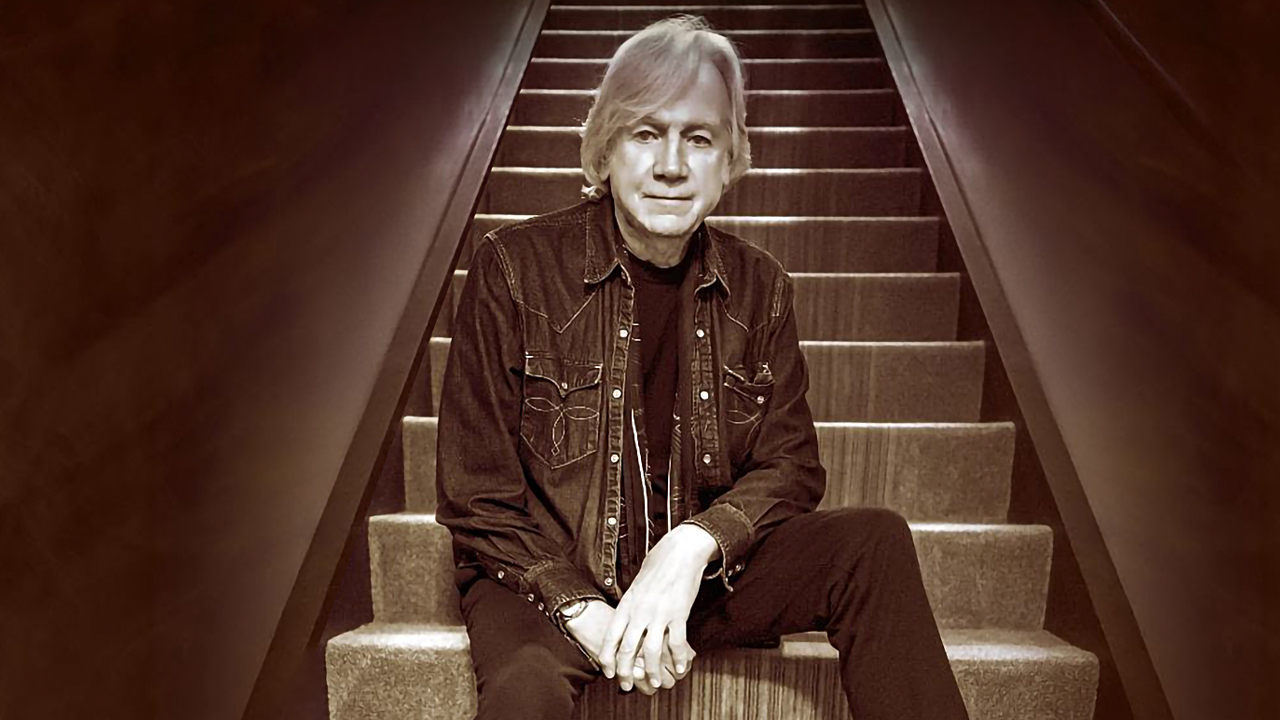
Moody Blues singer Justin Hayward announces Forever Autumn tour for October
Favicon 
www.loudersound.com

Moody Blues singer Justin Hayward announces Forever Autumn tour for October

"British music fans have a special place in the world of music, and I’m privileged that my songs are a part of that," Haywards says as he announces October dates
Like
Comment
Share
BlabberBuzz Feed
BlabberBuzz Feed
1 y

WATCH: Tulsa Traffic Stop Turns Into A Political Showdown—Ending With A Dem Senator In Cuffs!
Favicon 
www.blabber.buzz

WATCH: Tulsa Traffic Stop Turns Into A Political Showdown—Ending With A Dem Senator In Cuffs!

Like
Comment
Share
BlabberBuzz Feed
BlabberBuzz Feed
1 y

Putin's Playbook? Why Secession Movements In The U.S. Are Getting A Russian Boost!
Favicon 
www.blabber.buzz

Putin's Playbook? Why Secession Movements In The U.S. Are Getting A Russian Boost!

Like
Comment
Share
Showing 57484 out of 116693
  • 57480
  • 57481
  • 57482
  • 57483
  • 57484
  • 57485
  • 57486
  • 57487
  • 57488
  • 57489
  • 57490
  • 57491
  • 57492
  • 57493
  • 57494
  • 57495
  • 57496
  • 57497
  • 57498
  • 57499
Advertisement
Stop Seeing These Ads

Edit Offer

Add tier


Select an image
Delete your tier
Are you sure you want to delete this tier?

Reviews

In order to sell your content and posts, start by creating a few packages. Monetization

Pay By Wallet

Payment Alert

You are about to purchase the items, do you want to proceed?

Request a Refund