YubNub Social YubNub Social
    Advanced Search
  • Login
  • Register

  • Night mode
  • © 2025 YubNub Social
    About • Directory • Contact Us • Developers • Privacy Policy • Terms of Use • shareasale • FB Webview Detected • Android • Apple iOS • Get Our App

    Select Language

  • English
Install our *FREE* WEB APP! (PWA)
Night mode toggle
Community
New Posts (Home) ChatBox Popular Posts Reels Game Zone Top PodCasts
Explore
Explore
© 2025 YubNub Social
  • English
About • Directory • Contact Us • Developers • Privacy Policy • Terms of Use • shareasale • FB Webview Detected • Android • Apple iOS • Get Our App
Advertisement
Stop Seeing These Ads

Discover posts

Posts

Users

Pages

Blog

Market

Events

Games

Forum

BlabberBuzz Feed
BlabberBuzz Feed
1 y

Biden MOCKS Marjorie Taylor Greene’s Weather Manipulation Claims!
Favicon 
www.blabber.buzz

Biden MOCKS Marjorie Taylor Greene’s Weather Manipulation Claims!

Like
Comment
Share
Living In Faith
Living In Faith
1 y

Why We Need Zephaniah
Favicon 
www.thegospelcoalition.org

Why We Need Zephaniah

Apart from Zephaniah’s depiction of God’s exuberant joy over his redeemed people (3:17) that John Piper has popularized in his preaching, the book of Zephaniah hasn’t received the attention it merits. This neglect is unwarranted not only because the prophecy is God’s Word but because Zephaniah’s bold, broad, and beautiful presentation of God at the center of redemptive history makes his book as relevant to contemporary readers as it was to its initial audience. The prophet’s presentation of sin and its remedy is particularly potent. Zephaniah’s message moves far beyond predictions of judgment against the sins prevalent in Judah in the late seventh century BC. It also presents glorious salvation promises of salvation and the superlative restoration of God’s repentant people (vv. 14–17). Three facets of the book’s message capture this redemptive movement. 1. Sin and Its Consequences Zephaniah’s diagnosis of the world’s fundamental problem is bold. The book begins with a blunt announcement that God will meet humanity’s rebellion with the direst consequences imaginable (1:3). And more immediately, Zephaniah makes clear that due to Babylon’s rise and the predations of Judah’s neighbors, severe judgment is no idle threat; it’s standing at the door. In his first chapter, Zephaniah emphasizes Judah’s violations of the first commandment as the grounds for God’s judgment (vv. 4–6). Rather than trusting that God would protect and preserve his people when they remained faithful to him, Judah responded to geopolitical threats by attempting to ensure its stability and success outside the boundaries of the covenant: by looking to other nations for help. Many in Judah assumed God would do neither good nor ill in response to this sinful autonomy (v. 12). They’d turned God into an abstract idea with no relevance for their daily lives or for the future. But this way of thinking and living was tragically mistaken. God refutes Judah’s rebellion in absolute terms, weaving announcements of judgment into the litany of Judah’s sins (vv. 4–13). Then, Zephaniah 1 culminates in the foreboding day of the Lord that’ll bring the irreversible destruction of sinners worldwide (vv. 14–18). Contrary to the mistaken belief of many Judeans, divine justice will bring their imagined self-sufficiency and immunity from the covenant crashing down on their heads. Zephaniah’s uncompromising and unflattering evaluation of humanity at large, and of God’s old covenant people in particular, reminds believers they must take their sins seriously and practice repentance habitually. Zephaniah’s message also refutes visions of justice and liberty that look to social or political efforts to bring the transcendent change only God’s saving power can deliver. 2. Grace and Repentance In light of these dire threats, it’s surprising that Zephaniah offers hope in the very next section (2:1–3). But God’s immense patience makes a way for rebellious Judah to escape his punishment. Zephaniah calls the people to repentance, and his call is uncompromising. It demands a radical reorientation of the heart, for the Lord to be made absolutely central by the “humble of the land, who do his just commands.” This far-reaching change involves three interrelated ways of “seeking”: relationally (seek the Lord), behaviorally (seek righteousness), and subjectively or internally (seek humility). But even if they’re reconciled to God, the Judeans who repent may or may not be delivered from Babylon (v. 3). Zephaniah’s uncompromising and unflattering evaluation of humanity reminds believers they must take their sins seriously and practice repentance habitually. God’s justice will affect non-Israelites in similar ways, leaving no doubt his judgment is global. The oracles in verses 4–10 and 12–15 condemn nations to the west, east, south, and north for the same sin already highlighted in Judah: living as if God doesn’t matter. To this are added the sins of treating God’s people like any other people (v. 8) and each nation putting its own plans and priorities first. As with the unrepentant Judeans, the fate of non-Israelites who persist in their autonomy and rejection of God’s claims on them will be catastrophic. Zephaniah’s call to repent can be summarized as a command to order our lives and loves in light of who God is. Rather than adopting our culture’s definitions of the good life, we must heed the prophet’s reminder that life with God—even if it involves difficulty—is radically richer because it shares the permanence of the world to come. 3. God’s Love and Presence Though Zephaniah will circle back to announce one final condemnation on Judah (3:1–7), the rest of chapter 2 shows not only that God will preserve a remnant of his people but that he’ll eliminate their enemies. Yet, surprisingly, the prophet also announces that God will show grace to those who weren’t his covenant people. Amid the judgment oracles (2:4–15), God announces that Moab, Ammon, and the distant corners of the globe will learn he alone is God and then worship him (v. 11). When God demonstrates his awesome power against the claims of the nations’ false gods, his grace will transform converts from across the world. When Zephaniah describes how God supernaturally transforms human hearts and turns their desires to him, the prophet consistently integrates the relational, behavioral, and internal dimensions of this change. Those who holistically embrace his will pursue righteousness (v. 3), unity (3:9), proper worship (vv. 9–10), and humility (2:3; 3:11). In the end, God’s saving work will completely remove the pride that motivated his people’s rebellion (3:11) along with their corrupt desires that produced sinful words and deeds (v. 13). The justified and perfected remnant will then enjoy God’s unmediated presence (v. 15). Amazingly, God’s transformed people, including the non-Israelites (2:11; 3:9), are the subjects of God’s jubilation. The LORD your God is in your midst, a mighty one who will save; he will rejoice over you with gladness; he will quiet you by his love; he will exult over you with loud singing. (3:17) In contrast to the individualism and autonomy that are part of modernity’s heritage, the gospel that Zephaniah anticipates ties our fulfillment to a restored relationship with God. Moreover, God’s sovereignty in salvation compels us to reject human effort and strategy—in our lives and in the church—and instead cling to Christ’s work. Grace in Bold Relief Though the book of Zephaniah pulls no punches in its condemnation of sin and announcement of judgment, it’s equally forceful in proclaiming God’s salvation. It puts God’s grace in bold relief against the backdrop of universal sin, showing that while there’s nothing that compels God to intervene in favor of those who refuse his claims as Creator, God nevertheless fulfills his promises and saves people out of every clan of humanity (Gen. 12:3). Though the book of Zephaniah pulls no punches in its condemnation of sin and announcement of judgment, it’s equally forceful in proclaiming God’s salvation. In these ways, Zephaniah calls us to deepen our grasp of sin’s seriousness and horrific consequences, to drink deeply of God’s grace, and to find in God’s promises all we need for a faithful life and witness. Our sanctification is like a tree that bears many fruits, but it has one root: a heart that’s profoundly and increasingly drawn to God. To grow in Christlikeness, we must continually meditate on God’s greatness and unmerited love in Christ. Our remaining pride pushes us to minimize our faults and keep God at a safe distance. It’ll only grow worse unless it’s beaten down in the light of God’s glory, perfect holiness, and amazing goodness to us in his Son. As our hearts are transformed by God’s love and grace, our loves will be reordered and our lives will increasingly honor him.
Like
Comment
Share
History Traveler
History Traveler
1 y

Prison site excavations reveal 12,000 years of life in southern Sweden
Favicon 
www.thehistoryblog.com

Prison site excavations reveal 12,000 years of life in southern Sweden

A massive archaeological investigation at the site of a new correctional facility in Dalköpinge outside Trelleborg, Sweden, has uncovered evidence of occupation dating back 12,000 years, including the richly furnished grave of an elite woman from the Bronze Age. Two excavations, the first from late August to November 2023, the second over three months in the spring of 2024, covered an area of almost 50 acres, one of the largest ever made in the Scania province of southern Sweden. The Trelleborg area has excellent arable land, easy access to the Sound (the strait between Denmark and Sweden) and a relatively warm climate, features that attracted a large population continuously inhabiting the site for 10,000 years. Preliminary surveys carried out at the site in 2021 found evidence of huts, houses and graves from the Neolithic and a large number of Iron Age long houses. At the highest point in the middle of the site, the survey found the remains of a Bronze Age mound that had been ploughed flat but still contained its central grave. This was the grave of a high-status woman who died around 2,500 years ago and was buried with luxurious grave goods, including a bronze dagger, a round bronze belt buckle, thick bronze spiral arm rings and two gold spiral finger rings. The oldest remains found at the site, a leather and tool-making site, date back about 12,000 years to the Stone Age. A more recent Neolithic find was a 4,000-year-old dwelling. The floor was discovered in good condition, with portable contents — tools, pottery, arrowheads — still in place. This suggests the home had to be hastily abandoned leaving important objects behind. The team also unearthed a rare cellar pit from a Neolithic home. A small selection of the artifacts discovered at the site are on display in the foyer of Trelleborg Museum until November 24th. Most of the archaeological material is still undergoing analysis and conservation. When the work is complete in 2026, a larger exhibition is planned at the museum.
Like
Comment
Share
YubNub News
YubNub News
1 y

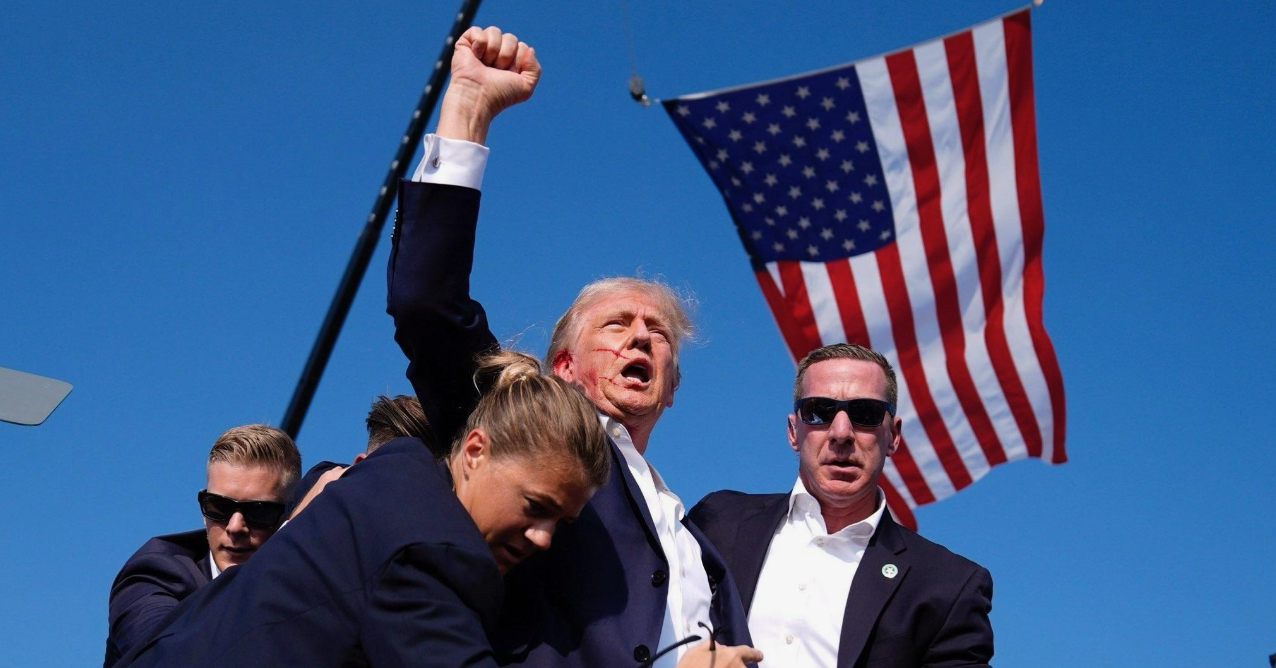
What I Saw in Butler, Pennsylvania
Favicon 
yubnub.news

What I Saw in Butler, Pennsylvania

On October 5, 2024, Donald Trump returned to the Butler Farm Show grounds where he had avoided death by a hair’s breadth on July 13. He was not the only one to return.  From my position on the…
Like
Comment
Share
YubNub News
YubNub News
1 y

What’s So Great About Public Libraries?
Favicon 
yubnub.news

What’s So Great About Public Libraries?

Despite earning my living as a writer, reading and reviewing an ungovernable number of new books each year, and being by all appearances a bookish fellow, I have no great fondness for libraries. To be…
Like
Comment
Share
YubNub News
YubNub News
1 y

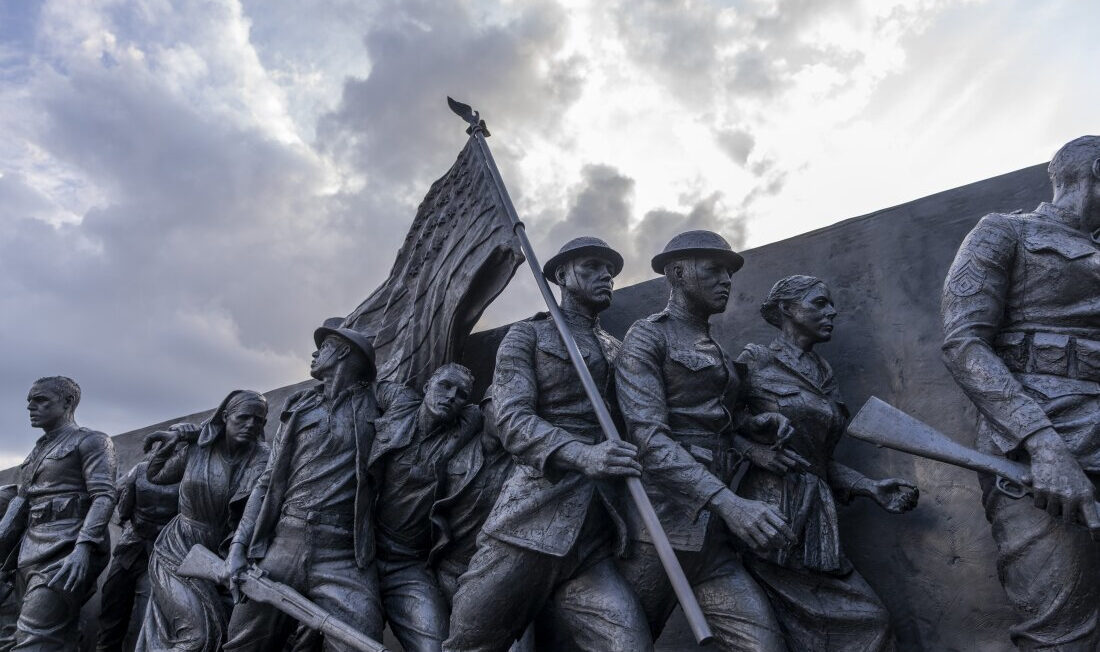
American Giants
Favicon 
yubnub.news

American Giants

Joe Biden has a new neighbor. Pennsylvania Avenue’s latest attraction is a 58-foot-long anti-war monument. A Soldier’s Journey, a frieze composed of 38 larger-than-life realistic figures, tells…
Like
Comment
Share
Conservative Voices
Conservative Voices
1 y

What’s So Great About Public Libraries?
Favicon 
www.theamericanconservative.com

What’s So Great About Public Libraries?

Culture What’s So Great About Public Libraries? The valorization of librarians as public servants makes even less sense than that of schoolteachers.  Credit: image via Shutterstock Despite earning my living as a writer, reading and reviewing an ungovernable number of new books each year, and being by all appearances a bookish fellow, I have no great fondness for libraries. To be sure, I had little firsthand experience with truly great libraries as a child. The library at the private grade school I attended early in my academic career was almost comically miniscule. In my memory, it was a single, classroom-sized room whose shelves were not even close to full. The main reason I spent any time there was because the Journalism Club met there. When I wanted to read a book, which was often, I went to the late B. Dalton.  My experiences with public libraries were no more salutary.   Far from being the very marrow of our civilization’s wisdom and learning, public libraries always struck me as bleak, depressing places. In my experience, poorly lit stacks and the smell of must do not necessarily promote the dissemination of knowledge. I could not have articulated it this way at the time, but most librarians I encountered suggested the sort of glum government workers one might encounter at the Bureau of Motor Vehicles, and the patrons, while generally unremarkable, always seemed to include one legitimately crazy man—conspicuously crazy. At one of the public libraries of my youth, I recall repeatedly encountering a middle-aged fellow who read aloud in a chair in a corner, a display that surely annoyed everyone but about which nothing was done. That libraries are now the sites of so-called Drag Queen Story Hours is not a surprise development. Plus, if one loves books—really, truly loves books—can’t one concede that books pressed into service at libraries are treated rather shabbily? Yes, careless library members must take a lion’s share of the blame for the rough treatment given to the books they check out, but the libraries themselves encourage this sort of treatment by defacing tomes with due-dates stamped on inside slips and call-number labels affixed to the spines. What sort of message does it send to readers when books come sheathed in plastic covers?  Perhaps my indifference to libraries is hereditary.   My mother remembered being sent to her school library during one lunch hour. The assignment was to read a book—presumably a short one—and come back with a verbal report, but she misunderstood the purpose of the excursion. Instead, she flipped through an issue of Better Homes and Gardens, and when later asked for her report, she told her teacher: “I read Better Homes and Gardens, and it’s about, well, better homes and gardens.”For his part, my father was an inveterate book-buyer, but a reluctant book-checker-outer. Even if he only had a passing need for a business book—say, to read a single chapter or look up a single reference—he would nonetheless buy and keep the book. Operating on the principle that one can never foresee when a book purchased in haste might again be useful, he encouraged me to do the same. Acquiring books was in my DNA, but being lent books struck me as a needless bureaucratic obstacle. Besides, if one loves a book, doesn’t one want to reread it without asking permission or waiting for someone else to finish it? I can’t imagine not owning my own copies of Walker Percy’s The Moviegoer, Graham Greene’s The End of the Affair, Evan S. Connell’s Mrs. Bridge and Mr. Bridge, Flannery O’Connor’s Wise Blood—each purchasable for the cost of, what, a pizza? Today, with second-hand books so widely available on Amazon, they are more affordable than ever. As we all know, when one goes to a concert or a stage show, the experience is not reproducible. Literature distinguishes itself from the “lively arts” for being something that does not disappear—that is, unless you voluntarily disappear it inside a library return bin. These days, librarians, as much as libraries themselves, seem to be the subject of an awful lot of cringe-inducing valorization. We are told to hug a librarian or thank a librarian, and I gather that National Librarian Day and National School Librarian Day are real things. If the goofy Minnesota Governor (and proud former schoolteacher) Tim Walz becomes the vice president, I tremble at the thought of these becoming federal holidays.  To work in a library is a perfectly fine way to earn a paycheck, but is it anything more than that? After all, librarians preside over a whole range of books—good books, useful books, lousy books, downright evil books. This makes the job essentially as neutral as a video rental store clerk under whose supervision are row upon row of great movies, horrible movies, and boring movies. At most, the librarian, like the video clerk, is just a conduit to various good and bad media, not a saint.  Which leads me to my final reflection on this matter: Despite my lack of enthusiasm for libraries, I was a regular customer at video rental stores in the mid-1990s. Why? I think the reason was their utility in an age before DVD or streaming. If I wanted to see, say, Ingmar Bergman’s Fanny and Alexander, Woody Allen’s Love and Death, or Federico Fellini’s 8 ½, I had to rent them—which I did. But as soon as I could find copies to buy, you can bet your bottom dollar I did. The post What’s So Great About Public Libraries? appeared first on The American Conservative.
Like
Comment
Share
Conservative Voices
Conservative Voices
1 y

What I Saw in Butler, Pennsylvania
Favicon 
www.theamericanconservative.com

What I Saw in Butler, Pennsylvania

Politics What I Saw in Butler, Pennsylvania Or how I learned to stop worrying and love Donald Trump. (Twitter) On October 5, 2024, Donald Trump returned to the Butler Farm Show grounds where he had avoided death by a hair’s breadth on July 13. He was not the only one to return.  From my position on the left side of the field, close to the infamous roof, I talked to several attendees who had also been present on July 13. One man told me that he was standing more or less where he was that day when the shots rang out. He had returned to show his support. Another couple, Roger and Linda, drove all the way from West Virginia to attend the rally and showed me on an aerial map where they had been standing when the shots rang out. They recounted that it had not been immediately clear what was happening and many people had remained standing until a state trooper near them began to yell for everyone to get down.  Nearly everyone I chatted with stated in some form or another that they were here to show support for Trump and had already made their minds up to vote for him long ago. As one man who had driven about an hour to be there put it, he was there to show support in the face of the attacks Trump endures everyday.  Another man I talked to, who it serendipitously turned out had been an acquaintance nine years ago when I had worked in the DC area, had driven five hours from Northern Virginia to be here, echoed an experience nearly identical to my own. He had been a ho-hum Trump supporter who was planning to vote for him, but was not enthusiastic until the fateful and tragic events of July 13 transformed his understanding of the election and turned him into a passionate supporter.  Numerous local officials and members of the campaign spoke in the four hours leading up to Trump’s appearance around 6pm, with nearly everyone emphasizing Corey Comperatore’s life and his heroic act of shielding his family amidst the oncoming fire. When Christopher Macchio sang “Ave Maria” as a tribute to Comperatore many people were openly moved to tears.  This was my first time attending a Trump rally, or any political rally since I had attended one of Ron Paul’s in Pittsburgh in 2012. Standing around for seven hours left me plenty of time to reflect on how I ended up here—not just at the rally, but also “here” in the sense of cheering unabashedly for Trump. My 23-year-old self from 2016 would have been quite surprised to see me now.The events of July 13 played a large role. It is difficult to imagine what would have happened to the country in the event Trump had been killed, but there was more to it than just Trump’s brush with death. The shooting happened a 40-minute drive from my house. A fellow Westsylvanian was killed, and two others, one of whom lives in the township next to mine, were seriously injured. The shooter lived about a 20-minute drive away from my house. To say this struck close to home is an understatement.  For myself and many others, the assassination attempt, and Trump’s defiant, raised fist and call to “fight, fight, fight!”  represented a cosmological shift in our understanding of the presidential race.  But what exactly was he exhorting people to fight, and why did it resonate so deeply with me so as to turn me from a ho-hum unenthusiastic supporter to cheering him on without reservations?As a naive, “principled nonvoter” libertarian, I did not vote in the 2016 election. But by the time voting day rolled around, I found myself rooting for Trump because of the outpouring of vitriol against Trump supporters, who were portrayed as worse than Nazis. Since nearly my entire extended family supported Trump, I took this personally.  It did not matter to many people on social media that the same Pennsylvanian voters who had propelled Trump to victory had previously been solid Democratic voters. It did not matter that there were economic and socio-cultural grievances that had motivated this support for Trump. All that seemed to matter to the voices of rage online was that evil white people had helped to install a barbarian into the White House.  Aside from taking pleasure in the shock and horror of the people calling my friends, neighbors, and family fascist white supremacists, I still was highly critical of Trump in the years to come. Yet in the wake of Trump’s bout with Covid and the obscene death wishes to be seen all over social media, I finally began to understand that the danger of such hatred was not limited to Trump alone, but to those who support him, or even just fit the stereotype of supporting him. It was at this point I concluded that Trump’s opponents were a threat to my family and neighbors and that I would be voting for Trump. Nevertheless, while I was rooting for him, I was not particularly enthusiastic, especially in the 2024 campaign season.  I had complaints and quibbles about various policies and plans. I worried who would staff his administration after the disastrous picks the first time. I was worried about his capricious streak.  But Trump’s defiant fist transformed the election from a question of tax rates and foreign policy minutia to a symbolic clash between incompatible spiritual visions of the nation itself. Before Trump came on stage, Steve Witkoff stated that this election went beyond mere politics to the very soul of the country. The truth of that statement is especially relevant in Western Pennsylvania, not only as an important region in a state that is likely to be the keystone to the election, but as a place that encapsulates the very heart and soul of America. Seventy-five miles from where Trump was standing in Butler is the Fort Necessity National Battlefield in Fayette County. This is where George Washington ignited the French and Indian War as a result of a land dispute with the French garrison at Fort Duquesne, built at the confluence of the Allegheny and Monongahela Rivers in what is now the heart of downtown Pittsburgh.  Even back then it was clear that geography had destined Western Pennsylvania for greatness. With abundant coal and other natural resources paired with the numerous waterways that eventually flowed into the Mississippi River the region experienced extreme growth for over a century, helping to propel Pennsylvania to a peak of 38 electoral votes in the 1912 to 1928 elections, second only to New York’s 45.  Lewis and Clark launched their famous expedition from the renamed Fort Lafayette. The first ever oil well was drilled in Western Pennsylvania (near aptly named Oil City). Titans of business and industry like Andrew Carnegie, Henry Heinz, Andrew Mellon, George Westinghouse and Henry Clay Frick transformed the world with the empires they built here.  The steel mills of the Pittsburgh area produced more steel during the Second World War than all the Axis powers combined. The Jeep was created in Butler County. Two Pittsburgh companies, American Bridge and the Dravo Corporation, employed tens of thousands of people in their Ohio River shipyards, including my late grand-aunt, to produce a fifth of all the massive LSTs used in amphibious landings from Normandy to Saipan.Western Pennsylvania has been the home of my ancestors since my sixth great-grandfather, Paul Trimmer (also Richard Nixon’s third great-grandfather), died in Washington County in 1838. When my great-great grandfather, Joseph Yost, immigrated to America in 1892, he made his home in Pittsburgh and raised his 11 children five miles from where I live today.  It is precisely this deep and rich history that is ultimately responsible for the untrammeled rage its inhabitants stir in the minds of the left. A people rooted in the history of specific time and place are more difficult to treat as simple economic cogs that can be swapped out at will for immigrants from the rest of the planet. A people rooted in history similarly puts the lie to claim that foreigners can in fact be even more American than people whose ancestors have lived here for centuries, merely because they have adopted the supposedly universal values of our constitutional system, as if America exists as an abstract exercise in thought.  The disdain with which the establishment holds Western Pennsylvanians was barely hidden in the past, going back to Barack Obama’s remarks in 2008 at a San Francisco fundraiser about people in “small towns in Pennsylvania” who are “bitter” and “cling to guns or religion”. But in the wake of Trump’s 2016 victory the mask has long since slipped after it became apparent that the people stuck in history were not planning to go quietly into that good night.In addition to the unceasing vitriol about Trump supporters being Nazis, more serious proposals popped up, in places like the New York Times, where in October of 2020 Peter Beinart questioned if the U.S. might need international intervention to deal with Trump and his odious supporters. Similarly, MSNBC host Chris Hayes tweeted out “The most humane and reasonable way to deal with all these people, if we survive this, is some kind of truth and reconciliation commission”—“these people” being Trump supporters, who, in other words, need to be “dealt with” like Rwandan war criminals. “In the end, they’re not coming after me. They’re coming after you.” Trump’s words in response to his federal indictment last year ring ever truer the more one pays attention to leftist rhetoric and the open disdain with which they hold Trump supporters, even when they are not openly celebrating political violence against them.  When Elon Musk spoke at the rally, he stated that this may be the last truly democratic election in the U.S., due to the left importing millions of illegal immigrants into swing states. He later stated in an interview with Tucker Carlson that, if Trump were defeated, he would doubtlessly be targeted by the government even more than he already has been. Tucker remarked that Musk would be “f*cked”.  So would Westsylvania. But at least someone is fighting for us. The post What I Saw in Butler, Pennsylvania appeared first on The American Conservative.
Like
Comment
Share
Conservative Voices
Conservative Voices
1 y

American Giants
Favicon 
www.theamericanconservative.com

American Giants

Culture American Giants A new monument to the First World War is a worthy addition to the best of Washington’s memorials. Joe Biden has a new neighbor. Pennsylvania Avenue’s latest attraction is a 58-foot-long anti-war monument. A Soldier’s Journey, a frieze composed of 38 larger-than-life realistic figures, tells the story of one American “doughboy” from enlistment to return. A decade in the making by Sabin Howard, this bronze Iliad is epic in scale, operatic in tone and beautifully executed.  Notwithstanding these qualities, discovering an indictment of war’s folly here is surprising. A U.S. president may be black or white, Catholic or Quaker, peanut farmer or real estate mogul, but never a pacifist. That A Soldier’s Journey finds itself next door to the commander-in-chiefbetrays the First World War’s ambivalent place in Western consciousness.  Perhaps monuments always reflect the time they are made as much as the thing they honor. Washington, DC, where the National Mall is lined with what Ronald Reagan called “shrines to the giants on whose shoulders we stand,” is the place to test that theory.  The Washington Monument, the 555-foot granite needle that appears at least once in every political thriller, looms over “America’s Back Yard.” It stands proxy for a country united by the high ideals of its greatest Founding Father, George Washington. But that serene symbolism has complications aplenty. The obelisk went up in 1848, when that unity was still inchoate. There was something ingenious in capturing the nation’s internal conflict in a shrine to a plantation owner who manumitted his slaves at death. Having weathered its great crises, the U.S. expanded West to dominate the continent and its surrounding oceans.  By century’s end, the now rich country was ready to directly broach the Civil War. In 1901, the year an assassin’s bullet made Theodore Roosevelt president, Congress set aside funding to begin the splendidly solemn memorial to Ulysses S. Grant in front of the Capitol. If Grant was the first modern general, Teddy was the first modern president—an unabashed imperialist who saw as opportunities the “foreign entanglements” that George Washington dreaded. So rote are politicians’ condemnations of war today that Roosevelt’s full-blooded militarism is both shocking and refreshingly frank. “Peace,” he scoffed, “is a goddess only when she comes with a sword girt on thigh.” When the Great War finally began in 1914, Roosevelt supported Wilsonian ambitions to join the Allies. Roosevelt believed taking part was imperative for the putative superpower. He chastised congressmen who voted against conscription in 1917. One of 50,000 Americans who died fighting in Europe was a young pilot named Quentin Roosevelt. After the Spanish Flu, the national death toll exceeded 100,000. In 1919, as the vindictive Treaty of Versailles was forced on Germany, Roosevelt died a broken man. Western Civilization never recovered either. That collapse is brilliantly visualized in Howard’s sculpture. The frieze’s center depicts the “crowded hour” where Mars runs riot.  The frenzy is terrible and thrilling in a way the younger rough-riding Roosevelt would have relished. The central figure is an officer rousing his men like the famous marine who cried, “Come on, you sons of bitches, do you want to live forever?” In the aftermath, Howard undercuts our exhilaration by confronting us with the butcher’s bill. A nurse restrains a man blinded by gas as another soldier, clearly shellshocked, breaks the Fourth Wall of the composition. He turns and strides towards us. His foot hovers in empty space stepping out a world of “divine order” as Howard describes it, “into one of alienation.” America left its innocence in the trenches. While no one could argue that a war of mustard gas, barbed wire and foot rot was glorious, it made J.P. Morgan and DuPont money. These American industrialists and bankers who benefited from British imperial decline would ensure that Uncle Sam got to the party early next time.  While we now associate the interwar years with jazz, cubism, and modernist literature, that cultural disruption took time to take hold—and that is reflected in the monuments of the era. The Lincoln Memorial unveiled in 1922 is solidly classical. Again, we see an America striving to salve raw wounds by harking back to an older and now sanctified conflict. Sculpted by Daniel Chester French with a team of Italian masons, this monumental Abe is not the crafty politician of reality but an immortal patriarch. Indeed, his seated pose and the surrounding temple emulates a lost masterpiece of Phidias, the colossal Statue of Zeus at Olympia. If the Lincoln Memorial is a church packed with worshipers, the Jefferson Monument is an untended shrine; a reflection, perhaps, of how irrelevant Jeffersonian ideals are to the modern empire. The Roman serenity of Jefferson’s Monument conceals the fact that it was built while another world war, the one that created that empire, raged. The domed building is reminiscent, almost a copy, of Rome’s Pantheon. That architectural quotation may have pleased the Sage of Monticello; the 19ft bronze sculpture inside would not. This graceless lump was cast in 1947, by which time Modernism had its claws in America and academic standards were slipping.  Figurative sculpture may be older than democracy, but to American hipsters of 1950s, that just made it square. Totalitarian associations didn’t help—fascist and communist regimes both embraced the neoclassical pastiche of Heroic Realism—but mainly the problem was that classical symbols were jarringly archaic in an age that prided itself on modernity. What did columns and togas have to do with the age of Atomic Power and Sputnik? That’s not to say that Modernism produced no great monuments. The Vietnam Wall erected in 1983 is an effective way to commemorate a divisive war. Whether you think that America’s Indochina intervention was a necessary evil or simply evil, Maya Lin’s minimalist design—two long black walls of polished granite engraved with 58,320 names—is oddly eloquent. No commentary, context or justification is offered with the names of the dead—it silently bears witness and lets us draw our conclusions.  But Maya Lin’s memorial derives much of its power from juxtaposition, its functional simplicity contrasting with the iconic Lincoln and Washington monuments at either side of the Mall. The trick can only be pulled off once. Her wall in less august surroundings would be only a wall.  The Korean War Memorial takes a more traditional approach, though it dispenses with plinth and podium. Dedicated in 1995, it is realistic to the point of banality. Nineteen soldiers patrol in the long grass. Clad in raingear, they look stooped, frightened and lost, a forgotten platoon of a forgotten war. Somewhat underwhelming by day, it is most effective at night; their shapeless ponchos make the soldiers resemble a troop of weary phantoms.  No ghosts haunt the World War II Memorial, which George W Bush opened in 2004. It has majesty, if not much imagination. A fountain plays in the center of a plaza surrounded by 56 pillars. The pillars, representing states and territories, are decorated with bronze laurel wreaths. Aside from a pair of decorative eagles and some relief panels, there is none of the elaborate statuary that would have been de rigueur in Theodore or even Franklin Roosevelt’s day.  This failure of nerve aside, the memorial is effective. Its chilly grandeur communicates that World War II has become the new cornerstone of the national self-image. That austerity starkly contrasts the pathos of Howard Sabin’s monument. Though World War II killed far more—represented here by stars on the spangled “Freedom Wall”—it remains the Good War fought by the Greatest Generation. A work of equal dignity to the World War II memorial but far deeper emotion was opened by Barack Obama in 2011.  The centerpiece of the Martin Luther King memorial is a non-finito high relief by Chinese sculptor Lei Yixin. It shows a 30-ft tall figure emerging from a granite slab. The composition cleverly communicates that the Reverend’s work is unfinished, just as his crossed arms bespeak impatience. The stern portrait bears comparison to Mount Rushmore’s pantheon. That’s no accident. King now occupies an unassailable position in the national imagination that Theodore Roosevelt, Lincoln, Jefferson and Washington did in 1925.  It is increasingly hard to erect works of such grandeur. The commissioners, curators and critics that governments look to for guidance are indoctrinated in a century-old Modernist critique of academic art that renders them especially incompetent in this sphere. The Commission of Fine Arts, an agency involved in vetting the King memorial, complained of its “colossal scale and Social Realist style”. New York Times critic Edward Rothstein whined, “We don’t even see his feet.” The bizarre MLK memorial unveiled in Boston last year The Embrace is what results when such philistines have their way.  The Eisenhower memorial opened in 2020 was equally misconceived. Designed by Frank Gehry, this much-delayed and ultimately underwhelming edifice proves that Modernist architects simply don’t know how to use statuary effectively. The sculptures of Eisenhower and his staff look stiff and pathetic, dwarfed by featureless monumental blocks. Gehry belongs to a generation of so-called Starchitects, skilled at extracting fortunes from corporations and governments with gimmicky “concepts” and prima donna antics. The Eisenhower memorial officially cost $150 million. Even in the city where they print the money, that’s too much. The architect Joe Weishaar and Howard took a more honest approach with A Soldier’s Journey. They designed a monument that is revolutionary because it is not revolutionary. It is, rather, a return to form, a return to the exquisitely made and nobly conceived monuments that were the norm in pre-1940 Washington DC. A Soldier’s Journey will inspire tomorrow’s artists and architects but it would be naïve to imagine that its antiwar message will influence politicians. The princes, presidents, and prime ministers who laid wreaths in Normandy this year and vowed “Never Again” have allowed the Ukraine War to escalate to the point that we are one stray shell away from another conflagration. From history we learn little; still less from art. Even so, whoever is president next year, I like to imagine them taking a break from the next crisis and going for a walk in Pershing Park. I imagine them coming upon a vision of the hell that swallowed much of our civilization a century ago. I imagine them then returning to the Situation Room with a newfound appreciation of diplomacy.  The post American Giants appeared first on The American Conservative.

Like
Comment
Share
Intel Uncensored
Intel Uncensored
1 y

This guy explains how salt water is causing lithium devices and electric cars to catch on fire...
Favicon 
api.bitchute.com

This guy explains how salt water is causing lithium devices and electric cars to catch on fire...

?????????‍♂️ Hmmmm.....watch out those in danger of the HURRICANE ?!!
Like
Comment
Share
Showing 57774 out of 103511
  • 57770
  • 57771
  • 57772
  • 57773
  • 57774
  • 57775
  • 57776
  • 57777
  • 57778
  • 57779
  • 57780
  • 57781
  • 57782
  • 57783
  • 57784
  • 57785
  • 57786
  • 57787
  • 57788
  • 57789
Advertisement
Stop Seeing These Ads

Edit Offer

Add tier


Select an image
Delete your tier
Are you sure you want to delete this tier?

Reviews

In order to sell your content and posts, start by creating a few packages. Monetization

Pay By Wallet

Payment Alert

You are about to purchase the items, do you want to proceed?

Request a Refund