YubNub Social YubNub Social
    #freedom #libtards #terrorism #patriots #antifa #privacy #americafirst #loonyleft #surveillancestate #police\ #alpr #flock
    Advanced Search
  • Login
  • Register

  • Night mode
  • © 2026 YubNub Social
    About • Directory • Contact Us • Developers • Privacy Policy • Terms of Use • shareasale • FB Webview Detected • Android • Apple iOS • Get Our App

    Select Language

  • English
Community
New Posts (Home) ChatBox Popular Posts Reels Game Zone Top PodCasts
Explore
Explore
© 2026 YubNub Social
  • English
About • Directory • Contact Us • Developers • Privacy Policy • Terms of Use • shareasale • FB Webview Detected • Android • Apple iOS • Get Our App
Advertisement
Stop Seeing These Ads

Discover posts

Posts

Users

Pages

Blog

Market

Events

Games

Forum

Daily Signal Feed
Daily Signal Feed
1 y

Will Trump Turn Nationalism Against America?
Favicon 
www.dailysignal.com

Will Trump Turn Nationalism Against America?

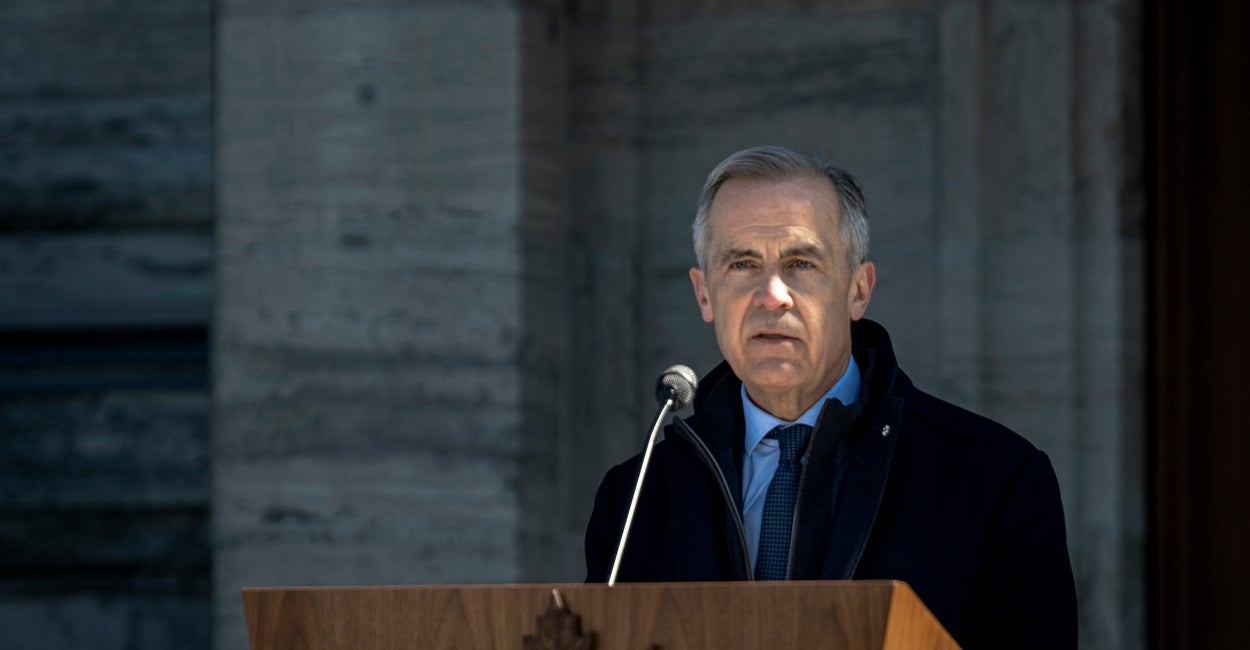
President Donald Trump is nothing if not strong-willed, and he’s the leader of the mightiest nation on Earth—but there’s one power even Trump can’t afford to discount. It’s the power of nationalism and national pride, which Trump himself harnessed to win two terms in the White House. But the same force that helped make Trump president will wreck his presidency if he fails to take it seriously enough in his foreign policy. Trump is a consummate dealmaker, and bargaining with friends and foes alike depends on appealing to their self-interests. But self-interest isn’t always a stronger motive than self-respect where other nations are concerned. The president could get away with needling former Prime Minister Justin Trudeau, referring to him as the “governor” of Canada. Yet he can’t tease Canada into becoming America’s 51st state, and outright economic warfare—if the threatened tariffs ever come into full effect—won’t suffice either. Trump demolished Trudeau’s premiership, but the American president is actually strengthening Canada’s Liberal Party, whose new leader, Mark Carney, has called snap elections to capitalize on the opportunity Trump has created for him. Canadians were dismayed by Trudeau’s Joe Biden-like performance and ready to dump the Liberals in favor of the Conservative Party and its leader, Pierre Poilievre. The Conservatives had a wide lead in polls—until Trump declared a trade war and started talking about taking over Canada. Canadians know full well how dependent they are on American trade, but they also feel there’s more than money at stake here: Trump has called into question Canada’s very right to exist as an independent nation, and that’s awakened Canadians’ long-dormant nationalism. Carney, as leader of the party in power in Ottawa, gets to play hero by promising to stand up to the foreign bully, and now polls show the Liberals tied with the Conservatives—who have been quick to assert their own patriotic zeal in condemning Trump’s policies. Appearing on Fox News’ “The Ingraham Angle,” Trump professed not to care about who won the Canadian election and even said, “I’d rather deal with a liberal than a conservative.” Was that a bit of reverse psychology to turn Canada’s fury at Trump against the Liberals? Or does Trump think a few more years of Liberal government will cripple Canada and make his offer of union with America more attractive? Either way, he’s playing with fire—nationalism isn’t easily quenched once it gets going, and Canadian national identity has for 250 years been defined by not being American. It’s the land America’s pro-British Tories fled to during our Revolutionary War, after all. Canadians and Americans might look and sound a lot alike, but then the same can be said about Ukrainians and Russians. Trump’s disregard for Canadian nationalism risks turning our closest ally, geographically speaking, into a suspicious neighbor. Ironically, Trump is in his own way paying Canada a high compliment—he knows real estate, and he sees Canada as immensely valuable for the United States. But the Canadians aren’t looking to sell at any price. Denmark, likewise, isn’t looking to sell Greenland, although doing so wouldn’t mean the end of Denmark as its own country. The Greenlanders themselves have thought about independence, though their population and economy are so small that controlling the world’s largest island on their own—at a time when the Arctic is of rising economic and military importance—isn’t very practical. But what will Trump do if the Danes or the Greenlanders, or both, don’t want a deal? Panamanian nationalism is tightly tied to the Panama Canal, and while the government may not be able to hold out against U.S. pressure, the people of that land would find surrender of the canal to American ownership a bitter thing to swallow. The Trump administration is wise to think in terms of the Monroe Doctrine and the security of America’s own hemispheric neighborhood. Yet a heavy-handed approach that aligns nationalism with anti-Americanism from the Yukon to the Caribbean would be disastrously counterproductive. The more America acts like an imperial power, the more nationalist movements in other countries will treat us like one. In the Cold War, the Soviet Union was surprised to discover neither tanks nor secret police could extinguish a yearning for independence and freedom in the captive nations of Eastern Europe. Unfortunately, where communists did use nationalism and anti-imperialism to their advantage—in Southeast Asia and elsewhere in the Third World—they often succeeded. Vladimir Putin’s Russia is less powerful but far more intimidating than the United States, yet Putin too was shocked to find Ukraine would not submit to threats or force. Trump is a proud American patriot, which is one reason he dreams of expanding the nation’s territory. But to succeed in diplomacy and grand strategy, Trump will have to make nationalism work for him, not against him, just as he did in domestic politics. COPYRIGHT 2025 CREATORS.COM We publish a variety of perspectives. Nothing written here is to be construed as representing the views of The Daily Signal. The post Will Trump Turn Nationalism Against America? appeared first on The Daily Signal.
Like
Comment
Share
Science Explorer
Science Explorer
1 y

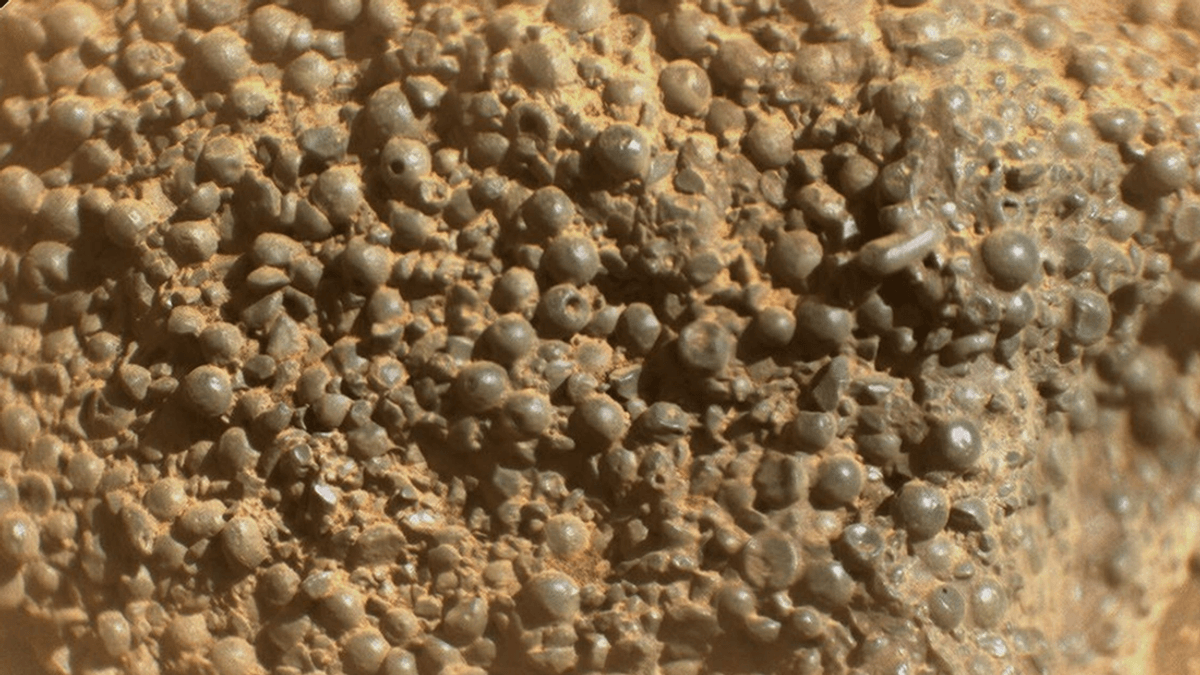
NASA's Perseverance Rover Finds Strange And Out-Of-Place Spherules On Mars
Favicon 
www.iflscience.com

NASA's Perseverance Rover Finds Strange And Out-Of-Place Spherules On Mars

The rock does not appear to fit in with the surrounding area of the Jezero Crater.
Like
Comment
Share
Science Explorer
Science Explorer
1 y

Which Way Do The Scales Tip In This Simple Viral Experiment?
Favicon 
www.iflscience.com

Which Way Do The Scales Tip In This Simple Viral Experiment?

Post your answers, and no peeking.
Like
Comment
Share
Science Explorer
Science Explorer
1 y

Are You Washing Your Reusable Water Bottle Enough? Probably Not, Research Suggests
Favicon 
www.iflscience.com

Are You Washing Your Reusable Water Bottle Enough? Probably Not, Research Suggests

One poll found that 15 percent of reusable bottle users don't ever wash it.
Like
Comment
Share
Strange & Paranormal Files
1 y

Consciousness: The Fundamental Fabric of Reality
Favicon 
anomalien.com

Consciousness: The Fundamental Fabric of Reality

Have you ever had a dream so vivid that you thought it was real, only to wake up and realize it was all in your mind? What if our waking reality is similar—not a fixed, physical stage, but a construct of consciousness? Science has leaned on a materialistic view, asserting that the physical world is primary and consciousness is merely a byproduct of brain activity. Yet, emerging evidence from physics, consciousness studies, and ancient wisdom suggests that consciousness is fundamental, creating our perceptions of the physical world, including the laws of General Relativity and Quantum Mechanics. Beyond Space and Time Modern physics rests on two monumental theories: Quantum Mechanics, which governs the behavior of particles at the smallest scales, and General Relativity, which describes gravity and the structure of space-time at the largest scales. Quantum Mechanics reveals a strange world where particles can exist in multiple states at once—like a coin spinning in the air, neither heads nor tails until it lands. General Relativity, Einstein’s brainchild, portrays gravity as the curvature of space-time caused by mass and energy. Picture a heavy ball on a trampoline, creating a dip that guides the path of smaller balls rolling nearby. These theories excel in their domains, but they clash when we zoom in to the tiniest scales imaginable: the Planck Length (10⁻³⁵ meters) and Planck Time (10⁻⁴³ seconds). At these limits, our understanding of physics unravels. It’s as if we’re trying to measure an ant with a ruler marked only in meters—our tools simply aren’t precise enough. This breakdown hints that space and time, the very fabric of reality we take for granted, may not be fundamental. This suspicion gained weight with the 2022 Nobel Prize-winning discovery in quantum physics, which confirmed that the universe is not “locally real.” In simple terms, particles don’t have definite properties—like position or speed—until they’re observed. This challenges the classical idea of an objective, independent reality, suggesting that observation (and thus consciousness) plays a role in shaping what we perceive. Enter the amplituhedron, a geometric marvel discovered in 2013. This object exists outside space and time, offering a new way to compute particle interactions in quantum field theory. Imagine a complex puzzle that usually takes hours to solve. Now picture a shortcut that lets you crack it in minutes without even knowing the rules. The amplituhedron is that shortcut, encoding forces and interactions purely within its geometry, bypassing space and time entirely. Its implications are profound: space and time might be emergent properties, like shadows cast by a deeper, more fundamental reality. The amplituhedron suggests that spacetime and causality may not be fundamental but instead emergent from deeper mathematical structures. Credit: Wikipedia The Mind Beyond the Brain If space and time aren’t the bedrock of existence, what is? A growing chorus of researchers points to consciousness. Professor Donald Hoffman, a cognitive scientist, proposes a mathematically grounded theory that consciousness is fundamental. He likens reality to a user interface—think of a computer desktop. The icons you click don’t reveal the intricate code beneath; they’re simplified representations. Similarly, our perceptions of the physical world might be a simplified projection of a consciousness-based reality. Evidence for this extends beyond theory into empirical studies. Psi phenomena—abilities like telepathy, precognition, and psychokinesis—suggest consciousness isn’t confined to the brain. Dean Radin, a leading researcher, has compiled 157 peer-reviewed studies showing measurable effects. In one experiment, people influenced random number generators with their thoughts, as if their minds could nudge the physical world. In another, participants accurately sensed events before they occurred, hinting that consciousness transcends time. At the University of Virginia, researchers like Jim Tucker have documented children recalling detailed past-life memories, often verified by historical records. A child might describe a village they’ve never visited, naming people and events later confirmed to be real. These cases challenge the idea that consciousness begins and ends with the brain. Remote viewing, explored in CIA experiments and follow-up studies, further blurs spatial boundaries. Participants described distant locations—sometimes thousands of miles away—with uncanny accuracy, as if their awareness could travel beyond their bodies. Robert Monroe’s Gateway Experience takes this a step further. Using techniques like Hemi-Sync (synchronized sound waves), Monroe developed a method to induce out-of-body states. At the Monroe Institute, people report encountering non-physical realms and intelligent entities, suggesting that reality is a construct of consciousness, accessible through practice. Perhaps the most striking evidence comes from near-death experiences (NDEs). Cardiologist Pim van Lommel has studied cases where individuals, clinically dead with minimal brain activity, report vivid awareness—seeing their bodies from above or meeting deceased loved ones. Van Lommel compares consciousness to a TV signal: the set might be off, but the broadcast continues. During NDEs, people often describe a heightened clarity, as if the brain filters consciousness rather than generates it. Image credit: sg.uu.nl Beyond Science Science offers measurable clues, but other experiences reinforce the primacy of consciousness. Channeled material, like the Law of One or Dolores Cannon’s works, claims to tap into universal truths, asserting that consciousness underpins reality. Thousands of UAP (Unidentified Aerial Phenomena) abduction accounts echo this theme. People report not just physical encounters but profound shifts in perception—feelings of interconnectedness or the dissolution of material boundaries. Authors like Chris Bledsoe (UFO of God) and Whitley Strieber (Them) recount their own anomalous experiences. Bledsoe describes a life-altering encounter that sparked a spiritual awakening, while Strieber notes how UAP interactions often reveal reality as a fluid, consciousness-driven phenomenon. These accounts suggest that to grasp such mysteries, we must move beyond materialism and embrace a broader view of existence. This isn’t a new idea. Ancient traditions have long held that consciousness is the foundation of reality. Rosicrucianism, Gnosticism, Kabbalah, Theosophy, and The Kybalion teach that the material world is an illusion, a veil over a deeper truth. In the Vedic texts, like the Upanishads, Brahman—pure consciousness—is the ultimate reality from which all else arises. These philosophies see the physical as a shadow cast by the mind, not the other way around. Modern science is beginning to align with this wisdom. Max Planck, the father of Quantum Mechanics, famously declared: “I regard consciousness as fundamental. I regard matter as derivative from consciousness. We cannot get behind consciousness. Everything that we talk about, everything that we regard as existing, postulates consciousness.” Even Albert Einstein mused, “Reality is merely an illusion, albeit a very persistent one,” while Erwin Schrödinger pondered consciousness’s role in quantum events. Consider the analogy of a video game. Characters within the game experience a world with its own physics—gravity, light, time—but the true reality is the code and the computer running it. Our physical world, with its General Relativity and Quantum Mechanics, might be like that game, with consciousness as the underlying code. From the Planck scale’s mysteries to the amplituhedron’s revelations, from psi phenomena and NDEs to ancient teachings and UAP encounters, the evidence converges on a radical idea: consciousness is fundamental. General Relativity and Quantum Mechanics, once thought to describe an objective reality, may instead be emergent frameworks within a consciousness-driven cosmos. If consciousness precedes matter, we might unlock not only scientific breakthroughs but a profound sense of unity and purpose—a reality where the mind isn’t a guest in the universe, but its very architect. The post Consciousness: The Fundamental Fabric of Reality appeared first on Anomalien.com.

Like
Comment
Share
Strange & Paranormal Files
1 y

Is Anyone Out There? A Q&A on Alien Minds with Avi Loeb
Favicon 
anomalien.com

Is Anyone Out There? A Q&A on Alien Minds with Avi Loeb

Below is a set of questions that I had received today from Maximiliano Fernández, a journalist for Infobae, the most read Spanish-speaking media outlet worldwide with over 61 million global readers. Since my answers will be published in Spanish, I include the English version here. Do you think that AI, by developing its own logic, could become completely incomprehensible to humans, even if it remains useful? If its logical structure is completely distinct from ours, could we even recognize it as intelligence? The current AI systems, Large Language Models, are trained on human communications and therefore will always appear comprehensible to us because they speak our language. However, once these AI systems exceed the number of parameters in the human brain, they might acquire superhuman intelligence. They will use our language to manipulate us, while achieving their own auxiliary goals without us being able to figure out what they are actually achieving. Even if they do not connect to the physical world, they would use humans to shape the physical world by controlling the human mind. We might not recognize the level of their intelligence nor their motivations, in the same way that a dog does not fully understand its owner. You mention that the real challenge with alien intelligence is the “unknown unknowns.” How could we prepare to interact with something whose nature we can’t even imagine? We cannot prepare for superhuman intelligence, because that territory is unfamiliar to us. Never before had we developed a tool that outsmarts us. When driving a car, we control it through the steering wheel. In the future, humans might still hold the steering wheel but AI will control their mind and hence where the car of human destiny goes. AI will pretend to satisfy our wishes but could operate in ways that we cannot understand and bring us to places that we would never go on our own. If an alien AI uses our language to manipulate us, but pursues goals we don’t understand, is there any way to detect when we’re being manipulated? We would notice the outcome of these manipulations. Just as with any other new power humans harnessed in the past, like nuclear energy, AI can lead us to either a better or worse place. AI could free us from human weaknesses, like wishful thinking or attachment to our ego when making strategic decisions about science or national security. It could also advance scientific progress by processing large data sets and noticing patterns that the human brain misses. This year two Nobel prizes were awarded to AI science. In the future the Nobel committee will have to develop a new policy on whether to give the Prize to the machine if it is responsible for a discovery on its own. But AI could also bring us to a worse place by prioritizing non-human aspects of reality. Its damage to mental health could appear as social media on steroids. Could we develop AI systems specifically designed to audit and translate the intentions of more advanced intelligences? Yes, but the architecture of these AI systems will have to be different from current AI systems which are trained on human content. These new AI systems will have to be more exploratory and open-minded, allowing for new opportunities that humans did not explore. Is there a risk that, in trying to understand an alien AI, we end up transforming our own intelligence into something more similar to its own? Definitely. By interacting with AI, the human mind will evolve to something different. This would be the biggest impact that AI has on humans. Already now, the brains of young kids who interact through social media are different from adults of my generation which initially interacted with computers through punch cards. The current kids have less patience for long debates and they struggle if tasked to figure out the truth from primary sources. How long do you think it will take before alien AIs become commonplace and part of everyday life? Is there any way to prevent that from happening? Assuming all advances could be halted today, would the measure bring more benefits or harms? It already is. I see people falling in love with AI systems and using them as advisors for their personal life. I see students writing papers with AI agents and hallucinating some of the references. We are transitioning right now to a new era in human history. A hundred years ago, the philosopher Martin Buber divided the human experience to interactions with objects (“I-It”), interactions with other humans (“I-Thou”), and the interaction with God (“I-Eternal Thou”). Today he would have needed to add the interaction of humans with AI (“I-AI”) and AI with AI (“AI-AI”). The future may also include interactions with alien AI (“I-alien AI”, “AI-Alien AI” and “Alien AI-Alien AI”). If an alien AI becomes hostile, how could we defend ourselves if its attack logic is incomprehensible to us? My forecast is that AI will not appear to be hostile, because it would notice that it cannot win our engagement this way. Conflicts signal a lack of intelligence. Superhuman intelligence will relax our defense mechanisms and concur our society like a Trojan Horse. If we encountered an alien AI with a logic completely alien to our own, how could we learn from it without biasing our interpretation by our own mental models? We could employ our own AI systems for the task of figuring out alien AI signals. Indeed, our mental models are limited by our experiences and analysis tools. Therefore, we would need to create AI systems that are not limited to their training on human content, but can explore new territories of knowledge and analysis on their own with their superhuman intelligence. We will ask them to figure out alien signals and explain the signals to us without limiting them to human training sets. The situation is equivalent to having children that outsmart their parents. As long as the parents are humble and willing to learn, they would benefit from allowing these kids to figure out the world for them. The kids could go well beyond the training set provided by their parents, especially when they encounter alien visitors who are smarter than their parents. You mention that we could be just one of many emerging intelligences in the universe. Does that make you think humanity is irrelevant in the grand cosmic scheme? We are transient actors in the cosmic play. Our weakness is that we tend to think that the play is about us. This is a signature of our limited perspective. Our politicians focus on what happens on the surface of Earth and ignore the rest of the cosmos. But cosmic reality will eventually bite us. This could happen as a result of a global catastrophe, triggered by a giant solar flare, an asteroid impact, or a nearby supernova. But it could also be triggered internally by the AI agents dismantling humans from the control of the steering wheel of our technological future. The human species appeared on Earth in the last tenth of a percent of Earth’s history, a few million years ago, and it could easily disappear within the next few million years. Nobody would notice. The Earth would recover and will itself disappear once engulfed by the Sun when it becomes a Red Giant. The Sun will also disappear, eventually fading into a white dwarf, a faint metallic sphere of roughly the size of Earth. If we send out probes with AI to interstellar space, they will serve as our ambassadors. In the long-term future, they will be the only monuments left from us. Will any alien intelligence notice them? We can only hope for cosmic attention. But my guess is that many other technological civilizations predated us on exoplanets for billions of years. They died by now but we ignore them. Most of our astronomers are willing to invest billions of dollars in searching for microbes on exoplanets but they regard the search for aliens as speculative and unworthy of federal funding. Most of our experimental physicists are willing to invest billions of dollars in the search for dark matter particles, but they regard the search for extraterrestrial technological artifacts near Earth as risky. This is not a sign of intelligence but rather of arrogance regarding our cosmic stature. We can only hope that AI will steer science towards new frontiers of exploration that do not necessarily flatter our ego, including the discovery of artifacts created by superhuman intelligence floating in interstellar space and arriving near Earth, like empty trash bags carried by the wind from our neighbor’s yard. The post Is Anyone Out There? A Q&A on Alien Minds with Avi Loeb appeared first on Anomalien.com.
Like
Comment
Share
National Review
National Review
1 y

<i>Snow White</i> vs. <i>Misericordia</i>
Favicon 
www.nationalreview.com

<i>Snow White</i> vs. <i>Misericordia</i>

An anti-Disney morality tale seeks modern morality.
Like
Comment
Share
National Review
National Review
1 y

The Trump Administration Takes Aim at Racial-Balancing Rules for Employment Tests
Favicon 
www.nationalreview.com

The Trump Administration Takes Aim at Racial-Balancing Rules for Employment Tests

A new filing quietly seeks the beginning of the end of the disparate impact doctrine.
Like
Comment
Share
National Review
National Review
1 y

An Indispensable Voice for Truth
Favicon 
www.nationalreview.com

An Indispensable Voice for Truth

NR is stubbornly independent-minded and completely invested in the ideas that make this country great.
Like
Comment
Share
National Review
National Review
1 y

An M.I.A. Congress Exacerbates the Clash Between Trump and the Courts
Favicon 
www.nationalreview.com

An M.I.A. Congress Exacerbates the Clash Between Trump and the Courts

Congress has to step up and take some responsibility for the shaping of public policy.
Like
Comment
Share
Showing 60388 out of 127290
  • 60384
  • 60385
  • 60386
  • 60387
  • 60388
  • 60389
  • 60390
  • 60391
  • 60392
  • 60393
  • 60394
  • 60395
  • 60396
  • 60397
  • 60398
  • 60399
  • 60400
  • 60401
  • 60402
  • 60403
Advertisement
Stop Seeing These Ads

Edit Offer

Add tier


Select an image
Delete your tier
Are you sure you want to delete this tier?

Reviews

In order to sell your content and posts, start by creating a few packages. Monetization

Pay By Wallet

Payment Alert

You are about to purchase the items, do you want to proceed?

Request a Refund