YubNub Social YubNub Social
    Advanced Search
  • Login
  • Register

  • Night mode
  • © 2025 YubNub Social
    About • Directory • Contact Us • Developers • Privacy Policy • Terms of Use • shareasale • FB Webview Detected • Android • Apple iOS • Get Our App

    Select Language

  • English
Install our *FREE* WEB APP! (PWA)
Night mode toggle
Community
New Posts (Home) ChatBox Popular Posts Reels Game Zone Top PodCasts
Explore
Explore
© 2025 YubNub Social
  • English
About • Directory • Contact Us • Developers • Privacy Policy • Terms of Use • shareasale • FB Webview Detected • Android • Apple iOS • Get Our App
Advertisement
Stop Seeing These Ads

Discover posts

Posts

Users

Pages

Blog

Market

Events

Games

Forum

The Lighter Side
The Lighter Side
1 y

Police Officer Grabs Garden Hose To Stop House From Catching Fire
Favicon 
www.sunnyskyz.com

Police Officer Grabs Garden Hose To Stop House From Catching Fire

Like
Comment
Share
SciFi and Fantasy
SciFi and Fantasy  
1 y

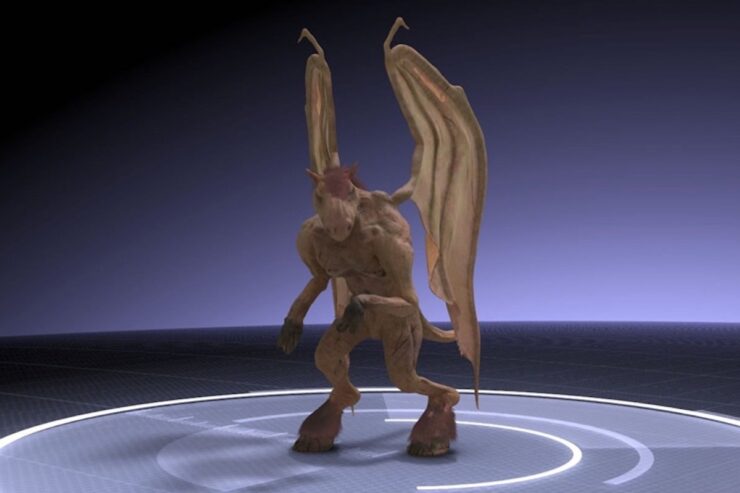
“I Felt Like Prey:” MonsterQuest Investigates the Jersey Devil
Favicon 
reactormag.com

“I Felt Like Prey:” MonsterQuest Investigates the Jersey Devil

Column SFF Bestiary “I Felt Like Prey:” MonsterQuest Investigates the Jersey Devil With photographic evidence, and a massive hunt through the Pine Barrens… By Judith Tarr | Published on July 15, 2024 Credit: History Channel Comment 0 Share New Share Credit: History Channel I’ve learned to trust our friends at MonsterQuest to take a good, hard look at the cryptid of the hour. They’ll examine it with care, test a range of theories, and come up with a new or unusual suggestion as to the nature of the beast. Their episode on the Jersey Devil, first aired in 2009, does not disappoint. They don’t spend a great deal of time on the history, but we get a quick summary of the Mother Leeds story, along with Joseph Bonaparte’s hunt for the beast, and the week-long panic of 1909. A professor of American History from Rutgers points out that the story’s longevity indicates that there must be something in it, as does the identity of many of the eyewitnesses: professionals, politicians, clergy of multiple denominations. People whose occupations and positions in life indicate that they’re honorable and truthful. The investigation focuses on a single sighting in February of 2004, with actual photographic evidence—a rarity in the annals of the Jersey Devil. One night during a winter storm, the Winkelmann family encounters a large, dark creature in the trees around their yard. It flies over them and lands noisily on the roof. In the morning, they find strange tracks in the snow: three-toed, about nine inches by five inches in size, and apparently bipedal; the tracks are spaced four feet apart, as if the creature had hopped along the roof. The family called the Parks and Recreation Department, but neither they nor the police were able to identify the animal that left the tracks. There are photos on file, and a police report. MonsterQuest brings in investigators of its own, retired NYPD detectives and a polygraph expert, along with a sketch artist and a sculptor. They also mount an epic hunt in the Pine Barrens, in the Wharton State Forest. Sixty men form a cordon to drive whatever game they can find toward a smaller line of hunters, accompanied by a small army of cameramen. If there is a cryptid lurking in those woods, they believe they’ll flush it out. They’re looking for either a hooved biped with a head like a horse, batwings, and a serpentine tail, or a quadruped that looks like a cross between a dog and a monkey. Meanwhile, what the Winkelmanns saw was large—over six feet tall—and dark, with a bulbous forehead, glowing red eyes, a long dark neck, and dark wings. It terrified them; it still terrifies them, years later. The investigators call in a polygraph expert who determines that they are telling the truth about what they saw. There’s also a sketch artist whose drawing serves as a basis for a life-sized, presumably lifelike sculpture. That, at the end, is the focus of a reveal to the eyewitnesses. Both are suitably shocked, and their response is definitive: that’s what they saw. Pretty much exactly. So what did they see? The artist produces a creature with batlike wings, red eyes, and a head somewhat like a bird and somewhat like a carcass that washed up on Long Island in 2008, almost two hundred miles north of the Pine Barrens. The Montauk Monster was the subject of much rumor and speculation. Was it a cryptid, or was it a mutant, the product of secret government experiments? MonsterQuest debunks it fairly handily by going to the place called Monster Island—actually the Plum Island Animal Disease Center. The center studies diseases in livestock. There are no classified experiments there, and they do not experiment on small animals. The carcass, says the biologist they consult, is that of a dog, probably a bulldog based on the shape of its head and jaw. The investigators do not try to argue that the Jersey Devil is a dog that somehow got into a tree and ended up on the Winkelmanns’ roof. They call in biologists and wildlife experts from the area, who present a couple of theories. One is that the Winkelmanns saw a great horned owl. These owls are huge. They do not weigh 200 to 400 pounds, which is what the police estimated the animal on the roof must have weighed. But the trees in the yard could not have supported the weight of such an animal, and the tracks are not as definitive as they initially seemed to be. The photos were taken from an angle rather than from directly above, which made it impossible to really determine what made them. They do show something big with three toes and a four-foot stride. Laurie Winkelmann heard it scraping and rattling across the roof. A large owl might have moved like that, and also been able to perch in the trees, then fly soundlessly over her head. Its eyes would glow red in the ambient light. That’s one possibility, and might answer the question of what the Winkelmanns saw. During the reveal I remembered another, similar experiment the MonsterQuest team set up, with eyewitnesses who claimed to have seen the Mothman. The point of that episode was that eyewitnesses are notoriously unreliable when it comes to estimating size. They usually overestimate, sometimes by a significant margin. When Laurie Winkelmann says that she saw a creature larger than a human, at least six feet tall, she may actually have seen something closer to the size of a large owl. It was dark; she notes that the area has an eerie vibe at night. If a bird with a three-foot wingspan flew close overhead, she might have thought that it was much larger than it was. Another possibility wouldn’t work for the Winkelmanns, but it might explain some of the earliest sightings. A wildlife biologist proposes that the Jersey Devil as described—batwings, horse’s head—rather closely resembles the African hammer-headed bat. This large bat is native to Africa; it may have either stowed away on a ship or been imported as a pet. It eats fruit in large quantities, but it has been known to go after chickens—which might explain the stories of attacks on livestock. It’s a creature of the tropics and would not survive a New Jersey winter, which means it can’t have been what the Winkelmanns saw during a snowstorm, or what people all over the region claimed to have seen in January of 1909. But it might have been the original devil, the one that shocked and horrified people in the eighteenth century. Maybe, once they were primed to see it, they would misidentify other, native fauna, and see a devil instead of a large night-flying bird. Whatever the truth is, the great hunt turned up nothing relevant. It flushed out a number of deer and small birds. No owls; no bats. No Jersey Devil. Because cryptid hunters never give up hope, one of the investigators, retired NYPD Detective Mitch Parker, sums it up for all of us: “I don’t know that they saw the Jersey Devil, but they saw something out there.” That much I think is true. That’s what the polygraph test proves: not that they saw an actual devil, but that they believe they did.[end-mark] The post “I Felt Like Prey:” <i>MonsterQuest</i> Investigates the Jersey Devil appeared first on Reactor.

Like
Comment
Share
SciFi and Fantasy
SciFi and Fantasy  
1 y

The Director’s Cut of The Fall Will Be Released in September
Favicon 
reactormag.com

The Director’s Cut of The Fall Will Be Released in September

News The Fall The Director’s Cut of The Fall Will Be Released in September We are counting the days. By Molly Templeton | Published on July 15, 2024 Comment 0 Share New Share Last week, we learned that a 4K director’s cut of Tarsem Singh’s stunning, underseen 2008 film The Fall would be making its world premiere in August—at a film festival few of us ordinary folks would be able to get to. But we won’t have long to wait! Deadline has the exclusive word that MUBI is releasing the film in the U.S. on September 27th. It would not be an exaggeration to say that some of us have already marked our calendars. The Fall is the story of a stuntman named Roy (Lee Pace) who, while laid up after an accident, encounters a young girl named Alexandria (Catinca Untaru). He begins to tell her fantastical stories, woven from his heartbreak and from the people and things in their sun-soaked California hospital. There is no short summary that does this film justice; it’s about stories, storytellers, and those we tell stories to, and it’s absolutely beautiful to look at; Singh filmed it over the course of several years, in more than 20 locations around the world. Roger Ebert called it “a mad folly, an extravagant visual orgy, a free-fall from reality into uncharted realms,” continuing, “Surely it is one of the wildest indulgences a director has ever granted himself.” The Fall arrives (again) on September 27th, presumably on MUBI, though one strongly hopes it gets a theatrical release too. And a DVD? Pretty please?[end-mark] The post The Director’s Cut of The Fall Will Be Released in September appeared first on Reactor.
Like
Comment
Share
Daily Signal Feed
Daily Signal Feed
1 y

BREAKING: Trump Documents Case Dismissed
Favicon 
www.dailysignal.com

BREAKING: Trump Documents Case Dismissed

A federal judge in Florida on Monday dismissed the criminal classified documents case against former President Donald Trump, saying the appointment of special counsel Jack Smith as a prosecutor for the case violated the appointments clause of the U.S. Constitution. Trump faced charges of illegally retaining classified government documents after leaving the White House in January 2021, and trying to withhold them from government officials who sought their return. Judge Aileen Cannon granted former President Donald Trump’s motion to dismiss the case, ruling that when Attorney General Merrick Garland nominated Smith, he violated the appointments clause, which states that “Officers of the United States” must be appointed by the president and confirmed by the U.S. Senate. Cannon also ruled that Smith’s use of a permanent indefinite appropriation also violates the appropriations clause of the Constitution, but the dismissal solves that issue. Judge Aileen Cannon dismisses Trump documents case — pic.twitter.com/3vz9thSUyQ— Eliana Johnson (@elianayjohnson) July 15, 2024 President Biden faced an investigation for also reportedly mishandling classified documents. Yet special counsel Robert Hur ultimately recommended against bringing charges against Biden, saying he would likely win over a jury by presenting himself as an “elderly man with a poor memory.” Former Attorney General Ed Meese and two law professors, Steven Calabresi and Gary Lawson, filed an amicus brief in December arguing that Garland lacked the power to appoint Smith for a different reason. They argued that the attorney general has no authority to appoint a “private citizen to receive extraordinary criminal law enforcement power under the title of special counsel.” Trump appointed Cannon to the federal bench. The ruling comes two days after an assassination attempt on Trump’s life at a rally in Butler, Pennsylvania. A shooter struck Trump’s ear before Secret Service killed him.  Former fire chief Corey Comperatore died from a gunshot wound sustained after diving on his family to protect them. This is a breaking story and will be updated. The post BREAKING: Trump Documents Case Dismissed appeared first on The Daily Signal.
Like
Comment
Share
Hot Air Feed
Hot Air Feed
1 y

BREAKING: Cannon Rules Smith Appointment Unconstitutional, Dismisses Documents Case
Favicon 
hotair.com

BREAKING: Cannon Rules Smith Appointment Unconstitutional, Dismisses Documents Case

BREAKING: Cannon Rules Smith Appointment Unconstitutional, Dismisses Documents Case
Like
Comment
Share
Science Explorer
Science Explorer
1 y

Communication Across Different Languages Is Now As Easy As Putting In An Earbud
Favicon 
www.iflscience.com

Communication Across Different Languages Is Now As Easy As Putting In An Earbud

We have all been there – when you are trying to communicate with another person but you don’t share a common language. This can be because you are on holiday, on a video call with colleagues halfway across the world, a student in a new country, or even have in-laws who speak a different language to yourself. When there is no common language, a person may reach for their phone for a text translator app, hire an interpreter, or just partake in good old-fashioned charades. Now, new companies are coming to the fore to try and invent new methods of communication – and some are looking to science fiction for inspiration.  Space exploration is a common theme in sci-fi movies, and from planet to planet, not everyone speaks the same language. In the past, writers have come up with creative solutions to this (otherwise it would be a very boring show). For example, in Doctor Who, the TARDIS has a telepathic translation circuit; in Star Trek, they have their own fancy universal translator; and The Hitchhiker’s Guide To The Galaxy has the babel fish. The babel fish is this small, bright yellow, fish-like species that is placed into people’s ears and allows them to hear any language. Back in 2016, the principle (not the fish itself) inspired Leal Tian, a self-proclaimed sci-fi lover and the founder of Timekettle, to create a device that could also allow the person to hear translations of any language, in the world’s first ear-to-ear wearable translator. The concept of these earbuds was so popular that they broke Kickstarter records. The campaign had over 1,500 backers and they quadrupled the initial pledge money. Within the first few years of creating the product, it won several awards and was named by Entrepreneur magazine as one of the "incredible startups”.View this post on InstagramA post shared by IFLScience (@iflscience)Currently, the earbud translator (WT2 Edge/ W3 Real-time Translator Earbuds) is on its third upgrade since the products were first introduced. This upgrade enhances translation efficiency and accuracy.These translators are sleek earbuds that you can pop into your ear and are very easy to use. You hand one to the person you are talking to and select the languages (up to 40 online and 13 offline) that you are both speaking on the app. The app can also be used without the earbuds. In addition to earbuds, there are other technologies that Timekettle has produced. For example: The X1 AI Interpreter Hub: ideal for business meetings as it does not require an app on the phone. It comes with earbuds and a hub that shows an interface and can support up to 20 people in five different languages. Fluentalk T1 Mini Handheld Translator Device: aimed at leisure travel. With no earbuds, this allows an instant text-based translation service, with 40 languages available for both voice and photo translations, as well as 13 offline languages. How does the technology work?Timekettle uses a unique technology called HybridCommTM, which helps the natural and fluent interpretation experience. Falling under this umbrella are various other software needed for different purposes:BoostClean Speech – this helps to reduce the environmental noise. The technology recognizes the sound coming from the direction of the person’s mouth.TurboFast SI – using Bluetooth the products can record, translate, and playback any translations at the same time.UniSmart AI Translation Platform – Timekettle has built an adaptive cloud platform with over 150 servers and accelerators, allowing the products to accurately support more than 600 languages directions and 40+ languages.Easy communication is something that every human craves and with new translator technology being brought to the market, conversations are becoming easier. The future is looking to be more interconnected. To find out more click here.  This article includes sponsored material. Read our transparency policy for more information.
Like
Comment
Share
Science Explorer
Science Explorer
1 y

Rare SpaceX Falcon 9 Failure Leads To Grounding And Investigation
Favicon 
www.iflscience.com

Rare SpaceX Falcon 9 Failure Leads To Grounding And Investigation

On Thursday, July 11, the second stage engine of a SpaceX Falcon 9 rocket failed to ignite and likely exploded about one hour after launch. It took off from Vandenberg Space Force Base in Santa Barbara County, California, carrying 20 Starlink satellites. This was supposed to be a routine launch but it led to the satellites being released too low, with dire consequences for them.“During tonight’s Falcon 9 launch of Starlink, the second stage engine did not complete its second burn. As a result, the Starlink satellites were deployed into a lower than intended orbit,” a post on X from SpaceX reads. The company attempted to raise the satellites by using the ion thrusters they are equipped with, but it was difficult to counteract the drag in their orbit.The lowest point in the orbit was 135 kilometers (84 miles) above Earth, and 5 kilometers (about 3 miles) is lost with each orbit. The attempt to raise them was bold, but ultimately failed. Rocket science is hard. The failure ends an impressive streak of success for SpaceX’s Falcon 9. This was the 354th launch of Falcon 9 and it was its first failure since 2016, when it exploded on the launchpad, destroying its customer payload.Falcon 9 is temporarily grounded as an investigation takes place to understand the cause. This will require approval from the Federal Aviation Administration, especially if the failure requires modifications to the rocket.“The FAA is aware an anomaly occurred during the SpaceX Starlink Group 9-3 mission that launched from Vandenberg Space Force Base in California on July 11. The incident involved the failure of the upper stage rocket while it was in space. No public injuries or public property damage have been reported. The FAA is requiring an investigation,” a note from the FAA states.“A return to flight is based on the FAA determining that any system, process, or procedure related to the mishap does not affect public safety. In addition, SpaceX may need to request and receive approval from the FAA to modify its license that incorporates any corrective actions and meet all other licensing requirements.”SpaceX's rockets are the most launched rockets in the world at the moment, used for commercial launches as well as to bring crew and cargo to the International Space Station. Most of the launches, such as this failed one, are for SpaceX itself to continue to build Starlink, its controversial megaconstellation.
Like
Comment
Share
Science Explorer
Science Explorer
1 y

JWST Celebrates 2 Years Of Fantastic Science With New Merging Penguin Galaxy Portrait
Favicon 
www.iflscience.com

JWST Celebrates 2 Years Of Fantastic Science With New Merging Penguin Galaxy Portrait

It has been two years since the JWST revealed its first science images and since then, the telescope has contributed massively to furthering our understanding of the universe near and far. From discovering new features in the atmosphere of Jupiter to spotting the most distant galaxies yet, JWST deserves its accolades. To mark its second birthday, the mission team has released a glorious new image of interacting glaxies with a very distinctive appearance.The two interacting galaxies are officially known as Arp 142; thanks to their appearance it is one of the most famous merging galaxies out there. The pair are not fully merging yet, but they had a flyby encounter between 25 and 75 million years ago. That initial interaction led them to look like a penguin and an egg. The Penguin and the Egg are locked in a slow cosmic dance as they merge, which will happen in hundreds of millions of years.Image credit: NASA, ESA, CSA, STScIThe Penguin (individually cataloged as NGC 2936) is a former spiral galaxy, deformed by the close passage of the elliptical Egg (NGC 2937) during their first pass. The galactic dance between the two dramatically altered the thinner portion of the penguin into its current shape. The gravitational effects on an elliptical galaxy are less noticeable in comparison.  This is accentuated when seen in infrared light as it traces the effects of newly born stars. Galaxy mergers lead to the formation of stars as the gas is pulled and pushed under the influence of tidal forces between the galaxies. Two particularly obvious places are what looks like a fish in the Penguin’s “beak” and the “feathers” in its “tail.”The mid-infrared view of the system traces the dust and gas. The Egg is fairly poor in those components.Image Credit: NASA/ESA/CSA/STScIThat’s not all. Around these star-forming regions, there are dusty, wispy structures rich in carbon-based molecules, and there’s dust (the fainter, deeper orange arcs) visible around the galaxy. Elliptical galaxies like the Egg tend to have an older population of stars and less available gas to form new ones. This is why it appears less affected by the gravitational dance known as galaxy merging. It is also less prominent in longer wavelengths sensitive to gas and dust.The image is a snapshot of a merging process that will take another hundred million years. The two galaxies will continue to fly by each other, with the Penguin becoming more and more distorted as the Egg comes and goes, eventually merging into a single elliptical object.  A similar fate awaits our galaxy, the Milky Way and its neighbor Andromeda, although that will take place in about 5 billion years. 
Like
Comment
Share
Science Explorer
Science Explorer
1 y

The Rise And Fall Of El Niño Shown In Beautiful Maps By NASA
Favicon 
www.iflscience.com

The Rise And Fall Of El Niño Shown In Beautiful Maps By NASA

The rise and fall of the last El Niño phase has been beautifully captured in newly released data visualizations. Ocean conditions may look peaceful in the Pacific at the moment, but big change is brewing.El Niño is a global climate phenomenon that has impacts on weather patterns worldwide, but it all starts with warm waters over the central and eastern tropical Pacific Ocean. The changing ocean influences atmospheric circulation, which can cause higher rainfall in some regions while sparking droughts in others. El Niño phases also typically create higher average global temperatures, raising the chances of record-breaking warm years.The past year – 2023 to 2024 – has been marked by a particularly mighty El Niño phase that finally died out in May. In newly released images, sea surface height anomalies are shown in the central and eastern Pacific Ocean on December 4, 2023, near the peak of El Niño, compared to July 1, 2024, during its current neutral phase.Sea surface height anomalies are an interesting way to track temperature differences in the sea because they are directly influenced by thermal expansion; warmer water expands and results in higher sea surface levels. By analyzing the anomalies, scientists can identify areas where the ocean is warmer or cooler than average.The data for the maps were gathered by the Sentinel-6 Michael Freilich satellite, named after the esteemed NASA oceanographer, and processed by NASA's Jet Propulsion Laboratory (JPL).“This was a sizable El Niño, but not the biggest we’ve seen in the last 30 years,” Josh Willis, an oceanographer at NASA’s JPL, said in a statement.Water was warmer than usual around the Equatorial Pacific in December 2023, close to when El Niño peaked.Image credit: NASA Earth Observatory/Lauren Dauphin, using modified Copernicus Sentinel data, processed by ESA and further processed by Josh Willis, Severin Fournier, and Kevin Marlis/NASA/JPL-Caltech.Now the last El Niño is dead, the equatorial Pacific is currently in a neutral phase and meteorologists at the National Oceanic and Atmospheric Administration’s Climate Prediction Center are expecting it will remain this way until at least August 2024. Following the neutral period, there’s a strong chance La Niña will return. If El Niño is known as the "warm phase", La Niña is the “cool phase” characterized by unusually cool ocean temperatures in the Equatorial Pacific. If it were to appear on similar maps as seen above, you’d expect to see a strip of blue around the equator in the East Pacific, denoting its chilly waters.La Niña can lead to drier weather in the southern US, but notably wetter and colder weather in the Pacific Northwest and Canada. We tend to see warmer winter temperatures in the South during La Niña and cooler temperatures than normal in the North. It also fosters less severe hurricane seasons in the Pacific but fuels a more severe hurricane season over the Atlantic. We can also expect to see drier conditions in East Africa, as well as wetter weather in Australia and parts of Southeast Asia.Globally, La Niña phases are generally cooler than others. While we might expect global temperatures to be slightly lower in the La Niña year ahead (at least compared to the recent record-smashing years), the long-term trend of warming temperatures as a result of human-generated carbon emissions is likely to ensure that we continue to see climbing temperatures around the world.
Like
Comment
Share
Science Explorer
Science Explorer
1 y

Oldest European Hominid Remains Indicate Early Humans Crossed Strait Of Gibraltar
Favicon 
www.iflscience.com

Oldest European Hominid Remains Indicate Early Humans Crossed Strait Of Gibraltar

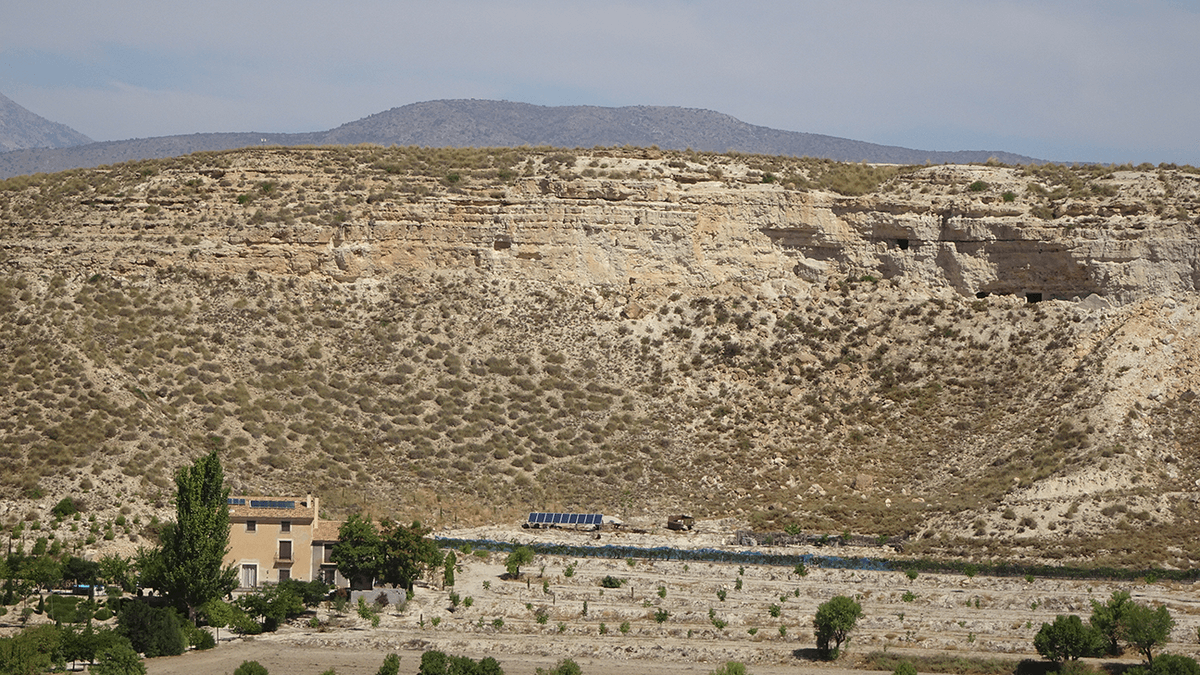
Redating of five fossils from southeastern Spain places these as comfortably the oldest evidence of hominids in Europe. If correct, this provides strong evidence for the claim that members of the Homo genus first reached Europe by crossing the open water between Morocco and Gibraltar, implying a level of technological sophistication previously thought to have evolved much later. Astonishing as such a conclusion would be, it is consistent with several other recent discoveries from around the world.Long before our species, Homo sapiens, appeared on Earth, other hominids had left Africa and populated much of Asia and Europe. Although the ancestors we share with these explorers were making stone tools more than a million years earlier than that, it was initially assumed Eurasia was populated entirely on foot. The idea that Homo erectus or its contemporaries could build boats or swim long distances was treated as a non-starter. If that was true, therefore, the path into Europe would have required passing through parts of Asia and around the Black Sea before moving west. The dating of remains from Orce, Granada as 1.3 million years old contradicts that, being far older than any from Eastern or Central Europe.Dr Lluis Gibert of the University of Barcelona is lead author of a new attempt to date these fossils using the magnetic records in sediments in which the fossils were found. Magnetic rocks preserve a record of the direction of the magnetic field in which they formed. Occasional reversal of the Earth’s poles allows paleontologists to date these rocks with more confidence than most alternative methods.Outcrops in the Orce region are perfect for this, Gibert claims. "The uniqueness of these sites is that they are stratified and within a very long sedimentary sequence, more than eighty meters long. Normally, the sites are found in caves or within very short stratigraphic sequences, which do not allow you to develop long paleomagnetic sequences in which you can find different magnetic reversals," he said in a statement. Based on their placement relative to five such reversals, fossils from Venta Micena, Barranco León and Fuente Nueva are respectively 1.32, 1.28, and 1.23 million years old. That puts these Orce sites as 200,000-400,000 years older than the alternative oldest site of hominid occupation on the Iberian Peninsula. More significantly, it makes all of them far older than any hominid fossils elsewhere in Europe.Unless an error can be found in Gibert and co-authors’ dating, early humans either passed all the way from the Caucuses to Spain without leaving any trace, or they arrived there via the Strait of Gibraltar. Both are hard to believe, but Gibert and the other authors consider the second option much more likely.The area occupied by early humans 700,000 years ago (salmon), with sites where remains or tools have been found. Possible migration paths are marked in yellow, notably those by which humans could have reached Spain.Image Credit: Gibert et al/Earth Science ReviewsWe know hominids can live in an area for a long time without leaving any fossils – or at least none we have found. Yet if humans had been spread out across at least southern Europe for hundreds of thousands of years, we’d have expected to find something. The alternative possibility, that hominids migrated through eastern and central Europe, and then France, but didn’t stay long enough to leave traces before flourishing in Spain, is equally implausible.This leaves the idea that the ancestors of the Orce fossils crossed the Mediterranean, presumably at the Strait where it is currently 14 kilometers (8 miles) wide. The similarity of stone tools at one Orce site to those being made in North Africa around the same time strengthens the claim. Meanwhile, the oldest evidence of the Acheulian technology, developed by Homo erectus and continued by Neanderthals, lies beneath layers at most 1.07 million years old. Between 0.91 and 0.78 million years ago Acheulian technology appears in Italy as well as Spain, suggesting this was the point where hominids entered Europe from the east.Nevertheless, the question remains how anyone could have crossed the Strait?We know the Strait has been blocked at times, but the most recent was millions of years before the first humans, so passage on dry land was not possible. On the other hand, tectonic activity in the area means the width of the Strait has grown and shrunk over time, so it might once have been a shorter passage than it is today.Nevertheless, the powerful currents make it very unlikely the Strait was swimmable at the time, suggesting anyone crossing the Strait must have had a boat or raft. This would also explain how the ancestors of Homo floresiensis, the so-called “Hobbits” crossed the even wider – 19 kilometers (11 miles) or more – Lombok Strait. “Humanity arrived in Europe when it had the necessary technology to cross maritime barriers, as happened before a million years ago on the island of Flores (Indonesia)," Gibert said.The possibility of such early, and relatively small-brained, human ancestors making steerable watercraft became more credible with the discovery of a wooden structure 476,000 years old, before Homo sapiens.If more than a million years ago early humans were building wooden houses and vessels capable of crossing treacherous waters, we have to ask: What else they could do? Equally puzzling is why people capable of such advanced technology apparently never developed some technologies and cultural practices that finally burst on the scene in the Neolithic. The study is open access in Earth-Science Reviews. 
Like
Comment
Share
Showing 69413 out of 103640
  • 69409
  • 69410
  • 69411
  • 69412
  • 69413
  • 69414
  • 69415
  • 69416
  • 69417
  • 69418
  • 69419
  • 69420
  • 69421
  • 69422
  • 69423
  • 69424
  • 69425
  • 69426
  • 69427
  • 69428
Advertisement
Stop Seeing These Ads

Edit Offer

Add tier


Select an image
Delete your tier
Are you sure you want to delete this tier?

Reviews

In order to sell your content and posts, start by creating a few packages. Monetization

Pay By Wallet

Payment Alert

You are about to purchase the items, do you want to proceed?

Request a Refund