YubNub Social YubNub Social
    #music #tew #tuba #euphonium #tew2026 #militarymusic #armymusic #armyband #uk #jazz #armyorchestra #orchestra #quartet #warmup #history
    Advanced Search
  • Login
  • Register

  • Night mode
  • © 2026 YubNub Social
    About • Directory • Contact Us • Developers • Privacy Policy • Terms of Use • shareasale • FB Webview Detected • Android • Apple iOS • Get Our App

    Select Language

  • English
Night mode toggle
Featured Content
Community
New Posts (Home) ChatBox Popular Posts Reels Game Zone Top PodCasts
Explore
Explore
© 2026 YubNub Social
  • English
About • Directory • Contact Us • Developers • Privacy Policy • Terms of Use • shareasale • FB Webview Detected • Android • Apple iOS • Get Our App
Advertisement
Stop Seeing These Ads

Discover posts

Posts

Users

Pages

Blog

Market

Events

Games

Forum

SciFi and Fantasy
SciFi and Fantasy  
18 hrs

First Dune: Part Three Teaser is All Spectacle and Blond Robert Pattinson
Favicon 
reactormag.com

First Dune: Part Three Teaser is All Spectacle and Blond Robert Pattinson

News Dune: Part Three First Dune: Part Three Teaser is All Spectacle and Blond Robert Pattinson It’s really hard to be emperor, guys By Molly Templeton | Published on March 17, 2026 Screenshot: Warner Bros. Comment 0 Share New Share Screenshot: Warner Bros. The first teaser for Dune 3—which should be called Dune Messiah, but how could we possibly keep track of the order without numbers—believes only in the whisper and the scream. “Your father never started a war,” Rebecca Ferguson whispers in what is apparently her single scene in the film. What starts quietly becomes all aggressive when the chanting kicks in… and never ends. Stop yelling at me, Dune 3! (Yes, Hans Zimmer is back to do the score.) But then, one can’t help but think that this trailer is coming out now for two rather cynical reasons. One: Timothée Chalamet’s latest Oscar campaign ended on Sunday night. Two: Timothée Chalamet recently said that very foolish thing about opera and ballet, and people are rightfully quite cranky with him. (A highlight of the Oscars was watching Misty Copeland dance right in front of him.) Hence: A Dune trailer to put him back in our good graces! Will it work? Hard to say. This trailer is all vibes, as first looks so often are. Paul (Chalamet) and Chani (Zendaya) talk about what they’ll name their kid. Duncan Idaho (Jason Momoa) does a cool move. Robert Pattinson, extremely blond, lurks, creepily. He lightly gives off the aura of Rutger Hauer in Blade Runner, and no, I can’t exactly explain why. Princess Irulan (Florence Pugh) stalks about. There is, naturally, quite a lot of sand. Javier Bardem returns as Fremen leader Stilgar; Anya Taylor-Joy also does a bit of stalking about as Paul’s little sister Alia. The trailer premiered in Los Angeles, with director Denis Villeneuve and some of the stars present. Villeneuve said, “It’s a very different movie than the first ones,” continuing, “If the first movie was contemplation, a boy exploring a new world, and the second one is a war movie, this one is a thriller. It is action-packed and tense. More muscular.” Taylor-Joy said of Alia, who is really a lot of a character, “She carries the weight and the wisdom of generations and generations in her head. She’s never in a singular conversation. It’s kind of everything everywhere, all at once. And the one thing that she really feels most strongly about is her love and devotion to her brother, because that is the only person who’s ever made her feel like she makes sense.” Most of Villeneuve’s collaborators have returned for the third Dune film, including composer Zimmer, costume designer Jacqueline West, production designer Patrice Vermette, and editor Joe Walker. For this one, though, Brian K. Vaughan joins Villeneuve as writer, and the film has a new cinematographer in Linus Sandgren, who won an Oscar for his work on La La Land. Much of the movie was shot on 65mm film, but some on IMAX. “I kept the desert in digital because I like the brutality,” said Villeneuve. Dune 3 will sandblast into theaters on December 18th.[end-mark] The post First <i>Dune: Part Three</i> Teaser is All Spectacle and Blond Robert Pattinson appeared first on Reactor.
Like
Comment
Share
SciFi and Fantasy
SciFi and Fantasy  
18 hrs

Wonder, Hope, and Rain on Mars: A Conversation With Author Matthew Kressel
Favicon 
reactormag.com

Wonder, Hope, and Rain on Mars: A Conversation With Author Matthew Kressel

Books Matthew Kressel Wonder, Hope, and Rain on Mars: A Conversation With Author Matthew Kressel Matt Kressel discusses his new novella The Rainseekers, seeking out natural wonders, and writing authentic emotion. By Martin Cahill | Published on March 17, 2026 Photo by Christine Kressel Comment 0 Share New Share Photo by Christine Kressel Matt Kressel is someone I’ve known for over a decade. A kind person and a talented, award-nominated writer, Matt is dedicated to the writing community of NYC and abroad, synonymous with the KGB Fantastic Fiction reading series and the writing group of Altered Fluid (which we were both a part of for many years). Matt writes in many modes, across many genres, and while his work is always imaginative and packed to the brim with the fantastic, the strange, or visions of potential futures, there is one theme that always appears in his work: the human experience is vast, beautiful, and important, our future is one we build together, and there is more that unites us than divides us. I was so thrilled for his new novella when I heard about it, and it did not disappoint. You can find our conversation below, and I encourage you to pick up The Rainseekers today! Buy the Book The Rainseekers Matthew Kressel Buy Book The Rainseekers Matthew Kressel Buy this book from: AmazonBarnes and NobleiBooksIndieBoundTarget Martin Cahill: Hi Matt! Thanks so much for talking with me about The Rainseekers. I absolutely loved this story, and what you accomplished with it, and I’d love to start off with: if you were being asked your life story in a rover on your way to witness something spectacular, how would you describe the time in your life where you wrote this book? Matthew Kressel: Thank you, Martin. That means a lot! I began writing The Rainseekers during the first Covid lockdown in early 2020. I was feeling depressed about the state of the world and I wanted to write something “optimistic.” A lot, though certainly not all, of near-future science fiction tends toward dystopia and a pernicious nihilism, and I wanted to actively challenge that. I wanted to write about a future where things definitely aren’t perfect, but things are qualitatively better than where we are now. I wrote two or three chapters, then promptly trunked the story. I just felt it would be too hard to write. Fast forward two years later, and I pulled out the story from my digital trunk and realized that there was something there. I actually got the chills reading it. I believe this is because I had tapped into a deep need in myself, and maybe some universal human need, for narratives of hope and resilience. In those intervening two years a lot happened to me. People I loved had died. The world I had come to trust and rely on had permanently changed. I did a lot of mourning of people, of lost things. In those years I had also grown as a person. I had matured into a place where I felt I could finally write the story, and most of all it would be honest. Most of the characters in The Rainseekers are nothing like me in real life, but I have felt what they felt. Their emotions are authentic in that regard. Martin: There are so many beautiful elements to this book that combine to become more than the sum of their parts. Can you tell me who or what appeared first? Sakunja, the rain on Mars, one of the passengers? Matthew: Whenever I get asked questions like these my answer sounds either evasive or mystical, but the truth is I don’t know where my ideas come from or when exactly they appear. Maybe it’s a fault of memory more than anything. I do recall riding in a cab with my friend Theresa DeLucci (we were coming home from a Fantastic Fiction at KGB event in Manhattan) and I told her about the idea for a story: a group of people are chasing an evasive storm on Mars, hoping to be the first to experience rain on the newly terraformed planet. I don’t recall if Sakunja was a fully formed character at that time. But I do know that as soon as Sakunja appeared that I knew everything about her, almost as if she pre-existed. The other characters definitely came after these two. And the book’s optimism was always a deliberate choice. Martin: The Rainseekers is definitely a mosaic-like story of all these disparate souls coming together to witness the first natural rainfall on Mars, and I loved learning about each one of them. Was there anyone who was more difficult to tap in to than the others? Did they always all contribute to the creation of a habitable Mars, or was that something you discovered along the way? Matthew: When I’m crafting a new character I look for the humanity in them, the thing that connects the reader to their experiences. We are all challenged by life, we all suffer, and so I focused on specific and difficult challenges they faced. One of the things that makes a character interesting is not just how they feel but what they do in the face of their suffering. In The Rainseekers, I tried to write characters who, despite facing incredible hardships, maintain some kind of hope. They keep on going even when all seems lost. Usually this is not just because of their efforts alone, but because they have the help of others along the way. I was also writing about people from cultures very different from my own, and so I had to be careful to honor and respect those cultures and to do my homework to make sure I was representing these cultures in a respectful way. I am imperfect and I likely got some things wrong. But I do hope readers will see that I’m trying to highlight each character’s humanity to show that even though we come from these diverse backgrounds we all share a commonality of experience. We all suffer. In that sense, I think all the characters were equally hard to write. I tried to bring a lot of my own experiences into the text, from people I’ve known and things I’ve felt and witnessed, and doing that can often bring up a lot of pain, both consciously acknowledged and deeply repressed. We’re talking about individual but also generational trauma. With each character, I tried to explore what brought them to Mars, what hardships they faced getting there. And because Mars is still actively being terraformed and because it’s a new frontier, like a Wild West town, many people in the narrative are participating in its construction. Martin: The reader learns of Sakunja’s story fairly early on, which I found exciting. As the narrator of the book, I feel like other authors might have taken her story as a way to begin the book or end the journey, but you chose as we were in the middle of all the tension of reaching the rain. How did that happen? Matthew: It was important for me to start the story in media res, already on their journey, and to keep the story organic. A lot of fiction follows common tropes: the inciting incident, the tension building, plot reversals, culmination, and denouement. Readers expect these tropes, especially in genres like science fiction. So it was important for me to have an ostensible framing narrative where the characters are chasing this rainstorm across a dangerous terrain, and I tried to develop a tension arc around that. But I ultimately wanted to focus on the individuals and their stories. I also quickly realized that the narrator, Sakunja, needed a strong backstory too. Sakunja is a former social media influencer and up until just before the story begins she’s lived a narcissistic life, focusing on herself, her own needs, to the detriment of those around her. She has developed enough self-awareness since then to realize how selfish she has been, especially after a personal tragedy, so she is now actively trying to excise herself from the story and focus on others for a change. This is why when one of the passengers asks her to tell her own story, she is reluctant. She has exclusively focused on herself for years and has come to loathe her former incarnation. But when this passenger hears her story and tells her that her story is just as interesting and important as any other, it gives Sakunja permission to accept and forgive herself. As to why it happened where it did, it just felt like the right place in the story. I was going for a sense of verisimilitude, and so things seldom happen in a convenient or fortuitous order. Martin: You’re known for writing across a variety of science fiction themes, milieus, genres within sci-fi; what brought about this specific journey, this examination of a (positively) changing climate on Mars, this venture into a documentarian point of view? Matthew: The late philosopher Mark Fisher used the term “hauntology,” a word invented by Jacques Derrida, to describe the feeling of mourning a future we were “promised” but never got. Instead of improving people’s lives, technology has, to a large extent, made some aspects of our lives measurably worse. (Our attention span, for an example.) The vectors of capitalism have driven this “enshittification.” For a long time, I have been lamenting this lost future, this positive optimistic world that I feel we should have gotten but somehow we keep descending into its exact opposite, some nihilist dystopia. We are more than happy to build the bleak worlds science fiction warned us about, but somehow we cannot conceive of the opposite. I don’t give a specific timeline in the book, but terraforming Mars would take centuries. Someone compared this to the European cathedrals that took generations to build. This multi-generational timeline sits in stark contrast to the ephemeral nature of our present, with dwindling attention spans and doomscrolling the daily atrocities. I tried to take a wider, longer view of things. Because it feels to me, especially the United States, that we’ve very much lost a collective vision of a brighter future. In The Rainseekers I wanted to ask, what if we all came together and worked toward something beautiful and beneficial? And, sure, you could argue that terraforming Mars may not be beautiful or beneficial to all, but I took the point of view that it would be to those on this journey, and so this mission to feel the rain is deeply meaningful to them, a kind of touchtone to prove that humanity is capable of not just atrocities but great beauty too. I chose the documentarian style for two reasons. I usually find writing in first person more freeing because you can insert the character’s voice in a way that is harder to pull off well or as convincingly in third person. Also, this style provides a nice framing device for each character to tell their story. Through this framing you see that each person, in their own small way, helped assemble this “cathedral,” this profoundly meaningful thing, brick by brick. But it also has a very practical purpose. A terraformed planet means new life can now thrive there too. Martin: Where do you feel like The Rainseekers pushed you as a writer? Or do you have a moment in the book that you felt was absolutely tapping into something you love doing as a writer? Matthew: It certainly pushed me far out of my comfort zone. It made me realize that, though I love plot, my first love is character. I love writing about interesting life experiences and how that shapes a person. When I was done writing it, I didn’t know if the book worked or not. I mean, I personally thought it worked, but I had no idea how others would receive it. I always get a little nervous when I show a new work to first readers. But this time it was different. I felt extremely vulnerable. Perhaps because I had put so much of myself into it. It was frightening actually how vulnerable I felt. And so when I finally started to get feedback from first readers, and it was overwhelmingly positive, it was a great relief. But I was also like, uh-oh, I think I’m onto something here, and this means I’ll have to stay in this place of vulnerability if I want to continue writing like this. It’s hard, but my best fiction usually comes from these places of deep searching and honesty. Martin: Ultimately, the book is a celebration of the natural world’s wonders, and humanity’s ability to seek those places out and know them. Are there any landscapes on our planet Earth now where you’ve felt similar awe or wonder? Matthew: Switzerland was like this for me. My wife and I visited there in 2015 for our honeymoon. I imagined Switzerland to be one specific way, a field of flowers on a hill a la The Sound of Music. I had no idea it had so many different climates. You have these impossibly humid rainbow-filled valleys with spraying waterfalls that inspired J.R.R. Tolkien to create Rivendell, and at the same time 11,000 feet up on the same day you have frozen glaciers on mountain tops where you need arctic gear to cross. You have green bucolic towns miles up on mountain plateaus that you can only get to by cable car. And there is hauntingly desolate terrain atop some mountains that looked to me no different from Mars. We were hiking at thousands of feet above sea level, on a rocky ledge and there were fossilized sea creatures embedded in the rocks. It astounded me how this high mountain pass was once at the bottom of some ancient ocean, and so much time had passed that not only had these sea creatures been fossilized, but the earth had slowly pushed the ocean floor up until it was now thousands of feet above sea level. It really had a profound effect on me. But also, I think if you pay attention to your own neighborhood, even if it’s not as openly “majestic” as Switzerland, there are still amazing wonders hiding everywhere. I live in Queens, and this summer I noticed there were wild lizards living on the streets. In Queens! In New York City! And we have these little empty overgrown lots that are often filled with the most amazing wildflowers and pollinator insects (I may have been guilty of a few seed bombings). If you pay attention to your surroundings, even if you live in a big city, you will often spot the most incredible things hiding in the cracks. Honestly, any time I’m walking in nature, either in a city or deep in some wood, I feel a sense of wonder. It’s all sacred to me, and why I feel so strongly we need to protect the environment for future generations. Martin: What is on the horizon for you? Matthew: Next month I have a story coming out in Lightspeed Magazine called “Espie Droger Dreams of War.” I wrote it last year after DOGE was cutting government jobs and gleefully chainsawing beneficial organizations like U.S. Aid. It made me so furious, so I had to write about it. It’s a very angry story — far different in tone from The Rainseekers, but I still think there is a core nugget of humanity within it. I have another short story that I wrote on request for a themed anthology that the editor is pitching to a few publishers, so it may be a while before that one is out. I’m also hard at work on the follow-up to The Rainseekers (my agent tells me not to call it a sequel), which picks up more or less where the novella ends. Whereas The Rainseekers is structured as a kind of documentarian travelogue, this new book is structured like a mystery, but with enough echoes of theme and tone that readers of the first book should like it. It’s been really hard but also really fun to write so far. Other than the above, just cohosting the Fantastic Fiction at KGB reading series with Ellen Datlow, and the podcast I do with Mercurio D. Rivera called Nerd Count, and I’m going to a few conventions. I’ll definitely be at Readercon and also most likely WorldCon as well. I’m usually posting, updating, and publishing new things all the time, so the best place to find out what I’m up to is my website. Martin, thanks so much for these fantastic questions. They really were a pleasure to answer![end-mark] The Rainseekers is available now from Tordotcom Publishing. The post Wonder, Hope, and Rain on Mars: A Conversation With Author Matthew Kressel appeared first on Reactor.
Like
Comment
Share
Daily Signal Feed
Daily Signal Feed
18 hrs

Biden Judge Blocked Kennedy’s Vaccine Policy — Prompting Call for Impeachment
Favicon 
www.dailysignal.com

Biden Judge Blocked Kennedy’s Vaccine Policy — Prompting Call for Impeachment

A Biden-appointed judge, previously admonished by the Supreme Court, imposed an injunction against the Trump administration’s move to stop recommending the COVID-19 vaccine for children. U.S. District Judge Brian Murphy in the District of Massachusetts issued the ruling on Monday.  Last May, Health and Human Services Secretary Robert F. Kennedy Jr. announced the removal of the COVID-19 vaccine from the Centers for Disease Control and Prevention-recommended immunization schedule for children and pregnant women.  Kennedy fired 17 members of the CDC’s Advisory Committee on Immunization Practices, or ACIP, in June and replaced them with 13 new advisers. The American Academy of Pediatrics sued in July, claiming the directive adversely affects the physician-patient relationship since doctors could be put in a position to advise against federal health guidelines. The group also asserted that the rule change violated the Administrative Procedure Act.  The advisory board firings likely violated the Federal Advisory Committee Act, Murphy found. The judge further determined all the decisions made by the advisory board–including about other vaccines–were voided. Murphy imposed the preliminary injunction and stayed any actions taken by the advisory committee’s new members.  The administration is likely to appeal the decision.  “HHS looks forward to this judge’s decision being overturned just like his other attempts to keep the Trump administration from governing,” HHS spokesperson Andrew Nixon said in a statement, according to The Guardian.  In an immigration case, Murphy revoked the Trump administration’s policy of deporting illegal immigrants to locations other than their country of origin. The U.S. First Circuit Court of Appeals reversed Murphy’s ruling in that case.  In the vaccine case, the committee ruled in January to remove the COVID-19 vaccine and other suggested vaccines from the immunization schedule, a ruling that was voided by the judge. Murphy found that the administration bypassed the immunization advisory committee “to change the immunization schedules, which is both a technical, procedural failure itself and a strong indication of something more fundamentally problematic: an abandonment of the technical knowledge and expertise embodied by that committee.” “Second, the government removed all duly appointed members of ACIP and summarily replaced them without undertaking any of the rigorous screening that had been the hallmark of ACIP member selection for decades,” he added. Murphy wrote, “the court concludes that plaintiffs are likely to succeed in showing that the reconstitution of ACIP and the January 2026 changes to the childhood immunization schedule violate the Administrative Procedure Act.” Advisory Committee co-chair Robert Malone called for Murphy’s impeachment in a post on X.  “Brian Murphy is a rogue judge, who has been rebuked by the Supreme Court for continuing to enforce an injunction after the Supreme Court had already stayed it in an immigration deportation case. In that case, the Supreme Court held that district court judges do not have authority to issue nationwide injunctions. He then again defied the same order in 2026,” Malone posted.  Brian Murphy is a rogue judge, who has been rebuked by the Supreme Court for continuing to enforce an injunction after the Supreme Court had already stayed it in an immigration deportation case. In that case, the Supreme Court held that district court judges do not have…— Robert W Malone, MD (@RWMaloneMD) March 17, 2026 He added, “This is the third time in six months, he has defied the Supreme court – insisting that he can issue national wide injunctions against the federal government. There is no other remedy to remove him from the bench, other than impeachment.” Malone was referring to the deportation case. Last summer, the Supreme Court temporarily cleared the way for “third country” deportations before Murphy again imposed an injunction on the administration’s deportation policy. The high court told Murphy he could not enforce an order it had stayed. American Academy of Pediatrics President Andrew D. Racine applauded Murphy’s ruling.  “This decision effectively means that a science-based process for developing immunization recommendations is not to be trifled with and represents a critical step to restoring scientific decision-making to federal vaccine policy that has kept children healthy for years,” Racine said in a public statement.  The post Biden Judge Blocked Kennedy’s Vaccine Policy — Prompting Call for Impeachment appeared first on The Daily Signal.
Like
Comment
Share
Daily Signal Feed
Daily Signal Feed
18 hrs

EXCLUSIVE: Campaign Calls Out Waste Concerns at Cleveland Clinic
Favicon 
www.dailysignal.com

EXCLUSIVE: Campaign Calls Out Waste Concerns at Cleveland Clinic

FIRST ON THE DAILY SIGNAL—While the Trump administration looks to crack down on waste and fraud across the country, a conservative watchdog group is looking to fight waste in Vice President JD Vance’s own background by highlighting concerns at one of the nation’s top hospitals. Save Our States, a group dedicated to defending the Electoral College, has—along with its 501c4 action arm—come up, with a TV ad, digital ad campaigns, mobile billboards, and a website to highlight its concerns with the Cleveland Clinic and their tax-exempt status. The TV ad from Save Our States Action framed the Cleveland Clinic as an example of “bejeweled, bedazzling lifestyles of the rich and famous.” Among the concerns listed in the ad are allegations of suing patients, “deceptive billing,” and sexual assaults. Such concerns were revealed in a report from last April by Sen. Bill Cassidy, R-La., chairman of the Senate Committee on Health, Education, Labor & Pensions. The TV ad also highlighted an art museum, a sports center with the Cleveland Cavaliers, and a Super Bowl ad to speak to the clinic being at “the height of elegance!” “With all that cash, they’ve become venture capitalists,” the ad proclaimed. “And due to their tax-exempt status, it’s subsidized by you, the taxpayer!” “A wealthy urban hospital using tax loopholes to take money meant for rural hospitals. But it’s all about the money and fame! Cleveland Clinic-taking your tax dollars, betraying their patients,” the ad concluded.  A statement from Save Our States Executive Director Trent England shared exclusively with The Daily Signal highlighted how Ohioans are affected. “Should taxpayers subsidize Super Bowl commercials? Should health care dollars pay for art museums? Cleveland Clinic thinks so. It benefits from countless government programs, then pays executives multi-million-dollar salaries and builds lavish facilities in places like London and Abu Dhabi,” England said. “How does this help patients in Ohio, or American taxpayers? “Meanwhile, Cleveland Clinic faces accusations of overcharging, deceptive billing, and suing patients for medical debt. Taxpayers and patients need to know: We’re being systematically overcharged for health care and places like Cleveland Clinic are behind it.” England also sent a letter on Tuesday to Rep. Brett Guthrie, R-Ky., chairman of the House Committee on Energy and Commerce, and Rep. Morgan Griffith, R-Va., chairman of the Subcommittee on Health. “Chairman Bill Cassidy and the Senate HELP Committee released a report that examined Cleveland Clinic’s use of 340B. It found the system receiving hundreds of millions of dollars in benefits each year. It clearly has plenty of resources, having built luxurious facilities in places like London and Abu Dhabi, and even its own art collection. Yet it has faced allegations of deceptive billing, accusations of overcharging patients, and even reports of a secret settlement to cover up sexual assaults during exams,” the letter first shared with The Daily Signal stated.  England also expressed what he hopes lawmakers will do.  “Taxpayers subsidize it all, but these expenses do little to benefit American patients,” England wrote. “Save Our States urges congressional leaders to scrutinize spending at subsidized hospitals. Americans need health systems that respect taxpayers and put patients first. Now is the time for transparency and accountability.” Vance’s role on leading “the war on fraud” came up during President Donald Trump’s State of the Union address last month. The president made it official with an executive order on Monday. While blue states have faced scrutiny over massive fraud schemes, waste concerns with the Cleveland Clinic take place in the vice president’s home state.  The Daily Signal reached out to the Cleveland Clinic for comment, as well as attorneys for Dr. Omar Massoud, the doctor referenced in the ad. An attorney noted that the case has been closed for some time and declined to comment further.  According to the public docket from Cuyahoga County, on June 18, 2024, Massoud was ordered to pay a fine, surrender his license, and sentenced to probation. He also received credit for jail time served on May 9, 2025. The post EXCLUSIVE: Campaign Calls Out Waste Concerns at Cleveland Clinic appeared first on The Daily Signal.
Like
Comment
Share
Daily Signal Feed
Daily Signal Feed
18 hrs

‘Seditious’ Form of Islam Poses Major Threat to America and Republicans Are Right to Sound Alarm, Muslim Reformer Says
Favicon 
www.dailysignal.com

‘Seditious’ Form of Islam Poses Major Threat to America and Republicans Are Right to Sound Alarm, Muslim Reformer Says

After multiple shooters who reportedly supported the Islamic State attacked Americans amid the Iran war, a Muslim reformer warns that a “seditious” form of his faith poses a grave threat to America, and warns his fellow Republicans need to correctly identify the threat. Congressmen Keith Self and Chip Roy, both Republicans from Texas, established a “Sharia-Free America Caucus.” Roy warned that “Sharia is a direct threat to our Constitution and Western values and seeks to replace our legal system and erode our basic freedoms.” “I am a supporter of Chip Roy… and see eye-to-eye with [his allies] on the threat of the global Sharia supremacist movement and the threat domestically against the American way of life,” M. Zuhdi Jasser, a medical doctor and military veteran who founded the American Islamic Forum for Democracy, told The Daily Signal in an interview Friday. Jasser, a Republican running for Congress in Arizona, insisted that not all Muslims pose a threat, however. “We need to make sure we make a distinction between Muslims and those within the Muslim community that are Islamists, who believe that Islam is a political movement, a legal movement, and a national identity movement in which the flag is Islamist and they are a seditious movement against Western nations,” he explained. Jasser warned that “if we’re sloppy and we mix those two concepts of Islamism versus the rest of Muslims, we are going to lose that battle.” The Muslim reformer argued that “the greatest asset that we have against Islamism and political Islam are Muslims that are anti-theocratic.” He presented his own case as illustrative. “My American identity is what prevented me from being radicalized and motivated me to defeat theocracy,” Jasser said. He praised America’s Founders for fostering the possibility of religious freedom—drawing “a distinction between theocracy and the personal practice of Christianity and Judeo-Christian faith.” He suggested this should be a model for Muslim reform. In December 2024, Jasser argued in an Oxford debate that the current form of Islam needs reform in order to foster representative government. “I practice Sharia in my personal faith, but what’s Sharia? Is my Sharia a source of law, or the source of law?” Jasser said in the debate. He told The Daily Signal he is “very sympathetic” to “the visceral response of Americans to this threat,” and he said the onus rests on Muslims, not non-Muslims, to explain and combat it. “Light a fire under the feet of Muslims, because if my kids are going to be able to thrive in an America that welcomes anti-Islamist Muslims, then Americans need to get a little more savvy with the difference between them, and it’s up to Muslims to define that, not non-Muslims to just sort of give us a pass,” Jasser said. He lamented that very few Muslims are willing to condemn political Islam. Jasser cited a study from the German Federal Criminal Police Office showing that nearly half of Muslims under age 40 have Islamist views, showing a preference for Sharia law over the German Basic Law. He said the proportion is likely smaller in the United States, but still too large. Of American Muslims, he said, “Not only are 30-40% dyed-in-the-wool Islamists, the rest of the 60%, for the most part, have been silent. Yes, Muslims that are anti-Islamist are a minority, as far as vocal ones.” He highlighted the CLARITy Coalition, which aims to combat Islamist tyranny and which includes other Muslim reformers like Asra Nomani and former Muslims like Ayaan Hirsi Ali. “We need to flip the script on the Islamists that have said this is anti-Islam, and they racialize our faith,” he urged. The post ‘Seditious’ Form of Islam Poses Major Threat to America and Republicans Are Right to Sound Alarm, Muslim Reformer Says appeared first on The Daily Signal.
Like
Comment
Share
Hot Air Feed
Hot Air Feed
18 hrs

Goldberg: Everyone Hates Trump's War With Iran
Favicon 
hotair.com

Goldberg: Everyone Hates Trump's War With Iran

Goldberg: Everyone Hates Trump's War With Iran
Like
Comment
Share
Hot Air Feed
Hot Air Feed
18 hrs

Critical of the War? That's Fine, and Often Patriotic. Rooting for the Enemy? That's Evil
Favicon 
hotair.com

Critical of the War? That's Fine, and Often Patriotic. Rooting for the Enemy? That's Evil

Critical of the War? That's Fine, and Often Patriotic. Rooting for the Enemy? That's Evil
Like
Comment
Share
Science Explorer
Science Explorer
18 hrs

All 5 Genetic Building Blocks Have Been Found On Asteroid Ryugu
Favicon 
www.iflscience.com

All 5 Genetic Building Blocks Have Been Found On Asteroid Ryugu

The building blocks of life on Earth are not only found on Earth.
Like
Comment
Share
Science Explorer
Science Explorer
18 hrs

What Were Cocaine, THC, And Nicotine Doing On Ancient Egyptian Mummies?
Favicon 
www.iflscience.com

What Were Cocaine, THC, And Nicotine Doing On Ancient Egyptian Mummies?

Cocaine didn't make its way across the Atlantic until after the Spanish invaded. So how did cocaine end up being found on Ancient Egyptian mummies?
Like
Comment
Share
NewsBusters Feed
NewsBusters Feed
18 hrs

Capehart Tries to Link GOP Comments to Recent Muslim Terrorist Attacks
Favicon 
www.newsbusters.org

Capehart Tries to Link GOP Comments to Recent Muslim Terrorist Attacks

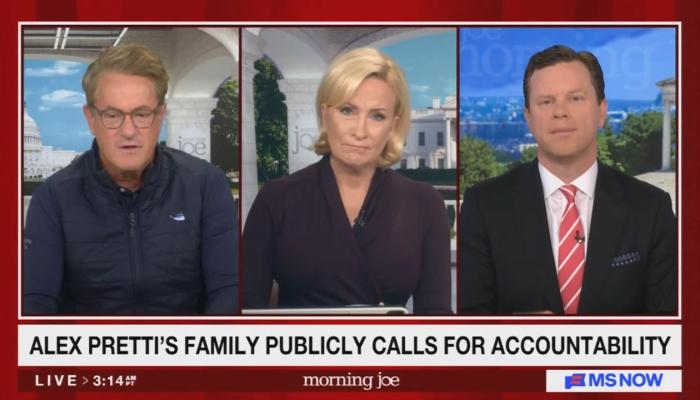
On Sunday's The Weekend, MS NOW co-host Jonathan Capehart stretched to link anti-Muslim comments by Republicans to recent terrorist attacks at a Michigan synagogue and at Old Dominion University, even though Muslims were the perpetrators and not the victims in both cases. Co-host Eugene Daniels began the segment by reading from a couple of recent statements by Republican members of Congress that were critical of Muslims, and then complained about how House Speaker Mike Johnson responded as the MS NOW host recalled: "And I think the thing that is like concerning -- frustrating all the words is that like the leadership of the party has said nothing." When co-host Jackie Alemany noted Johnson said something, Daniels said "he added to it!"  Then came a clip of Speaker Johnson alluding to concerns about the possibility of sharia law being applied in America: On Sunday, MS NOW hosts raged against "xenophobic" social-media posts about Muslims being incompatible with America, and Speaker Johnson saying there were concerns about Sharia law. Capehart suggested GOP posts were spurring terrorism! pic.twitter.com/aGifiRZM08 — Tim Graham (@TimJGraham) March 17, 2026   MIKE JOHNSON, HOUSE SPEAKER: Look, I've spoken to those members and all members as I always do about our tone and our message and what we say. There's a -- look, there's a lot of energy in the country and a lot of popular sentiment that the demand to impose sharia law in America is a serious problem. That's what animates this. And that's -- that's the, you know, the language that people use. It's different language than I would use, but I think that that's a serious issue. After Daniels exploded that no one's calling for sharia law, that this is just Johnson putting a "sheen on the Islamophobia and racism coming out of his party and from his own members," Capehart joined in:  CAPEHART: With his own little soft tones, as he talks reasonably about something so outrageous. And more to the point, I think we are in this in -- this moment because we have a President of the United States who talks like this, who talked like this on the campaign. He ran an openly racist, xenophobic, white nationalist campaign.  DANIELS: Three of them! CAPEHART: And so we should not be surprised when members of Congress post things on social media like that and get no pushback. And you get nonsense that we just -- like we just heard from the Speaker of the House, this will not change until we have leaders. We have grown-up adult supervision in the Capitol, in the White House, who take a step back and rein in the crazies who foment stuff like this, because right now we're talking about words and we're talking about social media posts. Without mentioning that the perpetrators of recent terrorist attacks were Muslims, Capehart concluded: "But we just saw this week incidents -- the synagogue in Michigan, a shooting at Old Dominion. Like, these words, this moment that we're in can have very real consequences for people." Anything inflammatory said by the Mamdanis and Omars and Tlaibs isn't part of the MS NOW equation. Co-host Jackie Alemany then went along with Capehart's premise as she responded: The Washington Post took stock of just how pervasive of a problem this kind of rhetoric has become. Since the beginning of the year, nearly 100 GOP members of Congress have posted about Islam or Muslims, and almost all of those posts have been negative, according to the Post's analysis. Two-thirds of those posts have mentioned radical Islam, sharia law, extremism or terrorism while several have called for Muslims to be deported. I fear that like this, this is not going to -- to change, right? I mean, this is why we've had conversations since 2015 about the importance of political rhetoric, how it leads to political violence. And now, 12 years later, you're seeing a vast majority of Republican congresspeople engaging and dabbling and propagating this kind of language that it is essentially becoming mainstream. Transcript follows: MS NOW's The Weekend March 15, 2026 8:31 a.m. Eastern JACKIE ALEMANY: As the war in Iran intensifies and after recent violent attacks here at home, some Republicans are becoming even more emboldened in their Islamophobic comments. Tensions erupted this week between lawmakers after some right wing house members and senators shared anti-Muslim social media posts. Alabama Senator Tommy Tuberville took aim at New York City mayor Zohran Mamdani while responding to an X post with side-by-side photos of the September 11th attacks and the newly elected mayor. Tuberville wrote, quote, the enemy is inside the Gates. And Florida congressman Randy Fine posted on X, quote, "We need more Islamophobia, not less. Fear of Islam is rational." EUGENE DANIELS These are not anonymous random accounts named "Egg2654," right, on X. These are elected officials who have power and influence in this country, who are making laws in this country, who are spreading this vile crap. And I think the thing that is like concerning -- frustrating all the words is that like the leadership of the party has said nothing. And so, you know -- JACKIE ALEMANY: Well, he said something. DANIELS: He said he did -- he added to it, right. And he tries to -- and Mike Johnson -- we're going to play it. Play Mike Johnson. MIKE JOHNSON, HOUSE SPEAKER: Look, I've spoken to those members and all members as I always do about our tone and our message and what we say. There's a -- look, there's a lot of energy in the country and a lot of popular sentiment that the demand to impose sharia law in America is a serious problem. That's what animates this. And that's -- that's the, you know, the language that people use. It's different language than I would use, but I think that that's a serious issue. DANIELS: Speaker, who is demanding -- JONATHAN CAPEHART:  Right. DANIELS: -- to impose sharia law in this country? There is I have not seen one elected Muslim official in this country saying that they would want sharia law in this country. That is not something that is actually happening. And so he likes to put a glean -- a sheen on the Islamophobia and racism coming out of his party and from his own members. CAPEHART: With his own little soft tones, as he talks reasonably about something so outrageous. And more to the point, I think we are in this in -- this moment because we have a President of the United States who talks like this, who talked like this on the campaign. He ran an openly racist, xenophobic, white nationalist campaign. DANIELS: Three of them. CAPEHART: And so we should not be surprised when members of Congress post things on social media like that and get no pushback. And you get nonsense that we just -- like we just heard from the Speaker of the House, this will not change until we have leaders. We have grown up adult supervision in the Capitol, in the White House, who take a step back and rein in the crazies who foment stuff like this, because right now we're talking about words and we're talking about social media posts. But we just saw this week incidents -- the -- the -- the synagogue in Michigan, a shooting at Old Dominion. Like, these words, this moment that we're in can have very real consequences for people. ALEMANY: The Washington Post took stock of just how pervasive of a problem this kind of rhetoric has become. Since the beginning of the year, nearly 100 GOP members of Congress have posted about Islam or Muslims, and almost all of those posts have been negative, according to the Post's analysis. Two-thirds of those posts have mentioned radical Islam, sharia law, extremism or terrorism. While several have called for Muslims to be deported. I fear that like this, this is not going to -- to change, right? I mean, this is why we've had conversations since 2015 about the importance of political rhetoric, how it leads to political violence. And now, 12 years later, you're seeing a vast majority of Republican congresspeople engaging and dabbling and propagating this kind of language that it is essentially becoming mainstream.
Like
Comment
Share
Showing 122 out of 114418
  • 118
  • 119
  • 120
  • 121
  • 122
  • 123
  • 124
  • 125
  • 126
  • 127
  • 128
  • 129
  • 130
  • 131
  • 132
  • 133
  • 134
  • 135
  • 136
  • 137
Advertisement
Stop Seeing These Ads

Edit Offer

Add tier


Select an image
Delete your tier
Are you sure you want to delete this tier?

Reviews

In order to sell your content and posts, start by creating a few packages. Monetization

Pay By Wallet

Payment Alert

You are about to purchase the items, do you want to proceed?

Request a Refund