YubNub Social YubNub Social
    #music #tew #tuba #euphonium #tew2026 #militarymusic #armymusic #armyband #band #concertband #uk #tusab #jazz #armyorchestra #orchestra
    Advanced Search
  • Login
  • Register

  • Night mode
  • © 2026 YubNub Social
    About • Directory • Contact Us • Developers • Privacy Policy • Terms of Use • shareasale • FB Webview Detected • Android • Apple iOS • Get Our App

    Select Language

  • English
Night mode toggle
Featured Content
Community
New Posts (Home) ChatBox Popular Posts Reels Game Zone Top PodCasts
Explore
Explore
© 2026 YubNub Social
  • English
About • Directory • Contact Us • Developers • Privacy Policy • Terms of Use • shareasale • FB Webview Detected • Android • Apple iOS • Get Our App
Advertisement
Stop Seeing These Ads

Discover posts

Posts

Users

Pages

Blog

Market

Events

Games

Forum

The Lighter Side
The Lighter Side
1 w

Pink noise for sleep: what it is and whether it actually helps you rest
Favicon 
www.optimistdaily.com

Pink noise for sleep: what it is and whether it actually helps you rest

BY THE OPTIMIST DAILY EDITORIAL TEAM For many people, a completely silent bedroom doesn’t feel relaxing but rather quite unsettling. A soft hum in the background, the sound of rain, or a steady stream of white noise can make drifting off easier. That habit is more common than you might think. A 2023 survey in the United Kingdom found that about 50 percent of people use some kind of sound to help themselves fall asleep. Among the most popular options is pink noise, a type of sound often described as gentler and more natural than white noise. But new research suggests that while it might help block out disruptive sounds, pink noise could also affect the quality of sleep in ways scientists are still trying to understand. What exactly is pink noise? When people talk about “sleep sounds,” they’re often referring to different types of noise categorized by how sound frequencies are distributed. Some sounds like music or speech are highly structured and full of patterns. Others, such as ocean waves or birdsong, have a softer rhythm that many people find soothing. Noise, on the other hand, sits on the opposite end of the spectrum. It contains no clear pattern, just a mix of frequencies. You’re probably already familiar with white noise, the most widely known example. In white noise, every sound frequency carries the same amount of energy, creating a consistent “hissing” sound. Research has shown it can help some people concentrate by masking distracting sounds. Pink noise works a little differently. Instead of equal energy across all frequencies, the energy decreases as the frequency increases. For example, a 500 Hz tone contains about twice as much energy as a 1000 Hz tone. The result is a deeper, softer sound that many people compare to steady rainfall or flowing water. There’s also brown noise (named after scientist Robert Brown), which is even heavier in lower frequencies. It often resembles the rumble of distant thunder or a powerful waterfall. What a new sleep study discovered A recent study conducted by the University of Pennsylvania and sponsored by the US Federal Aviation Authority explored how pink noise affects sleep under different conditions. Researchers invited participants to spend several nights in a sleep lab, where their brain activity, heart rate, and muscle activity were monitored throughout the night. This allowed scientists to track the stages of sleep participants experienced. One night served as the control, with no added sound interruptions. Other nights introduced different conditions, including pink noise and simulated environmental noise from airplanes flying overhead. When participants listened to pink noise in an otherwise quiet environment, researchers noticed a shift in their sleep structure. Specifically, the amount of rapid eye movement (REM) sleep decreased. REM sleep typically accounts for about one quarter of our total sleep and is closely associated with dreaming. Although it is not the deepest sleep stage, REM plays an important role in memory formation, brain plasticity, and emotional processing, especially during childhood. Environmental noise, on the other hand, mainly reduced a different sleep stage called N3 sleep. This is the deepest stage of non-REM sleep and is when much of the body’s physical repair and restoration takes place. Researchers then tested methods to block the airplane noise. Earplugs turned out to be surprisingly effective. They restored roughly three-quarters of the N3 sleep that had been lost due to environmental noise. Pink noise, however, had a different effect. Instead of improving sleep quality, it reduced both REM sleep and N3 sleep, suggesting that it may interfere with the natural architecture of sleep under certain conditions. Why many people still sleep better with background noise Despite the lab findings, the relationship between sound and sleep is far from settled. A 2022 review of sleep research found widespread (though often lower-quality) evidence suggesting that nighttime sound, particularly pink noise, may help people fall asleep faster and feel that they slept better overall. Those results were largely based on self-reported sleep experiences rather than the detailed physiological measurements used in the Pennsylvania study. That difference in research methods may explain the contrasting conclusions. In other words, a sound that technically alters sleep stages might still feel helpful if it reduces stress or blocks irritating noise. When background noise can still be useful For some people, background sound plays an important role in making sleep possible at all. Tinnitus, for example, causes ringing or buzzing in the ears that often becomes more noticeable in a quiet room at night. In these cases, a gentle background sound can help mask the internal noise and make sleep easier. Research suggests that allowing people to choose the type of sound they find most comfortable can be particularly helpful for managing tinnitus symptoms. That said, scientists are still investigating whether constant exposure to certain types of random noise could have long-term effects on hearing or brain processing. Finding the right sound environment for sleep The takeaway from current research isn’t necessarily that pink noise is bad; it’s simply that sleep environments are highly individual. If background sounds help you relax and fall asleep, keeping them soft, steady, and calming is generally a sensible approach. If outside noise is the problem, simple solutions such as earplugs may provide a surprisingly effective fix. Sleep science continues to evolve, and the role of sound in nighttime rest is still being explored. For now, the most helpful strategy may be paying attention to how your own body responds and creating a sleep environment that feels consistently restful.     Did this solution stand out? Share it with a friend or support our mission by becoming an Emissary.The post Pink noise for sleep: what it is and whether it actually helps you rest first appeared on The Optimist Daily: Making Solutions the News.
Like
Comment
Share
Daily Caller Feed
Daily Caller Feed
1 w

New York Bombers Wanted Attack ‘Bigger’ Than Boston Marathon
Favicon 
dailycaller.com

New York Bombers Wanted Attack ‘Bigger’ Than Boston Marathon

'only three deaths'
Like
Comment
Share
Daily Caller Feed
Daily Caller Feed
1 w

Trump Addresses When He Expects Iran Conflict Will End
Favicon 
dailycaller.com

Trump Addresses When He Expects Iran Conflict Will End

'everything they have is gone'
Like
Comment
Share
Hot Air Feed
Hot Air Feed
1 w

Trump Administration Plans New Approach to Ending DEI
Favicon 
hotair.com

Trump Administration Plans New Approach to Ending DEI

Trump Administration Plans New Approach to Ending DEI
Like
Comment
Share
History Traveler
History Traveler
1 w

The Brave Life And Death Of Lepa Radić, The Yugoslav Partisan Who Was Executed By Nazis At Just 17
Favicon 
allthatsinteresting.com

The Brave Life And Death Of Lepa Radić, The Yugoslav Partisan Who Was Executed By Nazis At Just 17

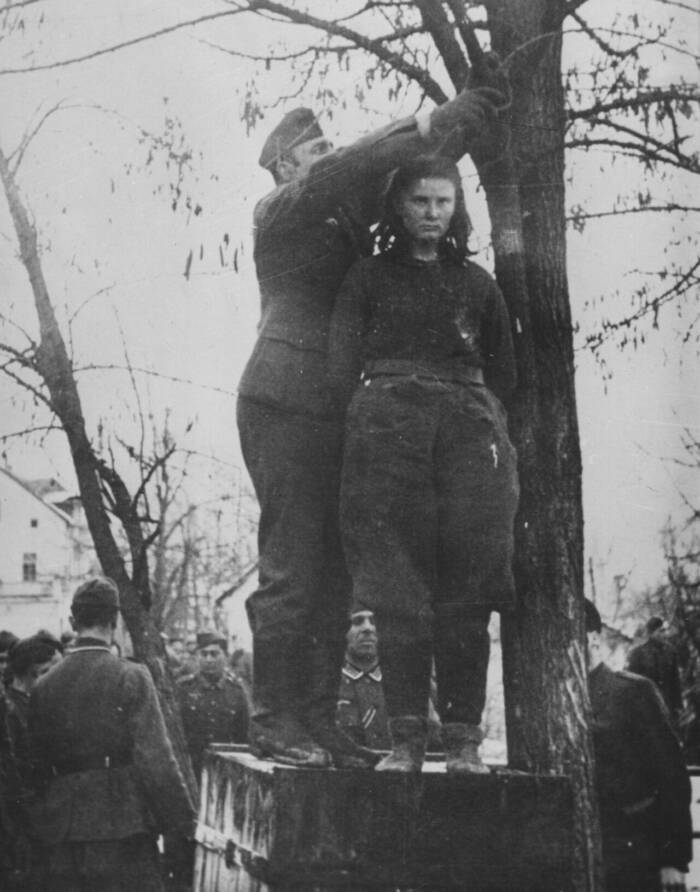
Public DomainLepa Radić stands tall as a German official places a noose around her neck just before her execution on Feb. 8, 1943. Lepa Radić was just 15 years old when the Axis powers invaded her home country of Yugoslavia in 1941. Her family was involved in the subsequent resistance movement, and young Lepa soon joined them, becoming a member of the League of Communist Youth of Yugoslavia. Even her imprisonment in November 1941 couldn’t stop the brave teenager. Lepa escaped from captivity and joined the Yugoslav Partisans. She spent the next year organizing the country’s youth, speaking about her cause, and even fighting in Partisan battles. Then, in February 1943, Lepa Radić was captured and handed over to the Nazis. Despite their brutal torture, she refused to give up any information on her comrades. Even while standing on the gallows, Lepa wouldn’t give in. She was publicly hanged at age 17, but she’s remembered today as one of history’s most courageous teenagers. Becoming A Teenage Partisan Lepa Radić was born in Gašnica, Yugoslavia — today part of Bosnia and Herzegovina — on Dec. 19, 1925. She had a fairly typical childhood, but she was influenced by her family’s strong political beliefs from an early age. With World War II on the horizon, Lepa’s uncle started gathering weapons in preparation for Yugoslavia’s uprising against the Nazis. Lepa helped him hide the guns. Public DomainLepa Radić in her early teens. The Radić family members weren’t the only ones who planned to resist. On March 27, 1941, a coup in Belgrade overthrew the pro-Axis government. In response, Adolf Hitler launched his assault against Yugoslavia on April 6 to secure the Balkans for Operation Barbarossa, his planned invasion of the Soviet Union. Within 12 days, Yugoslavian forces had surrendered to the Nazis. Axis countries annexed Yugoslavia, but their victory wasn’t entirely decisive. While the Germans maintained tight control over the country’s roads and cities, their soldiers weren’t as present in the remote, mountainous regions of war-torn Yugoslavia. In those hills, Serbian resistance forces began to emerge from the rubble. They were divided into two main groups: the Chetniks and the Partisans. The Chetniks were led by Colonel Draža Mihailović, who served under the Yugoslav government-in-exile. They were united in name only and composed of various sub-groups whose interests didn’t always align. Some were fervently anti-German, while others cooperated with the invaders at times. But what virtually all Chetniks did manage to agree on was their nationalist desire to ensure the survival of the Serbian population and their loyalty to the Yugoslav monarchy. Public DomainItalian soldiers entering Yugoslavia in April 1941. The Partisans were diametrically opposed to the Chetniks, as their group was fiercely communist. Their leader was Josip Broz “Tito,” the head of the underground Communist Party of Yugoslavia. Under Tito, the Partisans’ overarching goal was to establish an independent socialist Yugoslavian state after overthrowing the Axis powers. It was into this dense, tangled conflict that young Lepa Radić threw herself when she joined the Partisans in December 1941. The Heroism Of Lepa Radić At 15, Lepa had become a member of the League of Communist Youth of Yugoslavia. Later that year, she was arrested alongside the rest of her family by the Ustaše, a group of pro-German Croatian fascists. However, she escaped from prison a month later with the help of undercover Partisans. She then officially joined the Partisan cause as part of the 7th Company of the 2nd Krajiški Detachment. For over a year, Lepa recruited other youths for the cause and helped organize the harvesting of grain ahead of the arrival of enemy troops so that it wouldn’t be destroyed. Public DomainLepa Radić is led to the gallows ahead of her execution. Then, in February 1943, Lepa joined the Battle of Neretva. In late January, the Axis powers had launched an offensive against the Yugoslav Partisans. In return, Tito sent his rebel forces to defend and reclaim territory, leading to numerous clashes and heavy losses on both sides. During this weeks-long operation, Lepa Radić helped evacuate women and children from the front lines and transported wounded soldiers and civilians to shelters. At one point, she reportedly shot at enemy troops to hold them off and allow more people to escape, firing her weapon until she ran out of ammunition. Lepa was captured and taken into Nazi custody. She was then transported to the city of Bosanska Krupa, where she would spend her final days. Lepa Radić’s Execution And Courageous Final Moments The Germans kept Lepa in isolation and viciously tortured her in an attempt to extract intelligence about the Yugoslav Partisans and the group’s leaders. She bravely refused to divulge any information about her comrades, no matter how brutally her captors treated her. Public DomainLepa Radić’s body hanging as bystanders look on. A few days later, on Feb. 8, 1943, Nazi officials led Lepa Radić to a hastily constructed gallows in full view of the public. As they placed a noose around her neck, they told her once more that she could save her own life if she talked. Once again, she declined. As Dušanka Kovačević noted in Women of Yugoslavia in the National Liberation War, Lepa told her executioners, “I am not a traitor of my people. Those whom you are asking about will reveal themselves when they have succeeded in wiping out all you evildoers, to the last man.” With that, the teenage girl reportedly shouted to the gathered crowd, “Long live the Communist Party and Partisans! Fight, people, for your freedom! Do not surrender to the evildoers! I will be killed, but there are those who will avenge me.” Petar Milošević/Wikimedia CommonsA memorial to Lepa Radić in her hometown of Gašnica. Lepa Radić was just 17 years old when she was executed by the Nazis. Eight years later, she was awarded the Order of the People’s Hero, Yugoslavia’s second-highest military award, for her courage in the face of death. Indeed, Lepa’s bravery was so extraordinary that when SS Colonel August Schmidhuber received a report about her hanging, it read, “The female bandit… showed unprecedented defiance.” After reading about the daring life and death of Lepa Radić, learn about Hans and Sophie Scholl, the siblings who founded the White Rose movement and were killed for resisting the Nazis. Then, discover the story of Czesława Kwoka, the young girl who died at Auschwitz but whose memory lives on thanks to haunting portraits taken of her before she was killed. The post The Brave Life And Death Of Lepa Radić, The Yugoslav Partisan Who Was Executed By Nazis At Just 17 appeared first on All That's Interesting.

Like
Comment
Share
History Traveler
History Traveler
1 w

Archaeologists In Egypt Have Discovered Graffiti Scrawled By Indian Tourists On Several Pharaoh’s Tombs Some 2,000 Years Ago
Favicon 
allthatsinteresting.com

Archaeologists In Egypt Have Discovered Graffiti Scrawled By Indian Tourists On Several Pharaoh’s Tombs Some 2,000 Years Ago

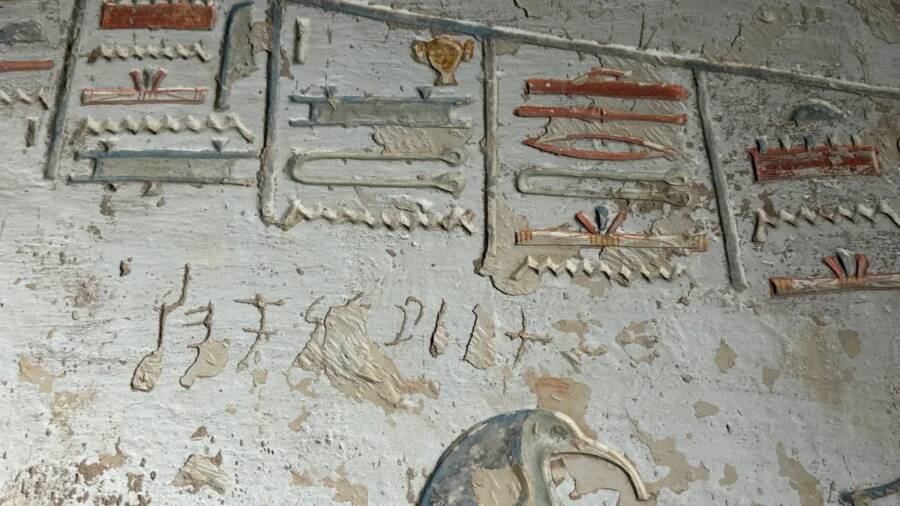
Ingo StrauchOne of the eight inscriptions left by an Indian man named Cikai Korran in Egypt’s Valley of the Kings. Today, tourists who scratch their names into centuries-old structures like the Colosseum are thoroughly reprimanded, even prosecuted. But 2,000 years ago, plenty of people literally left their mark at the historic places they visited. And a new study of the royal tombs in Egypt’s Valley of the Kings has found a number of inscriptions left there by Indian tourists some 2,000 years ago. The inscriptions were discovered in various pharaoh’s tombs and written in several Indian languages including Old Tamil and Sanskrit. But perhaps most striking is the fact that many of these etchings appear to have been made by the same man. The Discovery Of 2,000-Year-Old Graffiti Left By Tourists In Egypt’s Valley Of The Kings The findings about these ancient inscriptions were presented at a conference in Chennai, India by a group of researchers who published a paper in a collection called “Tamil Epigraphy: A four-day international conference 11-14 February 2026, Proceedings Volume 1” (Government of Tamil Nadu, 2026). During their presentation, they described 30 inscriptions that they’d studied inside six Egyptian tombs in the Valley of the Kings. The inscriptions were written in three Indian languages, and, though past Egyptologists had noticed the inscriptions before, they had been unable to translate them. Researchers identified the graffiti languages as Indian in origin, and determined that many of the inscriptions came from a single Indian tourist named Cikai Korran. Korran, writing in the language of Old Tamil, left eight inscriptions reading “Cikai Korran came here and saw” in five different tombs. Korran had a tendency to leave his inscriptions high off the ground, including in the tomb of Ramesses IX (1126 to 1108 B.C.E), where he wrote his message roughly 16 to 20 feet above the tomb entrance. Researchers remain baffled as to how he got up so high. They’re also not sure how he got into the tombs of pharaohs Tausert and Setnakhte, where Korran’s inscription is the only graffiti left inside, suggesting that these chambers had been sealed off in Korran’s day. Timothee SassolasOne of the eight inscriptions left by Cikai Korran in the Indian language of Old Tamil. But while Korran was prolific, he was certainly not the only Indian tourist to leave his mark in the Valley of the Kings 2,000 years ago. Other Indian Graffiti Found Inside Ancient Egyptian Tombs In addition to Korran’s inscriptions, researchers also identified dozens of others, including one left in Sanskrit by a man named Indranandin. He described himself as a “messenger of King Kshaharata,” a nod to India’s Kshaharata dynasty of the first century C.E. Public DomainAn 18th-century depiction of Egypt’s Valley of the Kings, where Egyptian pharaohs and other powerful nobles were buried for centuries. It’s possible that Indranandin — and the other Indians who left graffiti behind in the Valley of the Kings — traveled through Egypt as tourists on their way to Rome, which controlled Egypt at the time. But while these travelers’ exact destination is unknown, the inscriptions they left behind both confirm the presence of Indians in Egypt and hint at their interest in Egyptian culture and history. Indeed, the Valley of the Kings has long drawn the world’s interest. Composed of more than 60 tombs and chambers, the Valley of the Kings is the burial place of pharaohs and other powerful Egyptian nobles from the 18th, 19th, and 20th dynasties (spanning 1539 B.C.E. to 1075 B.C.E). One of the most famous tombs in the Valley of the Kings is that of Tutankhamun, or King Tut, which was first documented in 1922 by archaeologist Howard Carter. As such, the site is a rich resource of Egyptian history and culture, packed with information about Egyptian mythology and funerary practices. But as these Indian inscriptions from 2,000 years ago prove, the Valley of the Kings can also tell a story about the kinds of people who have visited the site over the past several thousand years. Alongside Roman and Egyptian tourists who may have visited the Valley of the Kings, Tamil and Western Indian people also made the trek to the Valley of the Kings, located near the modern-day city of Luxor. And just as tourists so often do today, the visitors in antiquity likewise left their mark — and etched their name into history. After reading about the 2,000-year-old graffiti left by Indian tourists in Egypt, go inside Egyptomania, the worldwide fascination with all things Egyptian. Then, go inside the question of who really built the Egyptian pyramids. The post Archaeologists In Egypt Have Discovered Graffiti Scrawled By Indian Tourists On Several Pharaoh’s Tombs Some 2,000 Years Ago appeared first on All That's Interesting.

Like
Comment
Share
Twitchy Feed
Twitchy Feed
1 w

Voice Actor for Halo's Master Chief Demands White House Remove Him From 'Disgusting War Porn'
Favicon 
twitchy.com

Voice Actor for Halo's Master Chief Demands White House Remove Him From 'Disgusting War Porn'

Voice Actor for Halo's Master Chief Demands White House Remove Him From 'Disgusting War Porn'
Like
Comment
Share
Trending Tech
Trending Tech
1 w

You're Probably Using The Wrong USB-C Phone Charger - Here's Why
Favicon 
www.bgr.com

You're Probably Using The Wrong USB-C Phone Charger - Here's Why

USB-C chargers are easy to mismatch. Some people never get the charging speeds their phone supports, while others pay for extra speed they rarely use anyway.
Like
Comment
Share
NEWSMAX Feed
NEWSMAX Feed
1 w

Chaotic Calif. Gov Race Has No Frontrunner
Favicon 
www.newsmax.com

Chaotic Calif. Gov Race Has No Frontrunner

The California governor's race is as muddled as can be, with Democrats starting to panic.
Like
Comment
Share
NEWSMAX Feed
NEWSMAX Feed
1 w

Trump Presses Republicans for Voting Limits Ahead of Midterms
Favicon 
www.newsmax.com

Trump Presses Republicans for Voting Limits Ahead of Midterms

President Donald Trump, addressing Republican lawmakers directly on Monday, pressed them to enact sweeping new voting restrictions as a way to "guarantee" victory in November's midterm elections, saying he would refuse to sign new bills into law until they do.The SAVE...
Like
Comment
Share
Showing 1433 out of 114637
  • 1429
  • 1430
  • 1431
  • 1432
  • 1433
  • 1434
  • 1435
  • 1436
  • 1437
  • 1438
  • 1439
  • 1440
  • 1441
  • 1442
  • 1443
  • 1444
  • 1445
  • 1446
  • 1447
  • 1448
Advertisement
Stop Seeing These Ads

Edit Offer

Add tier


Select an image
Delete your tier
Are you sure you want to delete this tier?

Reviews

In order to sell your content and posts, start by creating a few packages. Monetization

Pay By Wallet

Payment Alert

You are about to purchase the items, do you want to proceed?

Request a Refund