YubNub Social YubNub Social
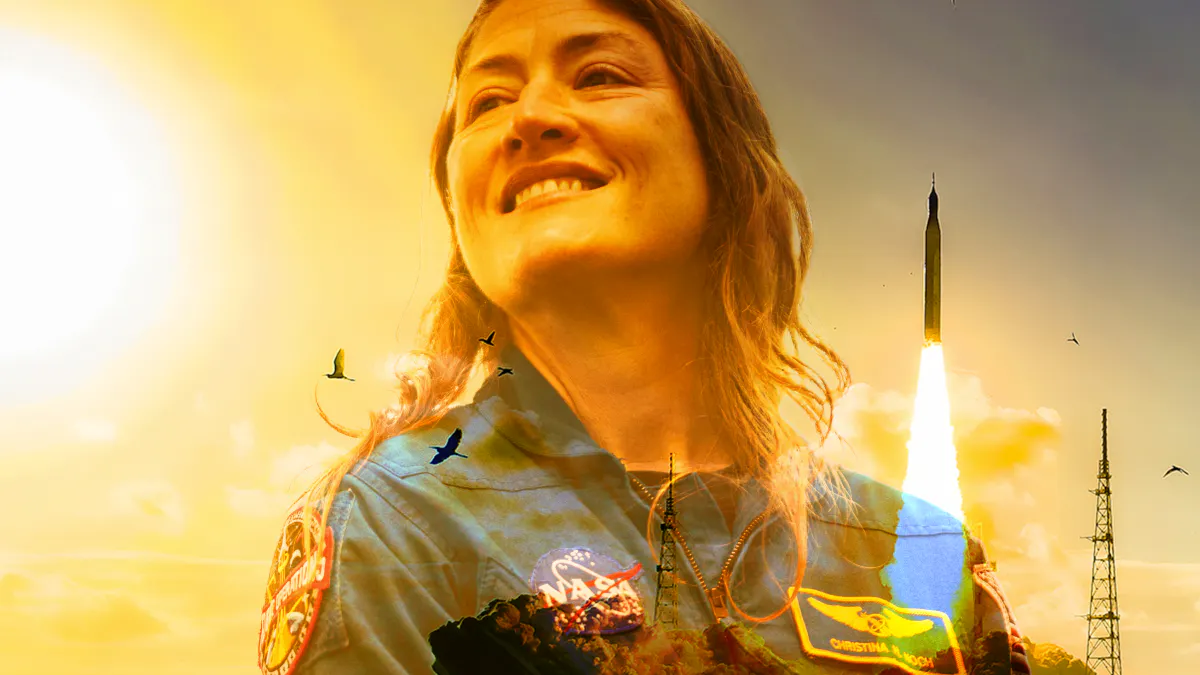
    #jesuschrist #christmas #christ #merrychristmas #christmas2025 #princeofpeace #achildisborn #noël #sunrise #morning
    Advanced Search
  • Login
  • Register

  • Night mode
  • © 2025 YubNub Social
    About • Directory • Contact Us • Developers • Privacy Policy • Terms of Use • shareasale • FB Webview Detected • Android • Apple iOS • Get Our App

    Select Language

  • English
Install our *FREE* WEB APP! (PWA)
Night mode toggle
Community
New Posts (Home) ChatBox Popular Posts Reels Game Zone Top PodCasts
Explore
Explore
© 2025 YubNub Social
  • English
About • Directory • Contact Us • Developers • Privacy Policy • Terms of Use • shareasale • FB Webview Detected • Android • Apple iOS • Get Our App
Advertisement
Stop Seeing These Ads

Discover posts

Posts

Users

Pages

Blog

Market

Events

Games

Forum

History Traveler
History Traveler
5 w

What Happened During the Columbian Exchange?
Favicon 
www.thecollector.com

What Happened During the Columbian Exchange?

  The Columbian Exchange was one of the most impactful events in human history. The term basically refers to the exchange of ideas, diseases, cultures, crops, and populations of people in the Americas from the 15th century. The exchange began after European settlers started to set sail to distant places in the era of the Renaissance.   The Columbian Exchange is named after Italian explorer Christopher Columbus because his arrival in the Americas in 1492 marked the beginning of the exchange of diseases, ideas, animals, plants, and technologies between the natives and outsiders. The resulting changes ended up having a profound biological and ideological impact on the cultures that participated in it.   Diseases in Communities An early map of the Americas. Source: Wikimedia Commons   While many of the Europeans who traveled to the New World had long been exposed to a wide variety of diseases common in the Old World due to close living quarters in the cities, the New World populations hadn’t. The diseases included illnesses such as bubonic plague, measles, typhoid, cholera, influenza, and smallpox.   The diseases caused millions of the native populations to die. While the exact extent of the depopulation effect is hard to pinpoint, it is estimated that over 80 percent of the Native American population was wiped out within the first century after Columbus’s arrival. For perspective, the native population of the island of Hispaniola was almost gone just 50 years after 1492. Mexico’s population in general fell from around 15 million in 1519 to about 1.5 million people a century later due to Old World diseases.   Plants That Were Introduced During the Exchange The arrival of Columbus in Hispaniola in 1492, shown here receiving imaginary gold gifts. Destruction of cultural heritage by melting artefacts.   A wide variety of plants was introduced to the New World during the Columbian Exchange. The plants included crops such as sugarcane, citrus fruits, rice, lettuce, wheat, onions, and barley. Indigenous New World crops at the time included corn, chiles, potatoes, tobacco, pineapples, tomatoes, pumpkins, and avocados. Hence an exchange of crop species occurred.   Other continents soon benefited from the influx of exotic crops from the New World. Tobacco, for example, gained immense popularity in other continents after its introduction from the Americas. The crop and its derivatives have since been used across Eurasia and Africa as stimulants. Whole industries have been built around the crop.   Chilli or pepper plant (Capsicum annuum). Source: Wikimedia Commons   Some crops brought from the New World also had some revolutionary consequences around the world. Corn brought to Africa from the New World in the 1550s, for example, became popular due to its drought resistance properties which allowed it to blossom even with unreliable rainfall. High demand for the crop led to its commercialization in the continent.   Animals That Were Introduced by Europeans Comanches capturing wild horses with lassos by George Catlin, ca. 1834. Source: Wikimedia Commons   While New World populations rarely domesticated animals, Old World inhabitants did for food. The animals included sheep, fowl, pigs, cattle, and goats. Horses, donkeys and cows were used as beasts of burden.   The limited domestication of animals in the New World not only limited technological development and food production among Native American tribes, it also limited their exposure to a wide range of disease-causing organisms. This factor reduced their resistance to many illnesses that existed in the Old World.   When the Europeans introduced new animals in the region, Native Americans benefited from new sources of hides and animal protein. They also made use of horses and oxen as beasts of burden that made plowing easier. Horses were also utilized for transportation purposes and were sometimes harnessed to wheeled vehicles.   The introduction of horses, in particular, also had an impact on the political dynamics in the region. After the Native cultures of the North American prairies acquired horses in the late 17th century, they were able to use them in warfare against their neighbors. Their acquisition helped to push groups such as the Comanche and the Sioux to new heights of political power due to their adeptness in equestrian warfare.   Native Americans watering their horses. Photograph by Richard Throssel. Source: Wikimedia Commons   Moreover, the use of horses enabled natives to hunt bison more easily. This factor boosted food supplies in the region until the 1870s when bison populations fell. Hence the introduction of such animals made the New World hemisphere more similar to the Old World in terms of economic and social progress.   Technologies Introduced by Europeans Landing of Columbus, by John Vanderlyn, 1847. Source: Wikimedia Commons   The Columbian Exchange introduced a wide range of new technologies. Steel and guns were among the technological items that the native tribes in the Americas gained access to after interacting with settlers from the Old World. The new technologies enticed native tribes to establish trade relationships with the Europeans.   The indigenous communities also got access to textiles and clothes. Obtaining textiles reduced their reliance on animal hide which led to reduced hunting of animals for pelt.
Like
Comment
Share
History Traveler
History Traveler
5 w

The Gregorian Reforms That Turned Europe Into a Persecuting Society
Favicon 
www.thecollector.com

The Gregorian Reforms That Turned Europe Into a Persecuting Society

  When we think of reformation and revolution, we think of the 16th, 17th, and 18th centuries with Protestant Reformation and the American Revolution. But the 11th and 12th centuries were also an age of transformation, often linked with the Gregorian reforms. This period saw a new clerical class redefine what it meant to be Christian in Western Europe, and the persecution of those subsequently defined as “other.” This led to the rise of what some scholars characterize as a “persecuting society.” But who was doing the persecuting, how did they emerge as a powerful group, and who was targeted and why?   Defining a Persecuting Society Leper with a bell, from an English Pontifical, c. 1425. Source: Historic England   The phrase “persecuting society” was popularized, at least in academic circles, by the late R.I. Moore. Briefly, it is a society in which there exist the societal and political conditions for the sustained legalistic and violent persecution of various minority groups. It was always acknowledged that there was a spike in persecutory activities in the 12th and 12th centuries. The expulsion of the Jews from countries such as England and the bloody Albigensian Crusade against the Cathars in southern France are only the most notorious examples.   It was traditionally assumed that this was because there were simply more heretics, Jews, and other such groups around this time, a result of Europe’s increasing prosperity. Moore, however, turned this on its head. These groups did not multiply in this era. They were invented.   The Medieval Revolutionaries Map of medieval universities, by W.R. Shepherd in Historical Atlas, 1923. Source: University of Texas   Moore, as well as historians such as Arnold and Biller, have defined the persecuting group as the literati, those who could read and write in Latin, in contrast to the illiterati, those who could only read and write in the vernacular or who were technically illiterate. For Moore, Latin literacy began to be identified in the 12th century as a “visible social marker” and “defining attribute” of the clerical class.   This was the class, educated by the church and in the new and growing universities such as Oxford, Paris, and Bologna, who were also supplying the kings and emperors of Europe with their government officials. Importantly, these were not men who traditionally held power. Often, they were drawn from the lower nobility or gentry, or at best, were the third or fourth sons of powerful families. In other words, they lacked the wealth and power of others and had a motive to accrue their own influence. They tick all the boxes of revolutionary cadres through history: newly educated, not traditionally powerful, literate, with a core of shared new ideas. They may have been what Turchin would describe as “surplus elite.”   The rise of these officials coincided with and was driven by a change in attitude in the papacy. There had been a reformist movement in the church for some time. It was embodied and driven forward most fervently by Gregory VII, a man who holds little purchase in the modern imagination but was a titanic figure of medieval Christendom.   Born as Hildebrand in Tuscany around 1015, he climbed the ranks of the church, including spending time with Cluniacs, a monastic group rooted in Cluny (France), who shared much of the ideology that Gregory would put into practice on an epic scale. He was elected pope in 1073. Although Gregory’s rise had been helped by his meddling in “secular” affairs, he and his colleagues saw it as their business to assert the dominance of the church and its independence from “lay” (secular) rulers, namely the Holy Roman Emperors. They also sought to “cleanse” the church of what they saw as impure activities, returning it to a purer state. Their actions included strengthening the power of the papacy over local churches, asserting their sole right to appoint clergy and control church land, and championing clerical celibacy.   Pope Gregory VII, c. 17th century. Source: Lombardy Cultural Heritage   Although this movement gained power in Rome through clerical appointments, through its influence over monasteries and the expansion of the church bureaucracy, it steadily spread across the continent. It was helped by rulers who, whether through genuine or opportunistic alignment, assisted their program. William the Conqueror is a notable example, condemning the unreformed practices of the English Church to win papal backing for his invasion in 1066.   Like later revolutionaries, they were convinced of the righteousness of their ideology and were prepared to use bureaucracy and even violence to make it a reality, to “turn the world upside down.” Moore argues that this group, to achieve their aims, had to define Christianity and being a member of the church to a greater extent than ever before. This, in turn, meant defining an “other.” This could include external threats, such as Muslim powers and even Byzantine Orthodoxy, as well as enemies within the borders of Latin Christendom. Through texts like Guilbert of Nogent’s Monodiae on the Jews, Peter Damian’s Liber Gomorrhianus on sodomy, and Thomas Aquinas’ Summa Theologia that called for “death” to heretics, these clerics and intellectuals formulated a “variety of rhetorical and cultural tropes” with which to describe these outsiders or dissidents as intellectually deficient, polluting, infectious, often associating them with Satanic magic.   The Persecution of Medieval Jews Miniature showing the expulsion of Jews following the Edict of Expulsion by Edward I of England, c. 14th century, from the Rochester Chronicle. Source: British Library   In some cases, these “enemies” had always been within Latin Christendom. There had always been leprosy, a present and instructive reminder of Christ’s own dealings with lepers. But as a result of writings and instructions emanating from the church, lepers began to be forcibly separated from the rest of the population throughout Europe.   There had also long been Jewish communities inside many of the prosperous towns and cities, often directly under the protection (and control) of the king. They had always been a minority, and this became more obvious in a society where religion and culture were becoming increasingly homogenized. Moore also argues that the Jews were a threat to the literati class due to their relative wealth, their international connections, their literacy, and their usefulness to secular rulers, usually as sources of finance. The Crusades, where stories of Jewish resistance to Christian soldiers were grossly exaggerated, further inflamed tensions.   Jews being burned at the stake in 1349, from the Antiquitates Flandriae, by Pierart dou Tielt, c. 1353. Source: University of Pennsylvania   Writings began to circulate defining Jews and Judaism. They contained tropes unnervingly familiar to us: Jews were greedy, they were unrooted, their practice of usury (money lending) was ungodly, and they were all connected. We see drawings of them, again terrifyingly familiar, with exaggerated noses and stereotypically long beards and hair. They were depicted as violent and powerful, in contrast to meek and virtuous Christians. The practical approaches of medieval states and the church also echo down the ages: containing them within certain districts, forbidding them from owning land, excluding them from certain professions, and forcing them to wear yellow badges.   Blood Libel: A Medieval Meme Martyrdom of Simon of Trent, an example of a medieval blood libel, from the Nuremberg Chronicle, by Michel Wolgemut, 1493. Source: Washington University   The most notorious trope, though, was the blood libel. This was a story of a Jew or a group of Jews sacrificing children to use their blood in religious rites. The first known example is from Norwich in 1144, where a twelve-year-old boy was found murdered. Stories quickly circulated that the boy had been ritually tortured and murdered by the local Jews. Strikingly similar stories emerged in Gloucester, Lincoln, Blois, Saragossa, Bristol, Munich, and other places.   In some cases, the consequence was violent retribution against Jewish communities. This was the medieval equivalent of a meme, where the same story and patterns of events were repeated again and again across the continent in different times and places, often stirred by local or visiting clerics. Those who had borrowed money from their local Jewish communities were, as expected, anxious to believe them and act accordingly.   The endpoint of all this was the final expulsion of Jews from some countries. Edward I expelled England’s Jews in 1290, after years of persecution and heavy taxation. France expelled their Jewish population in 1306 and again in 1394, and Spain much later in 1492, following the Reconquista. The conclusion in these cases was that, now that Christendom was defined and consolidated, there was no place for a dissident community.   Inventing the “Other” St. Dominic de Guzman and the Albigensians, by Pedro Berruguete, c. 1493. Source: Museo del Prado   Jews and lepers had long been a part of European life. Other persecuted groups were, according to Moore, invented. The most intriguing example is heretics. The church had always been, of course, somewhat anxious to define heresies and to ensure that only canon texts were read and revered. The slow spread of Roman Christianity across Europe after the end of the Roman Empire meant that, in some cases, it accommodated local practices and traditions. There were also practical limits to the degree to which the church could impose conformity due to distance, geography, slow transportation and communications, and a small pool of manpower.   The Gregorian reformation was all about imposing conformity and weeding out bad practice. They had what we would describe as a “modernizing spirit,” dragging what they saw as backward rural communities out of darkness and back to Christ. Naturally, there were some who were not interested in modernization and who saw Gregorian reform and the authority and energy of the clerical elite flooding out from Rome and the universities as a threat to their own customs and power bases.   The Mystery of the Cathars Excommunication of the Albigensians/Massacre of the Albigensians, miniature from the Chroniques de Saint-Denis, c. 1340. Source: University of Victoria   This, Moore argues, is how we get the Cathars. Previously, historians wrote that the Cathars were a group that followed antiquated Christian teachings, such as dualism and Gnosticism. They had gained their knowledge from writings circulating around the Byzantine and Bulgarian empires. By the 12th century, they had developed an elaborate hierarchy and a set of rites that mirrored those of the Catholic Church. Women were said to have more status in Catharism, with some even able to administer sacraments. One can imagine how this would have incensed reformers who were determined to kick women out of priestly beds, let alone the church hierarchy itself.   This could not be tolerated by a centralizing and reforming papacy. As such, they had to be wiped out. In 1208, a legate was sent by the Pope to control the local nobleman, Raymond, Count of Toulouse, who was allegedly protecting the Cathar community. When he refused assistance, he was excommunicated, and the Albigensian Crusade began. This was a military campaign by various northern French nobles who attacked various settlements in the Languedoc. Even the king of France himself eventually became embroiled, wishing to cement his status as the most Christian king. Many were killed, culminating in a massacre at Beziers in 1209, where perhaps as many as 20,000 people were killed by the besieging army. Hot on the heels of the military force was an inquisition, which interrogated and tortured its way across the region, burning those who refused to recant. Some historians describe this process as a genocide.   Expulsion of the inhabitants of Carcassonne in 1209, miniature from the Grandes Chroniques de France, c. 1415. Source: Nottingham University   Moore argues that this was the persecution of a community almost completely manufactured by the reformers. There is simply no real mention of Catharism and its beliefs in the sources until the middle of the 12th century. The word “Cathar” had been around for some time but had meant something quite different. It was usually used pejoratively against those who were, ironically, too puritanical. It is likely that contemporary clerics simply adopted it as a convenient term, enabling them to exaggerate the historical depth of the threat.   Most of the evidence regarding the Cathar church structure and its beliefs was obtained by the inquisitors following interrogations, likely provided by people weary of violence and anxious to agree to escape. At best, Moore says, Catharism was actually a deviant spiritual revival within the Catholic Church itself; a product of the same energies that drove the Gregorian Revolution. At worst, this was a clerical elite identifying a distinctive community with its own traditional beliefs and practices as a conspiratorial threat to advance their own aims and cement their own control, enthusiastically aided by land and fame-hungry secular lords. The myth was perpetuated by new landowners keen to legitimize their rights, a church that wanted to justify its part in the violence, and, in more recent times, by locals capitalizing on tourist traffic.   Moore is not the only historian to have reached this conclusion, but neither is his the definitive one. Some have argued that his view is too extreme and that, although Catharism may have been embellished, there is enough evidence to substantiate it. There is even now a post-revisionist school that has reverted to older ideas about a sprawling Cathar church. Nevertheless, one can see that the Albigensian Crusade and other inquisitorial and violent campaigns against heretics such as Cathars, Waldensians, and Manicheans fit within a wider pattern of identification, definition, and persecution of distinct groups of society that were potential sources of resistance to the revolutionary reformers.   Christendom Redefined Satirical illustration from an English Exchequer roll listing money owed to the Jews of Norwich, c. 1230. Source: National Archives   Just as Moore’s strong views about the Cathars are not unquestioned, his concept of a persecuting society is not universally held. The rise of a “persecuting society” in this period assumes a tolerant one before that, and few would describe early medieval Europe as enlightened and progressive. There is an argument that Moore’s vision of the process is too top-down, minimizing the agency of those lower down the social scale. The attacks on Jews, for example, often occurred without instigation by church officials. The Crusades also sharpened Christendom’s sense of itself, and people at war tend to coalesce and identify threats independently. There is a sense, too, that Moore may have been too reliant on the surviving written sources, assuming something to be widespread and cohesive that may have been sporadic and opportunistic. Perhaps he should have paid more heed to Tuchman’s Law, that “the fact of being reported multiplies the apparent extent of any deplorable development by five-to-tenfold.”   Burning of the Knights Templars as heretics, from the Chroniques de Saint-Denis, c. 1380. Source: British Library   However, no historian has been able to fully demolish Moore’s proposition. There is simply too much evidence and numerous supporting works by others to deny that a reforming revolution indeed occurred in the High Middle Ages. A newly educated counter-elite undertook their own Gramscian “march through the institutions” and took intellectual and official control of much of Latin Christendom, redefining what it meant to be a Christian and how they could protect their souls. There is no doubt that the quantity of writings defining the “others” around them, including Jews, heretics, and lepers, increased in the period. There are no more examples like that of Pope Gregory the Great instructing his missionaries in 601 CE to tolerate and adapt to local customs. The differences were sharpened, and the consequence was persecution, repression, and violence.   Selected Bibliography   Abulafia, A.S., Christians and Jews in the Twelfth Century Renaissance (London, 1995)   Arnold, J.H. Inquisition and Power: Catharism and the Confessing Subject in Medieval Languedoc (Philadelphia, 2001)   Chazan, R. Daggers of Faith: Thirteenth-Century Christian Missionizing and Jewish Response (Los Angeles, 1989)   Lambert, M. Medieval Heresy: Popular Movements from the Gregorian Reform to the Reformation (Oxford, 1992)   Moore, R.I. The Formation of a Persecuting Society: Authority and Deviance in Western Europe 950-1250 (Oxford, 1987)   Richards, J. Sex, Dissidence and Damnation: Minority Groups in the Middle Ages (London, 1991)
Like
Comment
Share
History Traveler
History Traveler
5 w

Historical Events for 24th November 2025
Favicon 
www.onthisday.com

Historical Events for 24th November 2025

1744 - John Carteret resigns as British Secretary of State for the Northern Department 1930 - Ruth Nichols sets the women's transcontinental air flight record from Mineola, New York, to California in a Lockheed Vega 1951 - British auto manufacturers Austin and Morris Motors merge 1964 - 30th Heisman Trophy Award: John Huarte, Notre Dame (QB) 1966 - The Beatles began recording sessions for their album "Sgt.Pepper's Lonely Hearts Club Band" 1970 - 36th Heisman Trophy Award: Jim Plunkett, Stanford (QB) 1996 - American Pete Sampras wins his 3rd ATP Tour World Championship tennis titles with a classic 3–6, 7–6, 7–6, 6–7, 6–4 victory over defending champion Boris Becker in Hanover, Germany 2019 - Data leaked from Chinese high-security Muslim Uighur security camps, housing 1 million people, show systematic brainwashing in western Xinjiang region More Historical Events »
Like
Comment
Share
BlabberBuzz Feed
BlabberBuzz Feed
5 w

Mamdani Adviser Made Vile "Jew" Jab And Cheered On Iran's "Cancerous" Israel Attack
Favicon 
www.blabber.buzz

Mamdani Adviser Made Vile "Jew" Jab And Cheered On Iran's "Cancerous" Israel Attack

Like
Comment
Share
Twitchy Feed
Twitchy Feed
5 w

Charles C. W. Cooke Holds a Hilarious Mirror Up to Grifter Conspiracists' Idiocy
Favicon 
twitchy.com

Charles C. W. Cooke Holds a Hilarious Mirror Up to Grifter Conspiracists' Idiocy

Charles C. W. Cooke Holds a Hilarious Mirror Up to Grifter Conspiracists' Idiocy
Like
Comment
Share
YubNub News
YubNub News
5 w

The Skies Empty Over Caracas As the Dictator Dances
Favicon 
yubnub.news

The Skies Empty Over Caracas As the Dictator Dances

Nicolás Maduro's days are numbered, and no one knows it better than the man himself. If you can call him that. As I wrote earlier this week, he wears $1,000 shoes, while the people of Venezuela can't…
Like
Comment
Share
YubNub News
YubNub News
5 w

Workplace Laws Too Confusing to Navigate for Well-Meaning Employers: Costello
Favicon 
yubnub.news

Workplace Laws Too Confusing to Navigate for Well-Meaning Employers: Costello

Former Treasurer Peter Costello during the Australian Financial Review (AFR) summit, Investing for Growth, at the Hilton Hotel in Sydney, Tuesday, March 10, 2020. AAP Image/Dean LewinsAustralia’s industrial…
Like
Comment
Share
YubNub News
YubNub News
5 w

President Trump Switches His Stance On MTG And Shares He Would “Love” To See Her In Politics Again
Favicon 
yubnub.news

President Trump Switches His Stance On MTG And Shares He Would “Love” To See Her In Politics Again

Is the feud between President Trump and Rep. Marjorie Taylor Greene finally over? In recent weeks President Trump and Rep. Marjorie Taylor Greene have been exchanging jabs with one another in the press…
Like
Comment
Share
YubNub News
YubNub News
5 w

UK Navy Intercepts Russian Corvette and Tanker as Moscow Steps up Naval Activity
Favicon 
yubnub.news

UK Navy Intercepts Russian Corvette and Tanker as Moscow Steps up Naval Activity

In this undated aerial photo released by the United Kingdom Ministry of Defence, HMS Severn, lower section, is seen tracking the Russian corvette RFN Stoikiy off the UK coast. United Kingdom Ministry…
Like
Comment
Share
YubNub News
YubNub News
5 w

BOOM: Trump CORNERS Democrats With New Healthcare Plan — Big Insurance PANICKING
Favicon 
yubnub.news

BOOM: Trump CORNERS Democrats With New Healthcare Plan — Big Insurance PANICKING

It appears that President Trump is on the verge of announcing a new, better healthcare plan to replace the disaster that is Obamacare. Shortly after signing the funding bill to re-open the government,…
Like
Comment
Share
Showing 4155 out of 104144
  • 4151
  • 4152
  • 4153
  • 4154
  • 4155
  • 4156
  • 4157
  • 4158
  • 4159
  • 4160
  • 4161
  • 4162
  • 4163
  • 4164
  • 4165
  • 4166
  • 4167
  • 4168
  • 4169
  • 4170
Advertisement
Stop Seeing These Ads

Edit Offer

Add tier


Select an image
Delete your tier
Are you sure you want to delete this tier?

Reviews

In order to sell your content and posts, start by creating a few packages. Monetization

Pay By Wallet

Payment Alert

You are about to purchase the items, do you want to proceed?

Request a Refund