YubNub Social YubNub Social
    #virginia #texas #biology #newyork #trafficsafety #terrorism #stopcars #carviolence #carextremism #endcarviolence #assaultcar #bancarsnow #stopcrashing #notonemore #transportation
    Advanced Search
  • Login
  • Register

  • Night mode
  • © 2026 YubNub Social
    About • Directory • Contact Us • Developers • Privacy Policy • Terms of Use • shareasale • FB Webview Detected • Android • Apple iOS • Get Our App

    Select Language

  • English
Community
New Posts (Home) ChatBox Popular Posts Reels Game Zone Top PodCasts
Explore
Explore
© 2026 YubNub Social
  • English
About • Directory • Contact Us • Developers • Privacy Policy • Terms of Use • shareasale • FB Webview Detected • Android • Apple iOS • Get Our App
Advertisement
Stop Seeing These Ads

Discover posts

Posts

Users

Pages

Blog

Market

Events

Games

Forum

Daily Wire Feed
Daily Wire Feed
10 hrs

‘Operation Economic Outcast’: Trump Admin Launches Economic D-Day Against Iran
Favicon 
www.dailywire.com

‘Operation Economic Outcast’: Trump Admin Launches Economic D-Day Against Iran

Treasury Secretary Scott Bessent on Monday launched “Operation Economic Outcast,” a campaign to cut Iran off from the global economy and punish governments, banks, and companies that continue doing business with Tehran. The announcement comes roughly six months after President Donald Trump launched his military campaign against Iran, with Bessent saying the new economic offensive will target the financial networks and revenue streams that sustain the Iranian government, military, and security apparatus. Bessent described the campaign as an “economic D-Day,” comparing it to the Allied invasion of Normandy during World War II, and warned that countries enabling Iran’s trade and financial activity will face U.S. sanctions. “Our objective is to sever every economic lifeline that sustains this tyrannical regime until Tehran stands alone,” Bessent said. “President Trump has taken action that his predecessors have long deferred, and under his leadership, America is no longer managing the Iranian threat; we are ending it.” The campaign marks a significant escalation in Washington’s pressure on Tehran. Rather than focusing solely on Iranian entities, the administration is threatening the international banks, companies, and governments that help keep Iran connected to the global financial system. Bessent said the Treasury has mapped the networks Iran uses to smuggle oil and evade sanctions and will pursue a “zero-leakage approach” to cutting off those channels. The administration is giving countries and entities a chance to shut down activities identified by Washington, but Bessent warned that the window will be short. “No one is above the reach of U.S. sanctions,” Bessent said when asked whether Chinese banks could eventually be targeted.  He declined to name specific institutions but said any bank or entity that facilitates transactions that turn Iranian oil into revenue for the regime could face sanctions. The first round of measures targets five sectors Bessent called vital Iranian lifelines: digital assets, technology, gold, aviation, and shipping.  Treasury’s Office of Foreign Assets Control (OFAC) is also sanctioning more than 60 entities, individuals, and vessels accused of helping Iran procure nuclear and missile technology, conduct cyber operations, and generate oil revenue. Bessent said every branch of Bank Melli, Iran’s largest commercial bank, should be “shuttered and dark” and warned that entities facilitating money laundering for Iran would be cut off from the U.S. dollar system. Trump has been calling world leaders with specific requests to end their interactions with Tehran, Bessent said, while State Department and Treasury officials are following up with governments and entities to outline Washington’s expectations. He declined to identify the countries involved or give a specific deadline, saying the United States does not have “infinite patience.” Bessent said a “wave of sanctions” would begin immediately and predicted a major announcement involving a financial institution by the end of the week. He pointed to the United Arab Emirates as an early example of a country responding to the pressure. The UAE suspended all trade with Iran last week following new Iranian attacks on the Gulf country, which has faced hundreds of attacks since the war began. Asked why the United States was not simply imposing the sanctions immediately, given his comparison to D-Day, Bessent said Washington did not want to “blow up the global financial system” and instead is giving countries and institutions a chance to remedy what the administration considers bad behavior before imposing secondary sanctions. Iranian Foreign Ministry spokesman Esmaeil Baghaei warned Monday that Tehran will retaliate against President Trump’s “Economic D-Day” sanctions campaign, including potentially targeting countries that cooperate with Washington. “Any escalation of this situation will undoubtedly bring about consequences,” Baghaei said. “Our hands are not tied.”
Like
Comment
Share
Daily Wire Feed
Daily Wire Feed
10 hrs

The Road To Hell Is Paved With The Golden State’s New Tire Regulations
Favicon 
www.dailywire.com

The Road To Hell Is Paved With The Golden State’s New Tire Regulations

I was born and raised in Los Angeles and spent the first 60 years of my life in California, where I served in both Houses of the State Legislature and represented the state in Congress. Ten years ago, I fled California for Arizona. Many believe I moved mainly to pay lower taxes, which was a factor. Others assume that California’s restrictions on activities beyond theft, abortion, and illegal alien protection pushed me away. That also played a role in my decision. But a third overlooked factor is that the government in Sacramento creates laws and regulations every year to make the cost of just about everything in California rise well above the costs in nearly every other state. They do this either in the name of “saving the planet” or “keeping us safe.” Take the quintessentially American and California-specific car culture. What once defined the zeitgeist of a golden era in the Golden State has become nearly prohibitively expensive. It already has the highest gasoline prices in the country and consistently ranks in the top five for the highest car insurance rates. So, in order to make driving your own car more expensive (as opposed to riding on the multibillion-dollar train to nowhere), they have decided to double down and make tires more expensive as well. The California Energy Commission, acting under a 2003 law, just passed new regulations requiring all tires sold in California to meet certain “low rolling resistance” standards starting in 2029. The standards get tighter every year until 2033. The idea is that low rolling resistance tires will save fuel and, therefore, carbon emissions, which will of course “save the planet.” Governor (and wannabe president) Gavin Newsom says that motorists will save $1 billion a year in fuel costs because of this regulation. Let’s first give the proponents of this regulation their due. Low rolling resistance tires do exist. They do increase fuel mileage. They can have poor grip in wet conditions, but the regulation includes standards for having adequate grip on slick pavements. The regulation also exempts certain tires, including snow and off-road tires. Fine. But let’s dig deeper. The regulation will make 70% of all tires currently sold in the state illegal. Seventy percent. According to the regulation’s proponents, the most common car to get a replacement tire in California is a 2017 Honda Civic. The commission itself acknowledges that only half of the tires currently in the correct size for this car meet the 2029 standards, and none meet the 2033 standard. The average price for those currently marketed as “low rolling resistance” is $629.48 for a set of 4 tires. The average price for all of the tires in this size category is $325.20 for that same set of 4 tires. So the person getting a new set of tires on their nine-year-old car will pay over $300 more, assuming compliant tires are even available. This analysis also doesn’t include price increases when choice shrinks starting in 2029. When people on the Left raise the cost of something, like taxes, they assume people will just gladly pay it and move on. But real people don’t do that. They look for a way to not spend an extra $300 on nothing. What will they do? They can buy used tires coming in from other states because the regulation only covers new tires. These tires will be cheaper, but they’ll have less tread, be older, and pose a safety risk. It will be illegal to buy non-compliant tires in California, but not illegal to install them. So, a gray or black market for non-compliant tires will form. Or, drive to Las Vegas for the weekend and get new tires that are $300 cheaper while you are there, costing jobs in California and causing the state to lose sales tax revenue as well. Or, just keep driving your old tires longer until they fail. As far as the claims about fuel savings, they are about as accurate as Newsom’s estimates of the cost of the bullet train. Low rolling resistance tires only save fuel when traveling at high sustained speeds. Have you even driven in L.A. or San Francisco? In stop-and-go traffic or on surface streets with lots of signals, there is no savings. That is where most driving occurs. Leftists are always talking about “income inequality.” What they conveniently ignore is that the income inequality in California and New York is much worse than in red states like Texas and Tennessee. Why? Because of laws like this one. The person in their nine-year-old Honda Civic is going to pay $300 more for their tires. But the Beverly Hills leftist will have no restrictions on tires for their Bentley, because low-volume cars like Bentleys are exempt from the regulation. No limousine leftist in Sacramento feels they need to live by the laws they impose on everyone else. However, as average Californians suffer under the burdensome costs of another new regulation, there is one thing they can know. They will help offset perhaps a second or two of China’s carbon emissions each year. So clearly, it’s all worthwhile. *** John Campbell was born and raised in Los Angeles, California. He is a Certified Public Accountant, businessman, and former member of Congress who served from 2005 to 2015. He also has a 25-year career in the retail automotive industry, progressing from Corporate Controller to owner/operator and dealer principal, and represented 15 franchises during his career.
Like
Comment
Share
Daily Caller Feed
Daily Caller Feed
10 hrs

US Army Helicopters Crash At Historically High Rates As Mechanical Failures Are Investigated
Favicon 
dailycaller.com

US Army Helicopters Crash At Historically High Rates As Mechanical Failures Are Investigated

‘A catastrophic transmission failure’
Like
Comment
Share
Daily Caller Feed
Daily Caller Feed
10 hrs

One Company Paid Off Another To Leave Market. Settlement With Gov’t Could Be Huge Win For Housing Prices
Favicon 
dailycaller.com

One Company Paid Off Another To Leave Market. Settlement With Gov’t Could Be Huge Win For Housing Prices

Redfin agreed to stay out of that specific business sector for up to 9 years
Like
Comment
Share
Daily Caller Feed
Daily Caller Feed
10 hrs

US Tankers Quietly Leave Bulgaria After Deployment Enraged Iran
Favicon 
dailycaller.com

US Tankers Quietly Leave Bulgaria After Deployment Enraged Iran

‘U.S. Air Force KC-135s have departed from Bulgaria’
Like
Comment
Share
The Lighter Side
The Lighter Side
10 hrs

Moms Love This Initiation Ritual Freshmen Must Go Through at This Oklahoma High School
Favicon 
www.goodnewsnetwork.org

Moms Love This Initiation Ritual Freshmen Must Go Through at This Oklahoma High School

School initiation rituals can be embarrassing, crude, and even disturbing, but for a 14-year-old, nothing could be worse than what is demanded of them, day 1, at Bishop Kelly High School in Tulsa. If initiation is about fitting in, what could be worse than being caught giving one’s mom, dad, or grandparent a goodbye kiss […] The post Moms Love This Initiation Ritual Freshmen Must Go Through at This Oklahoma High School appeared first on Good News Network.
Like
Comment
Share
Daily Signal Feed
Daily Signal Feed
10 hrs

LGBTQ CRACK-UP: Human Rights Campaign Slams Log Cabin Republicans for Rejecting Transgender Activism
Favicon 
www.dailysignal.com

LGBTQ CRACK-UP: Human Rights Campaign Slams Log Cabin Republicans for Rejecting Transgender Activism

A major fissure within the LGBTQ movement burst into public view last week when Log Cabin Republicans abandoned transgender advocacy and the Human Rights Campaign condemned the move. Log Cabin Republicans, which will celebrate its 50th anniversary next year, voted to remove the “T” from its advocacy. Ross Hemminger, the group’s president, announced the move in a Townhall op-ed last week. Hemminger noted that Log Cabin Republicans added the “T” to its mission in 2015, but he attacked the transgender movement for focusing “nearly all of their efforts” on minors, rather than consenting adults. “They push schools to teach radical gender ideology; they want biological men in women’s sports regardless of the consequences; perhaps most offensively, they support gender reassignment treatments for minors, often without the knowledge or consent of the parents, knowing full well these treatments are mostly irreversible,” he added. “That is why, after significant discussion with our membership, our Board of Directors voted to refine Log Cabin Republicans’ national advocacy focus to concentrate specifically on issues of sexual orientation and conservative values — in other words, we are an LGB advocacy organization, as our founders envisioned and as our moral center calls us to be,” Hemminger announced. He said the decision does not mean Log Cabin Republicans will exclude members who identify as transgender, but that the organization will focus on “issues of sexual orientation.” HRC Condemnation The Human Rights Campaign, America’s largest LGBTQ activist group, condemned Log Cabin Republicans. “It’s news to us that they ever pretended to care about the T,” HRC spokesman Delphine Luneau told LGBTQ Nation. “Splitting up the LGBTQ+ community and pitting us against each other is exactly what anti-equality forces want to see happen.” Luneau argued that the LGBTQ movement should stick together because “all our freedoms are intertwined.” Transgender Headwinds While many LGBTQ organizations continue to treat sexual orientation and gender identity as inseparable, critics have argued that the rapid expansion of transgender activism has alienated gays and lesbians. Some critics also argue that the issues are at odds with one another. A group of lesbians who opposed transgender ideology formed an organization called “Get the L Out” in 2018, claiming that transgender ideology “promotes the medical transition of lesbians and pushes harmful drugs and unnecessary medical procedures on lesbians’ healthy bodies.” The group claims that sex-rejecting procedures constitute “a form of misogynist medical abuse against lesbians.” While this explicit framing may be rare, the claim that transgender activism encourages transition for young people who might otherwise identify as lesbian or gay is not. Glenna Goldis, the assistant attorney general overseeing fraud whom New York Attorney General Letitia James fired earlier this year, warned that young gays and lesbians might be tempted to accept a transgender identity in order to be straight.
Like
Comment
Share
Daily Signal Feed
Daily Signal Feed
10 hrs

Every State Can Open Its Doors to Nuclear Energy
Favicon 
www.dailysignal.com

Every State Can Open Its Doors to Nuclear Energy

States want nuclear energy. That makes sense. They all face the same problem. States need energy now and lots of it. According to one industry analysis, electricity demand could grow by more than 55% by 2050. To put this into context, according to the Energy Policy Research Foundation, electricity production grew by a mere 0.5% from 2003 to 2023. Change is obviously on the way. What does this mean? According to the U.S. Energy Information Administration, it means that we need to build a lot of power plants. Indeed, the EIA says the United States will have to increase electricity generation capacity by between 50% and 90% to meet this demand. Currently, there are around 11,000 utility scale plants powering America’s modern economy and based on current projections we may need to nearly double that. It gets even worse because under every EIA scenario, coal plants are retired almost out of existence—that is between 100 and 125 Gigawatts of capacity, gone. In other words, the United States will be fighting this fight with one of its mightiest arrows left in the quiver. And why is this happening now? One reason is that domestic manufacturing is on the rise and that requires more power. Then there is the broader movement towards electrification across the economy. And of course, there is the boom in artificial intelligence and data centers, which is a primary driver. Data centers accounted for around 4% of summertime electricity demand in 2025 and that is projected to grow to 8.5% by 2027 and continue upwards to 17% by 2030. State leaders are beginning to recognize their dire situation and looking for answers. A top contender is nuclear energy. . After all, nuclear is extremely safe, very reliable, and its fuel, uranium, is readily available. Most importantly, in this situation, nuclear can produce a lot of energy for a long time. Even though only two new reactors have been built in the U.S. in recent decades, the technology still provides nearly 20% of the nation’s electricity. The problem for states that want more nuclear energy though is that Washington seemingly holds all of the cards. The Nuclear Regulatory Commission oversees nearly all commercial nuclear operations. Though that was a problem for many years, it is changing. Congress has helped with key legislative efforts like the 2019 Nuclear Energy Innovation and Modernization (NEIMA) Act and the 2024 Accelerating Deployment of Versatile, Advanced Nuclear for Clear Energy (ADVANCE) Act and the Trump administration is pushing the regulatory reform envelope with a series of bold nuclear energy focused executive orders.  And now nuclear is back on the rise. But just because Washington is acting doesn’t mean that there is nothing that states can do. There is a ton. While states do not  get involved in reviewing reactor designs or construction permits, they do impact land use, zoning laws, energy production, and other environmental decision making. So, what can states do specifically? For starters, they need to get rid of any laws, regulation, mandates or policies that promote one energy source of another. They need to make clear that nuclear is welcome and all energy sources are free to compete. By explicitly removing anti-nuclear biases, a state will remove one of the key political risks that nuclear investors often face. Critically, this must also include any explicit or implicit moratoriums that remain in place. Whether through public service commissions or other regulatory authorities, states often have substantial say over what power plants are built and what attributes power providers should prioritize. Where this is the case, states should prioritize reliability, availability, and cost over everything else. New nuclear is naturally positioned to compete on two of these categories and can be competitive on cost. Nuclear also brings substantial environmental benefits since it uses very little land per volume of energy produced and emits almost nothing into the atmosphere. States could also consolidate all nuclear related permitting under one office or authority. This could be a new office established for this purpose or identifying an existing office to take on the responsibility. One of the most time-consuming parts of any major, regulated project is navigating the bureaucracy, and nuclear is no exception. Given the high upfront cost of nuclear energy, anything that can shorten the permitting time frame by eliminating redundancy and confusion will be very valuable. Further, rules should establish specific and reasonable timelines for all regulatory decision making. The goal should be to have all state regulatory business resolved within a year and that work should be able to be conducted simultaneously to the federal permitting process to the extent possible. Another action could be to identify and prequalify sites for nuclear energy development. This could be at existing nuclear sites, the sites of old coal plants, industrial parks, or any place else deemed appropriate. By being proactive and doing the preliminary site work to establish that a nuclear plant can be built on specific sites, states would eliminate a substantial risk from the nuclear site developer. Going a step further, states could develop a combined power and industry permitting process for these sites. Such a process would allow for a project that includes an industrial facility, like a data center, plus a nuclear power plant to be permitted in a single, efficient regulatory process. Developers should then be able to decide if their power plant is connected to the grid or operates specifically to power the industrial facility. The latter, sometimes called Consumer Regulated Electricity, could save significant time and money because it should avoid substantial federal regulation since it wouldn’t be connected to any interstate electricity grids. This approach would relieve substantial demand pressure on the legacy grid and amplify the benefits of federalism by allowing states to innovate more modern approaches to regulating major infrastructure projects. An emerging nuclear industry needs a capable workforce, and states can help by promoting workforce development through their high school, community college, and university systems. A growing nuclear industry needs workers and states can have substantial influence on ensuring that their educational system can provide it. For example, they can ensure that high schools have state-of-the-art vocational training for the trades needed for modern construction. It means that they work to connect industry representatives to community college administrators to ensure that their schools are developing programs that give students the skills needed for the industry, and it means ensuring that their universities have robust nuclear and electrical engineering programs. And lastly, for states that really want to take matters into their own hands, they should demand greater authority to regulate nuclear energy. The federal Atomic Energy Act provides an opportunity for the Nuclear Regulatory Commission to relinquish some of its regulatory authority to the states, which it already does on a very limited basis through something called the Agreement State program. States that participate in the program must demonstrate to the NRC that they have the regulatory structures and expertise to safely provide oversight. The program has been successfully operating since 1962 on a limited basis. Given the decades of experience that nuclear operators and regulators have at this point, there is no reason that the program could not be expanded to include at least some aspects of the commercial power generation side of the nuclear industry. To do this, states would need to establish their own regulatory infrastructure and expertise. While this may seem impractical at first, some states have already begun moving in that direction. For example, legislation recently moved partially through the political process in Florida to establish a regulatory authority and Utah and Texas recently filed a lawsuit alleging that the NRC does not hold regulatory authority over certain small reactors. While transferring all regulatory authority over commercial nuclear power to the states might not make sense, identifying some areas where authority could be expanded probably does. Though Washington retains much power over the nation’s commercial nuclear industry, states do have a significant say. In the past, much of their authority over land use, siting and zoning, and energy use decisions were used to stop nuclear energy development. Now is the time to use those same tools to revolutionize nuclear energy.  
Like
Comment
Share
Daily Signal Feed
Daily Signal Feed
10 hrs

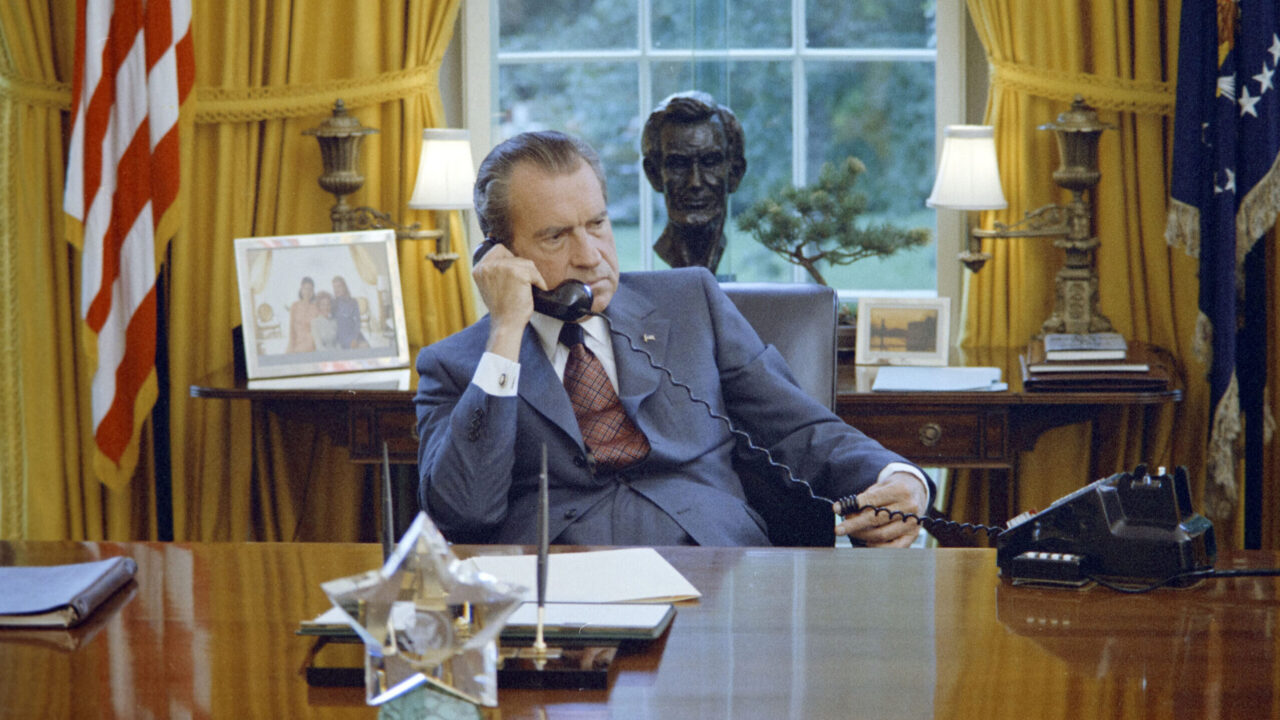
Victor Davis Hanson: Nixon Was the ‘Most Naturally Bright President’ We’ve Ever Had
Favicon 
www.dailysignal.com

Victor Davis Hanson: Nixon Was the ‘Most Naturally Bright President’ We’ve Ever Had

Editor’s note: This is a lightly edited transcript of the latest edition of “Victor Davis Hanson: In His Own Words” from Daily Signal senior contributor Victor Davis Hanson. Subscribe to Victor Davis Hanson’s own YouTube channel to watch past episodes. Sami Winc: So, Victor, I’m anxious to hear about our John Tyler, but also Richard Nixon, who is probably the more infamous of the two, although I’m not sure he should be.   Victor Davis Hanson: I don’t think he’s infamous. He’s actually enjoying a renaissance right now among young people. John Tyler was our 10th president. He was an accidental president. He was the first president who was elevated to the presidency as vice president. It doesn’t really say in the Constitution that the vice president shall become the president.  It said the vice president can fulfill the duties when the president is incapacitated. So he’s kind of famous that when William Henry Harrison died after 31 days in office, he didn’t just start doing it. He said, I want to be sworn in as the president, and that wasn’t in the Constitution. But that inaugurated that, and later amendments reified that.   So he was this Virginia slave owner, and he was in the Democratic Party. He was originally a Jacksonian from 1841 to 1845, so we’re getting very close. He’s gonna be followed by [James] Polk, and he followed [Martin] Van Buren, who wasn’t very popular. And we’re getting closer and closer to the big 1861 divide. He did nothing to slow that down.  He said he abhorred slavery, but he never sold his 40 or 50 slaves he had. He’s famous for having the most children of anybody. I think he had 15 children. Fifteen. He was married twice. Eight children the first time, seven the second.  Sami Winc: I did not know that. That is crazy.  Victor Davis Hanson: Yeah, he was, and he was very… He was a hotshot young guy in the Jacksonian period.  And he was a pillar or a primary guy in the Democratic Party, and he arose with a John Calhoun idea of states’ rights. And [Andrew] Jackson had been a big critic of the Adams family elite and the federal government, the Federalists. But once the South Carolinians said they were not gonna pay tariffs in 1832, I think Jackson became a tough Federalist.  And same thing with the Trail of Tears. He just went in, and he did what he had to do, he thought, and he really empowered the presidency. And that Tyler was on the other Calhoun side and broke with him. But when you look at over the four years, it’s really hard to see anything that he did. He had a treaty with China.  He tried to finesse the Democratic Party. He didn’t split with the Democrats in the North who were opposed to slavery. And he said, “On the one hand, I’m opposed to slavery. On the other hand, we have all these slave owners in my native state, and we’ll have a civil war if we outlaw it. So let’s just pass it on.” And then the next president will be Polk.  He was much better. But when you look at presidents that are rated, I mean, there’s, at the very bottom… And these are left-wing historians. Everybody should remember that. People, when you see presidential rankings, I think [Barack] Obama’s like eight or something. They’re all left-wing. The next Lincoln, remember, his Springfield, Illinois, train ride from Chicago or whatever it was, as he was the young Mr. Lincoln saving us from ourselves.   But in any case, I think he’s rated like 39th or 40th, along there with James Buchanan and Millard Fillmore. And if they put Nixon in there, that’s very unfair. He was a good president. He just made a couple of mistakes. He mussed his hair up, so to speak, as they say in “Dr. Strangelove.”  Sami Winc: Yeah, but nothing… He didn’t do even half as bad as some of the stuff we’ve seen recently.  Victor Davis Hanson: I mean, what he did was essentially, he had a bunch of zealots and an ex-CIA officer thought that the Democrats had… Larry O’Brien was crazy, or he was mental, the head of the DNC, and they wanted to get stuff on him.  So they broke in, and then they contained it, and then they got arrested, and they wanted money. So then they went into the lower rings of the White House. Howard Dean was the presidential counselor. He finally heard about it, and then he came and told Nixon, and Nixon basically said, “What in the blank? Are you kidding me? We’ve got an election.”   So they got through the election of ’72. The second largest popular vote landslide in history was Richard Nixon’s 1972 thrashing of George McGovern. Only Lyndon Johnson, playing on the sympathy of the Kennedy assassination, had beaten Barry Goldwater like that. It was just incredible.  So here he was at the top of the world, and he had all … He was juggling all of these key balls. First of all, he had Vietnamization, and he went into Vietnam, and he was given a mess in 1969, and he had drawn down from about 500,000 troops to almost none. And he was negotiating with them, and he knew that when we were leaving, they would take advantage of them.  But we had first-generation laser-guided bombs, so he started bombing the North, not like Operation Rolling Thunder, but Operation Linebacker. And they started targeting key personnel of the communists in North Vietnam, generals, agents, etc. And they, that made a profound approach.   So he had a peace deal, and he thought he could get out, and he did get out.  So there was a viable South Vietnam. That was the whole point. Of course, after Watergate, they sold the Vietnamese out, and they wouldn’t give them air support, so they got… And then at the same time, he was trying to triangulate with [Henry] Kissinger, his secretary of state and his national security adviser in one office.  First person to do that. Marco Rubio is doing it now. And Kissinger said, Well, you have to triangulate. Triangulate. And they said, Well, wait a minute. They’re all comm- He said, “They’re both communists. They’re both bad, but we can play off one against the other.” So we said no. China, under Nixon, he went to China.  He saw a decrepit old Mao [Zedong]. He didn’t hold… He was the arch anti-communist during the McCarthy period, and he was Ike’s vice president for eight years. Ike treated him really badly, too, when they… That famous thing when they said when Nixon ran for president in 1960, when he lost to JFK, “Well, can you, say something in praise of your former vice president, now candidate?”  He said, “Give me a week” or something like that. Give me a few days to think about it. So Ike could be very cruel to people for all of his… He was a good president, too, but… And so he was solving the Vietnam. It was solved by the time of Watergate. He had really started the détente process by being really tough.  He saved Israel in the Yom Kippur War of ’73. He was under enormous pressure. Kissinger was sort of working on getting Anwar Sadat to flip from the Russians and have a new peace deal if he got the Sinai back. But Kissinger was kind of tinkering around like, “Let’s not give them too many Phantom jets and try to help tit-for-tat.”  And Nixon said, “Get those transports and you put anything on it and you get over there and save the Jews.” And that’s very ironic because when he had his tapes come out, he just used derogatory language about everything. He didn’t really mean it, though. He was just, “The Jews are, they’re smart people. You got to be careful, don’t you think?” Stuff like that. And that hurt him.   But my point is, if you look at what he did about the Vietnam War, and then the Left started liking him. He created the EPA. He created the endangered species list. He created the toxic waste list, all of that. He was really good on the environment.  And the problem with him was I think he was probably the most naturally bright president we’ve ever had. He was smart. He was the best poker player in in a large group in the Navy. I know my grandfather, my maternal grandfather, was a Democrat. He got my parents really angry. And they said, “You can’t vote for Dick Nixon.”  And he said, “Well, he was the best poker player in the Navy. He, five-card stud, you couldn’t beat the man. It’d be good to have him as president. He’s sharp, Pauline. He’s sharp.”   And so, I remember that, and a couple of other things we forget now. 1960, you can make an argument… I know the Left says, “Well, Victor, you’re just a conspiracy theorist, but you could make the argument that Richard Nixon lost that election by 0.2%.”  In Cook County,in Illinois, Chicago, there were some questionable ballots, and there were some questionable ballots in Texas. And had he demanded a recount and got… there might have been. The Democrats might have lost Illinois and lost the Electoral College, and he was very good about that.  He said, “A losing candidate does not question, or if we do that, our reputation worldwide…”   He always thought of things in terms of foreign policy. So when all of these things were going on, and he’s thought that… And he got us off the gold standard for good or evil, but he was working on all of these things to end the Cold War, and he might have done it.  And then when it came to John Dean, he was looking at the papers every day, Woodward and Bernstein, Nixon’s gonna be guilty. We’re gonna finally get Nixon. Tricky Dick. They hated him, and so he dug down. And so he said, basically, “Well, what do they want? They got caught, so take care of them, meaning when they get out, give them money.”  And that looked really bad because they denied he did. Said Nixon didn’t know, and Dean turned state’s evidence. Dean was a sneaky blank mean… I remember he took money and borrowed it out of the White House to remodel his patio or something like that. But in any case, once the Watergate started, today, when you look at today, I mean, there was Deep Throat.  That was just a disaffected Mark Felt, FBI agent. He just wanted to be FBI director and was gonna rat everybody out. So when you look at… I mean, Barack Obama in the Oval Office had [John] Brennan, [James] Clapper, and [James] Comey, and he knew that Steele dossier was fake, and he was basically saying, “Go back and give me assessments that show me that Donald Trump is a Russian collusion,” when there was no evidence.  We know that. We know that he spied on the AP reporters. We know that. We know that Obama spied on James Rosen, spied on his grandmother’s text messages. They got mad for the secret bombing of Cambodia. Well, it wasn’t secret with Barack Obama. He detailed 500 assassination drone missions on the Pakistani border and killed two citizens.  Maybe they deserved it, maybe not. And he bombed Libya. They said [Iran’s] an illegal war. What are you doing? Well, what was Libya for seven months of bombing with no congressional authority. I could go on, and you saw what [Bill] Clinton did.   So, given how astute he was and what a great president he was in foreign policy and why he had really silenced the Left, they wanted to get rid of him, and they got rid of him.  He resigned in the summer of ’73. They knew that Jerry Ford was kind of a nice guy but not really sharp and that they could manipulate him.   We publish a variety of perspectives. Nothing written here is to be construed as representing the views of the Daily Signal.

Like
Comment
Share
Daily Signal Feed
Daily Signal Feed
10 hrs

GOP Challenges Extreme Absentee Voter Law Spreading Around the Country  
Favicon 
www.dailysignal.com

GOP Challenges Extreme Absentee Voter Law Spreading Around the Country  

Republicans are seeking to squash a voting law metastasizing through the nation that allows citizens to vote in states they have never inhabited.  The Nebraska Supreme Court could decide the constitutionality of a state law that allows U.S. citizens living abroad who have not lived in the state—or even live in the United States—to vote in Nebraska elections. Nebraska is one of three dozen states that allow some form of this law. The Republican National Committee has litigated what it calls ‘Never Resident” voting laws in seven states, joining local plaintiffs. A state high court ruling could put the matter on a pathway to the U.S. Supreme Court and establish a national precedent.  “The RNC is taking this fight all the way to the Nebraska Supreme Court because Nebraska elections should be decided by Nebraska voters, period,” Ally Triolo, RNC election integrity communications director, told the Daily Signal. “This loophole allows certain people who have never lived in the state to vote, weakening the safeguards that protect election integrity. We’re fighting to close it, protect the ballot box, and uphold the law.”  Two Nebraska voters, Jack Riggins and Pamela Dingman, who filed the complaint, were joined in the lawsuit by the RNC, arguing their votes are being diluted.  The RNC appealed a ruling by Lancaster County District Judge Ryan Post, who upheld the state’s 2005 law.  “A statute is presumed to be constitutional, and all reasonable doubts are resolved in favor of its constitutionality,” Post wrote in his Aug. 12 opinion. Article VI, Section 1, of the Nebraska Constitution specifies that those eligible to vote in the state must be U.S. citizens who are at least 18 and “have resided within the state and the county and voting precinct” in which they are casting a vote.  The state law says, “A person who is the age of an elector and a citizen of the United States residing outside the United States, who has never resided in the United States, who has not registered to vote in any other state of the United States, and who has a parent registered to vote within this state shall be eligible to register to vote and vote in one county in which either one of his or her parents is a registered voter.”  Nebraska Secretary of State Bob Evnen’s office declined to comment for this story because the matter is the subject of pending litigation.  The Nebraska Examiner reported that state numbers show there are 116 overseas Nebraska voters registered under the law and that six of them voted in the May 12 state primary.  But elections can come down to the slimmest margins. In 2024 in Nebraska, an election for a seat on the Denton Village Board of Trustees ended in a tie, and decided by a lottery, according to the Public Interest Legal Foundation, which tracks elections decided by a single vote or tied. According to the PILF database, 1,376 elections nationally since 1992 initially had a tie vote, and another 531 were decided by a single vote. After the lawsuit was initially filed in June in Lancaster County District Court, Nebraska Democratic Party Chairwoman Jane Kleeb said, “Nebraska Republicans are so afraid of voters—because of their radical, failed policies—that they’re now trying to deny Americans the right to vote.”  The lawsuits are not related to longstanding rules that allow military personnel or diplomats to vote absentee. The RNC says it strongly supports the Uniformed and Overseas Citizens Absentee Voting Act, or UOCAVA.The RNC has sued over “never resident” voting laws in battleground states Arizona and Nevada; blue states such as Colorado, New Jersey, and Virginia; and the red state of Nebraska.  In June, the Wake County Superior Court struck down a North Carolina law allowing people born overseas who never lived in the state to vote in the state’s elections.  The Federal Voting Assistance Program lists 38 states that allow some form of voting by U.S. citizens who never lived in a state. Typically, the states allow an American residing abroad whose parent or legal guardian has a specified connection to the state to vote by absentee ballot. 
Like
Comment
Share
Showing 55 out of 133922
  • 51
  • 52
  • 53
  • 54
  • 55
  • 56
  • 57
  • 58
  • 59
  • 60
  • 61
  • 62
  • 63
  • 64
  • 65
  • 66
  • 67
  • 68
  • 69
  • 70
Advertisement
Stop Seeing These Ads

Edit Offer

Add tier


Select an image
Delete your tier
Are you sure you want to delete this tier?

Reviews

In order to sell your content and posts, start by creating a few packages. Monetization

Pay By Wallet

Payment Alert

You are about to purchase the items, do you want to proceed?

Request a Refund