YubNub Social YubNub Social
    #music #tew #tuba #euphonium #militarymusic #armymusic #armyband #satire #tew2026 #jazz #quartet #history #warmup #bigband #armyblues
    Advanced Search
  • Login
  • Register

  • Night mode
  • © 2026 YubNub Social
    About • Directory • Contact Us • Developers • Privacy Policy • Terms of Use • shareasale • FB Webview Detected • Android • Apple iOS • Get Our App

    Select Language

  • English
Night mode toggle
Featured Content
Community
New Posts (Home) ChatBox Popular Posts Reels Game Zone Top PodCasts
Explore
Explore
© 2026 YubNub Social
  • English
About • Directory • Contact Us • Developers • Privacy Policy • Terms of Use • shareasale • FB Webview Detected • Android • Apple iOS • Get Our App
Advertisement
Stop Seeing These Ads

Discover posts

Posts

Users

Pages

Blog

Market

Events

Games

Forum

Pet Life
Pet Life
5 w ·Youtube Pets & Animals

YouTube
LIVE Dodo Cat TV
Like
Comment
Share
Let's Get Cooking
Let's Get Cooking
5 w

It's Impossible to Eat Just One of These Iconic Dessert Bites (So Buttery!)
Favicon 
www.thekitchn.com

It's Impossible to Eat Just One of These Iconic Dessert Bites (So Buttery!)

A Canadian classic. READ MORE...
Like
Comment
Share
History Traveler
History Traveler
5 w

How Roman Empresses Quietly Shaped an Empire From the Shadows of Power
Favicon 
www.thecollector.com

How Roman Empresses Quietly Shaped an Empire From the Shadows of Power

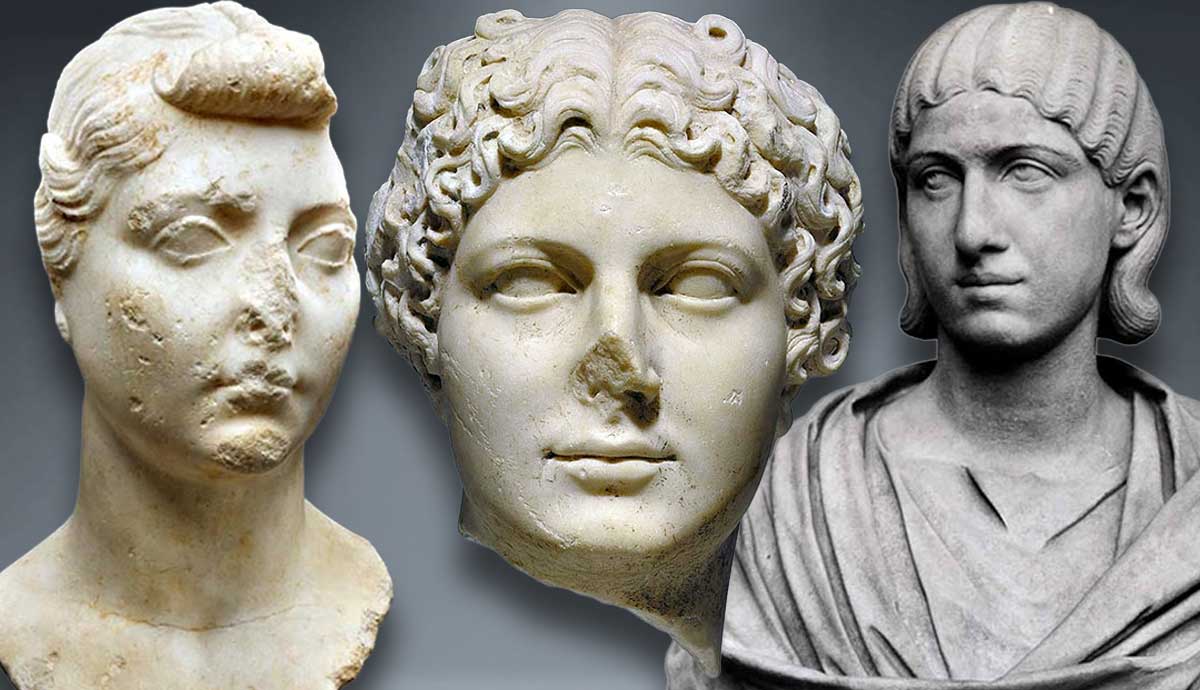
  In the early 3rd century CE, the senator and historian Cassius Dio complained that the rise of Rome’s emperors changed the nature of power. According to him, during the Republic, under the Senate, business was conducted in public. Now, the emperor ruled Rome as if it was his private household. While Cassius Dio is clearly a partisan reporter, he is correct in his observation that the imperial system opened new pathways to power, especially for imperial women. A focus on dynastic succession gave women an important role to play in the question of legitimacy, and as mothers, wives, sisters, and daughters, they had enviable access to the ear of the emperor. This is the story of Rome’s empresses, the women behind the Caesars.   Female Power Before the Empire The Story of Lucretia, by Sandro Botticelli, c. 1496-1504. Source: Isabella Stewart Gardner Museum, Boston   While women were excluded from Roman politics, one woman played an important role in the foundation of the Roman Republic. According to legend, in 508 BCE, Lucretia, the wife of a man named Collatinus, was defiled by Tarquinius Superbus, the King of Rome. Unable to bear the shame, Lucretia committed suicide. Her death so outraged the Romans that, under the leadership of the first Brutus, they rose up and threw out the kings for good. From out of the power vacuum left by the departed kings emerged the Republic.   Rome was a profoundly patriarchal society, and Lucretia had no political agency by which she could seek justice against Tarquinius. She did have influence over the men in her life, though it took an extreme act to move them. The “behind the scenes” influence of women is a recurring theme in Roman history.   Cornelia, Mother of the Gracchi, by Jean-François-Pierre Peyron, 1781. Source: National Gallery   Women were usually relegated to the private sphere. Aristocratic households were headed by men, known as the paterfamilias, who had authority over their wives. But just as the tutelary spirit (genius) of the paterfamilias was worshipped in the household shrine, so was the tutelary deity (juno) of his wife, suggesting that her role in the home was prominent, but in most cases ended at the door. When a woman’s influence extended beyond her household, it was considered noteworthy, as in the case of Cornelia, the mother of the notorious political activists Tiberius and Gaius Gracchus.   As the daughter of the famous general Scipio Africanus, Cornelia (c. 190-115 BCE) was close to the epicenter of Republican politics in the 2nd century BCE. Through her nurturing and support of her sons, she achieved unprecedented public prominence, including a public statue. She was celebrated for her virtues and for embodying the ideal matrona: chaste, modest, loyal to her family, and devoted mother.   Cornelia can be contrasted with another woman who was prominent in Rome for a period, the Egyptian queen Cleopatra, whom Julius Caesar brought to Rome as an honored guest. This publicly powerful woman from the east was described by Plutarch in the 2nd century CE as a master manipulator who used her sexuality to manipulate the men around her for her own purposes.   Cleopatra and Caesar, by Jean-Leon-Gerome, 1866. Source: Wikimedia Commons   In the civil war that ensued between Mark Antony and Octavian following Caesar’s death, Antony’s relationship with Cleopatra gave Octavian plenty of ammunition. She was characterized as a decadent eastern queen who had corrupted a Roman general, and nothing like the virtuous women of Rome embodied by Cornelia. When Octavian became Augustus and the paterfamilias of the Roman state, virtuous women of the imperial family resembled Cornelia, but there was more than one “Cleopatra” in the mix.   Virtuous Matron: The First Empress Portrait bust of Livia, c. 1-25 CE. Source: Getty Museum Collection   Rome’s first empress, Livia, the wife of Augustus, became something of an archetype for the women who followed. She was lauded publicly for her feminine virtues and, perhaps surprisingly, reportedly supported her husband Augustus in a handful of his political endeavours. Whereas Cornelia was a trailblazer with her single statue, Livia’s likeness appeared across the empire during her lifetime, from statues to coins. Her name was also given to prominent public buildings, such as the Porticus Liviae on the Esquiline Hill.   Nevertheless, there were clear limits to Livia’s agency and power. In a surviving letter from Augustus to the people of the island of Samos, he regretfully informs the Greeks that he cannot grant them the freedoms they had desired, despite his wife Livia arguing their case. The letter demonstrates how Livia could fulfil a public role as the patrona for a community, which was extraordinary for a Roman woman, but ultimately had no official power.   Statues of Tiberius and Livia, Paestum, 14-19 CE. Source: Wikimedia Commons   Livia actually became more powerful after Augustus’ death. Livia was an aristocratic daughter of the Claudian gens, but was now adopted into the Julian gens by Augustus, given a third of his property, awarded her the title Augusta, making her Julia Augusta. This protected the position she enjoyed under Augustus, and since Tiberius remained unmarried while he was emperor, there was no other woman to challenge her position. In addition, Tiberius infamously spent much of his time away from Rome, giving his mother significant power in the city in his absence. This led to the characterization of Livia as a domineering dowager during the reign of her son.   The Problematic Princess: An Alternative Stereotype Bust of Julia the Elder, c. 9 BCE. Source: Wikimedia Commons   Under Augustus, Livia enjoyed prominence as his wife and matron of the imperial family, but she was not the only female member of the Julio-Claudian clan to receive public attention. A number of female family members appeared in a procession on the Ara Pacis, an altar to peace dedicated on Livia’s birthday, January 30, in 9 BCE. Among other things, it depicts a public religious procession that took place in 13 BCE to celebrate Augustus’ military victories, which brought peace to the empire. While the relief is not complete, scholars have identified Livia, Antonia the Elder, the daughter of Mark Antony and Augustus’s sister Octavia, and also Augustus’s only daughter, Julia, whom he fathered with his previous wife Scribonia.   Julia was very important to Augustus’s dynastic plans. He first married her to his nephew Marcellus, who Augustus was grooming as his heir until his unexpected death in 23 BCE. She was then married to Augustus’s friend and right-hand man, Agrippa, who became the new heir apparent. Together, they had two sons, Gaius and Lucius Caesar, and Augustus prepared the youths as successors following Agrippa’s death in 12 BCE. At the same time, Augustus forced Livia’s son, his stepson, Tiberius, to divorce his beloved wife, Vipsania, and marry Julia to mark him out as the interim heir until his young grandsons came of age. While Julia may not have appreciated being repeatedly married off as part of Augustus’s dynastic plans, her importance is clear.   But while Livia had the reputation of the ideal matron like Cornelia, Julia was more of a Cleopatra figure. While she was considered glamorous and intelligent, she was also accused of promiscuity, adultery, and decadence. This eventually led to her exile for adultery and treason in 2 BCE. Both of these stereotypes, the supportive, chaste matron or the ambitious, promiscuous woman, would appear again and again throughout imperial history.   (Un)Happy Families: Empresses & Imperial Succession Marble Portrait head of Agrippina the Younger, c. 50 CE. Source: J. Paul Getty Museum   Many subsequent empresses align with the Livia or Juli stereotype, or something in between. Claudius’ third wife Messalina, the mother of his son Britannicus, was also convicted of adultery and treason. This made way for Claudius to marry his own niece, Agrippina, keeping imperial power in the family. She was portrayed as ruthlessly ambitious, doing away with Claudius at just the right moment to ensure that her son from a previous marriage, Nero, succeeded before Britannicus could come of age. She was then as overbearing as Livia. But while Tiberius tolerated his mother, Nero had Agrippina assassinated.   Gold Aureus of Trajan, with Plotina wearing a diadem on the reverse, 117-118 CE. Source: British Museum   More than half a century later, Plotina, the wife of Trajan, appears originally to have desired to be recognized as a kind of moral counterpart to her husband, who would be vaunted as the optimus princeps (‘the best emperor’). She displayed her lack of ostentation by rejecting the title of Augusta for over a decade after Trajan granted it to her in 100CE. However, the couple never had a son of their own. Instead, they adopted Trajan’s first cousin, Hadrian. This approach would go on to characterise the next several decades of imperial succession, leading to Rome’s Pax Romana, a relative golden age. Plotina’s heavy involvement in Hadrian’s succession did not pass with sceptical comment from some historians. A later tradition would even suggest that Plotina herself was responsible for Hadrian’s accession after Trajan’s death.   The celebration of imperial succession often proved a false dawn. In the early 3rd century, the matriarch of the Severan imperial dynasty, Julia Domna, was celebrated as the guarantor of “happy times” (felicitas saeculi) on coinage, because she was the mother of two sons who, in time, would succeed their father. Unfortunately for Julia, her sons Caracalla and Geta had a violently fractious relationship, resulting in fratricide.   Mater Patriae: Mother of Rome Gold Aureus of Septimius Severus, with a reverse depiction of Julia Domna, Caracalla (right) and Geta (left), with legend Felicitas Saeculi, or “Happy Times.” Source: British Museum   Whether successors were chosen through birth or adoption, significant evidence survives for the role of the empress as mater (mother). On coinage, the Augusta might be paired with recognisable feminine virtues, such as piety, modesty, and fecundity, linked with the ideal matrona. Beyond coinage, Faustina the Younger, the wife of Marcus Aurelius, was commemorated on inscriptions as mater castrorum, the “mother of the camps.” This extended her matronly role to the imperial army.   Aureus with Julia Maesa on the obverse and the goddess Juno, Rome, c. 218-222 CE. Source: British Museum   The Augustae that came after Faustina the Younger enjoyed many extravagant titles that celebrated their maternal capacities. Alongside their roles as mater castrorum, they were called mater senatus (mother of the senate), and even mater patriae (mother of her country), a striking counterpart to the emperor’s traditional role of pater patriae.   The latter two titles in particular are associated with the Julias of the Severan dynasty: Julia Maesa, Julia Soaemias, and Julia Mammaea. For a long time, these women have been vilified for their apparently pernicious influence on imperial power between 217 and 235 CE. While their political power appears to have been significantly overstated, they nevertheless appear to have wielded significant influence behind the scenes.   Conspirators: Empresses as Kingmakers Heliogabalus and the Wise Women, by Raphael Sadeler I (after Joos van Winghe), 1589. Source: National Gallery of Art, New York   Maesa was the elder sister of Julia Domna, the wife of Septimius Severus. After the assassination of Caracalla in 217, Maesa concocted a conspiracy against the new emperor, Macrinus, to restore her family to the summit of Roman imperial power. She claimed that her grandson, the 14-year-old son of Soaemias, was actually the illegitimate son of Caracalla and, therefore, the rightful heir. A claim she reinforced with a generous donation to the soldiers. This successfully installed the emperor known as Elagabalus, but his eastern customs proved unpopular in Rome, including the prominence he afforded the women of his family in his court, especially Maesa and Soaemias. Although the Historia Augusta’s claim that he created a “female senate” is surely an invention, it does appear that the women of his family enjoyed significant prominence.   Portrait bust of Julia Mammaea. Source: British Museum   A palace coup followed, in which Maesa appears to have sided against Elagabalus, despite her role in his rise. The teenage emperor was murdered and replaced by his even younger cousin, Alexander, the son of Julia Mammaea. According to the ambivalent historical tradition that developed around Alexander, while he was a good emperor, he could not escape the overbearing influence of first his grandmother, and then his mother. This apparent weakness left him unable to sustain the loyalty of his soldiers. They revolted in 235 CE, opting for the professional soldier, Maximinus Thrax, over the “mummy’s boy.” Mammaea was killed with her son in a military camp on the German frontier, a testament to her central role in imperial power.   Victims: Empresses & Imperial Downfall The Assassination of the Emperor Caligula, by Lazzaro Baldi, 1624-1703. Source: Wikimedia Commons   The fates of the later Severan empresses demonstrate another way in which the political importance of the Augustae was revealed: they suffered the same fate as the emperor husbands. Both Julia Soaemias and Julia Mammaea were not only executed in the plots against the emperor, but they suffered the same damnatio memoriae, with their names and images expunged from many public monuments.   Before this time, for an empress to be murdered alongside her husband was uncommon but not unheard of fate. The first to fall foul of this was Caesonia, the wife of the emperor Caligula. When Caligula was struck down in 41 CE, the rampaging praetorians also murdered his wife and young daughter. The emperor’s wife and child might just have been at the wrong place at the wrong time rather than deliberately targeted. In contrast, when Domitian was assassinated for his perceived tyranny, his wife Domitia Longina was spared. Neither Caesonia or Domitia seems to have enjoyed particular power or prominence when compared to their predecessors or successors.   Gods & Saints: The Afterlives of Empresses Scene of Faustina’s apotheosis from the base of the Column of Antoninus Pius, 161 CE. Source: Musei Vaticani   “Oh no, I think I’m turning into a god!” quipped the emperor Vespasian as he lay dying in 79 CE. Tongue-in-cheek though it might have been, he must have known that he, like several of his predecessors, was to be deified by the Roman state and worshiped across the empire after his death. This practice became entrenched in imperial ideology from the Julio-Claudian dynasty, and both emperors and empresses would enjoy deification.   While Augutus was deified immediately following his death in 14 CE, Tiberius would block the deification of his mother Livia when she died in 29 BCE, apparently wanting to reserve the supreme honor for Augustus. She would later be deified by Claudius in 42 BCE, who honored his grandmother as a way to legitimize his own position. But she was not the first imperial woman to be deified, with Caligula deifying his beloved sister Drusilla following her untimely death in 38 CE.   These early acts established a precedent that allowed later emperors to freely deify the female members of their family. In the Forum Romanum, the emperor Antoninus Pius ordered the construction of a vast temple to the cult of his wife, Faustina the Elder, which still dominates the center of the ancient city today.   Empresses in the Christian Empire Saint Helena, by Giovanni Battista Cima da Conegliano, 1495. Source: Wikimedia Commons   When the Roman Empire converted to Christianity in the early 4th century CE, the empresses continued to remain significant. Ideologically, they continued to be linked to ideas of succession, and therefore to notions of stability and continuity. They were also celebrated for their virtues. Helena, the mother of Constantine the Great, was recognised as Augusta in 325 CE. Thereafter, she embarked on a series of celebrated spiritual endeavours. Most famously, she undertook a pilgrimage to the Holy Land, where she uncovered the remains of the True Cross and led the construction of a number of churches, including the Church of the Nativity in Bethlehem. The fragments of the True Cross were brought back to Rome, where they can still be seen in the Church of Santa Croce in Gerusalemme.   A statue of Helena, depicting the empress seated, is said to have been inspired by the statue of Cornelia, the paragon of maternal virtue from the Republican era. In a new, Christian era, the empresses still lacked official political power in a patriarchal society, but held a different kind of sway both politically and ideologically.

Like
Comment
Share
History Traveler
History Traveler
5 w

7 Facts About Queen Artemisia I of Caria, the Fearless Admiral Who Fought at Salamis
Favicon 
www.thecollector.com

7 Facts About Queen Artemisia I of Caria, the Fearless Admiral Who Fought at Salamis

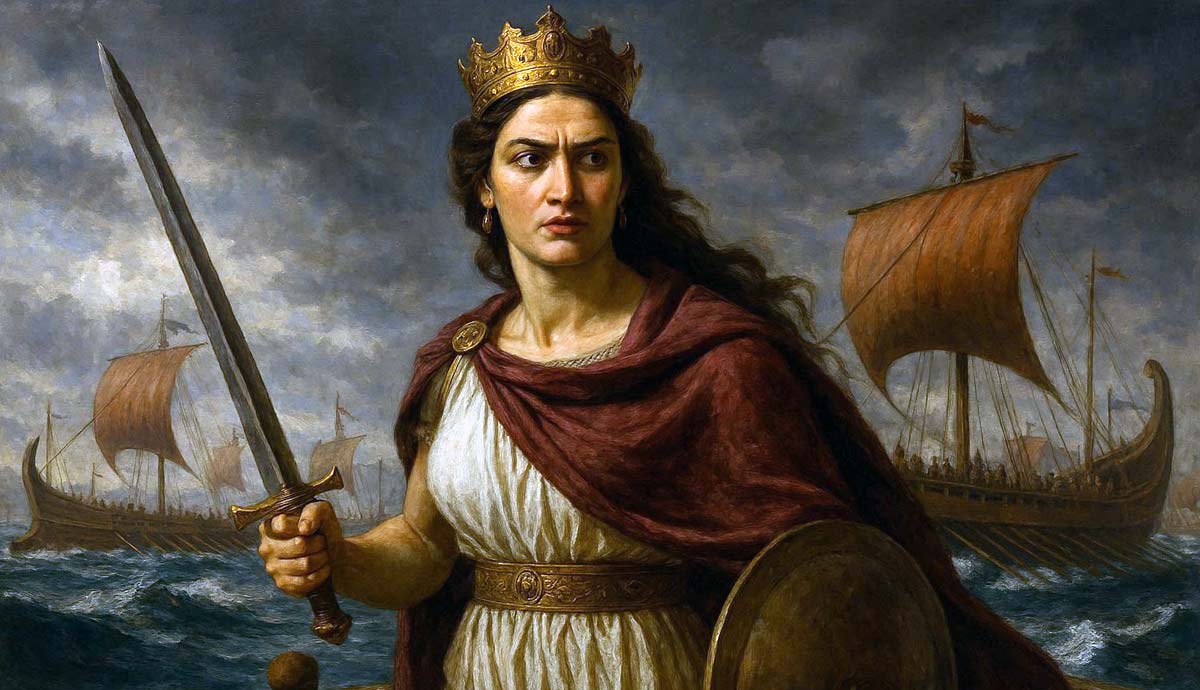
  Artemisia I of Caria was the Queen of the Greek city-state of Halicarnassus, but she allied herself with the Achaemenid Empire during the Greco-Persian Wars. She gained notoriety through famous chroniclers such as Herodotus and Polyaenus who made sure her bravery went down in history. Her rise to a position of power in the ancient world was both unlikely and unexpected. Meet the enigmatic warrior queen with seven fascinating facts.   1. She Became Queen as a Regent The ruins of the famous Mausoleum at Halicarnassus in Caria. Source: Wikimedia Commons   Artemisia’s origins are shrouded in mystery. Her father was King Lygdamis of Halicarnassus, and her mother was an unknown woman from Crete, suggesting she was probably a concubine or “pallake,” but she may have been a queen.   King Lygdamis died around 484 BCE, followed by Artemisia’s husband, whose name is not preserved, in 480 BCE. At the time, Artemisia had a young son, Pisindelis, who was too young to rule, so Artemisia assumed the position. Female rulership was rare in classical Greece, and there are few other examples of women assuming the primary position of power in the absence of a king.   Artemisia’s mother’s Cretan culture and her father’s prestigious Anatolian lineage likely provided Artemisia with a varied homelife unlike that of other Greek nobility, particularly for a woman. Contemporary Greek women from elite families received some level of education, although this varied from city-state to city-state.   Halicarnassus was of utmost importance as a centre of commerce between Anatolia and Greece, which presumably exposed the young Artemisia to even more affairs of state. Therefore, while Artemisia was not necessarily born to inherit the crown of a strategic, coastal trading post, her later successes clearly suggest she had some training in political, diplomatic, and military affairs.   2. She Was Greek, But a Persian Ally Die Seeschlacht bei Salamis, by Wilhelm von Kaulbach, 1868. Source: Lenbachhaus Museum, Germany   Despite Halicarnassus being a primarily Greek settlement in Southern Anatolia, when it came to the Greco-Persian Wars, Artemisia fought for the Persian Achaemenid side. Sitting between Greece and Persia, the province of Caria had a uniquely Greek culture but was conquered by Cyrus the Great around 545 BCE.   Halicarnassus enjoyed far greater autonomy than many other Persian satrapies, likely due to the significance of its economic power and the political influence of its ruling family within both Greece and Anatolia. There is little tangible evidence of any pressure being placed upon the city-state to supply troops to fight in the war. However, we can assume they felt at least somewhat obliged, so as not to fall out of favour with the Achaemenid Empire.   However, there would certainly have been no need for the ruling queen to attend, never mind lead her forces into battle. Consequently, the decision to do so would have been Artemisia’s own.   3. She Advised Xerxes Against the Battle of Salamis Official poster for 300: Rise of an Empire with Eva Green portraying Artemisia, 2014. Source: IMDb   Prior to the infamous Persian defeat in the naval Battle of Salamis, Xerxes assembled all of his military commanders and enquired whether the Achaemenid forces should engage with the Greek city-states at sea. Artemisia had just led her troops in the naval battle of Artemisium, which was fought concurrently with the Battle of Thermopylae. Here, she had proved herself as an expert military strategist and helped secure an upper hand for the Persians.   With the Achaemenid victory at Thermopylae, the Greeks were forced to abandon the battle of Artemisium and fled to the coast at Salamis. Furthermore, many deserted Athens, and the Persians proceeded to sack the city.   Now, Xerxes wanted to continue the momentum and pursue the allied Greeks at Salamis, where their navy was waiting. All of his commanders agreed that this would ensure his victory, except Artemisia. She noted the Greeks’ superiority in naval warfare.   According to Herodotus, the Queen of Halicarnassus described the poor position of the Greeks as they had abandoned their cities and had a limited supply of resources. She suggested that if the Persians moved towards the Peloponnese, they would cut the Greeks off from their most prominent bases, forcing them to abandon the war. Xerxes commended Artemisia for her wise input, but ultimately decided to follow the advice of his other commanders and engaged with the Greeks in the straits at Salamis. This resulted in a crushing defeat for the Achaemenid navy.   4. A Reward of 10,000 Drachma Was Placed on Her Head Illustration of Greek triremes at the Battle of Salamis, by Charles Oliver Murray for Cassell’s Illustrated Universal History, 1882. Source: Wikimedia Commons   During the clash at Salamis, an Athenian ship was in pursuit of Artemisia’s ship. The Queen had to think quickly as she tried to escape. Enclosed by her Persian allies, she ordered that the Persian flag be lowered and had her ship row straight into an allied Calyndian ship, pretending to be one of the Greeks.   As reported by Herodotus, a bounty had been placed on Artemisia because the Greeks found it so abhorrent that a woman could command a vessel against Athens. Ten thousand drachma would be awarded to any man who captured the Queen of Halicarnassus and returned her to Greece alive. This would have been a terrifying prospect to Artemisia. If she were captured, she would likely have been sold into slavery.   Therefore, Artemisia was seemingly prepared to do anything to evade imprisonment. Once she had sunk the Persian ship, the Athenian vessel captained by Ameinias, brother of the famous playwright Aeschylus, gave up on the chase as they assumed the ship was either an ally or a Persian ship that had betrayed the Achaemenid cause. It is assumed by Herodotus that Ameinias did not know Artemisia was on the ship, as capturing the Queen of Halicarnassus would have brought him considerable notoriety and great financial gain.   It is believed that Xerxes was watching the onslaught from the shore, and he and his advisors assumed Artemisia had sunk a Greek ship. This caused Xerxes to utter a now-famous quotation, “My men have become women; and my women, men.” None of the crew of the sunken ship survived, and thus the deception was never made known to Xerxes or any of the Achaemenids during Artemisia’s lifetime.   5. Xerxes Followed Her Advice to Leave Greece Relief of Xerxes I with attendants carved into rock at Persepolis, c. 486-465 BCE. Source: Wikimedia Commons   Through her prowess in both the Battle of Artemisium and the Battle of Salamis, as well as her advice as a tactician, Xerxes was thoroughly impressed with Artemisia. In the wake of the Achaemenid defeat at Salamis, Xerxes was sceptical of his advisor and commander, Mardonius, who suggested that the King flee and leave his troops in Greece to fight under him instead.   Therefore, Xerxes asked Artemisia for her advice as she had been right about Salamis, when all his other commanders, including Mardonius, had made the wrong call. On this occasion, Artemisia agreed with Mardonius. She explained that if Mardonius won, it would be under Xerxes’ auspices and still bring him great honor. But if he lost, Xerxes would not be tainted by the defeat. Plus, any Greek victory would only be against Xerxes’ slaves, and not the king himself. Satisfied, Xerxes returned to Persia.   Additionally, Xerxes trusted Artemisia to lead his illegitimate heirs back to Ephesus, a Persian stronghold in Anatolia. As a reward for her services, Xerxes presented Artemisia with a bespoke suit of armor.   6. We Do Not Know Her Fate After the War Coin from Caria dated to the end of Artemisia’s rule and the start of her son and successor, Pisindelis’s rule, c. 470-450 BCE. Obverse: winged female figure; Reverse: Baetyl or holy stone of a god. Source: Wikimedia Commons   After the Greco-Persian War, Artemisia faded from history. Two rumors about her fate persist. The first is that Artemisia remained in Ephesus to look after Xerxes’ heirs. This seems unlikely, as he would have had plenty of female attendants and servants to mind his children. The second, suggested by Photius around 1,300 years later, is that Artemisia fell in love with a man in Abydos who rejected her advances. In response, she blinded the man while he slept, then threw herself from a great height into the sea and drowned. This trope was common in ancient literature and may have inspired Photius to invent the story.   There is no hard evidence for what happened to Artemisia after she escorted Xerxes’ children to Ephesus. Her son, Pisindelis, succeeded her to the throne of Halicarnassus in 460 BCE, so we can assume she had passed away by then. As her date of birth is also unknown, we do not know how old she was at the end of her 20 years in power.   7. She Is a Popular Figure in Pop Culture Anne Wakefield as Artemisia and David Farrar as Xerxes in The 300 Spartans, 1962. Source: IMDb   Artemisia I of Caria has been reimagined many times since her death, usually in connection with the story of the 300 Spartans at Thermopylae. Rudolph Mate’s 1962 blockbuster, The 300 Spartans, saw actress Anne Wakefield bring the character of Artemisia to the big screen. Wakefield’s portrayal showed Artemisia as a captivating woman who had enchanted Xerxes and seemingly had a hidden agenda.   Typical of cinema at the time, Artemisia was depicted as largely one-dimensional. The same cannot be said in the 2014 film 300: Rise of an Empire, where Artemisia, played by actress Eva Green, is shown as a fearsome warrior with a tragic backstory. In this adaptation, Artemisia convinces Xerxes to become a god-king and leads the onslaught against the Greeks at Artemisium. In the action sequences, Artemisia fights among men as she wields two swords, and dies in battle at the hands of Themistocles.   Artemisia has also appeared in multiple fictional written works, such as Roy Casagranda’s 2018 thriller about the Queen of Halicarnassus titled The Blood Throne of Caria, and Gore Vidal’s work called Creation, where she has a relationship with the general Mardonius. Moreover, multiple ships and naval vessels have been named Artemisia, particularly in the Middle East.
Like
Comment
Share
History Traveler
History Traveler
5 w

Why Did the Persecution of Christians Backfire in the Roman Empire?
Favicon 
www.thecollector.com

Why Did the Persecution of Christians Backfire in the Roman Empire?

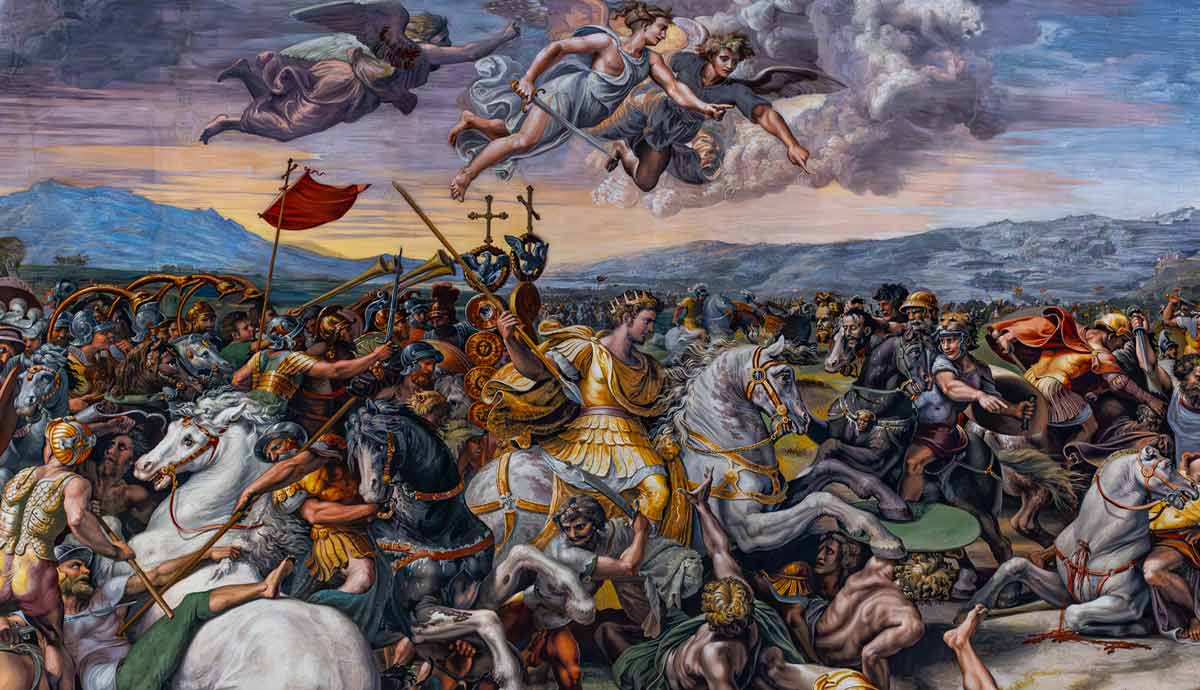
The Battle of Milvian Bridge, Mural from Vatican Palace, 1520-4. Source: Wikimedia Commons   Early Christians in the Roman Empire showed a high level of devotion to their God that made their persecution backfire. On many occasions, the martyrs sang while awaiting execution in arenas. While Roman authorities at the time intended for public executions to serve as a warning to anyone who refused to honor traditional gods, the strategy did not work.   Roman Emperor Nero started the trend in 64 CE after a great fire destroyed much of Rome. At the time, he needed people to blame for the disaster and chose the Christians as they were a small group of secretive people that lived on the fringes of society. The plan to scare the public away from the new faith failed as instead of fear, the lurid sights of their devotion to their faith even in the face of death, created curiosity among Roman citizens.   Christians Gained the Support and Admiration of the Masses Marble bust of the Emperor Nero. Source: Capitoline Museum   While public executions of Christians were meant to humiliate victims, their displays of courage when facing persecution were rare in a society built on power and self-interest. As a result, many Romans began to wonder what kind of god could give a person such strength. Tertullian, a famous writer from that era, notably wrote that the blood of martyrs acted as the seed of the church. Every time the state killed a believer, more people signed up to join the movement.   Painting depicting Christian persecutions The Christian Martyrs’ Last Prayer, by Jean-Léon Gérôme (1883). Source: Wikipedia   While most people in the empire easily added the Roman Emperor to their list of gods in order to avoid trouble, the Christians refused to burn incense to the image of the ruler. Over time, the church became more organized and created a welfare system that the Roman government simply did not provide. When the Plague of Cyprian that emerged in 251 CE killed thousands of people, pagan priests and wealthy citizens fled to their country estates to avoid the sickness. Christians by contrast stayed in the cities to nurse the sick and bury the dead regardless of whether the victims were believers or not. This level of kindness earned them deep respect among the poor and middle classes. The actions also helped to earn the trust of the people.   There Were Challenges in the Implementation of Laws Fragment of a statue of Diocletian (284–305). Source: Wikimedia Commons   One of the most intense efforts to destroy the faith began in 303 CE under Emperor Diocletian. He ordered the burning of Christian scriptures and the destruction of all churches across the empire. He also removed Christians from the army and the civil service. However, the vast size of the empire meant that local governors could not enforce these rules everywhere with the same intensity. As such, members of the church survived in pockets across the region. In some areas, officials only burned a few books to please the emperor.   A silver Antoninianus coin, with obverse portrait of Constantius, father of Constantine, with radiate crown; with reverse depiction of the Caesar greeting Galerius, his Tetrarchic equal, with a kneeling captive between them, struck at Sisica in Pannonia, AD 293, via American Numismatic Society   Moreover, some Roman elites had already joined the religion and many high-ranking officials had family members who were secretly Christians. In reality, believers had moved from the slums into the palaces. Therefore, attempts to kill them off started to look like a civil war against Rome’s own families. Notably, the violence lasted for eight years but failed to produce the results Diocletian wanted. Upon his death, he left behind a divided and exhausted population instead of a unified pagan empire. Galerius, who succeeded him, was also a fierce persecutor. However, he eventually realized that the campaign was a waste of resources and issued an edict of tolerance on his deathbed in 311 CE. He even asked the Christians to pray for his health.   Leaders Eventually Supported Christians Nummus of Constantine the Great with Christ’s monogram on a labarum, c. 327 CE. Source: The British Museum   The final collapse of the persecution decrees against Christians came in the form of a military leader and future Roman emperor named Constantine. At the time, he was a general who fought for control of the empire. He claimed to have seen a vision of a cross in the sky before a major battle in 312 CE. The victory at the Battle of the Milvian Bridge convinced him that the Christian God was a powerful ally.    Soon afterwards, new laws were drawn up to stop the persecution of Christians and return all the property that the state had stolen from the church. Constantine and his co-emperor, Licinius, signed the Edict of Milan in 313 CE to make this official. Soon, Constantine began to commission the construction of massive basilicas. He also gave bishops the power to act as judges.   It is estimated that about 10 percent of the empire was Christian by the time the persecution ended.
Like
Comment
Share
Country Roundup
Country Roundup
5 w

Blake Shelton + Gwen Stefani Are 'Trash Talking' Each Other
Favicon 
tasteofcountry.com

Blake Shelton + Gwen Stefani Are 'Trash Talking' Each Other

Blake vs Gwen... Who you got? Continue reading…
Like
Comment
Share
Conservative Voices
Conservative Voices
5 w ·Youtube Politics

YouTube
King George’s Side of the Story
Like
Comment
Share
Conservative Voices
Conservative Voices
5 w

Bad Bunny’s Anti-ICE Grammy Rant Raises Red Flags Before the Super Bowl
Favicon 
www.dailysignal.com

Bad Bunny’s Anti-ICE Grammy Rant Raises Red Flags Before the Super Bowl

If you thought Bad Bunny’s anti-ICE Grammy speech was bad, buckle up, because you’re not getting rid of him anytime soon. The Puerto Rican rapper, who took his acceptance speech slot to pontificate on behalf of illegal aliens, will be headlining the Super Bowl halftime show this upcoming Sunday. Will he bring the fiercely anti-law enforcement vibes from his speech to the stage next week? All signs point to yes. The post Bad Bunny’s Anti-ICE Grammy Rant Raises Red Flags Before the Super Bowl appeared first on The Daily Signal.
Like
Comment
Share
Bikers Den
Bikers Den
5 w

Sawicki Speed Intimidator Series Exhaust Review: CAD-Designed Performance for Harley-Davidson M8 Models
Favicon 
hotbike.com

Sawicki Speed Intimidator Series Exhaust Review: CAD-Designed Performance for Harley-Davidson M8 Models

From the heart of North Carolina’s racing country comes a bold new performance statement from Sawicki Speed with its all-new […] The post Sawicki Speed Intimidator Series Exhaust Review: CAD-Designed Performance for Harley-Davidson M8 Models appeared first on Hot Bike Magazine.
Like
Comment
Share
Conservative Satire
Conservative Satire
5 w Funny Stuff

rumbleOdysee
Funny how that works...
Like
Comment
Share
Showing 5321 out of 113716
  • 5317
  • 5318
  • 5319
  • 5320
  • 5321
  • 5322
  • 5323
  • 5324
  • 5325
  • 5326
  • 5327
  • 5328
  • 5329
  • 5330
  • 5331
  • 5332
  • 5333
  • 5334
  • 5335
  • 5336
Advertisement
Stop Seeing These Ads

Edit Offer

Add tier


Select an image
Delete your tier
Are you sure you want to delete this tier?

Reviews

In order to sell your content and posts, start by creating a few packages. Monetization

Pay By Wallet

Payment Alert

You are about to purchase the items, do you want to proceed?

Request a Refund