YubNub Social YubNub Social
    #freedom #libtards #terrorism #patriots #antifa #privacy #americafirst #loonyleft #surveillancestate #police\ #alpr #flock
    Advanced Search
  • Login
  • Register

  • Night mode
  • © 2026 YubNub Social
    About • Directory • Contact Us • Developers • Privacy Policy • Terms of Use • shareasale • FB Webview Detected • Android • Apple iOS • Get Our App

    Select Language

  • English
Community
New Posts (Home) ChatBox Popular Posts Reels Game Zone Top PodCasts
Explore
Explore
© 2026 YubNub Social
  • English
About • Directory • Contact Us • Developers • Privacy Policy • Terms of Use • shareasale • FB Webview Detected • Android • Apple iOS • Get Our App
Advertisement
Stop Seeing These Ads

Discover posts

Posts

Users

Pages

Blog

Market

Events

Games

Forum

SciFi and Fantasy
SciFi and Fantasy  
1 y

Down the Worst Roller-Coaster: Stephen King’s Pet Sematary (Part 20)
Favicon 
reactormag.com

Down the Worst Roller-Coaster: Stephen King’s Pet Sematary (Part 20)

Books Reading the Weird Down the Worst Roller-Coaster: Stephen King’s Pet Sematary (Part 20) The wendigo has done its work well, and no one is safe… By Ruthanna Emrys, Anne M. Pillsworth | Published on March 26, 2025 Comment 0 Share New Share Welcome back to Reading the Weird, in which we get girl cooties all over weird fiction, cosmic horror, and Lovecraftiana—from its historical roots through its most recent branches. This week, we continue Stephen King’s Pet Sematary with Chapters 58-60. The novel was first published in 1983. Spoilers ahead! Ongoing content warning for dead kids and pets. Jud’s slept through the night instead of watching for Louis. No, he didn’t fall asleep; he was put to sleep. He’s awakened by the sound of the porch door opening, then the front door. “Louis?” he calls, though he knows that whatever’s entered is “sent to punish an old man for his pride and vanity.” Footsteps approach, preceded by a “dirty, low smell—the smell of poisoned tidal flats.” Two shadows enter the sitting room. “Gage?” Jud asks. Church is the smaller shadow. Jud backs toward the kitchen, stumbling as Church twines around his ankles. He kicks the cat away. “It mayn’t be too late,” he thinks. “It’s back but it can be killed again.” Jud pulls a cleaver from the utensil drawer. “It ain’t a kid,” he reminds himself. “It may cry. But you ain’t gonna be fooled yet again. This is your last chance.” Church enters the kitchen first. Gage Creed follows, dressed in his moss-fouled burial suit. One eye is weirdly cocked. The other fixes on Jud. Gage grins. His babyish voice is perfectly understandable: “Hello, Jud. I’ve come to send your rotten, stinking old soul straight to hell.” Cleaver raised, Jud invites Gage to see who’s going to “fuck with who.” Gage says he’s seen Norma burning in hell. She was “a cheap slut” who cheated on Jud with all his friends. The thing’s voice changes to Norma’s: She knew about Jud’s whores, but he never knew he married a whore or how she and his friends laughed about him together… Jud springs toward Gage. Church trips him to the floor. He loses the cleaver. Gage attacks with Louis’s scalpel and drives its blade through the hand Jud raises. And the scalpel slashes again. Again. Again. * * * A truck driver helps Rachel fix her rental. A battery cable came off, weird thing to happen to a new car. Yes, weird, Rachel thinks as she drives on, feeling she’s being manipulated. Held up just long enough for something irrevocable to happen. By five o’clock, Jud’s dying. In Chicago, Ellie wakes from a nightmare, screaming. By quarter after, Rachel’s nearing Ludlow. She goes first to the Crandalls’ house. The peaceful dawn would usually give her a lift, but today brings “a dragging sense of unease.” Louis’s car isn’t in their driveway. When Jud doesn’t answer his doorbell, Rachel notices muddy footprints on the porch floor: very small prints, a child’s. Church meows inside. She opens the door. He sits in the hallway, whiskers beaded with blood. Crazily, memories of a monstrous Zelda interfere with Rachel’s rational fear that Jud’s hurt. Church meows upstairs now. Someone groans. Rachel runs to the second floor. Another groan, behind a closed door. Certain Zelda will be there, feeling like she’s shrinking to child-size, Rachel approaches. The door’s snatched open, and Zelda’s there, back twisted, “smelling of piss and death.” Her illness has dwarfed her, so she can wear Gage’s burial suit, and her eyes are “alight with an insane glee.” She’s come back for Rachel, to twist her back and put her permanently to bed— Then it’s Gage in front of Rachel, Church on his shoulder. His face is swollen, as if he’s been hurt and put back together by “crude, uncaring hands.” Rachel calls his name and stretches out her arms. Gage climbs into them and clings, one hand behind his back. “I brought you something, Mommy!” he screams. * * * Louis wakes around nine. He’s stiff everywhere, but his banged-up knee’s the big problem. Only the hope that Gage is back gets him up. No Gage upstairs, but from a window Louis spots a strange blue Chevette in Jud’s driveway, with Church curled atop it. Halfway downstairs, Louis remembers the Thing in the woods. His Disney World dreams merged with dreams about the Wendigo touching Louis to forever rot his good intentions. He’d become both a cannibal and the father of cannibals. He was in the Pet Sematary again, with the Batermans, and dead Jud with his dog Spot, Farmer Morgan with his bull, and—Rachel, dress splattered red. Behind them, sky-tall, the Wendigo stood… Stop, Louis tells himself. He’s going to make breakfast. After eating, he’ll shower, tend his injuries, and wait for Gage. The kitchen’s bright, but things feel awry, overshadowed. The phone rings. It’s Rachel’s father, asking if she got home all right. That’s when the sight of little muddy footprints freezes Louis’s heart. That blue Chevette, but where’s Rachel then? Louis lies that Rachel’s home and fine. Irwin tells him Ellie had such a nightmare overnight she couldn’t stop sobbing. They had to take her to the hospital, where she was sedated. Louis asks if Ellie said what scared her. She talked about Oz the Gweat and Tewwible, Irwin replies. How Oz had killed her mother. Crazy thing, that’s how Zelda pronounced the Wizard’s name—did Rachel ever tell Ellie about Zelda? The doctor says Ellie had a delayed shock from Gage’s funeral. She should be all right, but won’t Rachel and Louis come back to Chicago? After Louis says they will, Irwin adds that Ellie said something else strange: “Paxcow says it’s too late.” The call over, Louis sinks towards a swoon. Only the agony of landing on his swollen knee keeps him conscious. He fears Rachel’s dead. He knows he must wait for Gage, because wherever he might run, Gage would find him. What made him summon Gage back was grief, “the battery that burying ground survives on.” Its power feeds on Louis’s grief and sanity. He considers suicide, but first he must put things right. Tracing Gage’s footprints, Louis discovers his scalpel missing. Luckily, his doctor’s bag contains other potent things… As Louis prepares to act, he imagines a new family moving into this house, a young couple, no children yet but hopes and plans. They’ll congratulate themselves for getting the house cheap, not being superstitious about its recent past. And— Perhaps they’ll have a dog… What’s Cyclopean: Gage smells of “poisoned tidal flats.” When passing as Zelda, his face is “a raddled purple.” The Degenerate Dutch: Why is Wendy so obsessed with accusing women of infidelity? Or is that just the best way to get at men with certain obsessions? Madness Takes Its Toll: Madness takes a sizeable toll this week: Jud tries to hold onto his reason in the face of that horrible smell, “Zelda’s” eyes are “alight with an insane glee,” Ellie is “hysterical” in the older sense, Louis’s face is “out of a seventeenth-century painting of a lunatic asylum,” and he thinks that the wendigo has eaten his sanity. Ruthanna’s Commentary Sloooowwwww buildup—and now we’re on the downward slope of the roller-coaster, with no breaks. Gage and Church have teamed up, and no one is safe. The wendigo has done its work well, and while blood and obscenity-spewing 6-year-olds are certainly disturbing, the worst thing to me is how every single player has gotten separated from their loved ones. Jud, Rachel, Louis, even Ellie, have all been pried off solo one by one, naps and car breakdowns carefully choreographed to make sure they face the horror alone. (Sorry, Irwin, you don’t count.) The wendigo knows their vulnerabilities: the illusions and insults and areas of confidence and doubt that will make for the absolute worst possible experience and worst possible death. At this late date I can’t help but wonder about the monster’s motivation. If it wanted everyone dead, cat claws are in fact as good as a scalpel, and neither is as effective as a mind-controlled truck driver. But then, it’s a creature created by starvation and selfishness, so the point may in fact be cannibalism, metaphorical if not literal: children railing at adults with their worst fears in the worst possible language, expressions of love turned into routes for destruction, people dying in fear at the hands (if not will) of their loved ones. Getting killed by your toddler is much worse than getting killed by your cat. But then, I wonder… is Louis right that if he doesn’t interfere, “Gage” and “Church” will go off on a continent-wide rampage? Or rather, is he right that they’d still do that if he isn’t there to suffer for it, to feel guilty about being a “father of cannibals”? Nobody wants to get flayed by a zombie six-year-old, but for most people it wouldn’t really be personal. Wendy is more interested in Louis’s suffering than his death, or he would’ve been first under the scalpel. He is absolutely right that Ellie is still in Chicago, and that would be personal. And presumably Wendy would want to entertain itself on the way. Poor Ellie. Being a powerful little girl in a King novel is never good, and clairvoyance is not one of the fun powers to begin with. So she’s ended up in the hospital, sedated for “hysteria.” On the one hand, no one needs to be conscious and processing omens while her family is being murdered by her undead brother. On the other hand… on the other hand, sedation has been the consistent strategy for dealing with overset women and girls throughout this book, and that reflects something. Male emotion must be suppressed or translated into action, but female emotion is simply too intense for survival. Never mind that it’s Louis’s emotions that have proven deadly. I fear for Ellie’s future, and not just because of said undead brother. Under the best of circumstances, what are the odds that Irwin and Dory are up for keeping another mad girl at home, twenty years later? What will they do, for her own good? But maybe I’m wrong. Maybe she’ll recover, at least enough to convince everyone that she’s articulate and rational and safe. And then she can set out on her own, beset by visions, looking for Charlie and Carrie to help her learn how to bear her burden. Anne’s Commentary If it had only happened another way. If she or he or they had only, if we had only, if you had only. Most heartbreaking, if I had only. One act of courage or honesty, one modicum of restraint, one moment sooner or later, one tiny whim, and things could have been different in a way that would have made all the difference. Someone who claims they never wanted to change something in their past is trying to avoid talking or thinking about that something. Fair enough. Lady Macbeth, practical even in her madness, mutters that “what’s done cannot be undone.” Jud Crandall, stolid Yankee fatalist when he’s done things too wild to accept the blame for, says, “The soil of a man’s heart is stonier… A man grows what he can… and he tends it.” Intermittently, he knows this pithy credo is a cop-out. He admits to Rachel that “I better be able to take care of what’s happening [to Louis in her absence] because what’s happening is my fault.” Ain’t free will a bitch? But ain’t predestination a bitch as well? The Puritans tied themselves into knots trying to build a moral society around the idea that you’re either saved or you’re not—good actions can’t redeem you if you’re predestined for Hell, and vice versa. One solution: If you’re innately good, you’ll naturally prove it via your virtuous acts; innately bad, you’ll naturally prove it via your vicious ones. With this sort of theology in your cultural background, peace of mind may depend on labeling your “bad” actions as well-intentioned, springing from innate goodness, hence not really “bad.” Why does Jud take Louis to the Micmac burial ground? Oh, he knows Ellie will be bereft without her cat. Ergo, it’s only kind to restore the cat, pretty much intact. Never mind the consequences of Wendigo-powered resurrection. Suppress the notion that by sharing the Big Secret, you’re entangling another person in Its alluring webs. Its greatest allurement is this: What’s done can be undone. Including the ultimate if-only: If only my loved ones didn’t have to die. Some say they don’t reread books because they already know how the story ends. Such foreknowledge doesn’t matter to rereaders because they read for more than what happens in the final pages. They reread to enjoy the prose itself, the plot flow, the characters who feel like old friends or pet enemies. I experience another rereading phenomenon in many of my literary “second helpings.” Call it a suspension of foreknowledge, a sense that the characters’ fates are not finalized by the publication process, ink on paper, pixels on screens. Somehow, on a second or hundredth reading, things might happen differently. Pet Sematary is a reread novel in which I tenaciously cling to the hope things will change. I want so badly for the Creeds to live long and happy lives. King himself wanted it so badly that in Chapter 40 he wrote a whole alternate future for Gage. The immediate plot difference that makes all the difference is that instead of Louis’s fingers sliding off Gage’s jacket, they snag it, halting his son on the brink of the road. The chain of possible earlier saves is long: If only Gage tripped before reaching the road; if only Gage obeyed his parents and stopped running; if only Gage hadn’t gotten the urge to play catch-me; if only the Creeds had put up a fence to keep the kids safe from the dangerous road; if only that particular truck hadn’t come along; if only the truck-heavy road didn’t run by the Creeds’ property; if only the Creeds hadn’t come to Ludlow, where a malicious presence lurked in the woods hungry for death and grief and desperation. The chain could branch into the if-onlies involving Jud and others, all the way back to whoever made the Wendigo-assuaging burial ground to begin with. I know none of these if-onlies will happen. Yet I hope, and so viscerally re-experience the Creeds’ macabre tragedy. Am I looking for catharsis, a ritual cleansing through vicarious emotional release, that theoretical motor behind art in general, the weird and horrible in particular? To stretch the metaphor: If-onlies are the fuel of that emotion-motor, or at least a powerful fuel additive. What could-have-been makes what-actually-is all the more poignant, or in the case of Pet Sematary, all the more crushing. A parting conundrum: That the force behind Pascow’s apparition sees the future argues for predestination. That Pascow bothers to warn Louis argues that the future’s not preset. Through free will, Louis might alter his possible (even probable) destiny. Here’s a “fun” essay question. Extra points for including a concise yet comprehensive analysis of the Puritan/Calvinistic “shadow over New England weird fiction.” Negative points for those of you who just head-planted on your exam booklet… Next week, we revisit the town from “The Night Wire” with Stephen Graham Jones’s “Xebico.”[end-mark] The post Down the Worst Roller-Coaster: Stephen King’s <i>Pet Sematary</i> (Part 20) appeared first on Reactor.

Like
Comment
Share
SciFi and Fantasy
SciFi and Fantasy  
1 y

Marvel is Announcing the Cast of Avengers: Doomsday in the Most Annoying Way Possible
Favicon 
reactormag.com

Marvel is Announcing the Cast of Avengers: Doomsday in the Most Annoying Way Possible

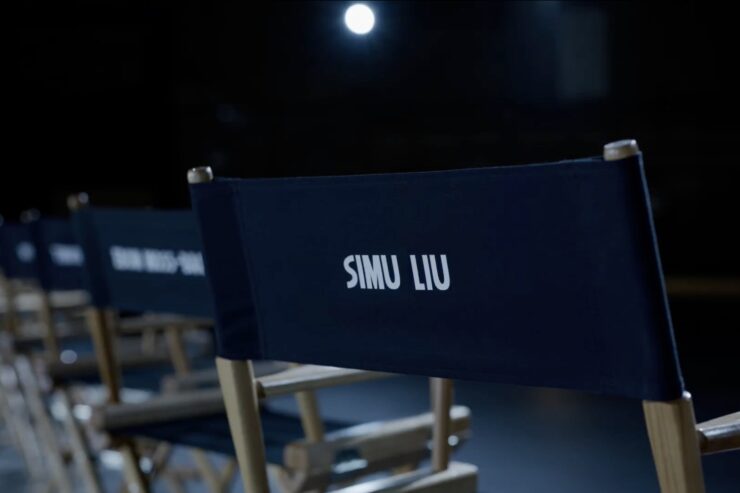
News Avengers: Doomsday Marvel is Announcing the Cast of Avengers: Doomsday in the Most Annoying Way Possible It’s unmusical chairs. By Molly Templeton | Published on March 26, 2025 Comment 0 Share New Share I have been staring, intermittently, at a livestream of chairs. I have been staring at this livestream of chairs for well over an hour. This is how Marvel has chosen to reveal the cast of Avengers: Doomsday: One chair at a time, an actor’s name across the back of each one. Positive: The Paul Rudd chair is small. Negative: It’s not small enough. It is a hobbit chair, not a tiny Ant-Man chair.Positive: Vanessa Kirby should be in everything.Negative: This should really be just one chair with Tatiana Maslany’s name on it, and she should play everyone. What we know so far: The movie will feature Chris Hemsworth, Vanessa Kirby, Anthony Mackie, Sebastian Stan, Letitia Wright, Wyatt Russell, Tenoch Huerta Mejía, and Ebon Moss-Bachrach. I am not willing to say who they are playing as I do not trust Marvel not to pull another Doctor Doom on us, but in other movies these actors play Thor, Sue Storm, Captain America, Bucky Barnes, Shuri, John Walker, Namor, and the Thing/Ben Grimm. The livestream is still going, so there may be more. The internet is not having this. Well, except when they’re having fun with it. Screenshot: Bluesky Screenshot: Bluesky We are also having fun with it. Screenshot Screenshot In conclusion: Screenshot This post will be updated when further chairs are announced. UPDATE: As I finished this post, Simu Liu’s chair arrived. Presumably he is playing Shang-Chi.[end-mark] The post Marvel is Announcing the Cast of <i>Avengers: Doomsday</i> in the Most Annoying Way Possible appeared first on Reactor.
Like
Comment
Share
Daily Signal Feed
Daily Signal Feed
1 y

‘Critically Important’: Iran Allegedly Used China as Golden Ticket to Quietly Operate in Panama Canal
Favicon 
www.dailysignal.com

‘Critically Important’: Iran Allegedly Used China as Golden Ticket to Quietly Operate in Panama Canal

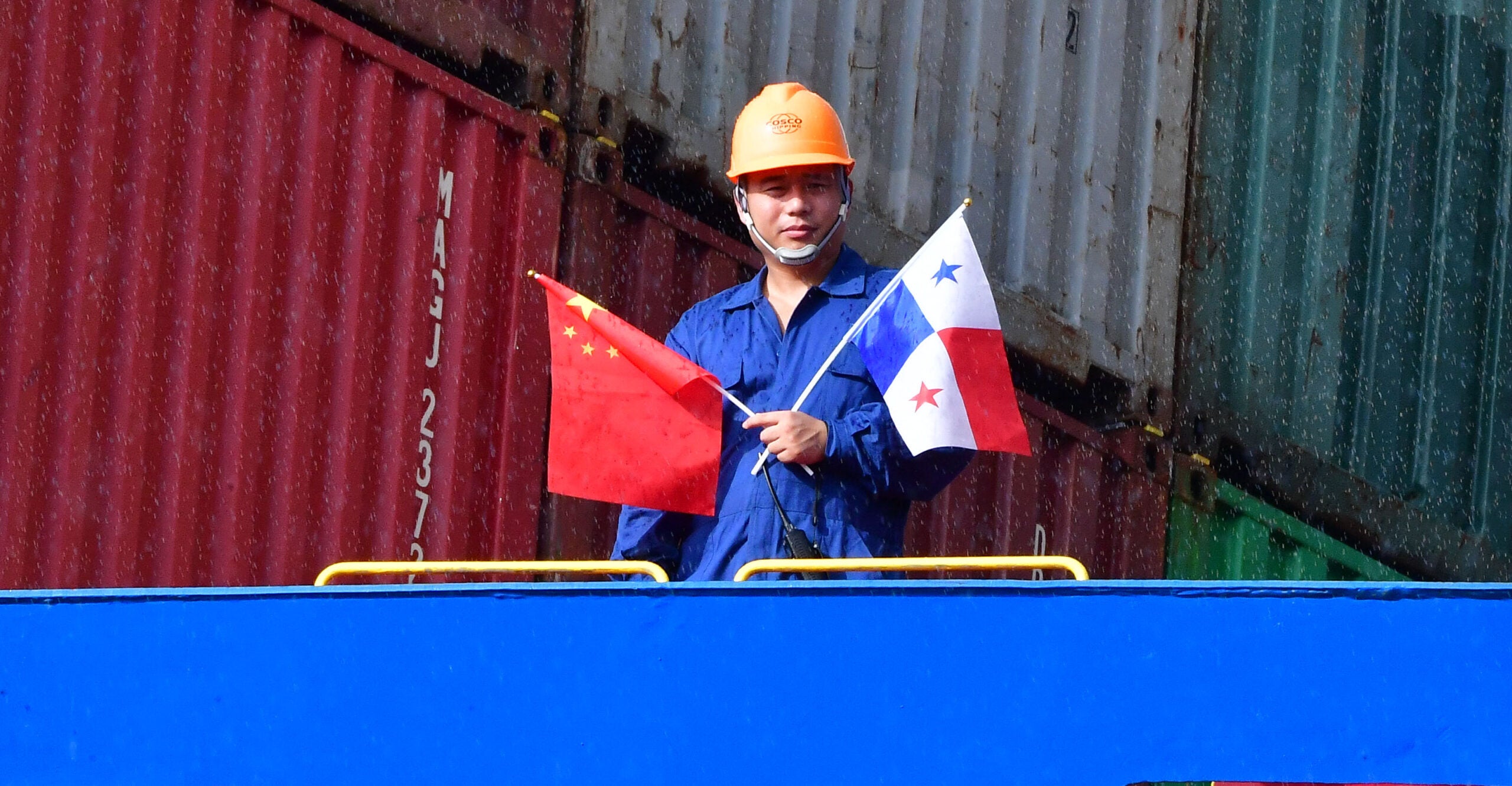
DAILY CALLER NEWS FOUNDATION—China’s growing foothold over the Panama Canal isn’t just fueling its own commercial interests, it also appears to be helping America’s adversaries engage side-step sanctions, court documents obtained by the Daily Caller News Foundation show. China has expanded its presence considerably in the Panama Canal since former President Jimmy Carter sold the shipping lane to Panama for $1 in 1977, and is funding multi-billion dollar infrastructure projects in the surrounding countryside while buying up ports to solidify its foothold. It’s also been a boon to American adversaries, like Iran. Panamanian court documents obtained by the DCNF show how Iran appeared to have used proxy firms based in Hong Kong, China, to register ships in the Panama Canal and attempted to reap the benefits of chartering its ships. “Given the presence of Chinese companies in port operations and infrastructure near the canal, U.S. officials worry that Beijing may seek commercial or strategic leverage in the region,” Dr. Umud Shokri, senior visiting fellow at George Mason University with expertise in foreign policy, told the DCNF. “The Trump administration’s efforts to regain influence over the canal reflect Washington’s broader view of the waterway as a critical national security asset.” The documents center on various cases involving three Hong Kong-based shipping companies—Grace Shipping, Expander Shipping, and Grandest Shipping—all of which have been accused of being subsidiaries of the state-owned Islamic Republic of Iran Shipping Lines (IRISL), a Tehran-based company owned by the Iranian government. IRISL was sanctioned under the first Trump administration, with the State Department describing the company as the “preferred shipping line for Iranian proliferators and procurement agents.” The EU went into more detail than did the Panamanian courts. The EU Council, charged with overseeing security, defense and diplomacy said that for years, IRISL has been “involved in shipping military related cargo,” while the Islamic Revolutionary Guard Corps Navy (IRGCN) “converts container ships owned by IRISL into drone carriers.” Iran has clandestinely operated in the Panama Canal for years, as the Latin American country is considered to be the world’s biggest supplier for “flags of convenience,” which allow shippers to register their vessels under Panamanian colors in exchange for a fee to conceal their port of origin, according to Reuters. Panama took away its flag usage privileges from 136 ships alone over their links to Tehran in 2023. In 2018, the Hong Kong-based companies were looking to sell three separate medium-range tanker ships through an agreement known as a bareboat charter to a Greece-based shipping company. But President Donald Trump announced sanctions on Iran that same year, effectively killing the deal and forcing the Iranian-backed companies to sell the ships outright to avoid penalties. The Greek company went on to use the ships unimpeded for two years after the 2018 sale. However, in 2020, the Hong Kong companies filed a lawsuit in Panamanian court to reclaim the ships from firms under the Greek company’s management that bought the vessels, alleging that the initial selloffs were invalid. The Panamanian court ordered the Greek company to return two of the ships to Grandest Shipping and Expander Shipping, respectively, or pay off the multi-million dollar valuation of the ships to the plaintiffs, according to the legal documents. The case involving Grace Shipping has yet to be resolved. Though the companies now deny their association with IRISL, they have yet to disclose what third parties they were sold to and the nature of the supposed sales. The only people who have appeared as witnesses in the case for the companies are Iranians related to IRISL, according to court documents. The Hong Kong-based firms are represented by Arias B. & Associates in Panama, court documents show. China’s presence in the Panama Canal has allowed Iran to take its business to the Western Hemisphere right under the nose of the U.S. “China has become unabashed in its unwillingness to comply with U.S. efforts to stop Iranian illicit behavior, and has, in fact, enabled it,” Rebeccah L. Heinrichs, senior fellow and Director of the Keystone Defense Initiative at the Hudson Institute, told the DCNF. “China is the one of the most effective enablers of Iran’s ability to evade U.S. sanctions.” The U.S.’s ability to curtail China-based front companies is partly a function of America’s willingness to potentially strain the U.S.-China business relationships, Heinrichs told the DCNF. “So some of this is just implementing the sanctions, finding the front companies that pop up and not giving China any plausible deniability,” Heinrichs told the DCNF. “All of this is endorsed by and facilitated by the [Chinese Communist Party].” Iran has long made moves to avoid Western sanctions, especially in its oil trade. President Donald Trump sanctioned Iranian minister of petroleum Mohsen Paknejad Thursday for allowing “the export of tens of billions of dollars worth of Iranian oil and has allocated billions of dollars’ worth of oil to Iran’s armed forces for export,” according to the Treasury Department. The Iranian government operates so-called “shadow fleets” that export primarily to Beijing. An entire shadow market for Iranian oil has emerged with China and Russia’s help. Beijing and Moscow have both taken steps to obfuscate the origins of the oil, according to the Atlantic Council. “I think we need to be very serious about Iran sanctions,” Matthew Levitt, director of the Reinhard program on counterterrorism & intelligence at the Washington Institute for Near East Policy, told the DCNF. “But being serious about Iran sanctions does not mean just listing more entities, listing more boats. I’m a former senior Treasury official. I’m all in favor of doing that. Can you do that without enforcement? It’s meaningless.” Panama has been more than happy to accommodate China in its expansion of maritime power. China’s Landbridge Group acquired Panama’s largest Atlantic port, Margarita Island, for $900 million in 2016. The acquisition was in conjunction with Beijing’s “Belt and Road” initiative (BRI), a global infrastructure project that has already made its way into a myriad of developing nations. The BRI has been criticized for often giving China undue leverage over the target countries with debt, dubbed “debt-trap diplomacy,” according to the Council on Foreign Relations. Panama formally joined the Belt and Road initiative in 2017. Moreover, Panama gave a 25-year no-bid renewal to the Hong Kong-based Hutchison Ports to operate two ports on either end of the canal, covering both the Atlantic and Pacific Oceans. However, American investment giant Blackrock agreed to purchase the ports from the China-based firm on March 5 for $22.8 billion. U.S. officials and congressmen, such as Republican Texas Sen. Ted Cruz and Republican Utah Sen. John Curtis, have levied criticism at the Panama Canal Authority for allegedly not doing enough to enforce sanctions, especially against China. The Panama Canal Authority has vehemently pushed back against the accusations, saying they are “not a haven for sanctions evasion.” “The United States has found that Iranian vessels are sometimes flagged by Panama in order to avoid sanctions so that they could sell the fuel that they have and then they can take that money and then use it as they wish,” Louis Sola, chairman of the Federal Maritime Commission (FMC), said during a Senate Commerce Committee hearing in January. Cruz also echoed the sentiment during the Commerce Committee hearing, saying the U.S. could not be “idle” while China grows its foothold. “China has always been firmly opposed to illegal and unjustifiable unilateral sanctions and so-called long-arm jurisdiction by the U.S. The international community, including China, has conducted normal cooperation with Iran within the framework of international law,” a Chinese Embassy spokesperson told the DCNF. “This is reasonable and lawful without harm done to any third party, and deserves to be respected and protected.” “All of this is primarily about control of sea lanes,” Heinrichs told the DCNF. “So, it’s critically important, and I credit the Trump administration for recognizing that and for understanding it, that you cannot let the Chinese take over the Panama Canal.” The Iranian Foreign Ministry and Arias B. & Associates did not respond to the DCNF’s request for comment. Originally published by the Daily Caller News Foundation The post ‘Critically Important’: Iran Allegedly Used China as Golden Ticket to Quietly Operate in Panama Canal appeared first on The Daily Signal.
Like
Comment
Share
Reclaim The Net Feed
1 y

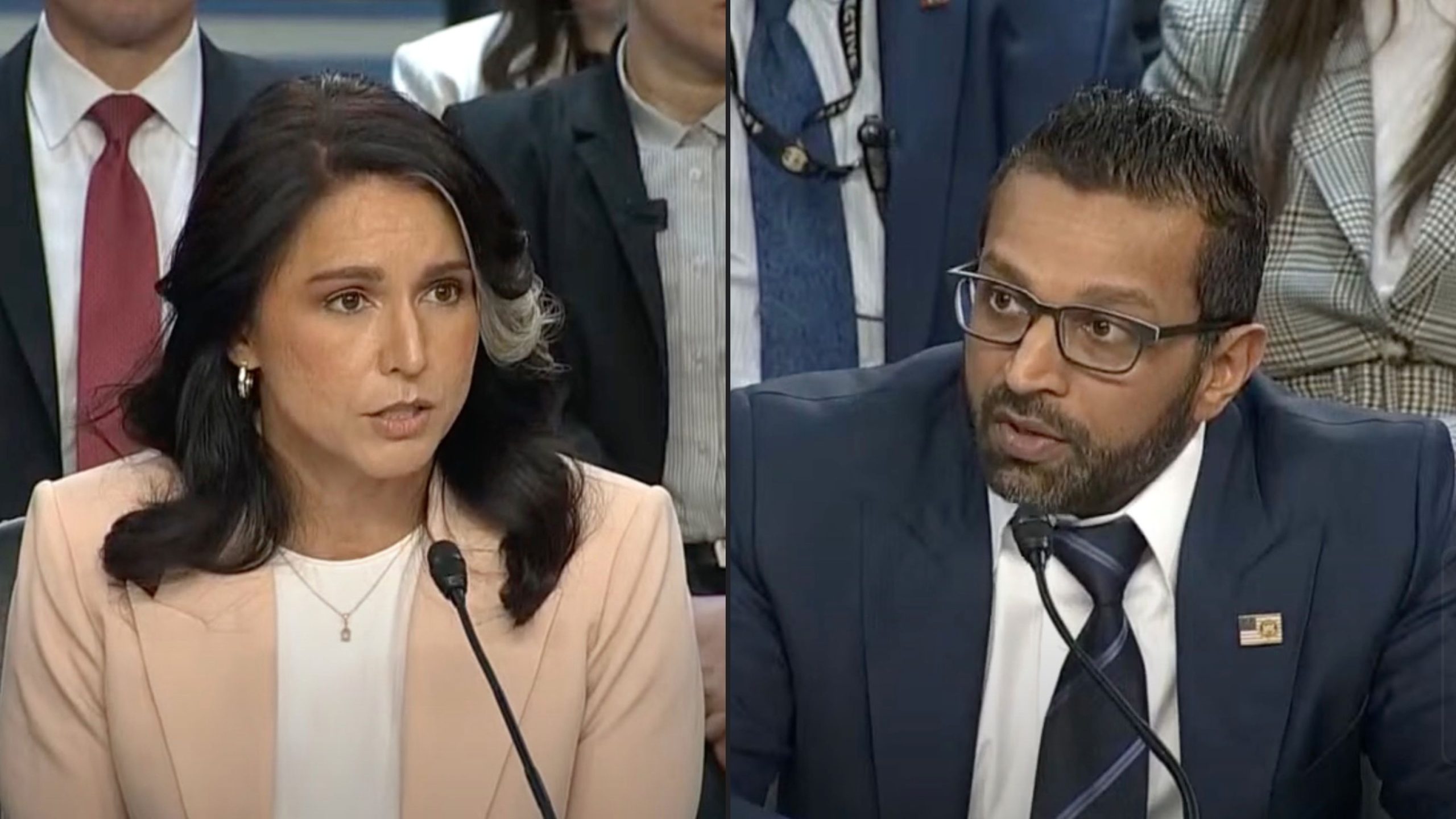
Gabbard and Patel Defend Section 702 Surveillance Powers Amid Civil Liberties Concerns in Senate Hearing
Favicon 
reclaimthenet.org

Gabbard and Patel Defend Section 702 Surveillance Powers Amid Civil Liberties Concerns in Senate Hearing

If you're tired of censorship and dystopian threats against civil liberties, subscribe to Reclaim The Net. US Director of National Intelligence Tulsi Gabbard and FBI Director Kash Patel appeared before Congress this week to strongly defend Section 702 of the Foreign Intelligence Surveillance Act (FISA), a warrantless surveillance authority that has long been a lightning rod for civil liberties concerns. The two intelligence leaders praised the utility of the law in preventing national security threats, while asserting that recent reforms have strengthened protections for Americans’ privacy rights. But the endorsement comes amid persistent public skepticism about government surveillance powers, fueled by FISA’s checkered history and its potential impact on the Fourth Amendment. “Section 702, which authorizes the foreign collection of non-US persons outside of the United States, continues to be one of our most effective collection tools to ensure our national security,” said Gabbard during a Senate Intelligence Committee hearing. “There are a number of reforms that the Senate passed, that Congress passed last year that have proven to strengthen the protections of Americans’ Fourth Amendment rights.” Gabbard pointed to a recent example in which the secretive FISA Court brought in amici curiae — outside legal experts — to weigh in on a privacy dispute, calling it a sign that the reforms are taking root. She added that she plans to visit the NSA for a “ride-along” to see firsthand how those reforms are being implemented. FBI Director Patel echoed Gabbard’s support while acknowledging the controversial nature of surveillance powers. “We need to both ardently defend its use, but also ardently support reforms that allow the American public to entrust that those charged with those capabilities are not violating the Fourth Amendment,” Patel said. He noted that he has already introduced changes to internal FBI protocols to ensure that exculpatory evidence related to US persons is thoroughly reviewed when applying for surveillance under Title I and Title III of FISA. Turning to Section 702 specifically, Patel stated: “Some of the biggest enterprise efforts we have had to thwart national security risk would not have occurred if 702 collection had gone dark. And the FBI continues to use that information to protect the homeland.” “We’ve had multiple takedowns in the last six months based on 702 and interagency collection processes,” he added. “But we just need to ensure the American public, and I’m working with my team, that even in the 702 sphere, American citizens’ information is protected.” Senator Ted Budd (R-NC), who initiated the exchange, acknowledged the value of the tool but underscored the need to restore public trust. “We need to rebuild [the] American people’s trust and confidence that such authorities are not being misused by the intelligence community to unlawfully target Americans,” he said. A History of Controversy First enacted in 1978 following the Watergate scandal, FISA was intended to provide a legal framework for the surveillance of foreign intelligence targets. Section 702, added in 2008, allows US agencies to collect communications of foreign nationals located outside the country — without a warrant — even when those communications pass through American infrastructure or incidentally involve US citizens. Critics have long argued that the law has effectively become a backdoor for domestic surveillance, enabling the collection of Americans’ data without a warrant or adequate oversight. In recent years, both the FBI and NSA have come under fire for improperly querying US persons’ data, including thousands of instances of non-compliant searches documented by the FISA Court. Civil liberties advocates, including the ACLU and Electronic Frontier Foundation, have long called for major reforms or even the repeal of Section 702. They argue that the program is fundamentally incompatible with the Fourth Amendment’s protections against unreasonable searches and seizures. While the 2024 renewal of the law included some new safeguards, many say the changes don’t go far enough — and in some cases, expand the program’s reach. Under the updated provisions, more US companies are now required to assist with surveillance by providing access to their networks, including phone systems and Wi-Fi routers. Despite this, the intelligence community maintains that 702 is vital. Gabbard described it as essential to preventing threats, while Patel insisted that national security efforts would be severely hampered without it. If you're tired of censorship and dystopian threats against civil liberties, subscribe to Reclaim The Net. The post Gabbard and Patel Defend Section 702 Surveillance Powers Amid Civil Liberties Concerns in Senate Hearing appeared first on Reclaim The Net.
Like
Comment
Share
Hot Air Feed
Hot Air Feed
1 y

BREAKING: SCOTUS Upholds Biden's 'Ghost Gun' Restrictions, 7-2
Favicon 
hotair.com

BREAKING: SCOTUS Upholds Biden's 'Ghost Gun' Restrictions, 7-2

BREAKING: SCOTUS Upholds Biden's 'Ghost Gun' Restrictions, 7-2
Like
Comment
Share
Science Explorer
Science Explorer
1 y

Psilocybin: How Science Is Turning Magic Mushrooms Into Medicine
Favicon 
www.iflscience.com

Psilocybin: How Science Is Turning Magic Mushrooms Into Medicine

A dose of ego death could be the tonic for a multitude of mental health conditions.
Like
Comment
Share
Science Explorer
Science Explorer
1 y

The Belief That God Has Forgiven You May Make You Less Likely To Apologize
Favicon 
www.iflscience.com

The Belief That God Has Forgiven You May Make You Less Likely To Apologize

Belief in divine forgiveness can help you forgive yourself, lowering the internal desire to seek reconciliation with others – but this is not the whole story.
Like
Comment
Share
Science Explorer
Science Explorer
1 y

Why Do Eclipses Often Come In Pairs?
Favicon 
www.iflscience.com

Why Do Eclipses Often Come In Pairs?

What we are seeing in March 2025 is more the rule than the exception.
Like
Comment
Share
Science Explorer
Science Explorer
1 y

“Lasso” Antibiotic Breakthrough Could Bring First New Class Of Drugs In 25 Years
Favicon 
www.iflscience.com

“Lasso” Antibiotic Breakthrough Could Bring First New Class Of Drugs In 25 Years

It’s fantastic news for humans, but terrible news if you happen to be a bacterium.
Like
Comment
Share
Science Explorer
Science Explorer
1 y

What's The Difference Between Bugs And Insects?
Favicon 
www.iflscience.com

What's The Difference Between Bugs And Insects?

All bugs are insects but not all insects are bugs!
Like
Comment
Share
Showing 60375 out of 127320
  • 60371
  • 60372
  • 60373
  • 60374
  • 60375
  • 60376
  • 60377
  • 60378
  • 60379
  • 60380
  • 60381
  • 60382
  • 60383
  • 60384
  • 60385
  • 60386
  • 60387
  • 60388
  • 60389
  • 60390
Advertisement
Stop Seeing These Ads

Edit Offer

Add tier


Select an image
Delete your tier
Are you sure you want to delete this tier?

Reviews

In order to sell your content and posts, start by creating a few packages. Monetization

Pay By Wallet

Payment Alert

You are about to purchase the items, do you want to proceed?

Request a Refund