YubNub Social YubNub Social
    #libtards #terrorism #patriots #antifa #americafirst #loonyleft #police\ #foundingfathers #patriotichistory #wethepeople
    Advanced Search
  • Login
  • Register

  • Night mode
  • © 2026 YubNub Social
    About • Directory • Contact Us • Developers • Privacy Policy • Terms of Use • shareasale • FB Webview Detected • Android • Apple iOS • Get Our App

    Select Language

  • English
Community
New Posts (Home) ChatBox Popular Posts Reels Game Zone Top PodCasts
Explore
Explore
© 2026 YubNub Social
  • English
About • Directory • Contact Us • Developers • Privacy Policy • Terms of Use • shareasale • FB Webview Detected • Android • Apple iOS • Get Our App
Advertisement
Stop Seeing These Ads

Discover posts

Posts

Users

Pages

Blog

Market

Events

Games

Forum

Conservative Voices
Conservative Voices
5 w

The Right Needs AI Realism
Favicon 
www.theamericanconservative.com

The Right Needs AI Realism

Politics The Right Needs AI Realism Neither luddism nor accelerationism is a serious policy. The right is finally having its long-overdue AI fight.  Conservatives have treated AI as either a productivity miracle or a distant science-fiction threat. But the coalition lines are not clean. Parts of Silicon Valley now live comfortably inside the right, and parts of the right have adopted the language of founders, defense tech, crypto, and acceleration. The boosters tell us to build faster, regulate less, and trust the engineers. The skeptics warn of job loss, censorship, surveillance, and machines that slowly displace human judgment. Both camps see something real. Neither offers enough. The recent conservative backlash against the administration’s AI policy shows that the debate has entered a new phase. More than 60 Trump allies urged him to require testing and approval of powerful AI models before release. That put one vocal faction of the MAGA base at odds with the White House’s more permissive approach. The administration had been preparing an AI order that would have created a voluntary framework for labs to give the government access to covered frontier models before public release. Then Trump called it off on May 21, saying he did not want to do anything that could dull America’s AI edge. That reversal only sharpens the question: Who governs the machines? That question is the beginning of AI realism. A conservative politics of AI cannot be written solely by people whose first loyalty is valuation, scale, data capture, or market dominance, even when those people now sit inside the conservative coalition. But neither can it be written by people who imagine the machine age can be wished away. The right should reject both uncritical acceleration and reactionary panic. Artificial intelligence is not merely another innovation story, labor story, censorship story, or China competition story. It is becoming a layer between citizens and reality itself. AI systems increasingly shape what people search, what they read, what they believe is credible; they determine what work remains human, how students learn, how bureaucracies make decisions, how campaigns test persuasion, and how institutions understand the public. The old public square was noisy, biased, and often foolish, but at least citizens could see much of the machinery. The new public square is filtered, ranked, summarized, personalized, and increasingly generated. The danger is not that every answer will be false. The danger is that reality becomes too mediated for ordinary citizens to know where persuasion ends and judgment begins. That makes AI a problem of self-government. Conservatives should be especially alert to this. A republic depends on citizens capable of judgment. It depends on institutions that remain accountable to the people they serve. It depends on some shared capacity to distinguish fact from fiction, speech from manipulation, authority from expertise, and public power from private preference. AI touches all of these. If search engines, chatbots, recommendation systems, automated agents, and synthetic media become the primary interface through which citizens encounter the world, then AI policy becomes civic policy. The fight is no longer theoretical. The U.S. government’s dispute with Anthropic shows what happens when private AI vendors, national-security agencies, and procurement power collide. The administration has defended its designation of Anthropic as a supply-chain risk even while exploring ways to use the company’s powerful Mythos model against cyber threats. The Pentagon argues it cannot rely on a vendor that might pull the plug over its AI safety views. Anthropic says it cannot control models once deployed in classified settings and has drawn red lines around mass domestic surveillance and autonomous weapons. That is not a narrow contracting dispute. It is a preview of AI governance. Who decides the limits once these tools become part of public power: elected officials, private model providers, courts, procurement officers, or corporate safety teams? The answer cannot be that a handful of private AI firms quietly decide the boundaries of public authority. But the answer also cannot be that the state absorbs every frontier model into its own machinery without meaningful limits. In a healthy republic, national-security tools should answer to constitutional government. So should the agencies that deploy them. Private vendors should not possess veto power over the state, but the state should not use procurement as a way to erase ethical limits, contractual boundaries, or public accountability. AI also has a physical component. It needs land, water, electricity, transmission lines, tax deals, and local political permission. The proposed Stratos project in Box Elder County, Utah, would bring large-scale data centers and energy development to about 40,000 acres, while critics have questioned state-level review, water oversight, and who has the final say. In Cape Town, Equinix faces opposition from groups demanding fuller disclosure of water, power, and environmental impacts before local planners approve two major data centers. The machine age is not floating in the cloud. It is landing in counties, towns, grids, aquifers, and neighborhoods. A politics that speaks endlessly of innovation while ignoring ratepayers, residents, towns, counties, and local governments is not conservative. It is abstraction with venture funding. This is why the technological class cannot become the right’s governing class by default. The men who build the machines should be heard. Some of them are genuine allies. Many are patriotic, brilliant, and necessary. But they should not be enthroned. Technology companies are good at building tools. So are the founders, investors, engineers, and defense-tech entrepreneurs who increasingly shape the right’s imagination of the future. They are not wrong to want American strength. They are often right about stagnation, bureaucracy, and the need to build. But the habits that produce software and scale companies are not enough to answer political questions about family, place, nation, duty, citizenship, moral formation, public trust, or constitutional order. Their incentives are speed, scale, user growth, investor confidence, and market capture. Those incentives can produce astonishing things. They can also produce systems that reshape civic life long before citizens understand what has happened. The answer is not for the right to turn against its builders. Conservatives should remember that fear of technological displacement is not new. The machine has frightened workers, writers, politicians, and philosophers since the first industrial revolution. The original Luddites were not stupid men smashing progress because they hated tools. They were skilled workers responding to economic disruption, social displacement, and loss of control. Their anxiety was human. Their strategy was not enough. The same is true now. The answer is not to rage against the machine. The answer is to ask who owns it, who governs it, who benefits from it, and whether citizens remain capable of saying no. A conservative AI realism should begin with innovation, but not end there. America should build. Retreating from AI would hand the future to rivals who do not share our constitutional traditions or concern for human liberty. National strength requires technological strength. But strength without judgment becomes appetite. The point is not merely to win the AI race. The point is to remain the kind of civilization worth winning it for. That means preserving human judgment in high-stakes decisions. It means refusing to let automated systems replace accountable officials in contexts where law, liberty, life, livelihood, or civic standing are at issue. It means protecting speech while recognizing that automated persuasion, bot networks, deepfakes, and synthetic media can distort the conditions under which free speech is understood. It means demanding auditability where AI systems exercise public power. It means preserving model replaceability and public control when private tools enter government workflows. It means building energy and data infrastructure with respect for towns, residents, ratepayers, counties, and local consent rather than treating them as obstacles to scale. It also means taking literacy seriously. AI literacy is civic literacy now. Citizens do not all need to become machine-learning engineers. But they do need to know when a system is helping them think and when it is laundering someone else’s assumptions. They need to understand that chatbots have defaults, models have training histories, search has rankings, feeds have incentives, and every interface teaches habits of mind. This is not a call for a new priesthood of regulators. It is a call for political maturity. The right should resist the temptation to solve the AI question with a centralized speech regime, safety bureaucracy, or industrial policy written by the loudest incumbent firms. But it should also resist the fantasy that markets alone can answer civilizational questions. Markets are good at discovering price. They are not sufficient for preserving a republic. The best future for AI is not one in which machines replace human judgment, but one in which they strengthen the conditions under which human judgment can flourish. Used well, AI could help citizens understand complex policy, help small businesses compete, help doctors and teachers extend their judgment, and help local governments become more competent. It could help America remain technologically sovereign in a dangerous world. Used badly, AI becomes a machinery of dependency. Citizens lose the ability to tell what is real. Workers are managed by invisible systems. Schools outsource judgment. Agencies hide behind automation. Private vendors quietly mediate public life. AI realism is therefore not pessimism. It is technology ordered toward human ends: capable citizens, stronger communities, better work, truthful information, accountable institutions, national resilience, and public power that remains answerable to the people. The right should not ask whether AI can be stopped. It should ask what kind of future AI is being used to build. The machine age will not wait for conservatives to settle their theory of technology. But a republic that still believes in human dignity, ordered liberty, and self-government has something better to offer than panic or surrender. It can insist that intelligence, artificial or otherwise, be placed in the service of human flourishing. The post The Right Needs AI Realism appeared first on The American Conservative.

Like
Comment
Share
Conservative Voices
Conservative Voices
5 w

Ohio Water Torture
Favicon 
www.theamericanconservative.com

Ohio Water Torture

Culture Ohio Water Torture Bad as Chinese schools can be, there is something more sinister in the U.S. Two unrelated events collided recently: President Donald Trump went to China, and I learned that the boy who bullied me in high school died. The two events connected in my mind in an unexpected way. The media, bullies themselves, of course found the China trip largely a disaster. Trump generated predictable coverage: panic over diplomatic protocol, endless parsing of symbolism, and stories about EVs and AI. As when at home they report on every Trump gaffe, act of pantomime-like resistance, and negative turn in the Iran War, the purpose is to humiliate Trump and mock the Orange Man. The other media tic that emerged, especially when nothing really significant came from the meetings between Trump and Xi Jinping, is that some American journalists rediscovered the soft piece: short videos about how strange stuff is in China, or how they venerate their elders, or maybe about a family where the Yoda-like grandpa fought with Mao while his young granddaughter wears a miniskirt. There is also the serious think piece, where a journo discovers Chinese math-centric schools have lessons to teach America.  But he’ll probably miss the real point: America’s school problem is not simply academic. The sad fact is that there is too much truth to the claim that American education is terrible, which contributes to the failures of our society in so many ways. The think piece on Chinese education will not, however, include anything on bullying or violence in Chinese schools, one of our own pervasive problems. The journo’s Chinese government translator will not tell him about bullying in local schools.  China has its own school problems, but American schools often tolerate something more openly physical. In China, social exclusion can be severe, particularly in a world where fitting into peer groups is highly valued. Students may be ostracized for appearing different or violating expectations. In some cases, classmates create groups on WeChat to spread rumors. Success on exams by itself can determine admission to top universities. This pressure creates stress, anxiety, and competition. Students who perform poorly may become targets of ridicule, while high achievers may be bullied for appearing overly ambitious or socially awkward. Imagine an American kid bullied over a high SAT score. Chinese schools may be harsh and conformist, but American schools often normalize violence. Both systems fail students in different ways. We share humiliation. But the key difference between Chinese high schools and my old one is violence, straight-up physical brutality in cases, which trains American kids to be violent themselves, to condone violence, and quietly to endure it; this leaves long-term social scars. My suburban Ohio high school was a violent place, even if it failed to compete statistically with the assault rates in nearby urban schools. My bully, Jimmy, was on the varsity football team when I was barely holding it together on the junior varsity crew. I had stopped growing a year before, and my interest in being one of the smaller kids on the squad was lessening all the time. Jimmy singled me out. In a coaching era where drinking water at practice was considered a sign of weakness, Jimmy would take away my lunch-break thermos, meaning nothing to drink halfway through the two-a-day football practices in the 95-degree, humid Ohio afternoons. The grit from the high school track in my mouth was awful without a splash of water to wash it down. Jimmy would chug my thermos while I stood there watching. He was bigger than me and I knew nothing about fighting, so I never thought to fight back. He’d often pretend to hold the thermos out to me so I could have a sip then pull it back. He’d offer it to another varsity player, and usually finish the daily show by dumping whatever he did not drink onto the ground. If I ever got anything, it would be room-temperature water snuck from the groundskeeper’s upright spigot.  These behaviors exist on a spectrum ranging from cruelty to severe physical violence. They created a ritualized environment in which I felt unsafe in places that were supposed to foster learning and development. Jimmy would also take a few swings at me, after school, before practice, whenever. But those just hurt. In retrospect, the water thing was in a way humiliating long after my split lip healed. When I learned that Jimmy had died at a fairly young age while Trump was in China, I did not feel that was a bad thing. I was not the only person bullied in my high school. Most assaults, like mine, went unreported because of fear of retaliation, masculine embarrassment, or disbelief from adults. Bullying was endemic, and what made it worse is how it was allowed by the people who could have helped us. My father brushed it all off over the newspaper as “boys will be boys,” and my mother responded by buying me a bigger thermos in hopes a few drops would be left for me post-Jimmy. We had no school resource officers to intervene. The football coaches were with us every minute of every practice, like Marine Corps drill sergeants—except for a brief period during lunch break every day when not a single adult was to be found. That’s when the bullying took place. The regular teachers who elsewhere patrolled the school restrooms for underage cigarette smokers somehow never paid any attention to the wood-shop corridor. And of course none of the students there never saw nothin’. Luckily, this was before mass shootings became routine. But many of us graduated believing the world was fundamentally unsafe, that authority figures would look away, institutions would fail, and humiliation was simply part of life. That lesson may have had a more lasting impact than anything we learned in class. The post Ohio Water Torture appeared first on The American Conservative.
Like
Comment
Share
Conservative Voices
Conservative Voices
5 w

Why Out-of-Touch Donors Love Rubio
Favicon 
www.theamericanconservative.com

Why Out-of-Touch Donors Love Rubio

Politics Why Out-of-Touch Donors Love Rubio The bestselling author Ann Coulter sat down with The American Conservative to talk about America’s warmongering top diplomat. So, who you got in 2028: J.D. Vance or Marco Rubio? That’s the question conservatives across the country have been asking each other in recent months. Last year, Vance ’28 had seemed inevitable, but no longer. “Trump voters like Marco Rubio More and More,” blared the headline of a recent piece in the Atlantic. “And J.D. Vance less and less,” noted the subheadline. But at least one prominent conservative with a reputation for uncommon foresight still sees Vance as the future of the GOP—and Rubio as a defective robot programmed by out-of-touch donors. In a scathing Spectator article published last week, Ann Coulter explained why she’s “Never Rubio.” And in an interview with The American Conservative, she explained why she’s on Team Vance. A partial transcript of the interview is below (and you can watch the whole thing here). The bulk of the conversation was about Rubio, Vance, and the Iran war—which Coulter opposes—but I began by asking about Rep. Thomas Massie of Kentucky, who lost his Republican primary on Tuesday. President Trump had endorsed Rep. Thomas Massie’s opponent, Ed Gallrein, whom nobody had heard of until five minutes ago. How have you interpreted the sometimes brutal Trump–Massie conflict? And what’s your take on Gallrein’s victory? I don’t think there’s ever been another president, another politician, another breathing human being that I have such a long “con” list for but also a pretty good “pro” list. And oh my gosh, that is Trump. I mean, this Massie thing is the worst of Trump for various reasons. I can’t blame Trump for this, but there is a Trump cult. I was listening yesterday to the journalist Robert Draper covering the Massie–Gallrein campaign from Kentucky. [Laughs] I’m sorry, I have to laugh when I mention Gallrein because this district went from having not only the smartest member of Congress, but probably the smartest human being living in the greater Washington, DC area, to the dumbest member of Congress. So congratulations, Fourth District! But there were tape recordings of these Massie rallies, and a guy stood up and said he opposed Massie. And Massie was magnificent. He talked to him for 15 minutes. He was cheerful. He was nice. But the guy’s main argument was, “Um, yeah, OK, I didn’t vote for war, but Trump knows more than any of us. He knows stuff you don’t know. He knows everything. Why don’t you just defer to him?” You have to listen to it. This is a cult. This is absolutely a cult. And I don’t like that. Republicans, conservatives, we’re the party of ideas. We’re the smart ones! I love a lot of things Trump is doing, but this is Moonie stuff. I don’t like that he’s brought that out in people on my side of the aisle, and I hope it goes away with Trump. The opposition to Massie was just absolutely batty. I posted a piece on my Substack just responding to some of the lies. What are some of the lies? One hilarious one is: He’s never passed a bill. Who has gotten a bill passed this term? Oh yes, I remember: Thomas Massie did. The most important, most beloved bill that has ever been passed in the history of the Republic and that was mightily resisted by Trump and the Republican Party. And that is the bill requiring the release of the Epstein files.  In the end, voted for by every member of Congress and signed into law by President Trump himself. Considering that’s one of the main arguments against Massie, you’d think they’d remember that bill. This is very depressing. And the one upside I’d say is, my gosh, it took a lot of money to take this guy out. Your Spectator piece explains why you’re “Never Rubio.” I’d be curious to hear why you felt the need to to write it. I suspect it’s because more people are talking about Rubio as the 2028 Republican nominee. The aura of inevitability around Vance seems to have waned. You’ve seen it all over. For one thing, Trump was polling his donors. And as I mentioned briefly in the article, donors have the worst political judgment. And they’re all, “Oh, Rubio, Rubio, we love him!” There’s a big article in the Atlantic. It’s Rubio! Vance’s star is fading! Nobody likes him! Well, the Atlantic and the woman who wrote this article have been the most fanatical, blood-coming-from-their-fangs anti-Trumpers from the moment he came down the escalator. One Christmas Eve, I went to a big Palm Beach dinner party. I’m the only non-billionaire at the table. And as with many dinner parties in Palm Beach, it ends in women crying, children running from the table—huge political argument. I came home from that. I had just sent my book Adios, America to the publisher, but I typed up a chapter that is now titled, “I wrote this chapter when I realized how stupid rich people are.” They have the worst political judgment. I think the donors are smitten with anyone who goes around throwing around terms like “Sharia” and “the Sunni” and “the Caliphate” and this and the other thing, because they are so separated from the concerns of ordinary people. And it makes both the half-wits like Rubio and his donors feel like big intellectual global strategists, striding the globe, rearranging things. But every time they rearrange things, it’s an unmitigated disaster. I get the sense that you like Vance much more than Rubio. Can you explain why, given that he doesn’t have a long political history, doesn’t have a political identity that pre-exists Trump’s presidency, except that he was a writer of Hillbilly Elegy back when he was a Never Trumper? I give him a break because he had just gotten out of Yale Law School. That’s like getting out of Chinese-style brainwashing. So come on, give that a rest. Obviously he changed his mind. I believe he genuinely changed his mind because it just fits with his entire character. His entire life is caring about poor people in Appalachia, growing up with that, seeing the drug problem, seeing that these poor white Americans have just been completely ignored by the elites for, I don’t know, half a century. So I think it’s deeply in his heart. And two other things I really like about Vance is first, well, who else? We’ve got to pick somebody, and I don’t see anybody else I like as much. And secondly, as with Massie, Vance is really, really smart. And I think it’s really important to have smart people running our party, to have smart people at the top. I will admit, Rubio’s smooth, he’s slick when he stands up and gives these little speeches and no one’s challenging him. Yeah, Rubio gives a good speech, but remember, Chris Christie destroyed him in that New Hampshire debate, because all Rubio can do is give these little speeches.  It was like a moment in The Stepford Wives. There was a glitch in the computer and he repeated the exact same riff four times with Christie standing there saying, “Look, he’s doing it again, he’s doing it again!” And he couldn’t stop. So no, not quick on his feet.  I don’t mean to be a snob about this, but Rubio’s educational attainments are not as impressive as those of Jasmine Crockett, whereas Vance came from absolutely nothing, did not have the advantage of being able to apply as a Hispanic. Yes, Cubans don’t get the full affirmative action that other Hispanics do, but they still get affirmative action—and I’m telling you, no white kid from Appalachia gets one leg up. And what Vance has accomplished is very impressive. Editor’s note: This article has been edited for conciseness and readability. You can watch the full conversation here. The post Why Out-of-Touch Donors Love Rubio appeared first on The American Conservative.

Like
Comment
Share
Intel Uncensored
Intel Uncensored
5 w News & Oppinion

rumbleBitchute
No, Israel STILL Has No Right To Exist. Here's why. - Mr. Quigley
Like
Comment
Share
Classic Rock Lovers
Classic Rock Lovers  
5 w

Select June Rock Releases: Evanescence, The Pretty Reckless, Stitched Up Heart & More
Favicon 
rockintown.com

Select June Rock Releases: Evanescence, The Pretty Reckless, Stitched Up Heart & More

Evanescence 6/5 Evanescence: Sanctuary Evanescence’s sixth studio album features the single, “Who Will You Follow.” “This album is over three years in the making and we are so damn proud of every second of it,” the band states on social media. Evanescence was founded in 1994 by singer and keyboardist Amy Lee and guitarist Ben Moody. The band released their debut album “The Fallen” in ’03 with the singles “Bring Me To Life” and “My Immortal.” Who Will You Follow Requiem For A Pipe Dream 6/5 Cyhra: Requiem For A Pipe Dream Cyhra’s fourth studio album features single, “Bleed With Pride.” “For a long time, I carried the weight of the past like something that needed to be buried,” offers Cyhra’s Joacim “Jake E” Keelyn. “But the truth is, those wounds kept me honest. They became my compass.” Keelyn had this to say about the title track: “This song is about the internal war — the silent thunder you fight inside — and choosing not to let it drown you.” Bleed With Pride Season Of Surrender 6/5 August Burns Red: Season Of Surrender The Metalcore band’s eleventh full-length effort features the track “The Nameless.” “Lyrically, ‘The Nameless’ is a song about not wasting your life away for the sake of acceptance and comfortability,” notes August Burns Red vocalist Jake Luhrs. “Sometimes it takes detaching from what you’ve been told, or from the beliefs you are no longer aligned with, in order to face your own weaknesses. In doing so you can break free to live a life you are proud of.” The Nameless I Survive 6/5 69 Eyes: I Survive The EP has the title track featuring guirist Steve Stevens and a cover of the Thin Lizzy classic “Cold Sweat.” “Every respectable Rock band also covers Thin Lizzy at some point, so now that is done as well,” enthuses frontman Jyrki 69. The song’s video was filmed in January during the band’s recent European tour. and features a cameo by Moonspell’s Fernando Ribeiro. Cold Sweat I Survive Medusa 6/12 Stitched Up Heart: Medusa The band’s fourth full-length album features “Glitch Bitch” and “Sick, Sick, Sick.”  “‘Glitch Bitch’ is a love letter to every fierce e-girl baddie out there shattering expectations and leaving a trail of broken hearts in your digital wake,” Stitched Up Heart shares. The track also features Kiarely and Kristen from Conquer Divide. Stitched Up Heart was formed in 2010 by vocalist Alecia “Mixi” Demner. They are known for heavy riffs and, anthemic choruses. Glitch Bitch Sick, Sick, Sick An Ending In Itself 6/12 Sleeping With Sirens: An End In Itself   Vocalist Kellin Quinn says the album is “both a culmination and a continuation, completing the recent emotional and thematic arc of “How It Feels To Be Lost” and “Complete Collapse” while reconnecting with the spirit that first propelled the band forward.” The album features the title track and Forever/Always.” The latter is “a love letter to anyone in the midst of struggle.” An Ending In Itself “The song marks the first single released with Rise Records since “Feel.” Forever/Always Frisson Noir 6/12 Tarja Turunen: Frisson Noir A press release states that the album is “the heaviest record of her career and a powerful statement of identity, strength and belonging.” The former Nightwish singer adds: “For some time already I’ve been looking for a really heavy sound for my albums. It was such a pleasure to work with Neal (Avron, who handled the mixing) on this album, because, yes, it really now sounds heavy. And it’s a result for me that I’m really happy with. The set contains “I Don’t Care,” featuring Dani Filth. I Don’t Care (featuring Dani Filth of Cradle Of Filth) Until The Sun Explodes 6/12 Sublime: Until The Sun Explodes It’s Sublime’s first full-length album with frontman Jakob Nowell.  “Until The Sun Explodes” features collaborations with H.R. of Bad Brains, Fletcher Dragge of Pennywise and G Love.  The title track is the lead single. “‘Until The Sun Explodes’ the album is an epilogue, and ‘Until The Sun Explodes’, the single, is the epilogue to the epilogue,” explains Nowell. Until The Sun Explodes Gargoyle Of The Garden State 6/12 Bolan (Rachel Bolan): Gargoyle Of The Garden State Rachel Bolin, the Skid Row bassist had this to say about working on the album: “When we did my solo record, I played most of the guitars, most of the singing, all the bass. Stuff didn’t have to clear the committee’s vote and stuff and shit like that. So it was cool, man. It was awesome, man. It was a really, really fun process.” The ‘Bolan’ name covers the entire project not just the frontman. The lead single was “At War With Myself.” At War With Myself Dear God 6/26 The Pretty Reckless: Dear God The set contains “When I Wake Up” and “For I Am Death,” which went to #1 on Billboard’s Mainstream Rock Airplay chart to become the band’s the fourth consecutive #1. ‘When I Wake Up’ is the story of a dream becoming a nightmare,” reflects frontwoman Taylor Momsen. “ “Dear God” is the fifth album from The Pretty Reckless and follows the ’21 album “Death By Rock And Roll.” For I Am Death When I Wake Up The Wow! Signal 6/26 Muse: The Wow! Signal The title of the tenth studio album by Muse refers to the “Wow! signal, a narrowband radio signal detected in 1977 suggesting the existence of extraterrestrial intelligence. According to frontman Matt Bellamy, the album explores themes of “cosmic mystery” and the “possibility of contact with something far greater than ourselves.” Muse is Bellamy, Dominic Howard and Chris Wolstenholme. Be With You Cryogen Described as “gothic, spacey Rock.”  ### The post Select June Rock Releases: Evanescence, The Pretty Reckless, Stitched Up Heart & More appeared first on RockinTown.
Like
Comment
Share
Intel Uncensored
Intel Uncensored
5 w

Global Tyranny: Britain is being used as a test case for digital ID control
Favicon 
www.sgtreport.com

Global Tyranny: Britain is being used as a test case for digital ID control

by Rhoda Wilson, Expose News: British politician David Kurten, leader of the Heritage Party, joined Daniel Forsius from the Swedish independent media outlet News Voice to discuss the escalating crisis in the UK.From people being jailed for protests against migration crimes and social media posts, to the King’s Speech pushing digital ID, and the growing resistance with massive protests – Britain […]
Like
Comment
Share
100 Percent Fed Up Feed
5 w

Ro Khanna Admits Democrats Ran ‘Status Quo’ Candidates While Working-Class Voters Got ‘Shafted’
Favicon 
100percentfedup.com

Ro Khanna Admits Democrats Ran ‘Status Quo’ Candidates While Working-Class Voters Got ‘Shafted’

Democrats spent years calling President Trump’s supporters extreme, deplorable, and out of touch. Now their own party is being forced to say what MAGA voters already knew: the Democratic establishment abandoned working-class Americans and got punished at the ballot box. Rep. Ro Khanna, a California Democrat, went on Meet the Press this weekend and delivered a remarkably blunt admission about his own party’s failures. He said Democrats “too often ran status quo establishment candidates” who refused to challenge a rigged economic system, and that working-class voters had been “shafted.” The DNC "autopsy" has finally emerged revealing the cause of death of the 2024 Kamala Harris campaign. You can sum up the nearly 200 pages in one sentence: "Joe Biden sucked as President and Kamala Harris would have sucked even more." pic.twitter.com/LrvpBc0iIW — Scott Jennings (@ScottJenningsKY) May 24, 2026 CNN commentator Scott Jennings summed up the nearly 200-page DNC autopsy in a single sentence that cut straight to the bone. It is hard to argue with that assessment when even Democrats are now saying the same thing in slightly more polished language. Khanna’s comments came in response to the long-awaited Democratic National Committee autopsy of the 2024 election, which was finally released last week after months of internal pressure and delay. The release itself was a disaster. DNC Chair Ken Martin kept the document under wraps for months, fueling speculation and frustration inside his own party. When he finally put it out, he slapped a disclaimer on it saying the report did not meet his standards and that the DNC could not independently verify many of its claims. That is not an autopsy. That is a cover-your-back memo released under duress. Multiple elected Democrats and party operatives called for Martin to resign, arguing he had badly mismanaged the one document that was supposed to chart a path forward. The Associated Press described the DNC release chaos this way: One day after the party released its botched autopsy report on the 2024 election, Democratic leaders were still limping toward the midterms while prominent voices inside the party demanded changes at the top. Ken Martin faced calls to resign from elected Democrats and operatives who said he mismanaged a report that was supposed to examine the party’s failures and offer a path forward. Martin kept the document under wraps for months, fueling speculation, then released it while arguing it was too flawed to be useful. The document also appeared with a red disclaimer saying it reflected the author’s views, not the DNC’s, and that the committee had not received underlying sourcing, interviews, or supporting data for many assertions. That meant the DNC could not independently verify major pieces of the very autopsy it had just released to explain why the party lost. That is the kind of process meltdown that turns a post-election review into a public indictment of the people running the party. As Fox News reported, Khanna did not hold back about what the party got wrong: Rep. Ro Khanna, D-Calif., said Sunday that Democrats have failed to connect with working-class voters because the party too often backed status quo establishment candidates unwilling to challenge what he described as a rigged economic system. Speaking on Meet the Press, Khanna weighed in on a newly released Democratic National Committee autopsy report examining the party’s 2024 election loss and broader struggles with voters. Khanna said Democrats need to recognize that the status quo has failed, that the economy is lopsided and unfair, and that many working-class and middle-class Americans do not think the system is working for them. He said Democrats too often ran establishment candidates unwilling to call out an economic and political system that failed. Khanna also said Democrats need an economic message aimed at working-class people who have been shafted, and he said Ken Martin could have handled the autopsy process better even though he did not call for Martin to resign. The admission landed because it came from inside the Democratic Party, not from a Republican attack ad. The party that claimed to speak for workers was being told by one of its own members that those voters no longer believed the system was working for them. He added that Democrats need “an economic message aimed at working-class people who have been shafted.” That is an extraordinary statement from a sitting Democratic congressman, because it validates the exact argument President Trump has been making since 2015. Trump won because he talked to the people both parties had ignored for decades. He talked about jobs leaving, wages stagnating, borders dissolving, and an elite class that got richer while everyone else fell behind. Democrats responded by calling those voters bigots. The autopsy report itself was not much better than the party’s broader messaging. It reportedly criticized Kamala Harris for writing off rural America and failing to attack Trump with enough negative firepower, as if the problem was not enough mud-slinging rather than having nothing real to offer voters. Former Democratic megadonor John Morgan did not mince words about the whole exercise. As Fox News reported, Morgan argued Democrats did not need a lengthy report to understand why voters rejected them: Former Democratic megadonor John Morgan blasted the party’s newly released election autopsy and argued Democrats did not need a lengthy report to understand why voters rejected them. Morgan, who had previously given more than a million dollars to Democrats, said he did not give a penny once Kamala Harris became the candidate. Speaking on Jesse Watters Primetime, Morgan argued the autopsy missed the obvious by failing to address progressive social issues that hurt the party. He listed DEI, woke politics, transgender athletes competing against girls, loose border politics, and Kamala Harris campaign baggage as the real reasons Democrats lost. The DNC report focused instead on infrastructure, voter registration, state-party support, and listening to certain voter groups. That contrast is the whole problem in miniature. Voters were reacting to culture-war radicalism, border chaos, and economic pain, while the party machinery was still talking like the answer was better process and more internal infrastructure. Morgan’s criticism also mattered because it came from a former donor, not a Republican consultant. He was saying that the party’s own postmortem ignored the issues regular voters had already made impossible to miss. Morgan said the reasons were obvious. He is right. The DNC report, meanwhile, focused on infrastructure, voter registration, and state-party support instead of addressing the progressive social agenda that drove voters away in droves. That tells you everything about where the Democratic Party still is mentally. They produced a 200-page document, slapped a disclaimer on it, sparked a leadership crisis over its release, and still could not bring themselves to say the obvious: voters rejected woke ideology, open borders, and an economy that made life harder for ordinary families. Ro Khanna at least had the honesty to say the quiet part out loud. Working-class voters were shafted, and Democrats were the ones holding the shovel. President Trump built a movement by listening to those voters. The DNC autopsy is proof that Democrats still have not figured out how to do the same.
Like
Comment
Share
Classic Rock Lovers
Classic Rock Lovers  
5 w

“It pissed Neil Peart off. He went back to his room and went, ‘F**k, f**k, f**k – I can’t say no to that guy!’” The one and only reason Rush’s R40 tour actually happened
Favicon 
www.loudersound.com

“It pissed Neil Peart off. He went back to his room and went, ‘F**k, f**k, f**k – I can’t say no to that guy!’” The one and only reason Rush’s R40 tour actually happened

The drummer had already decided to retire. But a wounded Alex Lifeson brought the only argument that made the classic line-up’s 2015 final road trip a reality
Like
Comment
Share
BlabberBuzz Feed
BlabberBuzz Feed
5 w

Subpoenas Drop On Hasan Piker And Codepink Cofounder In Explosive Sanctions Probe
Favicon 
www.blabber.buzz

Subpoenas Drop On Hasan Piker And Codepink Cofounder In Explosive Sanctions Probe

Like
Comment
Share
Living In Faith
Living In Faith
5 w

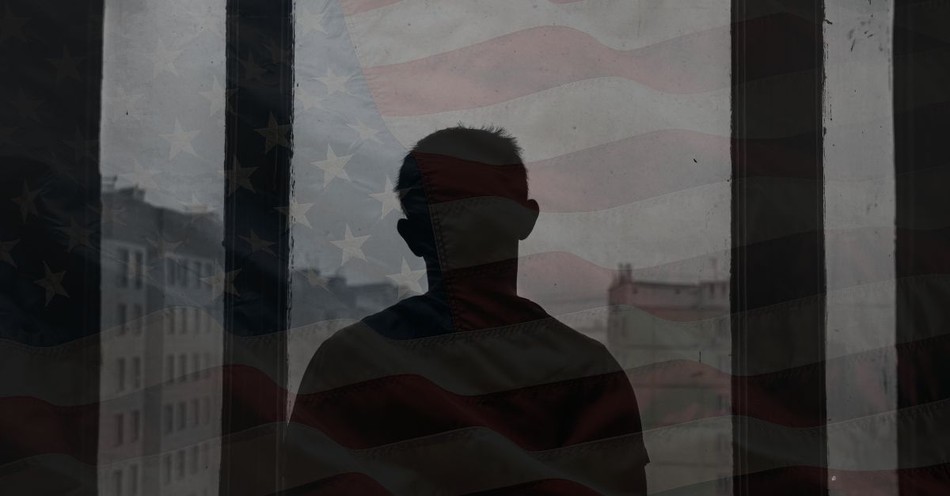
Was America Founded On Biblical Principles?
Favicon 
www.christianity.com

Was America Founded On Biblical Principles?

How has our nation drifted morally and spiritually, and how can believers carry Christ’s light faithfully in this moment?
Like
Comment
Share
Showing 4146 out of 127489
  • 4142
  • 4143
  • 4144
  • 4145
  • 4146
  • 4147
  • 4148
  • 4149
  • 4150
  • 4151
  • 4152
  • 4153
  • 4154
  • 4155
  • 4156
  • 4157
  • 4158
  • 4159
  • 4160
  • 4161
Advertisement
Stop Seeing These Ads

Edit Offer

Add tier


Select an image
Delete your tier
Are you sure you want to delete this tier?

Reviews

In order to sell your content and posts, start by creating a few packages. Monetization

Pay By Wallet

Payment Alert

You are about to purchase the items, do you want to proceed?

Request a Refund